As Covid-19 remote work continue to bolster at-home dining, India’s delivery companies are rushing to get groceries to doorsteps quicker.
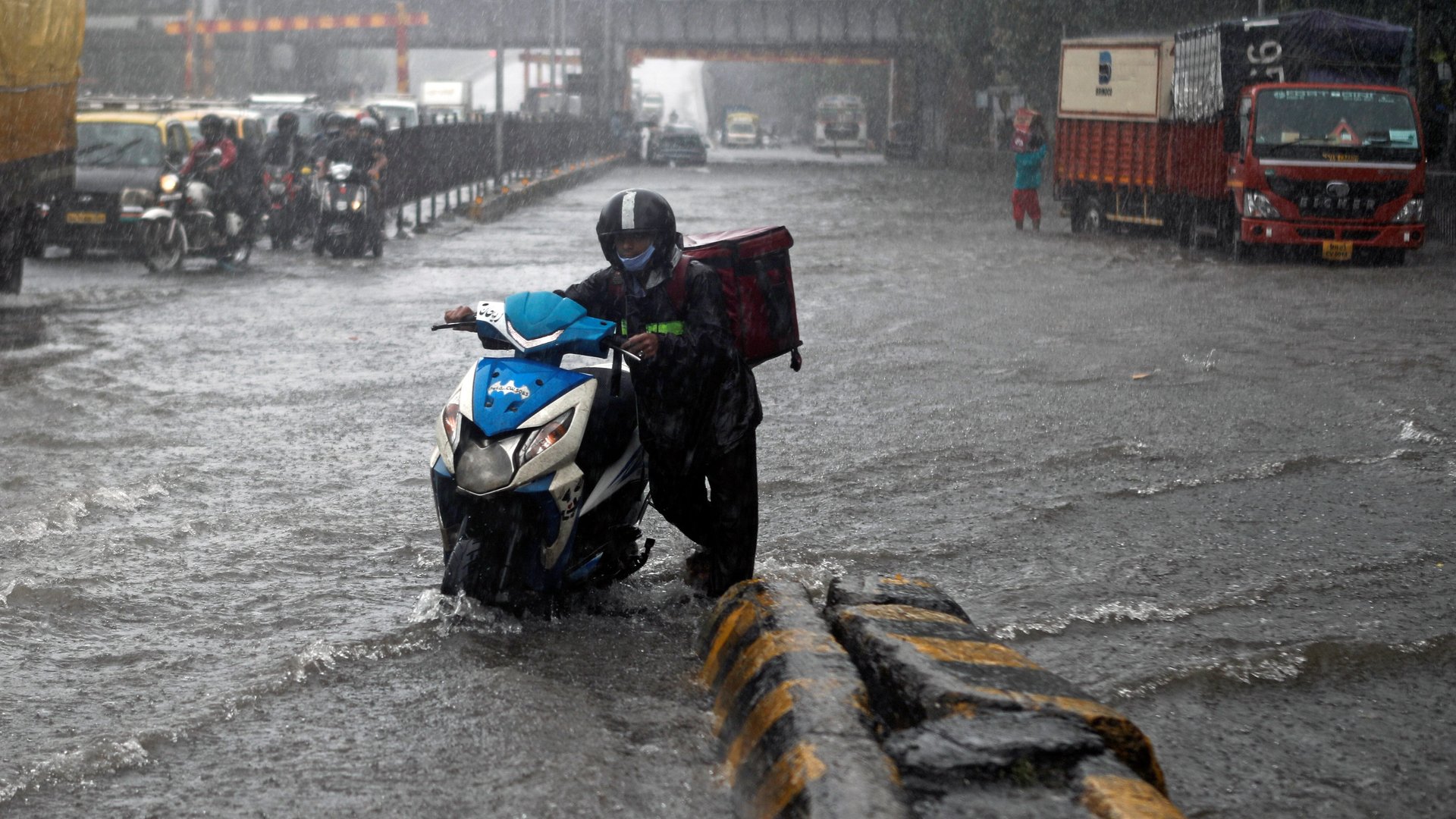
As Covid-19 remote work continue to bolster at-home dining, India’s delivery companies are rushing to get groceries to doorsteps quicker.
On Aug. 17, delivery outfit Grofers started promising 10-minute deliveries in 10 Indian cities: Delhi, Gurugram, Mumbai, Bengaluru, Hyderabad, Kolkata, Jaipur, Ghaziabad, Noida, and Lucknow. Hyperlocal delivery startup Dunzo has also launched 19-minute deliveries in Bengaluru, and Zepto now makes 10-minute grocery deliveries in two parts of Mumbai’s suburbs. With its InstaMart option, food-delivery giant Swiggy also guarantees grocery delivery within 30 minutes in Bengaluru, Gurugram, Delhi, Mumbai, Hyderabad, Chennai and Noida.
Join 500,000+ readers who start their day with Quartz.
By subscribing, you agree to our Terms of Service and Privacy Policy.
But backlash is brewing over the impact of ever-intensifying demands on India’s delivery personnel, and the ethics of framing exploitative marketing gimmicks as actually-useful innovation. Minuscule delivery windows in cities known for intense traffic and tightly packed housing are likely to exacerbate poor working conditions for delivery workers who already contending with long hours and paltry pay. And the precedents being set today matter: India’s quick-commerce industry is set to grow at least tenfold, to $5 billion, by 2025.
Globally, several players have tasted success with the quick delivery format: Getir in Turkey, Gorillas in Turkey, Dija in Britain, which was recently acquired by US-based grocery platform Gopuff.
In India, the trend is starting to catch on as consumer behavior evolves. Over the past few years, buying habits have shifted away from larger, monthly purchases to smaller, weekly ones. The number of single-person households interested in time-bound deliveries is increasing, as is unplanned ordering. Additionally, Covid caused online ordering to substitute some neighborhood kirana store visits.
“The demand for these services has been boosted by busy consumer lifestyles that prompted heightened desire for convenience and immediate services,” says Ankita Roy, retail analyst at GlobalData.
Delivery companies are racing to meet the demand on all fronts: by expanding the regions where delivery is available, by increasing the number and types of items that can be delivered, and by promising ever-quicker fulfillment.
The companies argue that quick-delivery advancements are possible because of increasingly robust supply networks, and not increased pressure on drivers. Take Albinder Dhindsa, co-founder and CEO of Grofers, who on Aug. 28 tweeted a “response to the hate we are getting for delivering groceries in 10 minutes.” Dhindsa explained that Grofers’ partner stores are located within 2 kilometers of customers, and said 90% of orders could already be delivered in under 15 minutes, even if the delivery person was traveling less than 10km (6.2 miles) per hour.
Dunzo, too, has opened several mini-warehouses across each neighborhood it’s servicing with quick delivery. The company’s aim is to set up more fulfillment centers so that every customer would be within 5 kilometers of one.
Companies are also shrewdly limiting which goods can be delivered at such lightning speeds. “It would be very different to make a promise like this for any product under the sun for any location under the sun,” says Sid Talwar, co-founder and partner at Lightbox VC, which has a stake in Dunzo.
Local fulfillment centers and limited inventory are meant to mitigate errors, and most order delays come from warehouse or ride-optimization issues, not driver failure. “You blame the goalkeeper for a goal scored, it’s wrong,” says Talwar. “That guy has gone through 10 more people.” Likewise, “if the delivery is not done in 19 minutes, you can’t penalize the delivery guy or pay him less money. That mistake is Dunzo’s mistake. There are 30 people involved.”
But while efficiency is mostly determined by technology, the brunt of a failed delivery still mostly falls on the person that deals with the customer.
The most immediate aftermath of a late order is usually a temper tantrum: The customer repeatedly calls the delivery person, and/or yells at them once the order shows up. That means that on the ground, most riders are still panicked about not meeting these short windows.
It doesn’t help that the companies penalize the delivery workers, too. If riders don’t make the window, some platforms will block their IDs and slash their incentive money, says Shaik Salauddin, national general secretary of Internet Federation of App-Based Transport Workers. Incentives are monetary rewards on top of the nominal delivery fee that are based on hours of work, earnings from each delivery and the number of rejects—all of which have been made worse due to Covid anyway.
To keep up with demand, delivery companies are also saturating neighborhoods by sometimes doubling the number of drivers competing for orders. “Company ke liye, woh humaare pet pe laat maar rahe hai,” Salauddin told Quartz, which roughly translates to, “For the sake of the company, they’re taking the bread out of our mouths.”
