
How Indian states are fiscally responding to climate change
India’s climate change nightmare is no more a matter of the distant future.
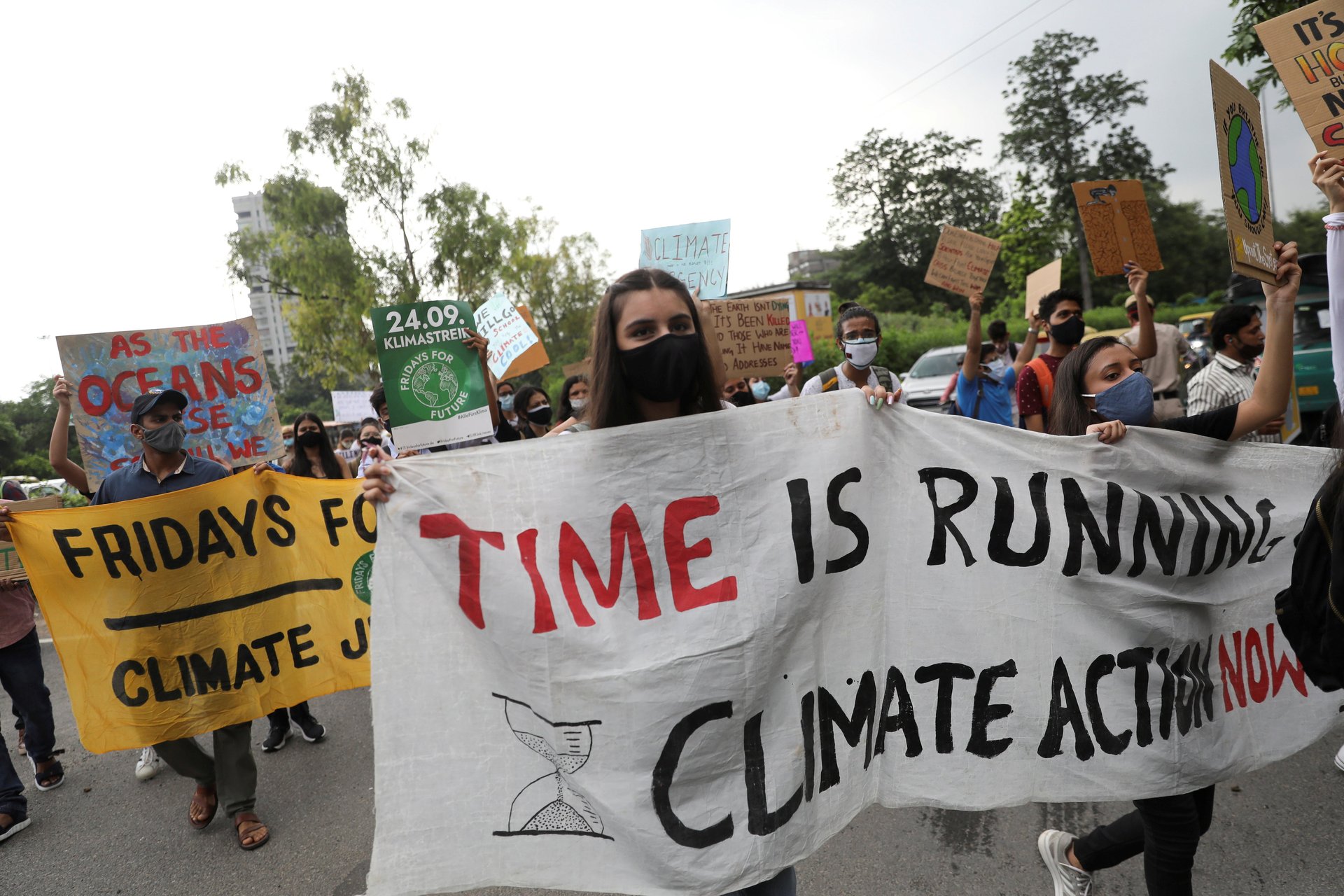
India’s climate change nightmare is no more a matter of the distant future.
India’s climate change nightmare is no more a matter of the distant future.
“It has already become a reality…Reduced agricultural productivity, heightened water insecurity, extreme weather events, stressed ecosystems, and elevated health risks are some of the manifestations of this climate change,” credit rating agency India Ratings and Research (Ind-Ra) said in a report released on Thursday (Oct. 7).
While the country’s gross domestic product (GDP) could shrink by 3% annually with every one-degree centigrade rise in temperature, the state-level impact could vary, it said citing a study by Advancing Earth and Space Science, an international nonprofit scientific association.
It is ultimately their individual fiscal capacities that will help states tackle the crisis.
Those with lower spending on the environment are highly vulnerable. Following this logic, it’s Jharkhand that has the most to worry about and Maharashtra the least, according to the climate change vulnerability index.
“A low climate change vulnerability index value does not mean that Maharashtra is not vulnerable to climate change in an absolute sense. In fact, all states in India are vulnerable to climate change/risks,” Ind-Ra said.
The agency has used the states’ debt-to-GDP ratio as a criterion to determine its financial vulnerability when faced with climate change. The climate change vulnerability index, on the other hand, shows how susceptible it is in general to the crisis.
Ind-Ra suggested that the way forward should be “adopting the climate-responsive budgeting or climate tagging of the state government budget to build a climate-resilient economy”.
Spending under budgetary heads such as “soil and water conservation” and “forestry and wildlife” directly addresses the ‘adaptive response’ part of climate change. These are some categories under which a few states have been planning their expenses in recent years.
It indicates that they are responding to the threat, although not necessarily enough, Ind-Ra said.
For instance, the overall expenditure under the budgetary head of “forestry and wildlife” shows a rising trend from the financial year that ended on March 31, 2001, through the financial year 2015. However, it showed a downward trend over the next four years.
A similar pattern was seen in some states’ individual spending capacity.
Only Assam and Maharashtra have shown a consistent increase in this period, Ind-Ra noted.
Join 500,000+ readers who start their day with Quartz.
By subscribing, you agree to our Terms of Service and Privacy Policy.