Mumbai-based Axis Bank is set to acquire Citigroup’s consumer business. The move follows the US banking giant’s exit from the country as part of a global strategy.
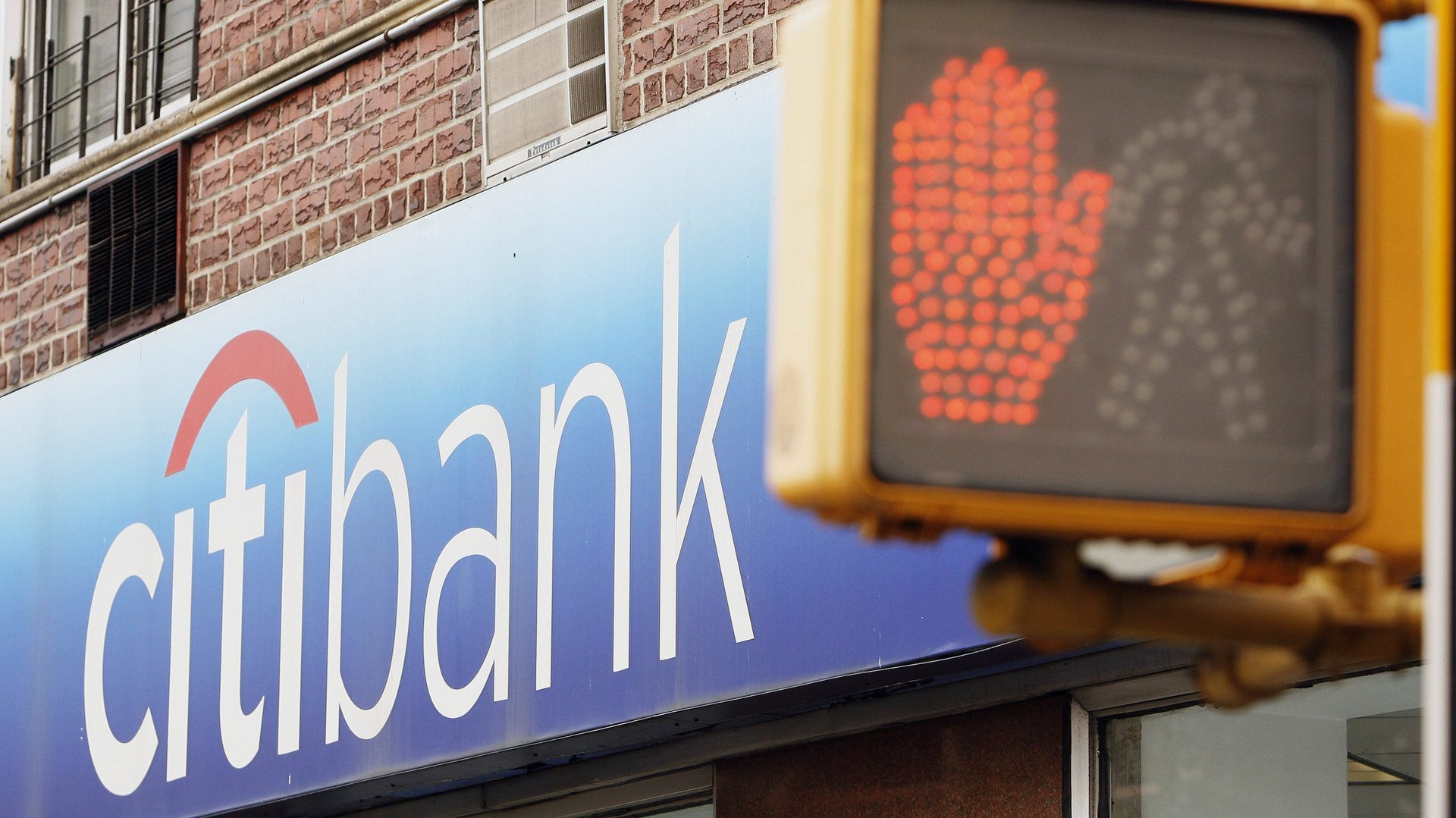
Mumbai-based Axis Bank is set to acquire Citigroup $C’s consumer business. The move follows the US banking giant’s exit from the country as part of a global strategy.
Axis Bank yesterday (March 30) announced that the $1.6 billion deal (12,325 crore rupees) to acquire Citibank’s arm, which includes the “credit card business, the wealth franchise, and a set of affluent customers.”
Join 500,000+ readers who start their day with Quartz.
By subscribing, you agree to our Terms of Service and Privacy Policy.
The move will boost the Indian lender’s presence in the retail segment. “Deals like these come once in a lifetime,” Axis Bank chief executive Amitabh Chaudhry said.
A pioneer in India’s credit cards space, Citi saw its outstanding credit cards decline from 2.6 million a year ago to 2.5 million by the end of February (pdf). This is in line with the overall shrinking witnessed by foreign lenders in the segment. On the other hand, Axis Bank, one of India’s biggest private players here, has a base of 8.6 million credit-card holders.
Citi, which has been present in India for over a century, is not the first foreign bank to exit or scale down operations.
Almost immediately after Citigroup’s announced its decision last year, FirstRand Bank, too, followed suit. South Africa‘s second-largest bank has $118 billion in assets in India.
Barclays, HSBC and Bank of America $BAC-Merrill Lynch, too, have downsized due to high capital requirements and costs.
Foreign banks have been struggling due to increased competition from domestic players, differences in compliance guidelines, and poor asset quality issues, among other reasons.
Some experts have blamed Indian banking’s bad-loan crisis.
“We believe our capital, investment dollars, and other resources are better deployed against higher returning opportunities in wealth management and our institutional businesses in Asia,” Citigroup’s global CEO Jane Fraser had said last year.
In 2013, RBI had announced guidelines for foreign banks, asking them to either operate through branch presence or set up wholly-owned subsidiaries to be treated at par with Indian banks. While the business models of some banks did not allow the subsidiary route, only a few got licences to open fresh branches.
Some have survived, though.
Deutsche Bank, Germany’s biggest lender, has 16 branches in India. Kaushik Shaparia, its chief country officer, does not see much benefit in the subsidiary model.
DBS Bank India, on the other hand, does. And it was allowed to acquire Lakshmi Vilas Bank in November 2020. This helped the Singapore-based lender to scale up operations in India to nearly 600 branches from 34 following the takeover.
