They don’t make them like Jagadish Chandra Bose anymore.
They don’t make them like Jagadish Chandra Bose anymore.
Born in Munshiganj district of Bangladesh (then part of India) on Nov. 30, 1858, Bose has a slew of achievements under his belt. He was a physicist, botanist, and even an author during his lifetime—all this even though he was not allowed access to science labs under the racist British rule.
Join 500,000+ readers who start their day with Quartz.
By subscribing, you agree to our Terms of Service and Privacy Policy.
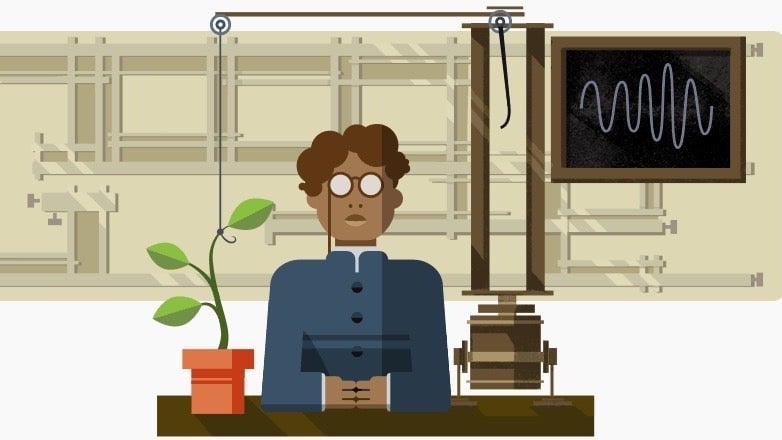
A Google $GOOGL Doodle across the US, Australia, India, and France is commemorating his contributions 158 years after he was born.
The renowned scientist is regarded as the father of wireless communication. At a public demonstration in Calcutta’s (now Kolkata) Town Hall in November 1895, Bose sent an electromagnetic wave across 75 feet, passing through walls to remotely ring a bell and to explode some gunpowder. He also invented the Mercury Coherer, a radio wave receiver that was later used by Guglielmo Marconi to build the first operational transatlantic two-way radio that was capable of communicating across 2,000 miles.
That’s not all.
In middle school biology, we all learn about how plants breathe, feel, and reproduce, much like humans do. These biological facts, which we now assume without a thought, were once unknown. And these were once the focus of Bose’s plant physiology research. He takes the credit for proving that plants have empathy.
Using a crescograph, a measuring tool he invented to track growth in plants by magnifying the process by 10,000 times, Bose proved they had nervous systems. He found that their growth changed according to different stimuli: pleasant sounds spurred it while harsh ones retarded it. He went on to test how plant tissues react to seasonal changes, chemical inhibitors, temperature variations and more—all to prove that they “feel pain and understand affection.”
In his nearly 80 years, Bose the polymath also pioneered the sci-fi genre in Bengali literature. In 1896, he published the novel Niruddesher Kahini (Story of the Untraceable) which tells readers how a bottle of hair oil could be used to divert a cyclone.
Even after the Doodle is no longer on Google’s landing page, Bose’s name will live on—on earth and beyond. A lunar crater of 91 kilometres diameter was christened “The Bose Crater” in honour of Bose, who was also knighted in 1917. It is adjacent to Crater Bhabha, dedicated to Homi Jehangir Bhabha, father of the Indian atomic energy programme.

