From streaming to cybersecurity to plant-based meat, an entire layer of the global economy has been built from scratch in the past 30 years — and it's still growin
Smith Collection/Gado / Getty Images
In 1995, the world's most valuable companies made cars, oil, and consumer goods. Microsoft $MSFT was the closest thing to a technology giant, and it sold software on floppy disks through retail stores. The internet existed but was used by fewer than 1% of the global population. Streaming was not a word applied to entertainment. Smartphones did not exist. Nobody had heard of cloud computing, the gig economy, or plant-based meat. The idea that a company with no physical inventory could become the world's largest retailer would have seemed implausible. The idea that people would pay a monthly subscription to watch television on their phones would have seemed stranger still.
Thirty years is not a long time in most historical contexts. It is roughly one working lifetime — the span between entering the workforce and approaching retirement. The people who were starting their careers in 1995 have spent those careers building, regulating, investing in, and working for industries that did not exist when they began. The transformation is not incremental. It is structural: a new layer of the global economy, built on digital infrastructure that itself barely existed three decades ago, now accounts for trillions of dollars in market value, hundreds of millions of jobs, and an increasing proportion of the daily activities of most of the world's population.
This list covers 15 industries that have been built, essentially from scratch, since the mid-1990s. The selection criteria are specific: each industry must represent a genuinely new category of economic activity — not simply a digital version of something that already existed, but a new thing that the economy did not have before. Streaming entertainment is not radio or television delivered differently. It is a new model of content distribution that has restructured how content is made, financed, distributed, and consumed. Ride-hailing is not a taxi service with an app. It is a labor market structure and a platform business model that had no precedent in the transportation industry.
Some of these industries are now mature and dominant. Others are still in the rapid growth phase that precedes either consolidation or collapse — it is not yet clear which. A few are already showing signs of the regulatory and competitive pressures that slow or reshape young industries. All of them are younger than most of the people working in them, which makes them, by the standards of economic history, extraordinarily new.
What drove the creation of all 15 is some combination of three enabling forces: the internet, the smartphone, and the willingness of capital markets in the early 21st century to fund businesses with no near-term profitability in exchange for the possibility of dominant market position. Remove any one of those three, and most of this list does not exist.

Peter Dazeley / Getty Images
In 1995, renting a film meant driving to a Blockbuster, choosing from the available physical copies, paying a rental fee, and returning the tape within 48 hours or incurring a late fee. In 1997, Netflix $NFLX launched as a DVD-by-mail service. In 2007, it added streaming. In 2013, it released its first original series. By 2024, it had 270 million subscribers in 190 countries and a market capitalization that exceeded the combined value of the major Hollywood studios at their peak.
Streaming entertainment is not simply television or film distributed through a different channel. It is a fundamentally different model of content production, distribution, and consumption that has restructured every aspect of the entertainment industry simultaneously. The subscription model — pay a flat monthly fee for unlimited access to a library — replaced the transaction model of rental and purchase and changed the economics of content in ways that are still playing out. Content that would never have been greenlit by a network focused on mass audiences — niche, foreign-language, formally experimental — became viable because the global subscriber base of a streaming platform is large enough to make small audiences economically meaningful.
The data advantage that streaming platforms have over traditional broadcasters — granular, real-time information about what every subscriber watches, for how long, at what point they stop, and what they watch next — transformed content commissioning from an intuitive process into a data-driven one. Netflix's decision to commission "House of Cards" in 2013 was made partly on the basis of data showing that its subscribers who liked David Fincher films also liked Kevin Spacey and the original British series. Traditional networks had no equivalent data and no equivalent decision-making process.
The competition for streaming dominance through the late 2010s and early 2020s — Disney $DIS+, HBO Max, Apple $AAPL TV+, Peacock, Paramount $PARA+ all launching within a few years of each other — produced an oversupply of content and a subscriber acquisition cost that became unsustainable. The industry is now consolidating, raising prices, and adding advertising tiers — a trajectory that looks increasingly like the cable television model it was supposed to replace.

Justin Paget / Getty Images
The gig economy — the labor market structure in which workers perform discrete tasks or short-term contracts for multiple clients through digital platforms rather than working as employees for a single employer — did not have a name or a recognizable form in 1995. TaskRabbit launched in 2008. Uber $UBER launched in 2009. Airbnb $ABNB launched in 2008. Fiverr launched in 2010. Within a decade, these platforms and their competitors had created a new category of work that employed hundreds of millions of people globally and generated revenues that challenged established industries.
The economic logic of the gig economy rests on platform technology — the ability of a digital intermediary to match supply and demand at scale, in real time, without owning the assets being deployed. Uber does not own vehicles. Airbnb does not own accommodation. TaskRabbit does not employ the workers it connects with clients. The platform captures a percentage of each transaction while the cost of assets, insurance, and labor rights falls on the individual workers and asset owners who use it. This model produced extraordinary capital efficiency — the ability to build enormous revenue-generating businesses with minimal balance sheet assets — and attracted investment on a scale that allowed platforms to subsidize their services below cost for long enough to establish dominant market positions.
The labor classification question — whether gig workers are employees entitled to benefits, protections, and minimum wage guarantees, or independent contractors who are not — became one of the most contested regulatory questions of the 2010s and remains unresolved in most jurisdictions. California's Proposition 22 in 2020, in which gig economy companies spent more than $200 million to pass a ballot initiative exempting them from a law that would have required them to classify drivers as employees, was the most expensive ballot initiative in California history and a demonstration of how much was economically at stake in the classification decision.
The pandemic accelerated the gig economy in some sectors — food delivery surged as restaurants closed — while exposing its vulnerabilities in others, as gig workers without employment protections lost income overnight with no safety net.

d3sign / Getty Images
Cybersecurity as an industry — the commercial business of protecting digital systems, networks, and data from unauthorized access, damage, or attack — did not exist in any meaningful form in 1995 because the threat landscape that makes it necessary barely existed. The internet was used primarily by academics and early adopters. Commercial transactions online were rare. The digitization of critical infrastructure, financial systems, healthcare records, and government operations that makes cyberattack consequential had not yet occurred.
By 2024, the global cybersecurity market was valued at over $200 billion and growing at roughly 10% per year, driven by a threat environment that has expanded in proportion to the digitization of every aspect of economic and social life. The industry encompasses endpoint security, network security, cloud security, identity and access management, threat intelligence, incident response, and a growing category of services organized around regulatory compliance — the legal obligation of organizations to protect the data of their customers and employees.
The economics of cybersecurity are unusual in ways that have no parallel in most industries. The defenders must protect every system, all the time. The attackers need to find only one vulnerability, once. This asymmetry — sometimes described as the attacker's advantage — means that the demand for cybersecurity is effectively unlimited, because the universe of potential attack surfaces expands with every new connected device, every new software update, and every new business process that moves online.
Nation-state cyberattacks — the use of offensive cyber capabilities by governments against other governments' infrastructure, elections, and military systems — have added a geopolitical dimension that has made cybersecurity a matter of national security policy as well as commercial competition. The 2010 Stuxnet attack on Iranian nuclear centrifuges, widely attributed to the U.S. and Israel, demonstrated that cyberweapons could produce physical destruction — a threshold whose crossing changed the strategic calculus of every government with digital infrastructure to protect.
Peter Dazeley / Getty Images
E-commerce — the buying and selling of goods and services over the internet — existed in rudimentary form in 1995 when Amazon $AMZN and eBay both launched, but as an industry it was negligible: total U.S. e-commerce sales in 1995 were approximately $300 million, a fraction of 1% of total retail. By 2023, global e-commerce sales exceeded $5.8 trillion, representing roughly 20% of all retail sales worldwide. The industry did not replace traditional retail — it restructured it, eliminating some categories entirely, reshaping others, and creating new supply chain, logistics, and fulfillment industries in the process.
Amazon's trajectory is the defining case study of e-commerce's economic logic. It began as an online bookstore, expanded into every retail category, built its own logistics network, launched a marketplace that allowed third-party sellers to use its platform and infrastructure, and in doing so created a business model in which the retail operation — historically low-margin — was cross-subsidized by Amazon Web Services' high-margin cloud computing revenue. The vertical integration of e-commerce platform, logistics infrastructure, and cloud services produced a competitive structure that no traditional retailer could replicate.
The logistics infrastructure required to fulfill e-commerce orders — the warehouses, the last-mile delivery networks, the same-day and next-day delivery expectations that Amazon established as the consumer standard — became a major industry in itself, reshaping land use around distribution centers, restructuring urban delivery systems, and creating millions of jobs in fulfillment and delivery while eliminating millions in traditional retail.
China's e-commerce industry developed differently and at greater scale than the Western model. Alibaba's Taobao and Tmall platforms, and later Pinduoduo and JD.com, built e-commerce ecosystems in which social commerce — the integration of shopping with social media and live video — became standard years before it achieved similar scale in the West. China's Singles Day shopping event, launched by Alibaba in 2009, generated $156 billion in sales in 2023 — more than the combined sales of Black Friday and Cyber Monday in the United States.
Myung J. Chun / Getty Images
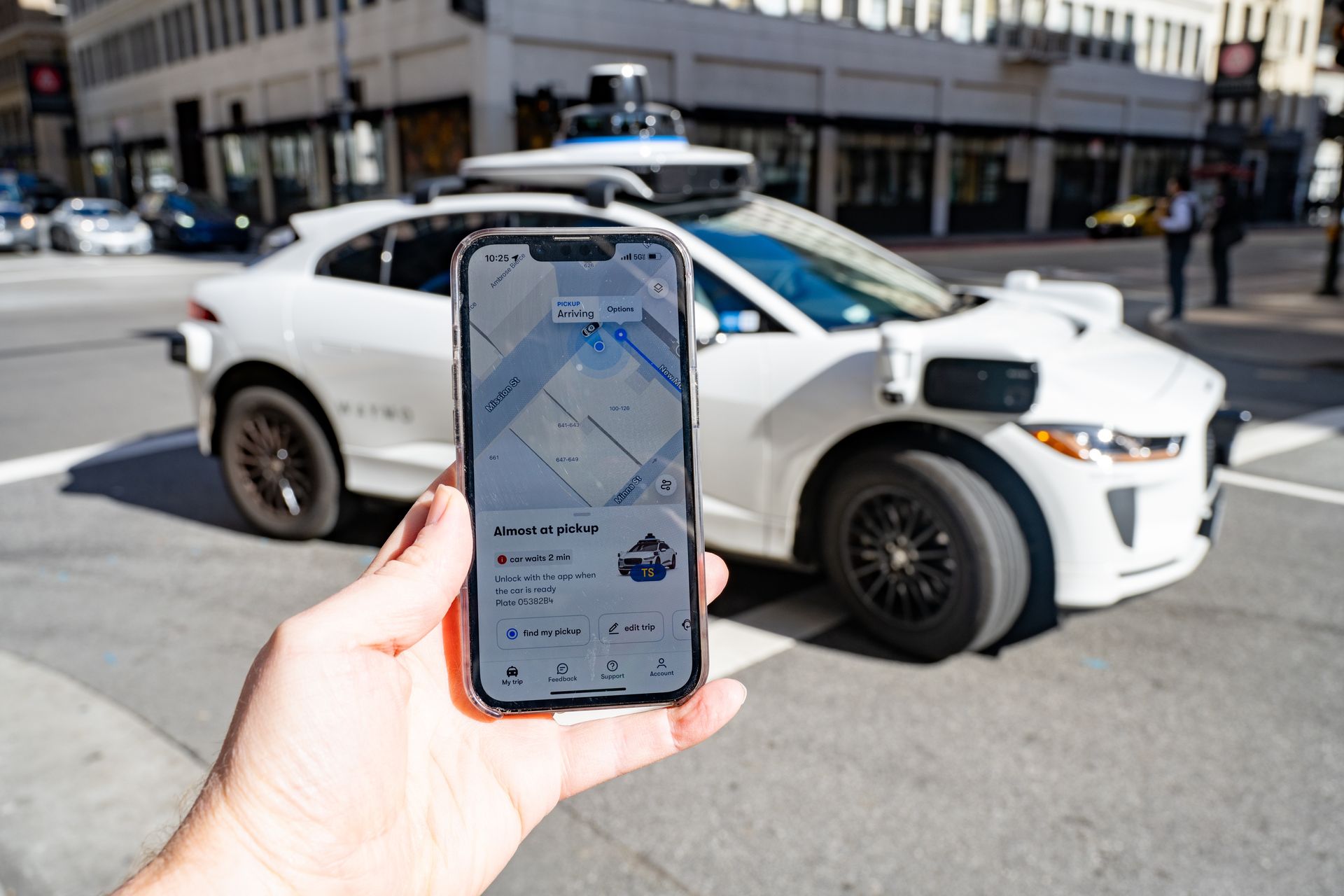
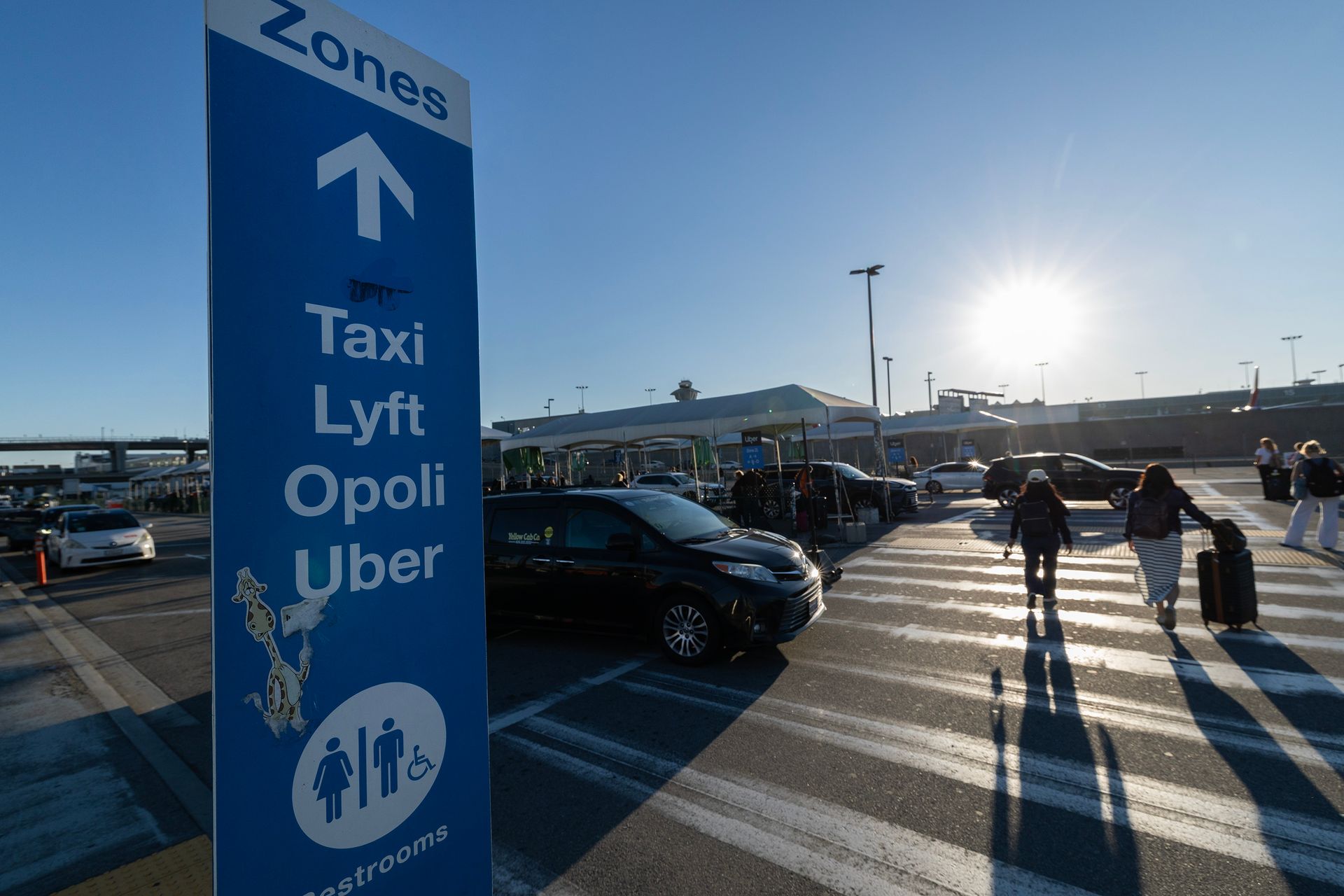
Before Uber $UBER launched in San Francisco in 2009, getting a car to drive you somewhere in most cities required either calling a licensed taxi dispatch, hailing one on the street, or having a personal or corporate car service. The process was inefficient, unreliable, and opaque on pricing. The licensed taxi industry was regulated, cartelized in most cities by medallion systems that limited supply, and had not meaningfully innovated in decades. Uber's model — an app that connected passengers with drivers in real time, with dynamic pricing, GPS tracking, and post-trip ratings — exploited the gap between consumer frustration and regulatory inertia with a speed and aggression that the taxi industry could not respond to effectively.
The ride-hailing industry — Uber, Lyft $LYFT in the U.S., Grab in Southeast Asia, Didi in China, Ola in India, Bolt in Europe and Africa — built a new transportation layer in most of the world's major cities within a decade. The economic model required enormous capital subsidies in the early years: fares were priced below cost to build rider habits and driver supply, with venture capital funding the difference. The companies involved collectively lost tens of billions of dollars in the pursuit of market share before achieving anything resembling sustainable unit economics.
The disruption extended beyond taxis. Ride-hailing reduced car ownership rates among urban young adults, challenged the economics of public transit in some markets, and created a new category of flexible part-time income that attracted millions of drivers. It also produced the labor classification dispute that became the central policy question of the gig economy — whether drivers were independent contractors, as the platforms insisted, or employees entitled to minimum wage and benefits guarantees.
The industry's economics remain challenged. Neither Uber nor Lyft has sustained consistent profitability, and the promise of autonomous vehicles — which would eliminate the driver labor cost that defines the business model — has remained further away than early optimists projected.
Leon Neal / Getty Images
Cloud computing — the delivery of computing resources including storage, processing, databases, and software over the internet on demand — did not exist as a commercial industry in 1995. IBM $IBM mainframes and corporate data centers provided computing infrastructure on a capital-expenditure model: organizations bought or leased servers, housed them in their own facilities, and managed them with their own IT staff. The model was expensive, inflexible, and inaccessible to small organizations and startups.
Amazon $AMZN Web Services, launched in 2006, defined the commercial cloud computing model: pay only for the resources you use, at any scale, with no upfront capital investment, managed by the cloud provider rather than the customer. The economic logic — pooling computing resources across many customers to achieve utilization rates and economies of scale that no individual organization could match — produced a cost advantage that was initially most relevant to startups and eventually became compelling for enterprises of every size.
The cloud computing industry — AWS, Microsoft $MSFT Azure, Google $GOOGL Cloud, and the broader ecosystem of software-as-a-service businesses built on top of them — became one of the most economically significant sectors of the technology economy. By 2024, the three major cloud providers generated combined revenues of over $250 billion per year, and the majority of enterprise software had migrated from on-premise installation to cloud delivery. AWS alone generates more operating profit than Amazon's entire retail business.
The cloud changed the economics of starting a technology business more fundamentally than any other single development since the personal computer. A startup in 2024 can launch a global-scale service on the first day of operation, paying only for the resources it uses, without the capital investment in servers and data centers that would have been necessary a decade earlier. The reduction in the cost and complexity of deploying software infrastructure contributed directly to the explosion of technology startups through the 2010s and the diversification of software development beyond major technology centers.

Boston Globe / Getty Images
The plant-based meat industry — companies producing food products designed to replicate the taste, texture, and nutritional profile of animal meat using plant-derived ingredients — did not exist in its current form in 1995. Beyond Meat was founded in 2009. Impossible Foods in 2011. Both achieved commercial-scale production and mainstream retail distribution in the mid-2010s, and Beyond Meat's IPO in 2019 — its shares rising 163% on the first day of trading — briefly made it one of the most discussed new public companies in years.
The industry emerged from the intersection of three trends: growing consumer awareness of the environmental impact of animal agriculture (which accounts for roughly 14.5% of global greenhouse gas emissions), concerns about the health effects of processed meat, and significant improvement in food technology that made plant-based alternatives taste credible enough to attract mainstream consumers rather than only committed vegetarians.
The technology involved — primarily the use of pea protein, soy protein, and methylcellulose to approximate the fibrous texture of meat, combined with heme (iron-containing compounds that produce the characteristic taste of meat) — represented genuinely new food science applied at commercial scale. The Impossible Burger's use of soy leghemoglobin, produced through fermentation in genetically engineered yeast, was a regulatory novelty that required a new category of FDA review.
The industry's growth trajectory since the 2019 peak has been more complicated than early projections suggested. Consumer adoption plateaued as price premiums over conventional meat remained high and novelty faded. Beyond Meat's market capitalization fell from over $14 billion at peak to under $1 billion by 2023. The longer-term trajectory of cultivated meat — grown directly from animal cells without slaughter — and precision fermentation products may prove more transformative, but both remain pre-commercial at meaningful scale.

GABRIEL BOUYS / Getty Images
The creator economy — the industry built around individuals who produce content for digital platforms and generate income from advertising revenue, brand partnerships, subscriptions, merchandise, and direct fan payments — did not exist in 1995 because the platforms that make it possible did not exist. YouTube launched its partner program, which allowed creators to monetize their videos through advertising revenue sharing, in 2007. Instagram's influencer marketing ecosystem developed through the early 2010s. Patreon launched in 2013. Substack in 2017. TikTok's creator fund in 2020.
The scale of the creator economy by the mid-2020s is significant: estimates of the total number of people who earn income from content creation range from 50 million to 200 million globally, depending on the threshold used. The top tier — full-time creators earning above median income from their content — numbers in the millions. YouTube alone pays out more than $70 billion to creators over a three-year period, according to its own figures.
The economic model of the creator economy inverted the traditional media industry structure. Traditional media employed professional content producers and distributed their work to passive audiences. The creator economy enabled individuals to build direct relationships with audiences, capture a significant share of the advertising revenue their content generates, and diversify their income across multiple revenue streams without the intermediation of a publisher, broadcaster, or record label.
The creator economy has produced genuine wealth for a small number of individuals — the top YouTube channels, the most-followed Instagram accounts, the highest-earning Substack newsletters — while the economics for the majority of creators remain precarious and the platforms retain the ability to change revenue-sharing terms, algorithmic reach, or content policies in ways that can eliminate a creator's income overnight. The power asymmetry between individual creators and the platforms they depend on is the industry's defining structural tension.

NurPhoto / Getty Images
Financial technology — the industry of companies using software and digital infrastructure to deliver financial services outside or in competition with traditional banking and financial institutions — was nascent in 1995 and has become one of the most heavily invested sectors of the technology economy. PayPal $PYPL, founded in 1998, was the first fintech company to achieve significant scale. The broader industry — encompassing digital payments, mobile banking, peer-to-peer lending, robo-advisory investment services, cryptocurrency exchanges, and buy-now-pay-later services — developed rapidly through the 2010s as smartphone penetration created the distribution infrastructure for mobile financial services.
The economic opportunity fintech addressed was the gap between what traditional banks offered and what consumers and businesses needed. Traditional banking was slow, expensive, geographically constrained, and designed for customers who fit a standard credit and income profile. Fintech companies exploited specific gaps: international money transfers that traditional banks charged high fees for (Wise, formerly TransferWise, launched in 2011), small business lending that banks had retreated from after the 2008 financial crisis (Kabbage, OnDeck), investment management that required minimum balances that excluded most retail investors (Betterment, Wealthfront), and payments that worked on mobile devices in markets with low banking penetration (M-Pesa in Kenya, launched in 2007, became the most successful mobile money platform in the world).
The most consequential fintech development by economic scale is digital payments. The shift from cash and physical card transactions to digital payments — Stripe processing payments for internet businesses, Square $SQ enabling card acceptance for small merchants, Alipay and WeChat Pay replacing cash in China at a scale unmatched anywhere else — has created infrastructure that now handles trillions of dollars of transactions annually and has effectively become the plumbing of the digital economy.
The regulatory response to fintech has varied dramatically by market. The European Union's Open Banking directive, requiring banks to share customer data with third-party providers on customer request, enabled a generation of fintech services built on bank account data. The U.S. regulatory environment has been more fragmented. China's decision to impose significant restrictions on Ant Group — Alibaba's fintech arm, which had built the world's largest money market fund and was preparing what would have been the world's largest IPO before regulators intervened in 2020 — demonstrated that fintech growth at sufficient scale attracts regulatory attention that can reshape the industry rapidly.
Bloomberg / Getty Images
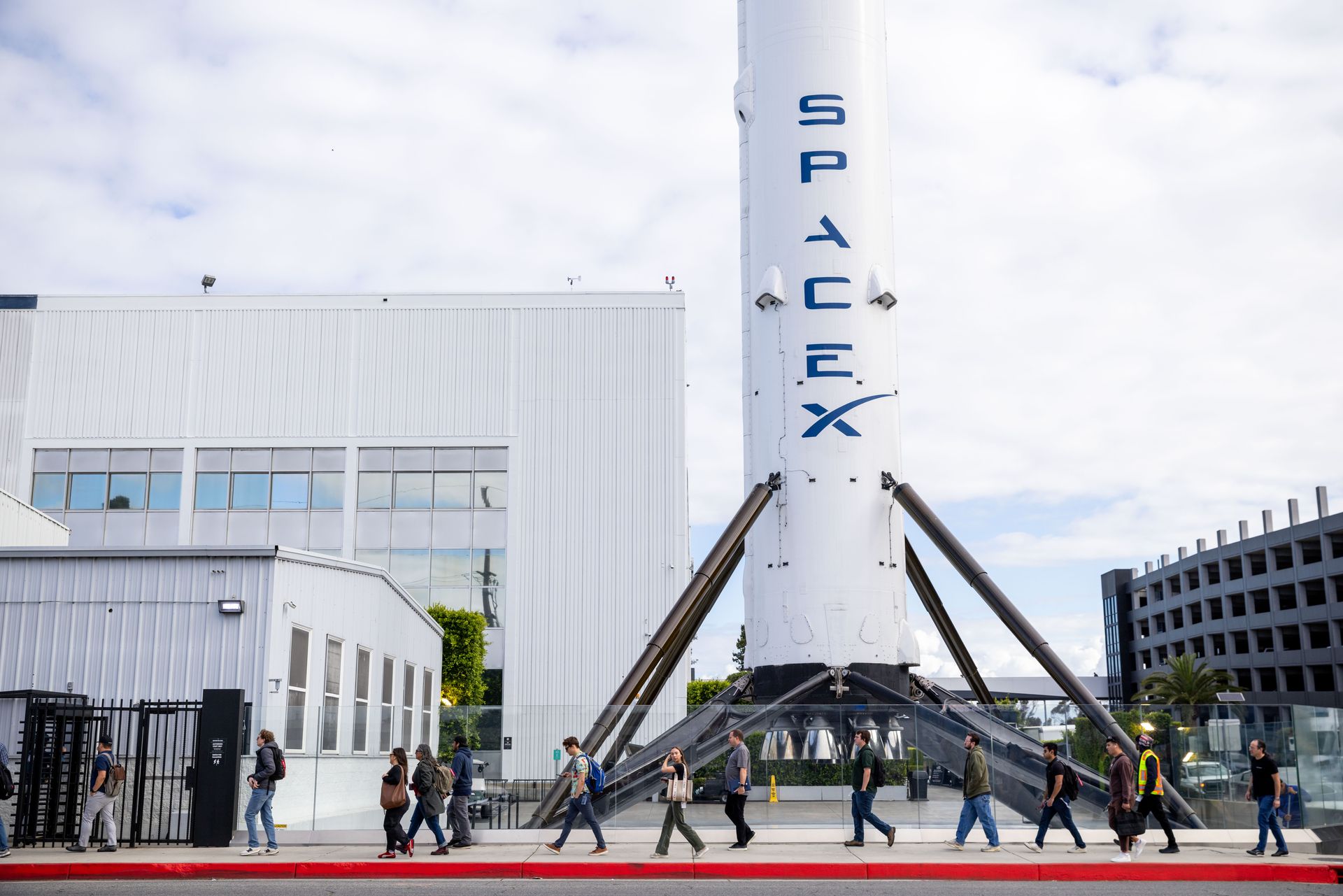
The commercial space industry — private companies designing, launching, and operating rockets, satellites, and eventually crewed spacecraft for commercial customers — was not an industry in 1995. Space was the domain of government agencies: NASA, the European Space Agency, Roscosmos. The few private companies involved were prime contractors to governments, building hardware to government specification under government contracts. The idea of a private company independently developing and launching rockets was speculative.
SpaceX, founded by Elon Musk in 2002, changed the industry's structure by demonstrating that private capital and engineering talent, organized without the procurement processes and political constraints of government agencies, could develop launch vehicles faster and cheaper than the established aerospace industry. The Falcon 9's first successful landing of a reusable orbital-class rocket stage in December 2015 — a technical achievement that the aerospace establishment had considered either impossible or uneconomical — reduced the cost of launch by a factor that made entirely new categories of space-based business viable.
The cost reduction produced a satellite proliferation that is transforming multiple industries simultaneously. SpaceX's Starlink constellation — over 6,000 satellites providing broadband internet coverage globally by 2024 — is the largest satellite constellation in history and is providing internet access to locations that no terrestrial infrastructure reaches. OneWeb, Amazon $AMZN's Project Kuiper, and others are building competing constellations. The Earth observation industry — satellites collecting high-resolution imagery, radar data, and multispectral data for agriculture, insurance, commodities trading, and government intelligence — has grown from a handful of government-operated systems to hundreds of commercial satellites providing daily or near-daily coverage of every point on Earth.
The industry's direction over the next decade is shaped by the tension between SpaceX's dominant market position — it now launches more mass to orbit than all other launch providers combined — and the competitive and regulatory pressure that dominance is beginning to attract.

Xinhua News Agency / Getty Images
The Human Genome Project, completed in 2003, produced the first complete sequence of the human genome at a cost of approximately $2.7 billion over 13 years. By 2024, a human genome could be sequenced for less than $200 in under 24 hours. That 10-million-fold reduction in cost in two decades is one of the most dramatic technological learning curves in history — faster than Moore's Law for semiconductors — and it has created a genomics industry that did not exist in 1995 and is now reshaping medicine, agriculture, and the forensic sciences simultaneously.
The commercial genomics industry encompasses direct-to-consumer genetic testing (23andMe, launched in 2006, had genotyped over 14 million customers by 2023), clinical genomic diagnostics for rare disease, cancer genomics (identifying the specific genetic mutations driving a patient's tumor to guide treatment selection), pharmacogenomics (using a patient's genetic profile to predict drug response and dosing), and the development of gene therapies that treat disease by correcting the underlying genetic error rather than managing its symptoms.
CRISPR-Cas9 gene editing technology, developed into a practical tool by Jennifer Doudna and Emmanuelle Charpentier (who received the Nobel Prize in Chemistry in 2020 for the work) and others between 2012 and 2015, added a capability that the genomics industry of 1995 could not have imagined: the ability to make precise, targeted edits to the DNA of living organisms. The first CRISPR-based medicine, a treatment for sickle cell disease, was approved by the FDA in December 2023 — less than 11 years after the technology was first described.
The industry raises ethical questions that the regulatory frameworks of most countries are still working through: the appropriate limits of genetic editing in human embryos, the privacy implications of genetic databases, the terms on which genetic data collected by consumer testing companies can be used for research and shared with law enforcement.

The San Diego Union-Tribune / Getty Images
Digital health — the industry of using digital technology to deliver, improve, and expand healthcare — existed in embryonic form in 1995 as a set of academic projects and early electronic medical record systems. The telemedicine component — delivering clinical consultations remotely using video or asynchronous messaging — was technically possible but commercially and regulatorily marginal: most insurance systems did not reimburse remote consultations, most physicians were not equipped to deliver them, and most patients had neither the broadband connection nor the device that would make receiving them practical.
The COVID-19 pandemic compressed a decade of adoption into approximately three months. Regulatory bodies in the U.S., Europe, and elsewhere temporarily relaxed the restrictions on remote prescribing and cross-state practice that had constrained telemedicine growth, and the practical necessity of avoiding in-person contact drove both patients and providers to adopt remote consultation at scale. U.S. telehealth visits increased by roughly 4,000% in April 2020 compared to April 2019, according to CDC data. The behavioral shift, once made, proved sticky: post-pandemic telemedicine use stabilized well above pre-pandemic levels.
The broader digital health industry encompasses remote patient monitoring (wearable devices tracking cardiac rhythms, glucose levels, and other physiological parameters and transmitting data to clinical teams), AI-assisted diagnostics (algorithms trained on medical imaging that detect cancers and other conditions from X $TWTR-rays and scans), mental health apps (a category that grew rapidly through the pandemic), and electronic health records systems that are still the subject of major implementation and interoperability challenges in most healthcare systems.
The economic scale of the industry reflects the size of the healthcare markets it addresses. Global digital health investment exceeded $57 billion in 2021, though it contracted significantly in the following years as higher interest rates reduced venture capital activity across all sectors. The underlying demand drivers — aging populations, chronic disease burden, healthcare system capacity constraints, and the demonstrated efficacy of remote monitoring for specific conditions — are structural rather than cyclical.

Bloomberg / Getty Images
Environmental, social, and governance investing — the practice of incorporating non-financial criteria relating to environmental impact, social practices, and corporate governance into investment decisions — existed in rudimentary form in the 1990s as socially responsible investing, primarily through funds that excluded tobacco, weapons, and gambling companies. It has grown into a $30 trillion industry that has restructured how capital is allocated across the global economy, how corporations report and are evaluated, and how asset managers market their products to institutional and retail investors.
The growth of ESG from a niche ethical investment category to a mainstream asset management framework was driven by several simultaneous forces: the growing evidence that climate change represents a material financial risk to asset valuations, the development of reporting frameworks (the Task Force on Climate-Related Financial Disclosures, the Global Reporting Initiative) that gave investors standardized data on corporate environmental and social performance, and the demonstrated correlation in some studies between high ESG scores and financial outperformance — a relationship that attracted mainstream institutional capital that had no ethical mandate but had a performance one.
The green bond market — debt instruments whose proceeds are designated for environmental or climate projects — grew from virtually nothing in 2007, when the European Investment Bank issued the first labeled green bond, to over $500 billion in annual issuance by the early 2020s. The market created a direct financing channel between institutional capital and renewable energy infrastructure, green buildings, and sustainable transport that bypassed the traditional project finance structures that had previously been the primary mechanism for such investments.
The industry has attracted significant criticism from two directions simultaneously. From one side, greenwashing — the practice of marketing financial products as environmentally responsible without substantive underlying commitment — has been documented extensively, leading to regulatory enforcement actions against major asset managers in the U.S. and Europe. From the other side, ESG has become politically contested in the United States, with several Republican-governed states passing legislation restricting state pension funds from considering ESG factors, framing the practice as ideological rather than financial. The tension between financial and political definitions of what ESG is — an investment methodology or a political agenda — is unresolved and likely to shape the industry's development through the late 2020s.

CFOTO / Getty Images
The modern electric vehicle industry — private companies designing and manufacturing battery-electric vehicles for mass consumer markets — did not exist in 1995 in any commercially meaningful form. General Motors $GM' EV1 was released in limited lease quantities in 1996 and cancelled in 2003. Tesla $TSLA was founded in 2003, delivered its first car in 2008, and went public in 2010 at a market capitalization of $2 billion. By 2021, Tesla's market capitalization exceeded $1 trillion — more than the combined value of Toyota $TM, Volkswagen, Mercedes-Benz, General Motors, Ford $F, BMW, Honda $HMC, and Stellantis $STLA. The speed of that value creation, and the industrial disruption it signaled, had no precedent in the history of the automotive industry.
The enabling technology was the lithium-ion battery — the same chemistry that made the laptop and the smartphone portable — applied at the scale required to power a vehicle across a useful range. Tesla's decision to use thousands of small cylindrical lithium-ion cells, packaged in a sophisticated battery management system, rather than pursuing a purpose-built automotive battery format, was the engineering bet that made the Model S's 265-mile range possible in 2012, at a moment when the automotive establishment believed consumer-grade EVs were limited to 100 miles per charge.
The growth of the EV industry forced every major automotive manufacturer to accelerate electrification programs that had been treated as long-term research projects. Volkswagen's commitment in 2017 to electrify its entire fleet, following the diesel emissions scandal that destroyed the credibility of its clean diesel strategy, was the clearest signal that the industry had accepted the transition as inevitable. The Chinese EV market, driven by government policy, consumer subsidies, and domestic manufacturers including BYD — which overtook Tesla as the world's largest EV seller by volume in 2023 — developed independently of and faster than the Western market.
The infrastructure challenge — the charging network required to make EVs practical for drivers without home charging — remains the primary constraint on adoption rates in markets where it has not been systematically addressed. The industry's trajectory over the next decade is shaped by battery cost curves, charging infrastructure investment, the availability of critical minerals including lithium, cobalt, and nickel, and the policy environment in major markets, where EV mandates and internal combustion engine phase-out dates have been set, revised, and contested by incoming governments.

Social media
GRICHKA BEYSSON-LEANDRI / Getty Images
Social media as an industry — the business of building and monetizing platforms where users create, share, and engage with content and connect with other users — did not exist in 1995. Friendster launched in 2002. MySpace in 2003. Facebook $META in 2004. YouTube in 2005. Twitter $TWTR in 2006. Instagram in 2010. TikTok in 2016. The speed of the industry's growth from zero to a combined market value of trillions of dollars within two decades is one of the most rapid accumulations of economic value in the history of capitalism.
The business model that made social media economically viable — advertising sold against the attention of users, targeted with precision using the behavioral data the platforms collected — was not obvious from the start. The early social platforms were uncertain about how to generate revenue. Facebook's advertising model, refined through the late 2000s, demonstrated that behavioral targeting — showing advertisements to users based on their demonstrated interests, relationships, and purchasing behavior — was far more valuable to advertisers than the demographic targeting that traditional media had offered. The result was an advertising market in which Facebook and Google $GOOGL captured the majority of growth in digital advertising for most of the 2010s.
The social consequences of the industry — its effects on political discourse, mental health, privacy, and the economics of journalism — became the defining regulatory and cultural debate of the 2010s and 2020s. The platforms' role in the spread of misinformation, the amplification of extreme content, and the disruption of the advertising economics that had supported local journalism produced a political response that ranged from congressional hearings to the European Union's Digital Services Act. Whether the industry will be significantly reshaped by regulation remains genuinely uncertain.
TikTok's dominance from the late 2010s onward introduced a new model within the industry — algorithmic content discovery that shows users content from accounts they do not follow, based entirely on predicted engagement — that changed how content creators built audiences and how platforms managed the relationship between content supply and user attention.