
Quartz
Subscribe
Quartz
Subscribe
Edition
Business News
A.I.
Technology
Money & Markets
Leadership
Lifestyle
Latest

Get Quartz in your inbox

Free daily briefing on global business news.

Business News
AirlinesAutomobilesFoodPharmaceuticalsPolitics & GovernmentRetail & EcommerceSpace & AerospaceEarnings
Technology
A.I.ComputingConsumer TechSpace & AerospaceEarnings
Money & Markets
Economic IndicatorsMarketsPersonal FinanceEarnings
Lifestyle
Cars & BikesCollectingEntertainmentFood & Fine DiningHealth and FitnessReal EstateTravel
Quartz

Global business news for a smarter world

Topics

  • Business News
  • Money & Markets
  • Tech & Innovation
  • Generation A.I.
  • Lifestyle
  • Leadership

Products

  • Daily Brief
  • Weekly Digest
  • Member Benefits
  • Quartz Pro

Legal

  • Sitemap
  • About
  • Accessibility
  • Privacy
  • Terms of Service
  • Advertising

© 2026 Quartz Media, Inc. All rights reserved.

Markets

Intel stock surges after Trump says Apple will build chips in the U.S.

Trump said Apple agreed to work with Intel on chip design and production, extending Intel's string of high-profile foundry wins
By Cris Tolomia·2 min read·Updated July 3, 2026
Add QZ to Google
Intel stock surges after Trump says Apple will build chips in the U.S.

David Paul Morris / Getty Images

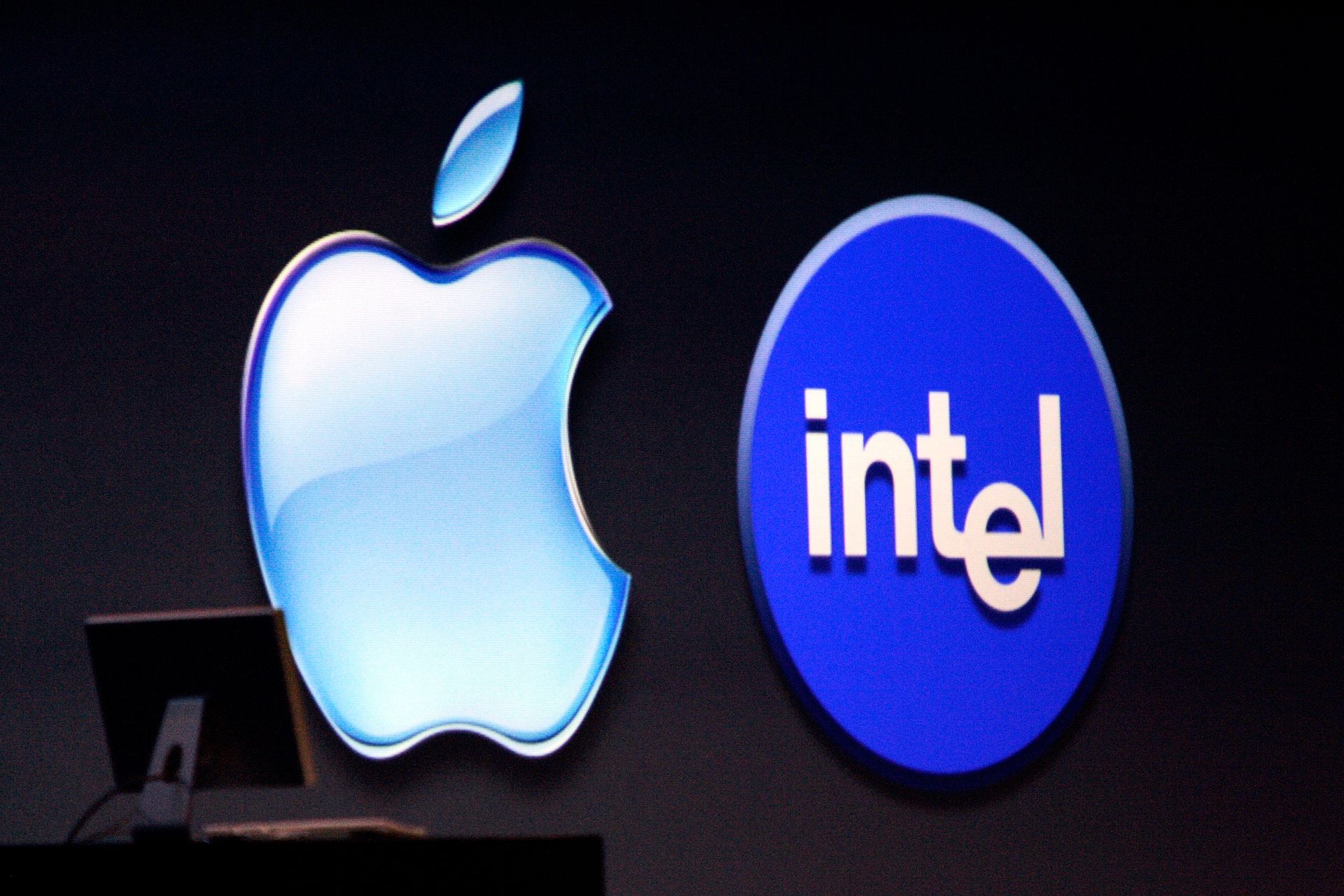
Intel $INTC stock rose as much as 9% in premarket trading Thursday after President Donald Trump said Apple $AAPL has agreed to work with the chipmaker to design and manufacture semiconductors in the United States.

Trump made the announcement in a Truth Social post, saying he had intervened to support Intel because the U.S. needed to produce its own chips domestically. "Apple has agreed to work with Intel to design and build its Chips in America," he wrote.

Neither Apple nor Intel confirmed the partnership.

A preliminary arrangement between the two companies — under which Intel would produce certain chips for Apple — had already been in the works following more than a year of negotiations, according to The Wall Street Journal. Landing Apple as a customer would anchor consistent revenue for Intel while lending credibility to its foundry operation, which has struggled to keep pace with TSMC $TSM.

For Apple, partnering with Intel would reduce its dependence on a single supplier. TSMC, which currently handles the bulk of Apple's chip production, is under intense capacity pressure from AI-focused customers such as Nvidia $NVDA and AMD $AMD, according to Reuters.

In his Truth Social post, Trump framed the Apple agreement as the latest in a series of commitments he has secured for Intel. He said Nvidia previously agreed to produce chips with Intel, and that Elon Musk's Terafab project — described as a large chip factory — would be designed in partnership with Intel's technology team.

Recruiting external clients for its chip production operation has been a central goal of the turnaround strategy that CEO Lip-Bu Tan has pursued since taking over early last year, according to Bloomberg. Intel disclosed this week that its next-generation manufacturing process, known as 18A, has moved into early-stage production.

As part of a government agreement struck last year, Washington acquired a position of close to 10% in Intel alongside a commitment of around $10 billion toward domestic factory construction and expansion. Since that deal was made public, shares have quadrupled in value.

Daily Brief

The essential business news, delivered fresh every morning.

Join 500,000+ readers who start their day with Quartz.

By subscribing, you agree to our Terms of Service and Privacy Policy.

Related

Business NewsBipartisan ex-FCC officials are calling the early ABC license review an attack on free speech
RetailShein is disclosing an FTC investigation as it readies for Hong Kong IPO
MarketsThe Dow rallies 659 points on falling oil and earnings beats — even as chips kept dropping
Business NewseBay and former executives agreed to pay $56 million to settle blogger stalking case
Economic IndicatorsU.S. consumer confidence is slipping for the third straight month as job market worries deepen