
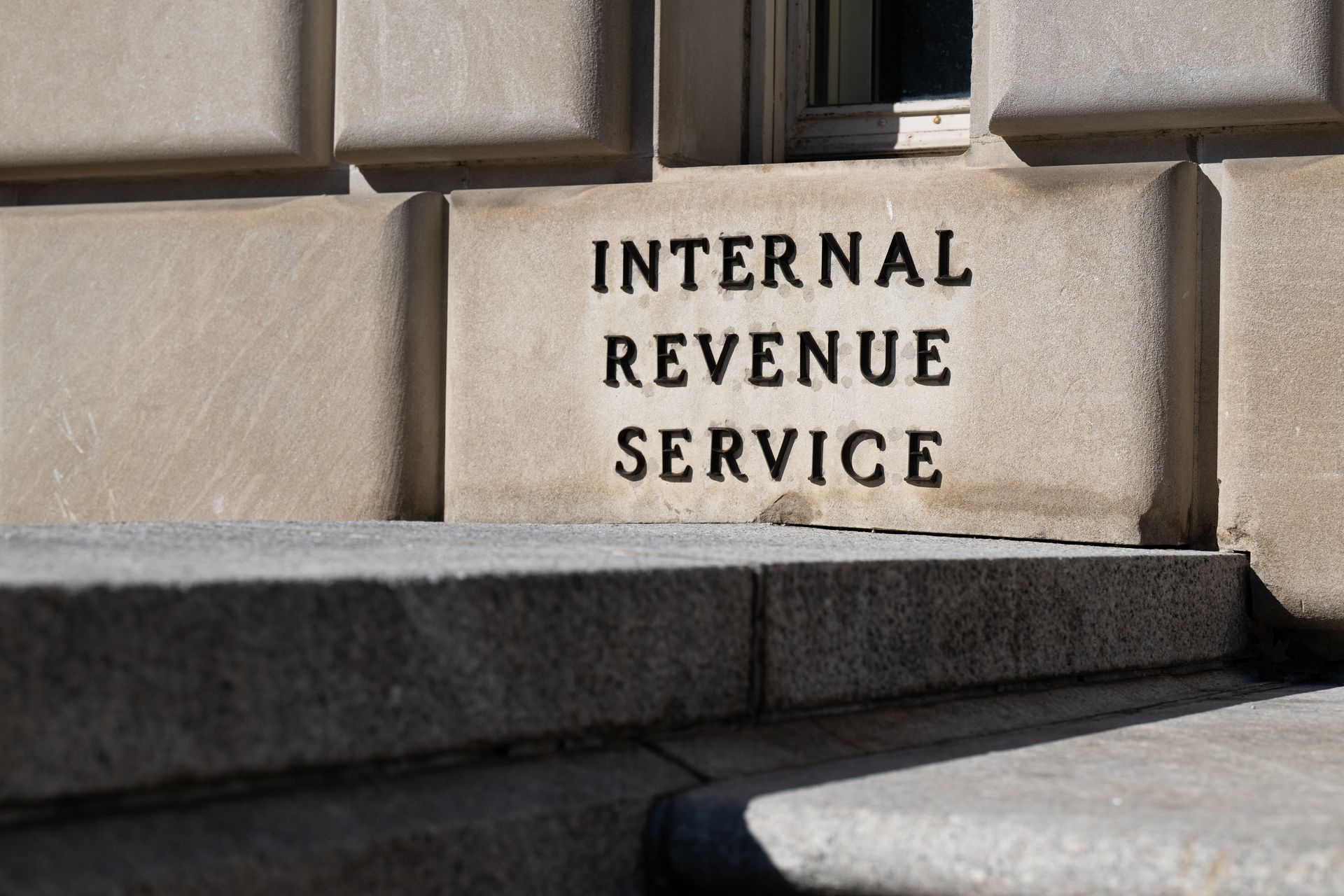
The Internal Revenue Service began furloughing employees on Wednesday, shuttering most services as the federal shutdown stretches into its second week with no end in sight.
On Wednesday morning, the IRS notified its 74,300 employees that "most operations are closed." The agency had federal funding available for the first few days of the shutdown, which allowed it to carry out its usual tax enforcement responsibilities. But that money ran dry on day eight, triggering the mass furloughs.
Now much of the agency is going dark until Congress restores federal funding. The Taxpayer Advocate Service — an independent group that aids taxpayers with filing returns, obtaining refunds and more — said its offices across the country were now closed. Audits will also be paused.
However, other functions, such as the IRS collecting tax revenue, are deemed essential and will continue for the length of the shutdown. About 40,000 IRS employees will be exempt from the furloughs, according to a Treasury plan.
The IRS did not immediately respond to a request for comment.
Notably, furlough notices that were sent to IRS employees promised back pay, citing a 2019 federal law that President Donald Trump signed. "The employees must be compensated on the earliest date possible after the lapse ends, regardless of scheduled pay dates," the notices said.
Attrition has chipped away at the IRS, an embattled agency under the second Trump administration. The organization has shed about a quarter of its workforce since the start of the year through a deferred resignation program and other incentives put in place by Elon Musk's Department of Government Efficiency, or DOGE.
Edward Jenkins, a tax professor at Penn State University and tax consultant, invoked a phrase attributed to famous boxer Mike Tyson: "Everybody has a plan until they get punched in the face."
"Now we're looking at not two punches, but three," Jenkins said. "You've got the fact that the IRS has already been neutered with a loss of 25,000 seasoned employees, and they're 75% of what they used to be. Now you've got a shutdown and they can't go to work."
Jenkins added that the agency must administer a mammoth tax law that was approved by Trump over the summer, updating tax forms and instructions for taxpayers to comply. If the standoff over government funding drags on, it could threaten filing season, he said.
The IRS has seen a carousel of figures cycle in and out of the top slot at the IRS. On Monday, Treasury Secretary Scott Bessent appointed Frank Bisignano to be the "CEO" of the IRS, a newly created job overseeing the agency that avoids Senate confirmation. Bisignano already holds a job as Social Security Commissioner.
An IRS organizational chart from August shows that a quarter of leadership slots are still vacant.
The White House has been weighing reinterpreting the law to argue that federal employees aren't entitled to retroactive pay after all. That move drew criticism from Democrats who argued Trump was using government workers as a bargaining chip in the shutdown fight.
Even some Republicans in Congress broke with Trump on the issue. "It has always been the case. It is tradition and I think it is statutory law that federal employees be paid," House Speaker Mike Johnson told reporters on Wednesday. "And that’s my position."