The JPMorgan Chase CEO cited geopolitical threats and rising government deficits as risks markets have not fully priced in
Victor J. Blue/Bloomberg via Getty Images
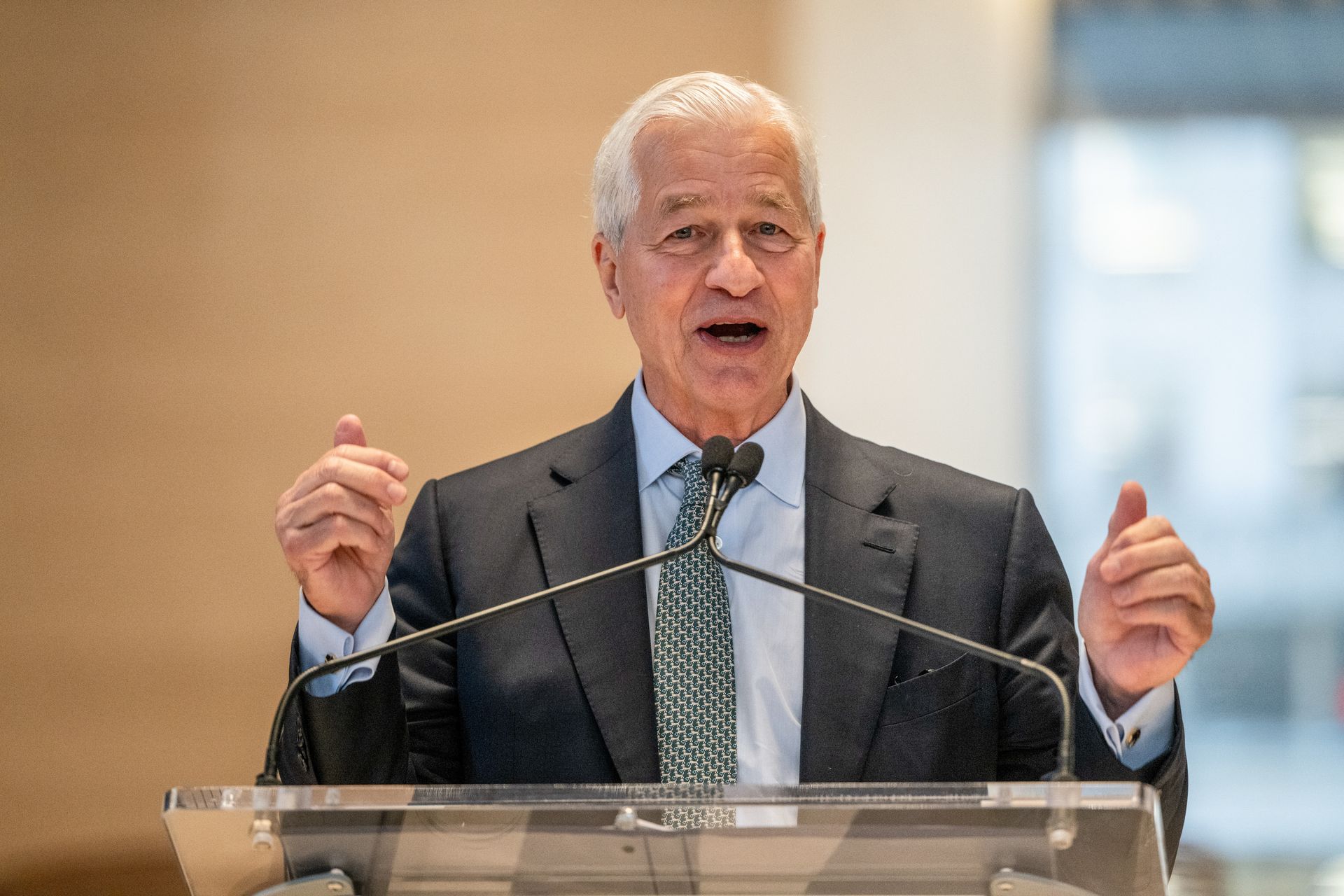
Dimon made the comments in an interview with the Master Investor Podcast with Wilfred Frost, recorded July 16 and released Monday. "I do think those risks are probably bigger than other people think," he said, citing the ongoing conflicts in Ukraine and the Middle East, U.S.-China tensions, and an increase in military expenditure at a time when government deficits are expanding.
On Treasurys, Dimon said he sees little reason to own long-dated government debt. "Even if inflation was 2%, the 10-year bond should probably be at 4-4.5%," he said, noting that rates are close to that level already and adding, "I don't understand what the upside is." He said inflation has run above 3% for nearly five years.
Dimon was similarly cautious on equities. While he said he would consider an individual stock that represented a strong opportunity, he would not be a buyer of the broader market at current valuations, according to CNBC.
He acknowledged the global economy has grown more resilient — partly because of lower energy dependence than in previous decades — but warned that resilience does not rule out a sudden shift. "You may need more straws in the camel's back to cause that tipping point," he said. On government debt loads, Dimon said persistent U.S. budget deficits would eventually drive interest rates higher as bond markets demand greater compensation to finance the debt. "My view is it will become a problem," he said.
Dimon's cautionary tone puts him at odds with the prevailing mood in financial markets. The S&P 500 is up close to 10% on the year, buoyed by resilient consumer spending, cooling inflation, and a rush of enthusiasm for artificial intelligence.
The interview came days after JPMorgan Chase posted the highest quarterly profit in its history, with second-quarter net income of $21.2 billion driven by a surge in trading revenue and a gain on its Visa $V stake. In announcing those results, Dimon described the U.S. economy as showing "notable resiliency" while simultaneously flagging geopolitical instability, persistent inflation, and stretched asset valuations as threats "shifting below the surface like tectonic plates."
Dimon also addressed artificial intelligence in the podcast, comparing the current wave of AI investment to the early internet era. "Will it in total pay off? Probably, just like the internet did. Will it pay off the way you expect and the timetable you expect? Definitely not," he said.
Join 500,000+ readers who start their day with Quartz.
By subscribing, you agree to our Terms of Service and Privacy Policy.
