The Federal Reserve's preferred inflation measure fell 0.1% in June from the prior month, the Bureau of Economic Analysis reported on Thursday, as a temporary truce in the war with Iran pulled energy prices lower.

The PCE price index's annual rate eased to 3.7% from May's 4.1%, driven by a drop in energy prices tied to a brief Iran ceasefire
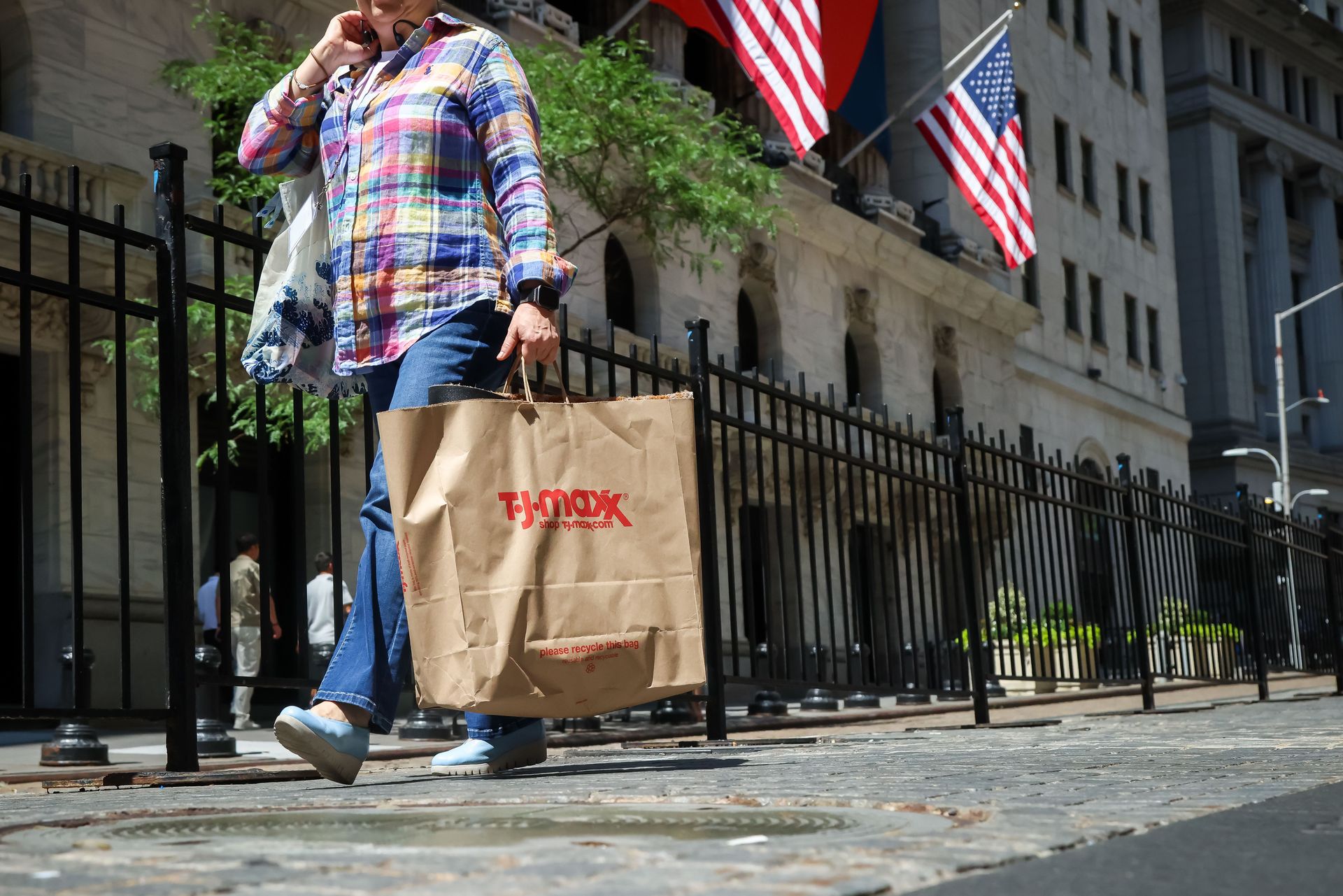
Michael Nagle/Bloomberg via Getty Images
The Federal Reserve's preferred inflation measure fell 0.1% in June from the prior month, the Bureau of Economic Analysis reported on Thursday, as a temporary truce in the war with Iran pulled energy prices lower.
June's PCE reading put the index's year-over-year rate at 3.7%, a step down from the 4.1% recorded in May. The core PCE measure, which strips out food and energy, gained 0.1% for the month and was 3.3% higher than a year ago, according to BEA. Both the headline and core readings remain well above the Fed's 2% target.
Household spending advanced 0.3% in June in nominal terms, and after adjusting for inflation, real PCE came in 0.4% higher. Services drove the bulk of the increase, with spending on services up $58.2 billion and spending on goods up $7.0 billion.
Personal income increased $54.9 billion, or 0.2%, in June. The gain was led by increases in compensation, personal income receipts on assets, and government social benefits, partly offset by a decrease in farm proprietors' income. Disposable personal income also rose 0.2%, and the personal saving rate came in at 2.7%.
The June PCE data covers a period when a U.S.-Iran ceasefire briefly took hold in mid-June, allowing oil prices to retreat, according to the New York Times. That truce has since broken down, and fighting resumed in July — suggesting the one-month drop in headline inflation may not persist. As recently as Wednesday, the United States struck back on Iran after it fired missiles at American bases in Jordan.
The Federal Reserve held its benchmark interest rate steady in a range of 3.5% to 3.75% at its meeting on Wednesday, though three officials dissented in favor of a quarter-point increase, according to the New York Times. The three dissenting votes came from Beth M. Hammack of the Federal Reserve Bank of Cleveland, Neel Kashkari of the Minneapolis Fed, and Lorie K. Logan of the Dallas Fed. Fed Chair Kevin M. Warsh said at a post-meeting news conference that the cooler June inflation data did not factor significantly into the decision to hold rates.
The next PCE release, covering July, is scheduled for August 26, 2026, according to BEA.
Join 500,000+ readers who start their day with Quartz.
By subscribing, you agree to our Terms of Service and Privacy Policy.