
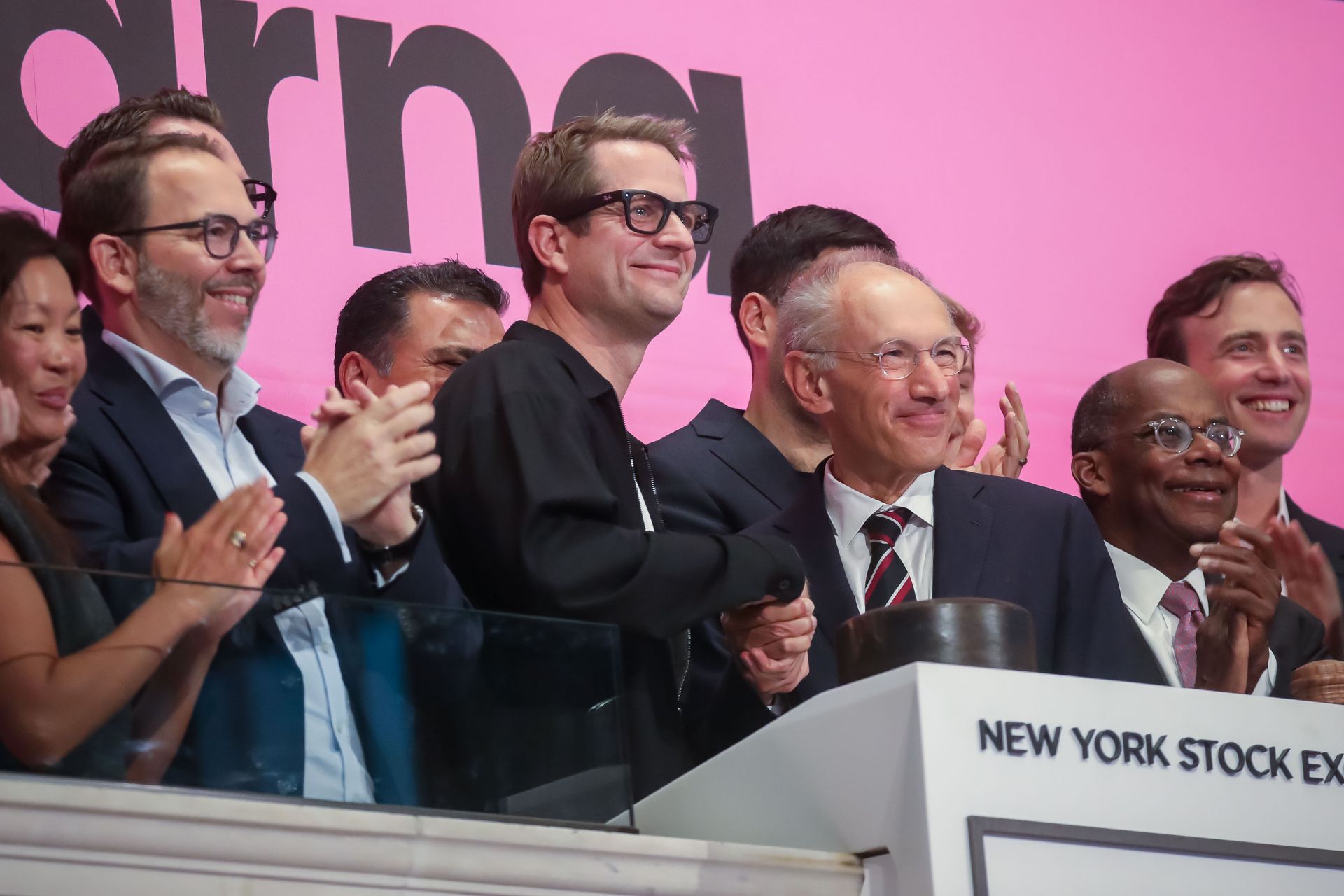
Klarna shares jumped 30% as it began trading on the New York Stock Exchange Wednesday, opening at $52 on its public markets debut.
Klarna’s stock market debut signals renewed momentum for IPOs as fintech companies look to win over cautious investors
Michael Nagle/Bloomberg via Getty Images
Klarna shares jumped 30% as it began trading on the New York Stock Exchange Wednesday, opening at $52 on its public markets debut.
The Swedish buy now, pay later lender had priced shares at $40 the previous day, already above its expected initial public offering range, allowing it to raise $1.38 billion in the process and valuing it at $15 billion.
It has been a long time coming for the lender. Klarna launched in the U.S. in 2019 and has since made the country its biggest customer market. It was originally pencilled for a spring IPO in New York, but was forced to delay it amid tariff uncertainty.
The fintech firm is the first in a wave of high-profile firms going public this week, as a new fall season of big IPOs kicks off on Wall Street. Stablecoin firm Figure Technology is planning to float tomorrow and the Winklevoss twins’ crypto exchange, Gemini, will have its market debut on Friday.
"This [going public] is really an opportunity … primarily for new shareholders, our 111 million consumers and others to really partake in that journey to disrupt the financial services industry and be the next generation of personal finance," Klarna's chief financial officer Niclas Neglén told Reuters in an interview.
Samuel Kerr, head of equity capital markets at Mergermarket, said the $15 billion valuation was already "far from disappointing given it was above Klarna's price range and shows a continuing trend of issuers being conservative in initial valuation expectations to garner investor demand and to hopefully leave them wanting more.”
Founded in 2005, Klarna has become one of the biggest players in buy now, pay later. In March, Walmart $WMT agreed to make Klarna its sole provider of BNPL services to its customers, expanding its American footprint further.
The company is also trying to convince investors that it can pivot to be a digital bank. The IPO is being seen by some analysts as an acid test of whether investors buy into that vision.
The incoming wave of IPOs comes after President Donald Trump roiled markets in April, stalling an expected wave of offerings during the spring. Now the fall calendar is being set as a second chance, though political uncertainty, volatile rates, and the risk of renewed trade tensions remain potential headaches.
"A strong aftermarket could convince other fintechs to take the plunge into public markets," said Russ Mould, investment director at AJ Bell. "The danger is that one good deal begets a few more and then a torrent of less good ones follows behind."
Some of Klarna’s long-term investors are expected to cash in, including venture capital big hitter Sequoia Capital, which sold 2 million of its 79 million shares in the IPO.
Co-founder and CEO Sebastian Siemiatkowski, who owns about 7% of Klarna, did not sell any shares. He told CNBC Wednesday that the IPO is a "little bit like a wedding. You prepare so much and you plan for it and it’s a big party. But in the end – marriage goes on.”
Join 500,000+ readers who start their day with Quartz.
By subscribing, you agree to our Terms of Service and Privacy Policy.