From Latin grammar to Japanese loanwords, here is how 20 languages left their mark on the vocabulary English speakers use every day

Credit: Barnabas Davoti / Pexels
English speakers who think they speak one language are, in a sense, speaking dozens at once. Open a dictionary and check the word origins in brackets. A different history emerges from the one taught in most grammar classes. English is not a single inheritance. It is an accumulation, built from centuries of invasion, trade, empire, migration and borrowing.
A plate of ketchup carries a Chinese fish sauce name that traveled west through Malay ports. A game of chess ending in checkmate preserves a Persian phrase about a stranded king. The word ukulele reached English by way of Hawaii, carried there by Portuguese immigrants and their small guitars.
This mixing did not start with modern globalization. It began before English existed as a distinct language, and it never stopped. Old English was already a Germanic language reshaped by Latin-speaking missionaries. Viking settlers then added a layer of Old Norse vocabulary so deep it replaced English pronouns. French-speaking nobility arrived after 1066 and rebuilt the language of law, government and food. Each wave left words behind. Some replaced native terms outright. Others sat alongside them and split into different registers, which is why English still serves beef on the table but raises cows in the field.
Later centuries opened new sources as English speakers traveled, traded, colonized and were colonized in turn. Arabic supplied precise vocabulary for mathematics and commerce. Dutch shaped the language of ships and sailing. Hindi and Sanskrit entered through empire, and later through yoga studios and wellness brands. Yiddish reshaped American slang. Chinese and Japanese added food, technology and pop culture terms within living memory.
The 20 languages below are not a complete account of every source English has drawn on. That list would run into the hundreds. They are among the most consequential: the languages that left the deepest and most traceable marks on words English speakers use without a second thought. Tracing them is one way of tracing the actual history of contact between English speakers and the rest of the world.

Credit: Görkem Özdemir / Pexels
Latin arrived in Britain twice before English speakers ever wrote a word of their own language. The Romans brought it first, during nearly four centuries of occupation that left place names and administrative terms behind. Starting in the sixth century, Latin-speaking missionaries brought Christianity to Anglo-Saxon England. They brought an entirely new vocabulary for religious life along with it: bishop, priest, monk, candle, school and altar all entered English during this period.
A third wave came centuries later, once English speakers reached back into Latin and Greek to build a modern vocabulary for law, science and scholarship. Many words that sound formal or technical today were deliberately coined from Latin roots during the Renaissance and after. Species, genius, vacuum, census, agenda, alibi, veto and forum all belong to this later, more literary borrowing.
What makes Latin distinct among the languages on this list is how many separate routes it took into English. Some Latin words came directly, through churchmen and scholars reading and writing in Latin. Others arrived secondhand, folded into the French that Norman nobility brought after 1066, since French itself grew out of spoken Latin. A word like justice reached English through French, but its root sits in the Latin justitia.
This layering explains a pattern native English speakers rarely notice. Many concepts have both a plain, everyday word and a more formal Latin-derived alternative sitting beside it. Ask versus interrogate. Fire versus incinerate. Motherly versus maternal. The plain version usually traces to Old English, while the formal one traces to Latin, often by way of French. Neither is more correct. They simply arrived at different times, for different purposes, and settled into different registers of the same language.
Legal and academic English still leans on Latin more than any other borrowed source. Terms like habeas corpus, quorum, referendum and curriculum are used in English exactly as written in Latin, without translation. That habit has continued from medieval courtrooms into modern institutions.
Credit: Barnabas Davoti / Pexels
Viking raids on England began in the late eighth century and eventually turned into permanent settlement. Norse settlers controlled a swath of northern and eastern England known as the Danelaw. For roughly two centuries, Old Norse and Old English were spoken side by side in the same communities. The two languages were close enough in structure that speakers of each could often make themselves understood to the other.
That closeness had an unusual effect. Rather than staying confined to specialized or borrowed-sounding vocabulary, Old Norse worked its way into the most basic layer of English: pronouns. The words they, them and their all replaced the native Old English equivalents. This kind of change is almost unheard of, since pronouns are among the parts of grammar most resistant to outside influence.
Everyday nouns and verbs shifted just as thoroughly. Sky, egg, knife, window, husband, leg, skin and sister all came from Old Norse. Many replaced or sat alongside native Old English words that meant something similar. Window is a particularly direct case. It comes from the Old Norse vindauga, meaning wind eye, a term for the unglazed opening that let air and light into early houses.
Old Norse also gave English several of its most common short verbs, including take, get, give, want and call. It added adjectives too, like ugly, wrong, happy and loose. These are not decorative or technical words. They sit at the core of ordinary sentences, which is part of why Old Norse influence is easy to overlook.
Place names carry some of the clearest physical evidence of Norse settlement. Towns ending in -by, from the Old Norse word for farm or settlement, include Whitby, Derby and Grimsby. Towns ending in -thorpe, meaning a small secondary settlement, include Scunthorpe and Cleethorpes. Both suffixes still mark the old boundaries of the Danelaw on a modern map of England.

Credit: Thomas Evraert / Pexels
William, Duke $DUK of Normandy, invaded England in 1066 and installed a French-speaking aristocracy. That ruling class controlled the country for roughly three centuries. English did not disappear during this period, but it absorbed an enormous amount of French vocabulary. Much of it landed in the domains the new rulers controlled: law, government, the church and fine living.
Government and legal English still show this influence directly. Words like parliament, jury, judge, verdict, attorney, sovereign and justice all entered English through Norman French. So did court, crime, evidence and prison. English had its own legal vocabulary before 1066, but much of it was replaced or pushed aside as French speakers ran the courts for generations.
Food terms tell an especially clear story about class. Anglo-Saxon peasants raised the animals, using native English words: cow, pig, sheep and calf. Norman nobility ate the meat, using French-derived words at the table: beef, pork, mutton and veal. That split between the word for a living animal and the word for its meat has survived in English for nearly 1,000 years. It is a fossil of who worked the land and who ate the results.
Fashion, art and taste absorbed French vocabulary just as thoroughly, both during the medieval period and in centuries since. Words like royal, duke, fashion, dress, wardrobe and cuisine arrived early. Later borrowings came in waves, since French remained the language of European high culture and diplomacy well into the modern era. Ballet, genre, cliché, entrepreneur, déjà vu and café all entered English long after the Norman conquest, through cultural contact rather than conquest.
French left English with more borrowed vocabulary than any language apart from Latin. The two are deeply intertwined, since French itself developed out of spoken Latin. A word that looks French on the surface often has a Latin root sitting one layer beneath it.

Credit: Hans Reniers / Unsplash
Greek entered English mostly at one remove, filtered through Latin, French or direct scholarly borrowing. Direct contact between Greek and English speakers was rare. Ancient Greek civilization gave later scholars a vocabulary for concepts European languages did not yet have words for. Philosophers, scientists and writers kept reaching back into Greek roots for centuries after Greek stopped being spoken by anyone nearby.
Some of the clearest borrowings came directly from Greek life and thought. Democracy, philosophy, theater, mathematics, drama, economy and politics all describe institutions the Greeks themselves built and named. English kept the Greek terms rather than inventing new ones. That pattern repeated as European scholars revisited Greek texts during the Renaissance and after.
Greek roots also became building blocks that English speakers still use to construct brand-new words. The suffix -ology, meaning the study of something, comes from Greek and appears in hundreds of English words, from biology to psychology to technology. Prefixes like tele- (distant), photo- (light) and bio- (life) work the same way, combining with other roots to name inventions and fields the Greeks never encountered.
This building-block quality makes Greek unusual among the languages on this list. Most borrowed languages contributed a fixed set of words tied to a particular historical contact. Greek instead supplied a toolkit that European languages, including English, have kept using for centuries. That includes technology that did not exist until the 20th century. Television is a hybrid case. Tele comes from Greek, while vision comes from Latin, combined into a single word for an invention neither the Greeks nor the Romans could have imagined.
Medicine and science lean on Greek roots more heavily than almost any other part of English vocabulary. That includes everything from anatomy and diagnosis to specialized terms coined for narrow fields of research.
Greek mythology added a different kind of vocabulary, describing personality types and states of mind. Panic comes from Pan, the Greek god associated with sudden, irrational fear among flocks and travelers in wild places. Nostalgia was coined from Greek roots in the 17th century by a Swiss medical student describing homesickness as a diagnosable affliction. The word only softened into its gentler modern sense much later.

Credit: burcubyzt_85 / Pexels
Arabic entered English mainly during the medieval period. Scholars in Latin Europe translated scientific and mathematical texts that had been preserved, expanded and in some cases originated within the Islamic world. Much of this scholarship was centered in cities like Baghdad, Cordoba and Cairo. Most of this vocabulary reached English secondhand, through Latin, Spanish or French, rather than through direct contact with Arabic speakers.
Mathematics owes some of its basic vocabulary to this route. Algebra comes from al-jabr, part of the title of a ninth-century treatise on equations. It was written by the Persian mathematician Muhammad ibn Musa al-Khwarizmi, who worked in Arabic at Baghdad's House of Wisdom. His own name, rendered into Latin as algorismus, eventually gave English the word algorithm, now central to computing rather than the arithmetic it originally described.
Trade and everyday commerce contributed a different set of words. Sugar comes from Arabic sukkar. Cotton comes from qutn. Coffee traces back to Arabic qahwa, though it reached English by way of Turkish and Dutch rather than directly. Magazine originally meant a storehouse, from Arabic makhazin, before narrowing to mean a periodical publication centuries later in English.
Everyday household and scientific vocabulary rounds out the list. Alcohol comes from al-kuhl, originally a fine cosmetic powder before the meaning shifted toward distilled spirits. Admiral comes from an Arabic title meaning commander. Sofa and mattress both trace back to Arabic words for a raised platform or cushioned surface used for sitting and reclining.
Spain and Sicily served as two of the main bridges through which Arabic vocabulary entered European languages, including English. Spain was under Islamic rule for several centuries during the medieval period. This is why so many Arabic-derived words in English carry a Spanish or Latin shape rather than looking like a direct transliteration from Arabic script.
Arabic's scientific legacy also survives overhead, in the night sky. Star names such as Aldebaran and Betelgeuse were adapted from Arabic phrases recorded by medieval astronomers. Those scholars preserved and expanded Greek astronomical knowledge at a time when much of it had been lost to Latin Europe. Their star catalogs still shape the names astronomers use today.

Credit: ᛟᛞᚨᛚᚹ / Unsplash
Persian reached English through several overlapping routes. Direct trade along the Silk Road was one. The influence of Persian-speaking courts on neighboring cultures was another. A third came through transmission via Arabic and Turkish, both of which absorbed heavy Persian vocabulary of their own during centuries of political and cultural contact.
Chess supplied one of the clearest examples. Checkmate comes from the Persian phrase shah mat, meaning the king is left helpless or ambushed, not literally dead as popular explanation sometimes suggests. The phrase traveled with the game itself, through Arabic and then French, before settling into English in something close to its original form.
Marketplaces and travel gave English several everyday nouns. Bazaar comes directly from the Persian word for marketplace. Caravan describes a group of travelers crossing difficult terrain together. It entered English through French but traces to Persian karwan. Khaki, now a color and a fabric, comes from the Persian word for dust, chosen for uniforms designed to blend into arid terrain.
Gardens and plants left a quieter mark. Paradise ultimately comes from an old Persian word for a walled garden or park, pairidaeza. That word passed into Greek, then Latin, then French, before arriving in English with a much broader meaning than its original, literal one. Jasmine and lilac both trace to Persian plant names, carried into English through French and Arabic intermediaries as the flowers themselves spread west.
Persian rarely gets full credit for its role in English vocabulary. Part of the reason is that so many Persian words arrived already reshaped by Arabic, Turkish or French along the way. Tracing a word like paradise back through four languages to its Persian root says something about how thoroughly medieval trade routes mixed vocabulary long before anyone called it globalization.
Orange followed a similarly winding path. Both the fruit and the color named after it trace back through French and Arabic to the Persian narang, an older name for the same fruit. Centuries of use in phrases like a norange eventually dropped the initial sound, leaving English with an orange rather than a norange.

Credit: alex ohan / Pexels
The Ottoman Empire controlled trade routes linking Europe, the Middle East and Central Asia for centuries. Turkish absorbed vocabulary from Persian and Arabic even as it exported its own words westward into European languages, including English.
Food supplied one of the most familiar borrowings. Yogurt comes from the Turkish yoğurt. English adopted both the word and the food relatively directly, with spelling that has varied over time before settling into its current form. The dairy product itself long predates its arrival in English-speaking countries, tied to a much older tradition of fermented milk across Central Asia and the Middle East.
Urban life contributed another common word. Kiosk comes from the Turkish köşk, originally describing an open pavilion or summerhouse in a garden. That meaning shifted in English toward the small freestanding stall or booth still called a kiosk today.
Flowers carried a longer, layered journey. Tulip comes from a Turkish word connected to the shape of a turban, since the flower's petals reminded early observers of turban cloth. The word passed through several European languages during the tulip's rapid spread through 16th-century gardens. It arrived in English already reshaped from its Turkish original.
Military and social vocabulary added a final layer. Horde comes from the Turkish ordu, meaning camp or army. It entered English through other European languages during centuries of contact along the edges of the Ottoman Empire. As with several other languages on this list, many Turkish words did not travel directly into English. They arrived after passing through French, Italian or another intermediary, picking up small changes in spelling and meaning along the way.
Even the color turquoise carries a Turkish connection, though an indirect one. The name comes from French for Turkish stone, a reference to the trade routes through Turkish territory that carried the blue-green mineral into Europe. The name has nothing to do with where the stone itself was mined. Trade routes like these explain why so many words tied to specific goods, from textiles to spices, picked up a Turkish-sounding name in European languages. The name often had little to do with where the goods actually originated.

Credit: Giusi Borrasi / Unsplash
Italian shaped English vocabulary in two distinct bursts, separated by several centuries and driven by different kinds of contact. The first came during the Renaissance, as Italian art, architecture and music set the standard the rest of Europe borrowed from directly, vocabulary and all.
Music still carries some of the clearest evidence. Piano, opera, soprano, tempo, solo, sonata and concert all entered English as Italian musical terms, adopted along with the musical forms and instruments themselves. Studio and fresco arrived alongside Italian painting techniques. Gallery and stucco followed a similar path through Italian architecture and interior design.
The second burst came much later, driven by mass Italian immigration to the U.S. and U.K. in the late 19th and early 20th centuries. This wave brought food into English far more than art or music. Pasta, pizza, spaghetti, espresso, cappuccino and broccoli all entered common use as Italian immigrant communities opened restaurants and shops in cities across both countries. They introduced regional Italian cooking to a much wider audience than it had ever reached before.
Some Italian words describe cultural roles or social types rather than objects. Paparazzi comes from Paparazzo, a photographer character in Federico Fellini's 1960 film La Dolce Vita. The word entered English almost immediately after the film's release, describing intrusive celebrity photographers in a way no earlier English word quite captured.
Everyday greetings crossed over too. Ciao entered English as an informal hello or goodbye, borrowed directly from Italian with no attempt to translate its older, more literal meaning tied to servitude. Centuries of casual use wore that original sense away completely.
What separates Italian's two waves of influence is timing and audience. Renaissance-era borrowings entered through educated elites who studied Italian art and music directly, often without ever setting foot in Italy. The later food vocabulary entered through immigration and everyday commerce. It spread from Italian American neighborhoods outward until dishes like pizza became as ordinary in English as any native word.

Credit: Jacqueline Larson / Pexels
Spanish entered English through several distinct channels. Direct contact with Spanish colonies in the Americas was one. The long Spanish presence in what later became the American Southwest was another. A third came from Spanish serving as a relay language for words that originated in indigenous American languages.
Ranching and geography supplied a large share of Spanish loanwords in American English specifically. Ranch, rodeo, canyon, plaza, patio, corral and lasso all describe features of land use and daily life across the Southwest. Spanish-speaking settlers established these words well before English speakers arrived in large numbers. Many of these words remain far more common in American English than in British English, a reflection of geography rather than any difference in the words themselves.
Weather and wildlife added another set of terms. Tornado and hurricane both trace back to Spanish, though hurricane's roots run deeper still. The word comes from a Taino word for a storm god that Spanish colonizers picked up in the Caribbean before passing it on to English. Mosquito, meaning little fly, is a straightforward Spanish diminutive that needed no translation at all.
Spanish also served as a bridge for words with no Spanish origin of their own. Chocolate comes from the Nahuatl xocolatl. Tomato comes from the Nahuatl tomatl. Both were absorbed into Spanish during the colonization of Mexico before spreading into English and other European languages. In these cases, Spanish did not invent the word so much as carry it, a relay role it played for several indigenous American languages during the same period.
Music and food rounded out the everyday vocabulary. Guitar has deeper roots stretching back through Arabic and Greek, but it arrived in English in something close to its Spanish shape. Vanilla is a more direct Spanish contribution, from vainilla, a diminutive referring to the pod's sheath-like shape.

Credit: Allie / Pexels
Portuguese sailors and traders reached West Africa, India, China and Brazil earlier than most other European powers. That early contact left English with a small but distinctive set of borrowed words. Many describe animals, foods and goods that Portuguese traders encountered before English speakers did.
Wildlife supplied some of the clearest examples. Cobra comes from the Portuguese cobra de capelo, meaning hooded snake, shortened in English to just the first word. Flamingo likely comes from Portuguese or Spanish, tied to a word for flame, describing the bird's color rather than its shape or behavior.
Food and trade goods carried a similar pattern. Cashew comes from Portuguese caju, itself borrowed from a Tupi word in Brazil. It describes a fruit and nut that Portuguese traders exported to markets that had never encountered either before. Marmalade comes from marmelada, a Portuguese preserve originally made from quince rather than the citrus fruit English speakers now associate with the word.
Molasses comes from the Portuguese melaço, describing the thick, dark syrup left over from refining sugar. That byproduct became a valuable commodity of its own across Portuguese and, later, British sugar colonies in the Americas.
Two words with more complicated histories show how thoroughly Portuguese trade reshaped vocabulary during centuries of contact along the West African coast. Fetish comes from feitiço, a Portuguese word for charm or sorcery. Portuguese traders applied it to objects used in West African religious practice, and English and French later broadened it into a much wider set of meanings. Palaver comes from palavra, the ordinary Portuguese word for speech or word. It took on a specific meaning of prolonged negotiation or talk during Portuguese trade contact along the African coast. That sense stuck in English long after the original, more neutral Portuguese meaning faded from view.
Albino, describing a person or animal lacking pigmentation, comes from the Portuguese albo, meaning white. Portuguese traders applied the term, and it entered scientific and everyday English largely unchanged.

Credit: Hector John Periquin / Unsplash
Dutch trading power in the 16th and 17th centuries put the Netherlands at the center of European shipping. English absorbed a specialized vocabulary of nautical terms as a direct result of competing and cooperating with Dutch sailors, merchants and shipbuilders across the same waters.
Ships and sailing supplied the largest cluster of borrowings. Yacht comes from jacht, a fast pirate-chasing vessel. Skipper comes from schipper, meaning ship's captain. Cruise, freight, deck, buoy and dock all entered English through Dutch maritime vocabulary, at a time when Dutch shipbuilding and navigation techniques led much of Europe.
Dutch settlement in North America left a second, distinct layer, concentrated around New Amsterdam, the Dutch colony that later became New York. Cookie comes from koekje, a small cake. Boss comes from baas, meaning master. English speakers in the colony wanted a word for a supervisor that did not carry the class connotations of master or lord, and boss filled that gap. Santa Claus descends from Sinterklaas, the Dutch name for Saint Nicholas, reshaped by English speakers into an entirely new figure with different traditions attached. Waffle and sleigh followed the same route into English, tied to Dutch food and winter travel rather than to city government or trade.
Art and everyday life added a final set of words. Easel comes from ezel, originally meaning donkey, extended to describe the wooden frame that holds a canvas the way a pack animal holds a load. Landscape comes from landschap, borrowed directly into English during the 17th century alongside Dutch painting techniques that were setting new standards across Europe at the time.
Coleslaw offers a small, clear example of how thoroughly some Dutch words have blended into English without most speakers noticing. It comes from koolsla, meaning cabbage salad. Today it reads as a fully English compound word rather than a foreign borrowing, which is exactly what happened to much of the Dutch vocabulary absorbed during this period.

Credit: Magda Ehlers / Pexels
German has contributed fewer words to English than French, Latin or Old Norse. The borrowings it did contribute tend to describe concepts English lacked a precise word for. That is part of why so many German loanwords survive in English with their original spelling intact.
Food supplied some of the earliest and most familiar examples. Hamburger and frankfurter both take their names from German cities, Hamburg and Frankfurt. Both foods traveled to the U.S. alongside German immigrants in the 19th century. Pretzel and delicatessen followed a similar path, arriving in English through the same waves of German immigration.
Academic and psychological vocabulary makes up a second, later cluster. It reflects Germany's influence on 19th and early 20th century scholarship. Zeitgeist, meaning the spirit of an age, and angst, describing a deep, often existential anxiety, both entered English through German philosophy and psychology. German-language scholarship led much of the world in those fields during this period. Kindergarten, literally children's garden, arrived through German educational theory and kept its German form entirely, without ever being translated into an English equivalent.
A smaller set of German words describe specific feelings or situations with unusual precision. Schadenfreude, pleasure taken in another person's misfortune, has no single-word English equivalent. That is likely why English speakers borrowed the German term directly rather than inventing a new one. Doppelganger, describing a double or look-alike, and wanderlust, a strong desire to travel, both fill similar gaps. Gestalt describes a unified whole perceived as more than the sum of its parts. It entered English through German psychology in the early 20th century and kept its German spelling entirely, much like kindergarten before it.
German's influence on English tends to cluster around ideas rather than everyday objects. It concentrates in philosophy, psychology and abstract emotional vocabulary more than in food, trade or geography, which sets it apart from most of the other European languages on this list.

Credit: Anirudh / Unsplash
British colonial rule in India lasted roughly two centuries. It was formalized first through the East India Company and later through direct crown administration. That long period of rule left English with a substantial vocabulary borrowed from Hindi, Urdu and related languages grouped under the broader label Hindustani.
Housing and daily life supplied some of the most familiar words. Bungalow comes from bangla, meaning in the style of Bengal, describing a house type that British colonists adapted and exported around the world under an Indian name. Veranda, cot and dinghy all entered English the same way, describing objects and features of everyday South Asian life that colonial administrators adopted alongside the local vocabulary for them.
Clothing and grooming added a distinct cluster of words still in daily use. Shampoo comes from champo, a verb meaning to press or knead, originally describing a type of head massage rather than a hair product. Pajamas comes from pae jama, meaning leg garment. Its roots reach further back into Persian, before the word settled into Hindi and Urdu and then into English through colonial contact. Bandana comes from bandhna, meaning to tie, describing the tie-dye technique used to make the cloth rather than the cloth itself.
A few words carry a harder edge, reflecting how colonial administrators described people and behavior they encountered. Loot comes from lut, meaning stolen goods or plunder. Thug comes from thag, originally describing a member of a specific group associated with robbery and violence in colonial-era accounts. The word later broadened in English into a generic term for a violent criminal.
Jungle, from jangal, meaning wasteland or forest, shows how thoroughly some borrowed words have shifted meaning over time. The original term described any uncultivated land, not specifically a dense tropical forest. That narrower sense developed only after the word settled into English usage.

Credit: Ivan S / Pexels
Sanskrit entered English through a different route than most of the languages on this list. It arrived not through trade, conquest or immigration, but largely through scholarship, translation and, later, the global spread of yoga and meditation practices rooted in Indian religious and philosophical tradition.
British scholars in India took a serious academic interest in Sanskrit texts starting in the late 18th century. Sir William Jones, a judge and linguist working in Calcutta, argued in 1786 that Sanskrit, Greek and Latin shared a common ancestor. That claim helped found the modern field of comparative linguistics. Scholarly attention like this brought a steady trickle of Sanskrit vocabulary into English academic writing over the following century.
Religious and philosophical terms make up the largest share of Sanskrit loanwords still in use. Karma, describing the consequences of one's actions, and nirvana, describing a state of release from suffering, both entered English through translations of Buddhist and Hindu texts. Guru, meaning teacher, and mantra, a repeated sound or phrase used in meditation, followed the same scholarly path before spreading into much broader, more casual English usage.
The 20th century added a second wave, driven by the spread of yoga and meditation to Western countries, especially the U.S. Yoga itself, meaning union, along with chakra and ashram, moved from specialized religious vocabulary into the language of gyms, wellness brands and lifestyle marketing. That shift in register moved these words far from their original context.
Avatar offers a striking case of a word crossing into an entirely new domain. It originally described a deity's descent into physical form in Hindu tradition. English speakers adopted it in the late 20th century to describe a user's digital representation online, a meaning now far more common in everyday English than the original religious one.
Juggernaut, now used for an unstoppable force, traces to Jagannath, a Sanskrit name for a form of the Hindu deity Vishnu. Colonial-era English visitors witnessed festival carts carrying his image through crowds. Based on exaggerated and inaccurate reports, they assumed devotees were regularly crushed beneath the wheels, a grim image that shaped the word's modern meaning.

Credit: Kim Stewart / Unsplash
Yiddish is a Germanic language historically spoken by Ashkenazi Jewish communities across Central and Eastern Europe. It entered American English mainly through immigration, especially the large wave of Jewish immigrants who settled in New York City in the late 19th and early 20th centuries.
Much of Yiddish's influence landed in informal, conversational English rather than in formal writing. That is part of why so many Yiddish loanwords carry a distinctly casual or humorous tone. Schmooze, meaning to chat in a friendly, often self-interested way, and kvetch, meaning to complain persistently, both filled gaps in English that no single native word covered quite as precisely.
Yiddish also gave English several words for social types and awkward situations. Klutz describes a clumsy person. Schmuck, though it can carry a cruder original meaning in Yiddish, became a general term for a foolish or contemptible person in English. Chutzpah describes a kind of shameless boldness or audacity, often used with a note of grudging admiration rather than pure criticism.
Food vocabulary crossed over just as directly. Bagel entered English alongside the food itself. So did nosh, meaning to snack, which functions in English as both a verb and a noun for a light snack. Blintz and knish followed the same path, tied closely to the foods they name rather than taking on broader meanings.
Technology picked up an unexpected Yiddish borrowing in the 20th century. Glitch, describing a small, often mysterious malfunction, entered English partly through Yiddish glitsh, meaning a slip. It became standard vocabulary in engineering and computing long after its Yiddish origins were forgotten by most speakers using it.
Yiddish's influence on English is unusual for how concentrated it is in tone. It is expressive, informal and often comic, shaping how American English sounds in casual conversation more than what it can formally describe.

Credit: Matej Bizjak / Pexels
English speakers who settled the eastern coast of North America in the 17th century encountered plants, animals and landscape features with no existing English name. They borrowed words for many of them directly from Algonquian languages spoken by Indigenous nations across the region.
Animals supplied some of the clearest and most lasting examples. Moose comes from an Eastern Abenaki word. Raccoon and opossum both trace to Powhatan, a language spoken in what is now Virginia. Skunk comes from a Massachusett word. None of these animals existed in Britain, so English speakers had no native word to fall back on. They adopted local names instead, sometimes reshaping the pronunciation along the way.
Plants and food followed the same pattern. Squash comes from a Narragansett word, askutasquash, shortened considerably in English. Hickory comes from a Virginia Algonquian word for a dish made from pounded hickory nuts. The word later narrowed to describe the tree itself rather than the food made from it.
Tools and objects tied to daily life added another layer. Tomahawk and moccasin both come from Algonquian languages, describing a weapon and a type of footwear that colonial settlers adopted along with their names. Neither object had a close equivalent in the material culture settlers brought with them from England.
Powwow comes from a Narragansett word that originally described a spiritual leader or the ceremony they led. The word shifted considerably in English, broadening first to describe any gathering with Indigenous participants and eventually, more loosely, to describe any meeting or conference at all. That shift moved the word well past its original, specific religious meaning.
These borrowings mark a clear difference from most other languages on this list. English adopted this vocabulary not through trade or scholarship but because colonists needed words for an unfamiliar environment immediately, from people who were already living in it.

Credit: Soly Moses / Pexels
Hawaiian's contribution to English is smaller than most languages on this list, but it is distinctive. It ties closely to the islands' culture, geography and, later, to Hawaii's role as a U.S. state and a global tourist destination.
Music supplied one of the best-known examples, with an unexpected twist. The ukulele takes its name from a Hawaiian phrase usually translated as jumping flea, describing the quick movement of a player's fingers across the strings. The instrument itself did not originate in Hawaii at all. Portuguese immigrants from Madeira brought small, guitar-like instruments to the islands in the late 19th century. Hawaiian musicians adapted the design and gave it the Hawaiian name that stuck in English.
Gatherings and greetings contributed some of the most widely recognized Hawaiian words. Luau describes a Hawaiian feast, now used in English for almost any casual outdoor party with a tropical theme. Aloha carries a much broader range of meaning in Hawaiian than its common English use as a greeting suggests, covering love, affection and compassion as well as hello and goodbye.
A more unexpected borrowing shaped the modern internet. Wiki comes from the Hawaiian phrase wiki wiki, meaning quick, first known to English speakers through the Wiki Wiki shuttle buses at Honolulu's airport. A software developer building an early collaborative website in the 1990s borrowed the word to describe fast, easy editing. That choice eventually gave the world Wikipedia and the entire category of wiki-based websites.
Lei, describing a garland of flowers, and hula, a traditional dance, round out the everyday vocabulary. Both entered English largely through tourism. Visitors to Hawaii encountered traditions closely tied to Native Hawaiian culture and carried the words home in something close to their original form and meaning. Mahalo, meaning thank you, appears constantly across Hawaii's tourism and hospitality industries, another everyday Hawaiian word English speakers now use with little sense of its deeper cultural weight.
Credit: 痞子 欣 / Pexels
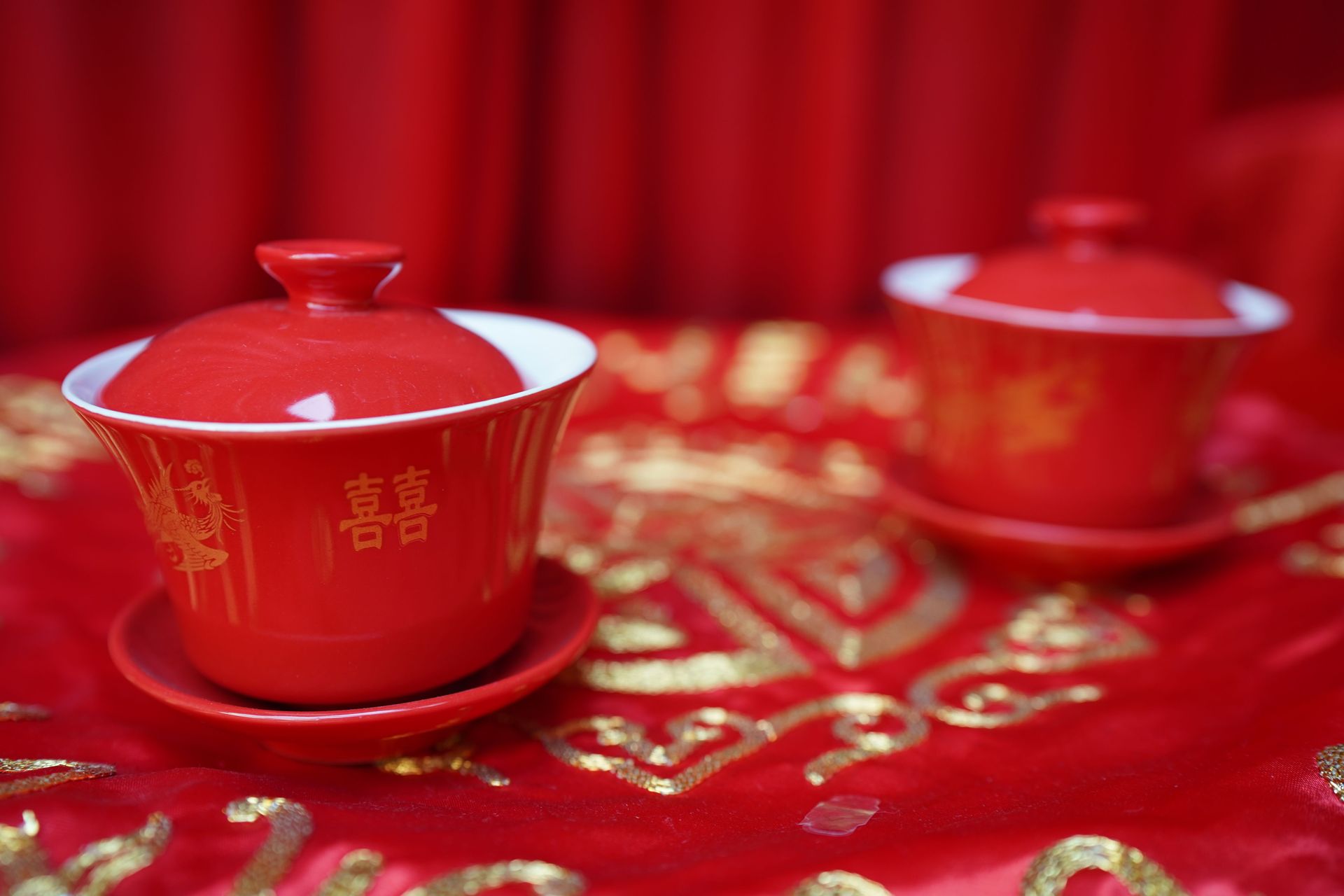
Chinese has contributed to English through several distinct routes over several centuries. Trade through the port of Canton, now Guangzhou, was one. 19th and 20th century immigration to the U.S. and U.K. was another. More recent global interest in Chinese food, medicine and philosophy added a third.
Tea offers one of the clearest examples of how trade routes shaped English vocabulary. The English word tea comes from a Min Chinese pronunciation, te, carried to Europe by Dutch traders who dealt directly with Chinese ports that used this pronunciation. Other European languages had contact with Mandarin-speaking regions instead and adopted words closer to cha. That is why chai and tea sit side by side in English as two words for versions of the same plant.
Food contributed several other everyday words. Ketchup likely traces back to a fermented fish sauce from a southern Chinese dialect, carried west through Malay ports before reaching English in a form that had already shifted considerably. It eventually settled into the tomato-based condiment known today. Wok and kung fu both entered English closer to their original Cantonese pronunciation, tied directly to the cookware and martial art they name. Chop suey likely began with Chinese immigrant cooks in the U.S. rather than in China itself. That history shows how a dish could pick up a Chinese-sounding name even when its origins were closer to home.
Business and social vocabulary picked up several distinct terms. Kowtow, from a word meaning to knock the head, described a formal gesture of deep respect in imperial China. English speakers broadened it to describe any excessively deferential behavior. Gung-ho, from a phrase meaning to work together, was adopted by U.S. Marines during the Second World War and shifted in English toward describing someone overly eager or enthusiastic.
Feng shui, describing a traditional practice for arranging space in harmony with natural forces, entered English largely intact. It arrived alongside a broader wave of interest in Chinese philosophy and design that picked up considerably in the late 20th century.

Credit: Tutolo Design / Pexels
Japan's ports opened to Western trade in the 1850s after centuries of restricted contact. Japanese vocabulary entered English gradually at first, then much faster after the Second World War, as cultural and economic ties between Japan and the English-speaking world deepened.
Food produced some of the most widely used borrowings. Sushi and ramen both entered English closely tied to the dishes themselves. They spread well beyond Japanese communities as the foods became popular internationally in the second half of the 20th century. Tofu, though ultimately Chinese in origin, reached English largely through its Japanese pronunciation and spelling.
Natural disasters and daily objects contributed a different set of terms. Tsunami, meaning harbor wave, became the standard English term for a phenomenon earlier described with the less precise tidal wave. Major Pacific tsunamis drew global attention to the more accurate Japanese word. Futon describes a type of bedding that entered English along with the object itself as Japanese design gained popularity abroad.
Postwar contact between Japanese civilians and American servicemen left a smaller, more specific layer of vocabulary. Honcho comes from hancho, meaning squad leader, picked up by U.S. troops stationed in Japan and brought home with a broadened meaning describing anyone in charge. Karaoke, literally empty orchestra, describes singing along to a recorded instrumental track. The format was invented in Japan in the 1970s and spread internationally under its original name.
More recent decades added vocabulary tied to Japanese pop culture and technology. Emoji, combining Japanese words for picture and character, entered English directly alongside the rise of mobile texting in the 2000s. Anime and karate followed similar paths, entering English intact as Japanese cultural exports found large audiences well beyond Japan's borders.
Rickshaw comes from the Japanese jinrikisha, literally a human-powered vehicle. Invented in Japan in the 1860s, this mode of transport spread quickly across Asia and entered English in a shortened, easier-to-pronounce form that is still used today.

Credit: Michael Parulava / Unsplash
Russian's influence on English arrived in two distinct phases, separated by roughly a century. Early trade and exploration marked the first phase. The political and technological rivalry of the Cold War marked the second, and the two involved very different kinds of contact.
Geography and nature supplied some of the earliest borrowings, describing features of the Russian landscape that had no close English equivalent. Taiga describes the vast coniferous forest belt across northern Russia and Scandinavia. Tundra describes the treeless Arctic plain further north. Mammoth was originally a Russian word for the extinct animal whose remains were found preserved in Siberian permafrost. It later broadened in English into an adjective meaning simply huge.
Everyday Russian culture contributed a smaller set of words tied closely to specific customs. Vodka, a diminutive form of the Russian word for water, describes the country's best-known spirit. Samovar describes the traditional heated metal container used to boil water for tea. Troika originally described a carriage pulled by three horses side by side, before broadening in English to describe any group of three people sharing power or responsibility.
The 20th century added a much more politically charged layer of vocabulary. Tsar, the traditional title for Russian emperors, is now used loosely in English for anyone given broad authority over a particular area. That usage spans everything from a drug policy tsar to a technology tsar. Gulag, formed from a Russian acronym for the government agency that ran Soviet forced labor camps, entered English as a general term for a brutal prison system. Sputnik, meaning fellow traveler or satellite, became a household word worldwide after the Soviet Union launched the first artificial satellite in 1957.
Glasnost and perestroika describe the openness and restructuring policies pursued in the Soviet Union during the 1980s. Both entered English as specific political terms and remain tied closely to that particular moment in history rather than having broadened into general use.
