
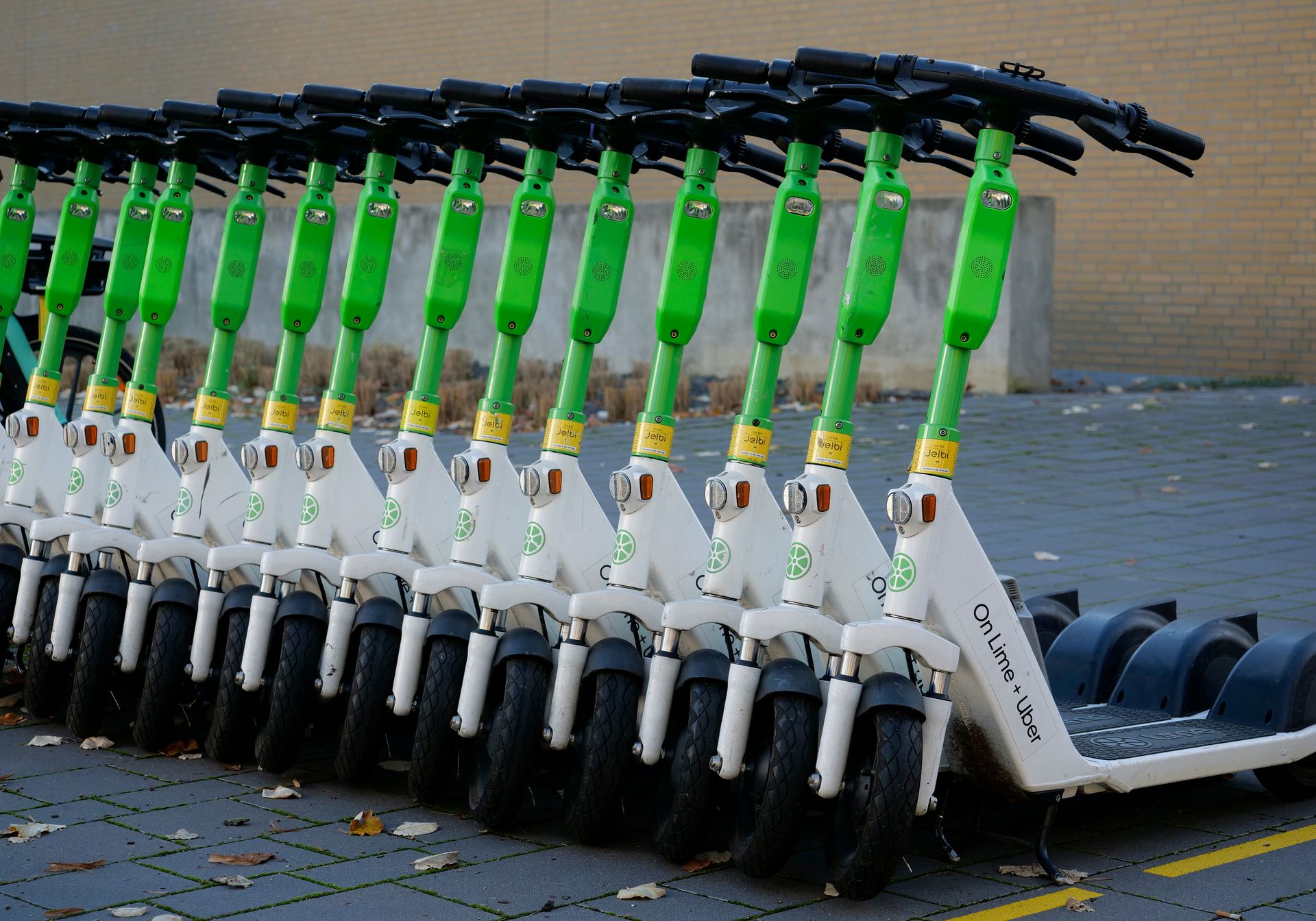
Lime, the Uber $UBER-backed electric bike and scooter rental company, filed for an initial public offering on Friday with the U.S. Securities and Exchange Commission, seeking a listing on the Nasdaq $NDAQ Global Select Market under the ticker symbol "LIME."
The company, incorporated as Neutron Holdings Inc., According to Bloomberg, the Financial Times put the targeted valuation at roughly $2 billion, based on people with knowledge of the plans. If achieved, the $2 billion target would represent a steep climb from the $510 million mark assigned to the company during Uber's 2020 investment, while still falling short of the $2.4 billion peak Lime reached in 2019.
Revenue climbed to $886.7 million in 2025, reflecting gains over the $686.6 million recorded in 2024 and the $521 million posted in 2023. Despite the revenue growth, losses deepened, with the net loss for 2025 reaching $59.3 million against $33.9 million the prior year. On the cash side, the 2025 figure of $104 million extended a streak of positive free cash flow to three straight years, per the filing.
The underwriting syndicate includes Goldman Sachs $GS, JPMorgan $JPM, and Jefferies, with the first two banks at the front of the deal, Reuters reported. The company did not disclose terms of the offering in its filing.
Founded in 2017 and led by CEO Wayne Ting, Lime's vehicles are available for rent across roughly 230 cities in 29 countries. Monthly active users reached 3.8 million in 2025, a 21% increase over the previous year's figure.
Lime's relationship with Uber has been central to its growth. The 2020 transaction, in which Uber put up $170 million, bundled in the transfer of Jump — Uber's own electric bike and scooter unit — to Lime's ownership. Through an exclusivity agreement, riders in nearly every city where both companies operate can book Lime vehicles directly inside the Uber app. The SEC filing shows the Uber channel accounted for 14.3% of Lime's total revenue in 2025.
Planned uses of the offering proceeds include covering operating costs, retiring existing debt, and pursuing acquisitions or investments in complementary technologies or assets, Reuters noted.
