
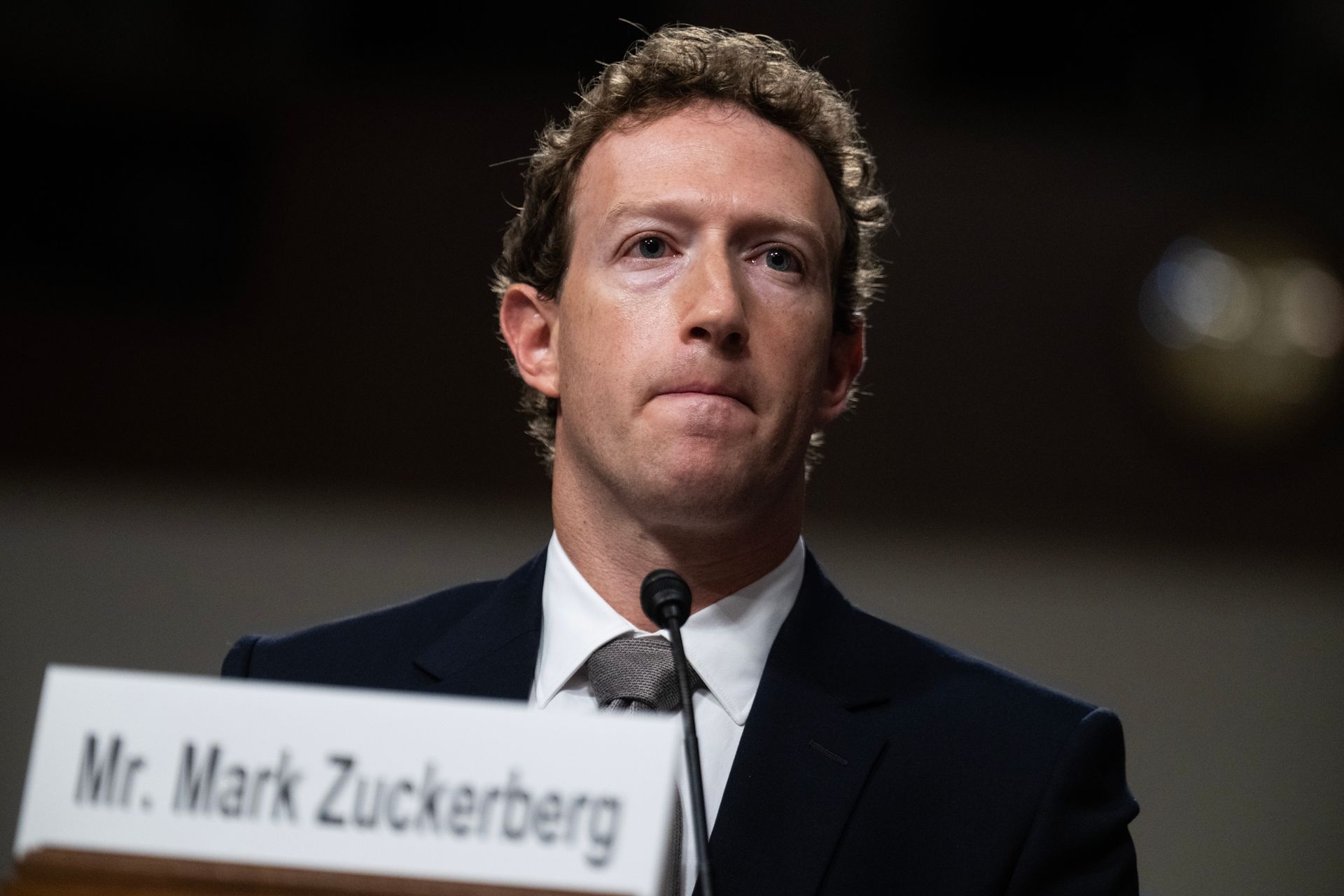
Mark Zuckerberg is pushing the U.S. government to focus on speeding up domestic AI development rather than placing restrictions on the technology. In an opinion column published in the Wall Street Journal on Tuesday, the Meta $META CEO argued that the benefits of distributing AI broadly outweigh the risks "by quite a margin."
Zuckerberg framed his position as a challenge to what he described as an overly pessimistic tone surrounding AI. "I get that it's always hard to debate about the future because it hasn't happened yet," he told the Wall Street Journal. "But I do think we have a lot of data points at this point, and that should point us to be much more optimistic than I believe the current discourse reflects." His comments appeared aimed in part at warnings about job displacement from leaders at Anthropic and OpenAI.
On government review requirements, Zuckerberg expressed concern about timing. The Trump administration is implementing an executive order that establishes a voluntary 30-day review period for new AI models. "Saying, 'Hey, we want to review stuff for — whatever it is — 30 or 60 days, it may not sound like that much," he said. "But the field is moving so quickly, that actually is quite a meaningful amount of time."
Zuckerberg also pushed back on proposals to bar Chinese open-weight AI models from the American market, calling such a ban unlikely to achieve its intended effect. Rather than erecting barriers, he said, U.S. policymakers should turn their attention to clearing the obstacles that impede AI-driven breakthroughs — including the development of new medicines — according to The Next Web.
The remarks arrive amid a live industry divide, according to The Next Web. On one side, Meta, Nvidia $NVDA, Microsoft $MSFT, and Elon Musk have championed open-weight AI; on the other, OpenAI and Anthropic have pressed for stricter oversight of the most powerful systems, citing both safety concerns and national-security risks.
Earlier this month, a coalition of more than 20 technology companies — including Meta, Nvidia, Microsoft, and Palantir $PLTR — released a joint letter urging policymakers to avoid placing restrictions on open-weight AI models. The letter argued that openness expands access to the AI economy and strengthens competition. OpenAI and Anthropic did not sign it. The letter followed the release of Moonshot AI's Kimi K3, a Chinese model that outperformed several U.S. competitors on industry benchmarks, sharpening the debate in Washington over how to respond to Chinese AI progress.
Meta has forecast capital expenditures of as much as $145 billion this year to support its AI buildout and eliminated roughly 8,000 jobs in May, with the company citing its AI spending as the reason for the reductions. The company is scheduled to report second-quarter earnings later Wednesday.