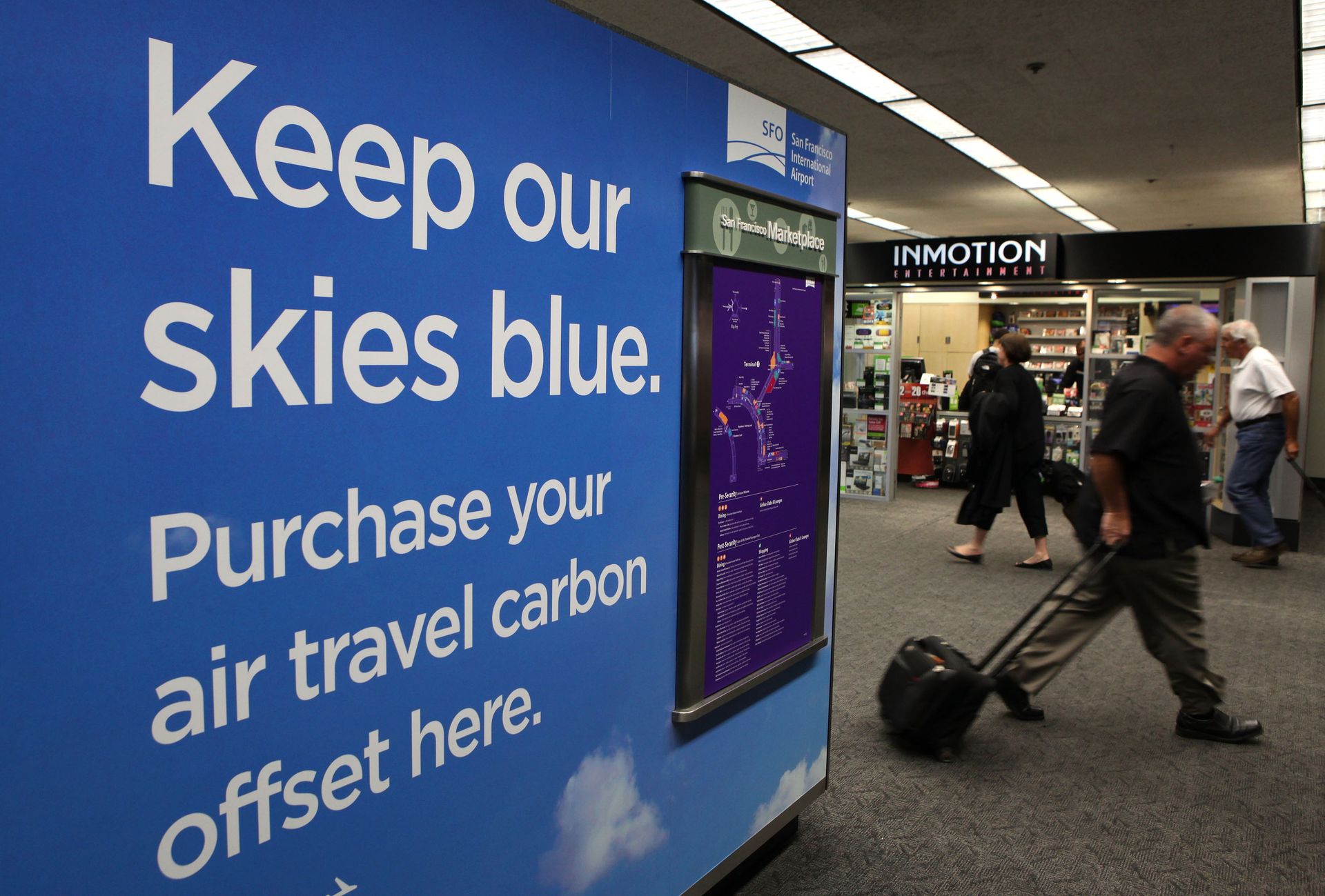
Photo by Justin Sullivan/Getty Images
A version of this article originally appeared in Quartz’s members-only Weekend Brief newsletter. Quartz members get access to exclusive newsletters and more. Sign up here.
Microsoft $MSFT, the company that almost single-handedly built the modern carbon removal market, told some suppliers last month it would be pausing new purchases of removal credits.
For an industry in which one buyer accounts for nearly $12 billion of the roughly $15 billion ever spent on these credits, that is the kind of news that rattles a sector.
Carbon removal credits, the unit of trade here, are sold by companies that pull carbon dioxide out of the atmosphere and store it. Buyers use them to offset their own emissions and back up corporate climate pledges.
Microsoft's pledge, made in 2020, is to be carbon negative by 2030 and to remove all the carbon it has ever emitted by 2050. It became the anchor customer that helped bring much of the market into existence.
Hundreds of startups have raised billions chasing that demand. Some build giant machines that filter CO2 out of the sky. Others inject carbon dioxide deep underground, where it turns to stone. Much of the technology is still experimental. Many startups aren’t sure if their contracts with Microsoft are still on.
Critics are already crowing. To some, the voluntary carbon market is paid absolution for companies that would rather buy forgiveness than cut emissions. To others, it's a hollow accounting exercise that hasn't meaningfully dented global warming. Either way, this looks like the moment of vindication.
That reading may be premature. The market is changing, no question, and the disruption, as in most stories these days, is AI.
The buildout has pushed emissions up at every major tech company that set a climate goal around 2020. Google $GOOGL's are up nearly 50%. Meta $META's, more than 60%. Amazon $AMZN's, 33%. Microsoft's, more than 23%. Building data centers is also expensive, and the bills are coming due. Pulling back on optional spending like carbon credits is one way to ease the pressure.
But the same AI boom that is pushing emissions up could eventually pull credit demand back up with it. A new report from the U.K. Carbon Markets Forum and the City of London projects the global carbon credit market will reach $268 billion by 2050, up from about $1.4 billion today. Data centers, the report says, will be the main driver.
Before changing tactics, Microsoft signed a record deal in January. The 12-year agreement, worth as much as $228 million, covers credits tied to regenerative farming. The company once funded the speculative end of the market. Now it wants credits that are easier to count.
Meanwhile, the rest of Big Tech bought more last year. Amazon, Google, Meta and Microsoft together purchased 68.4 million carbon credits in 2025, up from 24.4 million the year before and 11.9 million in 2023.
Even if Big Tech wants to pull back to pay for its data centers, it may not have a choice. Mandatory carbon pricing is spreading fast, and 2026 is shaping up to be the year it accelerates.
Compliance markets force polluters to pay for their emissions, usually by capping how much they can release and then making them buy permits to cover the rest. The voluntary market, by contrast, runs on goodwill and press statements.
An additional 2 billion tons of global emissions will fall under compliance carbon pricing by year's end, according to consultancy Wood Mackenzie, with new regimes going live in Japan, Mexico, India and elsewhere.
The E.U.'s carbon border adjustment, which charges importers for the emissions embedded in goods like steel and cement, started collecting payments earlier this year. That has given countries that export to Europe a strong incentive to launch their own carbon markets, since domestic carbon prices reduce what their exporters owe at the E.U. border.
International offsetting between governments is also picking up. Around 100 countries have now signaled they want to participate in trading verified emissions reductions across borders under the Paris Agreement.
None of this fixes the deeper questions about credit quality and enforcement. Many older credits were criticized for measuring emissions cuts that may never have happened, and some big buyers, including Apple $AAPL and Delta, have faced lawsuits over the offsets behind their green claims.
But markets find a way. Data centers are drawing local backlash, giving companies a PR reason to keep buying. Climate disasters are eating government budgets, giving regulators a fiscal reason to keep pricing. Both pressures point the same direction.
About 2.1 billion tons of CO2 are removed from the atmosphere every year. The world emits 40 billion. The math says the market has barely even started.
