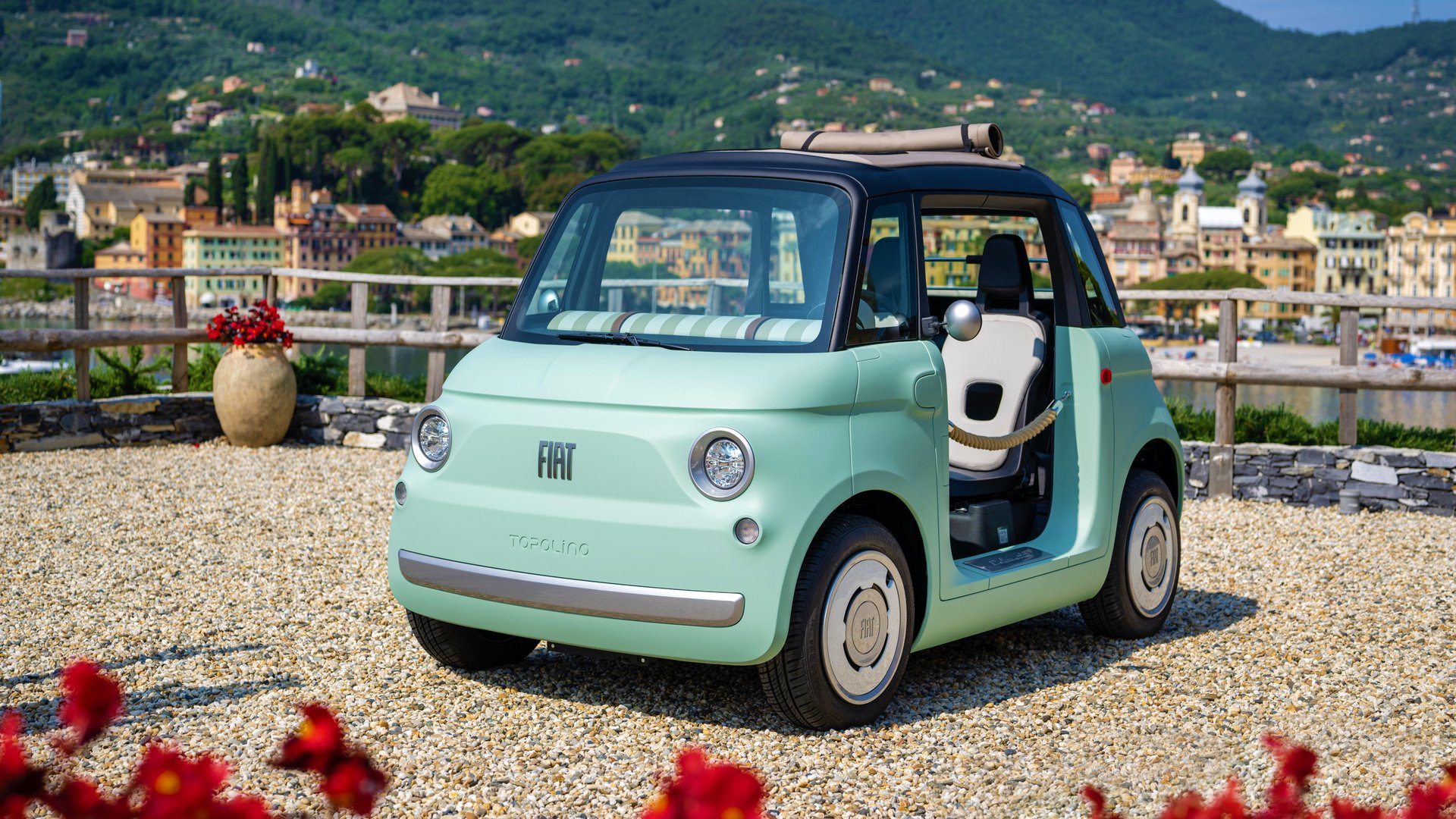
The National Highway Traffic Safety Administration, a division of the Department of Transportation, requires new cars sold in the US to adhere to the exhaustive Federal Motor Vehicle Safety Standards, which cover everything from windshields to seat belts. Unlike Europe, NHTSA has established only one category for smaller four-wheeled cars that can’t meet those safety standards: Low-Speed Vehicles (LSV), which are capped at just 25 mph. At the state level, departments of motor vehicles generally require vehicles to be classified as either an automobile or LSV to receive the registration that permits them to be legally operated on public roads. (In 2016 the federal government did create an exception for “autocycles,” three-wheeled machines that are generally treated as motorcycles.)
The rigidity of NHTSA categorizations for four-wheeled vehicles — car, LSV, or nothing — leaves little space for many minicars that are popular abroad. Outside the US, most minicars can exceed the 25-mph LSV maximum, and they typically lack the airbags and other costly safety equipment required to meet federal crash standards. (A rare exception, the Smart ForTwo, left the US market in 2019.) In 2008, NHTSA rejected a petition to create a new category of “medium speed vehicles” traveling at up to 35 mph, which would have accommodated many of the quadricycles popular in Europe.
Technically, minicar builders could sell their cars in the U.S. if they capped their speed at 25 mph, but that would sort of suck, wouldn’t it? At the very least, it would severely hamper the usefulness or practicality of these vehicles. It would also make them less safe. Imagine taking a car that tops out at 25 on one of America’s many stroads. It would be a nightmare.