From a Nissan Kicks with AWD under $24,000 to a Mazda CX-30 with standard AWD and the most engaging driving dynamics on the list
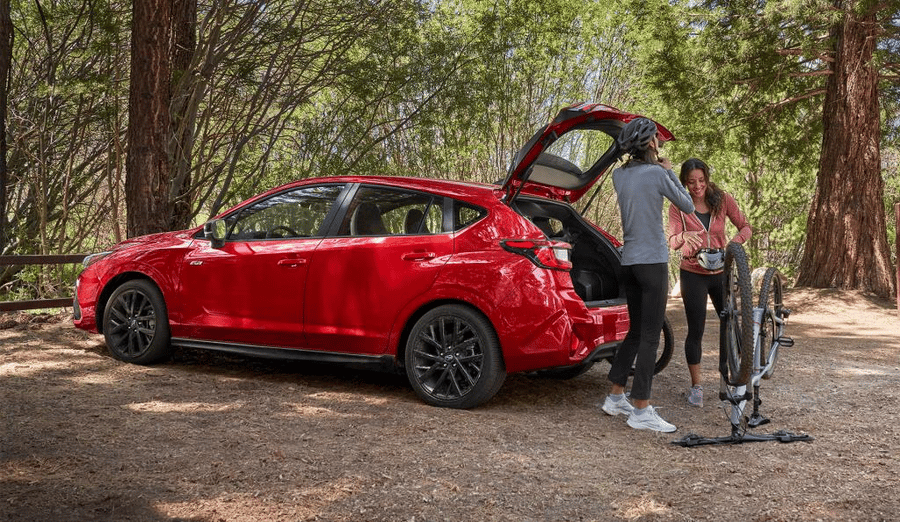
Credit: Subaru
All-wheel drive solves a specific problem. In regions where winter brings snow, ice, or slush, a front- or rear-wheel-drive vehicle becomes a liability on certain mornings, making every weather forecast a transportation calculation. AWD removes that calculation. The traction is there regardless of the surface, which gives the driver confidence without requiring deliberate management of the vehicle’s limits. For year-round residents of the northern United States or mountainous regions, AWD is less a luxury feature than a practical requirement.
The traditional argument against AWD has been cost. Most manufacturers charge somewhere between $1,500 and $2,000 to add all-wheel drive to a model that offers it as an option, and vehicles that come with AWD as standard often start higher than comparable front-wheel-drive alternatives. For buyers whose budgets sit at the lower end of the new-car market, that premium has historically made AWD inaccessible. The vehicles on this list challenge that assumption: all have AWD starting points below $27,000, and several fall well under that threshold. Every vehicle on the list also carries a U.S. News rating that reflects genuine overall quality rather than merely the cheapness of the AWD option.
The vehicles below appear in U.S. News & World Report, ranked by AWD starting point from lowest to highest. The list spans subcompact SUVs, a compact car, a compact sedan hybrid, and a compact crossover, giving AWD-seeking buyers a representative range of body styles within the budget constraint.
Credit: Nissan
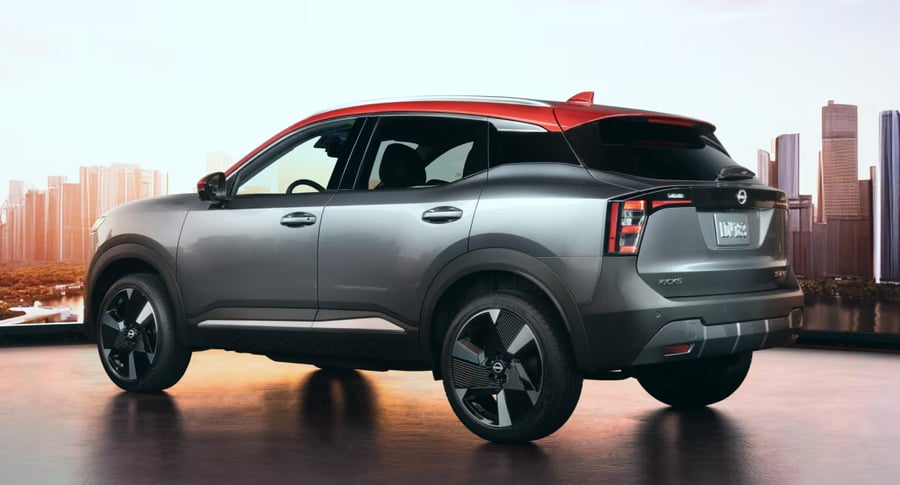
The Nissan Kicks earns a U.S. News rating of 8.5 out of 10 and carries the lowest AWD starting point of any vehicle on this list, coming in under $24,000 even with all-wheel drive added. Senior Editor Tony Markovich’s assessment of the Kicks as looking and feeling more upscale than any other tiny crossover, with sharp handling that rewards the driver on the scenic route, gives the value case a quality dimension that the price alone cannot capture. The Kicks won U.S. News’s Best Subcompact SUV for the Money award for 2026, which provides external validation of its value designation.
AWD is available across all Kicks trims, adding between $1,500 and $1,650, depending on the configuration. The base engine lacks power, which is the primary performance concession at this price point, but the fuel economy is excellent for the class. The cargo capacity decreases from 60 cubic feet in front-wheel-drive models to 50.1 cubic feet in AWD models, which is worth noting for buyers who regularly carry large loads.
The ride quality is relaxed over most surfaces, which gives the Kicks a daily comfort level appropriate to a commuter-focused subcompact. For buyers whose primary concern is getting AWD at the absolute lowest available starting point without sacrificing overall vehicle quality, the Kicks is the most straightforward answer on this list.
Credit: Kia
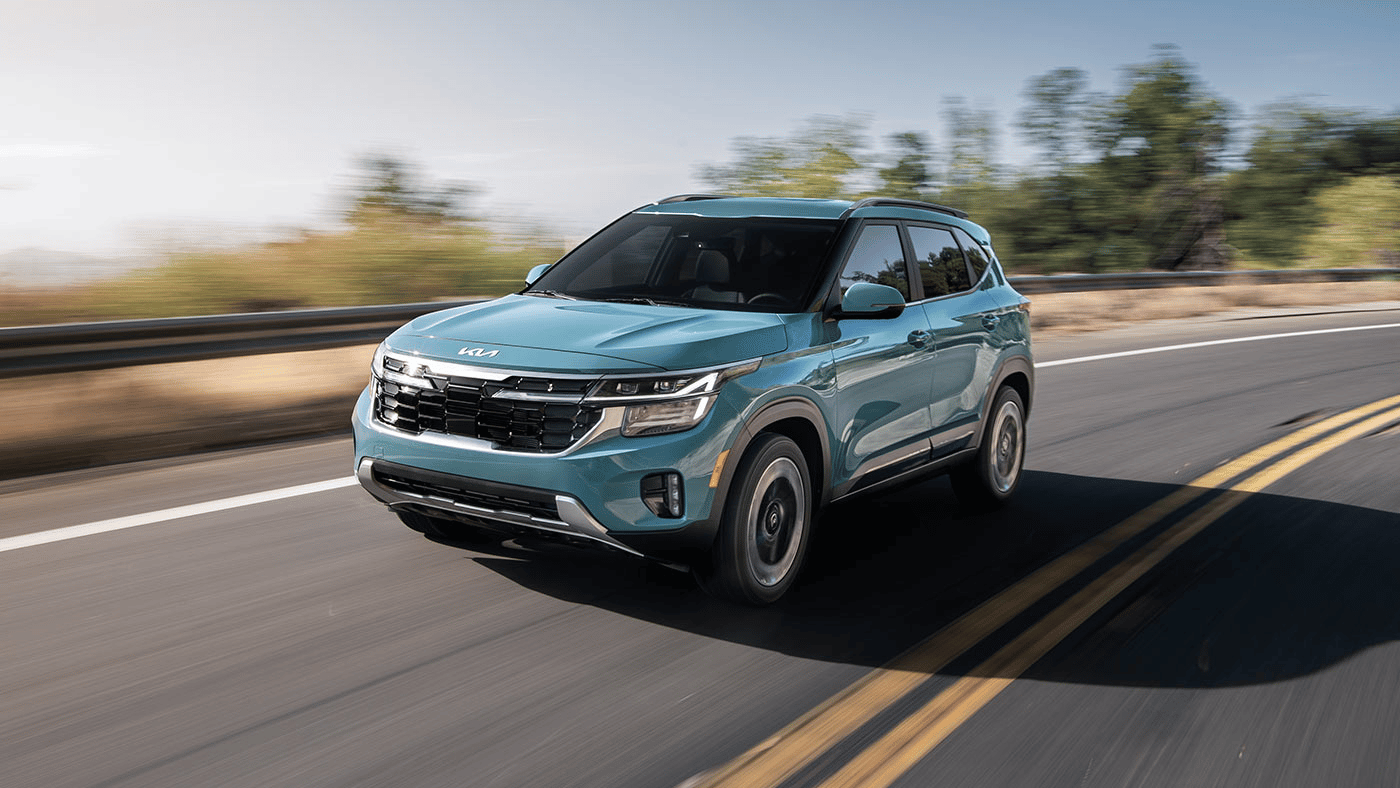
The Kia Seltos earns an 8.9 U.S. News rating and offers the most comfortable ride on the list, with reviewer Brontë Wieland describing the cabin as a great place to spend time thanks to its intuitive technology, spacious interior, and compliant ride. AWD is available as an add-on for around $1,200, the lowest supplement cost on this list. The combination of a competitive base starting point and a modest AWD premium gives the Seltos a strong total-cost case for buyers adding the traction upgrade.
Kia upgraded the Seltos cabin materials for 2025, and the improvement carries into the 2026 model with a cabin that reads as more upmarket than the price suggests. Cargo capacity is generous at 26.6 cubic feet behind the rear seats and 62.8 cubic feet with the rear row folded, which gives the Seltos practical interior dimensions alongside the comfort credentials. The fuel economy of 27 miles per gallon in the city and 31 on the highway is solid for the class.
The base engine is the primary limitation, delivering adequate but uninspiring performance, while the strong interior and ride quality compensate in daily use. For buyers whose priority is the comfort of the cabin environment and the quality of the driving experience on typical roads, the Seltos delivers both at a starting point where AWD does not strain significantly.
Credit: Mazda
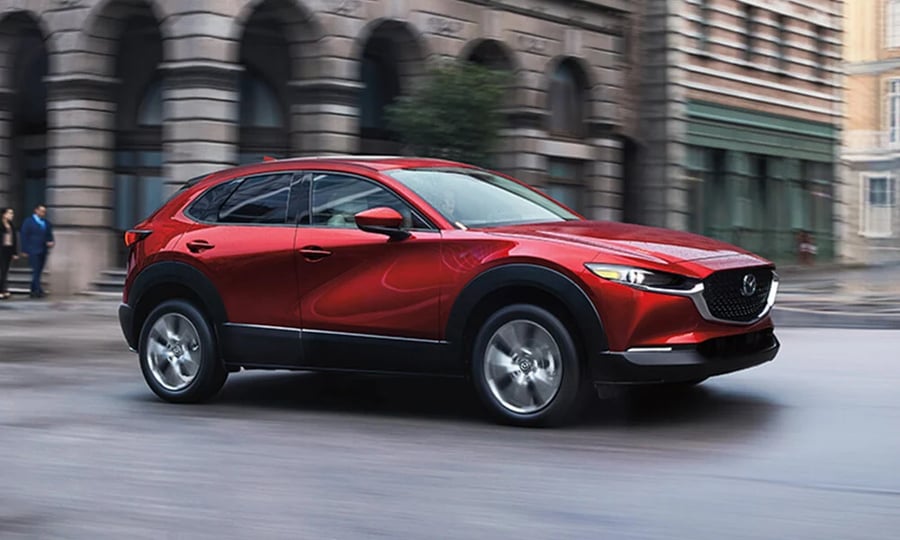
The Mazda CX-30 earns the highest U.S. News rating on this list at 9.1 out of 10 and comes with AWD as standard equipment, meaning the starting price already includes the traction capability other models charge extra for. The engaging driving dynamics that the CX-30 delivers are the feature that most distinguishes it from the competition: the handling, the steering feel, and the sense that the car responds accurately to driver input give the CX-30 a character that most subcompact crossovers in this price range do not attempt to develop.
The interior quality is premium for the class, with materials and design execution that read above the market’s starting point. The absence of a traditional touchscreen, replaced by a rotary controller, is a deliberate design decision that the source specifically endorses on distracted driving grounds: the physical controller keeps the driver’s eyes on the road in a way that reaching for a touchscreen does not. Not all buyers will prefer this approach, but those who do will find the CX-30’s interface among the least distracting in the class.
The honest limitations are rear-seat space and cargo capacity, which fall below the class average, and fuel economy that some rivals beat. For buyers who prioritize driving dynamics and interior quality over utility, the CX-30 is the most rewarding vehicle on this list.
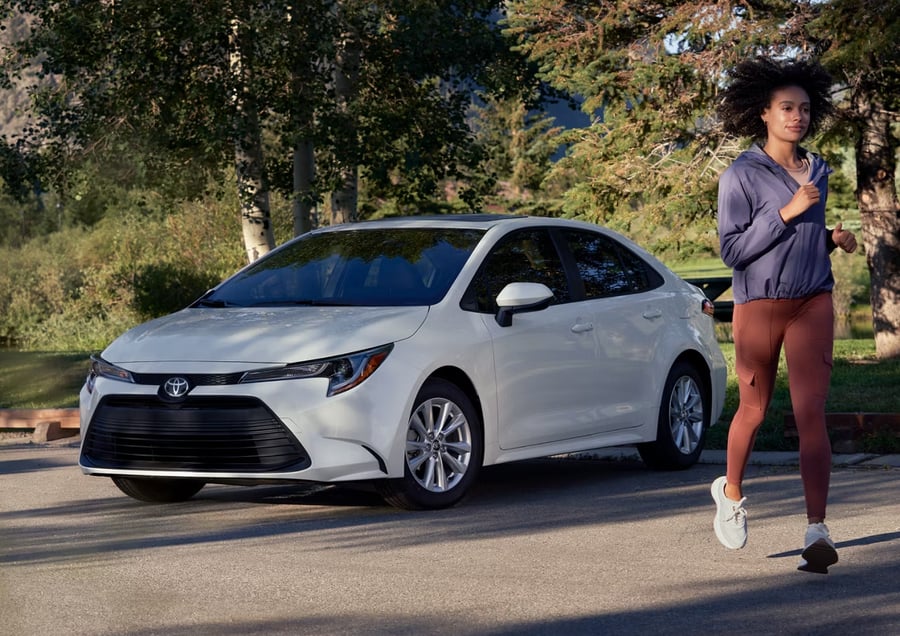
Credit: Toyota
The Toyota $TM Corolla Hybrid earns an 8.4 U.S. News rating and delivers the best fuel economy on this list at 47 miles per gallon in the city and 41 on the highway, with AWD included, starting at below $26,000. Reviewer Mike Hagerty describes a vehicle that is smooth and quiet, with comfortable seats and generous feature content for the price. The Corolla Hybrid is not exciting to drive, as Hagerty acknowledges, but it delivers the practical, daily-driver qualities that the Corolla name has represented for decades in a more efficient, more capable configuration.
Safety and reliability ratings are strong, which gives the Corolla Hybrid the long-term ownership case that complements the fuel savings from its hybrid system. AWD gives the Corolla Hybrid a traction capability that the base Corolla sedan, which is front-wheel-drive only, does not offer at any price, making the hybrid version the most practically complete Corolla available for buyers in winter climates.
For buyers who want maximum fuel economy alongside AWD at a budget-conscious starting point, the Corolla Hybrid is the only vehicle on this list that delivers all three simultaneously. The trade-off is a driving experience that prioritizes refinement and efficiency over engagement, which suits commuter-focused buyers who spend most time on highways and city streets rather than on twisting back roads.
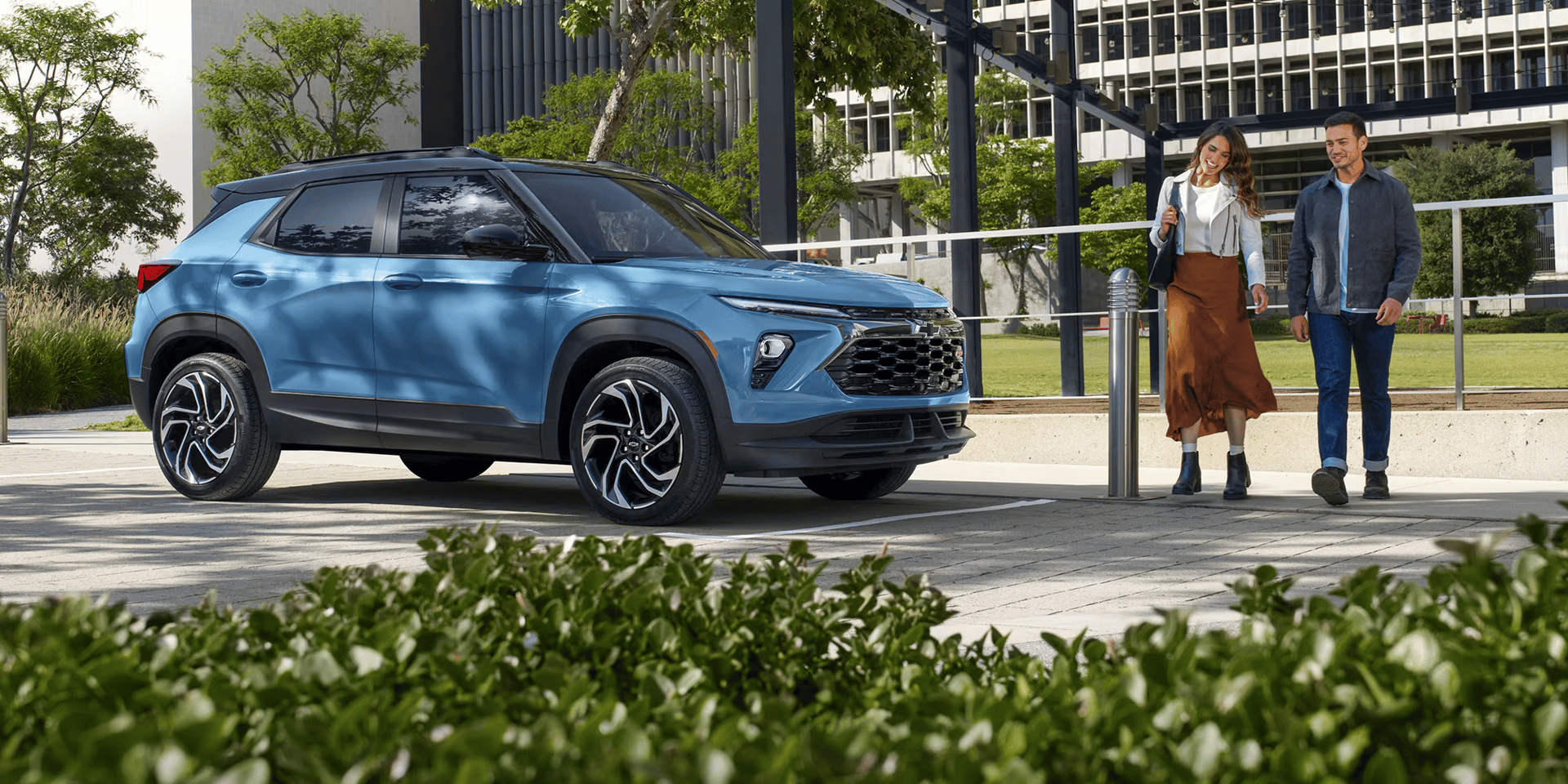
Credit: Chevrolet
The Chevrolet Trailblazer earns an 8.4 U.S. News rating, with excellent predicted reliability and a cabin that offers surprising passenger space for its exterior size. Reviewer Brontë Wieland characterizes the Trailblazer as a solid option for small SUV shoppers without calling it exceptional, which is an honest assessment that the vehicle’s strengths support: a comfortable ride, above-average fuel economy, adult-friendly head and legroom in both rows, and one of the better infotainment systems in the subcompact SUV class. The seats remain comfortable on longer drives, which gives the Trailblazer a road-trip suitability that its size might not suggest.
The Trailblazer is not exciting to drive, and several competitors offer more premium interiors, which are the specific limitations the source identifies. For buyers whose priorities are reliability, passenger space, and infotainment quality within this budget, the Trailblazer’s combination of strengths directly addresses those priorities without compromising on the practical dimensions.
The reliability prediction is worth specific note: in the subcompact SUV segment, where new models and frequent updates can introduce quality variability, a strong reliability rating reduces the uncertainty of ownership over a typical three- to five-year period.
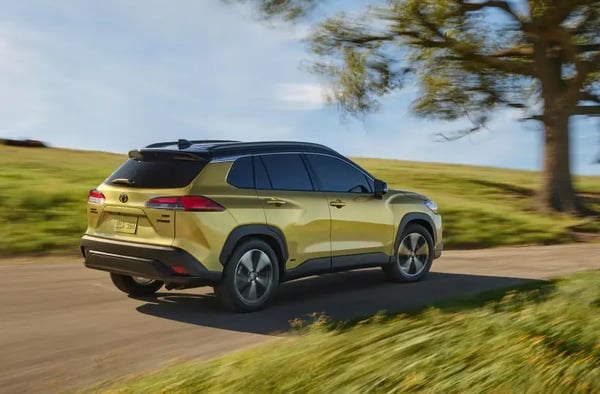
Credit: Toyota
The Toyota $TM Corolla Cross earns a 7.7 U.S. News rating, the lowest on this list, which the source addresses directly. Senior vehicle testing editor John M. Vincent describes the Corolla Cross as a solid but pedestrian player in a competitive segment where rivals meet or beat it on price, warranty, and features. The honest assessment gives buyers who consider the Corolla Cross the context to evaluate it realistically rather than on brand reputation alone.
The Corolla Cross’s genuine strengths are excellent fuel economy, a gentle ride, and an unusually comprehensive list of standard equipment that includes adaptive cruise control, traffic-sign recognition, wireless smartphone integration, and satellite radio at the base trim level. All-wheel drive is standard, eliminating the add-on cost that most other vehicles on this list incur.
For buyers who specifically want standard AWD with minimal friction, the maximum number of standard safety and connectivity features, and Toyota’s brand reliability at a starting point below $27,000, the Corolla Cross delivers that combination even if its overall score trails the competition. Understanding what the 7.7 rating reflects — solid execution in a field of stronger alternatives — gives the purchase decision a clear-eyed foundation.
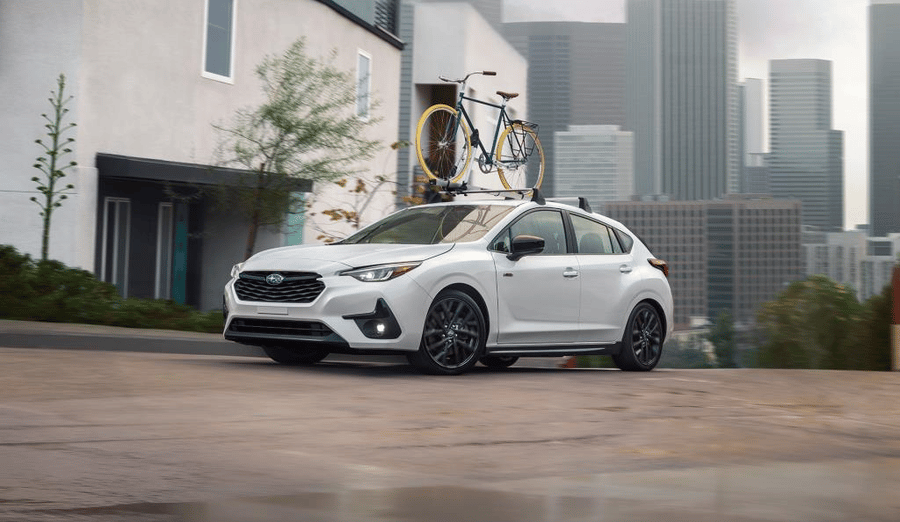
Credit: Subaru
The Subaru Impreza earns an 8.5 U.S. News rating and provides AWD as standard equipment in a compact car body style, which distinguishes it from every other vehicle on this list. For buyers who want a traditional sedan or hatchback rather than a raised crossover, the Impreza is the only option on this list that offers that format with AWD included as standard. The Subaru all-wheel-drive system, which comes standard across essentially the entire brand’s lineup, has a long track record that buyers in snow-prone regions have relied on for decades.
The cabin materials lean toward hard plastics, which our expert found cheap-feeling, though the overall interior construction is solid and the second-row legroom is generous. The base engine handles city driving without difficulty but strains when overtaking traffic at highway speeds, a problem the optional engine addresses but does not fully resolve. The ride quality is smooth, and the handling is balanced, which gives the Impreza a composed character appropriate to its daily-driver positioning.
The Impreza’s specific appeal is its compact-car format with standard AWD at a starting price under $27,000, a combination no competitor in the traditional sedan or hatchback segment offers. For buyers who specifically want a compact car rather than a crossover, the choice is essentially between the Impreza and front-wheel-drive alternatives.
Credit: Hyundai
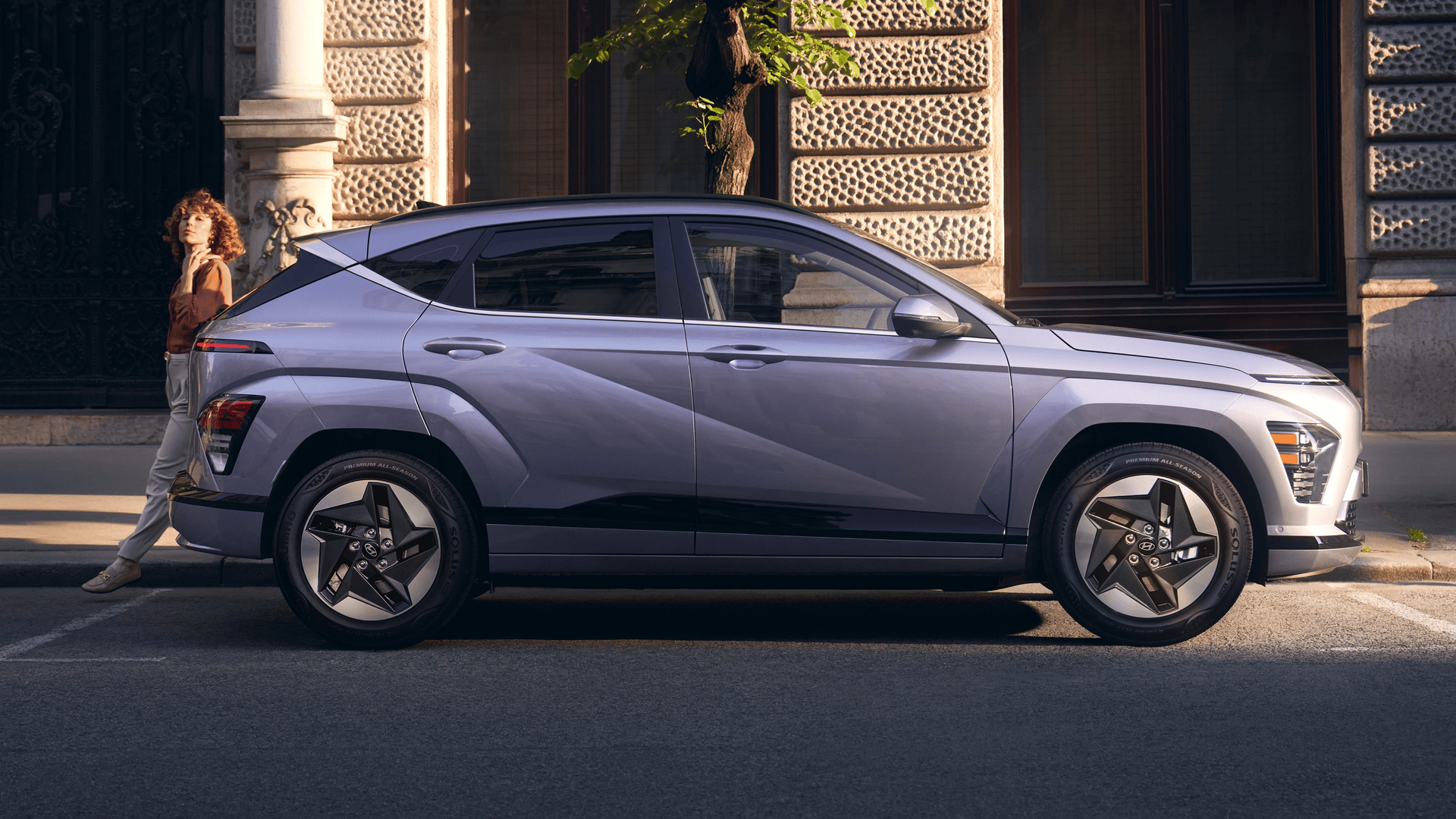
The Hyundai Kona earns a 9.0 U.S. News rating, the second-highest on this list, and a reviewer description as an excellent package for budget buyers who do not want to feel like they settled for an economy car. The Kona receives a revised trim lineup for 2026 alongside a roomy cabin that improves in style and material quality as buyers move up the trim hierarchy. Every configuration includes driver aids such as blind-spot monitoring, lane-keep assist, forward automatic emergency braking, and driver-attention monitoring as standard features.
The base engine is adequate without being energetic, and the optional powertrain delivers noticeably more performance for buyers who want it. The ride is gentle on most surfaces but can feel rough over deeper road imperfections, which is worth noting for buyers in cities with heavily deteriorated pavement. The high U.S. News rating reflects the Kona’s overall competitive standing in the subcompact SUV class, where its combination of quality, features, and starting point makes it a genuinely strong option rather than merely an affordable one.
The 2026 trim restructuring gives buyers a refreshed configuration to evaluate, and the carryover of the roomy cabin and strong safety features gives the Kona a consistent value proposition across model years.
Credit: Subaru
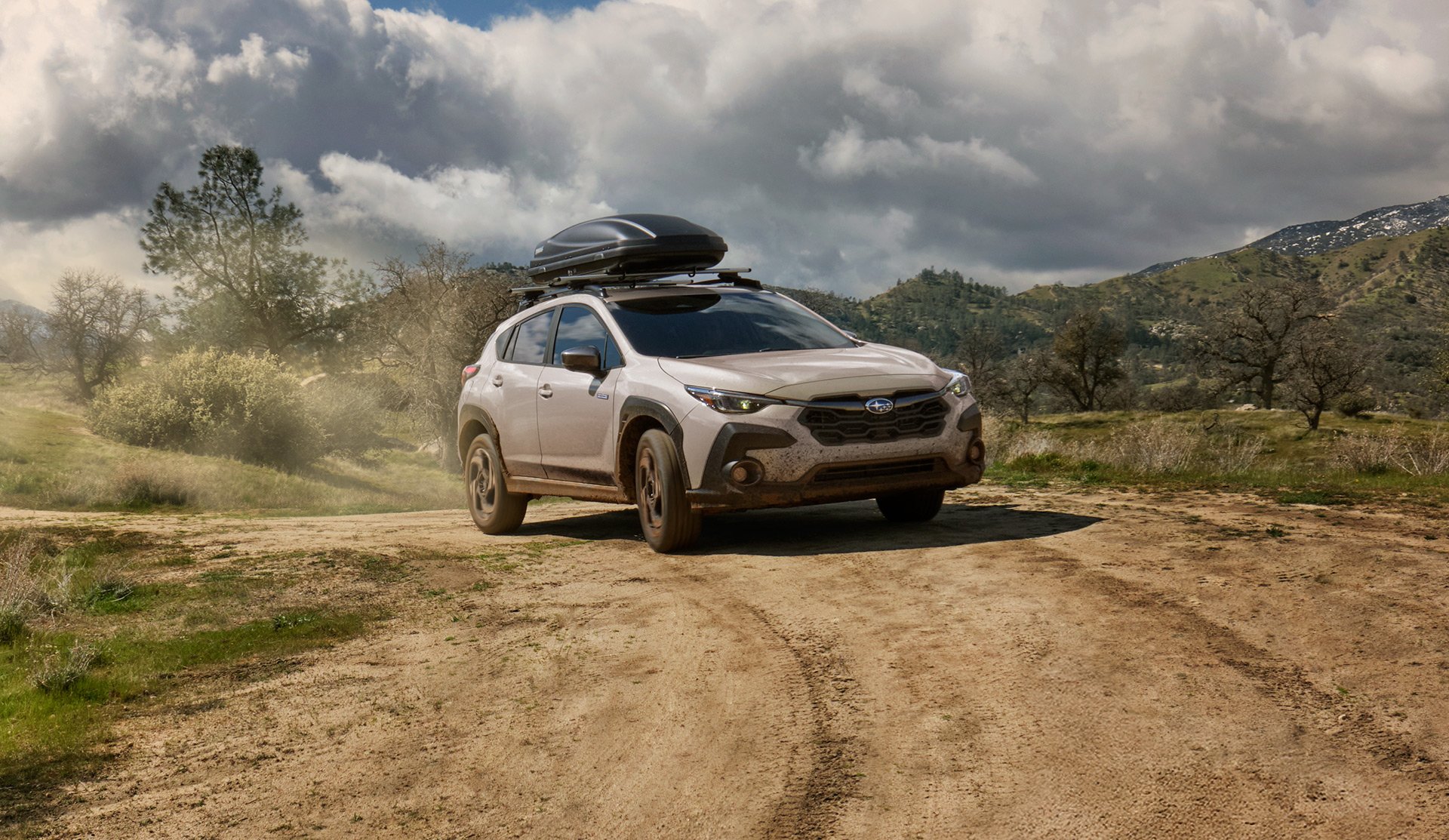
The Subaru Crosstrek earns an 8.5 U.S. News rating and ranks highest on this list while still coming in under $27,000. Reviewer Emme Hall describes the Crosstrek as an adventuremobile that doubles as a commuter, which reflects the vehicle’s specific design balance: more off-road capability and ground clearance than most subcompact crossovers provide, without sacrificing the daily-use manners that commuter-focused buyers require. The Crosstrek has included standard AWD since its debut, which gives the model’s AWD credentials a decade of refinement rather than a recent addition.
The cabin is comfortable and well-assembled, with a poised ride that makes daily commuting agreeable. Cargo capacity reaches 19.9 cubic feet behind the rear seats and 54.9 cubic feet with the second row folded. All models include adaptive cruise control, adaptive headlights, and lane-keep assist as standard equipment.
The Crosstrek Hybrid, introduced for 2026, is too expensive to make this list, meaning buyers who want hybrid efficiency alongside AWD will need to step to the Toyota $TM Corolla Hybrid earlier on this list or budget beyond the $27,000 threshold. For buyers whose budget reaches the Crosstrek’s starting point and whose driving includes mixed terrain, snow, or gravel alongside regular road use, the Crosstrek’s specific combination of AWD confidence, ground clearance, and commuter comfort makes it the most capable all-conditions vehicle on this list.
