
From a sub-$30,000 Nissan Leaf with 303 miles of range to a Volvo with a nearly $10,000 price cut, the most affordable electric SUVs worth buying
jetcityimage / Getty Images
Electric SUVs have become more affordable, but they still carry a price premium over their gasoline counterparts. Vehicle prices in general have risen substantially over the past two decades, and battery technology adds cost that combustion powertrains do not. The gap between the cheapest and most expensive electric SUVs is wide enough to matter: buyers who are thoughtful about where they shop within the segment can access capable, highly rated vehicles at prices that are competitive with many gasoline crossovers. The challenge is sorting through a market that has grown rapidly in both the number of available models and the diversity of what those models offer.
The expansion of the electric SUV market has improved the value proposition across the board. When fewer models competed in the space, manufacturers faced less pressure to price aggressively or invest in features that would justify a premium. More options mean more competition, and that competition has pushed manufacturers toward better feature content, higher quality, and more aggressive starting prices. The result is a class where a buyer can access a sub-$30,000 electric SUV with over 300 miles of range, or a vehicle with a perfect safety score from a major testing organization, at a price that would have seemed implausibly low five years ago. Not every affordable vehicle justifies its price, but several do.
The 10 vehicles below come from U.S. News & World Report’s list of the cheapest electric SUVs in 2026, which identifies the least expensive electric SUVs available to U.S. buyers, evaluated across price, range, performance, interior quality, and overall U.S. News ratings. Prices are manufacturer-suggested retail prices and reflect base trim configurations.
SOPA Images / Getty Images
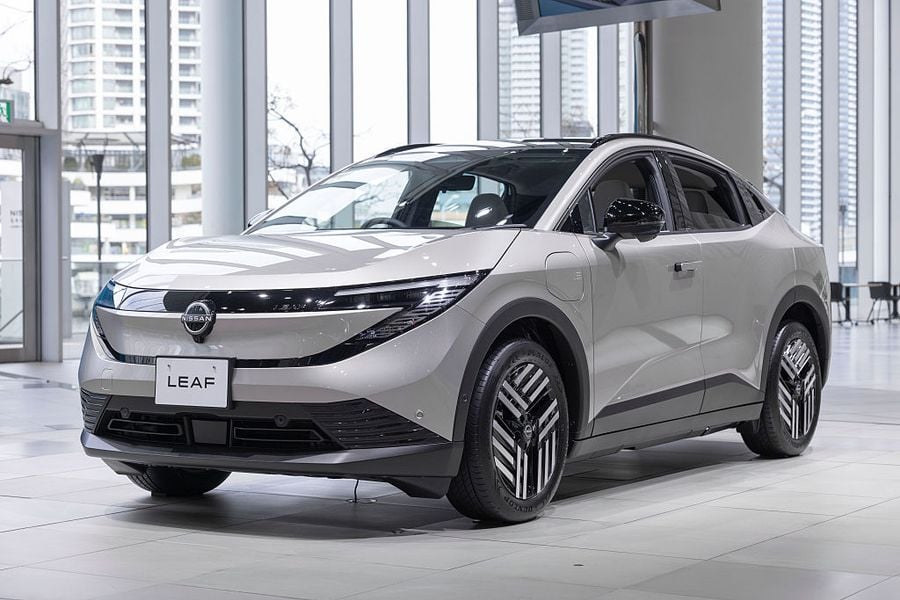
The 2026 Nissan Leaf is the only vehicle on this list with a starting price below $30,000, undercutting the next-least-expensive model by several thousand dollars. The Leaf is fully redesigned for 2026, transitioning from a hatchback body style to an SUV and adding substantially more range and interior space. U.S. News Senior Vehicle Testing Correspondent John Vincent describes the Leaf as “the right EV for economically minded shoppers,” and the redesign gives the nameplate a genuine competitive case, not the legacy-model inertia that sometimes sustains an entry-level vehicle past its useful life.
The 2026 Leaf returns 303 miles of standard range and earns a U.S. News rating of 8.6. The score reflects a vehicle worth buying on its merits, not just on price. The SUV is easy to maneuver and delivers reasonably quick acceleration. The interior looks good, with front seats described as spacious and comfortable. Rear-seat space is tighter by comparison, which is a common trade-off in the segment’s smaller models. Cargo capacity is described as pretty good, and the features list includes a cutting-edge infotainment interface anchored by a 12.3-inch touchscreen.
The Leaf’s redesign is the most significant development on this list for buyers who previously dismissed the nameplate as an older-generation hatchback. The jump from hatchback to SUV, the addition of over 300 miles of range, and the 8.6 U.S. News rating together give the 2026 Leaf an entirely new competitive profile. For buyers whose budget requires staying below $30,000 in the electric SUV market, the Leaf is not a compromise but the best option at that price point, with specs and ratings that compete credibly with vehicles thousands of dollars more expensive. The 2026 redesign also removes the objection that kept many buyers from considering the Leaf in recent years: the vehicle is no longer an aging hatchback but a genuinely modern SUV with over 300 miles of range.
benedek / Getty Images
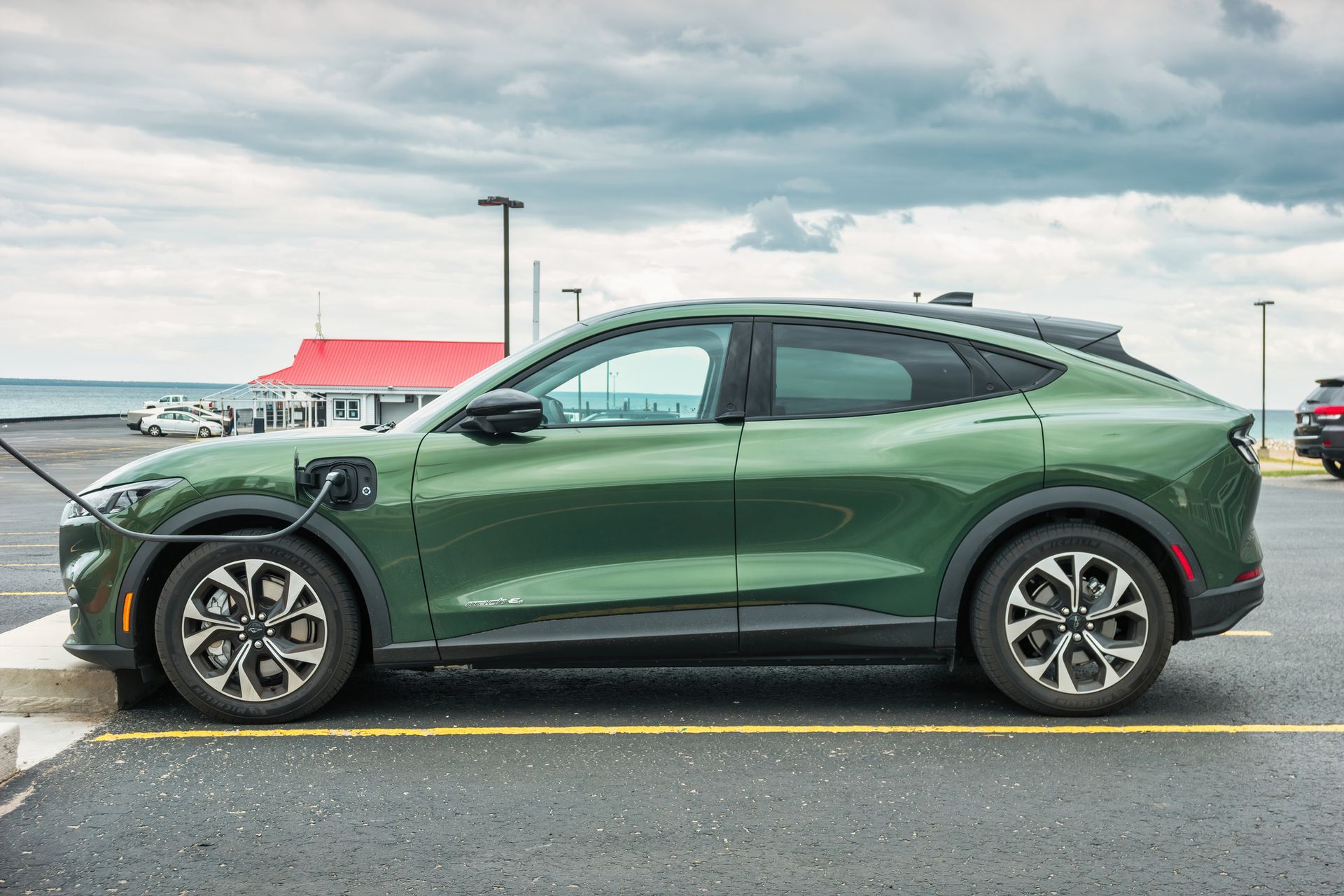
The 2026 Ford $F Mustang Mach-E earns a U.S. News rating of 9.2 — the highest among the vehicles on this list — at a starting price of $37,795. Senior Vehicle Testing Correspondent John Vincent characterizes the Mach-E as worthy of its famous nameplate, saying it delivers “hard-charging performance” that justifies carrying the Mustang badge. The standard-range configuration delivers 260 miles per charge, and a wide variety of powertrain configurations and options give buyers meaningful choices beyond the base trim.
The Mach-E prioritizes driving engagement over plush comfort. It delivers a dynamic ride with handling described as engaging and steering described as sharp, making it the most performance-oriented option on this list at its price point. Synthetic leather upholstery is standard, alongside a responsive 15.5-inch touchscreen and Ford’s BlueCruise semi-automated highway cruise control system. The breadth of available powertrains — covering different output levels and range options — means buyers can configure the Mach-E to match their specific priorities within the same nameplate.
The Mach-E’s 9.2 U.S. News rating, when paired with its position as one of the more affordable models on this list, makes it a particularly strong value. Few vehicles in any segment combine a top-tier rating from an independent evaluator with a starting price in the high-$30,000 range. For buyers who want the best-rated vehicle on this list alongside a driving experience that rewards active engagement, the Mach-E presents the clearest case. The performance character that the Mustang name implies is not marketing. It is a genuine description of how this electric SUV drives. The 9.2 rating also places the Mach-E among the top-rated vehicles in the entire electric SUV category, not just in this affordable subset. The distinction matters for buyers who want confidence that saving money on price does not require accepting a lower-tier product. The BlueCruise highway driving system adds a semi-automated convenience feature that most vehicles at this price point do not include as standard.
Bill Pugliano / Getty Images
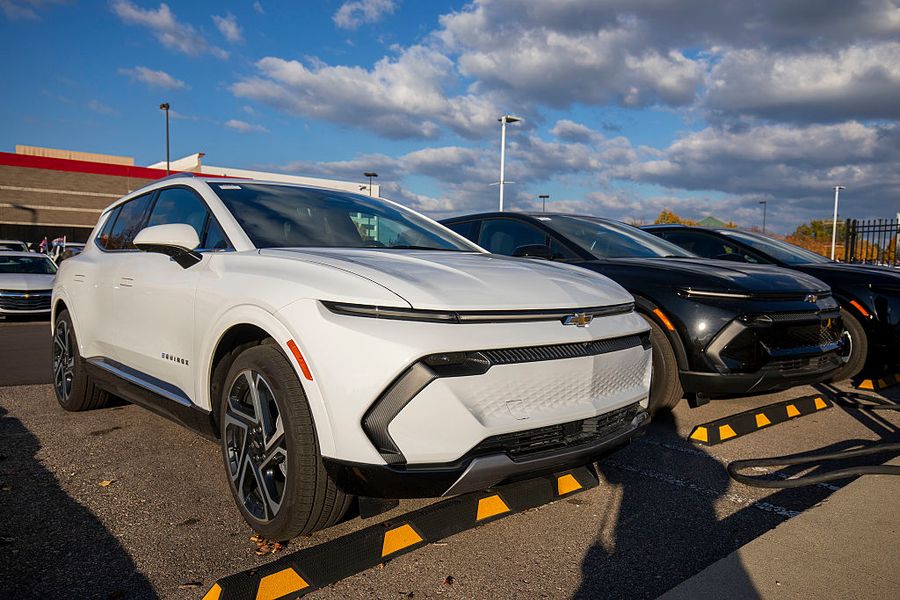
The 2026 Chevrolet Equinox EV starts at $34,995 and delivers 319 miles of standard driving range, the longest among the vehicles on this list at base configuration. The Equinox EV earns a U.S. News rating of 9.0, placing it among the highest-rated affordable electric SUVs in the market. Its 85-kWh battery pack powers a single front motor producing 220 horsepower, and the powertrain’s efficiency is the reason the base configuration can reach 319 miles. Full recharging on a DC fast charger takes approximately 40 minutes.
U.S. News Managing Editor Alex Kwanten describes the interior as punching above its price bracket in build quality and material choices, with both seating rows offering ample room and comfortable, supportive seats across the range. A 17.7-inch touchscreen is standard, alongside a comprehensive driver-assistance package. The Equinox EV does not offer Apple $AAPL CarPlay or Android Auto — a notable omission for buyers who rely on those platforms — but the native interface and standard technology content compensate meaningfully.
For buyers who prioritize maximum range at the most accessible price within the segment, the Equinox EV is the most direct answer on this list. The 319-mile standard range gives it a buffer against the real-world range reduction that cold weather, highway speeds, and climate system use can impose, making the official figure more meaningful as a planning tool than the range figures of shorter-range vehicles at a similar price. The 9.0 rating confirms the Equinox EV delivers genuine quality alongside its range leadership at this price point. The 17.7-inch touchscreen is one of the largest standard displays in the class and gives the interior a modern character that the vehicle’s price does not suggest. The absence of Apple CarPlay and Android Auto is the Equinox EV’s most controversial omission. Buyers who rely on those platforms for navigation and media integration should factor that limitation into their evaluation, but the native interface and comprehensive driver-assistance package address most practical connectivity needs for drivers open to learning the Chevy system.
Rodin Eckenroth / Getty Images
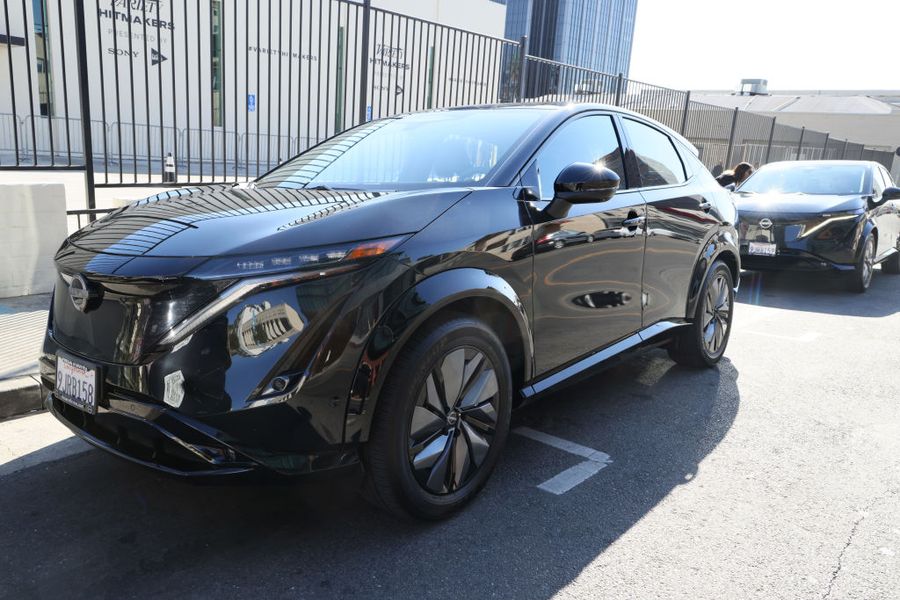
The 2025 Nissan Ariya starts at $39,770 and earns the highest interior quality score among the affordable electric SUVs on this list, with a U.S. News interior score of 8.7 out of 10. Nissan outfits the Ariya with an array of high-end materials that give the cabin a premium feel uncommon at this price point. Vehicle tester Kristin Shaw describes the Ariya as “a nice place to spend several hours driving cross country,” which reflects the degree to which interior refinement is the vehicle’s primary competitive advantage.
The trade-off for that cabin quality is a shorter standard driving range. The base Ariya covers 216 miles on a full charge — the shortest of any vehicle on this list — and reaching 289 miles requires stepping up to the midlevel EVOLVE+ trim, which starts at $44,370. The charging time is also longer than most competitors, which means road trip planning requires more conservative stops. The Ariya’s overall U.S. News rating of 8.3 reflects a vehicle that excels in specific dimensions while trailing the class leaders in range and charging speed.
The Ariya earns a specific buyer: someone who prioritizes the quality of time spent inside the vehicle over the distance it can cover between charges. For daily commuters whose driving falls comfortably within the 216-mile base range, the shorter spec matters less, and the interior advantage becomes the deciding factor. The Ariya’s cabin — with its comfortable long-distance seats, premium materials, and composed ride — addresses a genuine dimension of the EV ownership experience that range-focused shoppers sometimes underweight. A vehicle that is genuinely pleasant to occupy for extended periods delivers a quality-of-life benefit that figures alone cannot capture. The Ariya’s 8.3 overall rating reflects the trade-offs between its excellent interior and its shorter range and slower charging, and buyers who prioritize daily comfort will find that trade-off worthwhile given their actual driving patterns.
jetcityimage / Getty Images
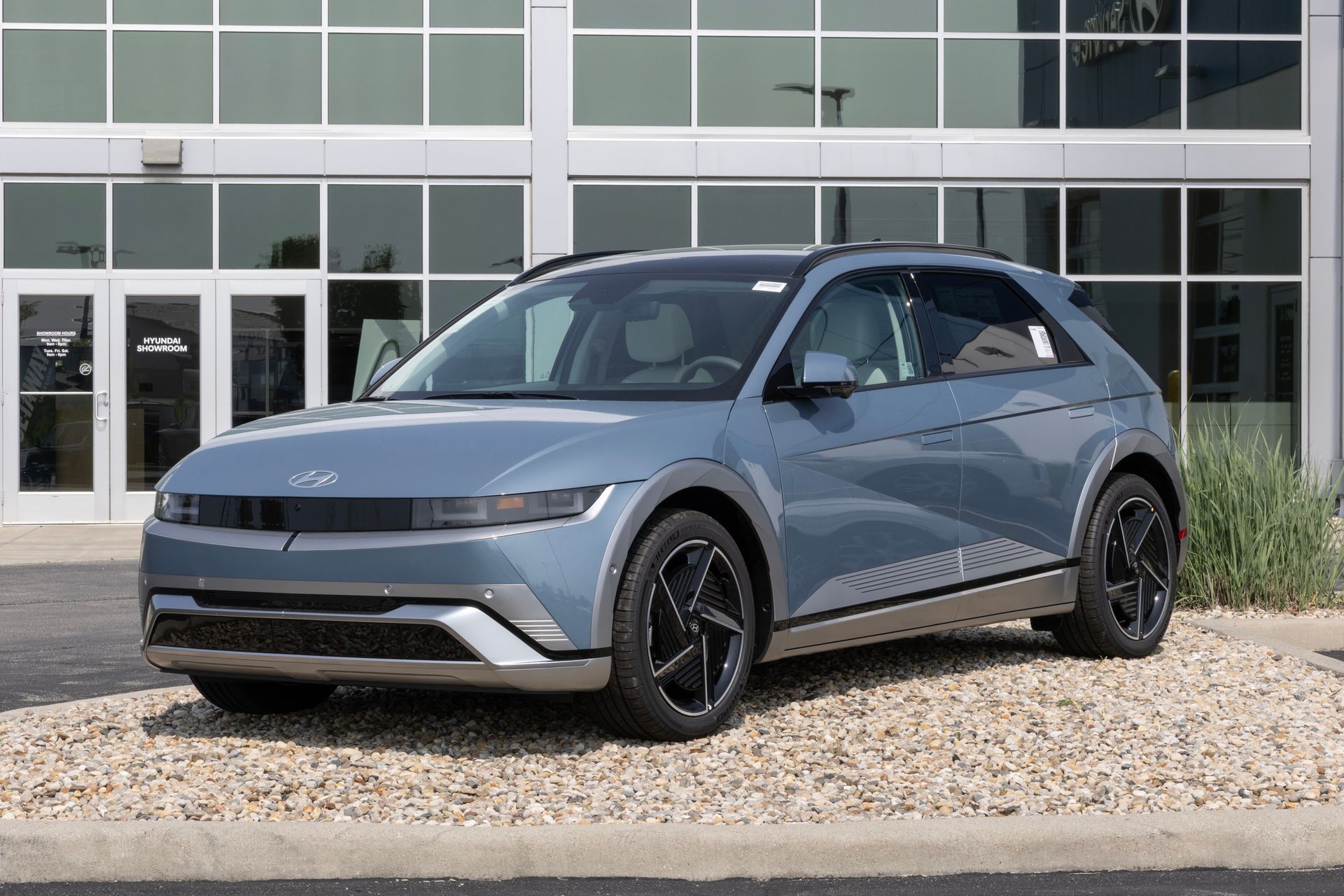
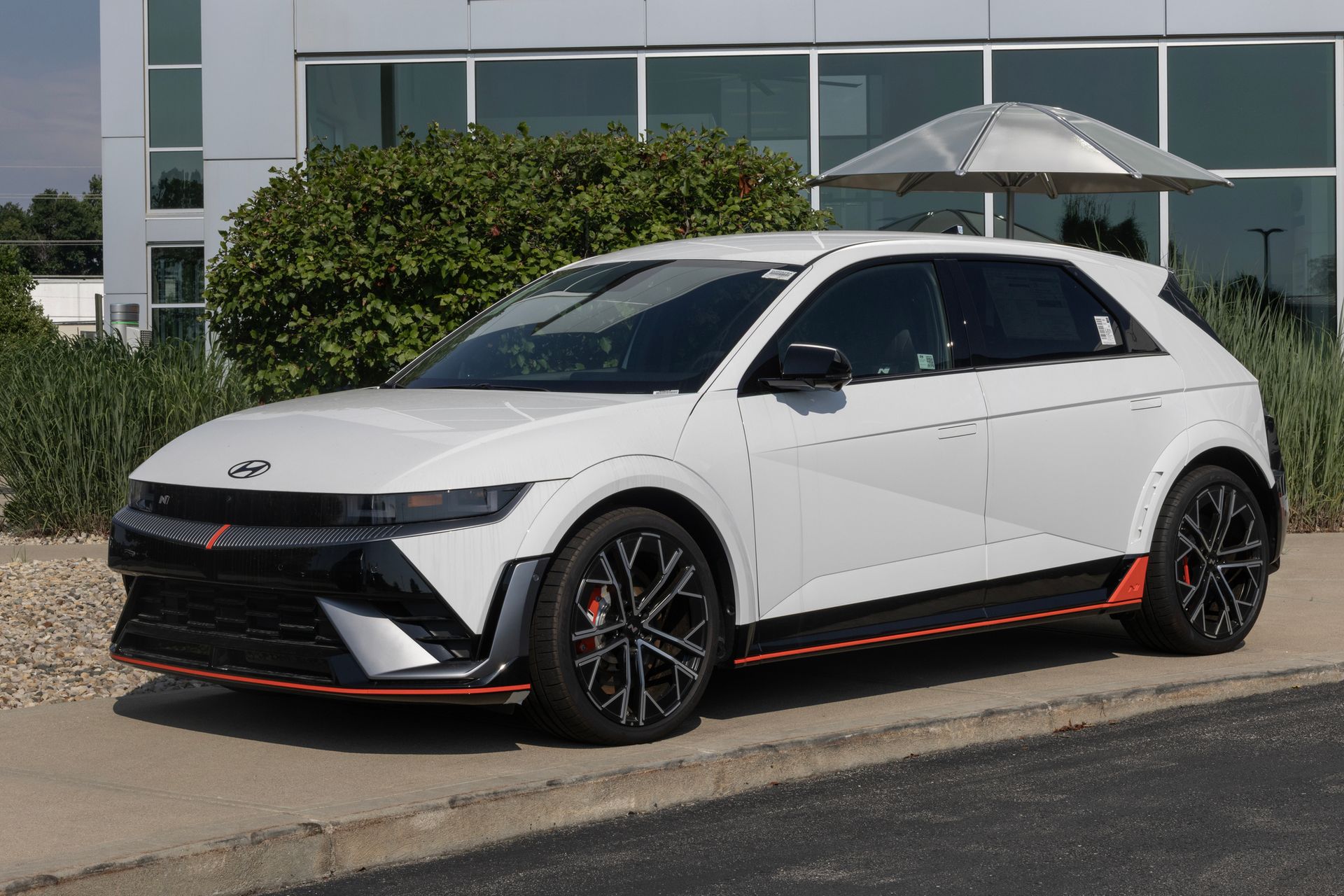
The 2026 Hyundai Ioniq 5 earns a perfect 10 out of 10 in U.S. News' safety score, the only vehicle on this list to achieve that mark. The Insurance Institute for Highway Safety awarded it the Top Safety Pick+ designation, its highest recognition. The Ioniq 5 starts at $35,000, and for 2026, it carries a significant price reduction from its previous model year, making it a meaningfully better value than it already was. The overall U.S. News rating of 9.4 places it second-highest on this list.
Vehicle Testing Editor Zach Doell spent a week driving the Ioniq 5 and describes the experience as “quiet, zippy, and relaxing,” noting the vehicle’s distinctive styling and a cavernous interior with advanced, easy-to-use technology. Standard driving range is 245 miles. The Ioniq 5 has maintained a top-rated position in the electric SUV segment for multiple years, which speaks to a competitive consistency that newer models have yet to match.
The Ioniq 5’s standing on this list is notable on two fronts simultaneously: it is both one of the most affordable and one of the most capable vehicles here, with the highest safety score available, a 9.4 overall rating, and a price cut that increased its accessibility. For buyers who prioritize safety credentials above all else, the Ioniq 5 is the only vehicle on this list to achieve the maximum safety score. A perfect safety rating, a top-five overall U.S. News score, a $35,000 starting price, and a recent price reduction give the Ioniq 5 a value argument that few competitors can answer. The multi-year track record at the top of the electric SUV ratings also gives buyers an established confidence in the Ioniq 5’s quality that first-year models and newly redesigned vehicles cannot provide. For buyers who want the most complete package on this list, the Ioniq 5 is the strongest overall answer.
Luca Piccini Basile / Getty Images
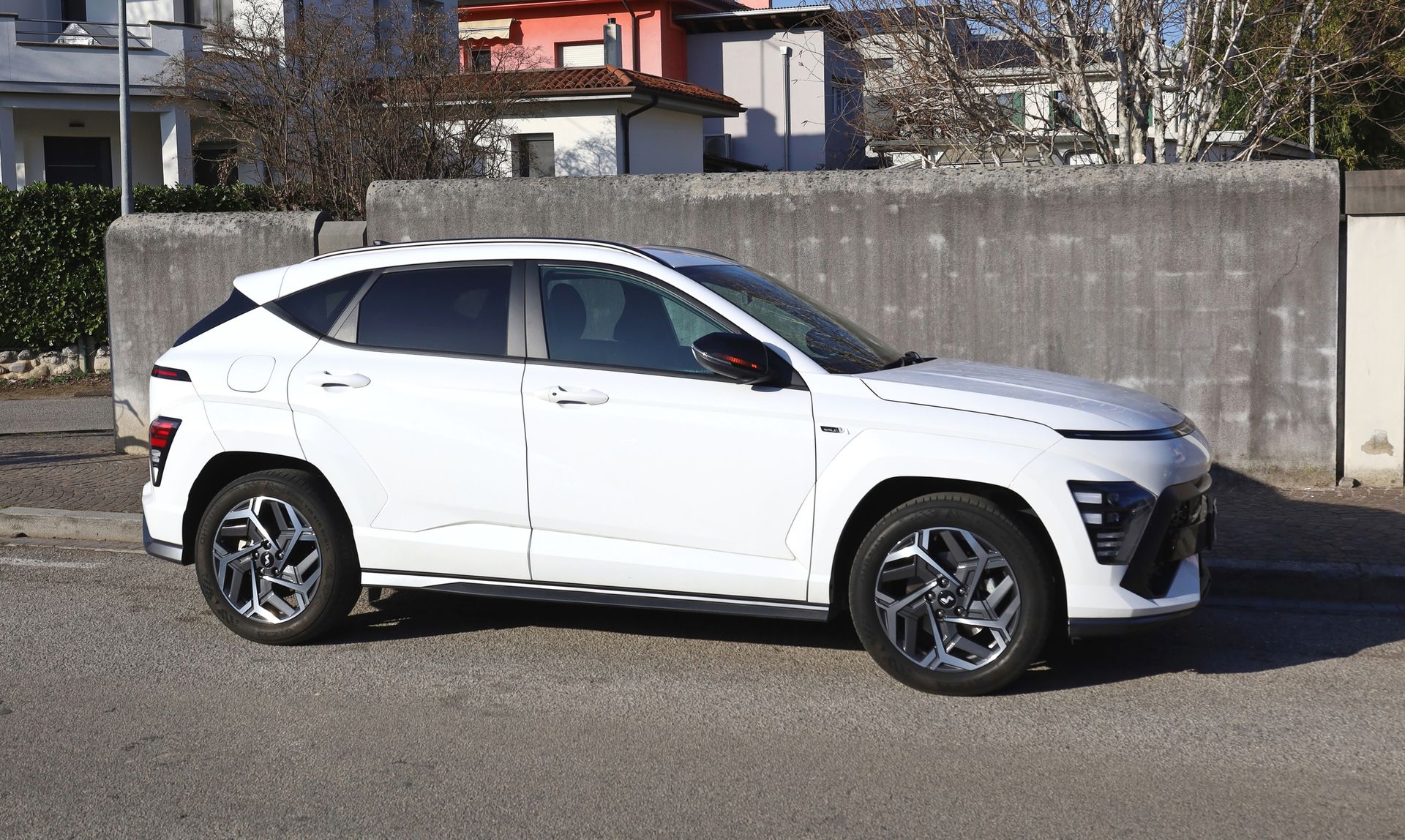
The 2026 Hyundai Kona Electric is reduced to a single trim level, and the remaining configuration delivers 200 miles of standard range. The source describes this as falling short by today’s EV standards. Despite its low price of $32,975, the reduction in trim availability undercuts the Kona Electric’s value case in a way that puts its value proposition in question, especially given that it won the U.S. News Best Electric SUV for the Money award the previous year. The 2026 model retains finalist status for that honor. The U.S. News rating is 8.6.
The Kona Electric compensates with extensive feature content for its price. Wireless Apple $AAPL CarPlay and Android Auto are standard, alongside a 12.3-inch digital instrument cluster, dual-zone automatic climate control, and pedestrian and cyclist detection systems. Reviewer Cameron Aubernon describes the infotainment setup as easy to use with “a very gentle learning curve and simple menus for vehicle operations.” Passenger and cargo space are described as surprisingly generous for such a compact SUV.
The Kona Electric’s position on this list is specific: it is priced well below most competitors and equipped generously, but its 200-mile range limits its practical appeal for buyers who need highway-trip capability. For urban commuters whose daily driving falls consistently within that range and who value the wireless CarPlay and Android Auto integration alongside a low purchase price, the Kona Electric is a genuinely sensible choice. Buyers who need to regularly exceed 200 miles between charges should look elsewhere on this list. The trim consolidation for 2026 reduced the Kona Electric’s flexibility without reducing its price by enough to compensate. For buyers who need to regularly exceed 200 miles between charges, other vehicles on this list offer materially more range at comparable or only slightly higher prices, and the Kona Electric’s strengths in feature content and interior space do not offset the range shortfall for that audience.
Tramino / Getty Images
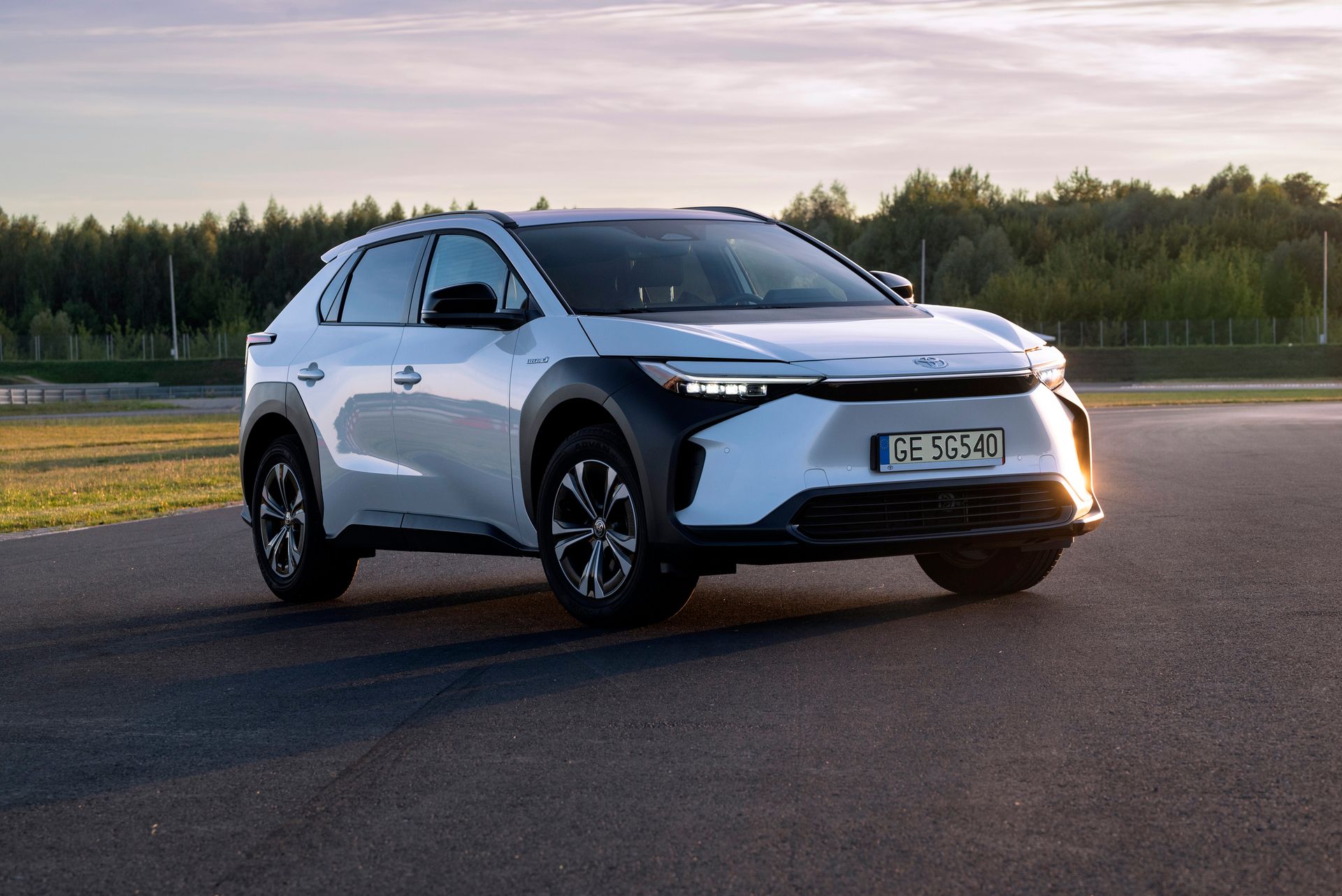
The 2026 Toyota $TM bZ arrives with new styling, a larger battery pack, and a simpler name, dropping the previous bZ4X designation. Vehicle Testing Editor Zach Doell tested the revised model and found it “a vastly better EV than its predecessor,” with the upgraded range and the addition of a Tesla $TSLA-compatible NACS charging port specifically highlighted as improvements. The NACS port gives bZ owners access to Tesla’s Supercharger network, which Doell describes as making charging quick and easy at those stations. The standard range is 265 miles, and the starting price is $34,900. The U.S. News rating is 7.8.
The bZ delivers a comfortable ride with genuine driving character. The powertrain produces swift acceleration from the instant torque that electric motors provide, and handling is described as competent. One notable absence is one-pedal driving, a feature that lets drivers decelerate by lifting off the accelerator without using the brake. The omission may frustrate drivers who rely on that mode in other EVs. Seat cushioning is well done, and adult-sized occupants fit comfortably in both rows, though three passengers in the rear seat would find children more comfortable than adults in the middle position.
The bZ lacks a front trunk — commonly called a frunk — which limits cargo capacity relative to what the vehicle’s overall dimensions would suggest. The 7.8 U.S. News rating places it below several other models on this list, reflecting the trade-offs in the package. The NACS charging port is the bZ’s most practically significant improvement for 2026, giving it access to the densest public charging network in the U.S. and substantially expanding its road-trip capability. Buyers who value charging network access alongside the Toyota brand’s reliability reputation will find the bZ the most directly relevant option on this list. The NACS port in particular closes the infrastructure gap that made previous Toyota EV models less practical for long-distance driving, and it does so at a starting price of $34,900.
NurPhoto / Getty Images
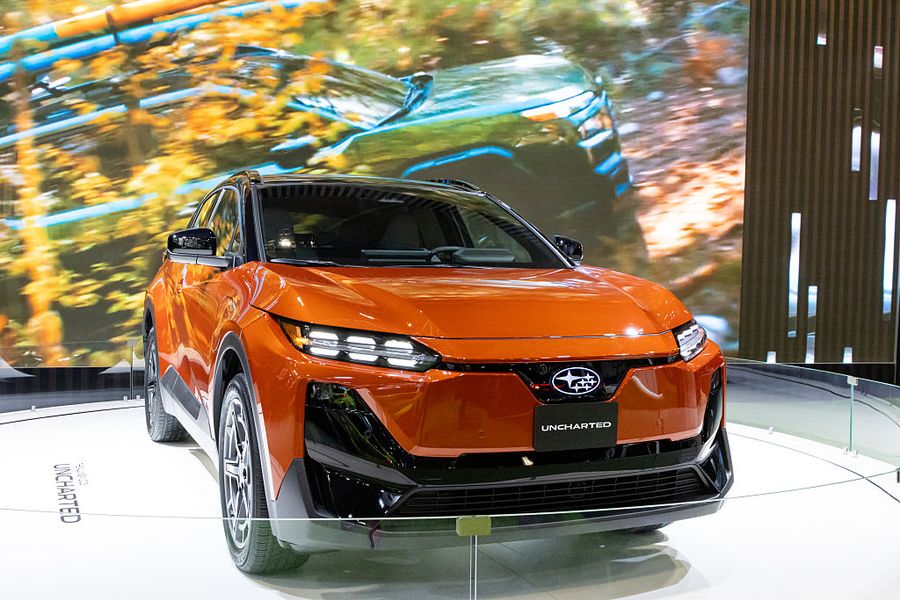
The 2026 Subaru Uncharted is an entirely new model, part of Subaru’s expanded electrification program alongside the also-new Trailseeker. It starts at $34,995 and delivers 308 miles of standard range, making it competitive on distance within its price tier. The U.S. News rating is 7.7, placing it near the bottom of the electric SUV rankings. Managing Editor Alex Kwanten describes the Uncharted as “quick, capable, reasonably efficient, and decently equipped,” while identifying limited rear-seat and cargo room and charging speed as the vehicle’s primary shortcomings.
The Uncharted’s acceleration is respectable, and it carries genuine off-road capability. Both qualities are consistent with the Subaru brand’s established identity in that area. However, all-wheel drive is not standard, which is an unusual omission for a Subaru given the brand’s association with all-wheel-drive vehicles. Upgrading to all-wheel drive improves traction on unpaved surfaces but reduces the range estimate from the base front-wheel-drive configuration.
As a brand-new model, the Uncharted enters the market without the refinement that established competitors have developed across multiple production cycles. The 7.7 rating reflects the gaps in the package, particularly the rear-seat and cargo limitations that Kwanten identifies. Buyers who are drawn to the Subaru brand specifically, who want a 308-mile range at a $34,995 price point, and who prioritize the off-road capability offered by the all-wheel-drive option will find the Uncharted the most relevant vehicle on this list for those priorities. First-generation models typically improve substantially in their second year, so buyers who can wait for a 2027 Uncharted may find a more fully developed vehicle. Those who want a Subaru EV at $34,995 in 2026 and do not want to wait will find the Uncharted a capable and quick first effort that falls short on interior and cargo room. Future model years will likely address those limitations. The 308-mile range is a genuine asset that gives the Uncharted a practical range advantage over several better-rated vehicles on this list.
joao malaquias / Getty Images
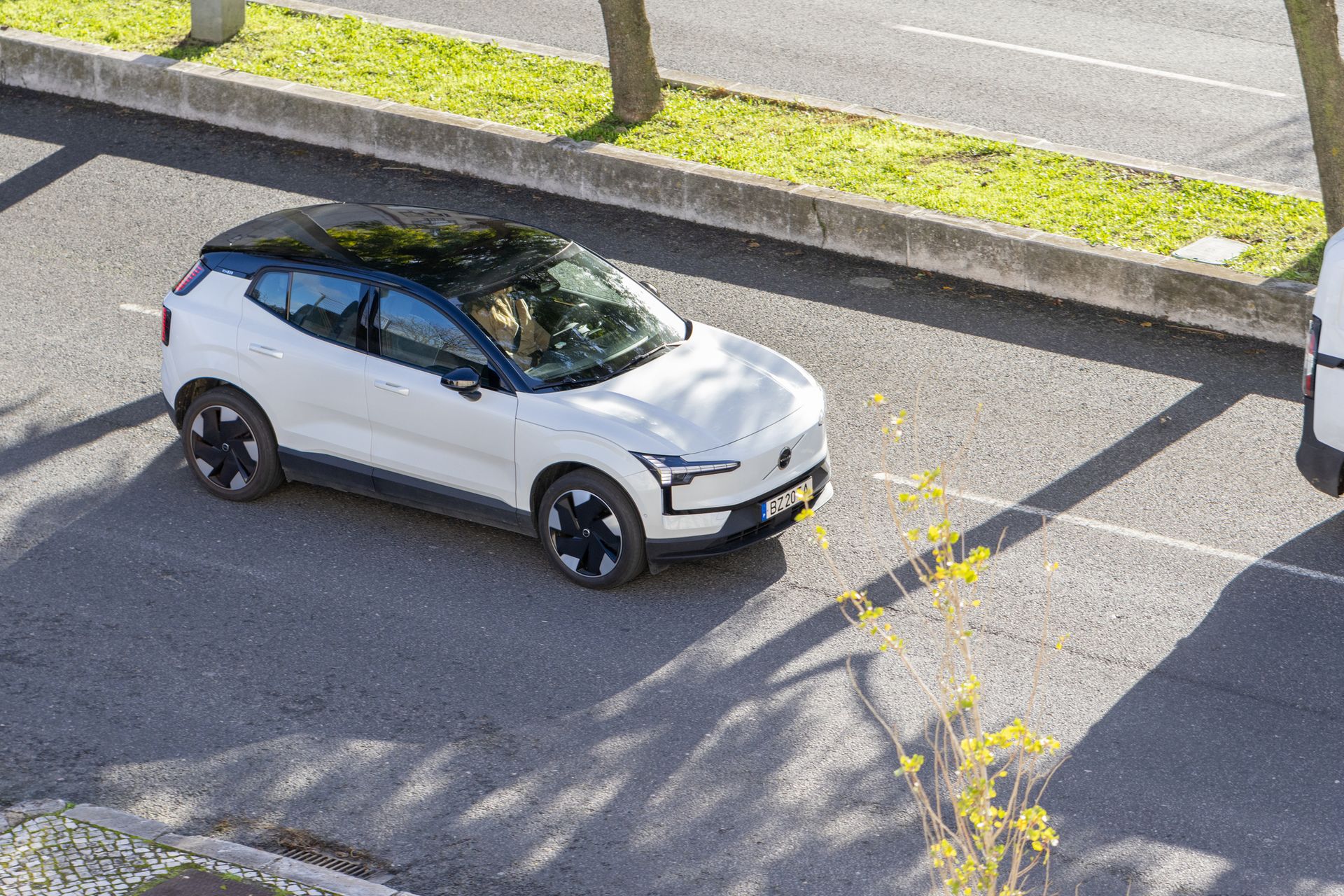
The 2026 Volvo EX30 gains two new trim levels, including a single-motor, rear-wheel-drive variant whose base price is nearly $10,000 lower than the 2025 base model. The price reduction makes the EX30 newly competitive in the affordable electric SUV segment at $35,000. Managing Editor Alex Kwanten describes the EX30 as “fast, fun, and filled with nice materials and cool details,” noting that the vehicle’s compromises include small rear seats, middling range, and a somewhat complicated infotainment interface. Standard range is 261 miles, and the U.S. News rating is 8.2.
The EX30 delivers a lively driving experience with competent handling, giving the vehicle a personality that some competitors in this segment lack. The materials quality and design details reflect Volvo’s luxury identity despite the vehicle’s positioning at the affordable end of the EV market. The rear seats are the most consistently cited limitation in the reviews. Adults in the back row will find the space constraining, which limits the EX30’s practical family utility. Cargo capacity is also described as below average compared to several other vehicles on this list.
A critical practical consideration applies to U.S. buyers: Volvo is discontinuing the EX30 in the American market before the 2027 model year. Buyers who want an EX30 need to act quickly. Once existing dealer inventory is exhausted, the model will not be restocked, and dealership service networks for discontinued models typically thin over time. For buyers who find the EX30’s driving character and Volvo’s material quality compelling at the new, lower price, the purchase window is limited, and waiting to compare other 2026 options may result in the EX30 no longer being available. The nearly $10,000 price reduction makes the EX30 one of the most notable value improvements on this list for 2026, and buyers who act on it before inventory is exhausted gain access to Volvo’s established luxury design sensibility at a price the brand has not previously offered in the U.S. market. The price reduction makes it genuinely worth considering before the availability window closes.
MarioGuti / Getty Images
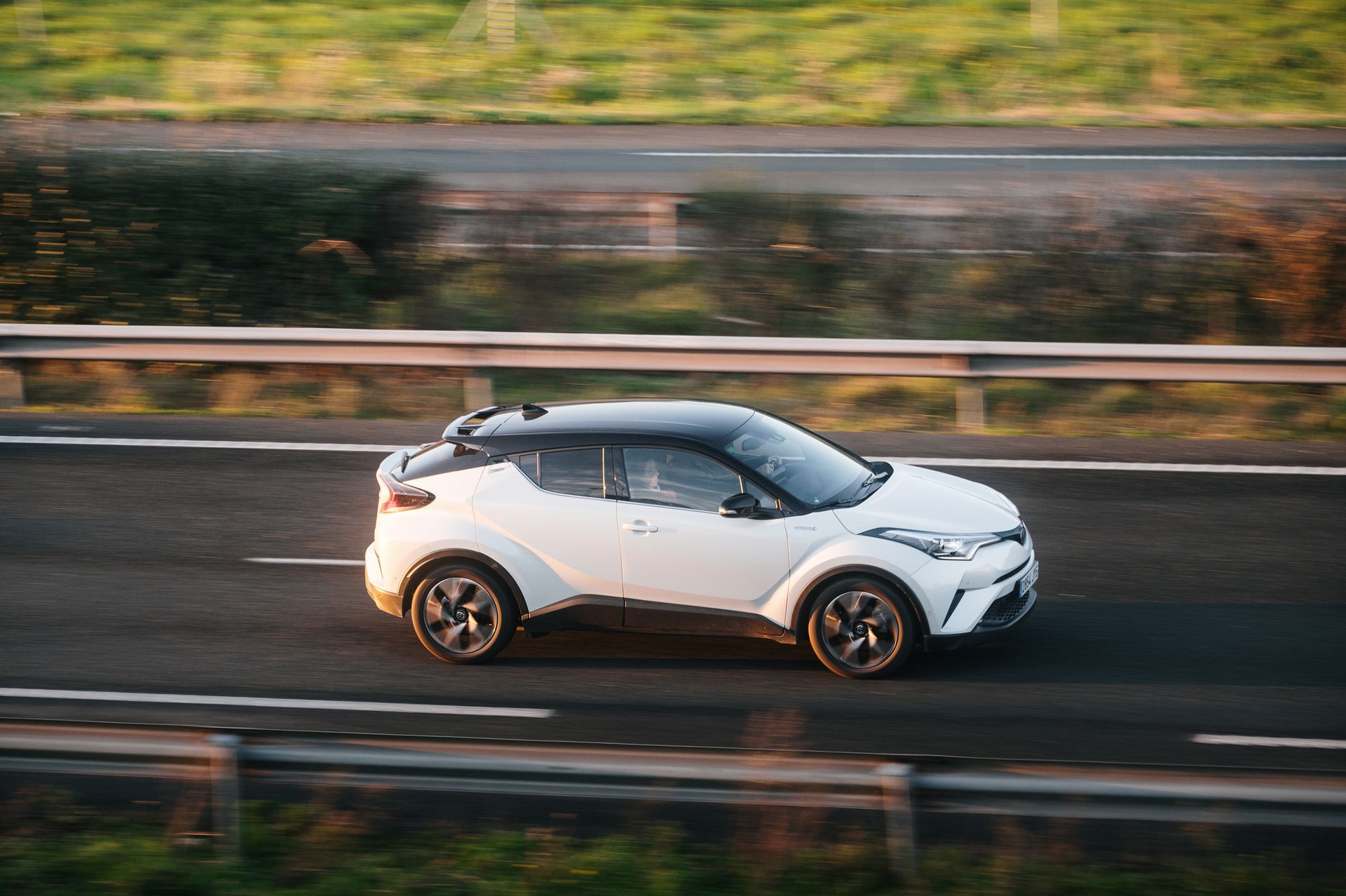
The 2026 Toyota $TM C-HR is an entirely new vehicle, returning to Toyota’s lineup as an all-electric model after a four-year absence, with no mechanical connection to the gasoline C-HR that preceded it. It starts at $37,000 and offers a standard range of 287 miles. The only powertrain available is a dual-motor configuration, which provides the traction and acceleration benefits of all-wheel drive across the full lineup. Vehicle Testing Editor Zach Doell describes the C-HR as having “a sleek, coupe-like physique that gives it a sporty vibe,” with performance that largely backs up the styling and a pliant suspension that makes it comfortable to drive. The U.S. News rating is 8.2.
The interior delivers comfort and ease of use. The cloth and synthetic leather seats are described as comfortable, and the infotainment system centers on a 14-inch touchscreen that is easy to navigate. Standard heated front seats and a heated steering wheel extend the C-HR’s comfort credentials into cold-weather driving. Rear-seat occupants may find the space less generous than the front suggests, and the maximum range of 287 miles, while respectable, is not class-leading at this price point.
The C-HR’s dual-motor standard configuration is its most distinctive structural feature: most vehicles on this list require buyers to step up in trim or pay a premium to access all-wheel drive, while the C-HR delivers it across every configuration. For buyers who want the traction benefits of all-wheel drive without navigating trim-level decisions, the C-HR eliminates that variable entirely. The vehicle’s coupe-like styling also gives it a visual distinctiveness that more conventionally proportioned electric SUVs on this list lack, which may be a deciding factor for buyers who want the aesthetics of a sporty crossover alongside EV efficiency. The standard heated front seats and heated steering wheel are practical additions that give the C-HR winter-weather usability that not all vehicles at this price point include from the base configuration.