From a Toyota Corolla Hybrid at 50 MPG with available AWD to a Tucson Hybrid with the highest rating on the list and a standout ride
Credit: Toyota
Hybrid vehicles have crossed a threshold that once seemed distant: they are now available at starting points that compete directly with comparable gas-only models, rather than requiring a meaningful premium for the efficiency benefit. The average new-car transaction price in 2026 is around $50,000. Every vehicle on this list comes in well below that figure, and several approach the $25,000 range. Hybrid technology has not only improved over two decades of refinement — the current generation of hybrid powertrains is smoother, more powerful, and more reliable than early versions — it has also become affordable enough that the upfront premium no longer requires a multi-year payback calculation to justify.
The fuel savings that a hybrid delivers are genuine and cumulative. A car achieving 50 miles per gallon combined versus 30 covers the same distance on two-thirds less fuel, and the difference in annual fuel cost compounds across the full ownership period. With gas prices continuing to rise, the efficiency advantage becomes increasingly valuable over time, making the hybrid option increasingly attractive even at a modest starting price premium over a gas-only alternative.
The vehicles below appear in U.S. News & World Report, listed from lowest to highest starting point. The list spans compact sedans, a midsize sedan, a hatchback, and compact SUVs, giving buyers across body style preferences a range of efficient options at accessible price points.
Credit: Toyota
The Toyota $TM Corolla Hybrid earns a U.S. News rating of 8.4 out of 10 and achieves 50 miles per gallon combined, delivering 16 more combined MPG than its gas-only sibling at the lowest starting point on this list. The hybrid system draws on technology derived from the Prius, which gives the Corolla Hybrid a proven powertrain foundation. All-wheel drive is available, giving this compact sedan traction that the base gas Corolla does not offer at any price.
The Corolla Hybrid is not powerful at 138 horsepower, which sets expectations accurately: this is an efficiency-focused commuter whose ride refinement and nicely weighted steering give the daily driving experience a quality appropriate to its role. Rear seat legroom is tight, and cargo space trails some class competitors, which are honest limitations for a compact sedan. The interior design is functional rather than inspiring, with materials that read as adequate but not distinctive.
Wireless Apple $AAPL CarPlay and Android Auto are standard, as is a comprehensive suite of driver assistance technology. For buyers whose primary requirement is the lowest possible entry point into hybrid ownership with genuine everyday utility, the Corolla Hybrid’s combination of proven technology, available AWD, and efficient powertrain makes it the most direct answer on this list.
Credit: Hyundai
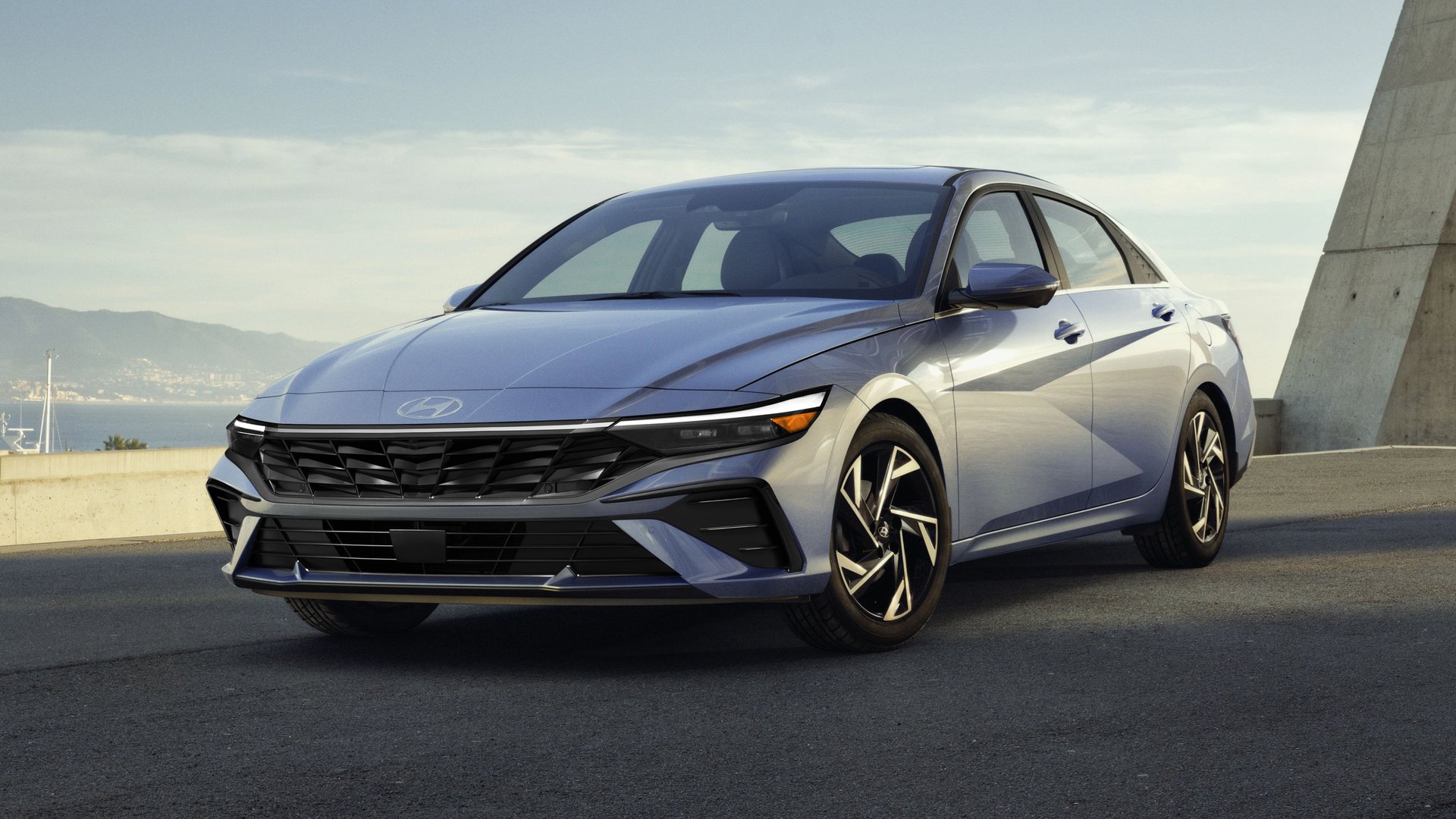
The Hyundai Elantra Hybrid earns a 9.2 U.S. News rating and reaches 54 miles per gallon combined, higher than the Corolla Hybrid above it in the list’s price order. The hybrid system pairs with a six-speed dual-clutch automatic transmission rather than the continuously variable transmission most hybrids use, giving the driving experience a more traditional feel with distinct gear changes rather than the elastic sensation of a CVT. Performance is good for a 139-horsepower system, with handling sharp enough for back roads and comfortable on the highway.
The interior is comfortable in the front rows, with rear legroom that can feel tight for taller passengers. Materials are durable and price-appropriate without straying into the upmarket. Trunk space is average for the class, and the base model includes wireless Apple $AAPL CarPlay and Android Auto, though higher trims require a USB connection for phone mirroring. The standard safety feature list is extensive across all Elantra Hybrid trims.
The 9.2 U.S. News rating gives the Elantra Hybrid a strong overall quality score for its starting point, reflecting the comprehensive value that Hyundai has built into the model. For buyers who want the highest combined MPG on this list at a price within the budget compact segment, the Elantra Hybrid delivers, with a quality rating that validates it.
Credit: Toyota
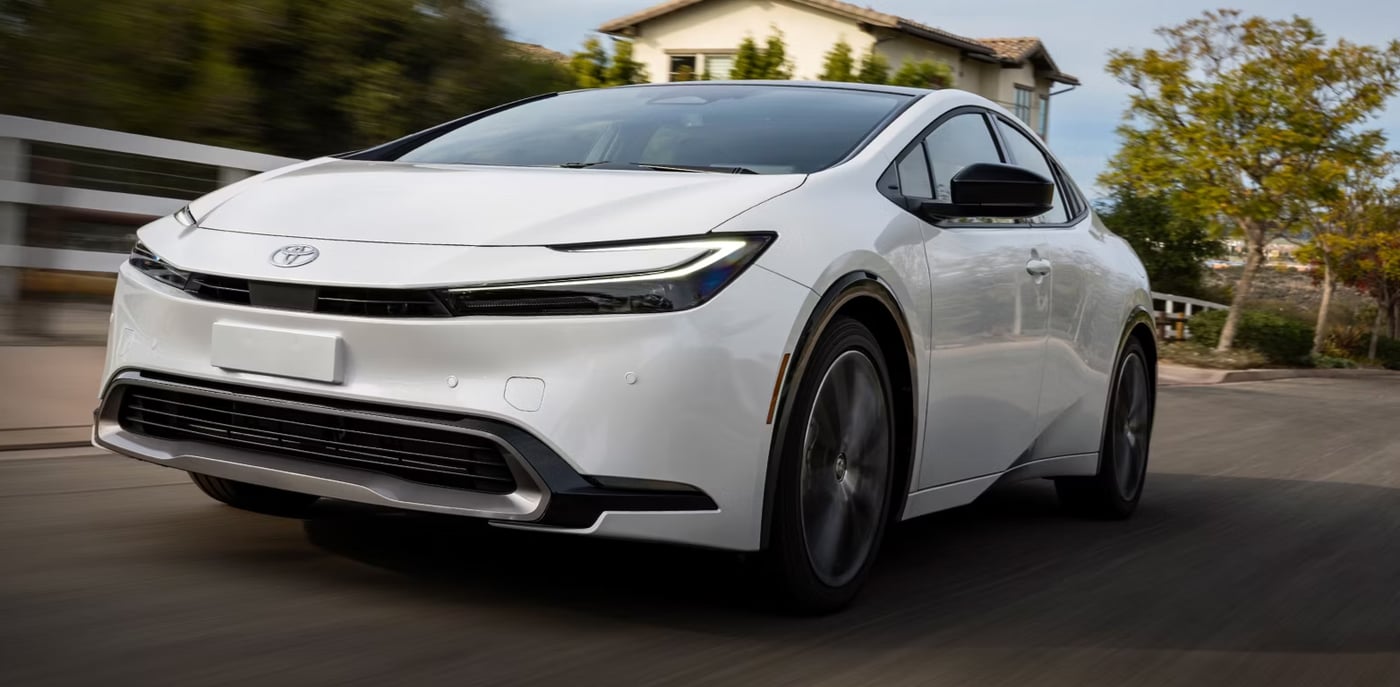
The Toyota $TM Prius earns an 8.8 U.S. News rating and achieves 57 miles per gallon combined, the highest fuel economy figure on this list by four MPG. The Prius pioneered affordable hybrid ownership in the United States and has continued to refine the formula across multiple generations. The current version is stylish and genuinely fun to drive on back roads, with handling that reviewer Mike Hagerty describes as almost tossable — a characterization that would have seemed improbable for any previous generation of the model.
The nearly 200-horsepower powertrain is not fast, but it is not slow, and the combination of performance and efficiency gives the Prius a balance that neither pure performance cars nor purely utilitarian economy cars achieve simultaneously. Front-wheel drive is standard, with AWD available at a slight fuel economy penalty. At higher speeds, the Prius is louder than rivals, which is its primary refinement limitation.
The sloped roofline that gives the Prius its aerodynamic efficiency also tightens the rear seat, making it uncomfortable for taller back seat passengers. The front seats are roomy and supportive, and the hatchback body style gives the cargo capacity an advantage over sedan alternatives. Even the base model includes wireless Apple $AAPL CarPlay, Android Auto, and a full driver assistance suite.
Credit: Toyota
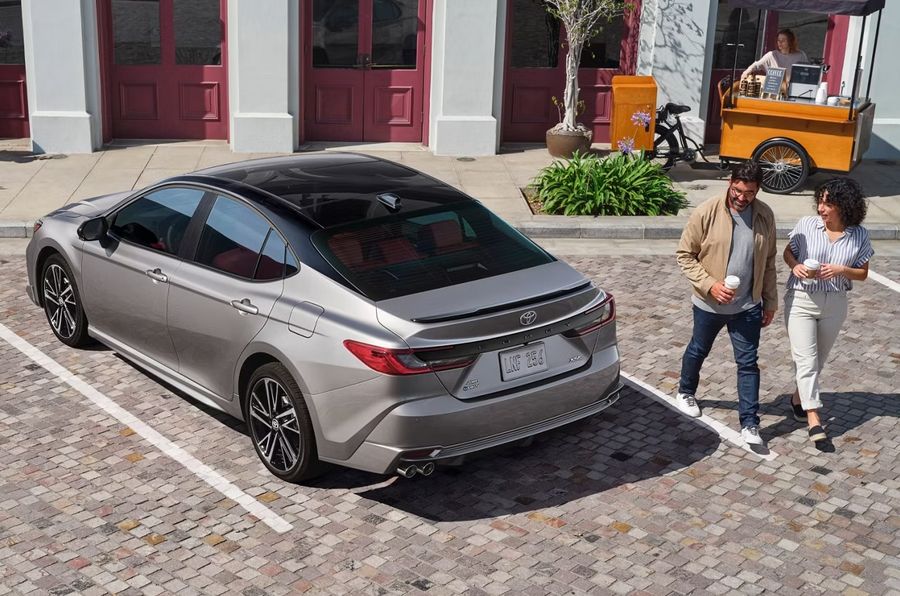
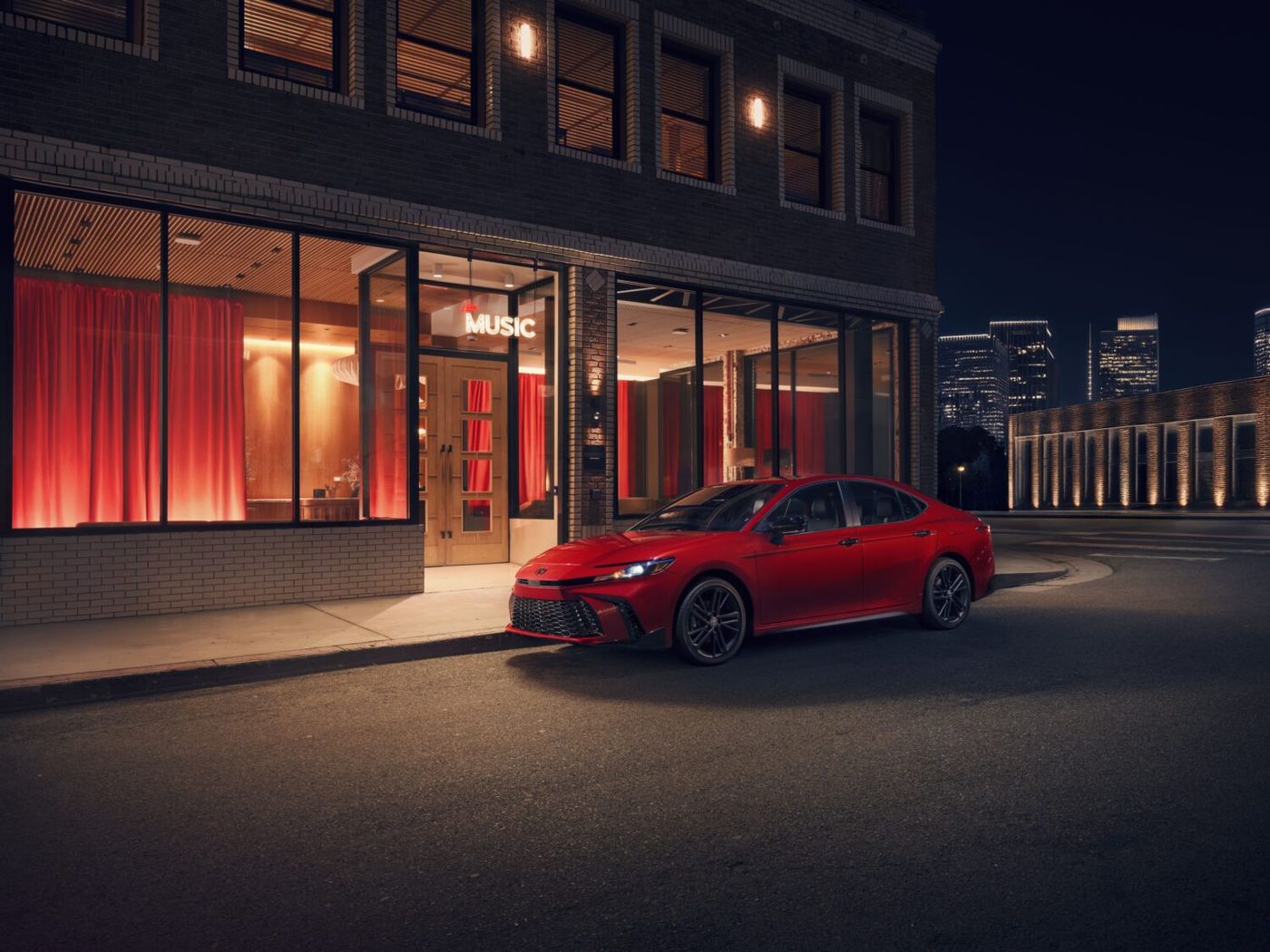
The Toyota $TM Camry earns the highest U.S. News rating on this list at 9.4 out of 10, and it has a five-star overall safety rating from the National Highway Traffic Safety Administration across frontal, side, and rollover crash tests. The NHTSA results give the Camry a safety rating that no other vehicle on this list matches at the same level of specificity. Every Camry now comes as a hybrid by default, with a powertrain producing 225 horsepower in the front-wheel-drive configuration and 232 horsepower with optional AWD.
The Camry is responsive without being exciting, with comfort-first handling, pleasant steering, and braking that the reviewer describes as similarly well-calibrated. Interior space is generous, though taller passengers are better served in the front than the rear. The front passenger position may feel separated from the center console depending on the trim configuration. Toyota equips every Camry trim with driver-assistance technology as standard.
The combination of the strongest overall rating, the strongest safety score, an all-hybrid standard powertrain, and a starting point under $30,000 gives the Camry a value case that the awards validate specifically: it wins U.S. News’s Best Midsize Hybrid Car for the Money for 2026, reflecting the breadth of what the vehicle delivers at its price point.
Credit: Kia
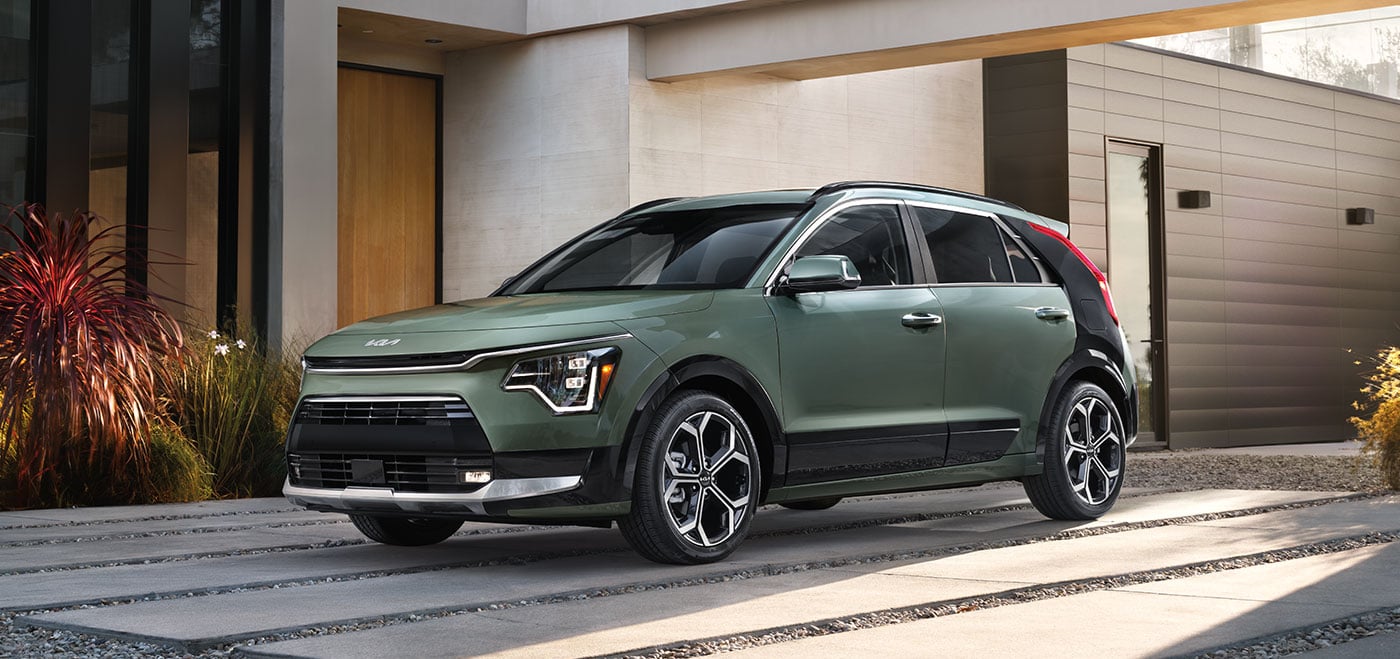
The Kia Niro earns an 8.6 U.S. News rating and delivers 53 miles per gallon combined, making it a subcompact SUV with above-average cargo space for its size. The 139-horsepower powertrain is modest, but 195 pound-feet of torque gives the Niro a responsiveness around town that the horsepower figure understates. Every Niro uses front-wheel drive and a dual-clutch automatic transmission, and the smaller 16-inch wheels on most trims give the ride quality the tire sidewall to absorb road irregularities comfortably.
The interior is roomy in both rows, with ample head- and legroom, comfortable seating, and above-average cargo space. Materials are simple but well-designed, and the infotainment system is easy to use with wireless Apple $AAPL CarPlay and Android Auto standard. The dual-purpose touch controls for audio and climate are the primary interface frustration, requiring eyes-off-the-road attention that physical controls avoid.
The Niro’s combination of a practical subcompact SUV body style, strong fuel economy, a roomy interior, and a competitive starting point makes it particularly well-suited to urban and suburban buyers who want the flexibility of an elevated driving position without the efficiency penalty that larger SUVs impose.
Credit: Honda
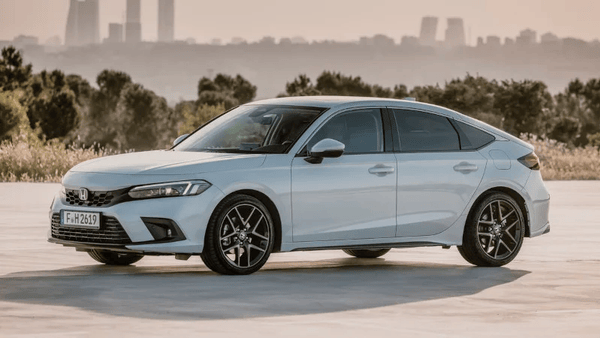
The Honda $HMC Civic Hybrid earns the second-highest U.S. News rating on this list at 9.3 out of 10 and achieves 49 miles per gallon combined with a dual-electric-motor system that produces 200 horsepower. The reviewer’s description of the Civic Hybrid as punching up reflects the specific quality gap between its driving experience and interior refinement and what its starting point would suggest. Braking and steering are both excellent in performance and feel, giving the Civic Hybrid a driving quality that rivals those at significantly higher price points and works harder to achieve.
The interior is spacious, with comfortable seats and rear seating that accommodates taller passengers. Fit and finish are top-notch, though some specific materials feel less premium than the overall execution suggests. The infotainment system is simple and complemented by physical climate controls below it, which give the interface a level of usability that purely touchscreen systems sacrifice. Trunk space nearly matches that of the larger Toyota $TM Camry.
The Civic Hybrid’s front-wheel-drive-only configuration is the primary mechanical limitation relative to the Corolla Hybrid and Camry, which offer AWD. For buyers in winter climates, that tradeoff is worth evaluating. For buyers in milder regions, the Civic Hybrid’s combination of high efficiency, strong dynamics, and premium interior quality makes it the most rewarding vehicle on this list to drive.
Credit: Hyundai
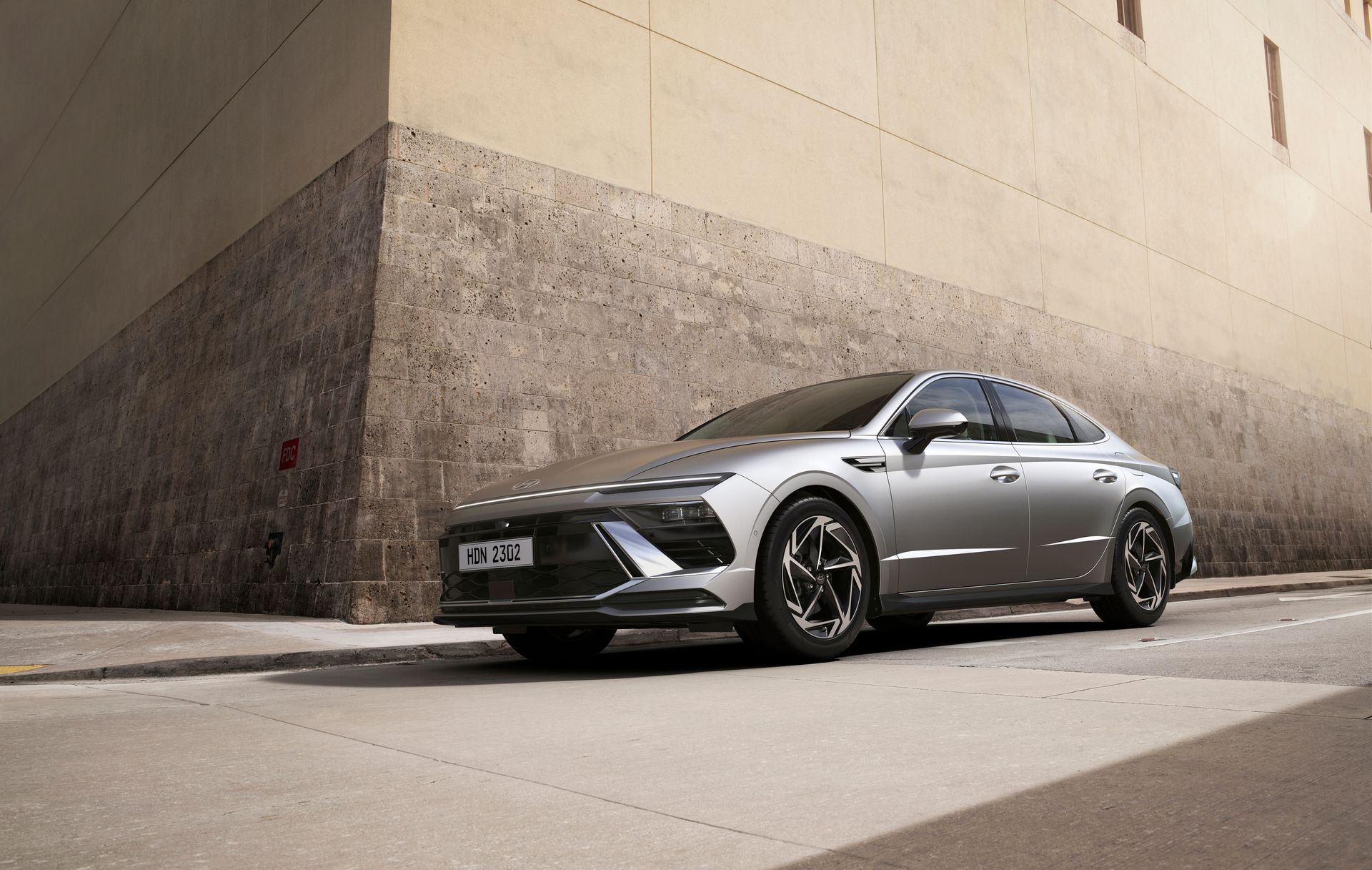
The Hyundai Sonata Hybrid earns a 9.0 U.S. News rating and delivers 51 miles per gallon combined from a 192-horsepower hybrid system paired to a six-speed automatic transmission. The Sonata’s character is comfort-oriented: competitors are quicker and more engaging to drive, but the Sonata Hybrid focuses on ride quality and cabin quietness in a way that specifically suits buyers for whom the driving experience is a background condition rather than a primary consideration.
The interior is luxurious in higher trims, with comfortable and roomy seating across both rows. Trunk space is a touch larger than the Camry’s, which gives the Sonata Hybrid a practical cargo advantage in the midsize sedan segment. Every trim includes a large infotainment screen with wireless Apple $AAPL CarPlay and Android Auto, and the base model’s standard driver-assistance features are substantial.
The Sonata Hybrid occupies a midsize sedan position on this list alongside the Camry, with a slightly lower starting point and a different character emphasis: the Camry prioritizes safety scores and overall quality balance, while the Sonata Hybrid prioritizes cabin refinement and ride comfort. Buyers who specifically value a quiet, smooth driving environment will find the Sonata Hybrid’s specific strengths well-aligned with that preference.
Credit: Toyota
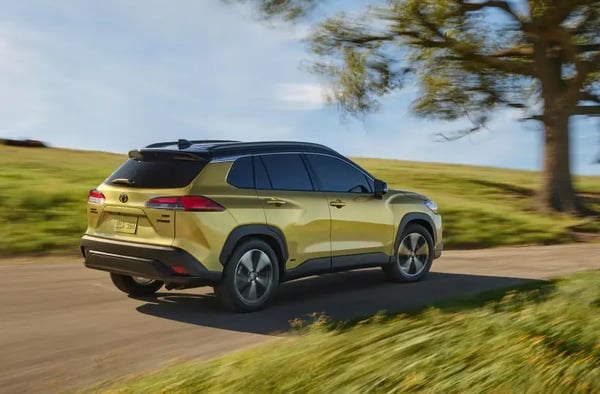
The Toyota $TM Corolla Cross Hybrid earns an 8.1 U.S. News rating and achieves 42 miles per gallon combined with standard all-wheel drive across all configurations. The 196-horsepower hybrid system is quicker than the gas-only Corolla Cross, which addressed the primary criticism of the base model’s underpowered engine. Ride quality is the model’s specific strength: the short wheelbase gives the Corolla Cross Hybrid a tight turning radius that urban driving rewards, and the suspension tuning delivers a comfortable, poised experience.
The front seats are comfortable, with good space for taller drivers, while the rear seat is tight on legroom and overall width. Interior materials lean toward hard plastics in a design that is relatively simple rather than premium. Cargo space is adequate but trails some class rivals. Standard equipment includes a digital instrument cluster, wireless Apple $AAPL CarPlay and Android Auto, and Toyota’s Safety Sense 3.0 safety suite.
The Corolla Cross Hybrid’s standard AWD gives it a practical advantage over front-wheel-drive competitors at similar starting points, and the efficiency improvement over the gas-only model is substantial. For buyers who want a subcompact SUV with standard traction capability, reasonable efficiency, and Toyota’s reliability heritage at a starting point under $30,000, the Corolla Cross Hybrid delivers that combination at the lowest price on this list among the AWD SUV options.
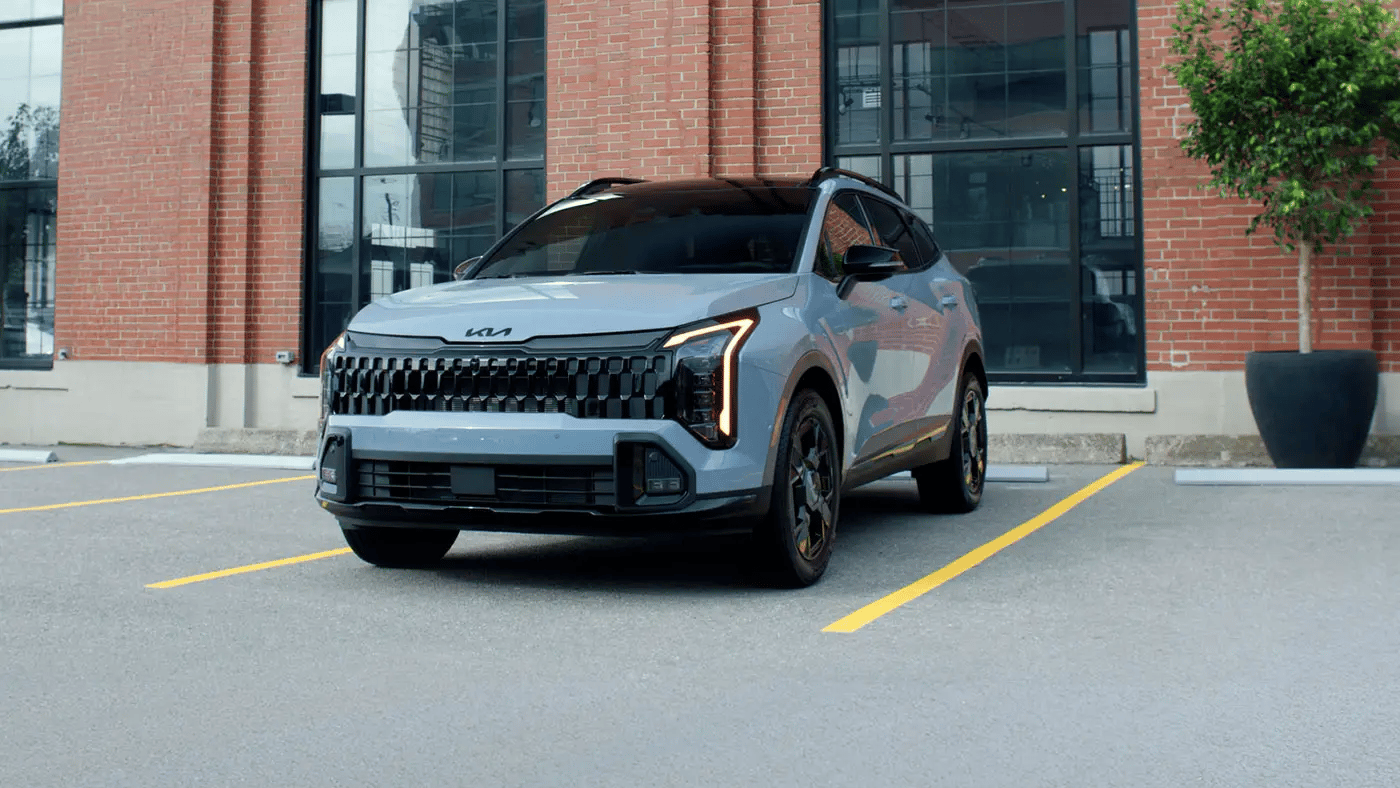
Credit: Kia
The Kia Sportage Hybrid earns a 9.3 U.S. News rating, the highest among the SUVs on this list, and achieves 42 miles per gallon combined from a 232-horsepower hybrid system available in both front- and all-wheel-drive configurations. The reviewer’s assessment of the drivetrain as responsive and torquey in testing gives the performance credibility from firsthand experience: this is a powertrain that delivers its power as the specifications accurately represent. Ride quality is comfortable with a focus on refinement rather than sport.
Second-row space is a particular strength: a reviewer who is 6 feet 1 inch can sit behind their own driving position with ease, which gives the Sportage Hybrid rear-seat space that the compact SUV category does not always deliver. Seats are comfortable throughout, and interior quality is more premium than the starting point would suggest. The twin 12.3-inch screens give the gauge and infotainment displays a distinctive visual layout, with wireless Apple $AAPL CarPlay and Android Auto standard.
The Sportage Hybrid wins U.S. News’s Best Compact Hybrid SUV for the Money award for 2026, providing external validation for the value case that the quality score supports. For buyers who want the best-rated compact hybrid SUV on this list with genuine second-row space, the Sportage Hybrid’s combination of high rating, spacious interior, and responsive powertrain makes it the SUV category’s strongest value argument.
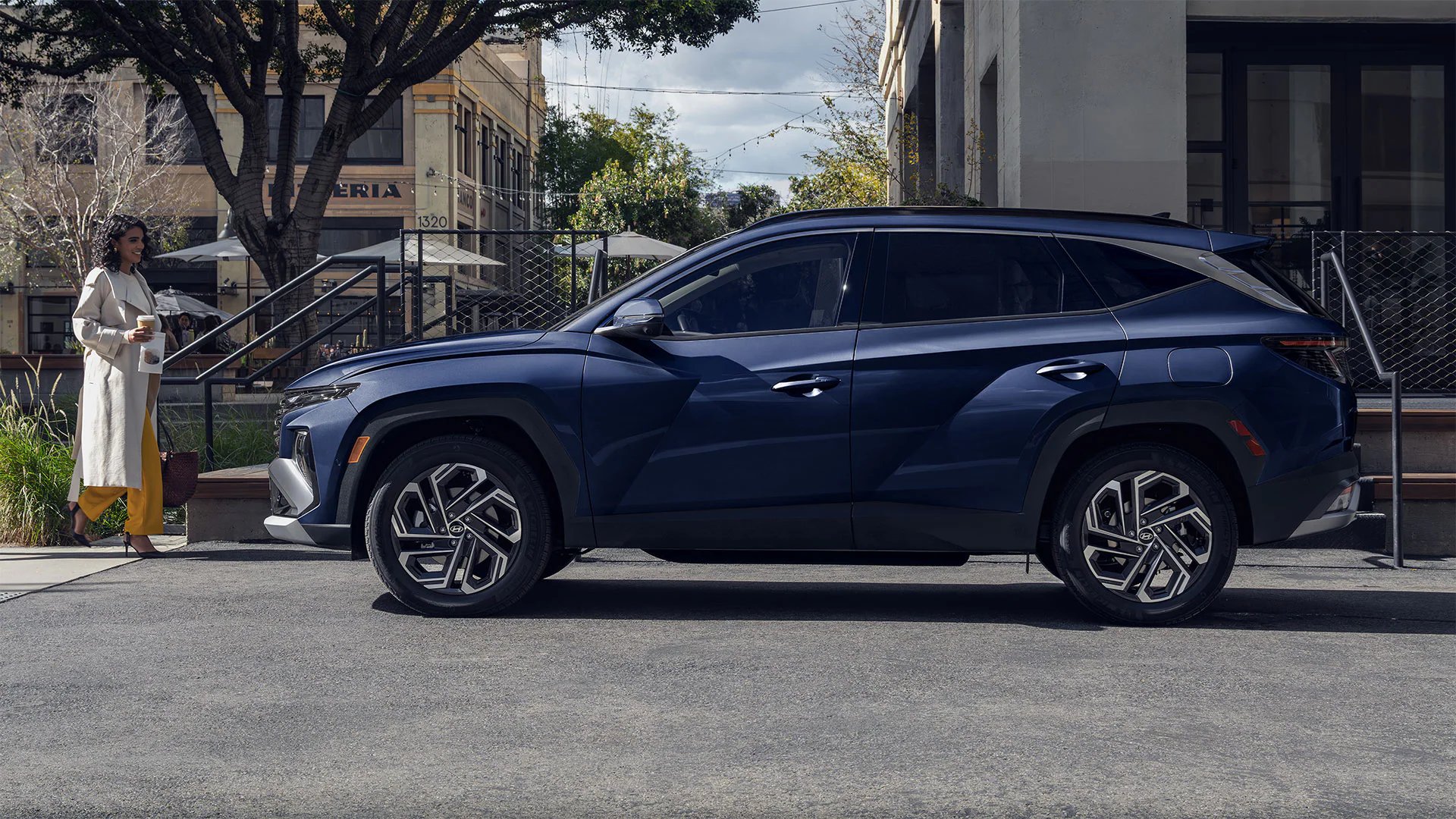
Credit: Hyundai
The Hyundai Tucson Hybrid earns a 9.4 U.S. News rating, the highest on the entire list, from a turbocharged 231-horsepower hybrid system paired with a six-speed automatic transmission. The 38 combined MPG is the lowest fuel economy figure on the list, reflecting the trade-off the Tucson Hybrid makes for its size, performance, and interior space. The ride quality is described as standout, with a comfortable and poised character that the suspension tuning delivers consistently.
The cabin is spacious and airy, with nearly segment-leading rear legroom and comfortable seats in both rows that accommodate tall passengers without compromise. Cargo capacity is similarly excellent. The large infotainment display, revised climate controls introduced in 2025, and a long list of standard driver-assistance features give the Tucson Hybrid a technology and safety level that the top overall rating reflects.
The Tucson Hybrid closes this list at the highest starting point of the ten vehicles, which gives buyers a clear decision point: the highest overall quality rating, the most spacious interior, the strongest ride quality, and the most powerful hybrid system come at the list’s highest starting point and lowest fuel economy figure. For buyers whose priorities weigh overall quality and interior space above maximum efficiency, the Tucson Hybrid delivers on both dimensions more completely than any other vehicle here.
