From Cornwall's clearest water at Porthcurno to an Essex estuary island where the seafood shack is reason enough to make the trip
Paulina Herpel / Unsplash
England’s coastline does not announce itself with the tropical clarity of the Mediterranean or the Caribbean. The water is cold, the weather is unpredictable, and the pebble beach is a feature rather than a compromise at several of the country’s most celebrated seaside destinations. What England’s beaches offer instead is something that warmer and more famous coastlines have largely lost: a sense of the coast as genuinely wild, shaped by wind and tide and geological time rather than by tourism infrastructure. The chalk cliffs of Kent, the limestone arch at Durdle Door, the granite coves of Cornwall, and the vast flat sands of Norfolk give England a coastal geography of genuine variety, and the cool climate means that even well-known beaches retain a quality of emptiness at the edges of the season that Mediterranean beaches traded for year-round crowds long ago.
The case for English beaches has also strengthened as southern European summer temperatures have risen to levels that make a July week in Mallorca or the Algarve less comfortable than it once was. A summer day on a Cornish beach, where the water is bracing but the air is mild, the seafood is local and fresh, and the nearest town has a pub with a fire for when the inevitable Atlantic squall arrives, is a genuinely different and increasingly appealing version of the beach holiday. The Minack Theatre performance above the ocean, the Tate St. Ives gallery on the harbor, and the oyster shed on Mersea Island give England’s coast a cultural program alongside the swimming and walking that warmer destinations do not always offer.
The 10 beaches below appear in Travel + Leisure, covering destinations from the Isles of Scilly in the far southwest to Norfolk in the east and the Isle of Wight in the south. Each offers a distinct reason to visit beyond the sand itself.
BEN ELLIOT / Unsplash
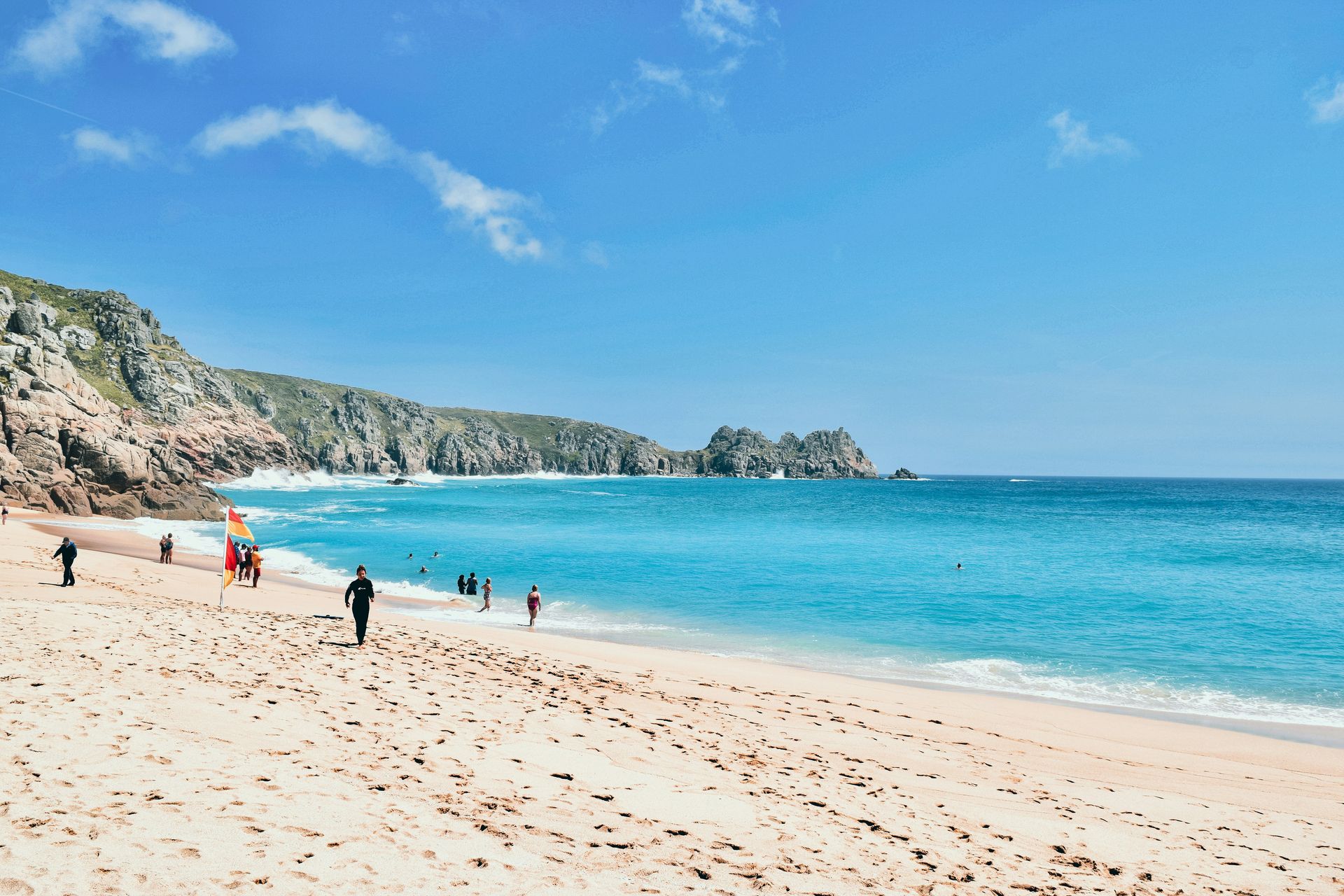
Porthcurno, at the far southwestern tip of Cornwall near Land’s End, makes the claim of prettiest beach in England with the visual evidence to support it: clear green water, pristine white sand, and rocky granite cliffs that shelter the cove from Atlantic swells and give the bay the calm, protected swimming conditions that the surrounding Cornish coastline’s exposure to the open ocean does not usually permit. The clarity of the water gives Porthcurno a Mediterranean quality that surprises visitors expecting the murky green of a typical English beach, and the dolphins and seals that occasionally visit the area add a wildlife dimension to snorkeling that Mediterranean beaches rarely offer.
The Minack Theatre, an open-air amphitheater carved into the clifftop above the beach by Rowena Cade in the 1930s, gives Porthcurno a cultural attraction of extraordinary specificity: a theater built into the granite cliff face above the ocean, where performances run throughout the summer with the Atlantic as backdrop and the surrounding sea providing the sound design that no artificial set can replicate. A full moon over the ocean from the theater’s stone seats during an evening performance is among the most specifically Cornish experiences available anywhere in the county, and the combination of afternoon beach and evening theater gives the Porthcurno day trip a range of experiences that most English coastal destinations do not compress into a single location.
The beach’s position at the southwestern extreme of mainland England makes it a substantial journey from most of the country, which helps maintain its quality. The distance filters out the casual visitor and leaves the beach to those who made the deliberate effort to reach it. The nearest settlement offers minimal but adequate practical infrastructure, without the commercial development that more accessible Cornish beaches have attracted, and the landscape approach through the Penwith peninsula’s small granite villages and open moorland gives the arrival a quality specific to this remote corner of England.
Credit: Cornwall Beaches
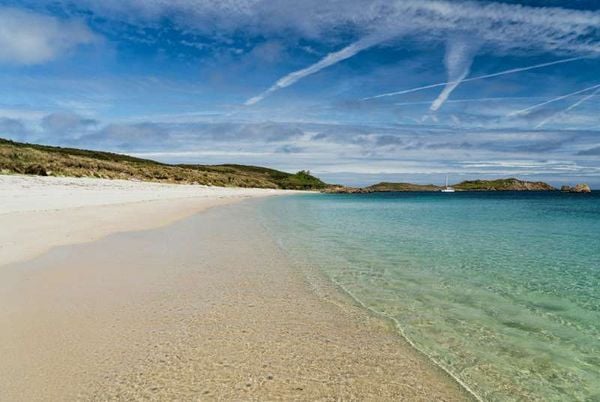
The Isles of Scilly, 30 miles off the Cornish coast and accessible by ferry or small plane from Penzance, give England its clearest blue water and its most isolated beaches in a setting that the Gulf Stream’s warming influence makes surprisingly mild relative to the latitude. St. Martin’s, one of the inhabited islands with fewer than 140 residents, gives Great Bay its primary practical advantage: the population is small enough that a quiet strip of white sand to oneself is essentially guaranteed rather than merely hoped for. The water quality in the Scilly archipelago exceeds anything available on the Cornish mainland, and Great Bay’s combination of clear water and genuine isolation gives it a strong claim on the best beach in England that Porthcurno’s more photogenic cliffs contest but do not definitively defeat.
St. Martin’s Vineyard and Winery, open seasonally on the south side of the island, gives the Great Bay visit a distinctive preliminary activity: tasting wine produced on one of England’s most remote inhabited islands, grown in the Scilly’s exceptionally mild climate, before carrying a bottle to the sand for a picnic gives the beach afternoon a local specificity that is difficult to replicate anywhere else in England. The vineyard’s wines reflect the islands’ unique terroir, produced in conditions that no mainland English wine region can match for maritime character.
The journey to the Isles of Scilly is itself part of the experience. The Scillonian III ferry from Penzance crosses 30 miles of open Atlantic in waters that can be rough or serene depending on the season and the weather, and the arrival at the island’s small quay has a quality of earned remoteness that airports and road journeys do not produce. Travelers $TRV who find the crossing rough will appreciate that the flight from Penzance Land’s End Airport takes eight minutes and delivers the same island without the maritime investment.
The islands’ protected status as an Area of Outstanding Natural Beauty gives the entire Scilly archipelago a conservation designation that limits development and maintains the water and beach quality that make Great Bay worth the effort to reach. Travelers who combine Great Bay with a walk across the island’s interior farmland and a visit to the island’s small harbor give the day a completeness that the beach alone, however beautiful, does not provide.
Credit: Visit South Devon Official Site
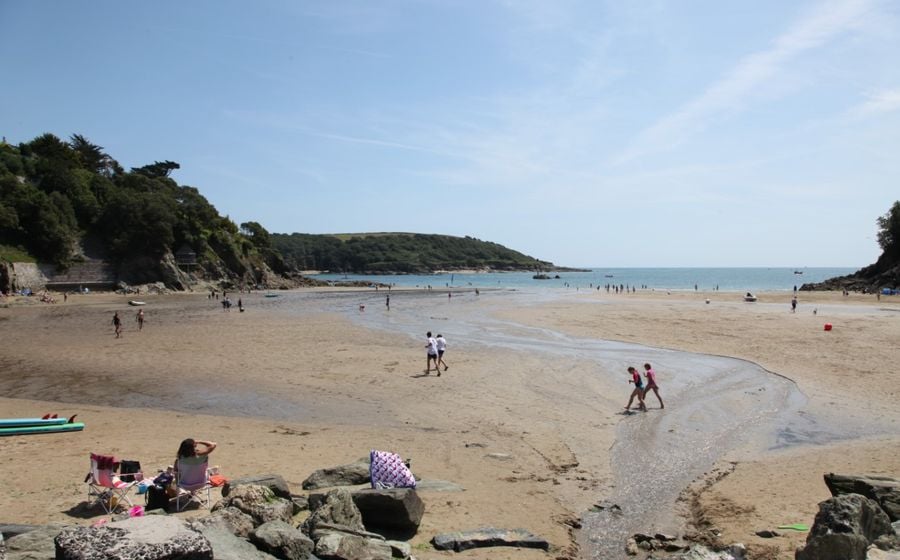
Salcombe North Sands, a sheltered cove at the mouth of the Salcombe estuary in south Devon, gives travelers one of England’s most visually surprising beaches. The combination of white sand, calm water, and the specific angle of the southern English sun at certain tidal states produces a turquoise and azure color in the water that visitors consistently describe as more reminiscent of the Adriatic or the Caribbean than the English Channel. The tidal behavior is extreme, with the beach disappearing completely at high tide and the full bay revealing itself at low tide, which gives swimming and rock-pool exploration a temporal dimension that rewards tide-table consultation and a correctly timed arrival.
The 20-minute coastal walk from Salcombe town along Cliff Road gives the beach access a landscape introduction that the beach itself rewards. The views of the estuary, the small sailing vessels anchored in the channel, and the wooded hills on the far bank give the approach a quality that arriving by car directly to a beach car park does not provide. Continuing 30 minutes further along Cliff Road to Overbeck’s Garden, a National Trust property containing rare and exotic plants that the south Devon microclimate allows to survive at this latitude, gives the walk an endpoint of horticultural interest that extends the day well beyond the beach itself.
Salcombe town serves as the practical and social center for beach visits. The gin distillery at Salcombe Gin offers tours and tastings of four gins produced using local botanicals, giving the afternoon a specifically Devon conclusion that the town’s seafood restaurants and waterfront pubs complement. Salcombe’s reputation as one of the more expensive small towns in England reflects both its beauty and the demand that beauty generates, but the beach itself remains free, and the coastal walk costs nothing.
The specific tidal window that reveals the full bay at low tide is worth planning around precisely because the beach that appears is so much more impressive than the sliver of shore available at high tide. Tide tables for Salcombe are available online, and the planning required takes five minutes, which is a small investment for the difference it produces.
Seb Heid / Unsplash
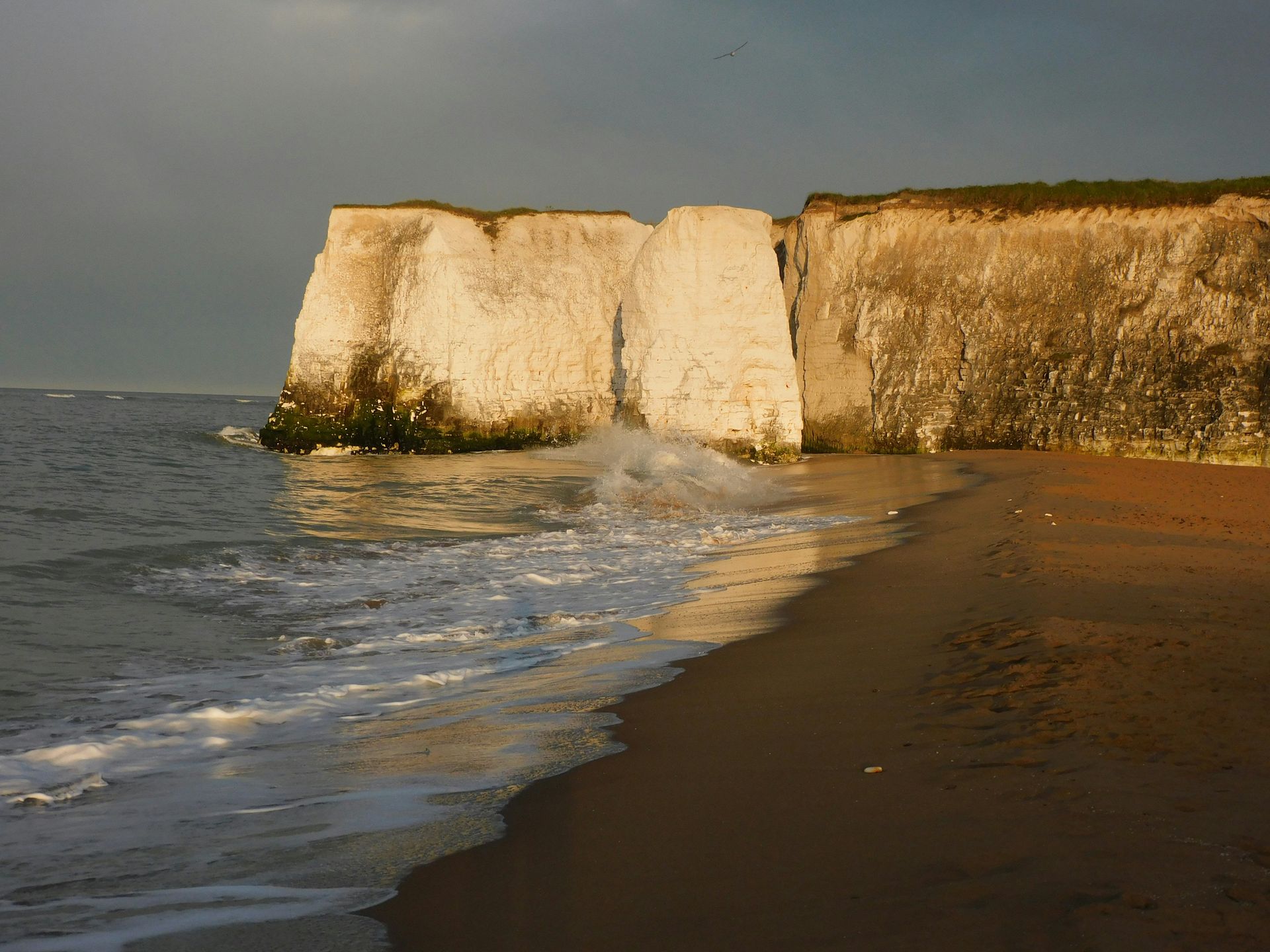
Botany Bay, the northernmost of seven beaches in the Broadstairs area of Kent, gives southeastern England its most distinctive visual identity: chalk cliffs backing a calm, clean bay whose water quality has earned a Blue Flag designation, reflecting environmental management standards consistently maintained rather than aspirational. The tidal behavior follows the same extreme pattern as Salcombe: a wide rectangle of sand at low tide where chairs and towels spread comfortably, and a beach that disappears almost entirely at high tide, giving the visit a tide-governed rhythm that requires planning but rewards correct timing.
The chalk cliffs give Botany Bay its fossil-hunting dimension. At low tide, when sea sponges and urchins that the chalk seabed releases become visible in the rock pools and on the exposed beach, dedicated fossil hunters find specimens that the geological age of the chalk, laid down approximately 70 million years ago, makes both significant and accessible. The Kent coast’s Cretaceous chalk geology makes it one of England’s most productive fossil hunting locations for amateur collectors, and Botany Bay’s low-tide exposure gives good access to the material without specialized equipment or permits.
Broadstairs, the town backing the seven beaches, offers Botany Bay a practical center with literary depth. Charles Dickens spent summers here and set parts of several novels in the surrounding landscape, giving the town a cultural dimension alongside its beaches. The town’s bakeries, fish and chip shops, and seafront cafes give the beach visit a food program that the Blue Flag water quality supports with confidence, and the town’s Victorian seaside architecture gives the approach from the station a specific character that more modern resort towns have lost.
Broadstairs itself, the town that backs the seven beaches, including Botany Bay, gives the visit a broader context: Charles Dickens spent summers here, and the town’s Victorian seafront architecture, its bakeries, and its fish and chip shops give the beach day an English seaside completeness that the fossil hunting and chalk cliff walking complement rather than replace.
Rebecca Campbell / Unsplash
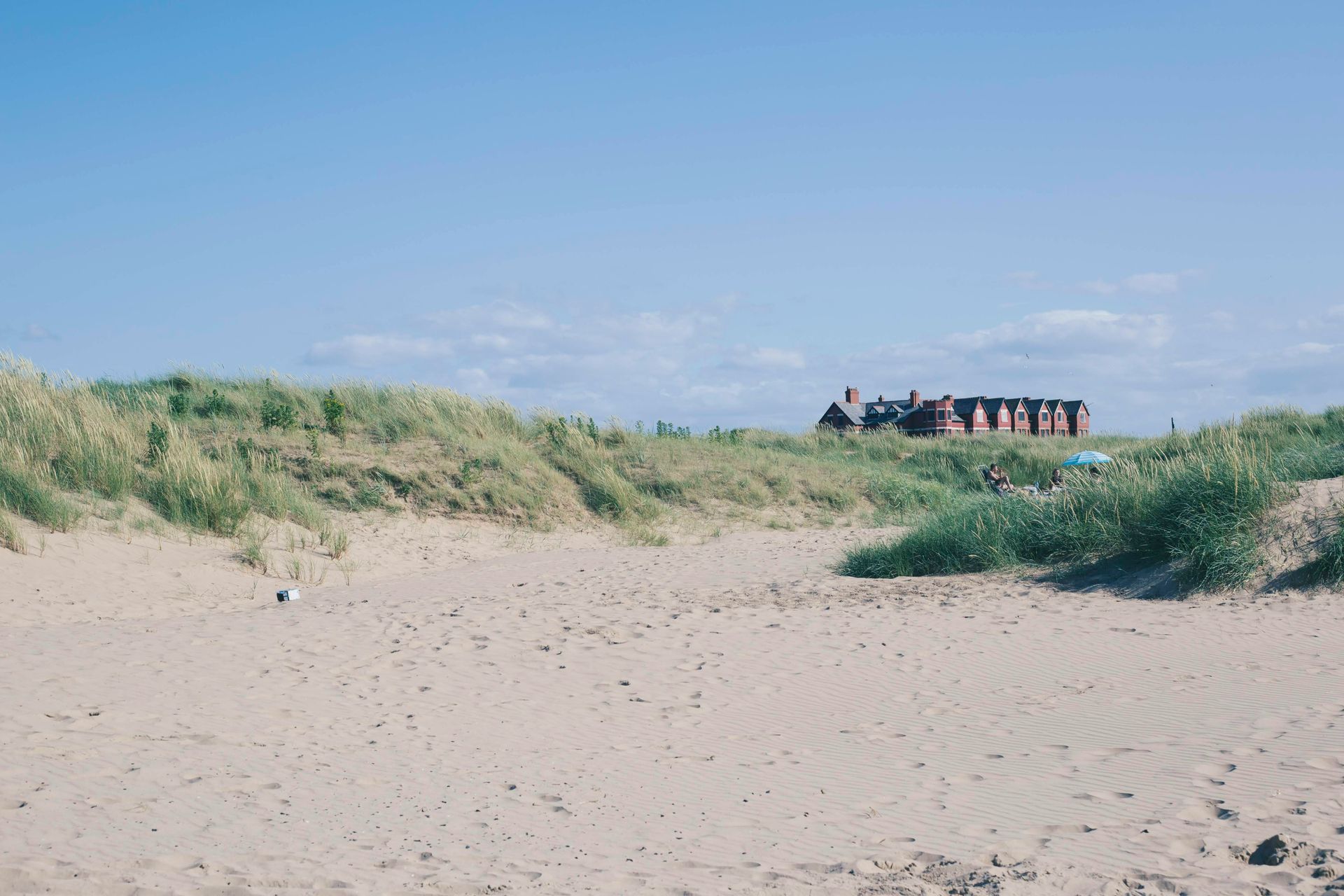
Ainsdale Beach, less than 40 minutes by train from Liverpool, near Southport on the Lancashire coast, offers northwestern England a beach whose breadth and wind exposure make it well suited to the kite sports that have made it a destination. Kitesurfers and kite buggy riders use the wide flat sands and consistent Atlantic winds that the Sefton coast provides in conditions that more sheltered coves cannot match. The spectacle gives Ainsdale a visual energy specific to the sport, and the beach’s scale accommodates the activity without crowding the swimmers who use the broader sand between the beachgrass dunes and the sea.
The Ainsdale and Birkdale Sandhills Nature Reserve, which occupies part of the beach and dune system, adds a natural history dimension beyond the beach itself. Walking trails through the dune system pass through habitat that supports the Natterjack toad, a rare British amphibian that the dune-pool environment specifically requires, as well as wildflowers, including the dune helleborine orchid and yellow glandweed, produced by the stabilized dune grassland. The reserve’s coexistence alongside a working beach gives Ainsdale an ecological specificity that most English holiday beaches, managed primarily for recreation, do not maintain.
The Blue Flag designation Ainsdale holds reflects the water quality standards the beach maintains, despite being adjacent to the developed Merseyside coast, giving swimmers the assurance of cleanliness that the industrial history of the northwest might otherwise cast doubt on. The train connection from Liverpool makes Ainsdale one of the most practically accessible nature reserve beaches in England for travelers based in the northwest’s largest city.
The combination of sport spectating, nature reserve walking, and Blue Flag swimming gives Ainsdale the strongest mixed-activity program of any beach on this list outside of Cornwall, and the train connection from Liverpool makes it the most practically accessible of the northwestern England beaches for travelers without a car. For visitors who arrive expecting a standard English seaside beach and discover instead a kite-sport venue alongside a rare amphibian habitat, Ainsdale consistently delivers more than the journey from Liverpool suggests.
Belinda Fewings / Unsplash
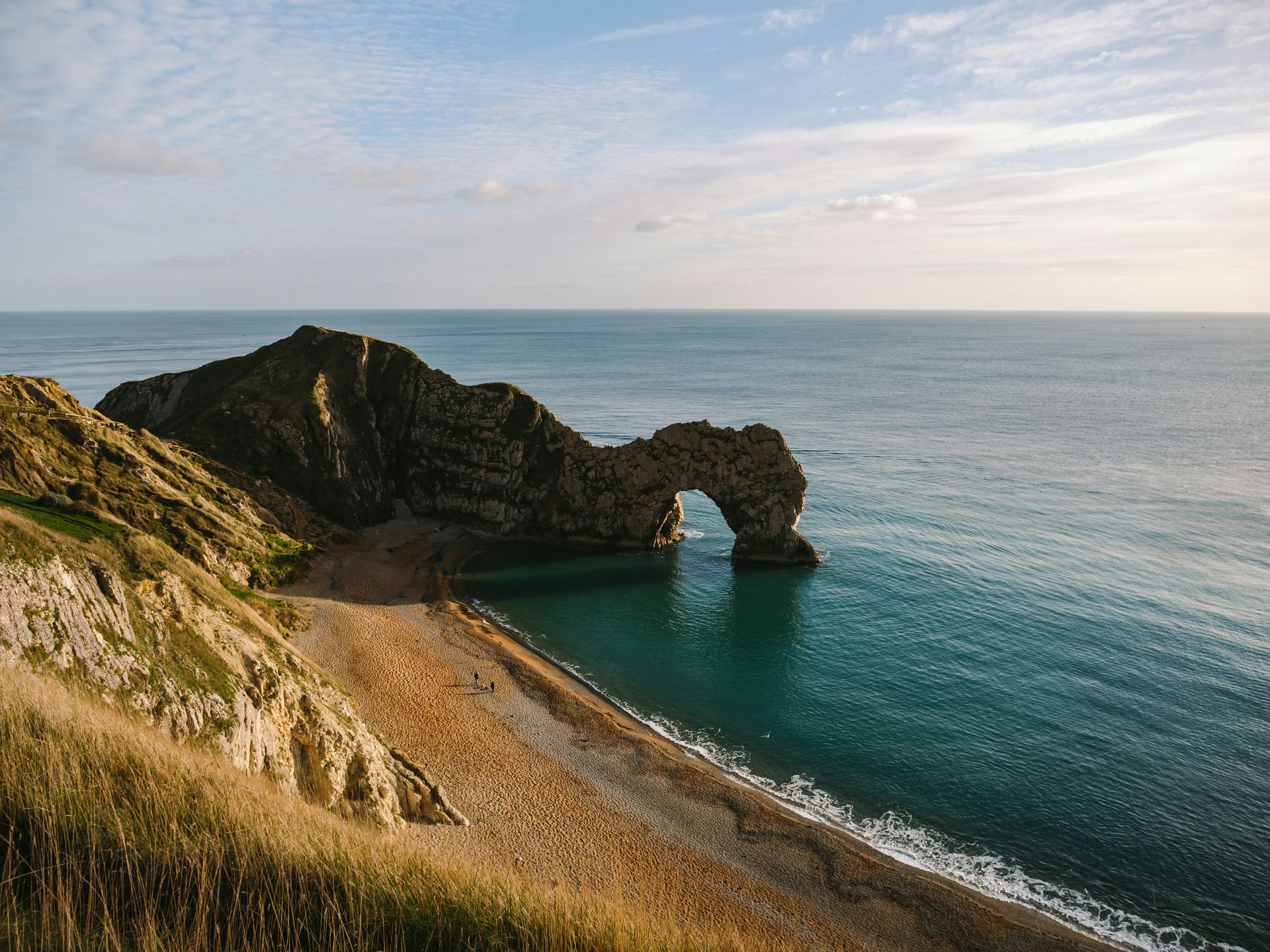
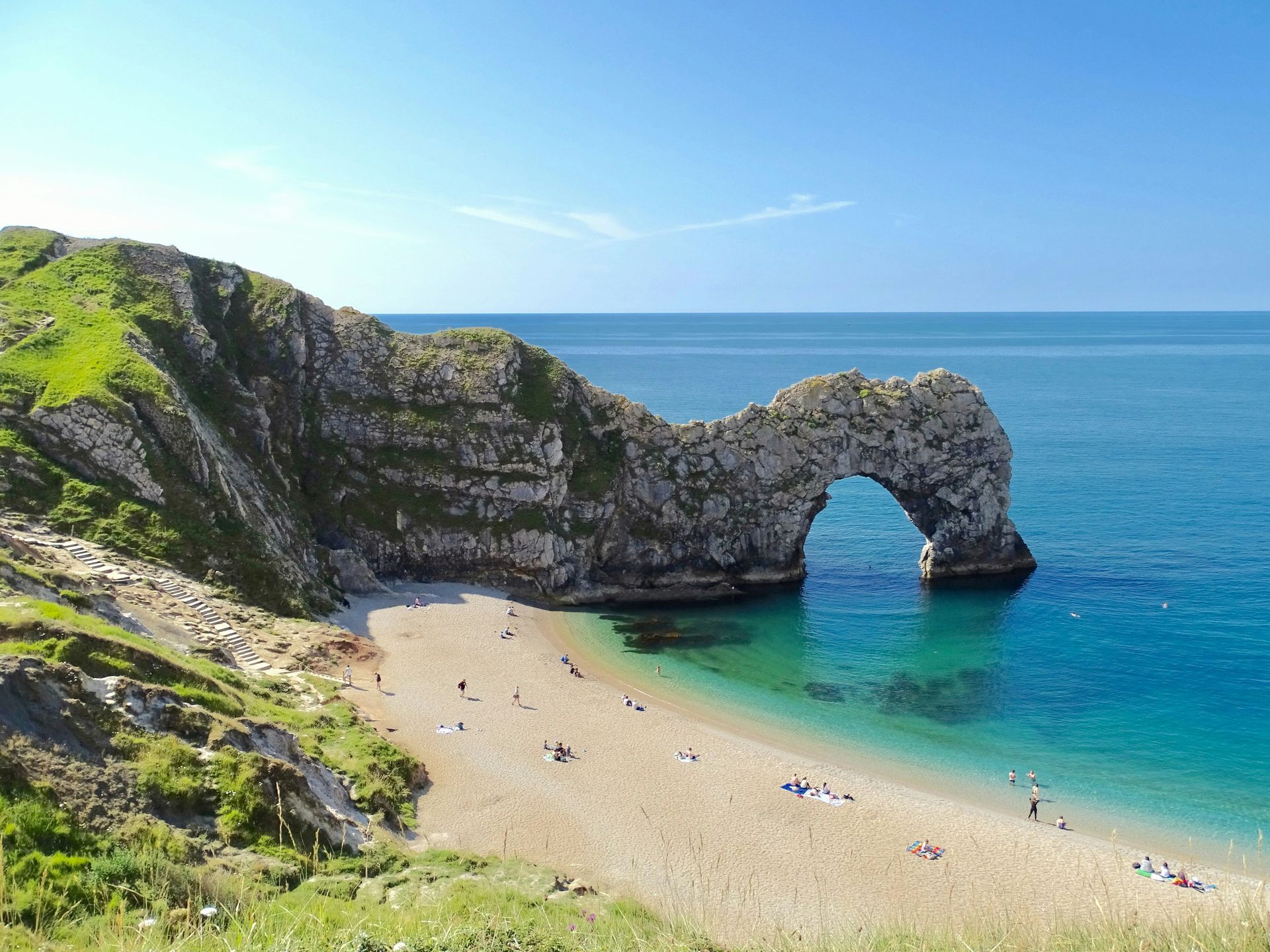
Durdle Door, on Dorset’s Jurassic Coast between Lulworth Cove and Weymouth, gives England’s most geologically significant coastline its most photographed landmark: a natural limestone arch that the sea has carved through the Portland limestone headland, creating a frame through which the open Channel is visible from the pebble beach below. The Jurassic Coast’s UNESCO World Heritage status reflects the 185-million-year geological record exposed in its cliffs, and Durdle Door’s arch is among the most dramatic expressions of the coastal erosion process that created that record. The arch has appeared in Doctor Who, the film adaptation of Far from the Madding Crowd, and the Tears for Fears “Shout” music video, giving it a popular culture visibility that its geological significance does not require.
The clifftop walk connecting Durdle Door to Lulworth Cove and the surrounding Purbeck Hills adds a hiking dimension to the beach visit that the Jurassic Coast Path specifically delivers. Views of the craggy Dorset coastline from the cliff edge, where the geology’s layering is visible in the cliff faces below, and the sea’s erosion work is legible in the natural arches, stacks, and coves distributed along the path, give the walk an educational and visual program that the beach alone does not provide. The off-season visit gives the clifftop and beach a quality of emptiness that the summer crowds, drawn by the arch’s visual fame, replace entirely between June and August.
The pebble beach below the arch, accessible by a steep path from the clifftop car park, gives the picnic a setting that the arch’s framing of the Channel makes specifically memorable. The beach’s pebble rather than sand composition reflects the same geology that produced the arch: the limestone and chalk material that erosion has reduced to rounded stones gives the beach its characteristic sound and texture alongside the visual spectacle above it.
The combination of UNESCO geological significance, cinematic and musical cultural reference, clifftop walking, and pebble beach picnicking gives Durdle Door the most layered single-location experience on this list, and the Lulworth Cove that lies a mile’s walk along the coastal path gives the day an additional beach of contrasting character for travelers who want more than one cove.
Carter Moorse / Unsplash
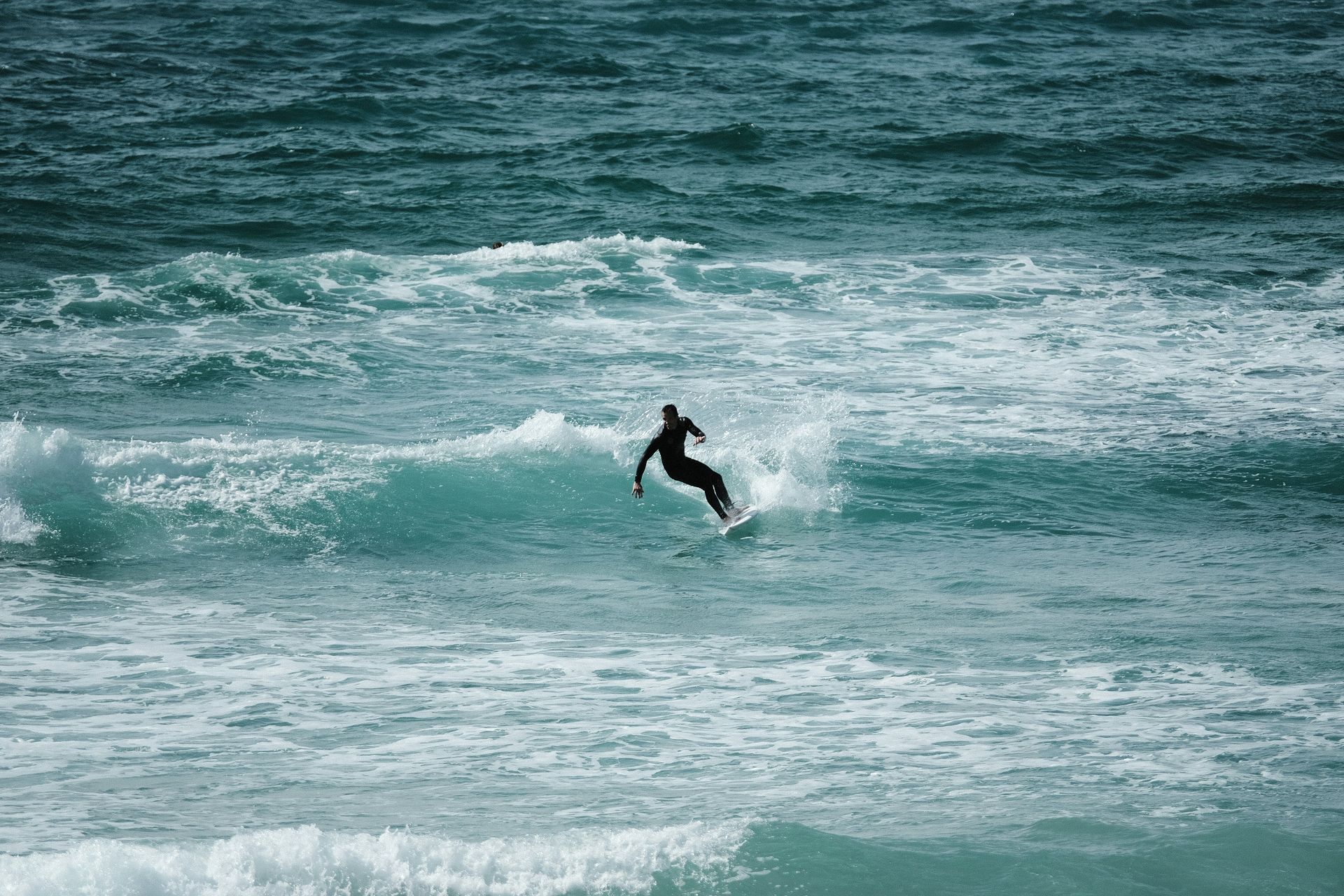
Fistral Beach in Newquay gives England’s Atlantic-facing coastline its strongest case for serious surfing. The consistent Atlantic swells that the beach’s northwest-facing exposure captures, combined with the sandbar configurations it produces, give Fistral the wave quality that has made it the primary venue for professional surfing competitions in England for decades. The Boardmasters festival, held annually at Fistral and nearby Watergate Bay, brings international professional surfers and a music program, making the beach an annual event of national significance.
Beginners and intermediate surfers benefit from multiple surf schools and rental facilities lining the approach, offering those without equipment immediate, competitively priced access to boards and wetsuits alongside instruction from qualified coaches. Lifeguard coverage throughout the summer months gives families a safety dimension that the beach’s Atlantic exposure makes genuinely necessary: Fistral’s waves are consistent enough to be excellent for surfing and challenging enough to require awareness from swimmers who are not reading the water’s behavior correctly.
For visitors who want to watch rather than surf, Fistral’s wide expanse of sand gives spectators room to spread a blanket at a comfortable distance from the break and watch the surfing from the beach. Competition events throughout the summer give spectators the option of a specific program. Newquay town, directly behind the beach, offers the day trip practical infrastructure, with a surf culture that makes it more interesting than the typical English seaside town, and the headland walks north and south of the beach give the afternoon a coastal extension beyond the sand itself.
The combination of professional surf competition spectating, accessible surf lessons for beginners, Blue Flag swimming for non-surfers, and Newquay town’s practical and social infrastructure gives Fistral the strongest all-demographic appeal of any beach on this list, and the consistent Atlantic swell that arrives regardless of the season makes it a worthwhile destination well outside the summer months. The headland walks north, and the south of the beach gives the afternoon a coastal extension that rewards the visitor who stays later than the tide-timed departure most day trips impose.
Credit: Visit Mersea Island Official Site
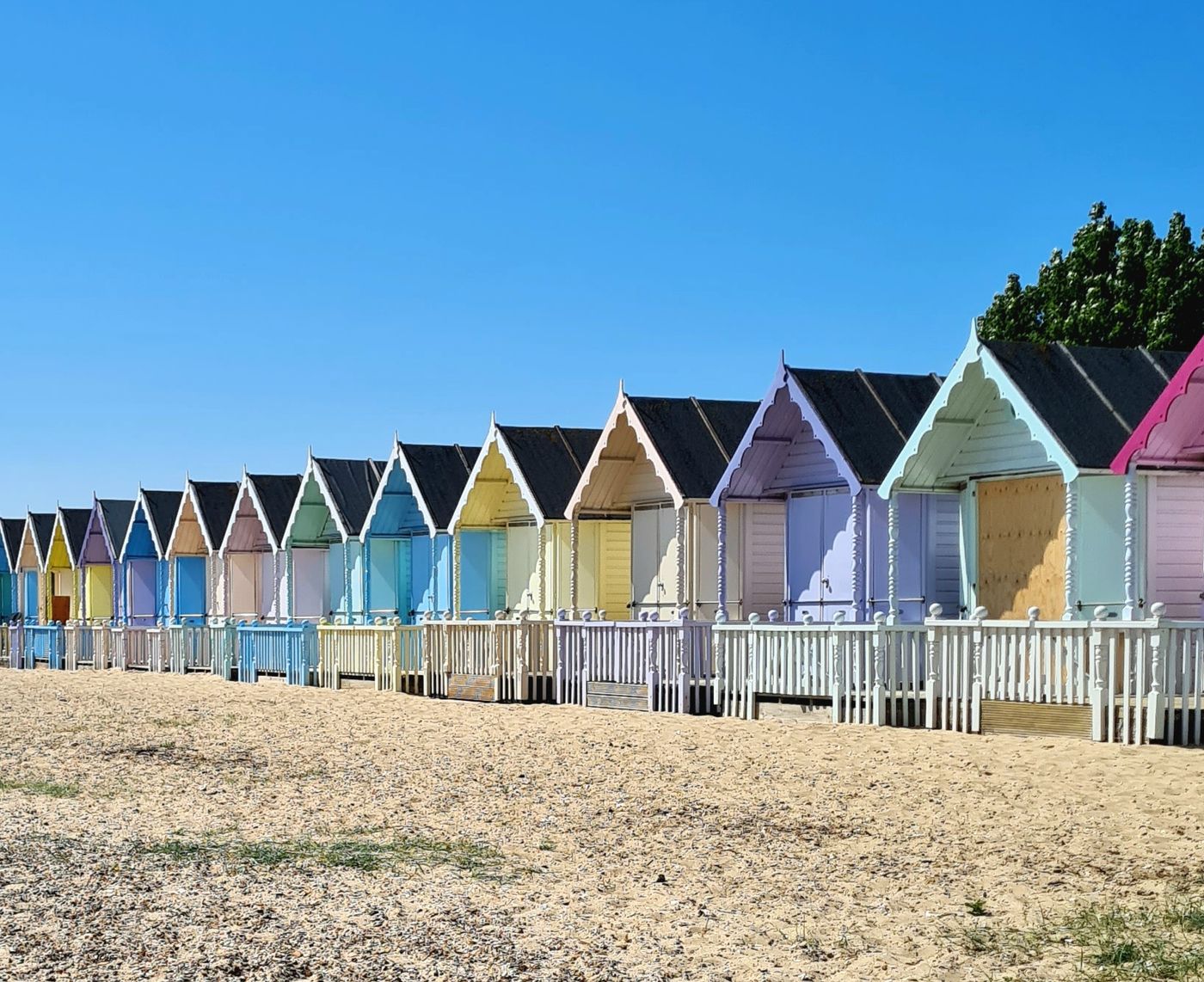
West Mersea, on Mersea Island in the Essex Blackwater estuary, gives the southeastern England coast a beach whose primary reason to visit is the Company Shed: an unpretentious seafood shack that serves oysters, shrimp, lobster, clams, and crab cakes from the local waters with a simplicity of presentation that the quality of the produce makes entirely appropriate. The Blackwater estuary oysters are recognized as among the finest in England, and the Company Shed’s bring-your-own-bread-and-drinks model gives the meal a casual participation that the quality of the shellfish rewards rather than undermines. Locals know to bring their own drinks and bread to sop up any flavorful broth, and travelers who arrive without this knowledge leave planning to return with it.
The beach itself provides a physical context for the meal. Rows of colorful pastel beach huts line the shore; the unblemished saltwater marsh landscape surrounding the island gives it a distinct Essex coastal character, distinct from the seaside town beaches further north, and the golden sand visible at low tide provides the pre-meal stroll with an attractive foreground. The drive or bus journey to Mersea Island, which becomes an island only at the highest tides when the causeway floods, gives the arrival a mild sense of maritime adventure appropriate to a day on an Essex estuary island.
The surrounding marshland and salt marsh habitats add a birdwatching dimension to West Mersea, alongside its beach and seafood. The Blackwater estuary’s extensive tidal flats support wading birds, wildfowl, and raptors in numbers that the open marsh landscape makes visible at distances that the coastal woodland of Cornwall or Devon does not permit. The combination of beach huts, outstanding seafood, marshland walking, and birdwatching makes West Mersea one of the most distinctly English beach destinations on this list.
The drive from London to West Mersea takes roughly 90 minutes, making it among the most accessible genuinely distinctive beach experiences available from the capital, and the Company Shed’s reputation has spread far enough that arriving before the Saturday lunchtime rush gives travelers the best access to the freshest catch.
Phil Hearing / Unsplash
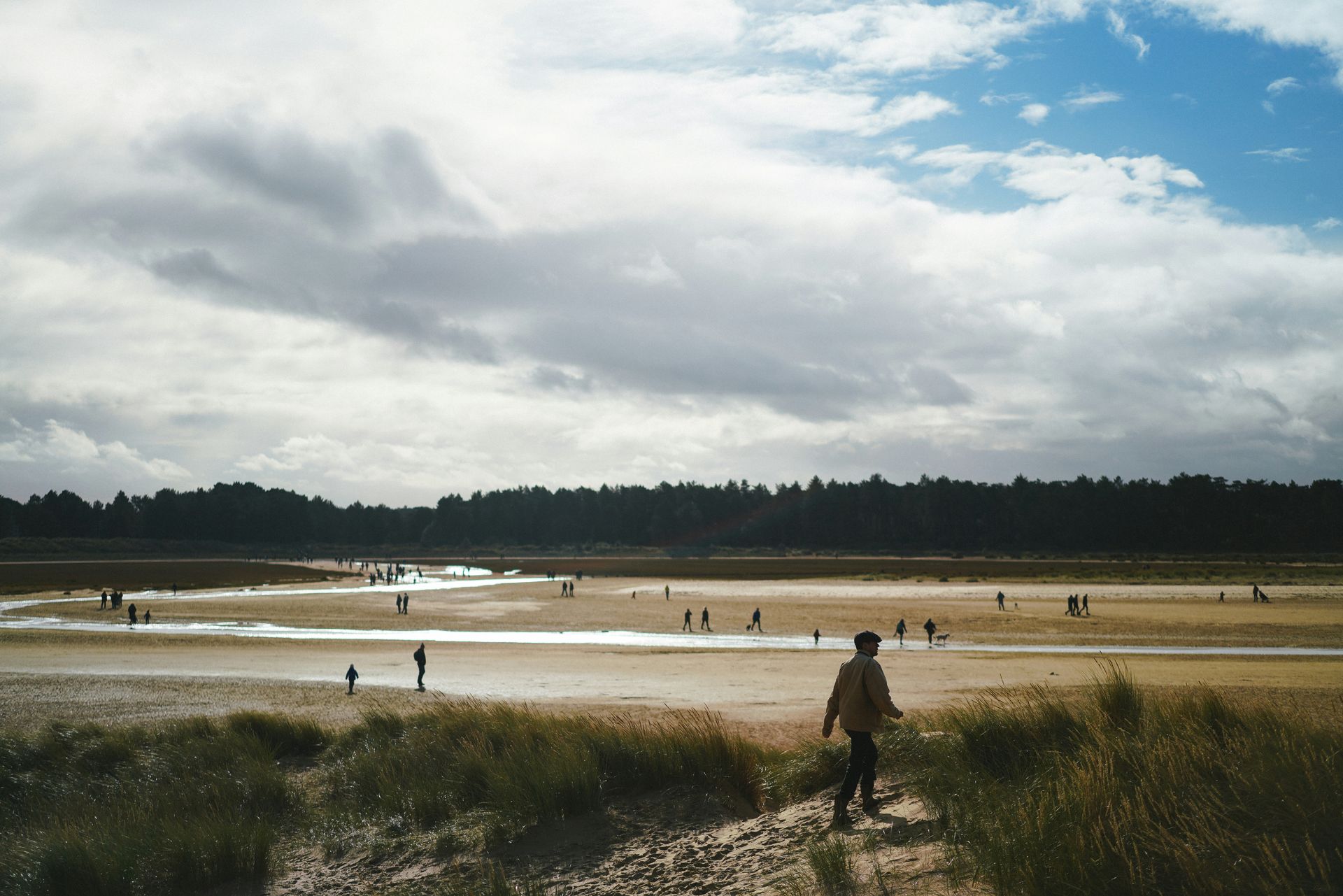
Holkham Beach, on the North Norfolk coast within the Holkham National Nature Reserve, gives England its most expansive beach: a wide stretch of golden sand backed by beachgrass dunes that lead into a pinewood and scrub forest whose specific smell, a combination of pine resin and salt air, gives the approach from the car park a sensory introduction available at very few other English beaches. The beach’s scale gives it a genuinely uncrowded quality even at peak summer weekends when smaller beaches nearby are packed, reflecting the reserve’s size and the distance most visitors walk from the car park before reaching the water.
The nature reserve’s walking trails through the pinewood give the Holkham visit an inland dimension that most beach trips do not include. The lesser rattlesnake plantain orchid, honeysuckle, and other reserve plant species give the woodland walk a botanical interest that the beach itself does not provide, and the transition from pinewood to dune grassland to beach gives the approach a landscape sequence whose variety makes the sand arrival feel earned rather than simply reached by a short path from a car park.
North Norfolk’s food culture gives the Holkham day its most satisfying conclusion. The region’s sailing and seafood tradition, centered on the harbors at Wells-next-the-Sea and Burnham Market nearby, gives visitors access to crab, lobster, samphire, and the specific smoked fish that the North Norfolk smoking houses produce in forms unavailable to travelers who have not made the journey to this corner of England’s eastern coast. The combination of the beach’s visual scale, the woodland trails, and the seafood culture in the surrounding villages gives Holkham the strongest all-day program of any beach on this list.
The beach’s inclusion within a National Nature Reserve gives it a level of environmental protection that prevents the development that other popular English beaches have accommodated at the cost of their character, and the estate management that Holkham Hall provides over the surrounding landscape gives the reserve a long-term stewardship that public nature reserves without private estate backing do not always achieve.
Credit: Visit Isle of Wright Official Site
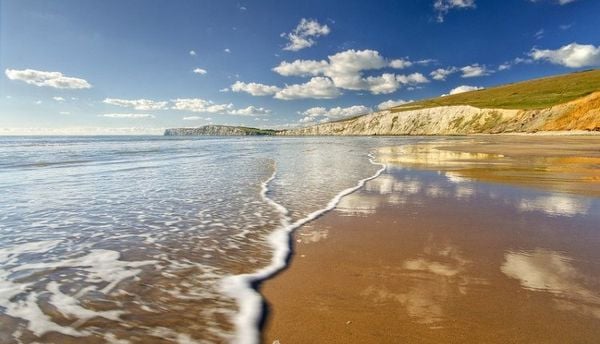
Compton Bay on the southwestern coast of the Isle of Wight offers the island's best surfing beach and its most dramatic dinosaur fossil site, in a setting whose wild, untouched character is reinforced by the island’s agricultural hinterland. The waves at Compton are popular with surfers and bodyboarders, giving the beach a physical energy that the island’s more sheltered eastern beaches lack, and the chalk and sandstone geology of the bay’s low cliffs gives fossil hunters access to material that has made this stretch of coastline one of England’s most productive sites for dinosaur remains. At low tide, dinosaur footprints are visible in the sandstone at Hanover Point, accessible by a walk along the shore from the main beach.
The ferry crossing from the mainland, with over 150 daily departures from Portsmouth, Southampton, and Lymington, gives the Isle of Wight visit a specific maritime beginning that distinguishes it from beaches accessible by road. The crossing takes between 25 and 45 minutes,, depending on the route and vessel, and the view of the island’s chalk cliffs and the Needles stack from the approaching ferry gives the arrival a visual introduction to the beach itself. The source specifically identifies the ferry journey as half the fun, which reflects the general principle that island travel involves two journeys and both deserve to be taken seriously rather than treated as logistical overhead.
Brighstone Village Shop, a five-minute drive from the beach, gives the picnic its provisions in a setting that the island’s agricultural character makes appropriately rural. The walk along the shore after eating, combining the fossil hunt at low tide with the cliff scenery and the surf watching, gives Compton Bay the full English coastal day that the Isle of Wight’s combination of accessibility and wildness makes consistently available.
The Isle of Wight’s position just off the Hampshire coast makes it among the most accessible islands in England for mainland travelers, and the day trip from London via Southampton or Portsmouth and the ferry gives the island visit a logistical simplicity that more remote island destinations cannot match. Compton Bay’s wildness is the specific reward for making the crossing.
