From Cap Blanc-Nez's chalk cliffs above the Channel to Calvi's pine-backed Corsican beach with a Genoese citadel overlooking the gulf
Paul-François Gapais / Unsplash
France’s coastline runs 3,427 kilometers, and the range it covers makes “beach trip” a deceptively narrow phrase. A coastal footpath scented with sea salt and herbal scrub along the Côte d’Albâtre offers something completely different from the celebrity beach clubs of St-Tropez, and both are completely different again from the limestone calanques outside Marseille, where steep cliffs drop into water clear enough to see straight through. Some of these beaches reward a simple swim. Others demand an entire day of hiking, kayaking, or driving just to reach them.
What ties these beaches together isn’t sand quality or water temperature so much as the specific character each stretch of coast has built around itself. Deauville caters to old-money glamour while neighboring Trouville stays laid-back and family-friendly. Plage de Pampelonne in St-Tropez exists almost entirely as a stage for seeing and being seen, while Plage des Govelins in Brittany draws only locals, escaping the resort crowds elsewhere on the coast. Picking the right beach for a given trip means understanding what kind of day you actually want, not just where the prettiest water happens to be.
The 10 beaches below appear in Lonely Planet, adapted from Lonely Planet’s France guidebook. These beaches span the entire French coastline, from the Channel in the north to the Mediterranean and Corsica in the south, and almost none of them require a major detour from the cities and regions most travelers already plan to visit. Several of these beaches work well as day trips from major cities, Marseille’s calanques and Nice’s nearby coves among them, while others, particularly Île de Ré and Corsica’s beaches, reward a dedicated multi-day stay built specifically around the coast, not a single stop on a broader itinerary. Travelers $TRV planning a trip to France, who travel along its coastline, should expect the Channel and Atlantic beaches to be noticeably cooler than the Mediterranean and Corsican options, a climate difference worth factoring into both packing and expectations for swimming versus simply walking the shore.
Pir6mon / Wikimedia Commons (CC BY-SA 3.0)
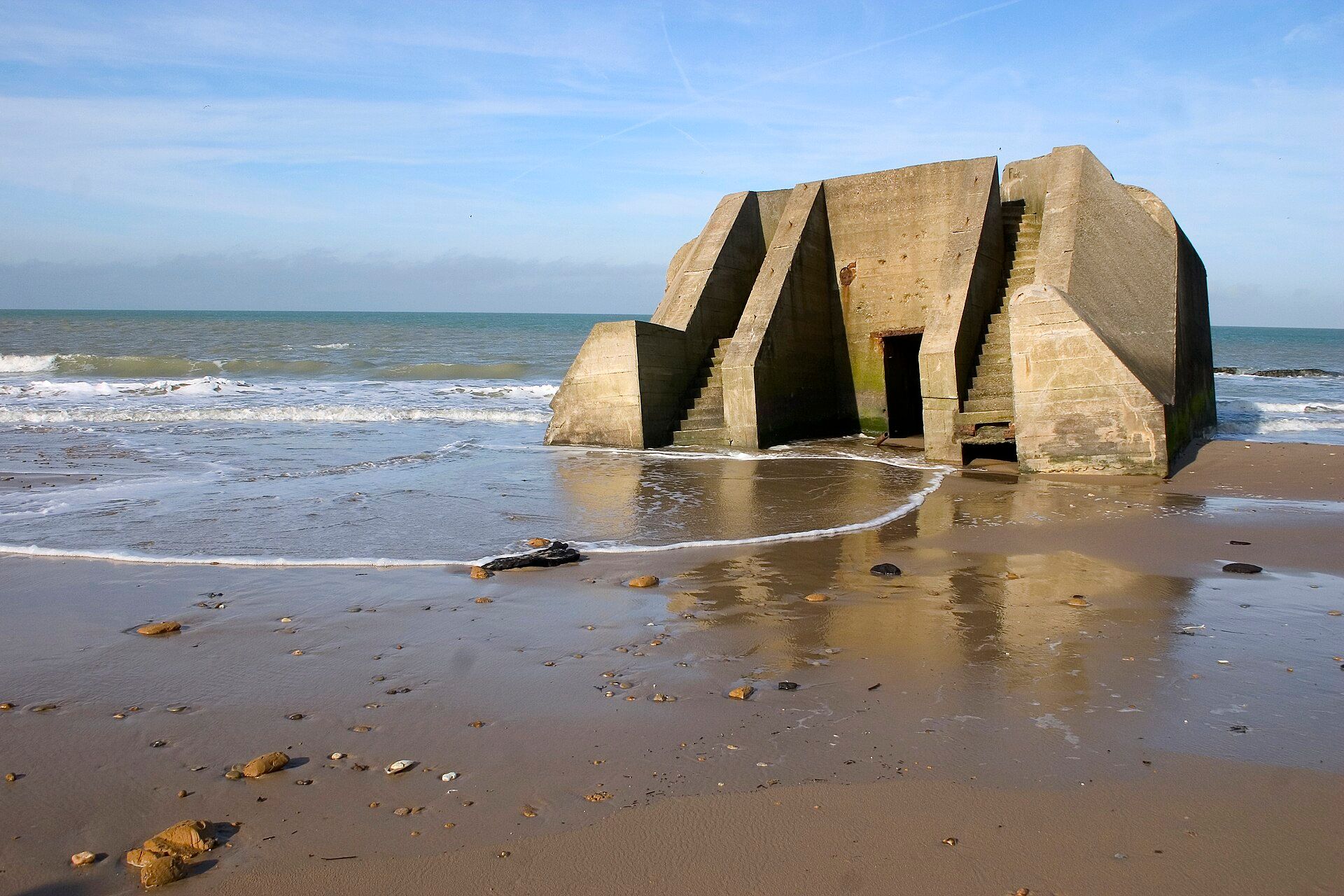
Wissant takes its name from the interplay of grays and blues across the sea and sky, and the stretch of English Channel coastline between Calais and Boulogne-sur-Mer earns the comparison to an artistic masterpiece without much exaggeration. Cap Blanc-Nez gives the clearest sense of the area’s scale: brilliant views over the Bay of Wissant, the distant white chalk cliffs of Dover visible across the Channel on a clear day, and rolling Flemish countryside stretching out behind. Down at the water’s edge in Wissant itself, the beach widens dramatically at low tide, making it ideal either for an invigorating swim or for simply watching one of the most extreme tidal ranges in France do its work.
The Sentier du Cap Blanc Nez, a 6.5-kilometer signposted loop starting from the Cap Blanc Nez car park on the D940, takes about an hour and a half to walk and covers the area’s best viewpoints without requiring serious hiking fitness. The trail’s exposure to wind off the Channel means the weather can shift quickly, and bringing a layer, even on a sunny day, is worth the minor inconvenience.
The beach’s enormous tidal swing changes the character of Wissant completely, depending on when you arrive. At low tide, the exposed sand stretches out for what feels like a genuinely long walk before reaching the water, turning a simple beach visit into something closer to a coastal expedition. High tide brings the water right up to the dunes, a completely different visual and physical experience of the same stretch of coast. The area’s chalk and sand combination, distinct from the pebble beaches farther south on the Channel, gives Wissant a softer underfoot texture that makes long beach walks considerably more comfortable than at some of France’s rockier coastal stretches. Cap Blanc-Nez itself sits within a protected nature reserve, and the surrounding grassland supports a range of seabirds that bird watchers travel specifically to see, adding a wildlife dimension to what’s primarily known as a scenic walking destination.
Tom Delanoue / Unsplash
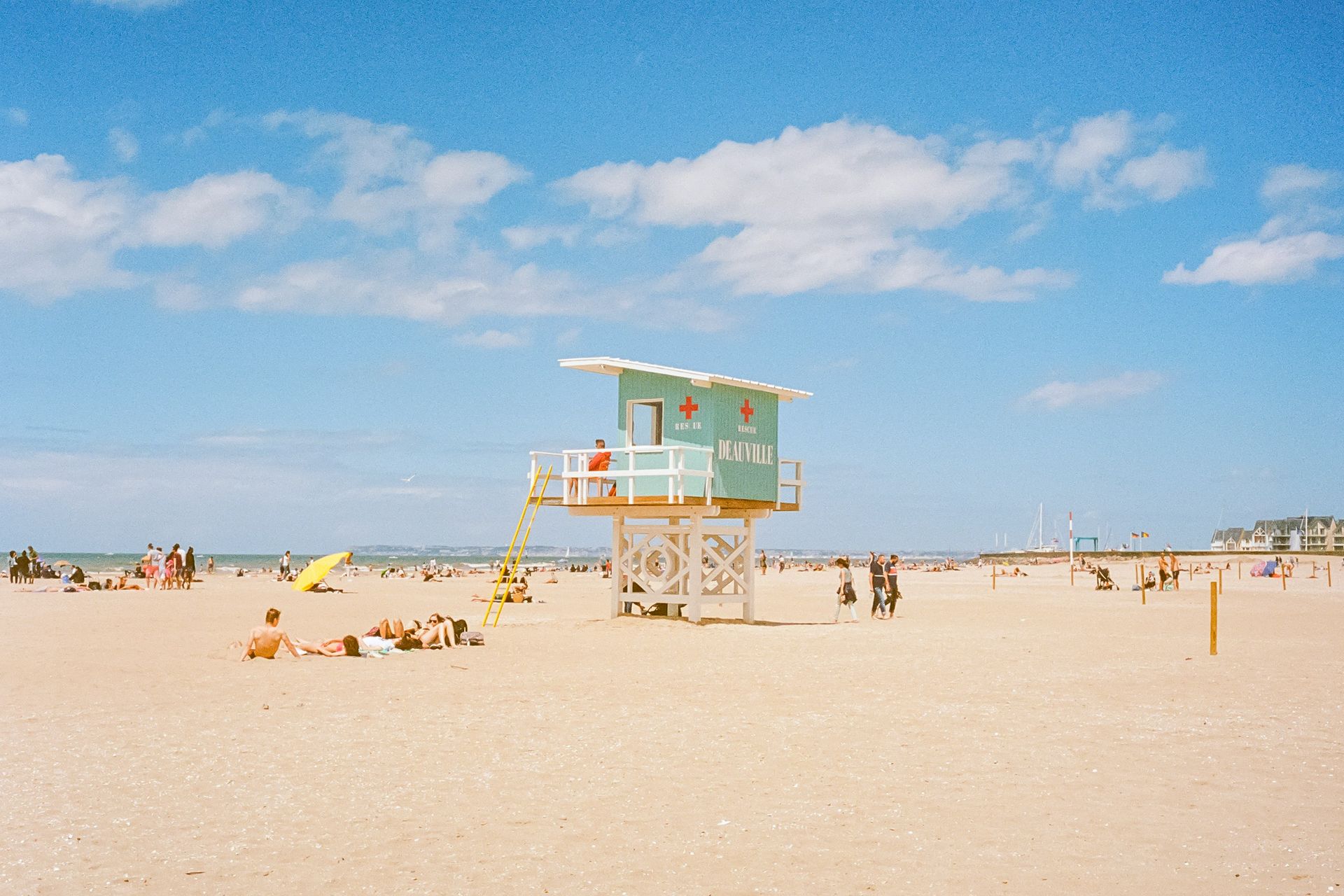
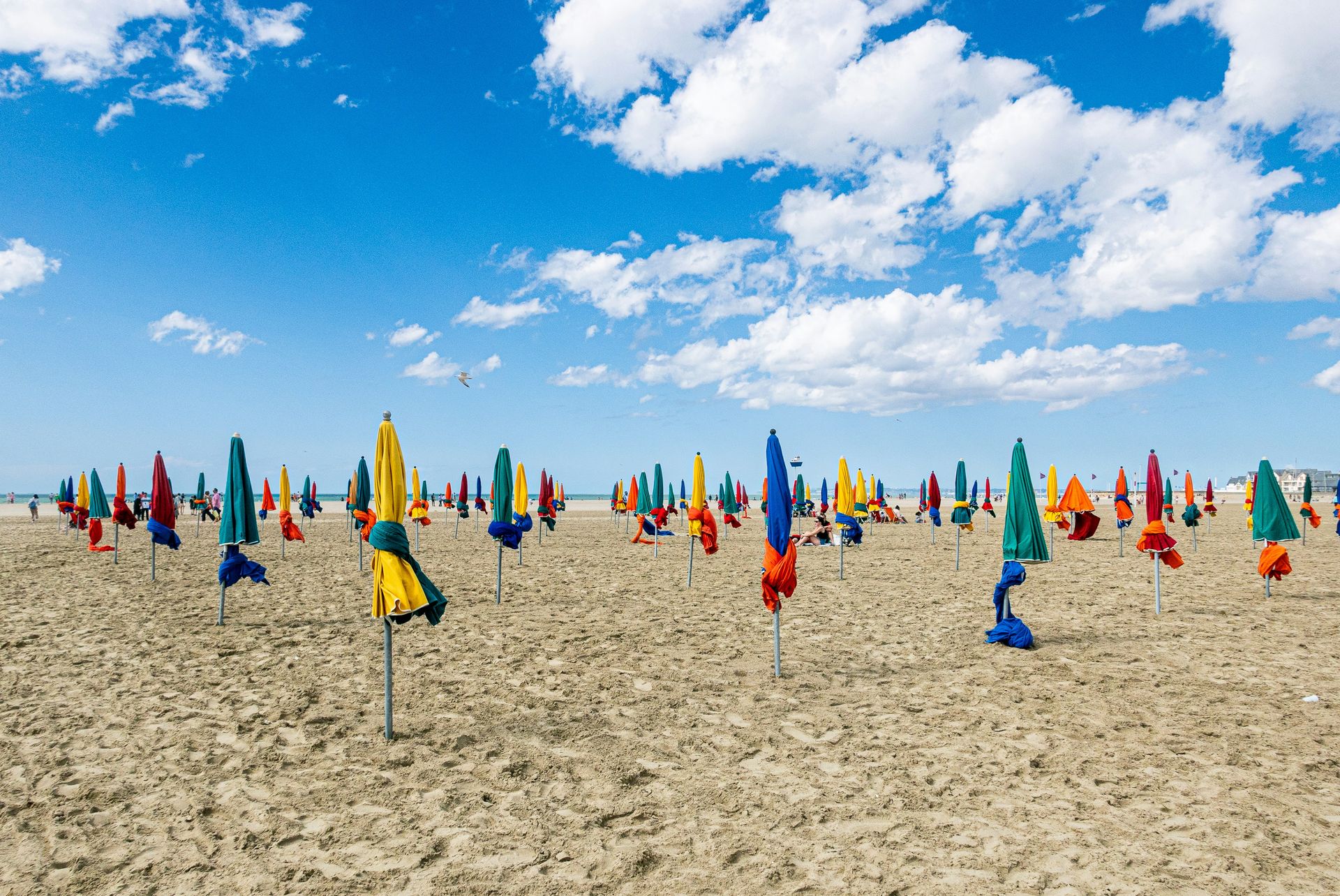
During France’s Belle Époque, writers and artists, including Marcel Proust and Eugène Boudin, flocked to these Norman shorelines on the English Channel, drawn by both inspiration and the era’s genuine belief that sea air restored health. The mid-19th-century sea-bathing craze that followed left behind a legacy of stunning seaside villas along the coast, many of which still stand today, giving Deauville and Trouville their distinctive architectural character.
Deauville has leaned fully into its glamorous reputation: the town now caters to a celebrity jet set, with luxury shopping and high-end restaurants that make it feel closer to a Riviera resort than a Channel coast town. Trouville, just across the Touques River, takes a noticeably more relaxed approach, with a family-friendly atmosphere that contrasts deliberately with its neighbor’s polish.
Trouville’s streets hold a specific cultural detail worth seeking out: the late artist Miss Tic left street art throughout the town, recognizable by poetic lines of graffiti next to images of dark-haired women. Tracking down a few of these pieces while wandering Trouville’s streets adds a layer of contemporary art history to the visit, alongside the 19th-century seaside heritage that defines the area’s reputation. Both towns share a single train station, conveniently named Deauville-Trouville, which makes day-tripping between the two genuinely effortless for visitors who want to sample both atmospheres without committing to one or the other for a full stay. The famous boardwalk along Deauville’s beach, lined with beach huts named after celebrities who’ve visited over the decades, gives even a casual stroll a small dose of glamour regardless of budget. The casino at Deauville, one of the most storied in France, hosts an American Film Festival each September that draws a notable crowd of French and international film industry figures, adding a cultural calendar highlight to a town already defined by its seasonal glamour. Trouville’s fish market, right on the harbor, sells the day’s catch directly to visitors and locals alike, and picking up fresh seafood here for a simple beachside picnic captures the town’s understated charm better than any restaurant meal could.
robin inizan / Unsplash
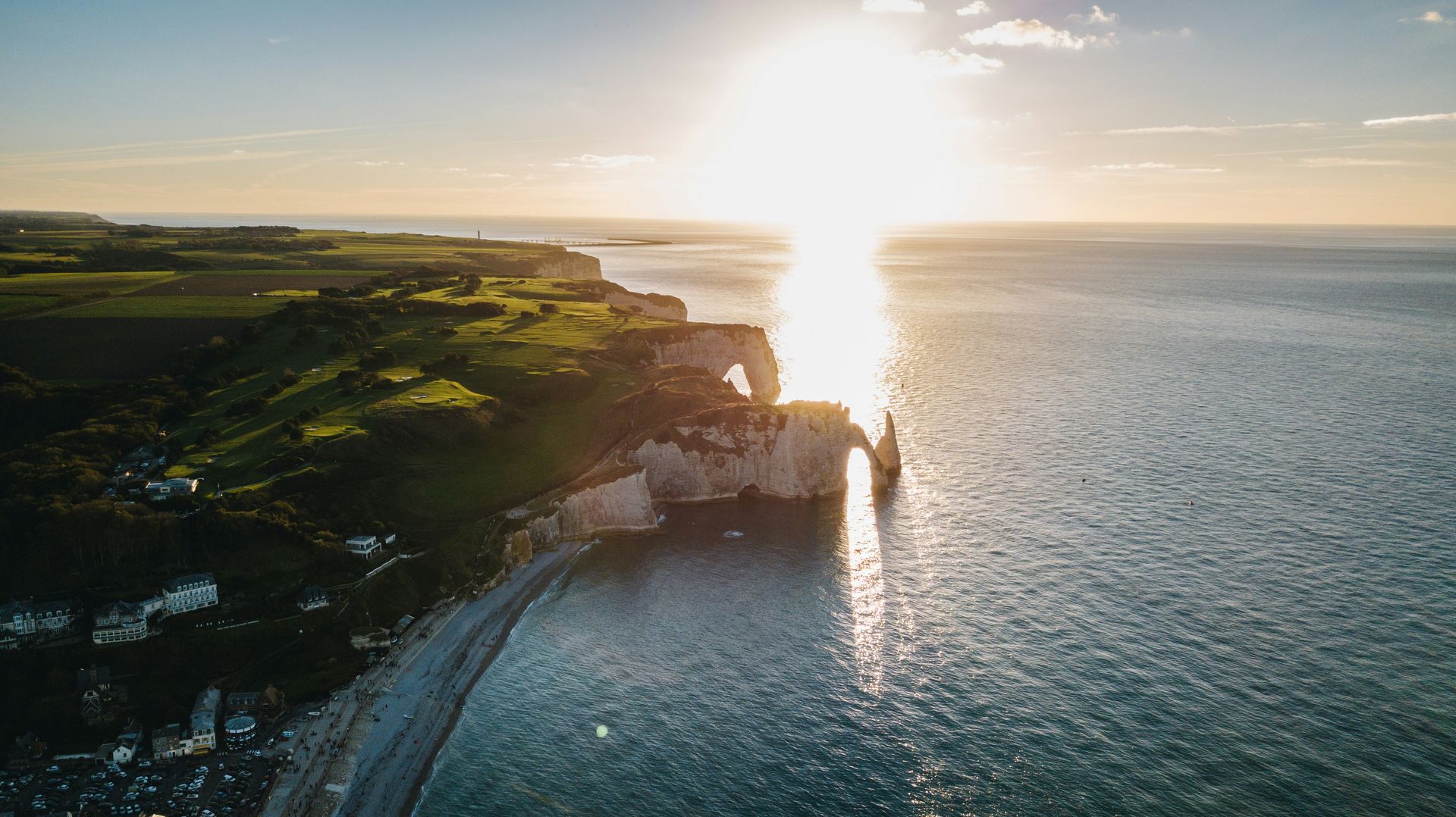
Étretat sits on the Alabaster Coast of the English Channel between Le Havre and Fécamp, and the beach here genuinely takes a back seat to the cliffs that frame it. Wind and sea have sculpted Étretat’s staggering natural arches over millennia, and Monet painted the formations more than 80 times, a fact that gives the cliffs a specific place in art history beyond their natural drama. The Falaise d’Aval and its adjacent aiguille, a rock needle shooting up from the water beside the main arch, form the most photographed combination on the coast, while the Falaise d’Amont offers a bird’s-eye view that takes in the entire formation at once.
Hiking here splits into clear options depending on appetite. The steep steps up to the neo-Gothic Chapelle Notre-Dame-de-la-Garde lead to a peaceful, if consistently windy, picnic spot with views back over the cliffs. Travelers $TRV wanting a greater challenge can tackle the five-hour Roc Vaudieu Loop, which covers considerably more ground and rewards the effort with a far less crowded experience of the same coastline.
Parking in Étretat village itself can be genuinely difficult even outside peak season, with limited spaces filling fast. Heading directly for the Parking de la Gare near the train station, which costs around 8 euros, avoids the stress of circling for a spot in town and still puts you within easy walking distance of the cliffs. The village itself, modest in scale compared to the dramatic landscape surrounding it, has a handful of solid seafood restaurants worth a stop after a morning of cliff walking, and arriving outside peak lunch hours makes securing a table considerably easier during the busiest summer weeks. Photographers chasing the golden hour should plan for early morning or late evening light, when the low sun angle brings out the texture and color variation in the chalk cliffs far more dramatically than the flatter light of midday. The 80-plus paintings Monet made of these formations are scattered across major museum collections worldwide, and seeing the actual cliffs after encountering the paintings reproduced countless times elsewhere tends to produce a specific kind of recognition that makes the visit feel oddly familiar, even on a first trip.
Lucas Gallone / Unsplash
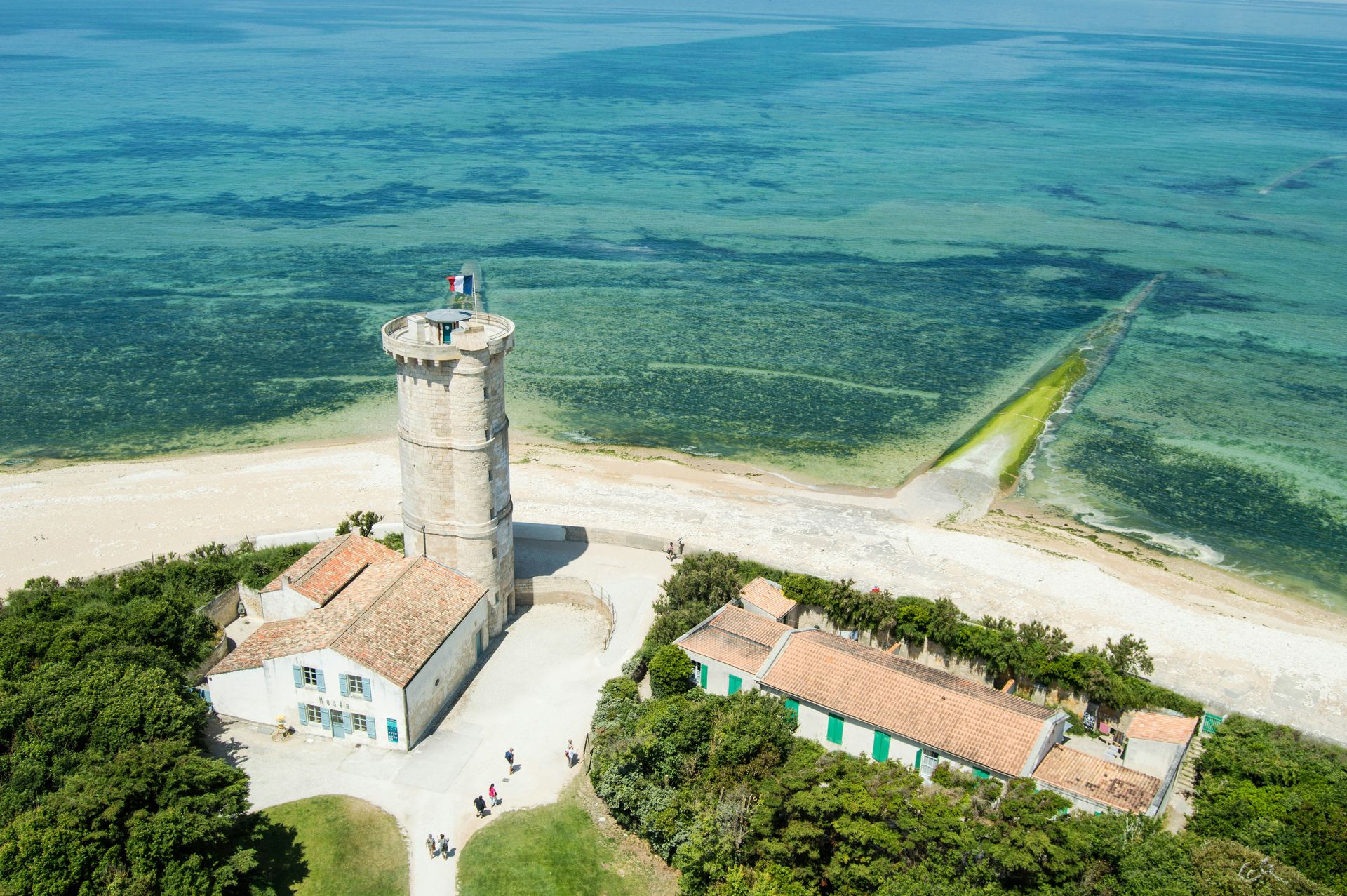
This island off the Atlantic Coast near La Rochelle shifts character entirely with the seasons, transforming from a tranquil retreat into a high-octane microcosm of Paris during the summer months, which makes timing a genuinely important consideration for anyone planning a visit. The island’s older traditions persist regardless of the summer crowds: salt is still harvested from ancestral salt pans, farmers work potato fields and oyster beds much as they have for generations, and local distillers craft gin and vodka using foraged seaweed as a defining ingredient.
The island’s wilder southern shoreline holds its best golden-sand beaches, including Plage de Gros Jonc, a hub for surfing and sailing that draws a more active crowd than the calmer northern beaches. Renting a bicycle is the standard way to explore Île de Ré, and the island’s almost entirely flat terrain makes cycling between beaches genuinely easy, not just theoretically pleasant.
Accommodation on the island is limited and expensive, particularly in peak summer, and camping or day-tripping by bus from La Rochelle tends to be the more practical approach for budget-conscious travelers. Bike rental demand spikes hard in July and August, and reserving ahead during those months is essential, not optional, if cycling is the centerpiece of the trip. The island’s network of dedicated cycling paths covers most of its length, separated from car traffic in a way that makes Île de Ré considerably safer for family cycling than many mainland coastal towns. Oyster farms dot the island’s interior waterways, and several offer direct tastings for visitors willing to detour briefly from the beach-focused itinerary, pairing fresh oysters with the local white wine that’s become a quiet specialty of the region. The island connects to the mainland via the Pont de la Ré, a toll bridge that charges a fee for cars during peak season, which makes the bus option from La Rochelle financially sensible as well as practical for visitors without their own vehicle. Villages across the island, particularly Ars-en-Ré with its distinctive black-and-white church steeple, are worth a slow wander between beach stops, since much of Île de Ré’s character lives in these small settlements, not on the sand alone.
Snap Wander / Unsplash
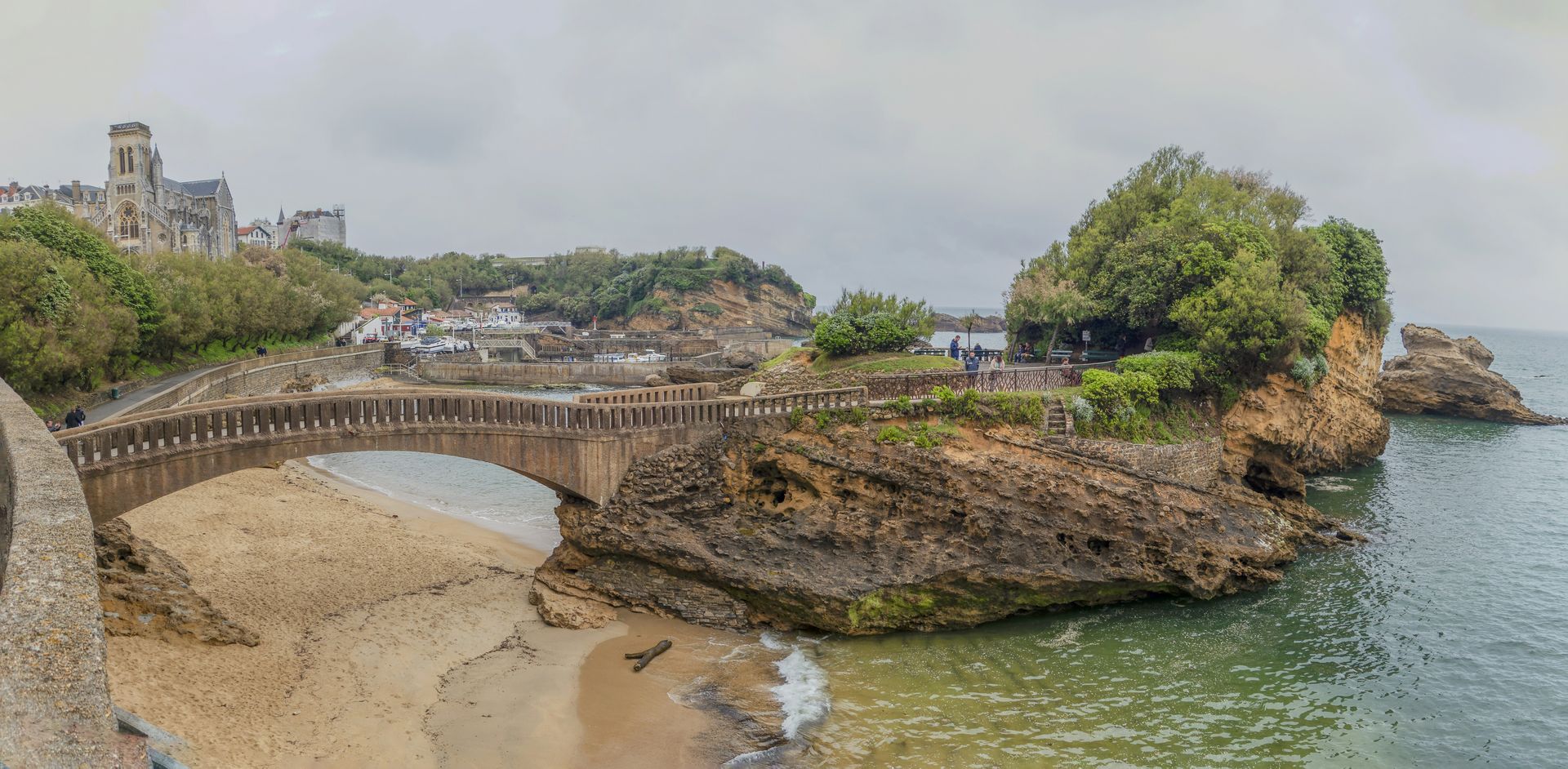
Biarritz’s main golden-sand beach on the Atlantic Coast has drawn admirers since the days of Napoléon III and Empress Eugénie, and today it functions as the pulsing center of France’s surf scene, a reputation built on consistently good Atlantic swells and a culture that’s grown up specifically around them. The beach’s companions each carry their own distinct identity. Plage de la Côte des Basques is the favorite among both surfers and sunset watchers, fringed by trendy bars that fill up as the day winds down. Plage d’Ilbarritz comes alive specifically through Blue Cargo, the beach bar whose summer terrace and after-dark dance floor make it the area’s most consistently lively nightlife spot.
Plage de l’Océan, backed by protected sand dunes, stands out as the wildest of Anglet’s back-to-back beaches, offering a noticeably less developed alternative to the more polished stretches closer to central Biarritz. The dune protection here reflects a broader regional effort to preserve the Atlantic coastline’s natural character against the development pressure that’s reshaped much of the rest of the French coast.
Cité de l’Océan, a sea-themed attraction about 2 kilometers south, gives visitors the chance to join a VR shark-study expedition or watch cetaceans rendered in 4D, a genuinely strange but popular detour from the beach itself. Combo tickets starting from 28 euros make the attraction a reasonable add-on for families looking to break up a beach-heavy day with something indoor and air-conditioned. Biarritz’s surf schools cluster along the Grande Plage and Côte des Basques, offering lessons for every skill level from complete beginners to experienced surfers looking to tackle the area’s more demanding breaks during bigger Atlantic swells. The town’s broader food scene, built around Basque specialties like pintxos and seafood, gives the evening hours just as much character as the beach delivers during the day. The Biarritz Surf Festival, held each summer, draws competitors and spectators from across Europe and gives visitors a chance to watch serious competitive surfing alongside the town's casual beach culture the rest of the year. Older Biarritz, away from the main beaches, retains genuine Belle Époque architecture worth a walking detour, a reminder that the town’s identity as a surf destination is a relatively recent layer atop a much older aristocratic seaside history.
ISHM / Unsplash
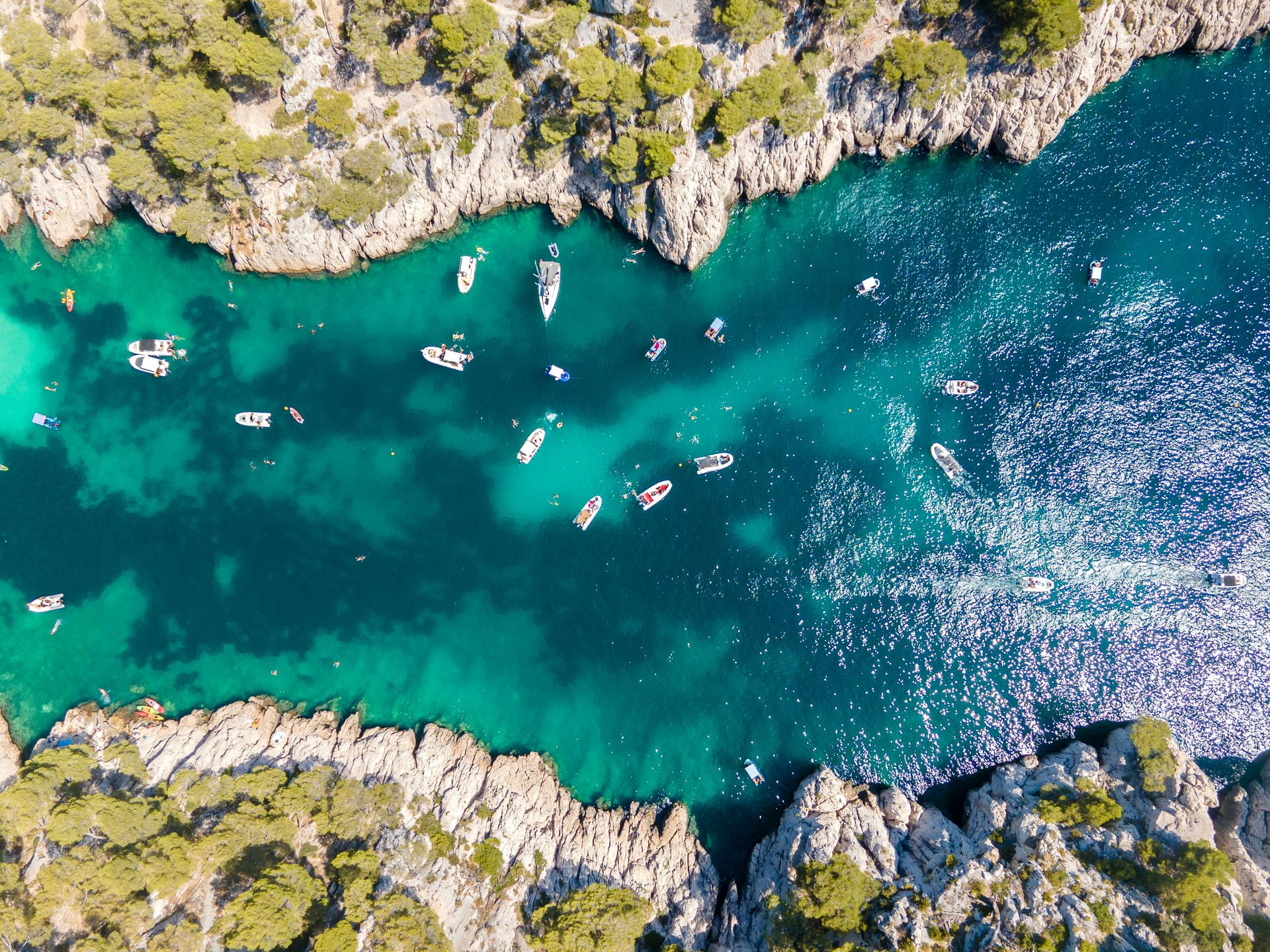
Finding a refuge like Parc National des Calanques this close to Marseille feels almost improbable. The park’s 85 square kilometers of scrubby limestone promontories on the Mediterranean coast include stretches where it’s genuinely easy to forget a major city sits just minutes away. The Calanques themselves are limestone inlets defined by steep cliffs rising sharply from crystalline water, a geological formation that gives this stretch of coast a dramatic, almost fjord-like character, unusual for the Mediterranean.
Calanque de Sormiou and Calanque de Morgiou rank as the most accessible inlets in the park, reachable without a serious hiking commitment, making them the logical starting point for a first visit. More remote inlets, Calanque d’En-Vau among them, require genuine dedication to reach, whether on foot along exposed coastal trails or by kayak across open water, and the extra effort tends to translate directly into fewer crowds once you arrive.
Overland access through the park is frequently restricted between June and September due to fire danger, and checking the official park website or downloading the app before any visit during these months is essential, not a nice-to-have precaution. A reservation system now governs access to Calanque de Sugiton and Calanque des Pierres Tombées during summer, reflecting how popular these specific inlets have become relative to the park’s capacity to handle foot traffic sustainably. Boat tours departing from Marseille’s Vieux-Port offer an alternative way to see the calanques without hiking at all, cruising past the dramatic cliff formations from the water and giving visitors a sense of the coastline’s scale that’s harder to appreciate from any single inlet on foot. Swimming in the calanques themselves rewards patience: the water stays notably cooler than the open Mediterranean further along the coast, owing to the depth and shade the steep limestone walls provide. Several calanques have small, informal cafés or snack stands operating in peak season, though relying on them is risky given their inconsistent hours, and bringing your own food and plenty of water remains the safer plan for a full day of exploring the park. The contrast between the white limestone cliffs and the deep turquoise water below has made this stretch of coast one of the most photographed natural landscapes in the south of France, rivaling more famous Mediterranean coastlines in visual drama despite sitting in the shadow of Marseille’s industrial reputation.
Guido Radig / Wikimedia Commons (CC BY-SA 4.0)
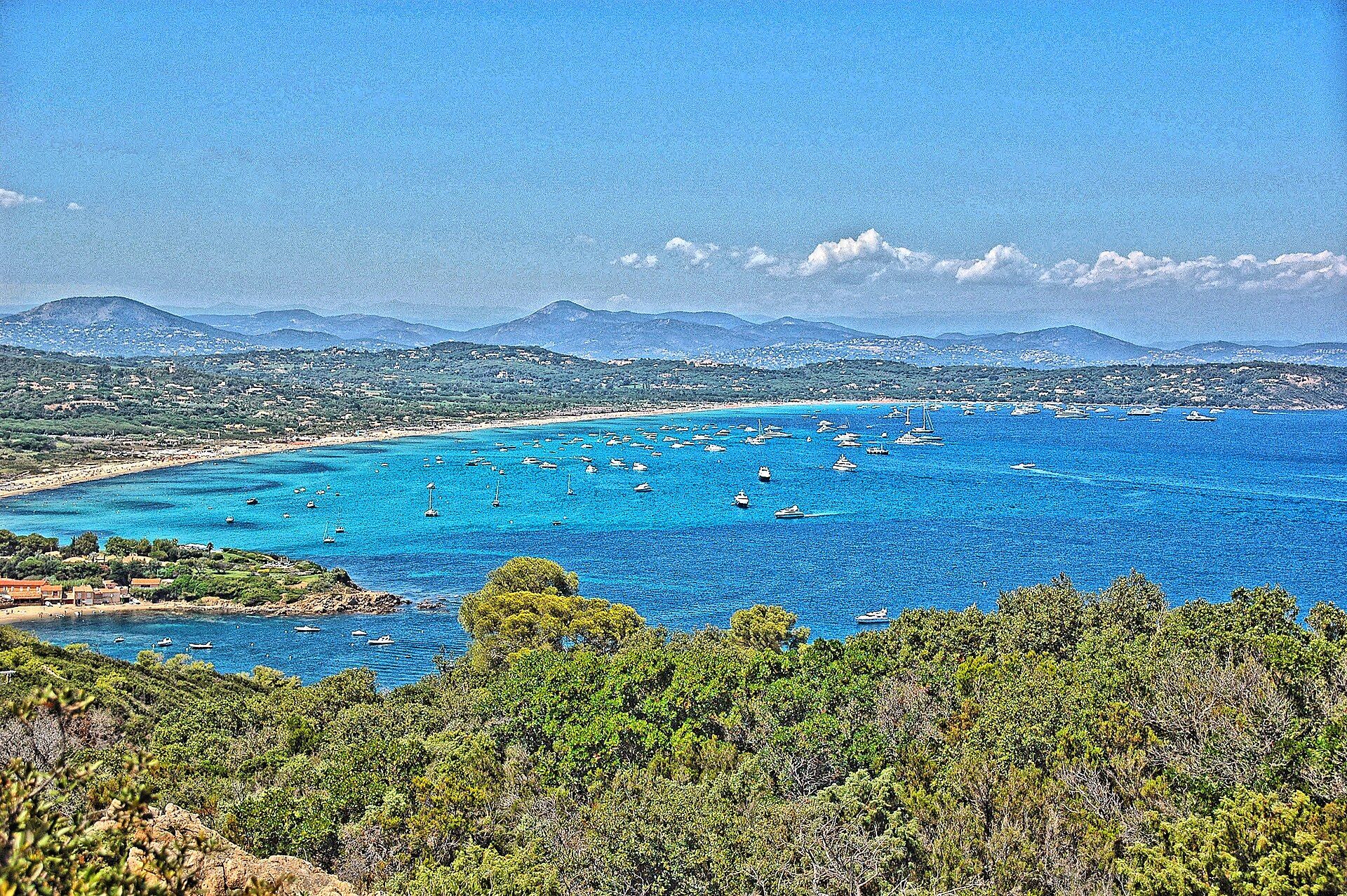
Plage de Pampelonne, stretching 5 kilometers along the Mediterranean, is the most famous beach in St-Tropez and home to the largest concentration of exclusive beach clubs and restaurants anywhere on the French coast. This is the beach where the entire point is visibility: reserving a lounger and a lunch table well in advance is standard practice, not an optional upgrade, for anyone hoping to actually get a spot during peak season.
Le Club 55 holds the longest continuous run of any club on the strip, with an origin story that traces back to serving as the crew canteen during filming of the 1956 movie And God Created Woman. The club still attracts celebrities who prefer to keep a relatively low profile while doing so. Nikki Beach draws the opposite crowd entirely, the dance-on-the-bar glitterati who come specifically for the spectacle, while Le 1051 carves out a calmer niche, prioritizing genuinely good food over the scene-driven energy that defines most of the strip.
Most beach clubs operate from May through September, and advance bookings are strongly recommended, as the best tables and loungers fill up quickly during high season. Public sections of the beach are free to access for anyone happy to bring their own towel and skip the club experience entirely, making Pampelonne considerably more accessible than its celebrity reputation might suggest. The beach’s location in Ramatuelle, a short drive from central St-Tropez, means traffic during peak summer can add significant time to what should be a quick trip, and arriving early in the day avoids both the worst congestion and the midday heat that makes the open, largely unshaded beach considerably less comfortable. Renting a beach umbrella or finding a spot near one of the public access points gives the budget-conscious visitor a workable middle ground between the free public sections and the full club experience. St-Tropez itself, a short drive from Pampelonne, offers a complementary afternoon or evening of its own: the old port, lined with yachts and cafés, makes for a worthwhile wander either before heading to the beach or after, once the crowds along Pampelonne have started to thin in the late afternoon. The contrast between the understated old town and the spectacle of the beach clubs captures something essential about how St-Tropez has evolved from a quiet fishing village into one of the Mediterranean’s most recognized luxury destinations.
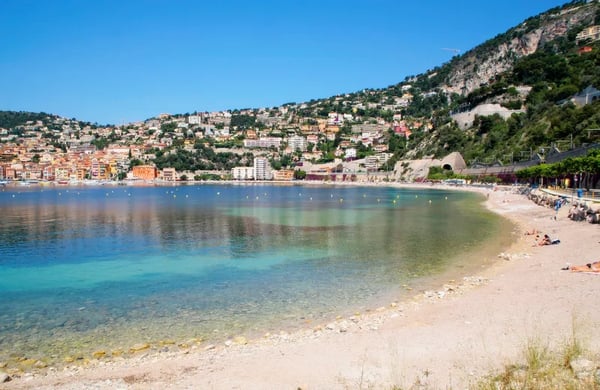
Credit: Nice Cote d'Azur Tourist Office
Villefranche-sur-Mer’s Mediterranean public beach has finer pebbles than nearby Nice, and a train station sitting just footsteps from the sand makes it genuinely convenient real estate on busy summer days. Plage de la Darse nearby, sheltered from the cruise-ship crowds that gather closer to the port, works particularly well for snorkeling, as does Coco Beach on the craggy eastern edge of Nice, where translucent water more than compensates for a near-total absence of actual sand.
Nice’s famous pebbles, known locally as galets, get replenished with entire container loads each March, a maintenance detail that explains why the beach always looks freshly stocked at the start of each summer season, regardless of how much erosion the previous year produced. Travelers $TRV whose ideal beach involves soft sand, not pebbles, should plan to base themselves west of Antibes instead, where Juan-les-Pins, Cannes, and the beaches beyond offer the buttercream sand that the Côte d’Azur’s eastern stretches generally lack.
Free public access, a convenient train connection, and genuinely good snorkeling at the nearby Darse and Coco beaches together make Villefranche-sur-Mer one of the more practical bases on the entire Côte d’Azur for travelers without a car who still want strong beach options within easy reach. The town itself, with its pastel buildings climbing the hillside above the harbor, ranks among the prettiest on the entire Côte d’Azur, and the citadel overlooking the bay is worth a brief detour for anyone taking a break from the beach to explore on foot. Ferries and trains connect Villefranche-sur-Mer to Nice and Monaco within minutes, making it a practical base for day trips along the coast in either direction. Snorkeling gear can be rented from several shops along the waterfront, and the calm, sheltered nature of the bay makes Villefranche-sur-Mer a noticeably gentler introduction to Mediterranean snorkeling than some of the more exposed coves further along the Côte d’Azur, which suits families and less experienced swimmers particularly well.
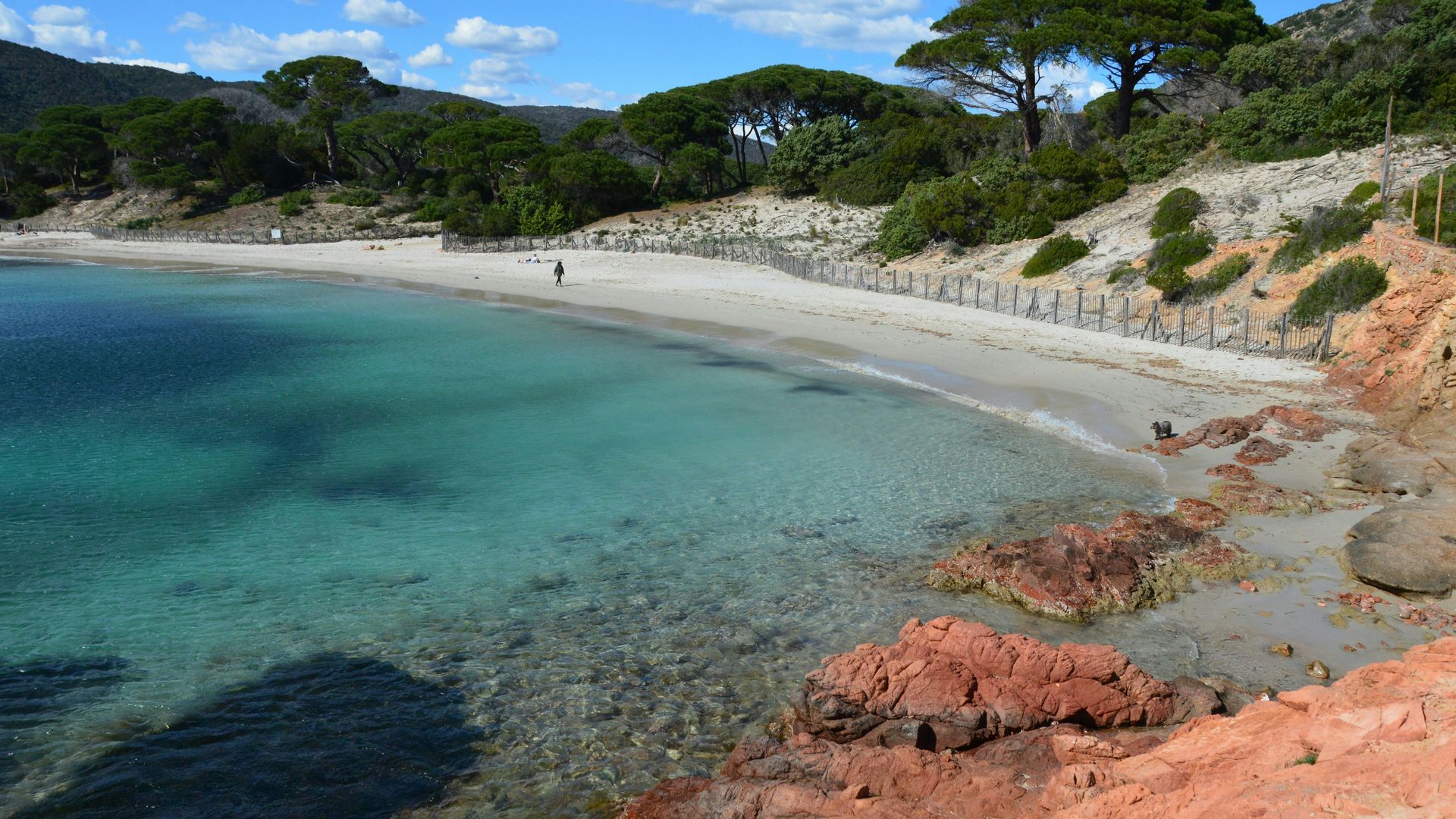
Slim MARS / Unsplash
Plage de Palombaggia, near Porto-Vecchio on Corsica’s Mediterranean coast, faces east toward immense, crystalline water glossy enough to reward swimmers and snorkelers in equal measure. The beach’s reputation isn’t a secret, which means expecting it to be genuinely saturated with visitors throughout summer is realistic planning, not pessimism.
Travelers $TRV wanting more seclusion should head instead to Plage de Carrataghju, nearby and frequently overlooked, precisely because reaching it involves a 20-minute walk through maquis scrubland that deters casual visitors. The trailhead starts near Ranch Campo Palombaggia, and the walk itself, while not difficult, requires enough commitment that most beachgoers simply choose the easier, more crowded option instead.
Most beaches in this part of Corsica have private paying car parks, typically around 5 euros, and arriving early in the morning is the only reliable way to secure parking during summer, when spots along the most popular stretches disappear fast. Planning around this reality, rather than discovering it on arrival, makes the difference between a smooth beach day and an hour spent circling for parking before even reaching the sand. Porto-Vecchio, the nearest town, has a genuinely good selection of restaurants for an evening meal after a full beach day, and the drive back from Palombaggia at sunset, with the maquis scrubland catching the evening light, is its own small reward independent of the beach itself. Visitors with a rental car should fill up on fuel and supplies in town before heading out, since the immediate area around the beach has minimal services beyond the car parks themselves. The broader Porto-Vecchio region has several other notable beaches worth comparing with Palombaggia, including Plage de Santa Giulia just to the south, which offers a similarly stunning setting with a slightly different character, shaped by its own collection of beach bars and water sports operators. Comparing the two on a single trip, rather than committing to just one, gives visitors a more complete sense of what makes this stretch of southeastern Corsica consistently ranked among the most beautiful coastlines in the Mediterranean.
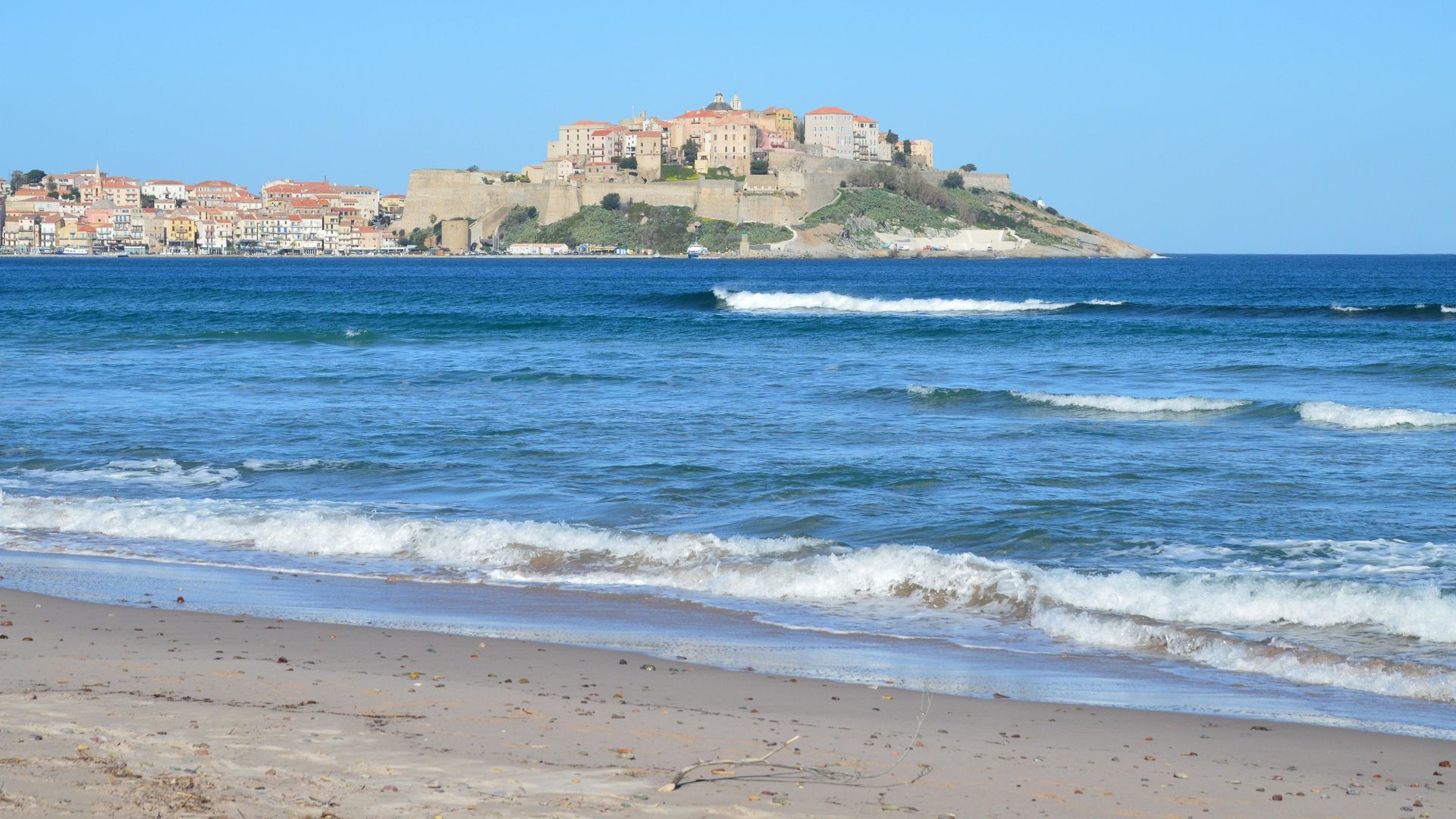
SlimMars 13 / Pexels
Calvi’s white-sand beach curves eastward for 4.5 kilometers around the Mediterranean’s Golfe de Calvi from the town’s marina, backed by a grove of pine trees that gives the whole stretch a softer, more shaded character than many of Corsica’s exposed beaches. For visitors who want something more strenuous than simply lying on a towel, Calvi Nautique Club rents kayaks, paddleboards, and windsurfing boards by the hour, with rates ranging from 10 to 20 euros per hour, depending on the equipment.
The petit train des plages, a small beach train running between Calvi and L’Île-Rousse, trundles along the coast through a string of coves and smaller beaches, giving visitors the option to hop off at any stop for a spontaneous swim before catching the next train back. This low-effort way to sample multiple beaches in a single afternoon suits travelers who want variety without committing to a full day at any single spot.
An active watersports scene, a scenic train connection to nearby beaches, and a long, pine-backed stretch of sand together make Calvi one of the more versatile beach destinations on Corsica, equally suited to a single relaxed day or a multi-day base for exploring the wider Calvi coastline. The citadel overlooking Calvi’s marina, a fortified old town dating to the Genoese era, offers sweeping views back over the beach and gulf, and climbing up for sunset gives the evening a natural conclusion after a day spent on the water or the sand below. Calvi’s airport, one of the more convenient on Corsica, makes the town a practical arrival point for visitors planning to base their entire trip on this stretch of coastline rather than touring the whole island. Calvi’s marina, lined with restaurants and cafés, makes for a pleasant evening stroll after a day on the beach, and the mountains visible behind the town paired with the sea in front give Calvi one of the more dramatic settings of any beach town on Corsica, let alone mainland France.
