From Repulse Bay's restaurant-lined shore 20 minutes from Central to Long Ke Wan's pristine cove reachable only by a steep descent with no facilities
Credit: Hong Kong Tourism Board
Hong Kong’s reputation as a concrete jungle is accurate as far as the skyline goes, but the territory’s coastline tells a different story. Beyond the skyscrapers and the harbor lies a remarkably wild coastal landscape: 260 islands, volcanic rock formations dating back 140 million years, UNESCO-listed geoparks, and beaches that range from the easily accessible, restaurant-lined to the genuinely remote, facility-free. The visitor who limits Hong Kong to the urban core misses a coastal dimension whose quality and variety are among the most underappreciated secrets in Asian travel.
The spectrum of what counts as a Hong Kong beach day is wide. At one end, Repulse Bay offers city dwellers a full-service beach experience within 20 minutes of Central, with restaurants, cafes, and beach volleyball. At the other end, Long Ke Wan requires a 20-minute taxi to a reservoir dam followed by a steep 25-minute descent to a beach with no facilities whatsoever, no shops, no shade, no café, just white sand, azure water, and the sound of wind and waves. Between those extremes, the other seven beaches on this list offer their own distinct combinations of access difficulty, water quality, cultural context, and surrounding landscape, giving the Hong Kong beach day its extraordinary range.
The 9 beaches below appear in Lonely Planet, written by a travel writer who has spent time on all of them. Hong Kong’s beaches are spread across Hong Kong Island, the Kowloon-adjacent New Territories, Lantau Island, the outlying islands, and the Sai Kung peninsula, and the travel time from central Kowloon or Hong Kong Island ranges from 20 minutes to over two hours, depending on the destination. The most remote beaches, Long Ke Wan and Tai Long Wan, require the kind of logistical commitment that gives the arrival its most earned quality.
Joshua J. Cotten / Unsplash
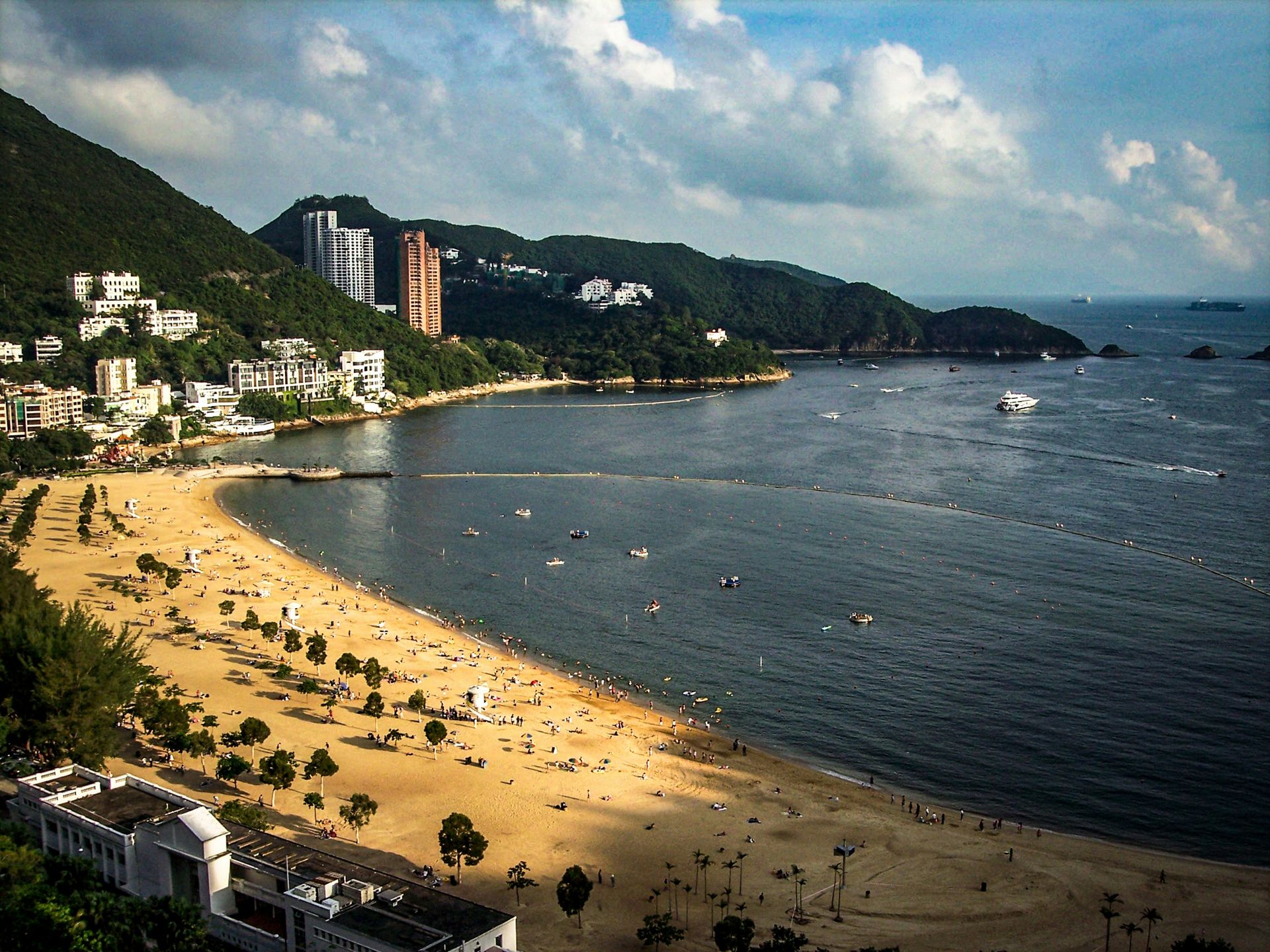
Repulse Bay is Hong Kong’s most accessible and most popular beach, located on Hong Kong Island’s southern coast and reachable in roughly 20 minutes by taxi from Central or by bus from Causeway Bay, Admiralty, and Central. The beach’s popularity is earned by easy access and genuine quality in combination: the broad, sandy bay gives the swimmer clean water and a sheltered cove whose calmer conditions make it appropriate for casual ocean swimming, and the surrounding restaurant and café scene gives the beach day a dining program specific to a neighborhood whose prestige is reflected in the city’s most expensive apartment towers climbing the hillside directly behind the sand.
The dining choices give Repulse Bay its most specific food credential among Hong Kong’s beaches: Sip Song’s Thai flavors and the signature roti pancake give the refueling stop a culinary identity whose quality exceeds the generic beach café standard, and Amalfitana’s Neapolitan-style pizza gives the longer beach lunch an Italian option specific to a restaurant whose food quality is worth the trip, independent of the beach. The mix of cuisine types along the waterfront gives the group with varying food preferences a single beach location that accommodates the full range without requiring a separate destination for each meal.
The local tip from Lonely Planet’s writer is specific and worth following: weekday mornings and the hour around sunset give Repulse Bay a crowd profile dramatically different from the weekend and midday peaks, whose popularity can make the beach feel more urban than coastal. The same beach at 7 a.m. on a Tuesday and at noon on a Saturday are functionally different experiences, and the visitor with scheduling flexibility will find the quieter version consistently rewarding. The beach’s proximity to Stanley Market and the Stanley waterfront, reachable in a short taxi ride from Repulse Bay, gives the day trip a shopping and seafood extension whose combined program makes the southern Hong Kong Island beach day one of the most complete half-day or full-day itineraries the territory offers.
Credit: Hong Kong UNESCO Global Geopark
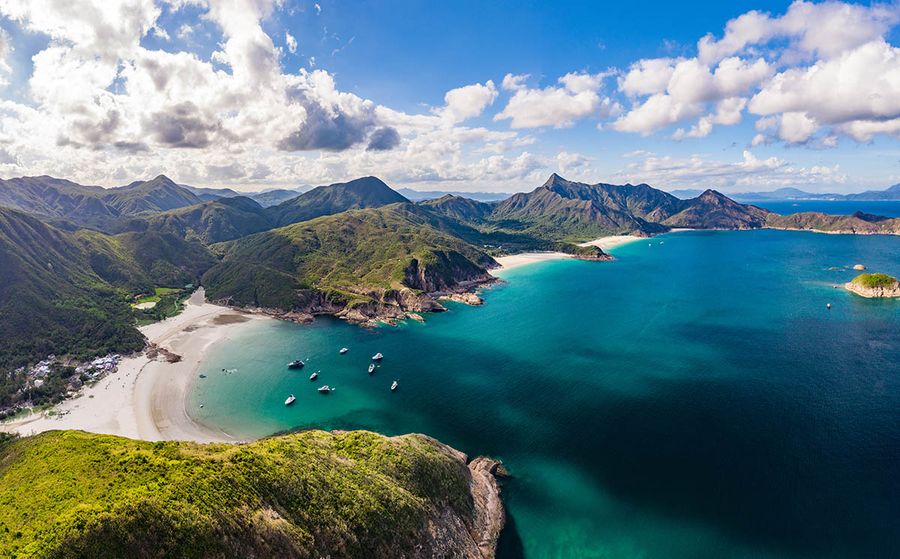
Tai Long Wan, whose name translates as Big Wave Bay, is a 3-kilometer stretch of coastline in eastern Sai Kung that encompasses four distinct beaches, Sai Wan, Ham Tin Wan, Tai Wan, and Tung Wan, connected by hiking trails whose volcanic landscape dates back approximately 140 million years. The beach-hopping format that most visitors adopt gives the Tai Long Wan day its most specifically rewarding structure: arriving at one bay, swimming and resting, following the trail to the next, repeating across the day, stopping at the open-air cafés at Ham Tin and Sai Wan for cold drinks and simple seafood, gives the full Tai Long Wan experience a variety specific to a coastline whose geological and visual character changes meaningfully from one beach to the next.
Access requires either a 90-minute hike from the green taxi drop-off in Sai Kung town or a 30-minute speedboat ride from Sai Kung Pier, and either option offers an arrival with an earned quality specific to a beach whose remoteness is part of its value. The powdery white sand and the clear water give each of the four bays a visual quality comparable to the best beaches in Southeast Asia, and the volcanic rock formations that frame the coastline give the landscape a geological drama that the more developed Hong Kong beaches cannot provide.
The overnight camping option at Ham Tin gives the Tai Long Wan experience its most complete possible version: spending the night on the beach gives the visitor access to the coastline after the day-trippers leave, when the four bays are quiet, and the star visibility in the absence of the city’s light pollution gives the evening a specific natural reward. The camping equipment rental available at Ham Tin makes the overnight option accessible without requiring the visitor to transport gear from the city. The Sai Kung town pier’s kaido boat services, speedboats whose operators negotiate direct fares to the beach, offer the visitor a flexible departure schedule, specific to a transit format that does not require advance booking, in the same terms as a scheduled ferry.
Credit: Hong Kong Tourism Board
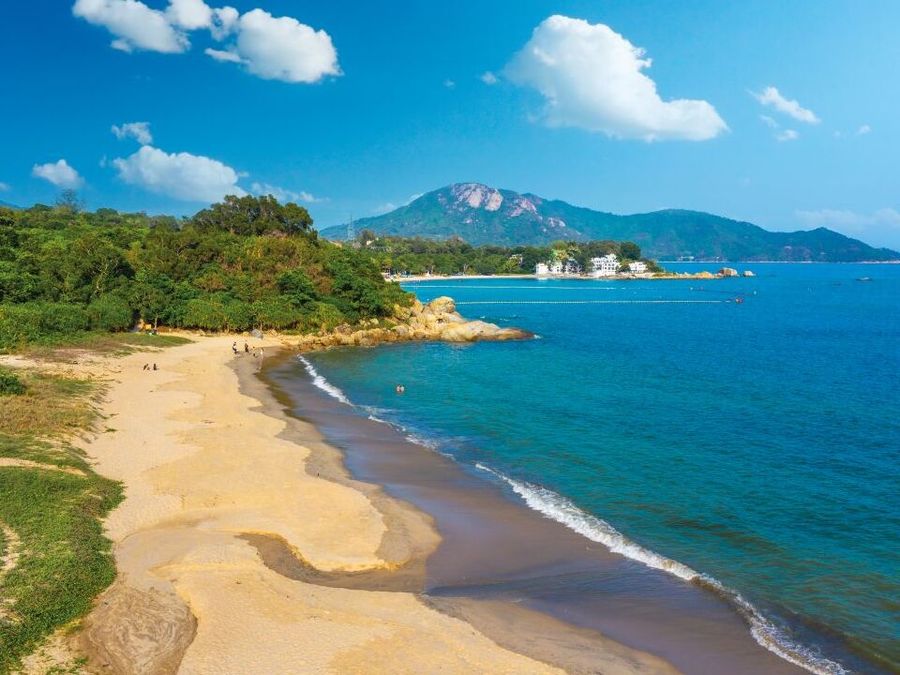
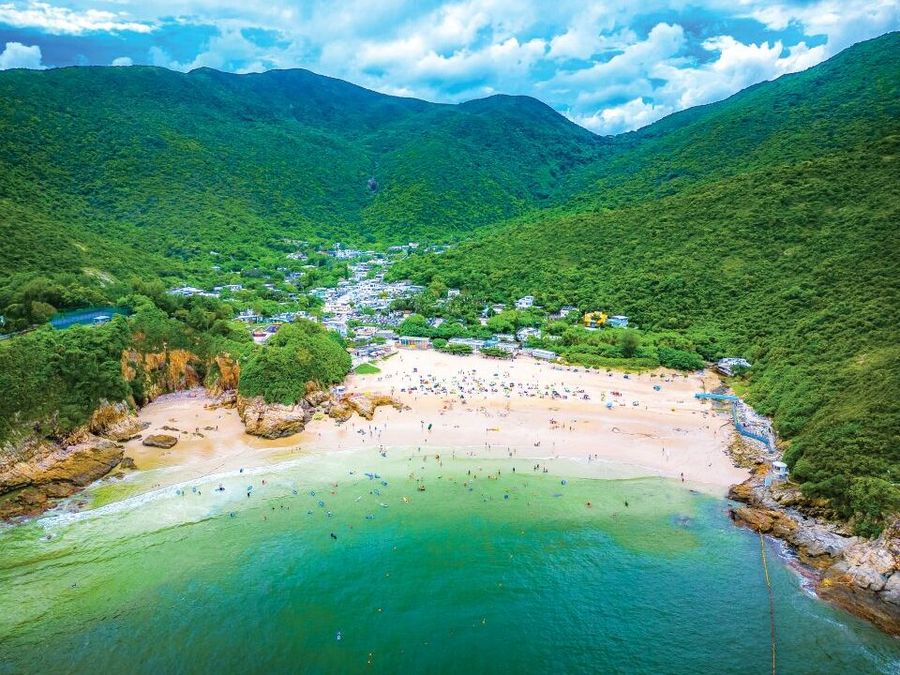
Cheung Sha Beach on the southern coast of Lantau Island is Hong Kong’s longest beach, divided into Upper and Lower Cheung Sha, and gives the family beach day its most spacious and least crowded canvas among the territory’s accessible beaches. The broad, open shoreline’s low crowd density reflects the beach’s location on Lantau’s less-developed southern coast, away from both the urban core and the tourism infrastructure of Tung Chung and the airport. Paddleboarding and kayaking are the active family program's most popular water sports, and the easy afternoon sandcastle building gives younger children the classic beach day activity, specific to a beach whose gently shelving sand and calm waters make supervised shallow-water play safe and relaxed.
The beachside dining gives the Cheung Sha day its social anchor: Bistro Sun N Sand and Harbour Café sit directly on the beach, giving the group that wants a long seaside lunch between swims a specific physical setting whose tables on the sand give the meal a casual quality appropriate to a beach day whose primary agenda is relaxation. The surrounding Lantau landscape provides a natural extension to the day trip: the nearby villages of Mui Wo and Tai O, both reachable within a short distance of Cheung Sha, offer the visitor a glimpse of older Hong Kong, whose fishing-village character and traditional architecture differ fundamentally from the territory’s contemporary urban identity.
The access by ferry from Central to Mui Wo, followed by a bus or taxi to the beach, gives the Cheung Sha day a transit journey whose ferry portion across the Pearl River Delta estuary gives the arrival a sense of departure from the city, specific to a beach that rewards the extra hour of travel with a significantly quieter and more spacious experience than the more easily accessible alternatives. The Lantau Trail, which passes near Cheung Sha as part of its 70-kilometer circuit of the island’s highland terrain, gives the more active visitor a hiking program that can precede or follow the beach portion of the Lantau day.
Credit: Hong Kong Tourism Board
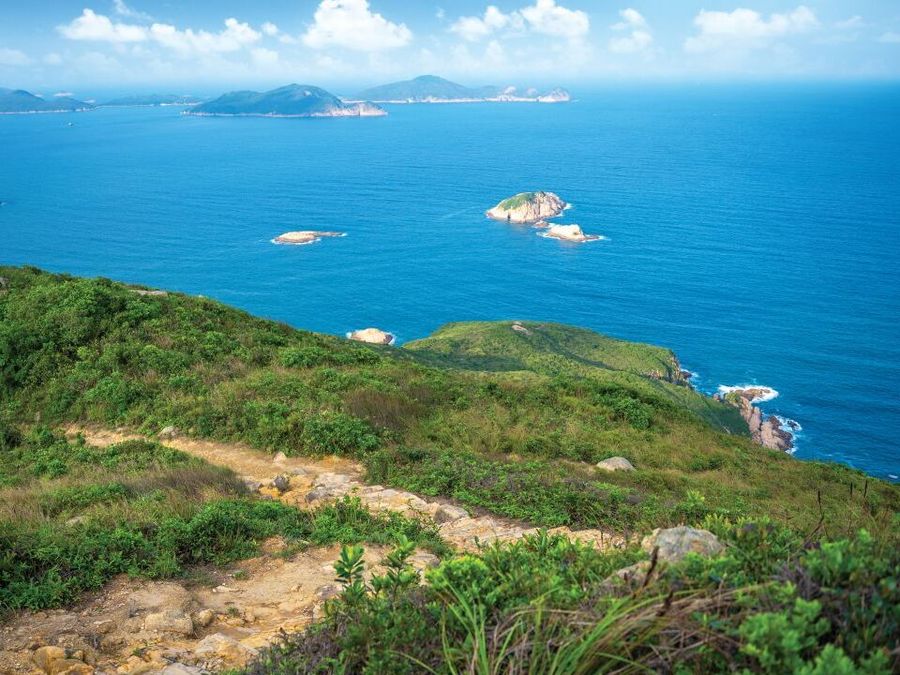
Big Wave Bay on Hong Kong Island’s eastern coast gives the active visitor the most culturally and historically layered single beach on this list: a beach that serves as the endpoint of the Dragon’s Back hike, one of Hong Kong’s most celebrated walking routes, and that contains prehistoric rock carvings declared a government-protected historic monument. The rock carvings, whose geometric and animal motifs have been dated to the Bronze Age and whose preservation on the beachside rocks gives the swimming day an archaeological dimension, make Big Wave Bay the only beach in Hong Kong whose value includes a formal cultural heritage credential alongside its natural qualities.
The Dragon’s Back trail, whose ridgeline route gives wide views across the South China Sea and the surrounding islands, gives the Big Wave Bay beach day its most satisfying possible prelude: the 8.5-kilometer hike from the starting point in Shek O to the beach arrives at the sand in a state of earned exhaustion whose cold beer at the beachfront café takes on a specific value. The beach’s former status as Hong Kong’s primary surf beach, before surfing was banned across the territory’s public beaches, gives the location a sporting heritage whose rolling waves still draw visitors for the wave-watching experience that motivated the surf community’s original gathering.
The local tip to avoid weekends is practically significant: the Dragon’s Back hike’s popularity among both Hong Kong residents and tourists means the trail and the beach simultaneously reach their peak crowd levels on weekend mornings, and the weekday visitor who arrives as a midweek hiker finds a fundamentally quieter version of the same destination than the weekend crowd participant encounters. The hiking access to Big Wave Bay from the Dragon’s Back trailhead at Shek O Road gives the visitor the option of arriving on foot from the island’s ridgeline, whose views across the South China Sea and toward the nearby islands give the trail its sustained reputation as one of Hong Kong’s most scenically rewarding urban hiking routes. The Shek O village, a 15-minute walk from Big Wave Bay, offers a cultural extension whose traditional village character contrasts with the beach’s more touristic surf-legacy identity.
Credit: Hong Kong Tourism Board
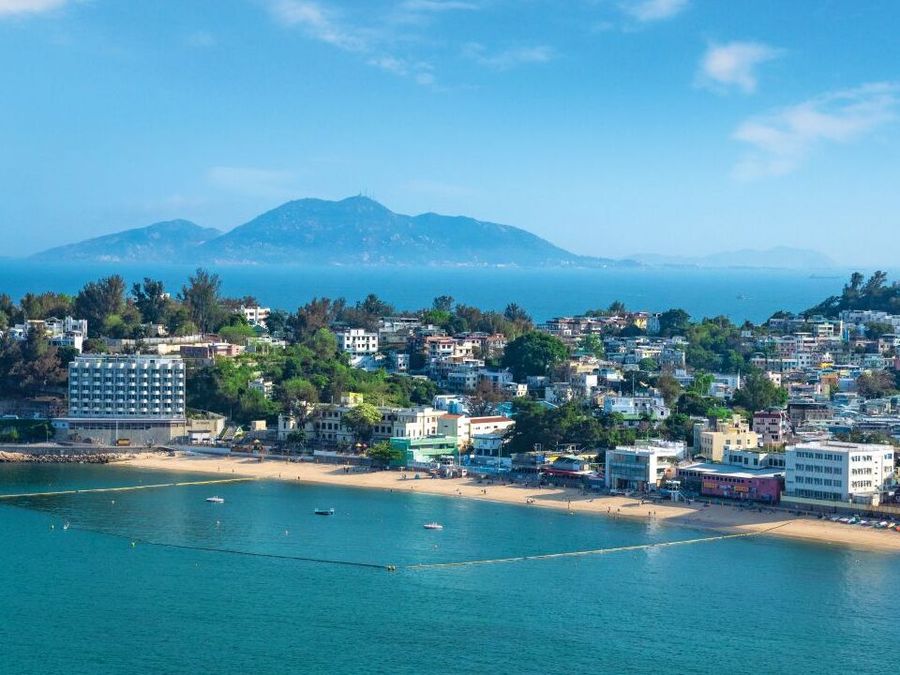
Tung Wan Beach is the main beach on Cheung Chau, the dumbbell-shaped island southwest of Hong Kong Island,, whose car-free streets and village character give the day trip a distinct pace, in contrast to the urban mainland. The beach’s water sports facilities give the active visitor the most organized watersports program available on any of Hong Kong’s outlying island beaches: the windsurfing and kayaking equipment and instruction give the visit a sports-day structure specific to a beach whose calm bay conditions make it the appropriate environment for learning or practicing both sports.
Cheung Chau’s place in Hong Kong’s sporting history gives Tung Wan Beach its most specific cultural credential: the island served as the training ground of Lee Lai-Shan, whose 1996 Atlanta Olympics windsurfing gold medal was Hong Kong’s first. The beach where she trained gives the water sports program a historical grounding specific to a location whose contribution to Hong Kong’s sporting identity is out of all proportion to the island’s small population and modest infrastructure. The colorful fishing boats that bob offshore during the windsurfing and kayaking sessions give the sporting program a visual context specific to a working fishing community whose boats share the same water as the recreational visitors.
The ferry from Central takes 30 minutes and arrives within a 10-minute walk of the beach, giving Tung Wan the most convenient island access of any beach on this list. The car-free island’s lanes and alleys offer a pedestrian-friendly circuit for pre- or post-beach exploration, with seafood restaurants, traditional shops, and temples that make the Cheung Chau day a cultural program equal in interest to the beach itself. The Cheung Chau Bun Festival, held annually in spring and drawing visitors from across Hong Kong and beyond, gives the island a specific cultural event calendar whose most famous element, the bamboo tower covered in plastic buns, whose climbing competition is the festival’s most photographed moment, gives the island its most internationally recognized single cultural tradition.
Credit: Hong Kong Tourism Board
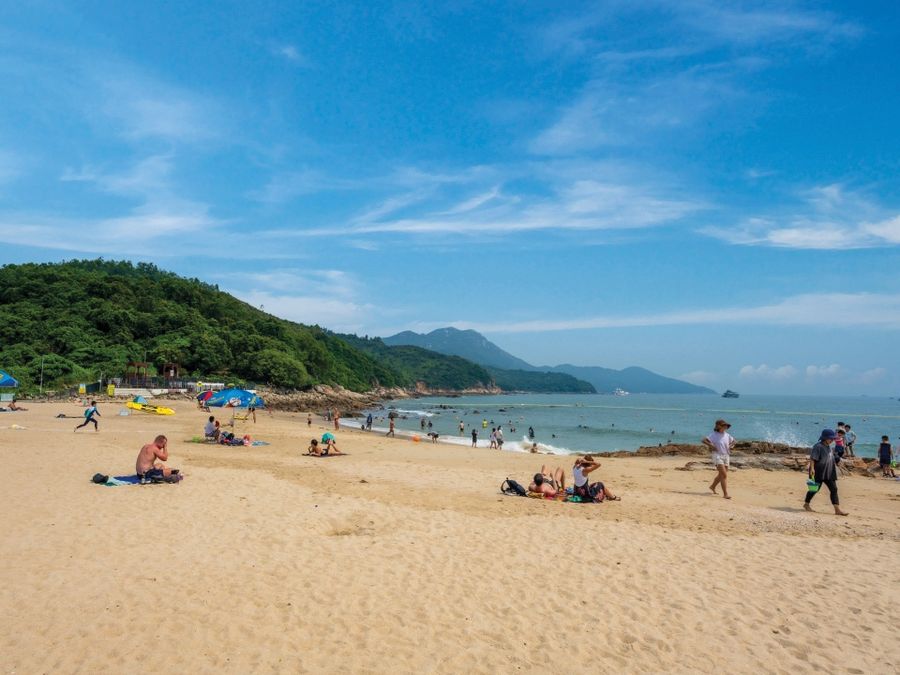
Clearwater Bay Second Beach gives the swimmer whose priority is water quality the most reliably clear and calm swimming environment on Hong Kong Island’s eastern approaches, known among local residents for the early morning lap swimmers who treat the beach’s broad crescent as their outdoor pool. The direct staircase from the bus stop at the top of the cliff gives access in its most efficient possible format: the minibus from Tseung Kwan O MTR station arrives at the beach’s top, and the descent to the sand takes a few minutes, giving the city-based swimmer a direct and simple route to one of Hong Kong’s finest swimming beaches.
The beach’s orientation and its lack of shade give the practical preparation its most important planning consideration: the Lonely Planet writer’s advice to bring sunscreen and a hat is a genuine necessity at a beach whose open aspect and limited natural shade give the mid-afternoon sun its most direct access to the sand’s exposed surface. The early morning visit, whose cooler temperatures and calmer water provide the best swimming conditions, also offers the reward of seeing the regular morning lap swimmers, a community whose consistency gives Clearwater Bay Second Beach its most locally authentic single character.
The beach’s crescent shape gives the swimming area a natural enclosure, and its calm conditions on most mornings provide a protected bay that the more exposed oceanic beaches cannot offer in the same way. The barbecue pit facilities provide the afternoon visitor with picnic and cooking options, and the shower and changing room facilities provide the post-swim refreshment program with basic infrastructure appropriate to a beach whose swimming quality warrants a full half-day visit. The Clearwater Bay Country Park, whose hiking trails extend across the peninsula’s hillsides above the beach, gives the active visitor a natural program that can precede or follow the swimming, and the nearby Clearwater Bay Golf and Country Club gives the area a residential leisure context specific to one of Hong Kong’s most scenic coastal neighborhoods.
Credit: Hong Kong Tourism Board
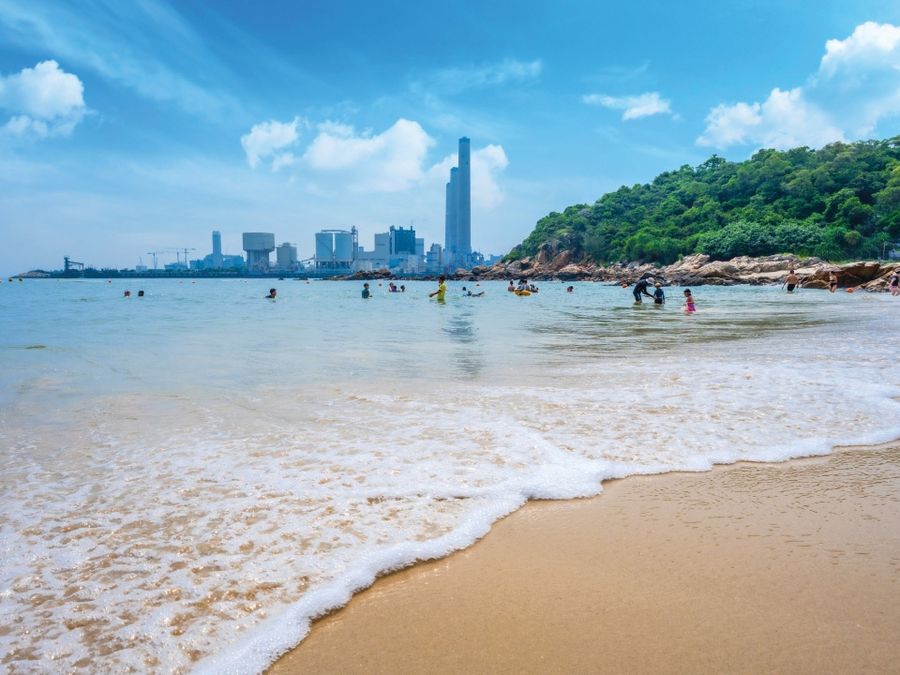
Hung Shing Yeh is the main beach on Lamma Island, the inhabited island closest to Hong Kong Island and reachable in roughly 30 minutes by ferry from Central, giving the Lamma day trip the most efficient island beach access on this list. The beach’s golden sand, calm waters, and the village of Yung Shue Wan’s restaurant strip give the Lamma beach day a social and culinary program specific to an island whose character is shaped by a mix of long-term expat residents, Hong Kong locals, and travelers whose preference for a slower pace has made Lamma the territory’s most popular alternative-lifestyle community outside the urban core.
The Lamma Power Station visible across the bay from Hung Shing Yeh gives the beach an unexpectedly industrial backdrop whose cinematic quality the Lonely Planet writer acknowledges with the specific observation that it works as an “oddly cinematic” visual element. The power station’s concrete cooling towers and industrial infrastructure, visible from the sand, give the beach a distinctly Hong Kong visual character, whose juxtaposition of natural and industrial landscapes reflects the territory’s broader relationship between its developed and undeveloped zones.
Fai Kee’s beef brisket noodles in Yung Shue Wan give the post-beach meal its most specifically recommended option from the article’s local knowledge: the casual restaurant in the village’s main street gives the noodle lunch a specifically Cantonese comfort food experience whose quality gives the Lamma day trip a culinary reason to linger after the beach portion concludes. The coastal trail between Yung Shue Wan and Sok Kwu Wan on the island’s other side provides the day trip's most rewarding physical extension, a 40-minute walk that crosses the island’s central ridge, offering views of both bays and the neighboring islands. Lamma’s seafood restaurants at Sok Kwu Wan, particularly the outdoor tables whose harbor view and fresh seafood give the dinner a specific outdoor dining quality, give the evening extension of the Lamma day its most celebrated culinary conclusion.
Minghong / Wikimedia Commons (CC BY-SA 4.0)
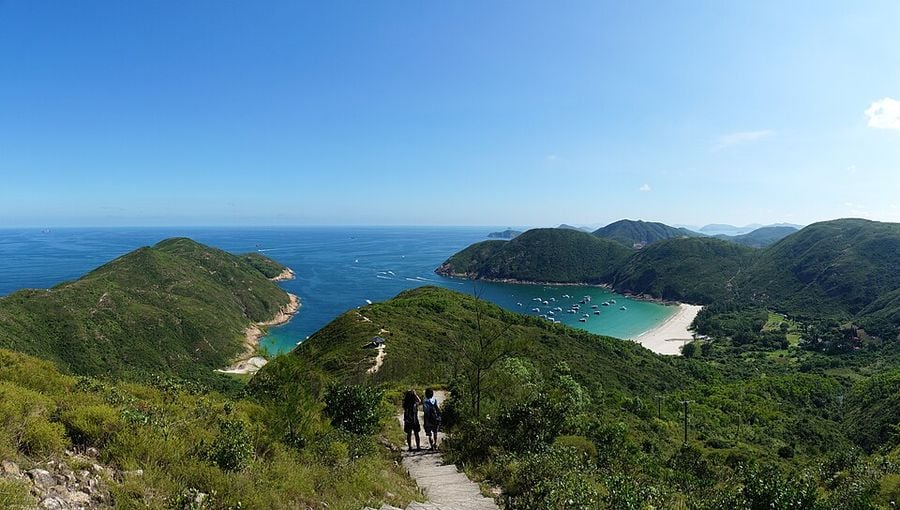
Long Ke Wan gives the visitor who wants the most genuinely off-grid beach experience in Hong Kong the most remote and least facilitated beach on this list: no shops, no cafés, no shade, no facilities of any kind, just a pristine stretch of soft white sand and azure water in a cove between rugged hills and volcanic rock formations that form part of Hong Kong’s UNESCO-designated geological heritage. The access requires a 20-minute taxi from Sai Kung town to the East Dam of the High Island Reservoir, followed by a steep 25-minute descent to the beach, and the effort of that descent gives the arrival at the sand a specific earned satisfaction whose intensity is proportional to the access difficulty.
The drive to the East Dam gives the approach its own visual reward before the descent to the beach begins: the views of Hong Kong’s volcanic landscape from the dam’s ridgeline, whose UNESCO listing reflects the geological significance of the columnar jointed volcanic rock formations visible across the reservoir, give the taxi journey its most scenically extraordinary section. The High Island Reservoir itself, whose enclosing dams were built in the 1970s to create one of the largest reservoirs in Hong Kong, adds a human-engineering element whose scale is visible against the geological backdrop.
The practical advice in the article is essential: bringing more water and food than seems necessary is the correct approach for a beach with no provisioning options, and the 25-minute, steep return ascent after a full day in the sun adds a physical demand component that flat-access beaches do not impose. The speedboat option from Sai Kung Pier offers a less physically demanding alternative access route, though the article notes the journey can be choppy. The broader High Island area of Sai Kung East Country Park, whose other beaches and geological formations offer a day-long exploration program for visitors with more time, gives Long Ke Wan a natural neighbor in one of Hong Kong’s most geologically significant protected areas.
Credit: Hong Kong Tourism Board
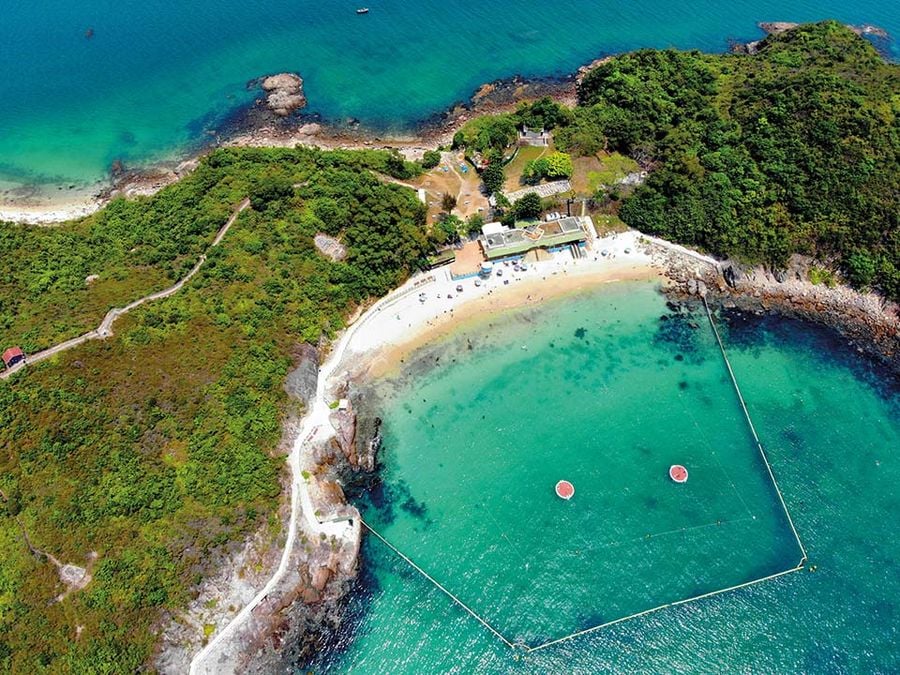
Hap Mun Bay, also known as Half Moon Bay, gives the snorkeling visitor the most marine-biologically rewarding beach in Hong Kong and the only one on this list reached by traditional sampan from Sai Kung Pier, giving the journey to the beach its own cultural dimension specific to a mode of transport whose traditional wooden boats connect the visitor to Hong Kong’s historic fishing community. The sampan tickets, sold by the boat operators at Sai Kung Pier for approximately HK$40, offer access at a cost and convenience specific to a short, scenic crossing, whose arrival in the crescent-shaped bay gives the transit its most satisfying conclusion.
The Sharp Island tombolo, whose local name, the Fairy Walk, describes the sand path that appears across the water at low tide, connecting the beach to the adjacent island, gives Hap Mun Bay its most photographically celebrated single natural feature. The tombolo’s appearance at low tide and its disappearance at high tide give the timing of the beach visit a specific tidal consideration: arriving at or around low tide gives the visitor access to the Fairy Walk’s sand crossing, while a high tide visit restricts the experience to the beach itself and the snorkeling in the surrounding waters.
The rocky shoreline around Sharp Island gives the snorkeling its most productive environment: the volcanic rock formations and the clear water whose visibility reflects the bay’s protected position within the UNESCO Global Geopark give the underwater exploration a marine biodiversity and water clarity specific to a protected area whose fishing restrictions and geological heritage status give the ecosystem a preservation level absent from the more heavily used beaches. The water shoes recommended in the article are practical advice for rocky entry and exit points, where the uneven underwater surface makes the barefoot approach both uncomfortable and unstable. The Sai Kung waterfront promenade’s seafood restaurants, just a short walk from the sampan pier, offer a wide range of live seafood options, giving post-beach dining its most locally authentic coastal character.
