From Edinburgh Castle's volcanic rock above the capital to Dunnottar's clifftop ruins reachable only by 200 steps down and back up
Ray Harrington / Unsplash
Scotland wears its history on its landscape in a way few countries can match. Castles appear on clifftops above crashing seas, on islands in highland lochs, in the middle of capital cities, and on the manicured grounds of active royal estates. Some stand in dramatic ruin, their collapsed towers and broken walls more atmospheric than any restored version could be. Others have been rebuilt, maintained, or converted into living museums that draw visitors from across the world. What connects them is the weight of what happened inside and around them: sieges, royal childhoods, parliamentary maneuvers, and centuries of conflict that shaped the country these buildings still occupy.
The density of Scottish castles is remarkable even by European standards. The country holds an estimated 1,500 of them, with the earliest structures dating to the 12th century. Many are privately owned and closed to visitors. Others open seasonally, typically from spring through October, when the grounds and interiors are accessible, and the surrounding landscapes are at their most inviting. A smaller number stay open year-round, operating as major cultural attractions that require advance ticket purchase during peak summer months.
The 10 castles below appear in Travel + Leisure, selected for their architectural distinction, historical depth, and the quality of the experience they offer visitors. The selection covers a geographic range from Edinburgh in the central Lowlands to the Northern Highlands, and includes everything from a royal residence still used by the British monarchy to cliff-edge ruins accessible only on foot. Each earns its place through what it offers beyond a striking exterior: the history embedded in its walls, the landscape it commands, and the experience of being there in person.
Ben Geurin / Unsplash
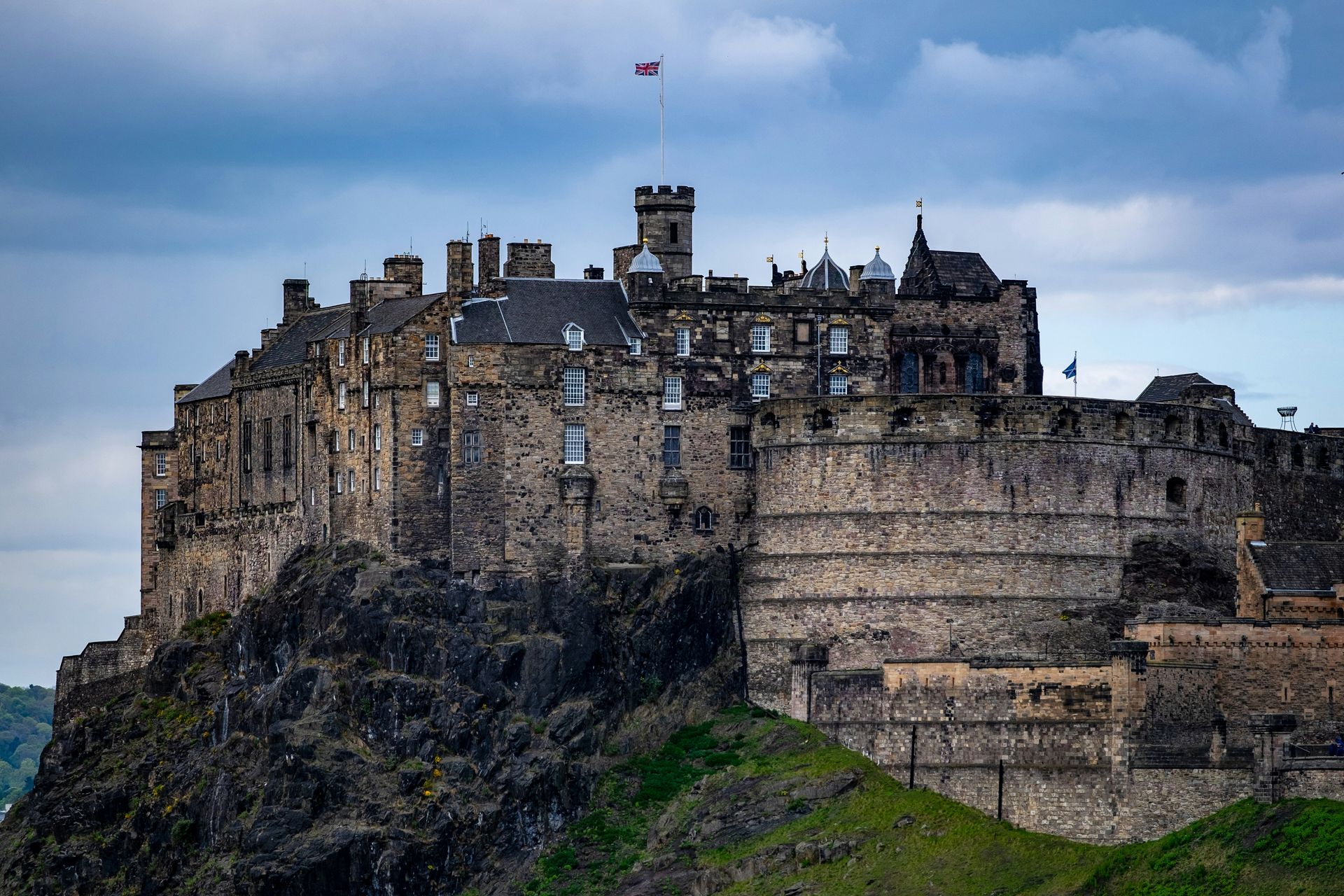
Edinburgh Castle sits on Castle Rock, a volcanic formation that rises above the city in a position that made it one of the most defensible sites in Scotland for centuries. The buildings on the rock date back to the 12th century, and the castle’s function has shifted over that span from royal residence to military fortress to prison to national monument. It now operates as a UNESCO World Heritage Site and the most visited paid attraction in Scotland, drawing visitors to a site that has stood at the center of the country’s political and military history for nearly a millennium.
The Great Hall and St. Margaret’s Chapel anchor the interior experience. St. Margaret’s Chapel, the oldest surviving building in Edinburgh, dates to the early 12th century and offers a rare encounter with Romanesque architecture at an intimate scale. The National War Museum occupies a section of the castle complex and holds one of Scotland’s most significant collections of military artifacts: uniforms, medals, weapons, and scale reproductions that trace the country’s martial history across several centuries. The combination of architectural age and curatorial depth gives Edinburgh Castle a density of experience that requires time to absorb properly.
Special events extend the castle’s appeal beyond a standard museum visit. Light shows, concerts, afternoon tea, and holiday performances take place on the grounds throughout the year, and the castle serves as the backdrop for the Royal Edinburgh Military Tattoo each August. Summer demand for tickets is high enough that advance purchase is essential, and the castle closes only on Christmas Day and Boxing Day. The views from the battlements across Edinburgh’s rooftops and out to the Firth of Forth on clear days reward the climb above the city’s streets.
The castle’s film history adds a layer of cultural familiarity for visitors who have seen its exterior in productions such as “The Lost King” from 2022. The building’s photogenic qualities from every angle around the city mean that travelers often feel they recognize it before they visit, but the scale and presence of the castle from within its walls read differently than any photograph suggests.
Credit: Historic Environment Scotland
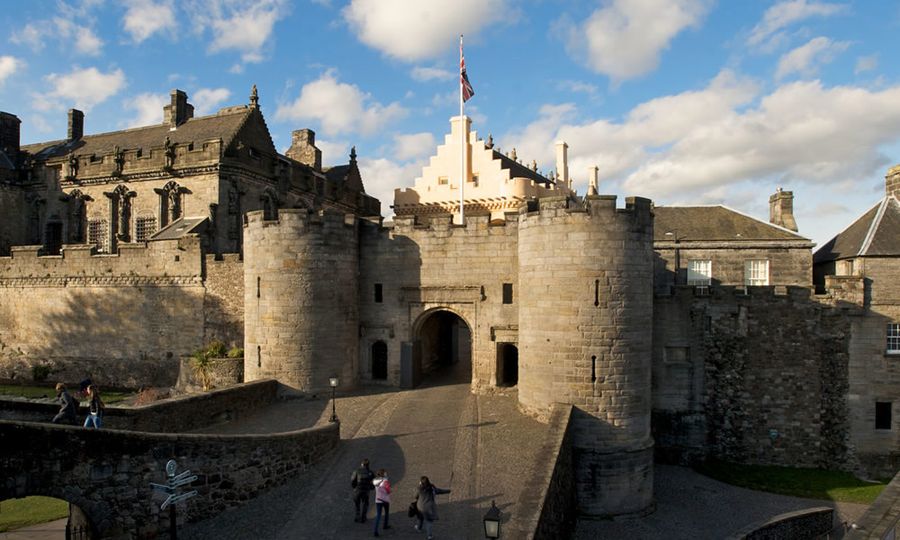
Mary Queen of Scots spent her early childhood at Stirling Castle, and the building’s connection to her life forms one thread in a historical narrative that stretches back to the 12th century. The castle stands at the head of the Forth Valley on a commanding rock, and its strategic position made it a primary seat of Scottish royal power across multiple centuries. Most of the structures visitors encounter date from the 15th and 16th centuries, including the Great Hall and Royal Palace, which represent some of the finest Renaissance architecture in Scotland.
The Stirling Heads Gallery holds one of the castle’s most unusual treasures: hand-carved oak medallions that once decorated the ceiling of the Royal Palace’s King’s Inner Hall. The originals, carved in the early 16th century, display portraits of royalty, courtiers, and classical figures in a style reflecting Renaissance influences reaching Scotland from continental Europe at the time. The craftsmanship of the medallions and the story of their removal, deterioration, and eventual restoration give this gallery a specific historical weight that the castle’s grander spaces do not replicate.
Clear days from the castle walls produce panoramic views across the Forth Valley to the Highlands beyond, a perspective that explains the fortress’s strategic value as immediately as any written account. The same vantage point today reveals the Wallace Monument on its hilltop to the northeast, the Ochil Hills across the valley, and, on days of exceptional visibility, the distant outline of highland peaks. Guided tours are included with admission and run year-round, giving visitors a structured way into a site whose layers of history reward context.
Stirling Castle’s recent role as a filming location for productions including “Good Omens” and “Mary and George” has introduced the site to audiences unfamiliar with its historical significance, though the building’s credentials need no dramatic series to establish them. The castle stands as one of the most important historical sites in Scotland on its own terms.
Christian Lendl / Unsplash
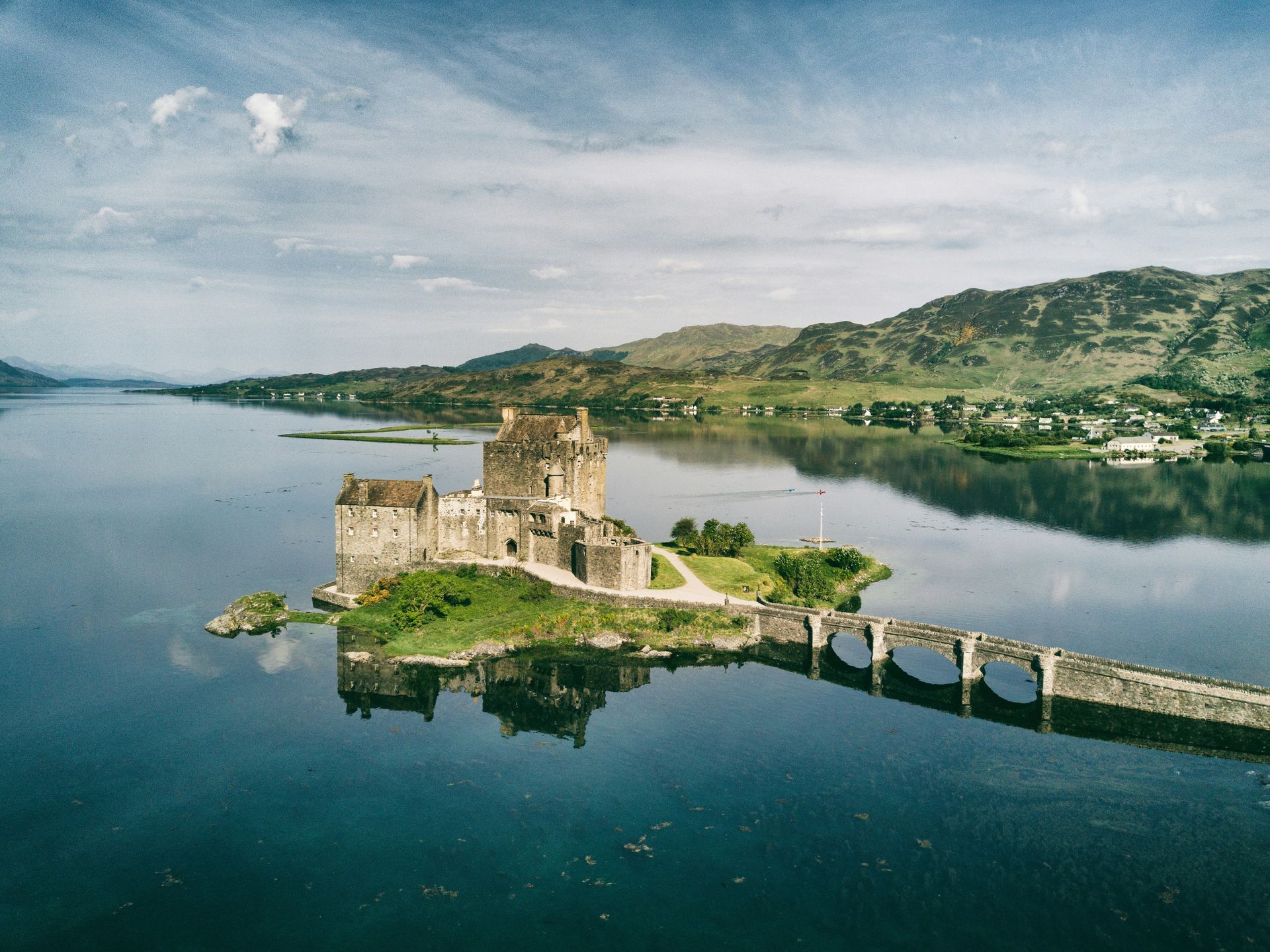
Eilean Donan Castle occupies a small island at the convergence of three sea lochs in the western Highlands, with mountains rising on all sides and the Isle of Skye visible across the water. The setting is responsible for the castle’s status as one of the most photographed landmarks in Scotland: the combination of water, mountains, and the medieval-style structure produces a visual composition that appears on more Scottish travel imagery than almost any other single site. No photograph, however well composed, fully conveys the scale of the surrounding landscape or the quality of the light that moves across it through the day.
The original fortress on this site dates to the 13th century. English troops attacked and largely destroyed it in the early 18th century during the Jacobite uprisings, and the structure lay in ruin for two centuries before a restoration project beginning in the 1920s rebuilt it into its current form. The reconstruction incorporated the surviving ruins into the new design, and the result is a building that reads as medieval in character while, in its present form, dating largely to the 1930s. The history of the restoration is part of the castle’s story rather than a footnote.
The surrounding wildlife adds a natural dimension unusual for a built attraction. Dolphins, otters, and porpoises inhabit the waters of the sea lochs around the castle, and visitors who spend time on the causeway connecting the island to the mainland encounter this wildlife in a setting framed by one of the most dramatic mountain landscapes in Scotland. The castle has served as a filming location for productions including “Highlander” and functions as a wedding venue, which means access on certain days depends on scheduled private events. Checking the website before visiting prevents a wasted journey.
The interior holds artifacts and furnishings connected to the Mackenzie and Macrae clans whose history the castle represents, and the exhibition rooms give the building a curatorial dimension beyond its exterior drama. For many visitors, however, the exterior and setting constitute the primary experience, and the approach along the road from Dornie, which reveals the full composition of castle, water, and mountain simultaneously, stands as one of the great arrival moments in Scottish travel.
John Roberts / Unsplash
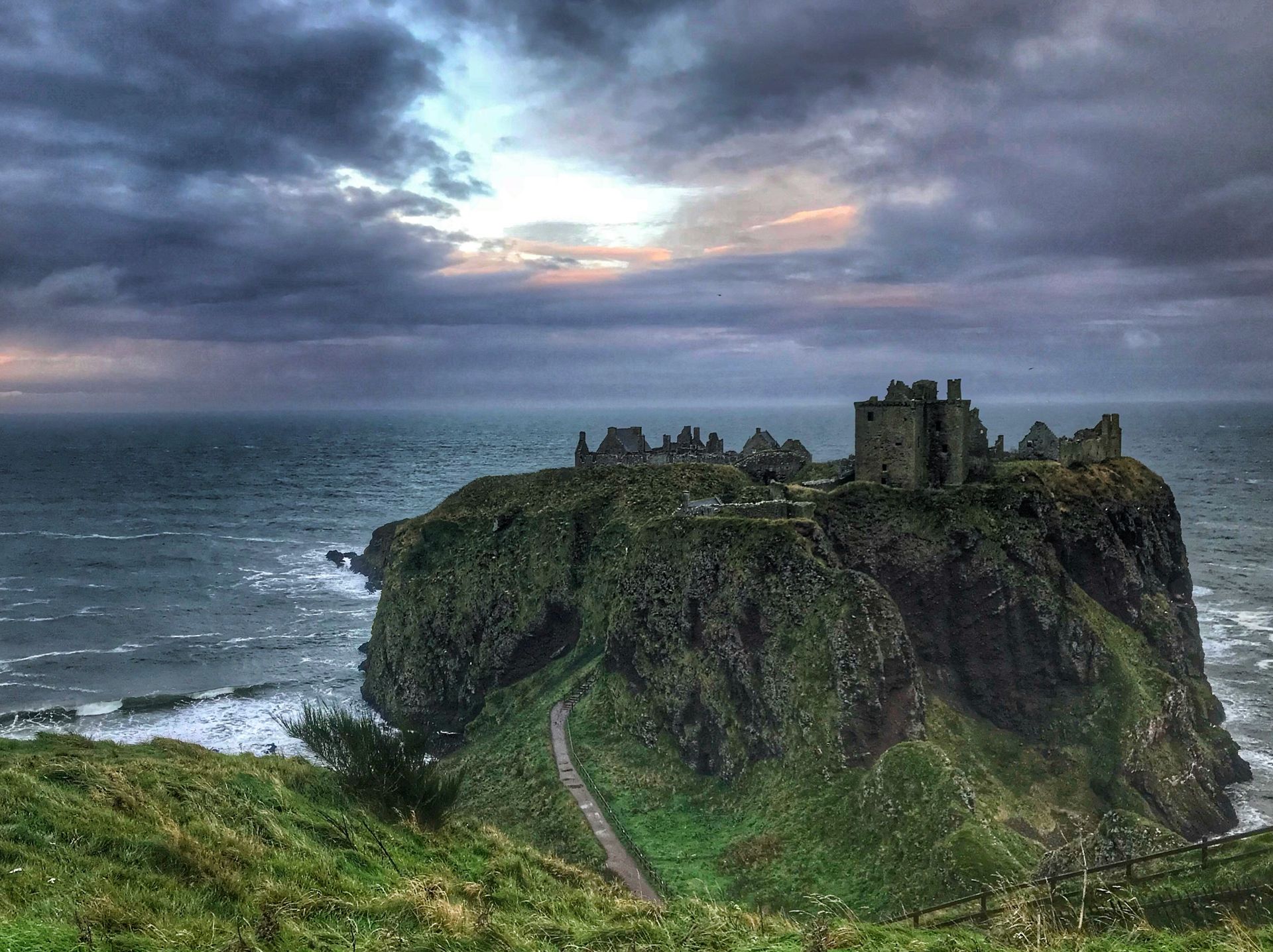
Dunnottar Castle stands on a clifftop promontory on Scotland’s northeast coast, separated from the mainland by a deep ravine and accessible only by a path that descends to the bottom of the ravine before climbing again to the castle entrance. The fortress crowns the rock, a complex of ruined buildings whose condition ranges from roofless shells to walls reduced to their foundations. The cliff setting, with the North Sea below and the Aberdeenshire coastline stretching in both directions, gives the ruins a visual authority that no restored building on a similar site could replicate.
The historical events attached to Dunnottar are among the most dramatic in Scottish history. Sir William Wallace besieged it during the Wars of Scottish Independence. In the 1650s, the castle served as the hiding place for the Scottish crown jewels when Oliver Cromwell’s army invaded, and the jewels’ eventual escape from the besieged fortress became one of the celebrated episodes in Scottish national memory. The history of what happened within these now-roofless walls gives the ruins narrative weight, making the site's physical state feel appropriate rather than unfortunate.
Reaching the castle requires more physical effort than most Scottish castle visits. Visitors descend more than 200 steps from the clifftop path to the ravine below, then climb back up to the castle entrance on the far side. Comfortable footwear is a practical requirement rather than a suggestion, and the path can be slippery in wet conditions, which the northeast coast produces regularly. The physical approach amplifies the experience of arrival: the castle appears, disappears, and reappears as the path descends and climbs, and the final ascent delivers visitors to an entrance that, with the surrounding sea and cliff, feels genuinely remote.
The shoreline below the castle, accessible to visitors with energy for further exploration after the main site, offers a different perspective on the clifftop fortress from the water’s edge. The castle is open daily except on certain holidays and during severe weather conditions, the latter a practical consequence of the exposed coastal location.
Cassie / Unsplash
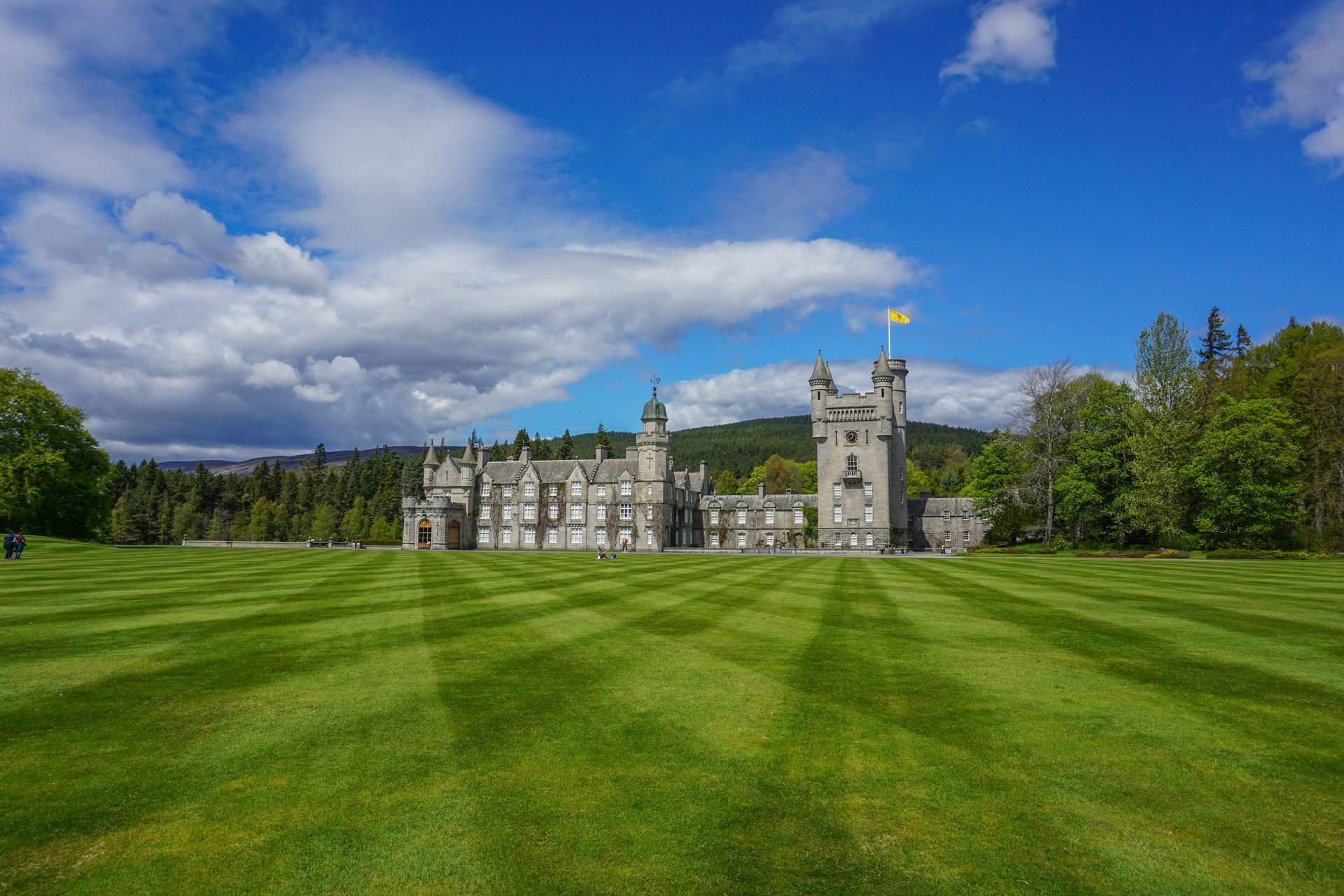
Balmoral Castle has functioned as the Scottish holiday residence of the British royal family since Prince Albert purchased the estate for Queen Victoria in 1852. The original building on the site was considered too small for royal requirements, and the present-day castle was completed in 1856 in a Scottish Baronial style, using granite from a local quarry. Successive generations of the royal family have added to the surrounding 50,000-acre estate, which encompasses farmland, grouse moor, and woodland that the family has managed for more than 170 years.
The castle’s association with Queen Elizabeth II, who spent significant portions of each year at Balmoral until her death in 2022, gives the property a contemporary resonance alongside its Victorian history. The queen’s attachment to the estate was widely documented, and Balmoral appears in historical accounts of major royal decisions as the setting for significant conversations away from the formality of London. The landscape of the Cairngorms surrounding the estate informed her approach to the natural world in ways that visitors to the grounds can appreciate firsthand.
Full interior access is not available to the public, as Balmoral remains a working royal residence. Admission to the grounds is free on select dates, and Land Rover expedition tours take visitors into the surrounding parklands to observe the estate’s wildlife and terrain. The gardens, ballroom exhibitions, and outdoor areas that open during the visitor season give access to the estate’s character without requiring entry to the private residential sections of the building.
The location near the town of Braemar in the Cairngorms National Park places Balmoral within a broader landscape of highland scenery that rewards time spent beyond the estate itself. The Dee Valley that the estate occupies, and the mountain terrain that rises above it, give the surrounding area a natural context that the castle’s history and architecture complement.
Amanda Llewelyn-Jones / Unsplash
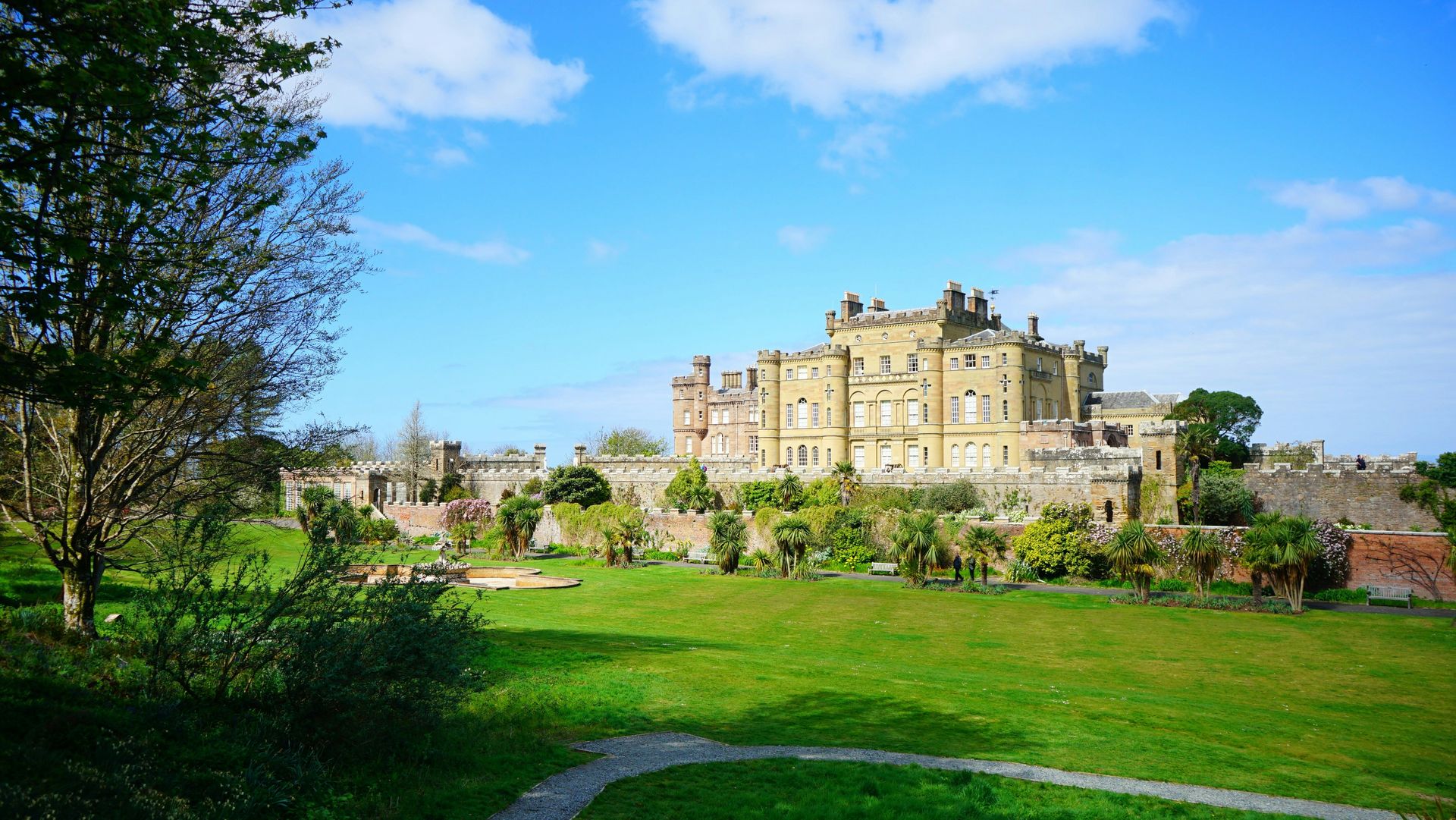
Culzean Castle stands on a clifftop above the Firth of Clyde on the Ayrshire coast, designed by the architect Robert Adam in the late 18th century and regarded as one of his finest works. The exterior presents a romantic clifftop silhouette that the interior matches in ambition: the oval staircase at the heart of the building is considered among the most impressive interior architectural features of any Scottish property, and the Round Drawing Room, which occupies one of the castle’s towers, frames views across the Firth of Clyde through windows arranged to maximize the sea vista. Sunset from this room produces a light quality that the castle’s reputation as a viewing point is built around.
The surrounding grounds cover more than 640 acres of gardens, beaches, woodland, and trails managed by the National Trust for Scotland. Two adventure playgrounds on the estate extend the site’s appeal to families with children, and the beach access at the base of the cliffs gives visitors a coastal dimension below the clifftop castle. The combination of formal garden design, natural coastal landscape, and Georgian architecture on a single estate gives Culzean a range of experiences unusual among Scottish castle properties.
The castle has served as a filming location for productions including “The Queen,” “The Wicker Man,” and “The Last Musketeer,” giving its interiors a degree of cinematic familiarity for visitors who arrive with that cultural context. The building’s visual distinction, both the clifftop exterior and the designed interior spaces, makes it a natural film location and explains its recurring use in productions that require a specific register of aristocratic Scottish architecture.
The castle, park, and walled garden open from mid-March through October. The seasonal closure reflects the practical realities of managing a coastal cliff property through Scottish winter conditions, and the open season aligns with the period when the gardens and grounds present at their best.
Colin Horn / Unsplash
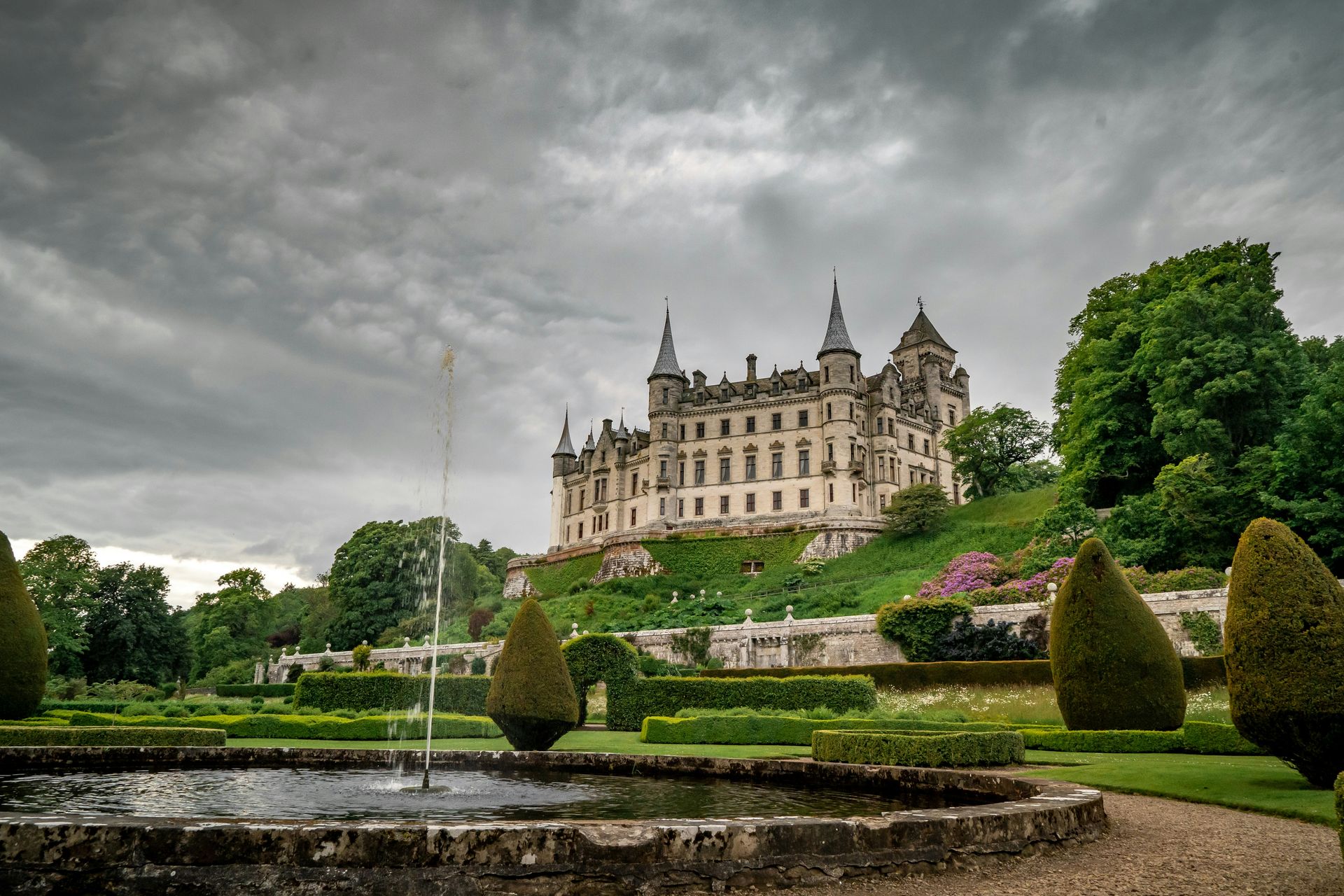
Dunrobin Castle in the Northern Highlands presents an exterior that reads more like a French chateau than a Scottish fortress: conical tower roofs, a formal facade, and a manicured Victorian garden laid out between the castle and the sea. The 189-room estate dates back to the 1300s, making it one of the oldest continuously inhabited houses in Scotland, though the current appearance owes much to 19th-century additions that gave the building its distinctive fairy-tale silhouette. The Moray Firth and Dornoch Bay spread below the castle grounds, visible from multiple points across the property.
The building’s history spans a range of functions that few Scottish properties can match. The Earls and Dukes of Sutherland used Dunrobin as their family seat for centuries. The First World War converted it into a naval hospital, and a period as a boys’ boarding school followed before the estate returned to family use. Each phase left its mark on the building, and the collections within it, and the on-site museum holds archaeological relics alongside family artifacts that trace the estate’s varied history across its different periods of use.
A twice-daily falconry display on the grounds adds a programmatic dimension to the visit, extending the experience beyond the castle interiors and the Victorian garden. The garden itself, designed in the formal Victorian style with geometrically arranged beds and parterres, is one of the finest examples of its type in Scotland and rewards time spent within it, separate from the castle tour. A cafe on the grounds provides a practical rest point within a site large enough to require most of a day to explore properly.
Dunrobin opens to visitors from April through October, and the Northern Highlands location makes it a natural inclusion in itineraries that combine the castle with the Bealach na Bà mountain pass, the Caithness coastline, or the shorter drive south to Inverness. The remoteness of the location relative to the central belt of Scotland adds to the sense of arrival that the castle’s dramatic exterior rewards.
martin bennie / Unsplash
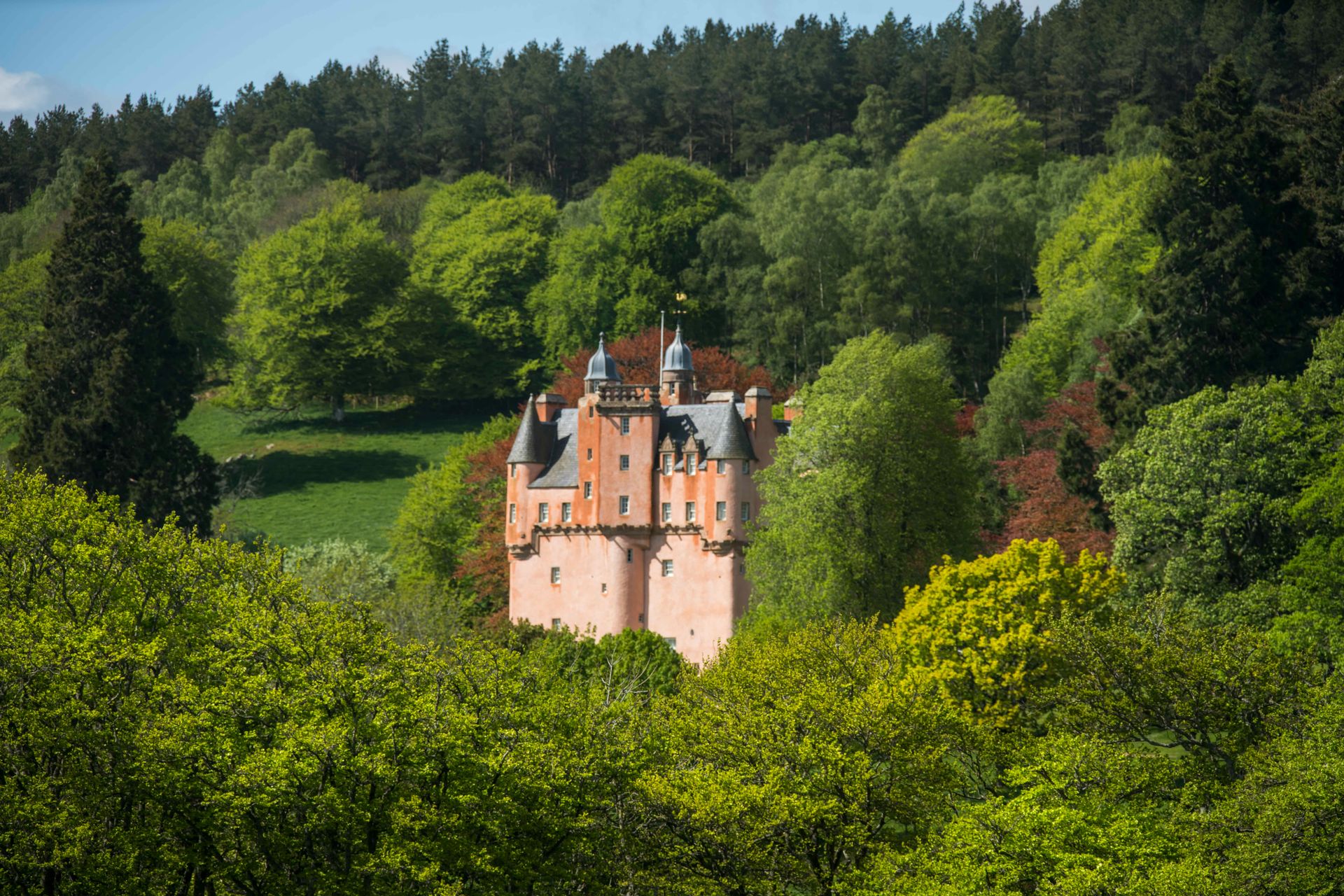
Craigievar Castle in the hills of Aberdeenshire presents a tower house of unusual elegance: a pink-harled exterior rising from a relatively modest base to an elaborate collection of turrets, corbelled balconies, and decorative stonework at the upper levels. The building dates to the early 17th century and represents the Scottish Baronial style at its most refined, concentrating its architectural ambition in the upper portion of the tower where the eye is drawn. Walt Disney $DIS is said to have drawn on Craigievar for inspiration for Cinderella’s castle, and the visual similarity between the two structures is difficult to ignore once noticed.
The Forbes family owned Craigievar for more than 300 years before transferring it to the National Trust for Scotland in 1963. The building’s interior reflects its long history as a family home: small rooms and narrow stairways give the castle a human scale very different from the grand public spaces of Edinburgh or Stirling. The Great Hall retains a magnificent plaster ceiling dating to the early 17th century, considered one of the finest surviving examples of its period in Scotland. The modest dimensions of the rooms amplify the craftsmanship of the interior details, which reward close attention.
The castle returned to its original pink color in the early 2000s after a restoration program addressed the harling that gives the exterior its distinctive tone. The color reads differently under different light conditions and seasons: vivid against the green of the surrounding Aberdeenshire hills in summer, more muted under the overcast skies this part of Scotland regularly produces. Guided tours run from early April through late October on a first-come, first-served basis, with no advance booking, so early arrival is advisable during peak months.
Three cottages on the grounds can be booked for overnight stays, giving visitors the unusual option of spending the night within a working National Trust property. The grounds themselves remain open year-round, and the walk around the castle exterior in different seasons gives the building’s color and silhouette a range of contexts that a single visit may not capture.
Johnny Briggs / Unsplash
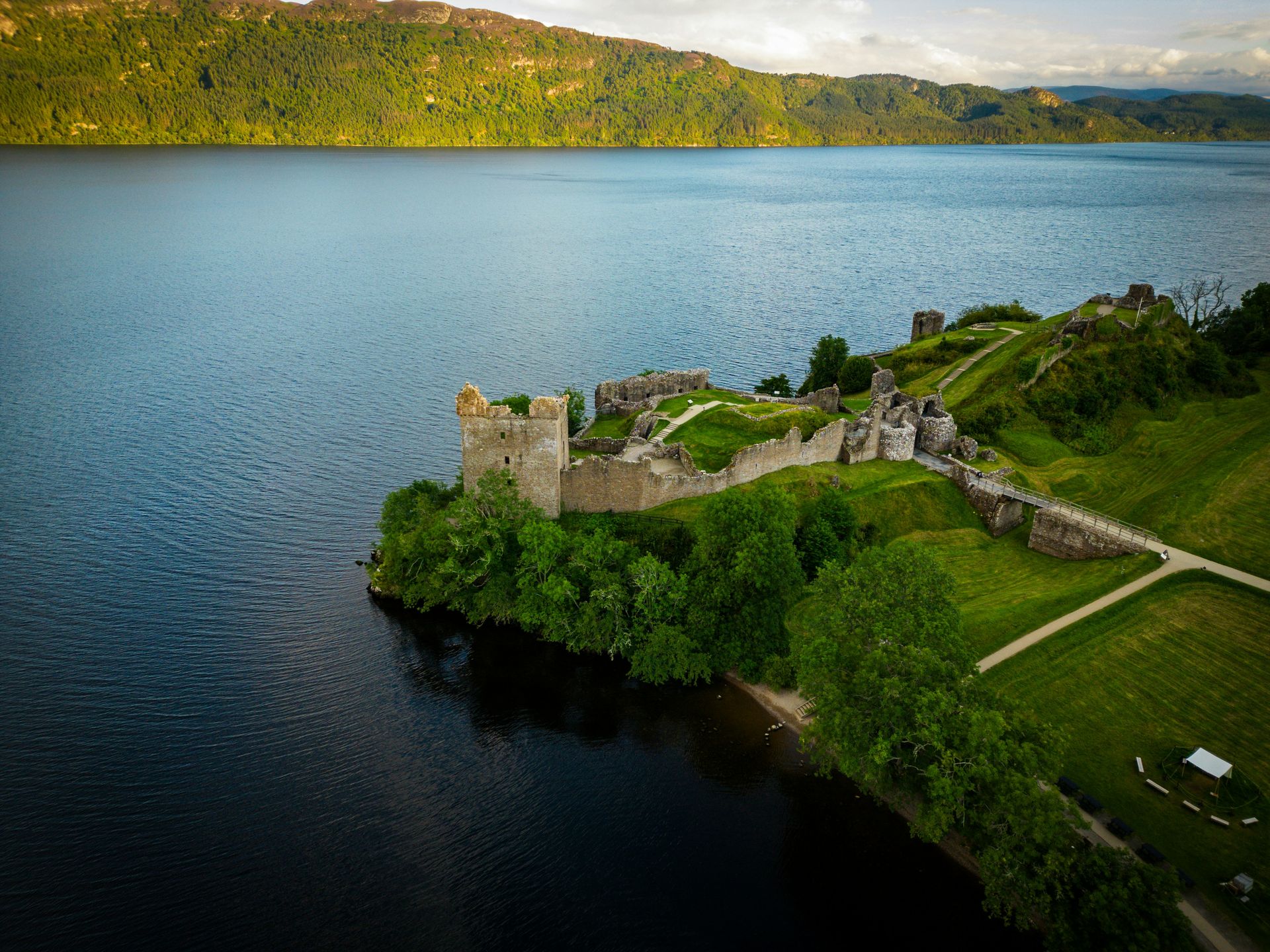
The ruins of Urquhart Castle stand on a promontory reaching into Loch Ness, a position that placed the fortress at the center of more than a millennium of conflict between Scottish and English forces. The castle changed hands repeatedly during its active life, and the physical evidence of that contested history is evident in the fragmentary state of the surviving structures: sections of wall, a tower house still standing to considerable height, and the foundations of buildings that the Jacobite occupation rendered unusable in the late 17th century. The audio tour included with admission navigates this complexity with enough historical context to make the ruins legible rather than merely atmospheric.
The loch setting provides Urquhart with a natural backdrop that few castle ruins in Scotland can match. Loch Ness stretches for 23 miles to the southwest, its surface dark and deep enough that the water reads as nearly black in overcast conditions and shifts to a cold blue-grey in direct sunlight. The scale of the loch and the hills that contain it on both sides give the castle’s promontory position a geographical authority that explains, without requiring the Nessie mythology, why this site was worth fighting over for centuries.
The Loch Ness Monster mythology that attaches to this stretch of water dates to the sixth century in recorded form, with sightings logged as recently as the 1930s. The castle’s position as the primary viewpoint onto the loch makes Urquhart a natural gathering point for visitors whose interest in the Highlands encompasses the legend alongside the history. Whether the mythology functions as the primary draw or as an entertaining footnote to a genuinely significant historical site depends on the traveler, but the ruins are worth visiting on their historical and scenic merits alone.
The site is open year-round and includes a visitor center with exhibits on the castle’s history. The full-size trebuchet on the grounds, a reconstruction of the type of siege weapon used against fortifications like Urquhart during the medieval period, gives the site a tangible connection to the military history that produced the ruins visitors walk through.
Tim Alex / Unsplash
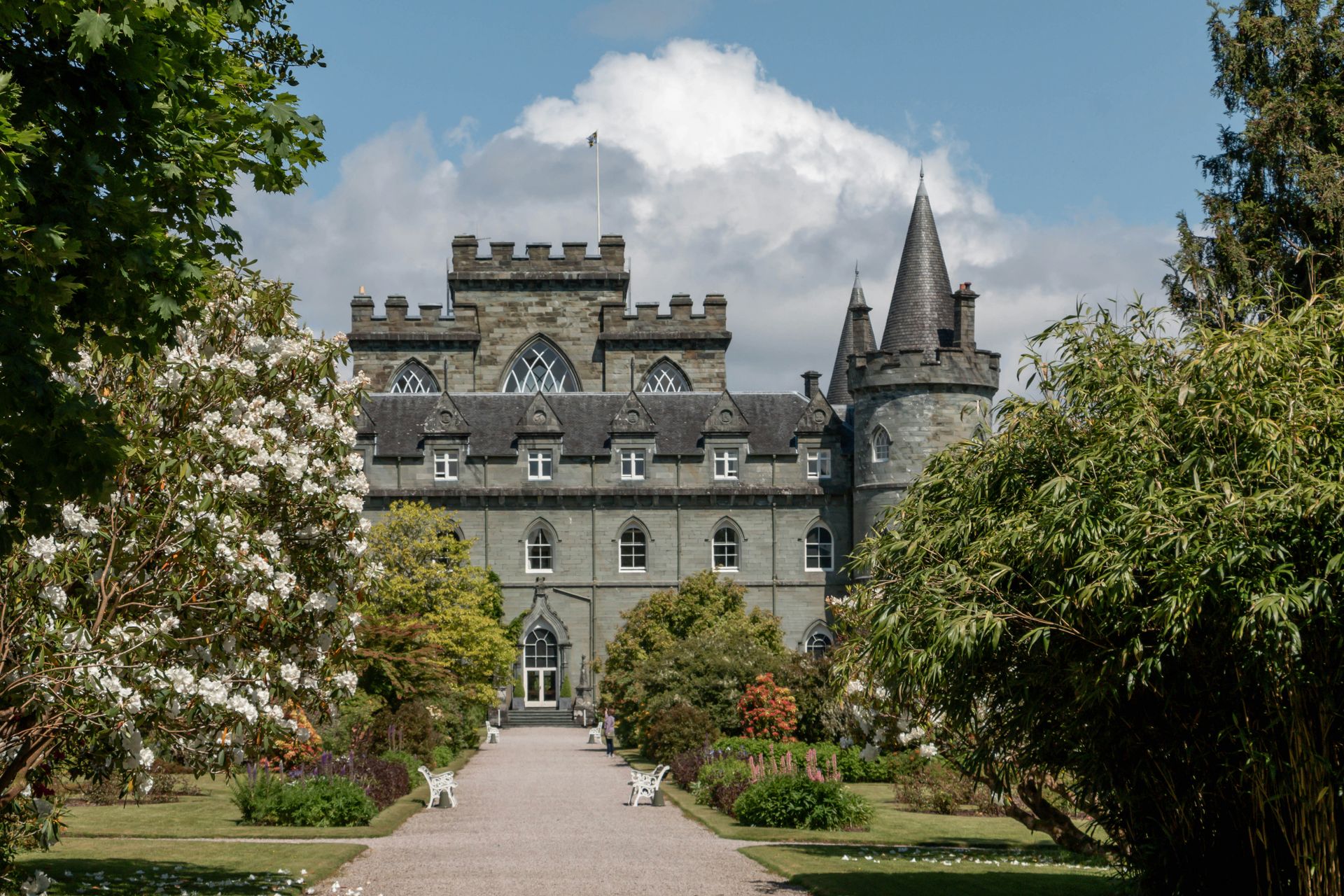
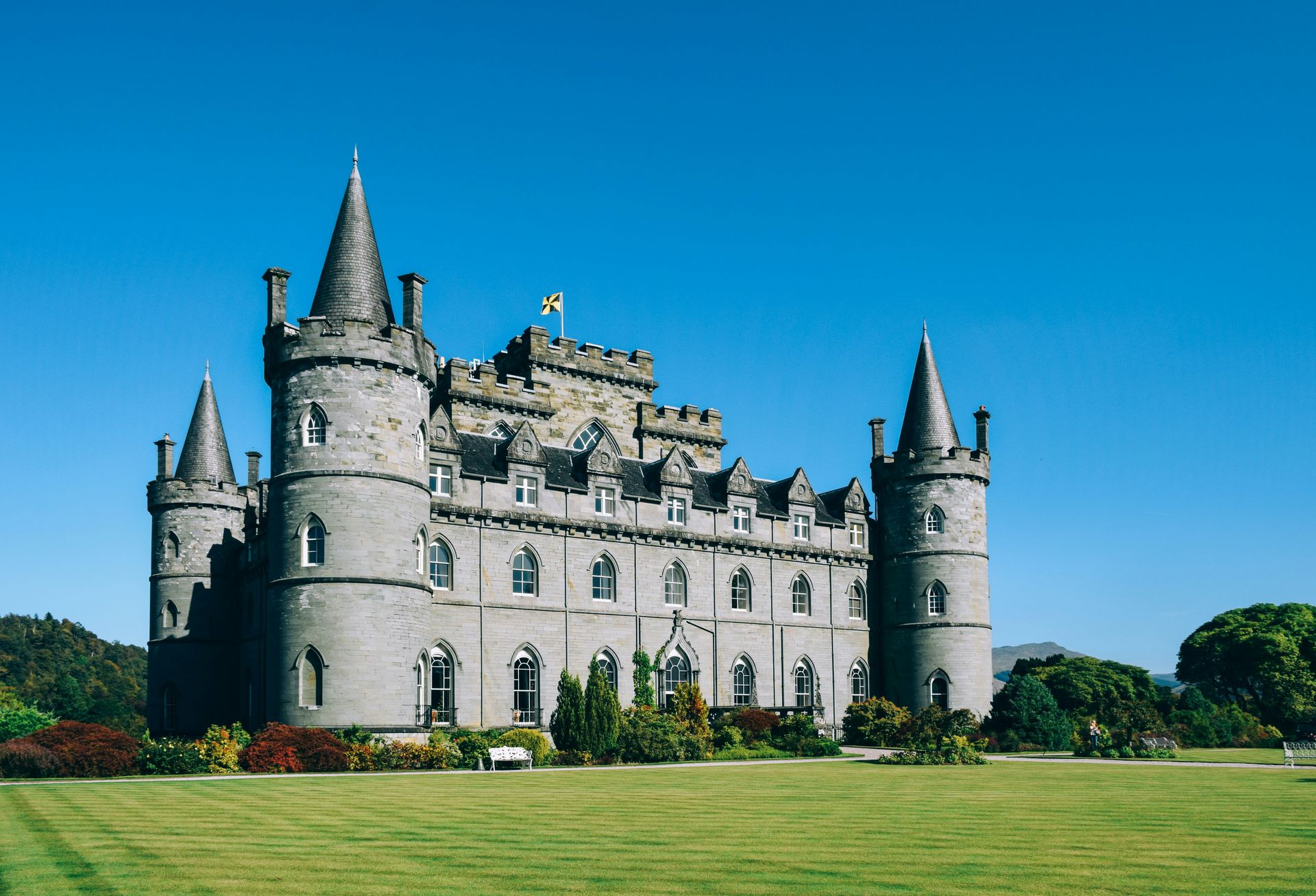
Inveraray Castle stands on the shores of Loch Fyne in the West Highlands, the ancestral home of the Dukes of Argyll and the seat of Clan Campbell since the construction of the current building in the 18th century. The castle replaced an earlier tower house on a nearby site, and its design introduced a Gothic Revival style to a Highland setting, influencing subsequent Scottish castle architecture. Renovations over the following centuries added the third floor and the conical roofs on the corner towers, which give the current building its distinctive skyline.
The interior holds collections of arms, armor, portraits, and furniture accumulated across the family’s centuries of occupancy. The Armoury Hall, spanning multiple floors of the central tower, displays a decorative arrangement of muskets, axes, and pikes that covers the walls from floor to ceiling. The visual impact of the armory, and the historical depth it represents through objects connected to the Jacobite risings and the clan’s military history gives this room a character unlike that of any comparable space in Scottish castle tourism.
The Campbell family lineage traceable through the castle’s collections extends back to Colin, the first Earl of Argyll, giving Inveraray a genealogical depth that connects to significant episodes in Scottish history across multiple centuries. The castle’s role as “Duneagle Castle” in the 2012 Christmas episode of “Downton Abbey” introduced the building to an international television audience, and the production’s use of the actual interiors rather than constructed sets gives visitors a point of recognition within the real rooms.
Several rooms and the grounds are open to visitors from April through October. The Castle Tearoom serves food prepared in the castle kitchen, including scones, soups, and sandwiches alongside local ales, giving the visitor experience a connection to the estate’s operational life that extends beyond the historical collections.
