
From the Acropolis and Mask of Agamemnon in Athens to a tiny Cycladic island with a natural sea pool, Greece's best destinations for every traveler
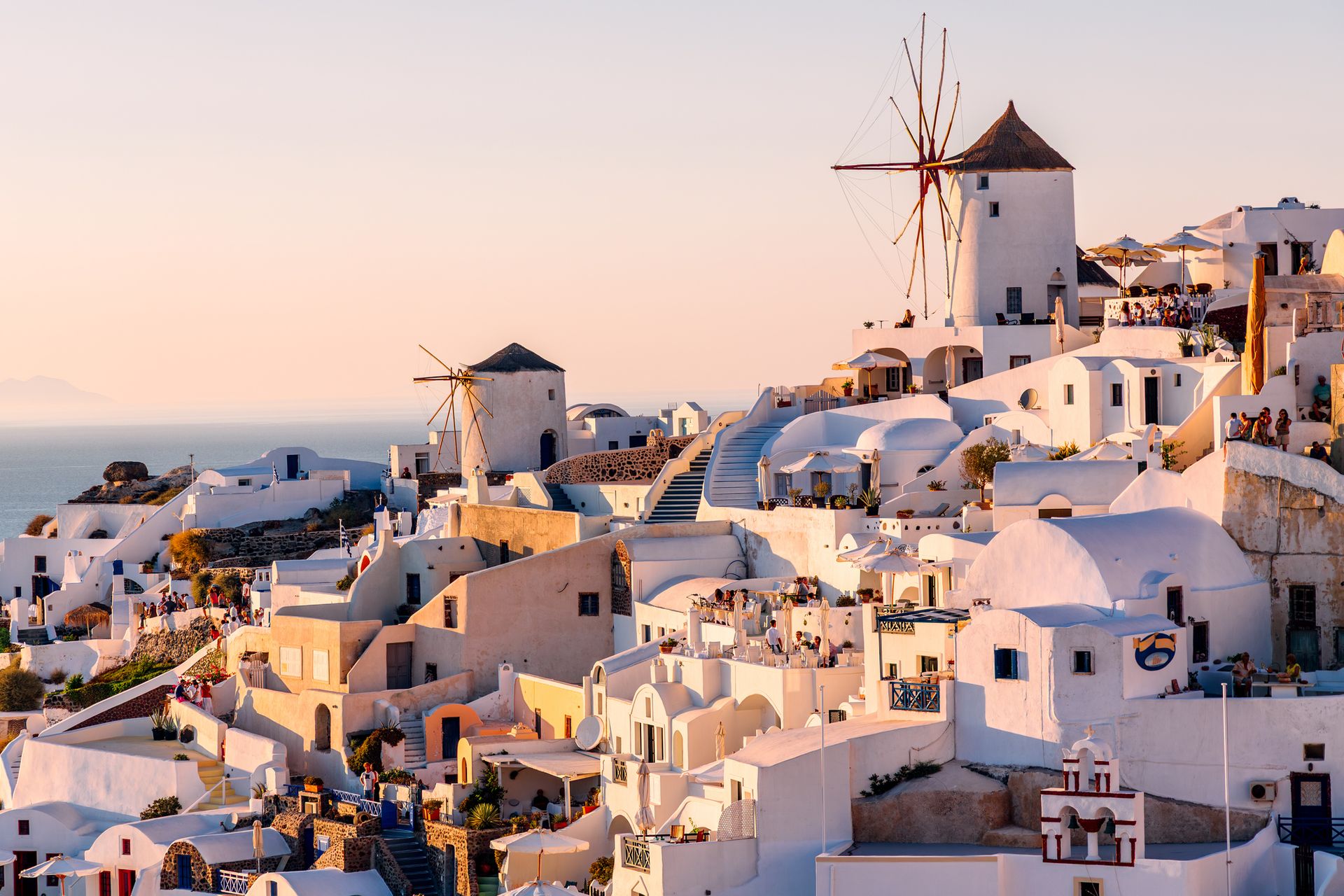
Alexander Spatari / Getty Images
Greece rewards travelers with a range of experiences that few countries of comparable size can match. Ancient ruins occupy the same hillsides as whitewashed village houses. Volcanic islands rise from the Aegean with beaches that look unlike any other coastline on Earth. Monasteries perch on rock formations above valleys still planted with some of the world’s oldest olive groves. The country’s singular appeal — the density of historical, natural, and cultural experiences packed into a relatively compact geography — gives it a claim on the travel imagination that has persisted since the era it helped create.
Planning a Greek trip well requires some navigation of that density. The major destinations — Athens, the Cycladic islands, and Crete — attract enormous visitor volumes in peak season, and the practical experience of these places shifts significantly depending on timing and approach. Less-visited destinations like the fishing village of Kardamyli or the tiny Cycladic islands of Koufonisia offer a different register entirely: quieter, more intimate, and increasingly sought out by travelers who have already done the circuit of famous sites. Greece’s geography, spanning mainland and island settings across three seas, means that no single itinerary can exhaust what the country offers.
The 10 destinations below come from U.S. News & World Report, which ranked the best places to visit in Greece based on notable attractions, photogenic scenery, and cultural significance. The methodology also incorporates traveler input, giving the rankings a practical audience perspective alongside editorial assessment. The list covers the top 10 of 14 ranked destinations, spanning the country’s capital, its most celebrated islands, a major mainland archaeological site, a second city with a UNESCO gastronomy designation, and two smaller destinations that specifically appeal to travelers seeking a quieter pace.
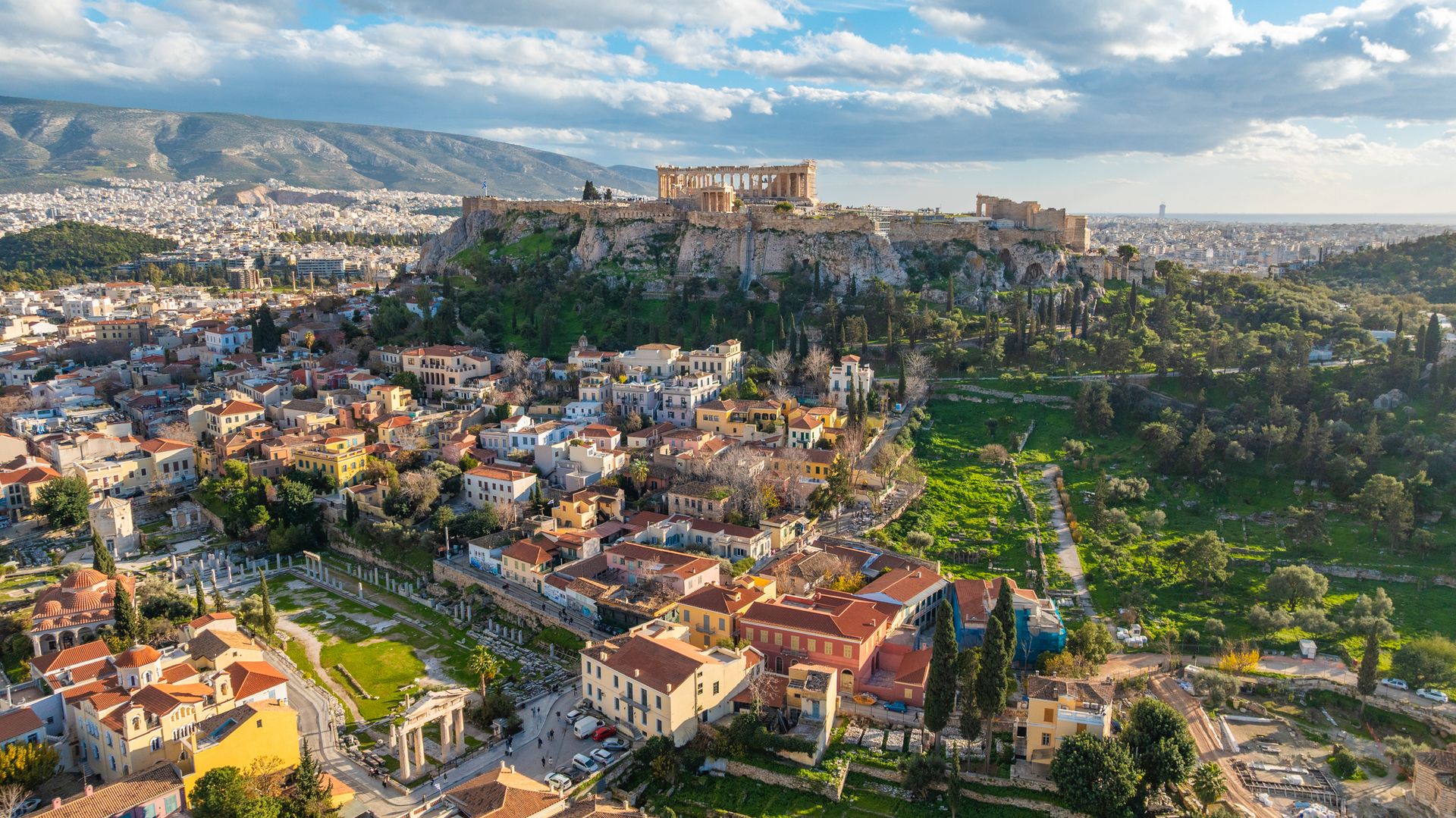
George Pachantouris / Getty Images
Athens is the birthplace of democracy and Greece’s capital, and its concentration of ancient sites makes it the strongest archaeological case on this list. The Acropolis — a fortified hilltop citadel overlooking the city — contains the Temple of Athena Nike $NKE, the Erechtheion, and the Parthenon, three structures that together define the visual peak of classical Greek architecture. Visiting the site in person gives those buildings a scale and materiality that photographs consistently undersell, and the hilltop position provides panoramic views over the modern city that connect ancient and contemporary Athens in a single sight line.
The Acropolis Museum, directly below the citadel, houses sculptures and artifacts excavated from the site in a building designed to maintain visual proximity to the hill. The museum allows visitors to examine objects at close range that are no longer accessible on the Acropolis itself, giving the experience a depth that the outdoor site alone cannot provide. A short distance away, the National Archaeological Museum extends the historical scope well beyond the Acropolis with a collection that spans Greek prehistory through late antiquity. Among its most celebrated holdings is the Mask of Agamemnon, a gold funerary mask discovered at Mycenae that dates to approximately 1550 B.C. and is among the most recognized objects in Greek archaeology.
Beyond the major sites, Athens rewards time spent at the neighborhood level. Plaka, the oldest continuously inhabited district in the city, occupies the slopes below the Acropolis, with neoclassical architecture, narrow lanes, and outdoor restaurants, where the citadel's foot remains visible above the rooftops. Monastiraki, adjacent to Plaka, centers on a flea market and a lively square that gives the area a more everyday commercial energy. Travelers $TRV who allocate time to both the archaeological circuit and the neighborhoods tend to leave Athens with a fuller sense of the city beyond its monuments.
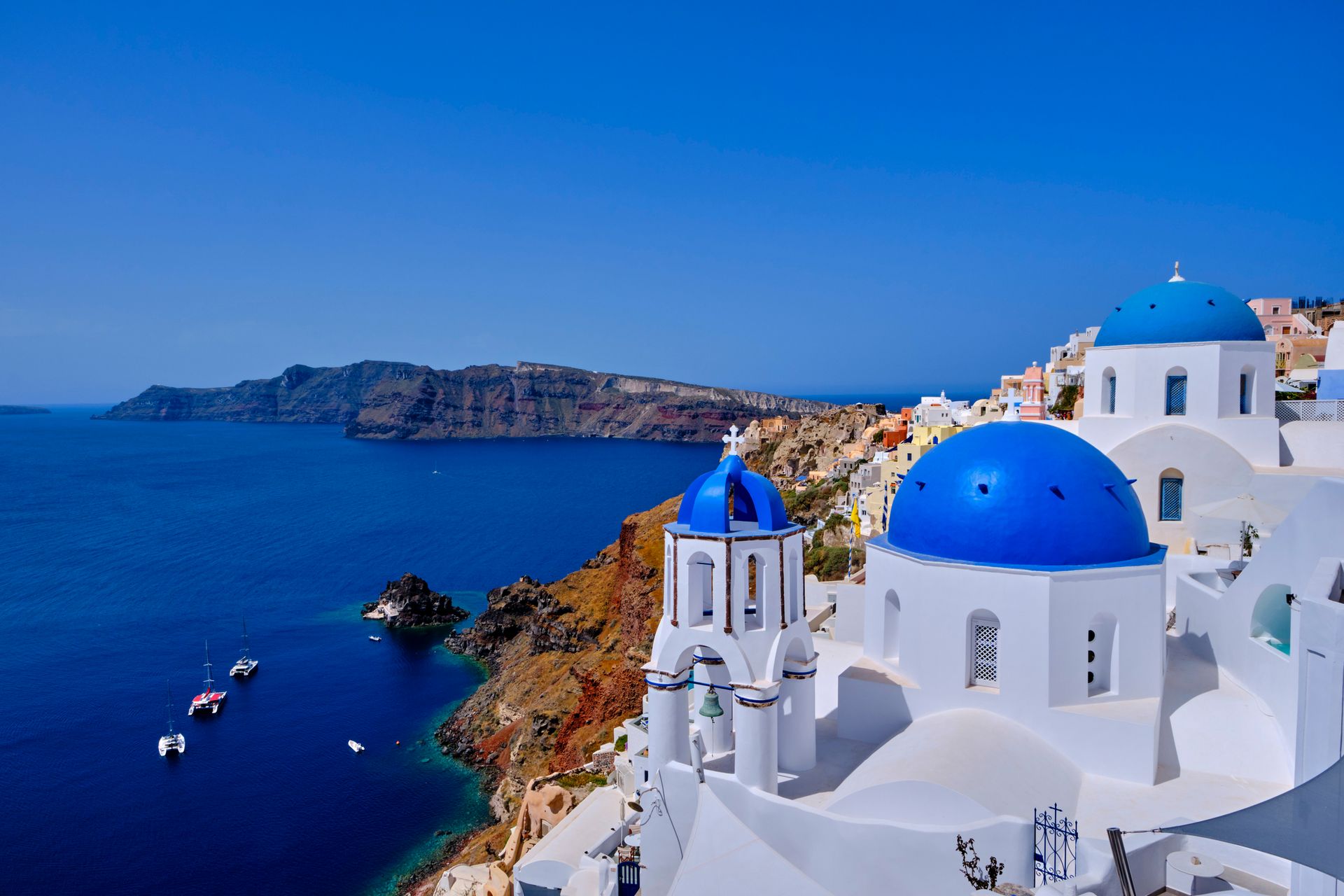
Tuul & Bruno Morandi / Getty Images
Santorini is a Cycladic island group in the Aegean whose reputation centers on its whitewashed clifftop architecture, its caldera views, and its volcanic geology — a set of characteristics that no other Greek island replicates in the same form. The main island of Thira hosts most of the activity, and the clifftop villages of Oia and Fira offer dramatic views that make Santorini one of the most photographed destinations in the world. A sunset cruise of the caldera — the flooded volcanic crater that forms the island’s central bay — offers a perspective on the geology from the water that the clifftop views, striking as they are, cannot substitute.
The beaches on Santorini carry the island's volcanic character into the shoreline experience. Kamari Beach features dark volcanic sand that looks entirely unlike the pale sand beaches of the Ionian Islands or Crete, and the color contrast with the blue Aegean gives the beach a visual quality that draws visitors specifically for the geological spectacle. The island’s volcanic origin shapes not just the beach colors but the dramatic cliffs, rock formations, and sea-level geography throughout.
The archaeological sites of Santorini lend historical weight to a destination that many visitors approach purely as a landscape. Ancient Thera, a Hellenistic and Roman settlement on a ridge above the sea, and Akrotiri, a Bronze Age city preserved under volcanic ash in a manner comparable to Pompeii, both reward travelers willing to step away from the caldera views. Amoudi Bay, at the base of the cliffs below Oia, serves fresh seafood at waterfront restaurants that offer the most direct connection to the island’s traditional fishing culture. The ancient ruins and the caldera cruise together give Santorini a depth of experience that travelers who arrive expecting only a scenic backdrop consistently find more historically layered and culturally substantial than they anticipated.
Tuul & Bruno Morandi / Getty Images
Rhodes is the largest of the Dodecanese islands, and its primary distinction on this list is the UNESCO-listed Medieval City at its center — a fortified urban environment built by the Knights of St. John in the 14th century that ranks among the best-preserved medieval towns in Europe. Within the walls, the Palace of the Grand Master anchors the upper town, and the Street of the Knights — a cobblestone lane lined with the inns of different knightly orders — gives visitors a direct physical experience of a chapter of medieval history that survives with unusual completeness. The walled city’s scale and architectural coherence give it a character that purely archaeological sites, however impressive, do not share.
Beyond the Medieval City, Rhodes carries its own classical heritage in sites distributed across the island. Ancient Kamiros on the northwest coast is a ruined Greek city with a recognizable street grid and civic buildings that give it substance beyond a field of scattered stones. The village of Lindos on the east coast sits atop a hill, with an acropolis above a harbor and a classically beautiful whitewashed village, creating a stacked visual encounter — ancient ruins, medieval village, blue sea — that rewards both the climb and the view from the top.
The island’s beaches provide a practical counterpoint to the historical touring. Tsambika and Ladiko beaches offer the picturesque shorelines that the source identifies as suitable for the recovery time between archaeological visits. Rhodes also supports a nightlife scene that distinguishes it from the more sedate archaeological destinations on this list. Medieval and classical historical depth, beach quality, and evening entertainment together make Rhodes one of the most complete single-island destinations in Greece for travelers who want variety across multiple days without switching locations. The Lindos acropolis on the east coast, positioned above a harbor and a whitewashed village, adds a visual layering that the Medieval City alone cannot deliver.
George Pachantouris / Getty Images
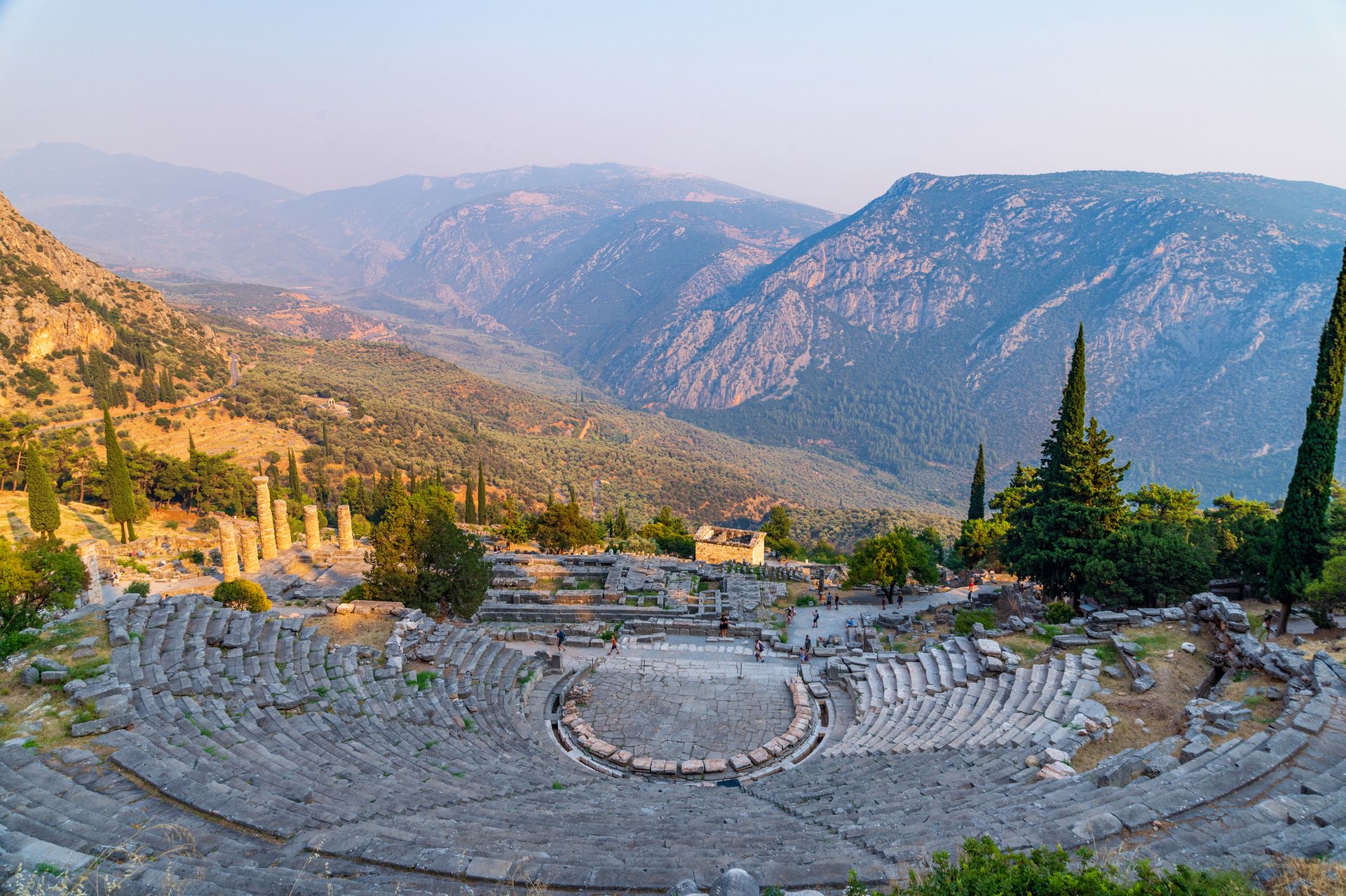
Delphi, on the slopes of Mount Parnassus, approximately 100 miles northwest of Athens, carries a mythological and historical weight disproportionate to its physical size. In ancient Greek belief, Delphi was the center of the world, a designation reinforced by the Oracle $ORCL of Apollo, who delivered prophecies from the Temple of Apollo that shaped decisions across the Greek world for centuries. UNESCO designated the site a World Heritage Site in recognition of its cultural significance. The hillside setting, with views down through a valley of olive trees toward the Gulf of Corinth, gives Delphi a visual drama that flat-site archaeological parks cannot replicate.
The ruins extend beyond the Temple of Apollo to include a well-preserved ancient theater and a stadium where the Pythian Games — one of the four Panhellenic athletic festivals alongside the Olympics — were held. Both structures survive in a state that allows visitors to read the original spatial logic of the sanctuary clearly. The Archaeological Museum of Delphi, adjacent to the ruins, houses objects excavated from the site, including the Charioteer of Delphi, one of the finest surviving bronze sculptures of the ancient world.
The landscape surrounding Delphi adds a natural dimension to the visit. The olive groves on the slopes near the site are among the world’s oldest, giving the approach to the ruins a living agricultural context that connects the present to the ancient past. The nearby town of Arachova, a short drive from the site, offers cozy cafes and restaurants for post-visit recovery, and its reputation as a premier skiing destination gives the wider area a winter tourism appeal unusual for a site primarily associated with ancient history. Travelers $TRV combining Athens with a day trip to Delphi will find the two-site itinerary one of the strongest archaeological day-trip pairings available in mainland Greece, particularly for travelers who prefer to base themselves in Athens.
George Pachantouris / Getty Images
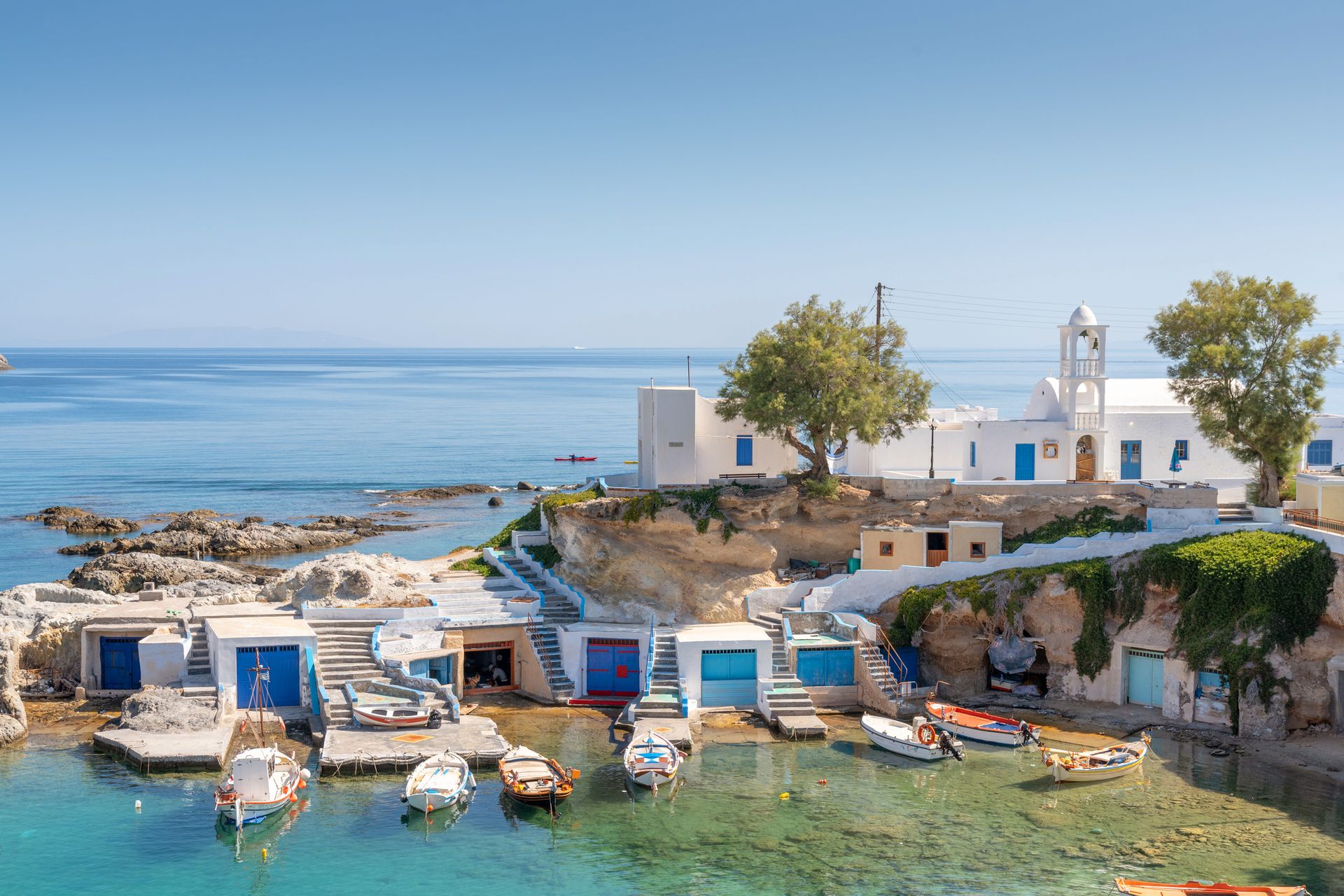
Milos occupies a specific niche in the Cyclades: the source describes it as Santorini in miniature, a characterization that captures both its resemblance to the more famous island and its meaningful difference from it. Milos shares the whitewashed architecture and volcanic landscape that define Santorini, but operates at a lower tourist volume, allowing a more relaxed, less congested experience. Travelers $TRV who want the visual rewards of Cycladic island travel without the peak-season crowds the major islands attract will find Milos the most direct alternative on this list.
Sarakiniko Beach stands as Milos’s most distinctive natural attraction: a white rock landscape shaped by volcanic activity into formations the source describes as otherworldly, where swimmers enter crystal-clear water surrounded by pale, sculpted stone rather than conventional sand. The beach is visually unlike anything else on this list and draws visitors specifically for the geological spectacle of the white formations against the blue sea. The scenic villages of Klima and Plaka give the island its architectural character, with colorful boathouses at the water’s edge in Klima and hilltop views from Plaka across the volcanic bay.
Kleftiko, accessible only by boat tour, adds a more adventurous dimension to the island experience. The sea cave network along the southern coast was historically used by pirates as a hideout, and the rock formations, sea caves, and clear water together give boat tours there a character distinct from conventional beach excursions. History-oriented travelers can also visit the Ancient Theater and the Catacombs of Milos, two sites that add an archaeological layer to the island alongside its natural and scenic attractions. The breadth of Milos’s distinctive offerings — the rock beach, the pirate caves, the ancient sites, and the uncrowded Cycladic atmosphere — makes it one of the most rewarding islands on this list for travelers who prioritize authentic local character over international celebrity in their broader Greek itinerary planning.
thethomsn / Getty Images
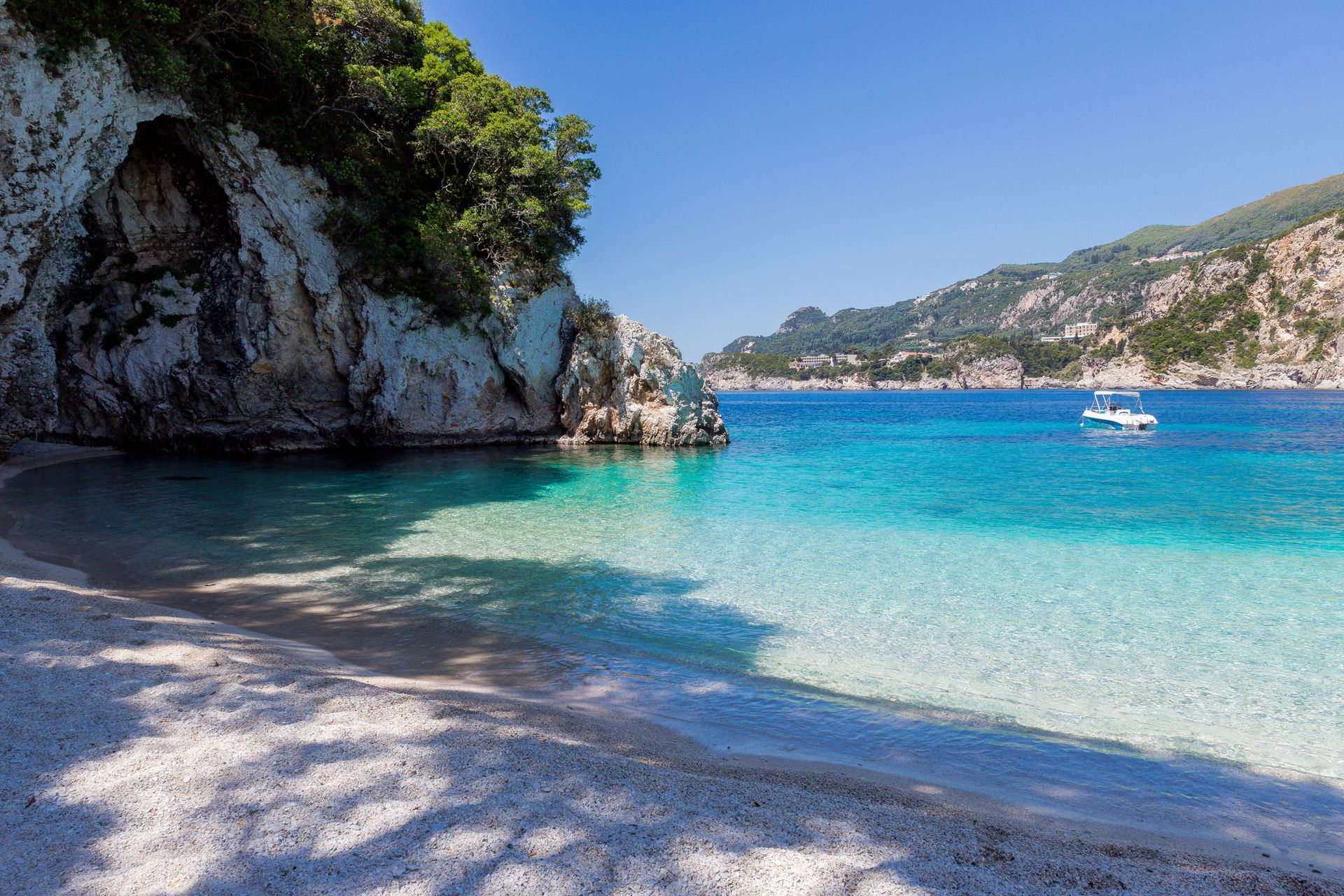
Corfu is the second-largest island in the Ionian Sea and carries a visual character that sets it apart from the Aegean islands on this list. Dense green vegetation covers the island’s interior, a lushness born of the Ionians’ higher rainfall, giving it a Mediterranean European quality distinct from the stark volcanic or rocky landscapes of the Cyclades. Paleokastritsa Beach, on the northwest coast, is the island’s most celebrated natural destination, with cerulean waters and rugged cliffs that the source flags as the primary reason many visitors make the trip. The Paleokastritsa Monastery, perched on a headland above the beach with commanding views of the bay, adds a historical and religious dimension to the area alongside its natural beauty.
The UNESCO-listed Old Town of Corfu Town concentrates centuries of architectural influence within a walkable area. Venetian, French, and British colonial periods each left visible evidence in the street layouts, facades, and public spaces, giving the town a layered European character that distinguishes it from the Ottoman-inflected towns of mainland and Aegean Greece. A Jewish Quarter, narrow alleys connecting small squares, and the Old and New Fortresses that anchor each end of the historic promontory give visitors several distinct zones to explore within a compact perimeter.
Achilleion Palace, built in the late 19th century by Empress Elisabeth of Austria and later owned by Kaiser Wilhelm II, adds a more recent historical layer to an island primarily known for ancient and medieval heritage. The palace’s museum and gardens are open to visitors and give Corfu a 19th-century European dimension, making its historical range more chronologically diverse than that of most Greek island destinations on this list. The Ionian landscape, the UNESCO Old Town, the Byzantine monastery, and the imperial palace together give Corfu one of the strongest multi-era historical profiles of any island destination on this list, spanning from Byzantine monasteries to Venetian urban planning to 19th-century imperial architecture.
Frans Sellies / Getty Images
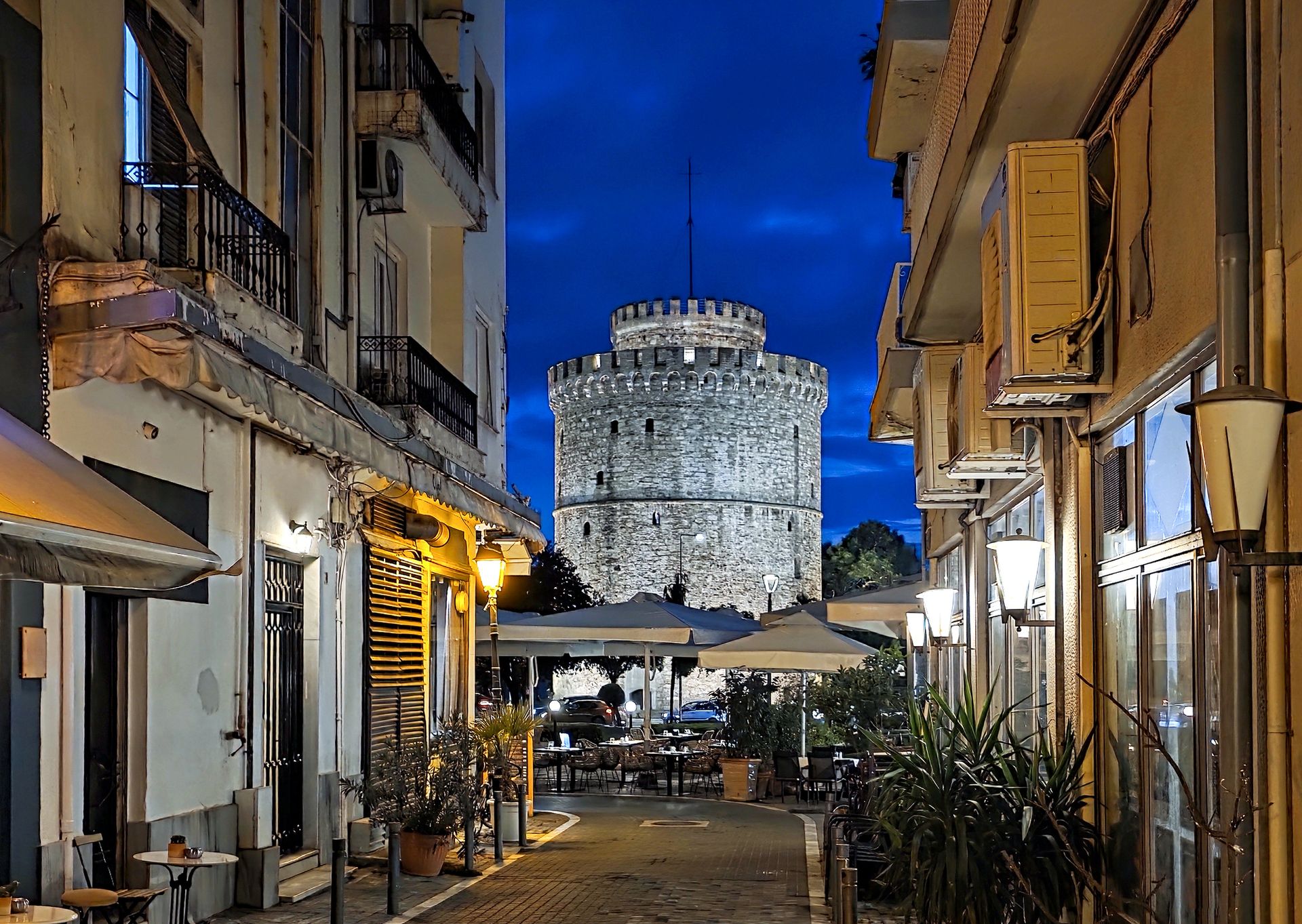
Thessaloniki is Greece’s second-largest city and holds the UNESCO Creative City of Gastronomy designation, which recognizes a culinary tradition shaped by Greek, Byzantine, Ottoman, and Sephardic Jewish influences across centuries of layered history. The food scene the source highlights ranges from traditional tavernas in the Ladadika district — a restored former oil merchants’ quarter now concentrated with restaurants and wine bars — to fine dining establishments in Aristotelous Square $SQ, the city’s main waterfront public space. Travelers $TRV who care as much about eating as about sightseeing will find Thessaloniki the strongest food destination on this list by a meaningful margin.
The city’s Byzantine and Ottoman heritage gives it a historical identity quite different from Athens’ classical focus. The White Tower, a 15th-century Ottoman structure on the waterfront, serves as Thessaloniki’s most recognizable landmark. The Rotunda, originally a Roman mausoleum, was later converted into a Byzantine church and then an Ottoman mosque, embodying four distinct historical identities in a single building. The Church of Agios Dimitrios, the largest church in Greece, honors the city’s patron saint in a structure whose foundations date to the fourth century. First-time visitors, the source suggests, should prioritize these Byzantine and Ottoman monuments as a concentrated introduction to a historical strand that Athens’ classical emphasis largely omits.
The city’s waterfront promenade along the Thermaic Gulf gives Thessaloniki a seafront public life suited to the evening strolls the source specifically recommends. Bustling markets add a commercial texture to the streets beyond the monument circuit. Travelers who give Thessaloniki two or more days instead of a transit stop tend to discover that the city’s genuine food culture, Byzantine and Ottoman architecture, and everyday Greek urban life deliver an experience that the island-heavy standard itinerary consistently undervalues. The Byzantine monuments — the Rotunda in particular, with its four distinct historical identities in a single building — give Thessaloniki a historical argument that no purely classical or medieval site can replicate.
Dado Daniela / Getty Images
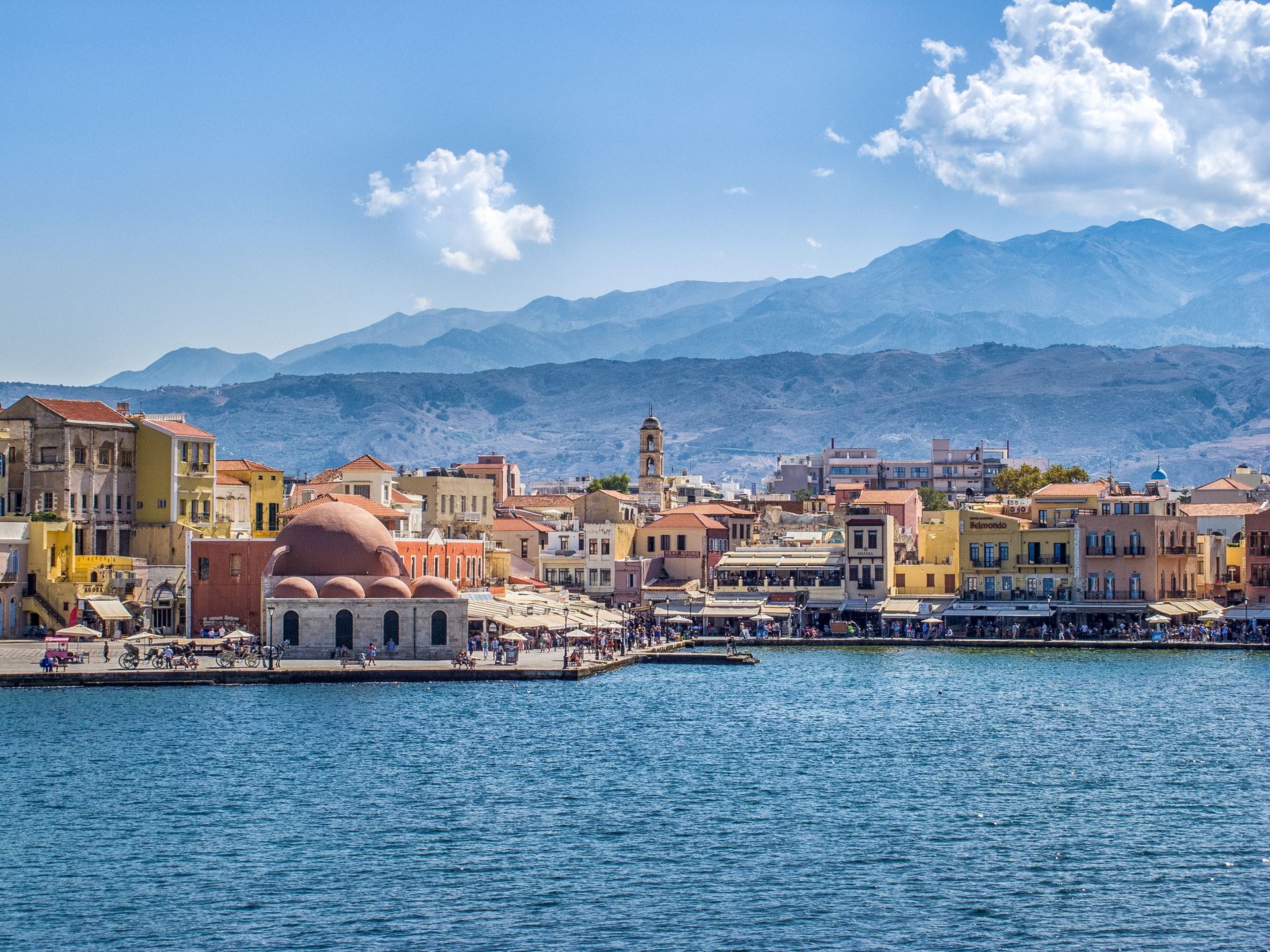
Crete is Greece’s largest island and offers an internal variety that rivals that of entire countries. Elafonisi Beach, on the southwestern tip, features pink-tinged sand produced by the mixing of crushed shells with white sand, a color unusual enough that it draws visitors specifically for the visual experience. Vai Beach on the eastern coast borders Europe’s largest natural palm forest, giving it a landscape that looks more Caribbean than Aegean. The two signature beaches alone suggest entirely different itineraries at opposite ends of the island, and the distance between them makes Crete a destination that rewards multiple days and deliberate planning.
Samaria Gorge National Park in the White Mountains of western Crete offers a 16-kilometer hiking trail through one of Europe’s longest gorges, descending from a highland plateau to the Libyan Sea. The gorge walk gives the island a mountain and trekking dimension that visitors, focused on coastal activities, routinely overlook. The physical landscape — towering rock walls, a seasonal river, and endemic Cretan plant species — provides a counterpoint to the island’s Mediterranean coastline character.
The Palace of Knossos, near the northern city of Heraklion, is the center of Minoan civilization and one of Europe’s oldest cities, with occupation dating to roughly 2700 B.C. The site covers several acres of excavated and partially reconstructed palace structures that convey the sophistication of a Bronze Age culture whose influence spread across the eastern Mediterranean. Rethymno Old Town, on the island’s north-central coast, adds a more intimate urban experience with a harbor, narrow streets, and traditional Cretan restaurants that give the city a character distinct from the archaeological intensity of Heraklion. The sheer geographic and historical breadth of Crete — from the pink beach at one end to the Bronze Age palace at the other — makes it the most internally diverse Greek island destination on this entire list by a considerable margin.
ankarb / Getty Images
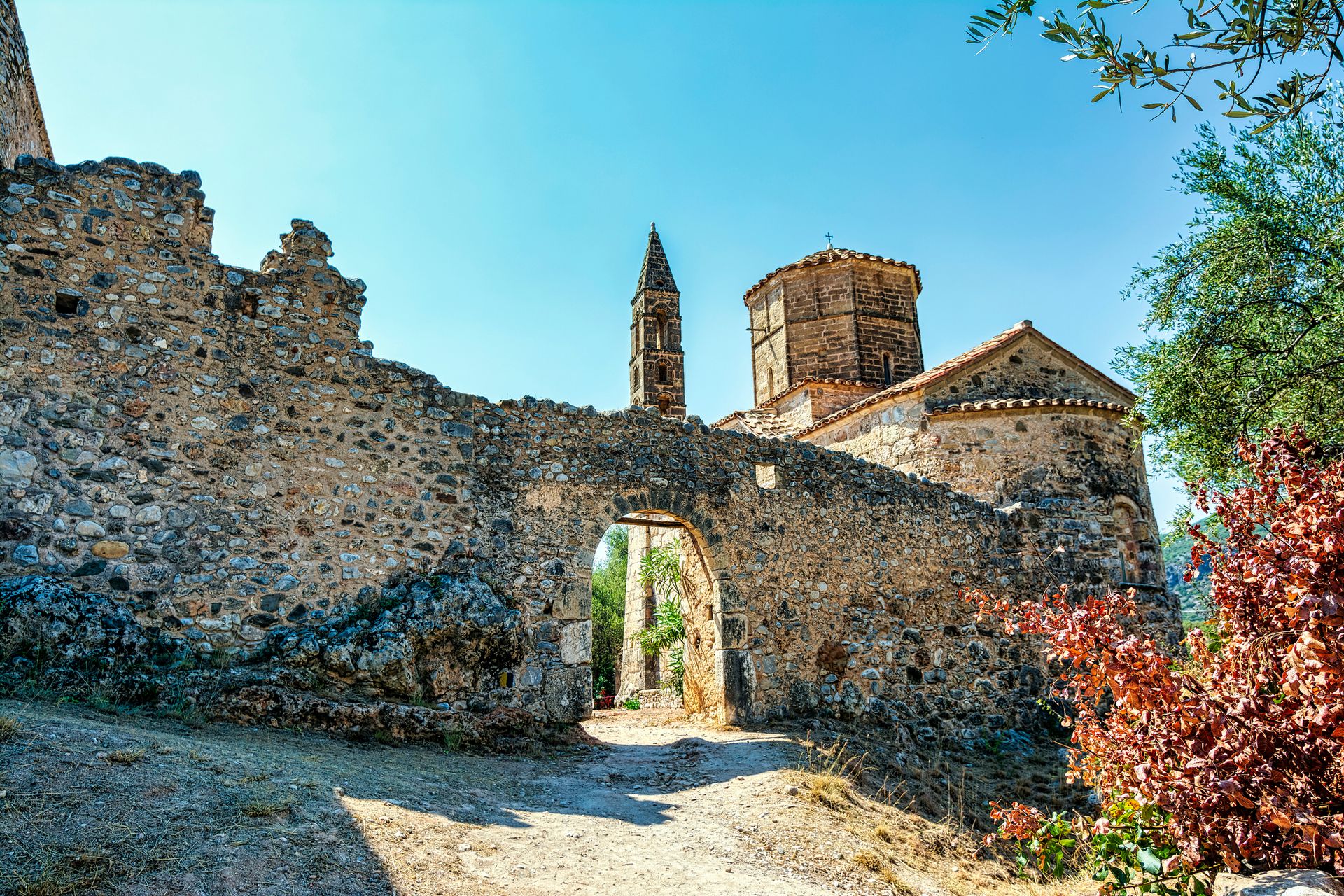
Kardamyli is a fishing village on the Mani Peninsula in the Peloponnese, a region of southern mainland Greece that most itineraries built around island-hopping and major archaeological sites pass over entirely. The source presents it as a destination defined by natural beauty and outdoor recreation, set in a region where the Taygetos Mountains descend toward the sea, creating terrain that enables both beach access and mountain activity within the same destination. The pebble beaches of Ritsa and Foneas feature water clear enough for snorkeling, and paddleboarding along the coastline adds a water-sports dimension that complements swimming.
The Taygetos Mountains, directly above the village, offer rock climbing, and the Vyros Gorge trail offers a demanding hiking route through the mountain landscape above the Mani coast. The gorge walk gives visitors who have exhausted the beach activities a physically challenging alternative that draws on the same dramatic terrain visible from the shoreline. The outdoor activity range — from snorkeling and paddleboarding at sea level to rock climbing and gorge hiking in the mountains — gives Kardamyli a breadth of active recreation that no other destination on this list concentrates in such a compact area.
The village’s Old Town carries centuries of local history in structures including Mourtzinos Tower and the Church of Agios Spyridon. The tower, a defensive structure typical of Mani Peninsula villages, connects Kardamyli to the broader architectural tradition of a region known for its stone tower settlements built during periods of clan conflict. The church serves as the village's religious center and architectural focal point. Travelers $TRV who seek a destination where a small fishing village, mountain wilderness, and genuinely unspoiled coastline occupy the same geography without the tourist infrastructure of the major island destinations will find Kardamyli the most off-the-beaten-track mainland option on this list that still delivers a genuinely full and varied travel experience.
LE-gals Photography / Getty Images
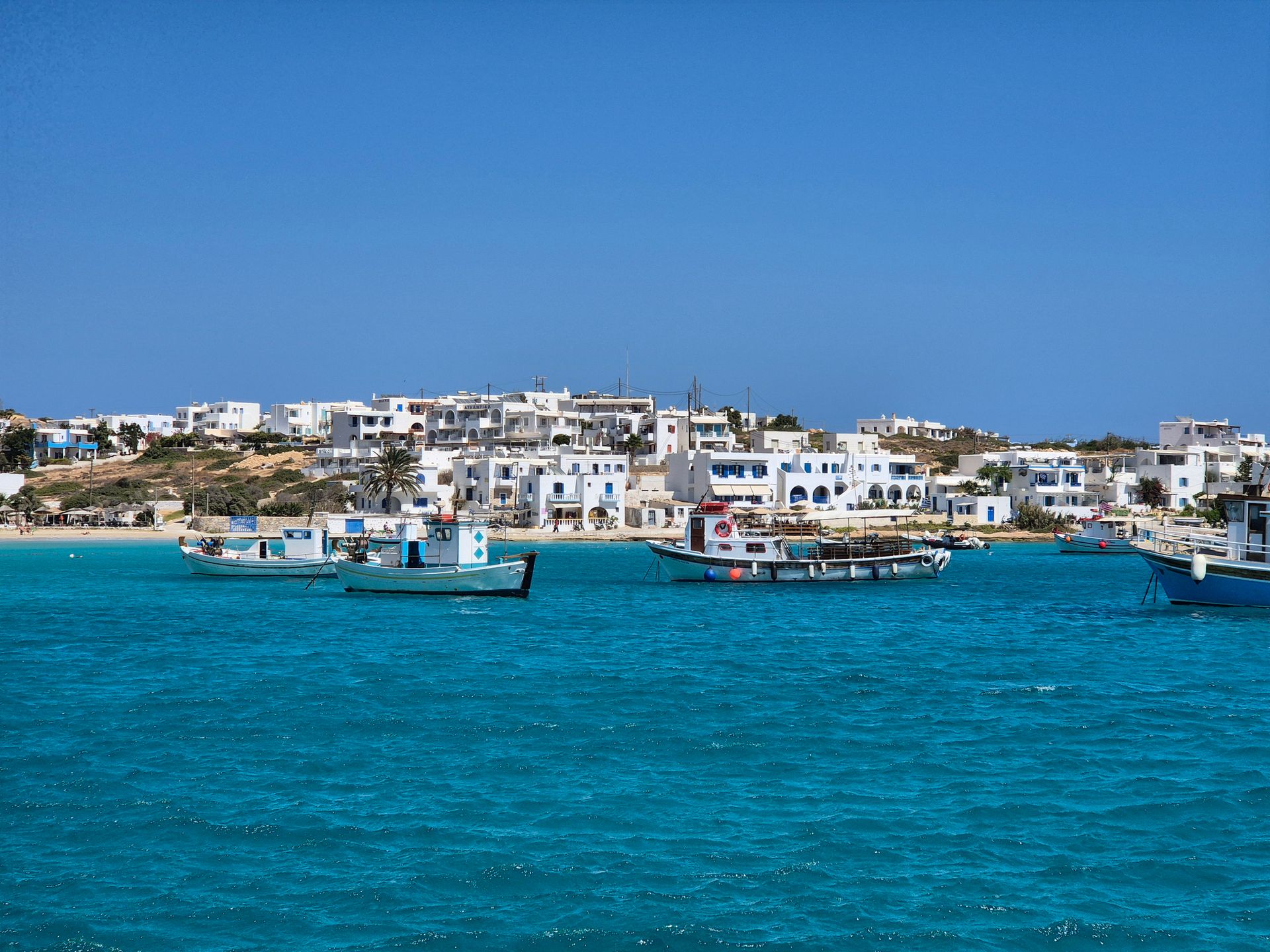
Koufonisia is a pair of tiny islands in the Cyclades — Ano Koufonisi and Kato Koufonisi — whose primary appeal is the calm, unhurried character that the source frames as a defining feature of the destination. The slow pace of life the source describes is not a euphemism for a lack of things to do but a description of how the available activities are best approached: renting a bicycle and exploring the island’s paths at a leisurely speed, wandering through Chora on foot without an agenda, and spending an afternoon at Pori Beach without a schedule. Chora, the capital of Ano Koufonisi, offers whitewashed houses, cobblestone streets, and a selection of shops and restaurants in a village center compact enough to cover entirely on a single walk.
Pori Beach, a crescent-shaped bay on the northeastern coast, is the island’s primary beach destination, with golden sand and azure water in a sheltered setting that the source identifies as one of the island’s sun-seeking focal points. The Pisina is a natural sea pool formed in the rock along the coastline that provides a swimming environment with the character of a swimming pool carved into the sea cliffs, giving it a distinctly different quality from a standard beach. Both the beach and the pool are accessible on foot or by bicycle from Chora, keeping the island’s low-cost, low-effort travel character consistent throughout.
Kato Koufonisi, the smaller, uninhabited sister island, is accessible by water taxi from Ano Koufonisi and offers adventurous visitors an extension of the Koufonisia experience into a fully undeveloped natural setting. The water taxi crossing is itself part of the Cycladic island-hopping experience that Koufonisia embodies more fully than the larger, more developed islands. Travelers $TRV who have visited the famous Cyclades — Santorini, Mykonos, Paros — and found their original character diluted by commercial development will find Koufonisia the closest approximation on this list to what those islands offered before tourism transformed them.