From the Mercedes-Benz G-Class EV's perfect interior score to a Ram 1500 that rides closer to a luxury SUV than a pickup truck
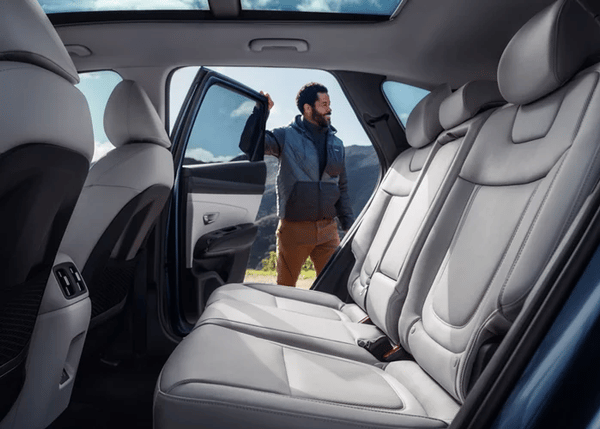
Credit: Hyundai
Comfort is an underrated factor in car buying. Most buyers focus on performance numbers, safety ratings, and fuel economy, all of which are easier to compare in a spreadsheet than the quality of the seats or the ride refinement. But for drivers who commute daily, take long road trips, or simply spend a lot of time behind the wheel, the cabin's comfort shapes the daily experience of owning a vehicle more concretely than a horsepower figure does. A car with a harsh ride and thin seats becomes a source of low-grade irritation on every trip. A car with a supple suspension, supportive seats, and well-placed controls turns the commute into something tolerable, and sometimes even pleasant.
The interior score used in this ranking reflects more than cushion softness. U.S. News interior scores incorporate build quality, materials, feature set, and cargo capacity, alongside seating and ride comfort, which most people associate with the word. A high interior score indicates a cabin that succeeds across all of those dimensions simultaneously, not just one. The vehicles that score highest tend to be luxury models precisely because premium materials, extensive soundproofing, and advanced seat technology require engineering investments that budget models do not. The list here spans compact SUVs, full-size luxury sedans, and a full-size electric SUV with a perfect interior score.
These 10 vehicles come from U.S. News & World Report’s ranking of the most comfortable cars, based on the highest interior scores in U.S. News vehicle rankings, and they cover a range of vehicle types and price tiers.
Credit: Mercedes-Benz
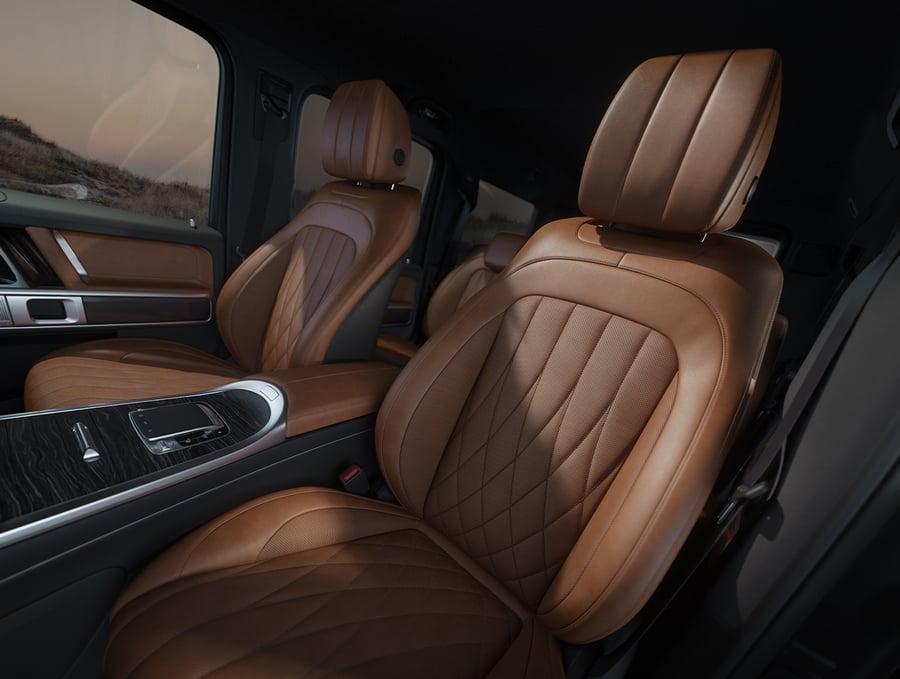
The 2025 Mercedes-Benz G-Class EV earns a perfect interior score of 10 out of 10, the highest of any vehicle on this list, alongside a U.S. News Rating of 9.0 out of 10. Vehicle tester Michael Teo Van Runkle describes the interior as delivering a luxurious aesthetic with premium materials at almost every touchpoint. Nappa leather upholstery comes standard on all models, and every G-Class EV includes heated and massaging front seats. Both rows offer generous head and legroom, allowing taller passengers to stretch without adjusting their posture.
The G-Class EV adds an all-electric powertrain to the G-Wagen’s established luxury identity. The driving range reaches 239 miles on a full charge, and the powertrain delivers the poised, robust performance the platform is known for. The electric drivetrain also eliminates the engine vibration that body-on-frame vehicles typically generate in the cabin, adding a layer of refinement to an already premium interior experience.
The G-Class EV’s perfect interior score represents a meaningful achievement in a field that includes the Mercedes-Benz S-Class and the Lucid $LCID Gravity, both at 9.9, widely considered among the finest interiors available. Reaching 10 out of 10 in an interior evaluation that incorporates build quality, materials, features, and seating across all passenger positions reflects a cabin where no single dimension pulls the overall assessment down. For buyers whose top priority is interior quality over any other vehicle attribute, the G-Class EV sets the standard that everything else on this list measures itself against. The massage function, standard on every model, is particularly notable: most vehicles on this list offer seat massage as an option at higher trim levels, but the G-Class EV includes it as a baseline feature alongside Nappa leather. The G-Class EV also retains the boxy, utilitarian exterior of the standard G-Wagen while delivering a polar-opposite interior experience, a contrast that makes it one of the most surprising cabin revelations of any vehicle currently on sale.
Credit: Lucid
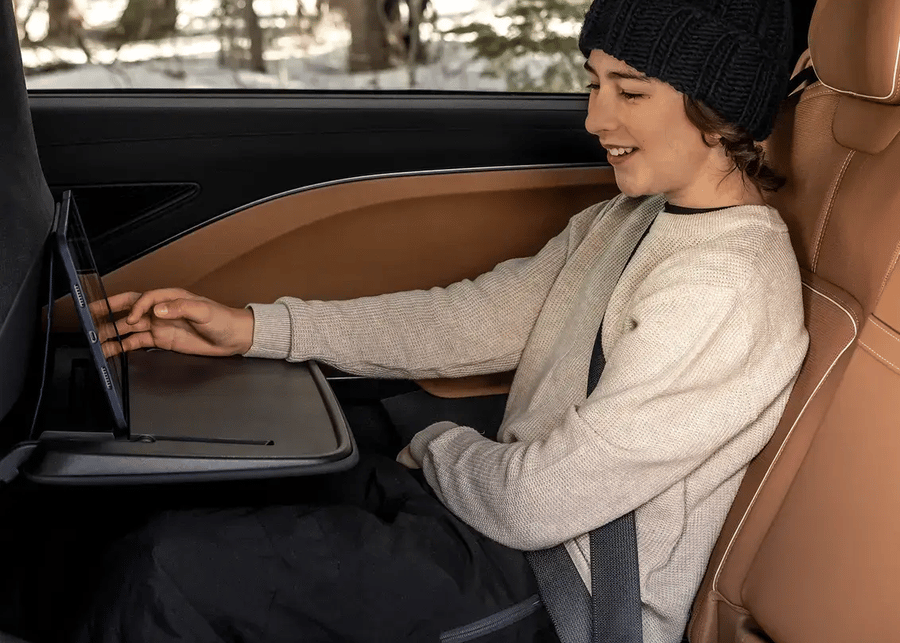
The 2026 Lucid $LCID Gravity earns an interior score of 9.8 out of 10 and a U.S. News Rating of 9.9 out of 10, the highest overall rating on the entire U.S. News vehicle ranking site. Senior Vehicle Testing Editor John Vincent finds the Gravity difficult to categorize: with 560 or 828 horsepower on tap, the performance credentials belong in a different conversation from those of a luxury touring SUV, and the roomy, versatile interior raises further questions about what category the vehicle actually occupies. The answer is that it occupies all of them simultaneously.
The Gravity’s centerpiece is a 34-inch curved touchscreen that dominates the cabin’s forward architecture. Physical controls for climate functions sit alongside the screen, which Vincent and the source both identify as a welcome counterpoint to the all-touchscreen trend that has made climate adjustment dangerous in many modern vehicles. The infotainment software runs somewhat laggy by acknowledgment, though over-the-air updates provide a path to improvement without a dealership visit.
The ride quality feels cushioned and well-composed, the handling is precise, and the interior materials present as premium at every turn. Spacious and comfortable seats complete the picture. The Gravity’s only acknowledged weaknesses — the software lag and the price — are both addressable over time. A vehicle with a 9.9 overall U.S. News score and a 9.8 interior score has effectively no structural flaws that a buyer cannot accept as trade-offs for what it delivers everywhere else, and the source makes no effort to identify serious criticisms beyond the two noted. The Gravity’s physical climate controls are worth specific mention: in a period when automakers have moved climate controls to touchscreen sub-menus, the Lucid engineers put them back within thumb reach, reducing distraction on every drive. The 828-horsepower top configuration also means the Gravity occupies the same performance tier as dedicated sports cars, making it the only vehicle on this list where comfort and supercar performance coexist as standard attributes.
Credit: Hyundai
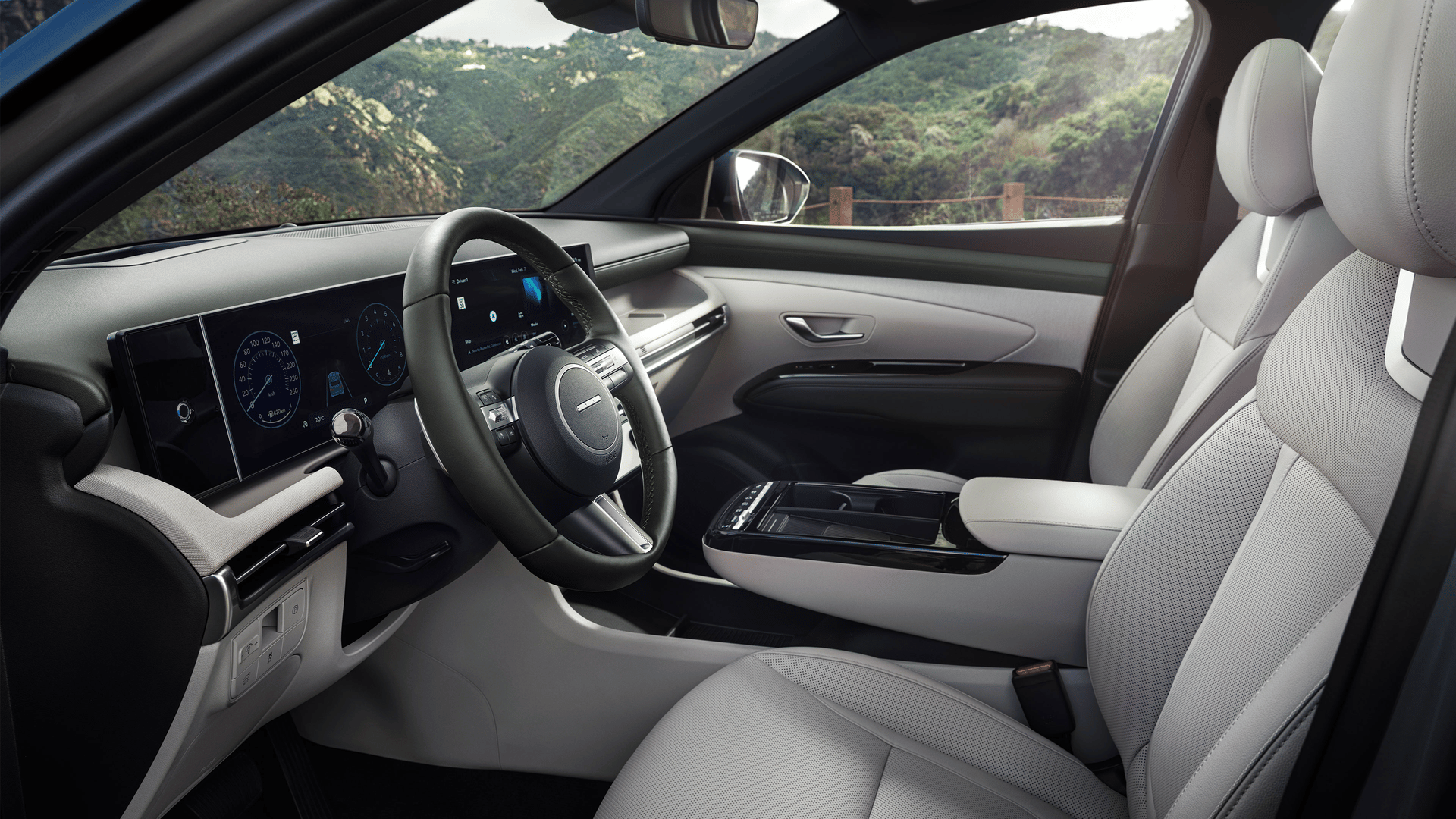
The 2026 Hyundai Tucson earns an interior score of 9.3 out of 10 and a U.S. News Rating of 9.3 out of 10, along with the 2026 Best Compact SUV for the Money and Best Compact SUV for Families awards. Vehicle tester Mike Hagerty calls it a smooth, competent cruiser with seats that stay comfortable over long drives, a refreshed instrument panel, and a 12.3-inch touchscreen that is clear and intuitive. Fuel economy is good for a non-hybrid compact SUV.
The Tucson is spacious for its class, with interior room that exceeds expectations given the vehicle’s exterior footprint. Standard safety features include stop-and-go adaptive cruise control and rear cross-traffic alert, giving it driver-assistance technology that some competitors offer only on higher trim levels. The 2.5-liter four-cylinder engine is not particularly engaging to drive, which the source identifies as the vehicle’s only notable shortcoming, a frank acknowledgment that the Tucson’s appeal rests entirely on its comfort, value, and practicality over driving dynamics.
The dual award status is the Tucson’s strongest credential on this list. Winning both the money and families categories simultaneously reflects a vehicle that satisfies financially practical buyers and family-use buyers without serving one at the expense of the other. For buyers who want a comfortable compact SUV at an accessible price with strong award recognition and a 9.3 interior score, the Tucson makes the clearest case on this list. The 12.3-inch touchscreen and stop-and-go adaptive cruise control, as standard features, give the Tucson a technology and safety baseline that many competitors at this price point offer only at higher trim levels. The Tucson’s roomy interior also deserves direct emphasis: the source specifically notes spaciousness as a standout characteristic for a vehicle in the compact class, where interior room typically forces trade-offs that the Tucson avoids. The stop-and-go adaptive cruise control specifically improves highway comfort by handling the acceleration and braking required by stop-and-go traffic.
Credit: Kia
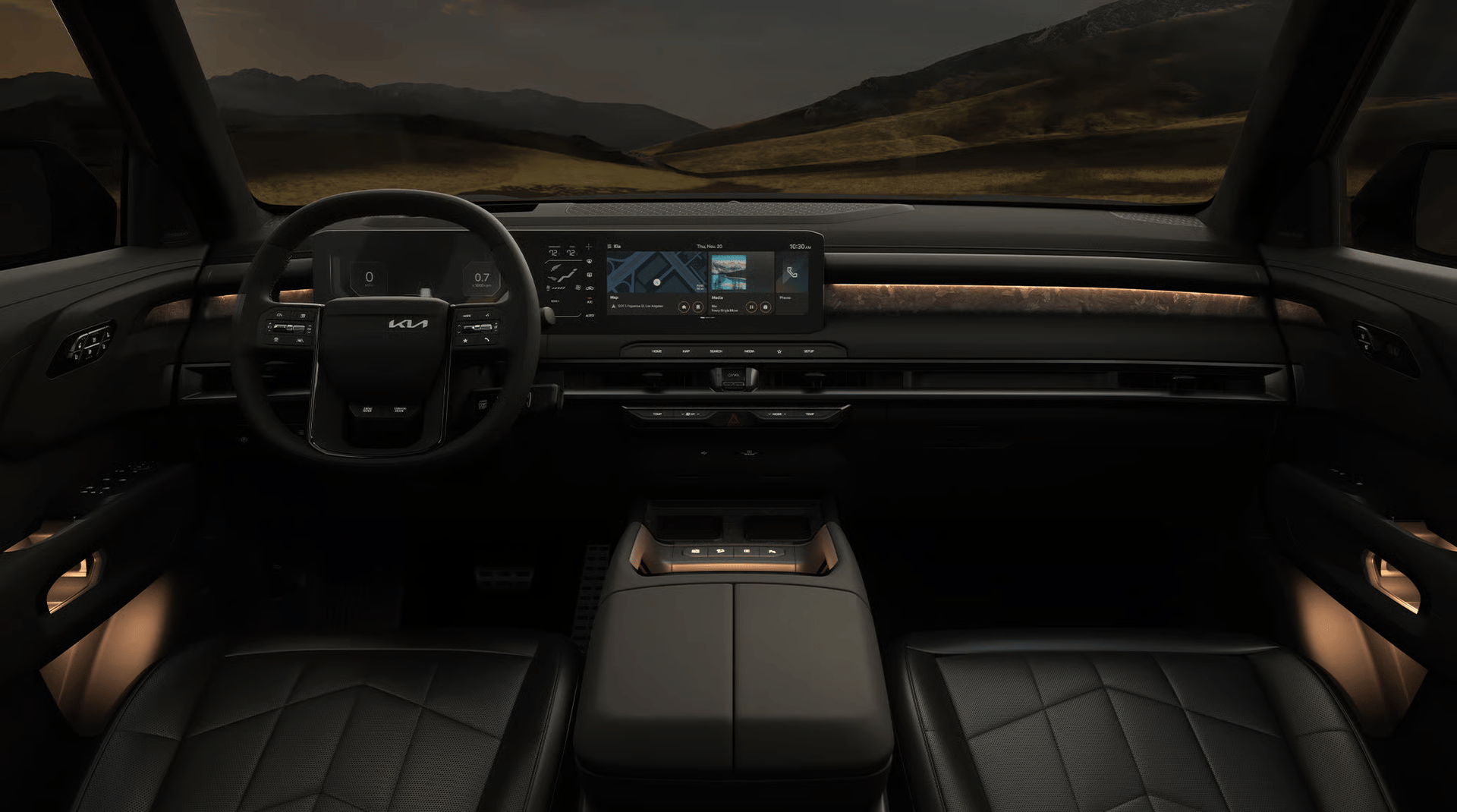
The 2025 Kia Telluride earns an interior score of 9.3 out of 10 and a U.S. News Rating of 9.5 out of 10. It tops the midsize SUV rankings every year and holds the Best 3-Row SUV for Families award, giving it a standing in the midsize segment that no competing vehicle has consistently challenged. Vehicle tester Kristin Shaw describes a plush, quiet cabin filled with amenities that get better as the trim level rises, housed inside a no-nonsense exterior.
The Telluride’s appeal is broad. The interior is upscale, the ride and handling feel composed, and the technology features are easy to use. The source identifies only one weakness: below-average fuel economy ratings. For a vehicle that wins Best for Families and scores 9.3 on the interior evaluation, subpar fuel efficiency is a trade-off that most buyers in the target demographic will accept without significant resistance.
The difference between the Telluride and the Tucson on this list is scale. Both score 9.3 on interior and both hold family-focused awards, but the Telluride’s three-row configuration provides substantially more room for passengers and cargo, a difference that families with more than two children, or those who need to carry additional adults regularly, will find decisive. The Telluride’s consistent performance atop the midsize rankings reflects a vehicle that has held its position against sustained competition for years, which is a more meaningful durability signal than a single award cycle. The Telluride’s three-row layout is also the right configuration for families who want to bring grandparents, car seats, and cargo on the same trip without having to choose which combination to leave behind. The Telluride’s consistent year-over-year ranking at the top of the midsize segment also means buyers who return to it for a second or third vehicle can rely on a continuous record of excellence that newer competitors have not yet established. A vehicle that holds its segment position year after year has, in effect, passed an extended reliability test that a single-year best-in-class designation has not.
Credit: Mercedes-Benz
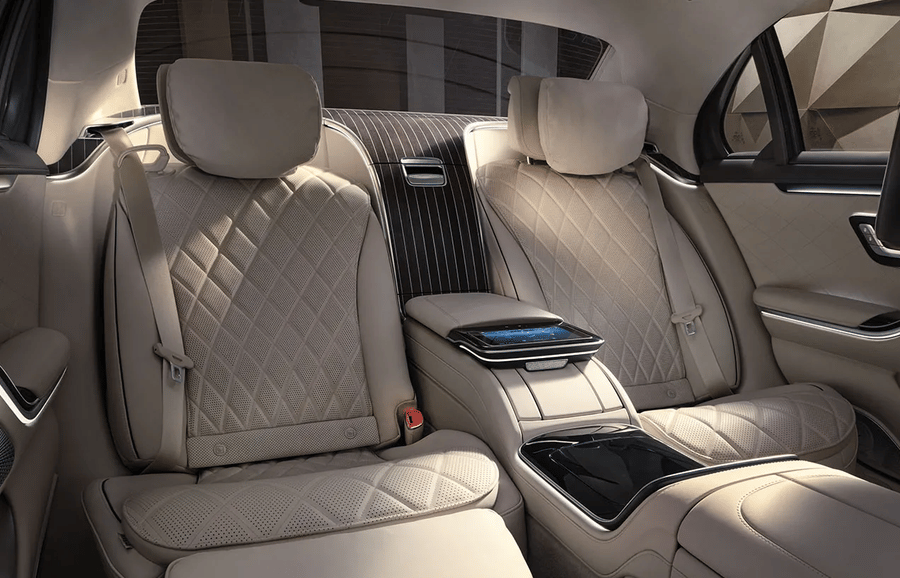
The 2025 Mercedes-Benz S-Class earns an interior score of 9.9 out of 10 — the second-highest on this list — alongside a U.S. News Rating of 9.5 out of 10. The S-Class is synonymous with automotive luxury in a way that very few vehicles are, occupying the top of Mercedes-Benz’s lineup as the reference point against which every other large luxury sedan measures itself. A Maybach variant of the S-Class starts at over $200,000, giving the nameplate a ceiling well beyond the base model.
The base S-Class is already extensively equipped. Leather upholstery, heated and ventilated and massaging front seats, a 12.8-inch infotainment touchscreen, and a 12.3-inch digital gauge cluster all come standard. The seats feel supple and supportive. The source identifies the infotainment software as genuinely complex at first due to an overwhelming number of controls and menus. The complexity is a noted limitation in a cabin that otherwise executes the luxury brief with precision.
The S-Class’s 9.9 interior score reflects the quality of materials, the depth of standard features, and the execution of the cabin across all positions. Exemplary is the word the source uses for the driving experience, and the interior score confirms that the passenger experience matches. For buyers in the large luxury sedan segment, the S-Class remains the standard against which alternatives like the Genesis G90 and BMW 7 Series on this list define themselves. The S-Class’s 9.9 interior score reflects decades of refinement on a platform that Mercedes-Benz has treated as the company’s engineering showcase, and the result is a cabin that sets expectations for what all other vehicles in the segment aspire to deliver. The heated, ventilated, and massaging seat combination standard at the base trim is a good example: that trio of features together represents what the S-Class does throughout its specification, and the consistency of that approach across the entire cabin is what the 9.9 interior score reflects.
Credit: Genesis
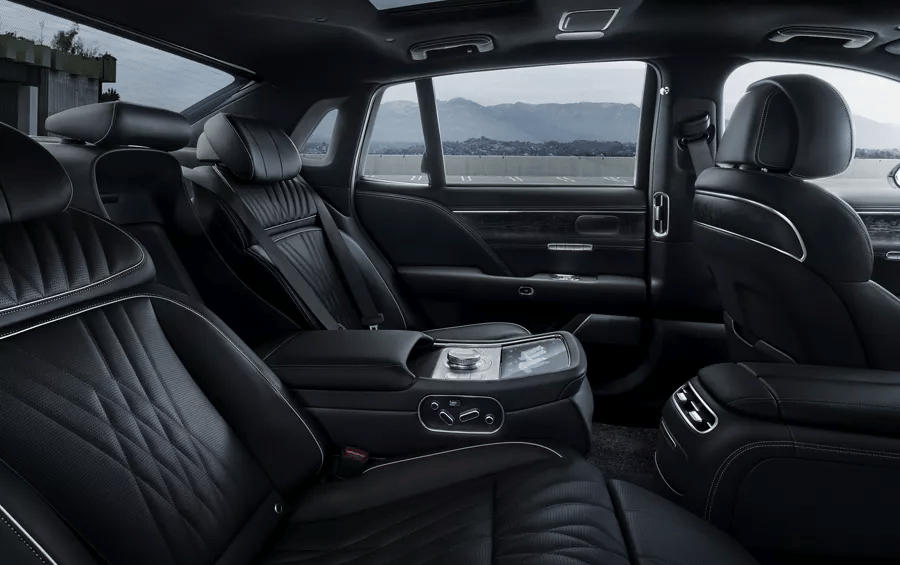
The 2025 Genesis G90 earns an interior score of 9.7 out of 10 and a U.S. News Rating of 9.5 out of 10. Vehicle tester Kristin Shaw describes it as stunningly beautiful inside and out, calling it a genuine threat to German luxury large-car rivals, including the Mercedes-Benz S-Class, BMW 7 Series, and Audi A8. The specific competitive advantage Shaw identifies is price: Genesis undercuts all three while maintaining comparable quality and elegance.
The G90 rides smoothly, uses premium materials throughout, and delivers a comprehensive technology feature set. The seats are roomy and comfortable. A 3.5-liter twin-turbocharged V6 engine, paired with an eight-speed automatic transmission and standard all-wheel drive, delivers effortless power. The source identifies poor fuel economy as the main trade-off of that powertrain configuration.
The Genesis brand carries less name recognition than Mercedes, BMW, or Audi in the luxury sedan market, a factor the source notes that has allowed the G90 to operate as a value disruptor rather than a prestige competitor. Buyers who prioritize interior quality, ride refinement, and feature depth over the social signaling that a German badge provides will find that the G90’s 9.7 interior score and 9.5 overall rating give it an objective case that the badge premium alone cannot counter. For value-conscious luxury buyers, it is the most compelling proposition in the large sedan category on this list. The G90’s Korean engineering heritage gives it a different set of design references from its German competitors, and the result is an interior aesthetic that reviewers consistently describe as beautiful without qualification, a characterization that not every vehicle in the segment earns. For buyers approaching the luxury sedan segment for the first time, the G90 is the vehicle on this list most likely to exceed expectations set by price, a difficult trick that only a handful of vehicles in any given year manage to pull off.
Credit: BMW
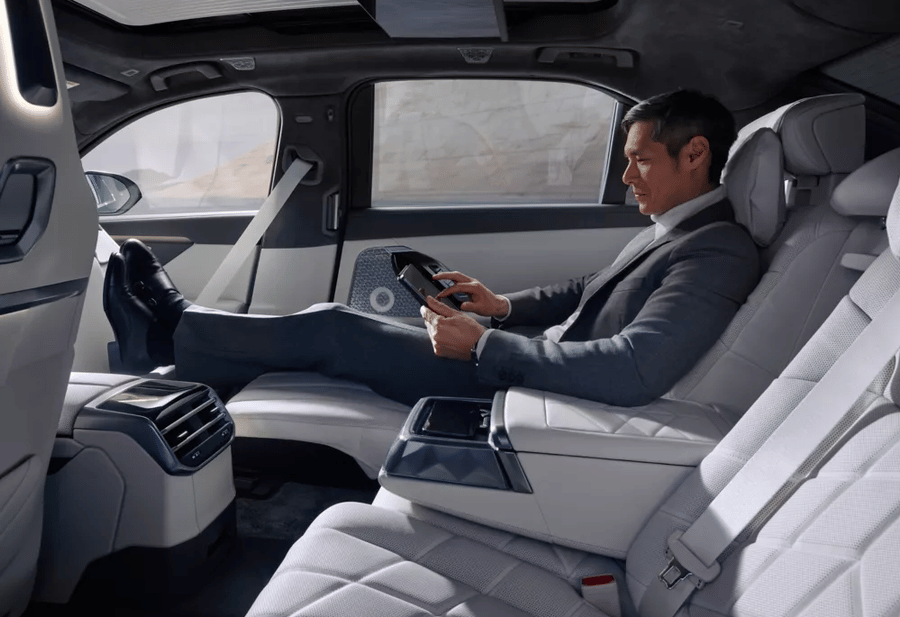
The 2025 BMW 7 Series earns an interior score of 9.5 out of 10 and a U.S. News Rating of 9.4 out of 10. Senior Editor John Vincent calls it his personal favorite in the large luxury car class, describing a car that looks as big as a battleship but drives with surprising agility. The cabin is gorgeous, with premium materials and palatial seats that are both supportive and comfortable. Heated front and rear outboard seats, along with a heated steering wheel, come standard on all models.
The 7 Series powertrain lineup is broad, with multiple potent engine options that give buyers performance choices across different output levels and fuel types. The suspension delivers a comfortable ride without sacrificing the handling precision that BMW prioritizes across its lineup. Optional equipment extends to ventilated and massaging front seats, remote automatic front and rear doors, and ventilated rear seats with massage capability, a suite of available seat technologies that no other vehicle on this list exceeds.
The BMW 7 Series sits in direct competition with the Mercedes-Benz S-Class and Genesis G90 on this list. Its 9.5 interior score is lower than either competitor's, but Vincent’s designation of it as his class favorite reflects a subjective preference that quality scores alone cannot capture. The 7 Series driving experience, which Vincent describes as captivating, gives it a character that neither the S-Class nor the G90 can replicate, and for buyers who want a large luxury sedan that rewards the driver as much as the passengers, the 7 Series makes the strongest case of the three. The remote automatic door option, which opens and closes front and rear doors automatically, is the kind of feature that feels frivolous until you are standing in the rain with your hands full, a genuinely useful application of automation that the 7 Series offers and most other vehicles on this list do not.
Credit: BMW
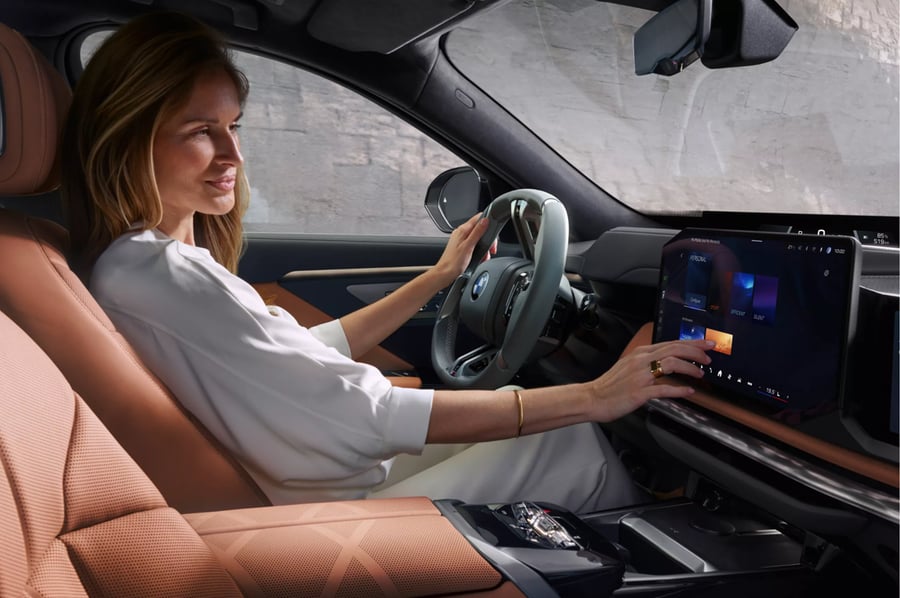
The 2025 BMW i7 earns an interior score of 9.5 out of 10 and a U.S. News Rating of 9.1 out of 10. Vehicle tester Mark Takahashi says the i7 gets the fundamentals of luxury right, with a spacious cabin and very high levels of comfort. The i7 is the electric version of the 7 Series, sharing its platform and cabin architecture while replacing the combustion powertrain with an electric one capable of more than 300 miles of range on a full charge.
The standard feature list is extensive. All i7 models include leather upholstery, heated and ventilated front seats, heated armrests, quad-zone automatic climate control, heated rear seats, a 14.9-inch touchscreen, an 18-speaker Bowers & Wilkins audio system, wireless device charging, and a cabin air filtration system. Massaging seats for both front and rear occupants are available as upgrades. The 18-speaker Bowers and Wilkins installation is a specific luxury technology that gives the i7’s audio system a concert-hall quality that generic car stereos do not approach.
The i7’s electric powertrain adds refinement to the already quiet 7 Series platform. The suspension soaks up road imperfections with ease, the handling stays relaxed, and the powertrain delivers brisk acceleration on demand. The source’s reviewers note a preference for greater driving range than the current more-than-300-mile figure, which is the one area where the i7 falls short of some EV competitors. For buyers who want the 7 Series cabin experience with an all-electric powertrain, the i7 provides both without meaningful compromise. The quad-zone automatic climate control standard on every model gives each passenger independent temperature management, and the heated armrests extend the luxury detail to a surface that most vehicles, even at this price point, overlook. The 18-speaker Bowers and Wilkins system also means the i7 delivers audio quality that rivals dedicated home listening systems, giving music as a daily-use comfort dimension the same investment the seats and ride receive.
Credit: Ram
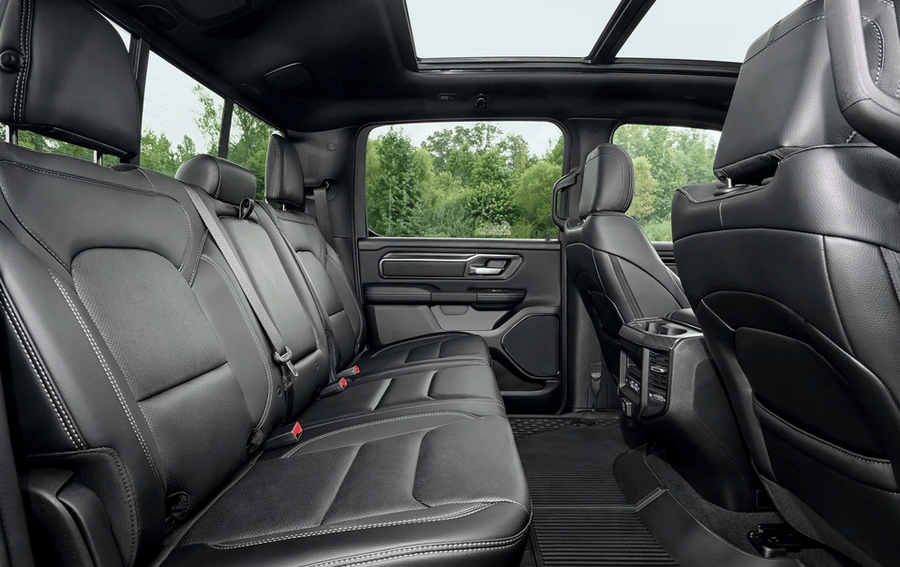
The 2025 Ram 1500 earns an interior score of 9.4 out of 10 and a U.S. News Rating of 9.5 out of 10, along with the 2025 Best Full-Size Pickup Truck for the Money award. John Vincent places the Ram 1500 at the top of his personal best pickup list, citing the refinement and comfort that push it beyond the utilitarian baseline the segment often accepts. The ride, which the source describes as buttery smooth, gives the Ram 1500 a highway character more in line with a luxury SUV than with a body-on-frame truck.
Ram offers the 1500 with three engine choices, none of which are traditional hybrid or diesel configurations. The base V6 powertrain delivers both strong power and fuel economy, which the source describes as fantastic, making it the recommended choice for buyers who want both performance and efficiency without upgrading to a larger engine. The cabin quality impresses across all trim levels, though the interior presentation improves substantially as the trim level rises, and the higher configurations close the gap with luxury SUVs in material quality and feature depth.
The Ram 1500’s presence on a comfort list that includes the Mercedes-Benz S-Class and the Lucid $LCID Gravity reflects the extent to which the pickup truck category has evolved. A truck designed to carry the maximum payload and tow the maximum load does not naturally prioritize cabin refinement, but the Ram 1500 has inverted that priority, making comfort the lead attribute and capability the secondary one. The result is a full-size truck that the source’s tester finds indistinguishable, in daily-driving feel, from the luxury SUVs it shares road space with. The 2025 Best Full-Size Pickup for the Money award confirms that the Ram 1500 delivers its exceptional comfort at a price that the full-size segment can support without premium pricing, giving buyers the comfort and value the award exists to recognize.
Credit: Hyundai
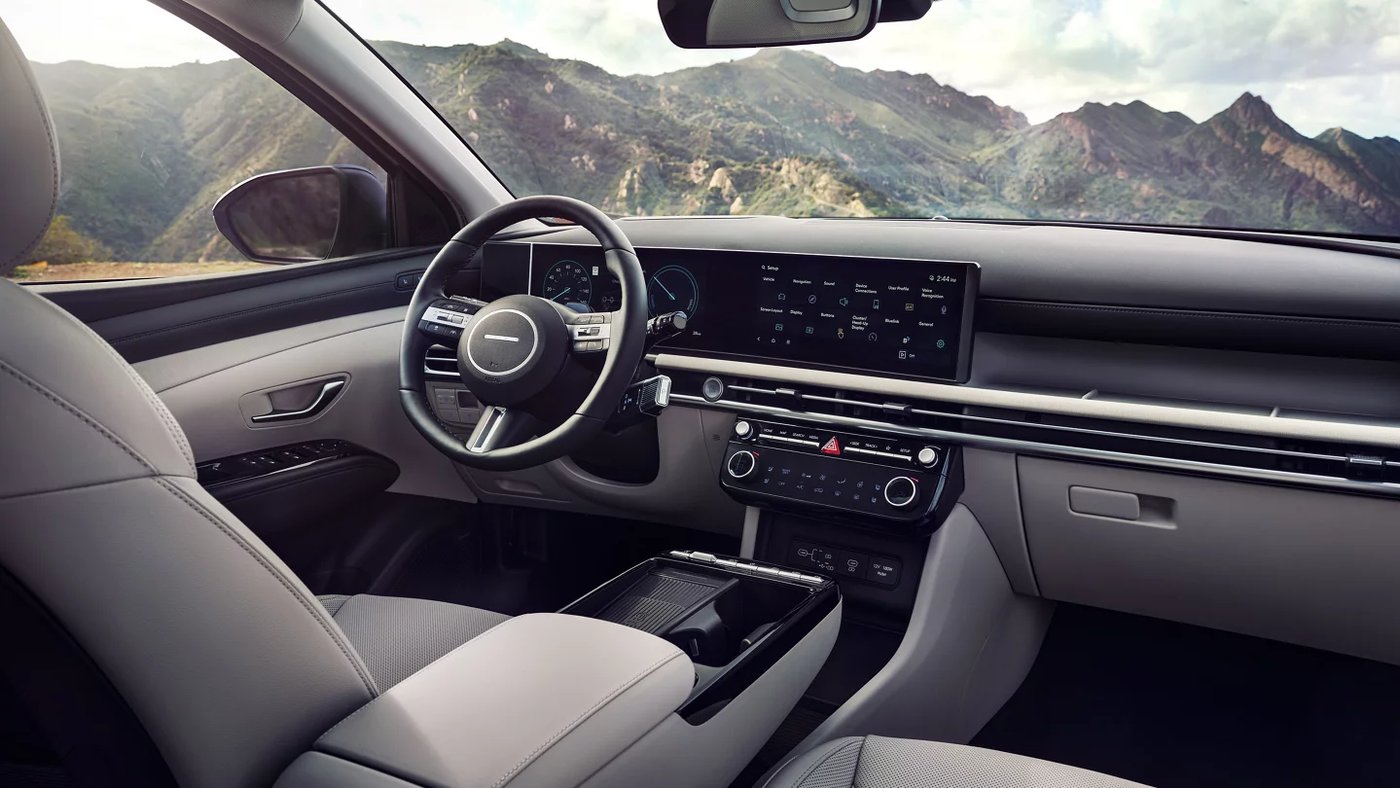
The 2026 Hyundai Tucson Hybrid earns an interior score of 9.3 out of 10 and a U.S. News Rating of 9.4 out of 10. Vehicle tester Robert Duffer finds the Tucson Hybrid seats four adults in genuine comfort, with a fifth passenger manageable. The cabin stays quiet under normal driving conditions, with noise increasing only when the driver engages Sport mode and pushes the throttle. High-quality materials on the upper dashboard give it a finish that Duffer describes as a grade above rivals in the segment.
The maximum cargo volume of 74.5 cubic feet is a specific practical credential that supports the comfort case beyond seating and ride quality: a cabin with generous storage reduces the clutter and compromise that erode the sense of spaciousness over time. The 12.3-inch infotainment touchscreen is easy to navigate and understand, enhancing the interior's daily-use comfort. Fuel economy reaches up to 38 combined miles per gallon, depending on trim, which is not class-leading for a hybrid compact SUV but represents genuinely good efficiency for a vehicle of the Tucson Hybrid’s size and capability.
The Tucson Hybrid and the non-hybrid Tucson share an interior score of 9.3, the same score as the Kia Telluride, and the Hybrid’s 9.4 overall rating edges the non-hybrid Tucson. Buyers choosing between the two Tucson versions will find the Hybrid adds fuel efficiency and a slightly higher overall score to the same fundamental cabin experience. For buyers who want a comfortable, practical, efficient compact crossover, the Tucson Hybrid delivers all three dimensions without requiring meaningful trade-offs in any of them. The up to 38 mpg combined fuel economy also means the Tucson Hybrid’s operating costs stay low over time, which keeps the total cost of comfortable ownership lower than many of the luxury vehicles on this list. The Tucson Hybrid’s quiet cabin under normal driving conditions, combined with its 74.5 cubic feet of maximum cargo, gives it a daily-use comfort profile that larger and more expensive vehicles do not meaningfully improve upon.
