Tramino / Getty Images
A midsize SUV used to come with an efficiency penalty baked into the purchase price. Buyers who needed three rows, genuine cargo space, and the raised ride height that families gravitate toward had to accept fuel costs that smaller vehicles avoided. The category rewarded practicality but punished anyone paying close attention to what they spent at the pump. The arrival of hybrid powertrains in this segment changed that calculation, and the change has been substantial enough that some of today’s most efficient midsize SUVs outperform compact cars from a decade ago.
The shift matters beyond the fuel bill. Hybrid technology in a midsize SUV typically adds cost at the point of purchase, but the efficiency gains can recover that premium through lower fuel spending over the vehicle’s life. The math depends on how much a buyer drives and what fuel prices look like in their region, but the efficiency gap between a conventional powertrain and a well-executed hybrid has grown wide enough that the calculation increasingly favors the hybrid for high-mileage drivers who keep vehicles for several years. Plug-in hybrid variants extend the advantage further for buyers who can charge at home, offering pure electric range for short daily trips while retaining the conventional hybrid’s long-distance flexibility.
The vehicles on this list cover a range of configurations, price points, and powertrain types. U.S. News & World Report compiled the rankings by evaluating each model in its most efficient configuration, using the best combined city and highway mpg estimates as the primary sorting criterion. The list spans traditional hybrids, plug-in hybrids, and one conventionally powered vehicle that crosses into the midsize SUV category for the first time in 2026. All vehicles carry a U.S. News rating based on expert reviewer assessments.
1 / 10
Credit: Kia
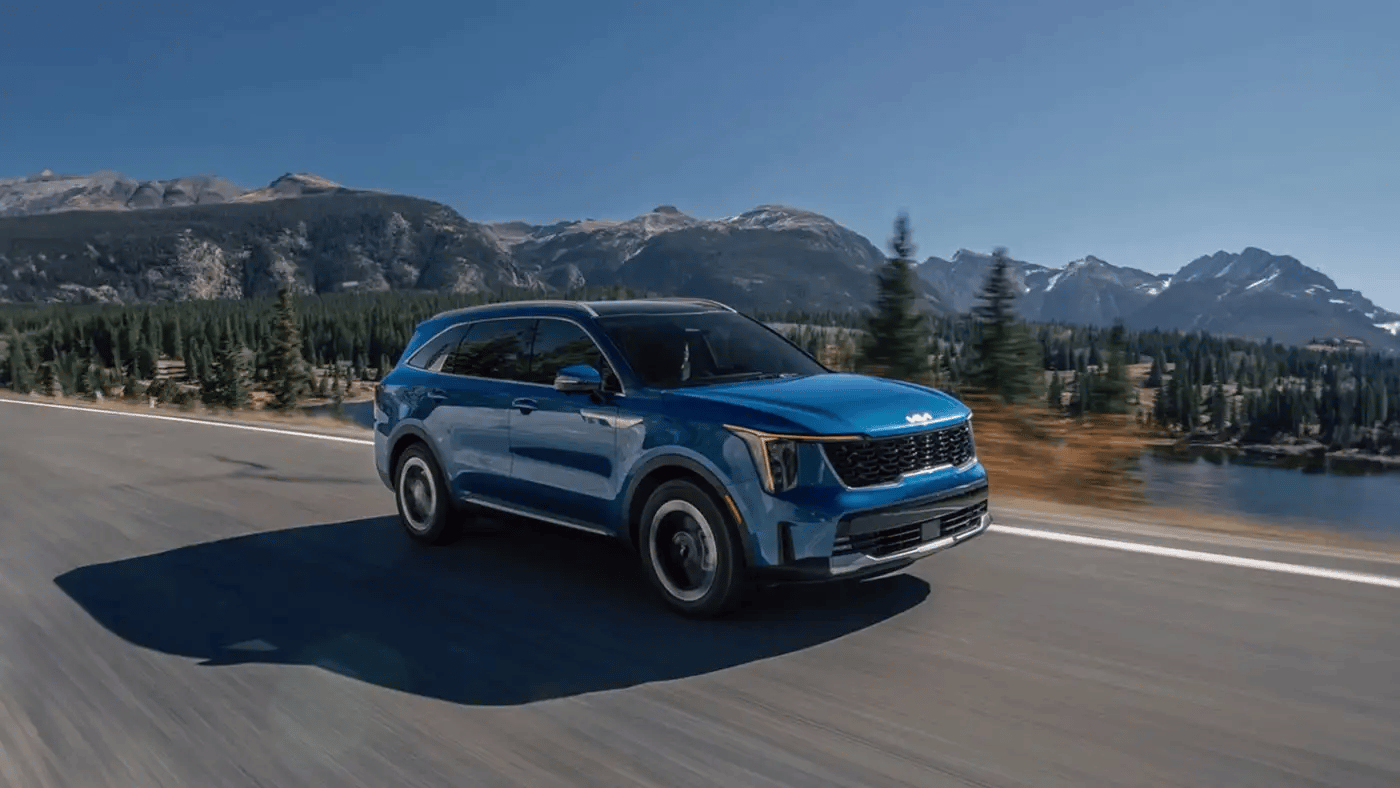
The 2026 Kia Sorento Hybrid leads the class in fuel economy with a 37 mpg combined rating, the highest figure among midsize SUVs on this list. Its base price starts at $38,890, and reviewer Matt DeLorenzo describes it as a strong value relative to the non-hybrid Sorento. The gap in purchase price is modest, but the efficiency advantage is substantial. Kia also awarded the Sorento Hybrid the 2026 Best Midsize Hybrid SUV for the Money title, reinforcing the value case that the pricing alone suggests.
DeLorenzo notes that the Sorento Hybrid drives more like a conventional gas vehicle than most hybrids. The reason is its powertrain architecture: Kia uses a traditional six-speed automatic transmission in the Sorento Hybrid, a departure from the continuously variable transmissions used by most competitors. The CVT is efficient but can give some drivers a sensation of disconnection from the engine. The six-speed maintains a more intuitive relationship between throttle input and vehicle response, which contributes to the car-like driving feel DeLorenzo describes. Buyers can choose between front-wheel and all-wheel drive.
The Sorento Hybrid’s third row is snug, which limits its appeal for families with older children or adults who expect to use the rearmost seats with any frequency. Families with young children will find the packaging more workable, and those passengers are unlikely to notice the third row’s constraints in the way taller adult passengers would. The efficiency advantage the Sorento Hybrid holds over the rest of the class is large enough that buyers willing to accept the third-row limitation get meaningful fuel savings in return. At 37 mpg combined, the Sorento Hybrid sits in a category of its own among midsize SUVs. The six-speed automatic’s role in shaping the driving experience extends beyond feel: it also gives Kia access to a more established transmission architecture at a time when some buyers remain skeptical of CVT behavior under load. DeLorenzo’s characterization of the Sorento Hybrid as a great deal relative to the standard Sorento reflects not just the pricing but the efficiency return on the modest price difference.
2 / 10
ollo / Getty Images
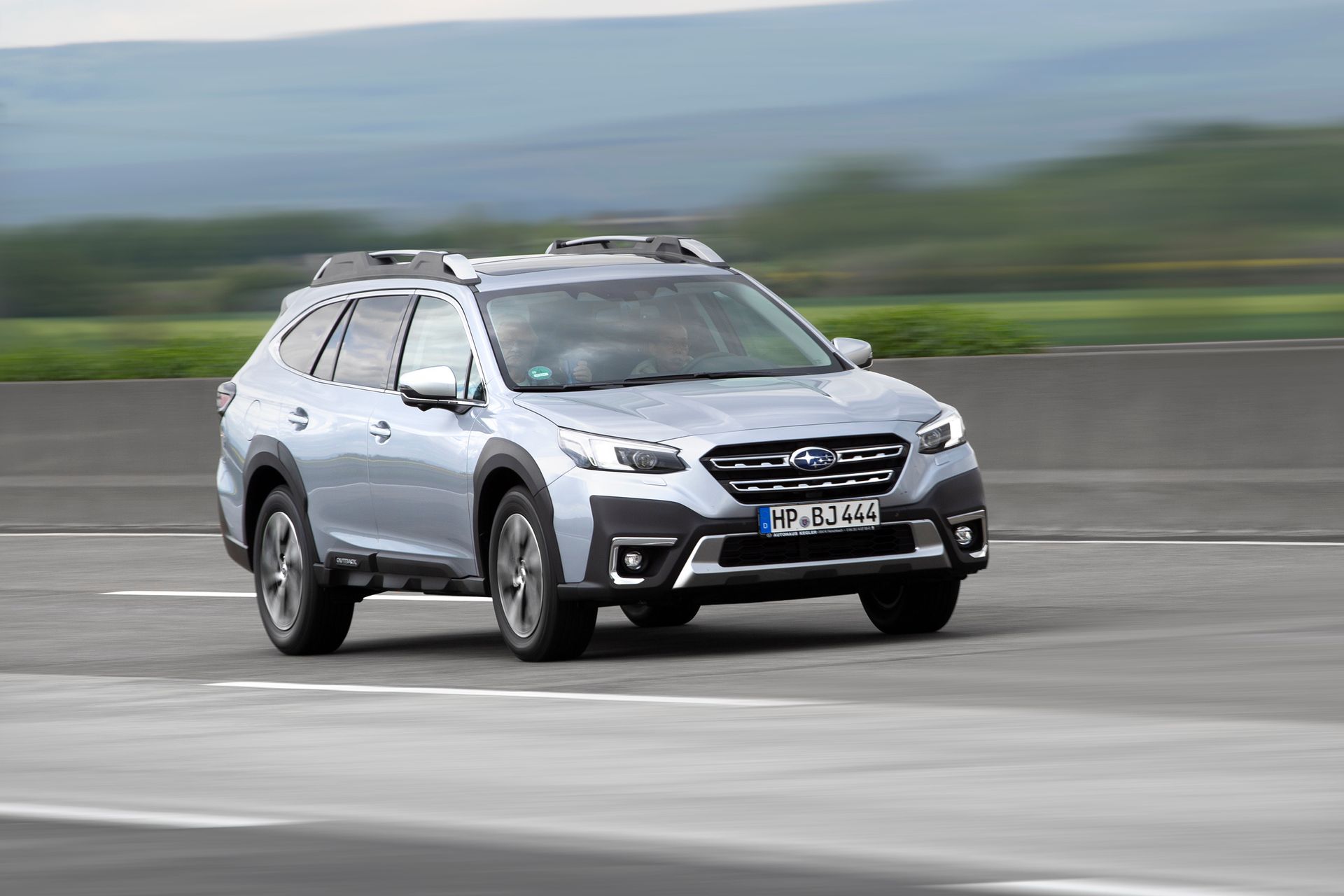
The 2026 Subaru Outback joins the midsize SUV segment for the first time following a full redesign, earning a 27 mpg combined rating and a U.S. News score of 9.3 out of 10, the highest rating on this list. The editor notes that the redesigned Outback sits only a couple of inches taller than the previous-generation station wagon it replaces and runs about the same length, making the reclassification a matter of proportional changes rather than a fundamental reinvention of the vehicle.
All-wheel drive comes standard across the entire Outback lineup, distinguishing it from competitors that charge extra for AWD or limit it to higher trim levels. Subaru offers two engine choices: a 2.5-liter four-cylinder boxer producing 180 horsepower for the base configuration, and an optional turbocharged four-cylinder that raises output to 260 horsepower. The turbocharged engine delivers substantially more performance, but it pushes fuel economy down to roughly average for the class, eliminating the efficiency advantage the base powertrain provides. Buyers who prioritize the 27 mpg combined figure should stay with the naturally aspirated engine.
The Outback’s crossover-to-SUV transition gives buyers who already valued the model’s practicality access to the same vehicle in a segment context that may better reflect how they use it. The 9.3 U.S. News rating suggests the redesign improved the vehicle across multiple dimensions without compromising existing strengths to fit the new classification. The editor describes it as one of the most well-rounded vehicles on the market today and selected it as the personal pick among efficient midsize SUVs, a designation that carries weight for buyers whose priorities align with the Outback’s mix of capability and efficiency. Standard AWD across the full Outback lineup removes a purchasing decision that other brands turn into a trim-level negotiation, and the Outback’s 27 mpg combined figure is competitive for a non-hybrid vehicle in a segment dominated by hybrid powertrains.
3 / 10
Credit: Kia
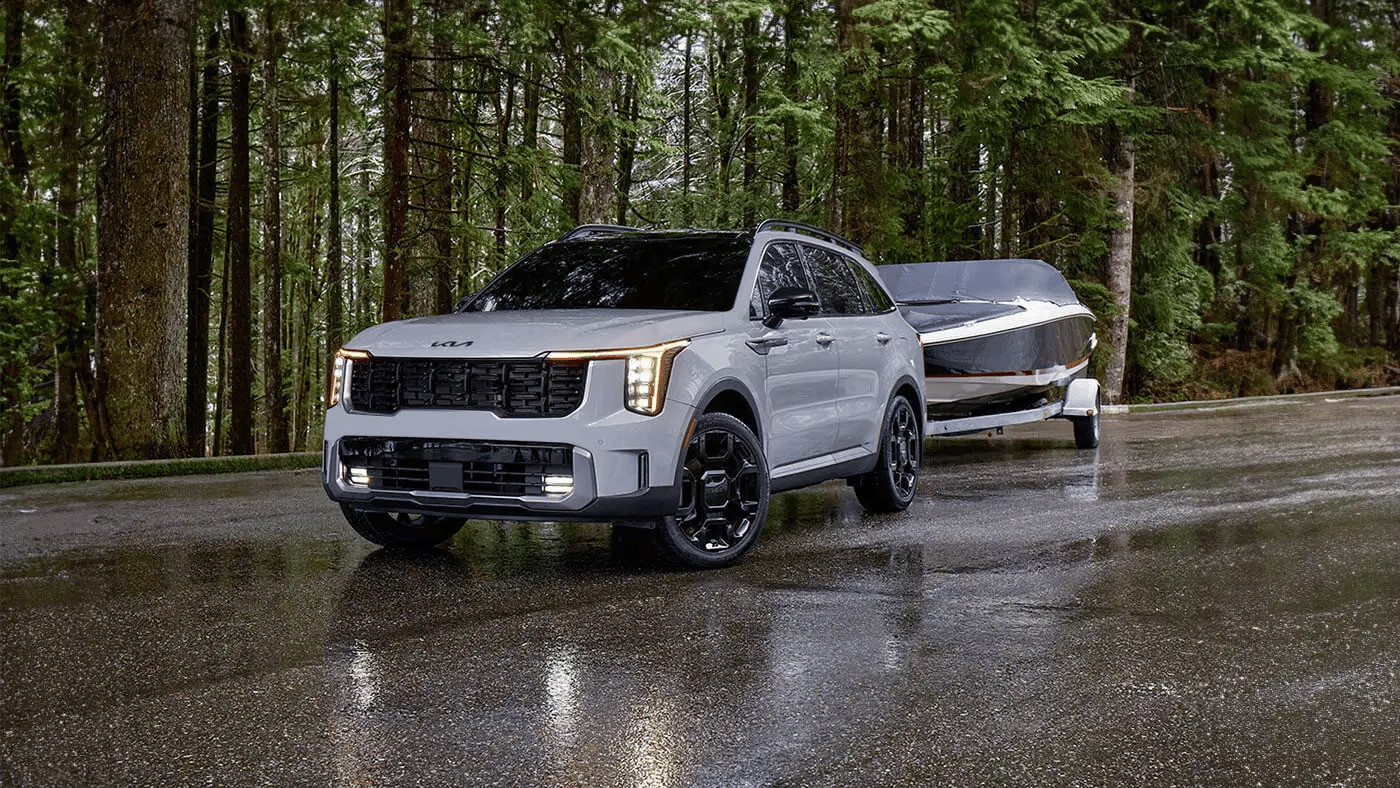
The 2026 Kia Sorento starts at $32,390, making it the most affordable vehicle on this list by a noticeable margin. The next-least-expensive option costs several thousand dollars more. Reviewer James Gilboy describes the Sorento as offering considerable value for its price, noting that the pricing structure alone compensates for some of the model’s shortcomings. The Sorento also won the 2026 Best 3-Row SUV for the Money award, which reflects the same value-oriented positioning its base price signals.
Two engine variants of a 2.5-liter four-cylinder power the Sorento. The base naturally aspirated version produces 191 horsepower, and the available turbocharged variant raises output to 281 horsepower. Front-wheel drive comes standard, and all-wheel drive is available across the lineup. The Sorento achieves 26 mpg combined in its most efficient configuration. Gilboy notes that the vehicle drives comfortably even in the X $TWTR-Pro off-road trim, a notable observation for a family-oriented SUV. Off-road tuning often introduces ride stiffness that makes routine driving less pleasant, but the Sorento manages the balance without sacrificing day-to-day comfort.
Gilboy identifies two genuine weaknesses: a snug third row and a feature set that has aged relative to newer competitors in the class. The third-row limitation echoes the constraint found in the Sorento Hybrid, suggesting that packaging the third row in this body is a challenge Kia has not fully resolved across both variants. The need for updates to match newer rivals is a more time-sensitive concern, since the competitive landscape in the midsize SUV segment moves quickly. Buyers who weigh price and driving comfort over feature content will find the Sorento well-positioned, and the $32,390 starting point gives it access to a buyer pool that the rest of this list does not reach. The Sorento’s status as the 2026 Best 3-Row SUV for the Money winner means the value assessment extends beyond this particular list and reflects a broader evaluation of the three-row segment.
4 / 10
Milan Surkala / Getty Images
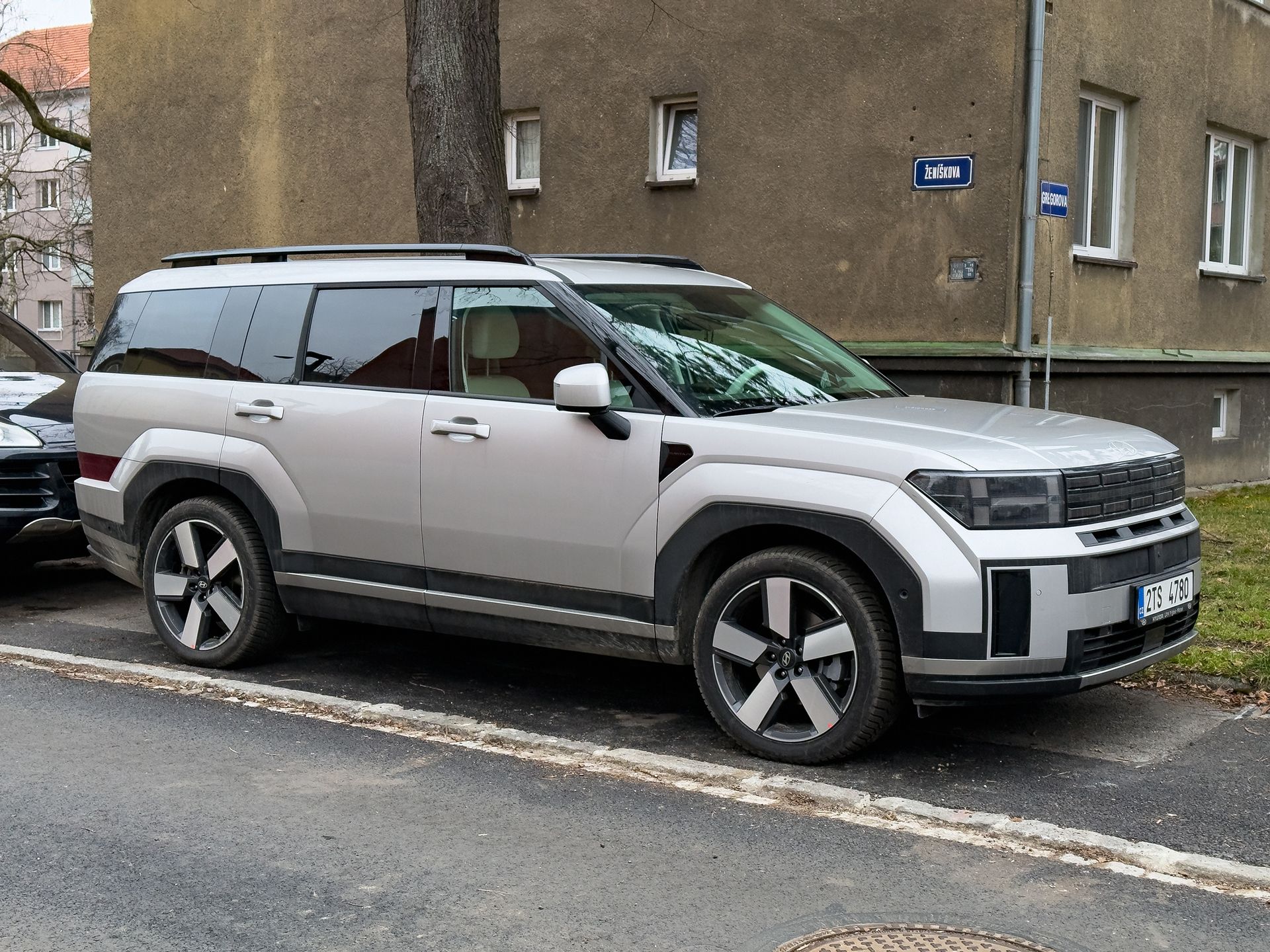
The 2026 Hyundai Santa Fe Hybrid holds a U.S. News safety rating of 9.7 out of 10, the highest safety score on this list, combined with a 36 mpg combined fuel economy rating. Writer Adrian Taylor describes the Santa Fe Hybrid’s feature set as strong, with particular emphasis on its safety and driver-assistance technology. Taylor notes that the Santa Fe Hybrid has few direct competitors, and most do not match its overall package.
A single powertrain serves the entire Santa Fe Hybrid lineup: a turbocharged four-cylinder engine paired with an electric motor, producing a combined 231 horsepower. A six-speed automatic transmission sends power to either the front or all four wheels, depending on configuration. Taylor characterizes the Santa Fe Hybrid as quick off the line, and the combined horsepower figure supports that assessment. However, Taylor also notes that the vehicle struggles somewhat when building to highway speeds. The behavior suggests the powertrain delivers stronger low-end response than sustained high-speed acceleration.
The 2026 model introduces a new base trim level and adds standard features to the upper trims, expanding the value accessible at different price points within the lineup. The Santa Fe Hybrid earned a finalist nomination for the 2026 Best Midsize Hybrid SUV for the Money award, a distinction that supports Taylor’s assertion that few direct competitors match it in terms of overall completeness. The safety rating of 9.7 out of 10 makes the Santa Fe Hybrid the appropriate choice for buyers who prioritize crash protection and advanced driver-assistance features alongside efficiency, and the 36 mpg combined figure means those buyers do not surrender meaningful fuel economy to get there. The single-powertrain lineup simplifies the buying process: every Santa Fe Hybrid uses the same 231-horsepower turbocharged four-cylinder and electric motor combination, eliminating the trade-off between performance and efficiency that multiple powertrains introduce in other vehicles on this list. The 2026 model’s new base trim also lowers the entry point into the lineup without reducing the safety features that drive the 9.7 rating.
5 / 10
Credit: Chevrolet
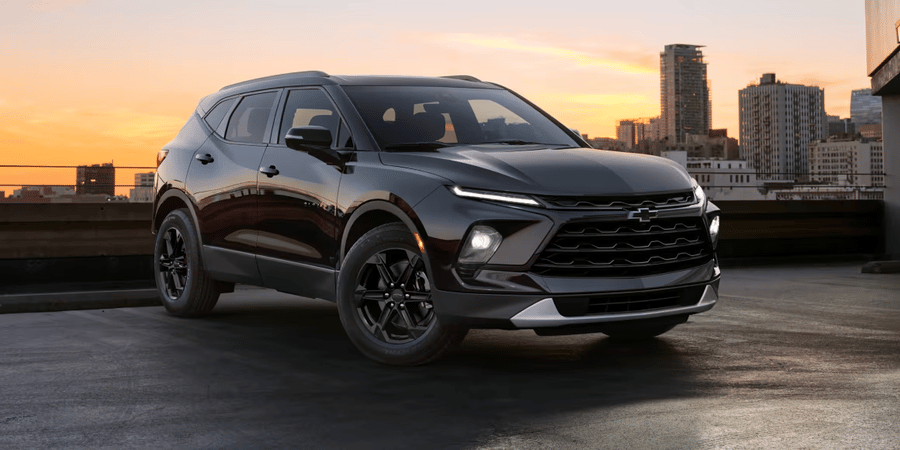
The 2025 Chevrolet Blazer holds the strongest J.D. Power reliability score on this list at 85 out of 100, earning it the most reliable designation among these efficient midsize SUVs. The base price starts at $35,600, placing it in the middle of the price range covered here. The Blazer carries a U.S. News rating of 8.4 out of 10 and earned a finalist position for the 2025 Best 2-Row SUV for the Money award. The interior leans toward a sporty design aesthetic, though the materials quality lands in the mediocre range.
Chevrolet offers the Blazer with two turbocharged engines: a four-cylinder producing 228 horsepower and a V6 producing 308 horsepower, both paired with a nine-speed automatic transmission. Both engines come in front- or all-wheel-drive configurations. The 25 mpg combined figure cited here applies to the front-wheel-drive four-cylinder variant. Other configurations sacrifice efficiency to a significant degree, making powertrain selection a more consequential decision for buyers who prioritize fuel economy alongside the reliability credentials. The 308-horsepower V6 places the Blazer among the more powerful options in the class, giving buyers who want performance without sacrificing reliability a credible option.
The Blazer also comes in a fully electric version, the Blazer EV, which U.S. News evaluates separately. The existence of an EV sibling reflects Chevrolet’s strategy of offering the same nameplate across powertrain types, which can create confusion in the buying process but also means the Blazer platform supports buyers at different points on the electrification spectrum. Buyers seeking a conventional gasoline-powered midsize SUV with documented reliability will find the front-wheel-drive four-cylinder Blazer delivers the package that earns the 85 out of 100 J.D. Power score and the 25 mpg combined rating together. The 308-horsepower V6 option also gives performance-focused buyers a reason to consider the Blazer beyond its reliability credentials, provided they accept the efficiency trade-off that comes with choosing the more powerful engine.
6 / 10
Credit: Toyota
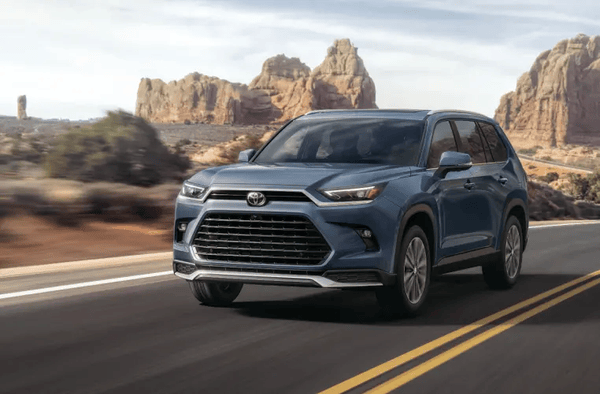
The 2026 Toyota $TM Grand Highlander Hybrid achieves 36 mpg combined while offering what contributor Bengt Halvorson describes as genuinely adult-friendly third-row seating, a capability he identifies as rare among midsize SUVs. The base price starts at $45,210. Halvorson notes that the Grand Highlander Hybrid is in its third year on the market and remains one of the few three-row hybrid SUVs available in the midsize segment. The vehicle earned a finalist nomination for the 2026 Best Midsize Hybrid SUV for Families award.
Two powertrain configurations are available. The base system uses a four-cylinder engine with two electric motors for front-wheel drive, or a third motor added for all-wheel drive. Both versions produce 245 horsepower. The Hybrid Max variant replaces the base engine with a turbocharged four-cylinder and two motors, generating 362 horsepower, a substantial jump in output. The Hybrid Max delivers a more engaging driving experience, but fuel economy drops meaningfully. Buyers who want the 36 mpg combined figure should choose the base powertrain.
The Grand Highlander Hybrid’s third-row distinction sets it apart from most competitors in a meaningful way. Three-row midsize SUVs typically use the rearmost seats as emergency seating for small children, not as practical accommodation for adults. A vehicle that changes that expectation gives families with older children or frequent adult passengers a genuinely different product, not a variation on the standard compromised third-row format. Thirty-six mpg combined, adult-usable third-row space, and a choice between a comfortable family powertrain and a high-performance variant give the Grand Highlander Hybrid a breadth of capability that few three-row hybrids in this class can match. Halvorson’s observation that the Grand Highlander Hybrid is one of the few midsize SUVs with genuinely adult-friendly third-row seating signals meaningful differentiation from competitors whose rearmost row is strictly for children. The base powertrain’s 245 horsepower gives the family-focused configuration enough output that buyers do not need to step up to the Hybrid Max to get a capable vehicle.
7 / 10
Artistic Operations / Getty Images
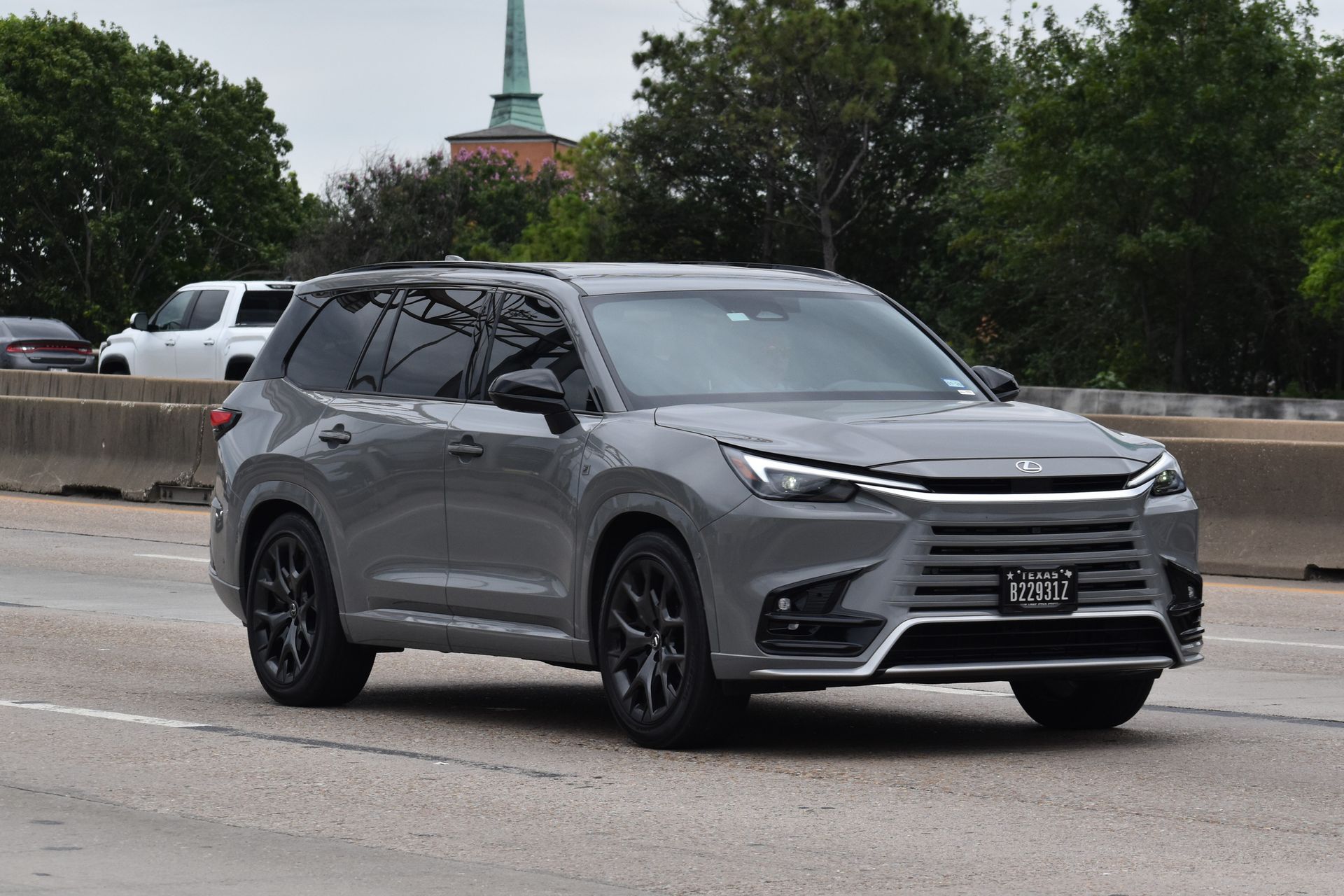
The 2026 Toyota $TM Highlander Hybrid delivers 35 mpg combined after more than 20 years on the market, a tenure that contributor Perry Stern credits to Toyota’s hybrid technology remaining competitive despite the segment catching up. The base price starts at $47,620, the highest of any Toyota on this list, and the U.S. News rating is 8.3 out of 10. Stern acknowledges that competition in the class has intensified, but still characterizes the Highlander Hybrid as “an ideal family SUV.”
A single powertrain configuration handles the entire lineup: a four-cylinder engine with three electric motors, a continuously variable automatic transmission, and standard all-wheel drive. The system produces 243 horsepower. Stern notes that the Highlander Hybrid feels adequately powerful for most driving conditions but does not accelerate quickly, and the engine gets loud under full throttle, a common characteristic of CVT-equipped powertrains at high engine loads. The handling inspires confidence, and the ride quality is smooth and comfortable.
The Highlander Hybrid’s 20-plus-year production run gives it a documented long-term reputation that newer entrants to the hybrid midsize segment cannot yet claim. Buyers who value proven technology and an established service network alongside efficiency will find the longevity meaningful. The $47,620 starting price positions it above most competitors on this list, which requires buyers to weigh the Highlander Hybrid’s established reputation against the value propositions of newer designs available at lower price points. Stern’s assessment that the Highlander Hybrid remains an ideal family SUV despite the competitive pressure it faces reflects a vehicle that has retained its core competence over two decades as the segment has grown more sophisticated. The single-powertrain structure keeps the buying decision straightforward: every Highlander Hybrid uses the same four-cylinder, three-motor, CVT, AWD system rated at 243 horsepower. Buyers who want a proven hybrid system with a two-decade track record and are willing to pay the $47,620 starting price get exactly that, without having to navigate multiple powertrain configurations.
8 / 10
Artistic Operations / Getty Images
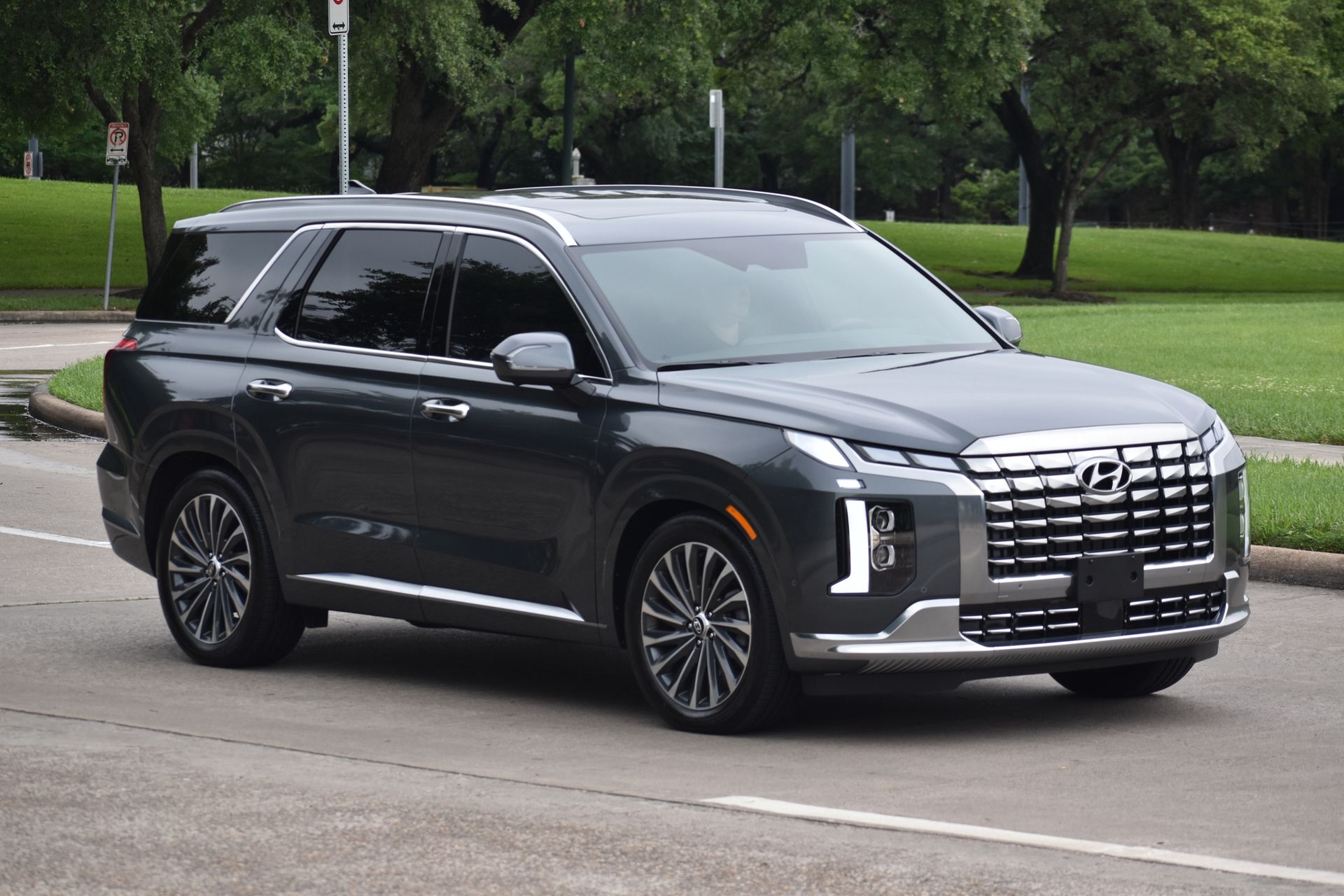
The 2026 Hyundai Palisade Hybrid introduces a new hybrid system alongside the model’s full redesign, achieving 34 mpg combined and starting at $44,160. Senior Editor John Vincent calls the Palisade the best midsize SUV on the market, and the 2026 redesign elevates that assessment further by adding a hybrid variant that Vincent describes as a much better vehicle than its gas-only predecessor at a modest price premium. The Palisade Hybrid took the 2026 Best Midsize Hybrid SUV for Families award, reflecting its standing among family-focused buyers.
The Palisade Hybrid’s powertrain architecture differs from most competitors in the class. Competing hybrids typically mount electric motors on the drive axles to provide propulsion and all-wheel-drive capability. The Palisade Hybrid inverts this arrangement: the turbocharged four-cylinder engine drives the wheels directly, while the two electric motors sit inside the housing of the six-speed automatic transmission. Vincent describes the result as eager, smooth, and quiet. The refinement aligns with the reduced mechanical separation between engine and transmission when the electric motors live within the gearbox itself.
The Palisade Hybrid’s U.S. News rating is 9.1 out of 10, one of the highest on this list. The redesign that introduces the hybrid also refreshes the full model, meaning buyers get a current-generation vehicle, not a carryover platform with a new powertrain. Vincent’s description of the Palisade as the best midsize SUV on the market carries weight coming from a senior editor who evaluates the segment regularly. Buyers who prioritize ride quality, powertrain refinement, and efficiency will find that the Palisade Hybrid’s unconventional motor placement delivers the smoothness Vincent describes. The 2026 redesign that introduces the hybrid also updates the entire Palisade lineup, which means the hybrid variant benefits from the full model refresh, not a powertrain addition to an aging platform. Vincent’s claim that the Palisade is the best midsize SUV on the market reflects the senior editor’s assessment of the full class, making the Palisade Hybrid the top-rated vehicle reviewed on this list.
9 / 10
Credit: Mazda
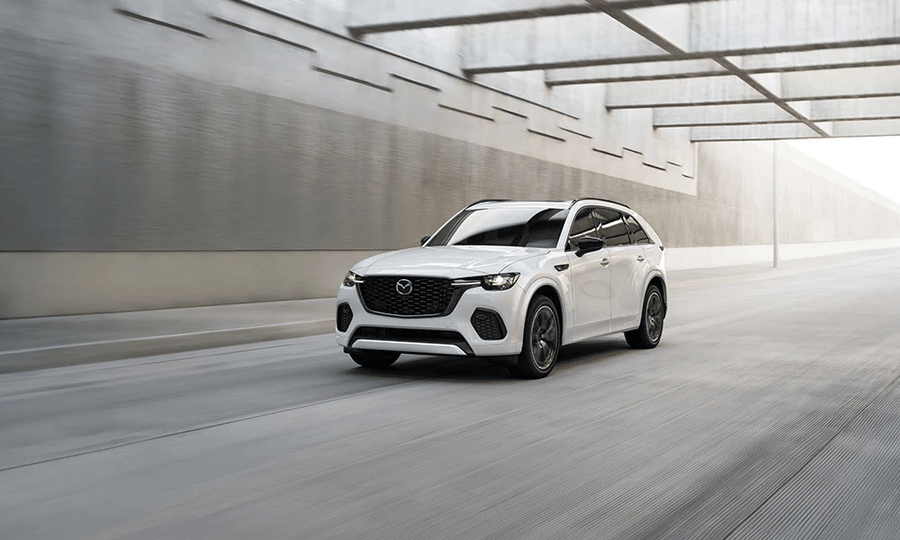
The 2026 Mazda CX-70 PHEV offers 32 miles of all-electric range, a 26 mpg combined conventional fuel economy figure, and a starting price cut of roughly $10,000 from the 2025 model year. The reduction addresses what had been a significant barrier to entry in its first year. The base price is now $44,250. Senior Editor John Vincent notes that Mazda’s midsize lineup naming convention creates confusion: the CX-70 and CX-90 share the same physical dimensions, but the CX-70 carries two rows of seating while the CX-90 offers three. Vincent identifies the CX-70’s advantage in this configuration as its superior cargo capacity relative to the three-row sibling.
The powertrain pairs a four-cylinder engine with an electric motor, producing 323 horsepower and 369 pound-feet of torque. An eight-speed automatic transmission and all-wheel drive are standard across the lineup. Vincent characterizes the acceleration as quick but not always smooth, suggesting the powertrain delivers strong outputs that the transmission occasionally struggles to manage without abruptness. The 369 pound-feet of torque is a notably high figure for a midsize SUV, contributing to the CX-70 PHEV’s performance character even when the electric range runs low, and the vehicle operates on the conventional hybrid setup.
The CX-70 PHEV earned a finalist nomination in the 2026 Best Midsize Plug-In Hybrid SUV for the Money award category. The $10,000 price reduction from 2025 repositions the vehicle as a more competitive offering relative to other PHEVs on this list, narrowing the gap between the CX-70’s premium materials and pricing that previously separated it from more accessible alternatives. Buyers who can charge at home and make the 32-mile electric range cover most daily driving will find the conventional 26 mpg hybrid figure relevant primarily for longer trips, making the CX-70 PHEV’s real-world efficiency substantially better than the combined number alone reflects. The $10,000 price reduction from 2025 brings the CX-70 PHEV to $44,250, a figure that positions it more competitively against the other PHEVs on this list while retaining the Mazda interior quality that distinguishes the model.
10 / 10
Credit: Mazda
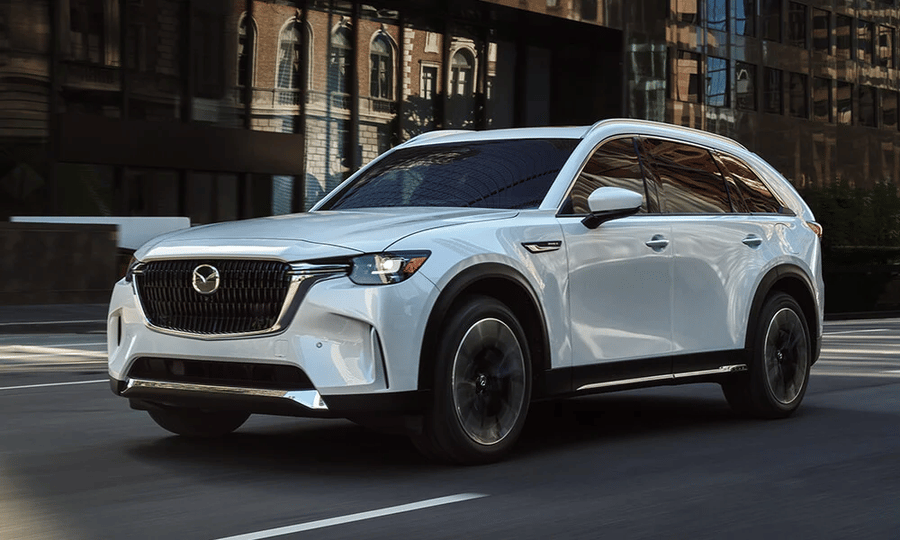
The 2026 Mazda CX-90 PHEV shares the CX-70 PHEV’s powertrain, a four-cylinder engine and electric motor producing 323 horsepower and 369 pound-feet of torque, paired with an eight-speed automatic and all-wheel drive, while extending the body to accommodate a third row of seating. The starting price of $50,495 makes it the most expensive vehicle on this list. The CX-90 PHEV achieves 26 mpg combined and carries an all-electric range of up to 27 miles, five miles fewer than the CX-70 PHEV. Senior Editor John Vincent notes that the third row offers limited usability, which he calls typical for rearmost seating in vehicles of this size.
The CX-90 PHEV claimed two of Mazda’s 2026 award designations: Best Midsize Plug-In Hybrid SUV for the Money and Best Plug-In Hybrid SUV for Families. The dual award recognition reflects a vehicle that performs well across different evaluation frameworks, covering both value and family-oriented criteria. Vincent identifies a behavioral weakness in hybrid mode: the powertrain can become loud and clunky as it works to balance gas and electric power, a characteristic he attributes to the system struggling to find the optimal balance between the two energy sources under certain driving conditions.
The CX-90 PHEV sits at the intersection of Mazda’s premium material quality, three-row practicality, and plug-in hybrid efficiency. At $50,495, it costs more than most vehicles on this list and more than the CX-70 PHEV it resembles mechanically. Buyers who need a third row and want plug-in hybrid technology in a vehicle with Mazda’s interior quality will find the CX-90 PHEV one of the few options available at this specification, even accounting for the hybrid mode roughness Vincent identifies. The shared powertrain with the CX-70 means buyers choosing between the two variants are primarily deciding between cargo space and passenger capacity on an identical mechanical foundation, with the CX-90’s third row as the only structural difference.
