From Rajasthan's cursed abandoned fort to a Bangkok skyscraper frozen mid-construction, Asia's most haunted places ranked
Jean-Philippe Tournut / Getty Images
Asia’s haunted places draw on a cultural relationship with the supernatural that differs in texture and specificity from the ghost traditions of Europe and the Americas. The continent’s horror cinema reflects this: Thailand’s Shutter and Japan’s Ringu produced scares rooted in local spiritual beliefs, mythology, and history, which the Western remakes attempted to replicate with variable results. The same specificity applies to the haunted sites themselves. Many of the places on this list are not haunted in the generic sense of being old, crumbling, or abandoned. They carry specific stories tied to specific tragedies, specific war crimes, specific curses attributed to specific individuals, and specific apparitions that enough independent witnesses have reported over enough decades to accumulate into something resembling a documented phenomenon.
The region’s history of colonialism and wartime occupation also runs through several entries on this list. Dutch and Japanese military presence in Indonesia, the Japanese occupation of Singapore, and the American and Japanese military presence in the Philippines all left behind sites where the violence of those periods has, according to local belief and folklore, produced supernatural residue. That historical layer gives several of these places a political and moral dimension alongside the purely frightening one.
These 10 locations come from Travel + Leisure’s selection of the most haunted places in Asia, spanning nine countries across the continent, from the Rajasthan desert to the Malaysian highlands, and from a centuries-old Rajasthan fort to an unfinished 1990s Bangkok high-rise, and from one of the world’s most famous palaces to a remote Silk Road ruin buried in the Gobi Desert’s sand, the list reflects Asia’s geographic and historical diversity across the continent from the Indian subcontinent to Southeast Asian island nations and the deserts of Inner Mongolia and the Malaysian highlands beyond.
Deepak Kosta / Unsplash
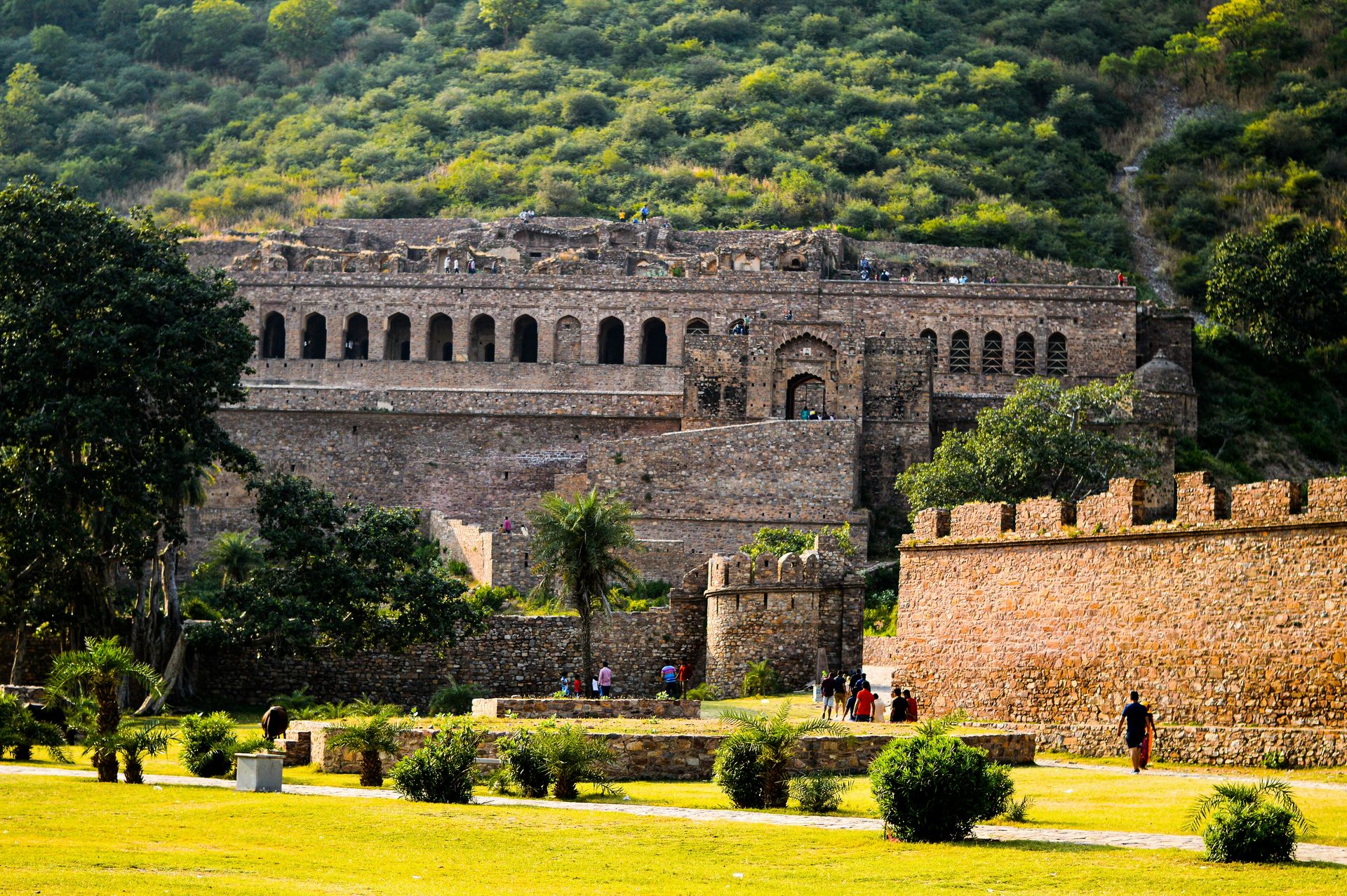
Bhangarh Fort in Rajasthan, India, was once a functioning royal residence in a settled town. In the 18th century, both the fort and its surrounding settlement stood abandoned, apparently abruptly, leaving behind empty temples and desolate market areas. The Rajasthan Tourism Office identifies it as one of the most haunted places in India. The question of why everyone left has generated two competing legends: one holds that someone placed a curse on the fort because its height was casting a shadow over their home, and the other attributes the abandonment to a love potion gone catastrophically wrong.
The details of these legends — the injured party, the nature of the offense, the mechanism of the curse — vary across retellings, as is typical of orally transmitted folklore over centuries. What does not vary is the outcome: a once-thriving settlement emptied completely and uninhabited ever since. The physical reality of Bhangarh today, with its roofless temples and vacant market stalls preserved in a kind of suspended emptiness, supports the legend’s premise that something caused everyone to leave at once.
The fort draws visitors who come specifically for the supernatural associations, and the site’s atmosphere during the day already carries the weight of its history. At night, the site is off-limits to the public, a restriction that the local authorities enforce in part because of the fort’s reputation. Documented historical abandonment, no clear mundane explanation for the departure, and a site uninhabited despite its architectural quality together make Bhangarh Fort one of the more genuinely mysterious locations on this list. The Archaeological Survey of India manages the site today, and entry is free. The gates lock before sunset and open after sunrise, an official acknowledgment of the site’s nocturnal reputation. Visitors should note that the Archaeological Survey’s management of the site has improved access and signage, making daytime visits more informative than the unguided exploration earlier visitors reported.
Irfan Bayuaji / Unsplash
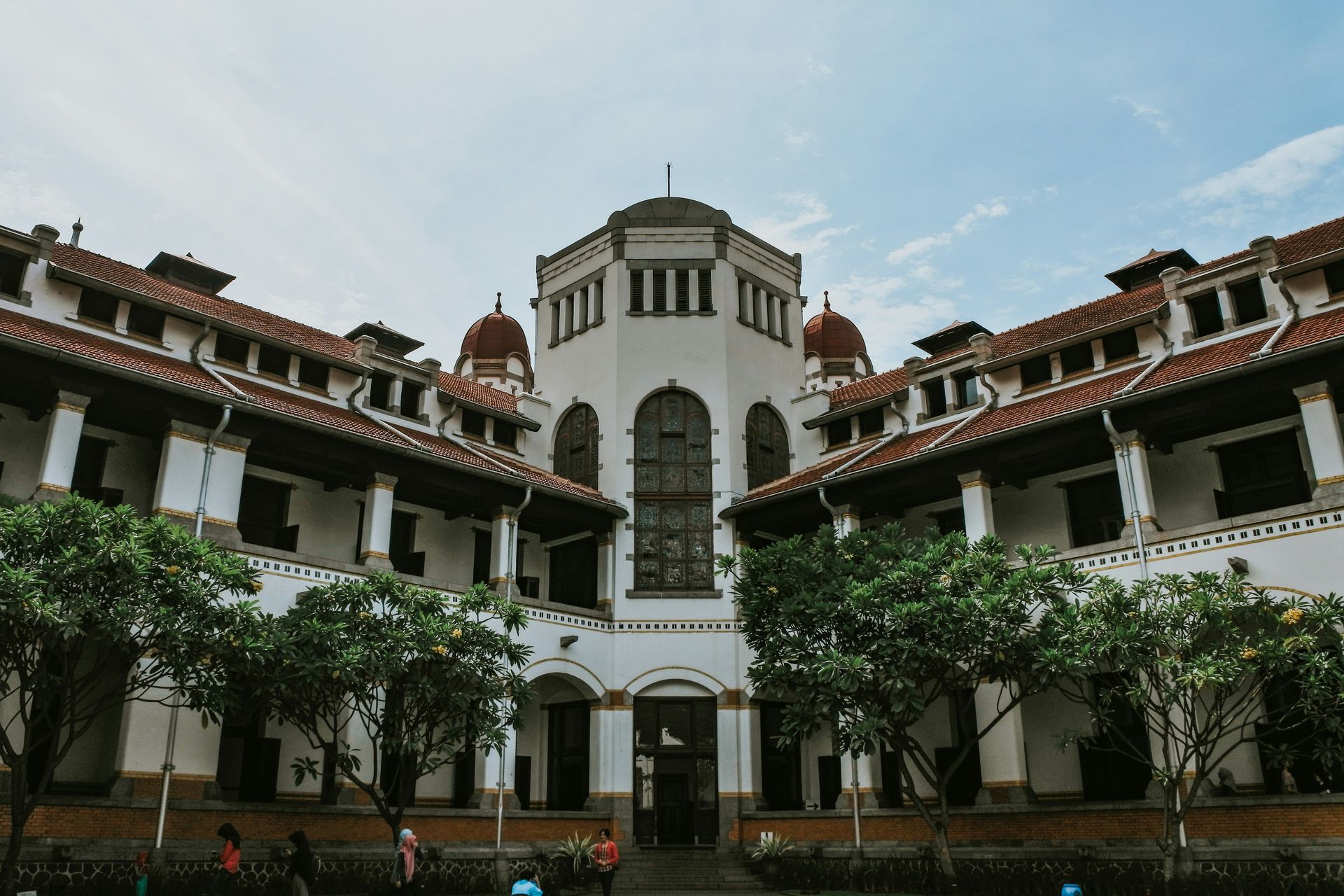
Builders erected Lawang Sewu in Semarang, Indonesia, in the early 1900s as an administrative hub for the Dutch East Indies Railway Company. The building’s name means “a thousand doors” in Javanese, a reference to the profusion of doors and similarly proportioned windows lining the facade, which create a distinctive and somewhat unsettling visual rhythm. After the Dutch colonial period ended, Japanese forces took over the building during World War II and used it as a prison. It subsequently became the site of a violent conflict between Dutch, Japanese, and Indonesian forces as the war ended and Indonesian independence approached.
One figure concentrates the building’s supernatural reputation: a young Dutch woman who died by suicide on the premises and is said to still roam the property. The specific identity of this ghost — a colonial-era European woman in a building that has undergone colonialism, occupation, and war — gives the haunting a historical charge that generic, frightening abandoned buildings do not. She appears in the context of a building that has witnessed multiple rounds of historical violence, which layers the supernatural claims over documented atrocities.
Lawang Sewu underwent restoration and now opens as a tourist attraction and historical site. The Indonesian tourism authority acknowledges its haunted reputation while also presenting the building’s architectural and historical significance. The fact that a building this famous for paranormal activity is also officially promoted as a heritage attraction reflects a pragmatic approach to the relationship between tourism and the supernatural that several Asian destinations have adopted. Lawang Sewu’s architecture is genuinely impressive beyond its ghostly associations: the symmetrical Dutch colonial building with its colonnaded facades and vast interior spaces would draw visitors on architectural merit alone. The building’s restored status also makes it more accessible than most of the sites on this list, functioning as a proper museum where the wartime history is documented alongside the architectural history.
__ drz __ / Unsplash
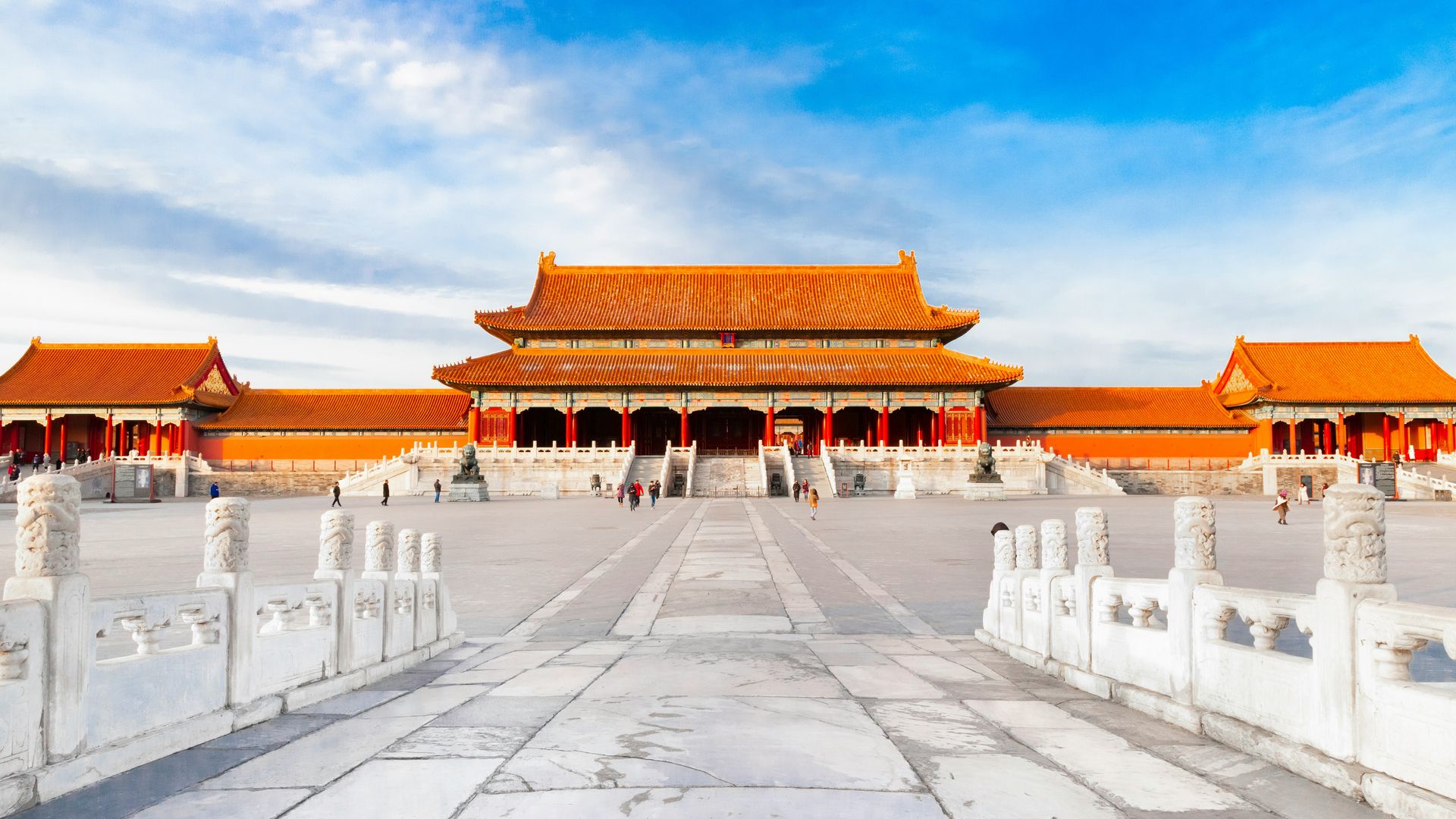
The Forbidden City in Beijing served as the residence of Chinese emperors for five centuries and is among the most visited palace complexes in the world. During daylight hours, the scale and grandeur of the site easily absorb the millions of annual visitors. At night, however, the palace closes to the public, and its emptiness after closing creates a distinct unease that the daytime crowds suppress. It is in this context that the most persistent supernatural story is set: a ghostly woman dressed in white, heard crying somewhere inside the palace, whose reports date from the 1940s.
The Forbidden City’s history justifies a certain density of residual tragedy. The palace was the center of an imperial system that involved enormous concentrations of power, political intrigue, forced servitude, and sudden death across five centuries. Consorts, concubines, servants, and courtiers lived and died within its walls in circumstances shaped by proximity to absolute power, and the historical record contains numerous accounts of violence, grief, and coercion that the physical magnificence of the building has always partially obscured.
The crying woman in white fits a specific ghost archetype common across Asian supernatural traditions: the female figure who died in circumstances of injustice or grief and whose spirit remains because the wrong was never resolved. The Forbidden City, with its vast and largely inaccessible nighttime interior, provides an appropriately resonant setting for a ghost whose defining characteristic is the sound of unresolved mourning. The Forbidden City’s sheer scale, with nearly a thousand rooms within its walls, means that most of its interior is inaccessible to visitors even during daylight hours, and the full extent of what the palace contains has never been completely documented. Tours of specific areas of the Forbidden City are available and provide access to sections not on the standard visitor route, helping orient to the scale of what the nighttime closure actually contains.
Lajmmoore / Wikimedia Commons
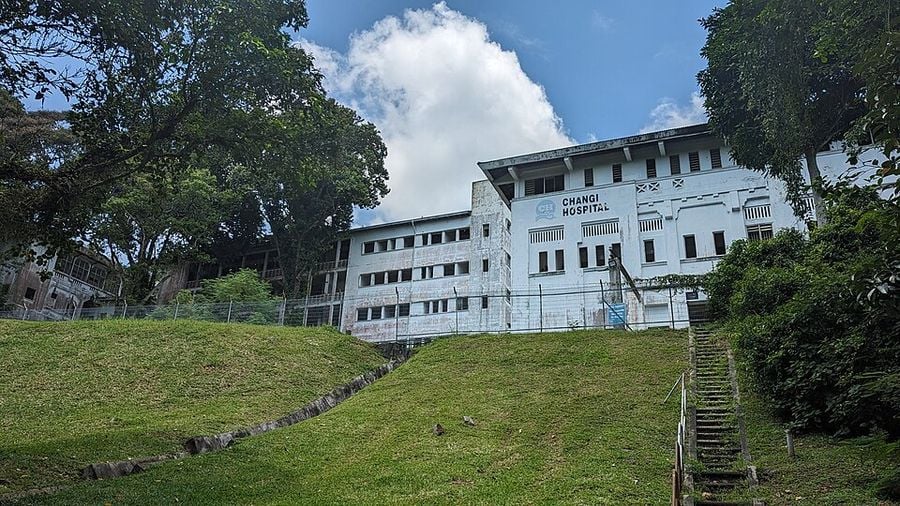
Old Changi Hospital in Singapore operated as a medical facility from 1935 to 1997, and its reputation as one of the most haunted places in the country reflects the layered tragedy of its history. During the Japanese Occupation of World War II, the hospital served as a military facility, and the ghosts associated with the building include both the spirits of former civilian patients and those of victims of the occupation. Medical mortality and wartime atrocity in the same building together produced a supernatural reputation that locals treat as well-established, not speculative.
The building’s physical state amplifies its atmosphere. Derelict hospitals produce a particular kind of unease: the visible infrastructure of medical care — wards, corridors, procedural rooms — without the clinical activity that normally fills them creates a sense of suspended purpose that visitors find deeply unsettling. Rumors of underground bunkers running beneath the hospital have never been fully confirmed or denied, and their possible existence adds a spatial dimension to the building’s mysteries.
Old Changi Hospital remains closed to the public, but people still find their way inside. The graffiti left by urban explorers documents a steady stream of visitors drawn to the building specifically because of its prohibition and reputation. The hospital’s status as an officially off-limits but persistently visited haunted site reflects a pattern common to several locations on this list: the supernatural reputation that keeps official authorities from opening the building is exactly what draws unauthorized visitors in. Singapore has announced plans for the site on multiple occasions over the years, but Old Changi Hospital remains standing and unrepurposed, its institutional fate as uncertain as its supernatural one. The area around Old Changi Hospital has seen significant development in the decades since the hospital closed, which makes the continued presence of the derelict building amid newer construction even more visually striking.
Stephen J. Boitano / Getty Images
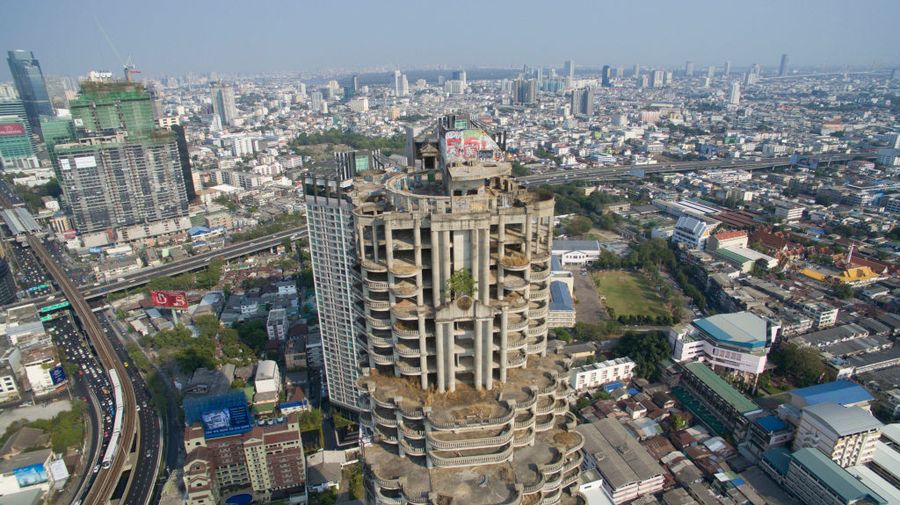
Developers designed Sathorn Unique Tower in Bangkok as a luxury residential high-rise,, and construction had progressed to approximately 80 percent completion before the 1990s financial crisis halted the project permanently. The building has stood in that incomplete state ever since: a 49-story tower with no exterior walls on the upper floors, open to the Bangkok sky, nicknamed the Ghost Tower by locals for both its spectral appearance and its supernatural reputation. At least one death has occurred on the premises, which anchors the haunted designation in documented fact, not legend alone.
The tower is officially off-limits, but the open-air upper floors have attracted a steady stream of daredevils and urban explorers willing to accept the structural risks of accessing an abandoned high-rise without exterior walls. According to local reports, the ground floor hosts a colony of stray dogs, giving the building’s lower levels a living presence that contrasts with the desolate upper stories. The building’s visibility on the Bangkok skyline makes it a public landmark despite its closed status.
Sathorn Unique Tower sits in an unusual category among the places on this list. Most haunted locations derive their reputation from historical events: wars, executions, and mysterious deaths from the distant past. The Ghost Tower’s history is recent and economically legible: a financial crisis halted construction of the building, and the incomplete structure has accumulated supernatural associations in the decades since. The building is less a site of historical tragedy than a monument to a specific historical failure, and the ghost stories that have grown around it reflect that origin. Several agencies have reportedly considered demolishing or developing the tower over the years since its construction halted, but the building remains as it was left in the 1990s, a preserved example of the financial crisis’s physical consequences visible from the Bangkok skyline that the city has neither demolished nor completed, a physical indecision that the ghost stories have filled.
Sanandreas119 / Wikimedia Commons
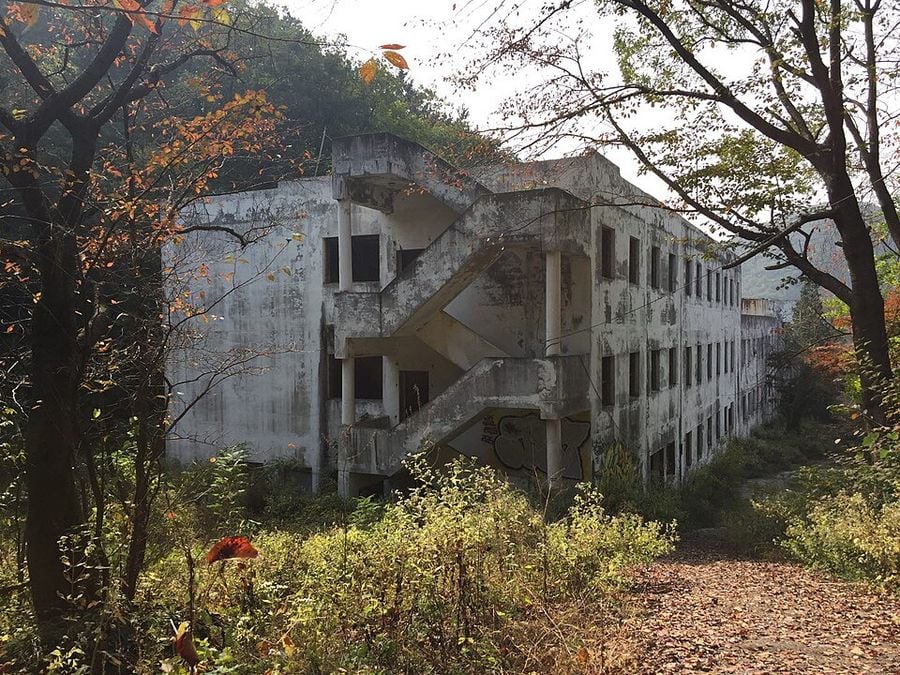
Gonjiam Psychiatric Hospital in Gyeonggi-do province, South Korea, closed in the 1990s due to problems with its sewage infrastructure. The mundane reason for the closure did not prevent the elaboration of far more dramatic explanations: legends circulated about patients dying under mysterious circumstances and doctors driven to suicide or madness by what they encountered within the building. None of these stories holds up to scrutiny, but the abandoned building provided a physical stage for their development, and the legends grew more specific and more disturbing with each retelling.
Urban explorers and paranormal enthusiasts have visited the hospital in large numbers since its closure, drawn by a reputation that the 2018 found-footage horror film Gonjiam: Haunted Asylum amplified significantly. The film became the third-most-watched horror movie in South Korean cinema history, demonstrating the extent to which the building’s reputation had permeated mainstream popular culture. The relationship between the building and the film is circular: the legends produced the film, and the film produced more visitors who have added to the legends.
The hospital building persists despite its abandonment, which is notable. Buildings of this age and notoriety in densely populated South Korea are typically cleared for redevelopment relatively quickly. The building’s continued existence as an abandoned structure in a country actively developing its urban land suggests that its supernatural reputation may have complicated practical decisions about demolition and site clearance, or that its status as a cultural landmark associated with popular horror media has given it an informal protected status. The broader abandoned hospital subgenre of Asian horror cinema owes much to the specific mythology that Gonjiam generated, and the building’s role in establishing that template gives it a cultural significance beyond its local haunted reputation. The province of Gyeonggi-do, where the hospital sits, is known as a prosperous suburban region adjacent to Seoul, which gives the abandoned hospital’s presence there a jarring quality that more remote abandoned sites do not.
Fandorine1959 / Wikimedia Commons
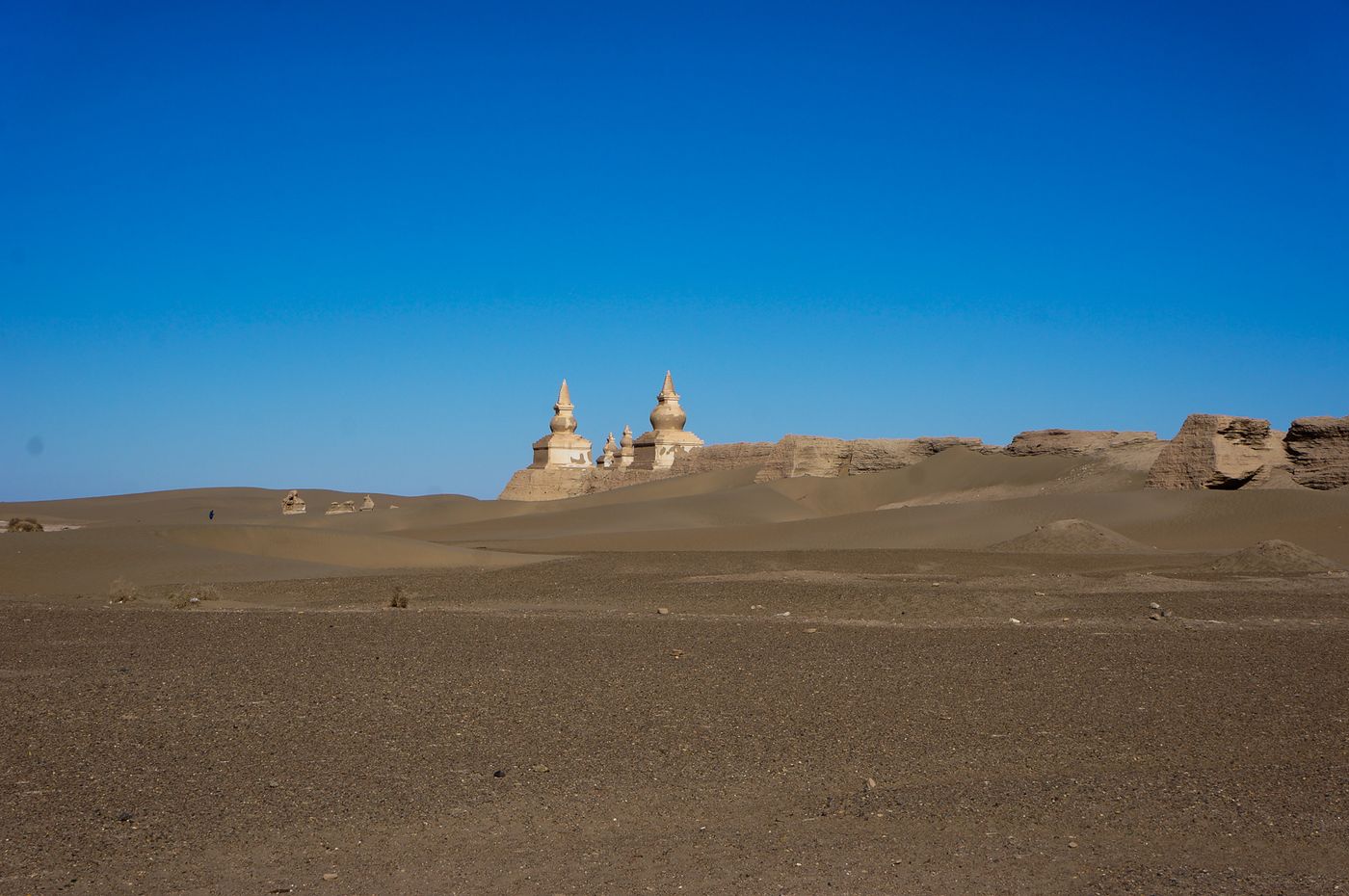
Khara Khoto in the Gobi Desert of Inner Mongolia was once a prosperous Mongolian city along the Silk Road, located at a commercially significant junction that sustained its wealth through the 13th and 14th centuries. Its end came in the 14th century when a Ming Dynasty army besieged the city and, according to historical accounts, diverted water from the nearby river to deprive the walled settlement of its water supply. The city fell, its population perished, and the site was subsequently covered by desert sand, preserving the ruins while rendering them less accessible.
Today, Khara Khoto is a remote site reachable by approximately seven hours of driving from Jiayuguan, a city in Gansu Province, and tour operators such as Silk Road China Tours run excursions to the location. The ruins rising from the desert sand carry a specific category of desolate beauty: the remains of a city deliberately destroyed, visible through the landscape that destroyed the attackers’ memory of it. Strange noises reported from the ruins and fires apparently burning without fuel have contributed to the site’s supernatural reputation.
The remoteness of Khara Khoto is both its protection and its appeal. The effort required to reach the site means visitors who make the journey are specifically motivated by the destination, not simply passing through, which gives a visit to the ruins a contemplative quality that accessible historical sites do not. Documented historical atrocity, spectacular desert landscape, and persistent supernatural reports create a destination that sits at the intersection of archaeology, history, and the paranormal in a way that few sites anywhere in the world can match. The ruins include a pagoda, residential structures, and sections of the original city wall, all emerging from the desert surface in varying states of preservation, giving the site a visually dramatic quality even in purely archaeological terms.
Vladimir Haltakov / Unsplash
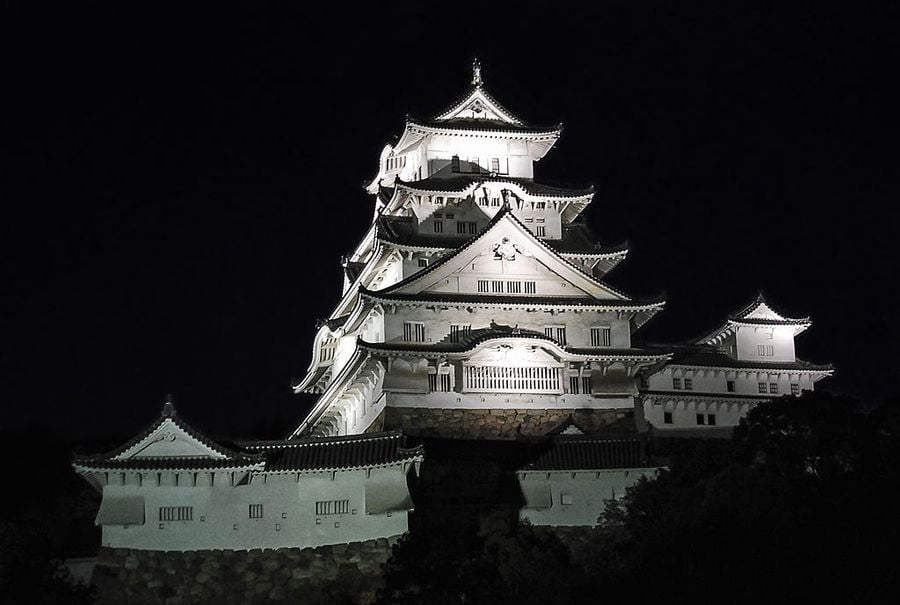
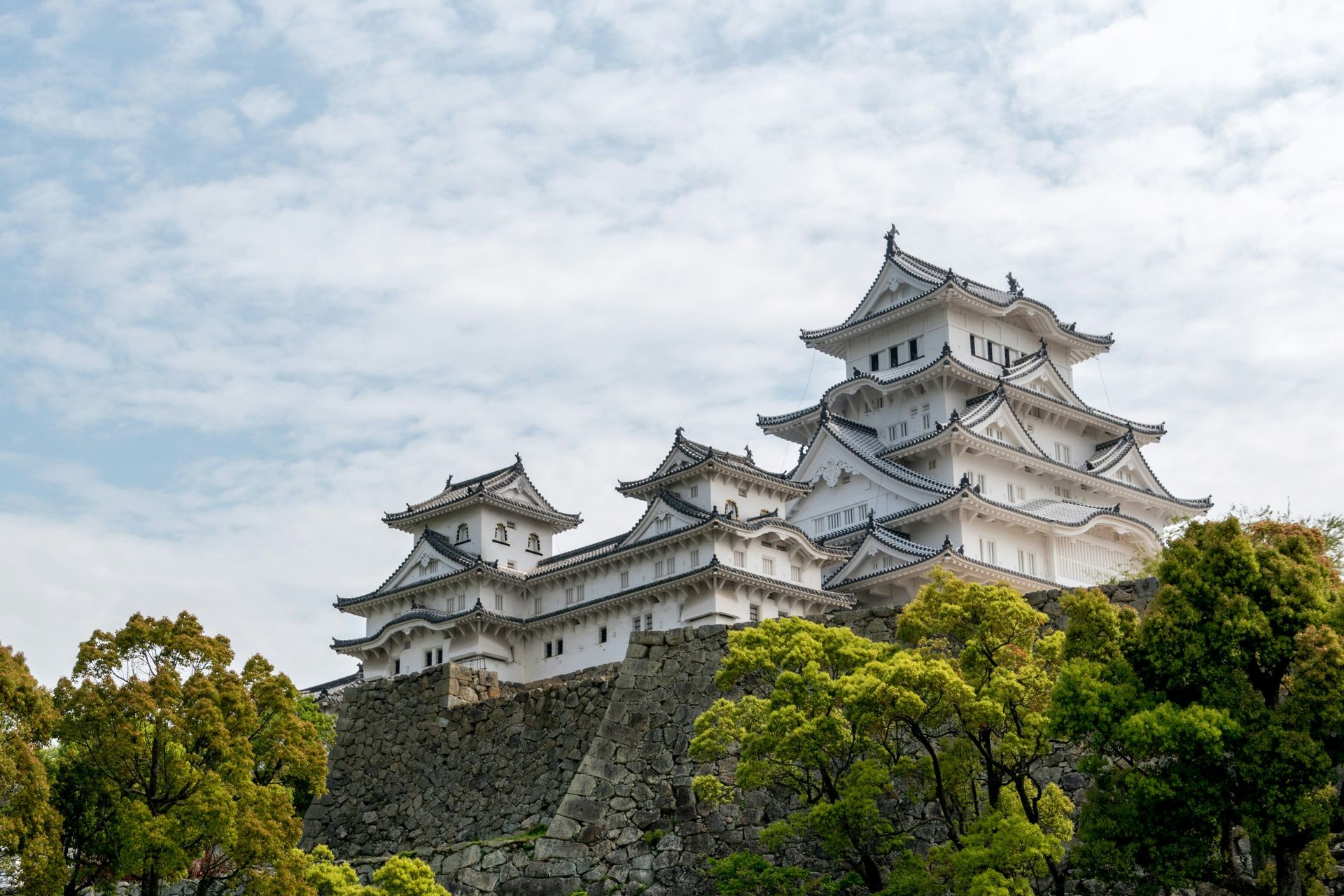
Himeji Castle, near Kobe, dates from 1333 and ranks among the finest surviving examples of classical Japanese castle architecture. It is a major tourist attraction that draws large numbers of visitors for its architectural and historical significance. But the castle’s international recognition extends beyond its architecture: it is the site of a well associated with the legend of Okiku, a servant girl who was falsely accused of a crime and dove to her death in it. Okiku’s ghost is said to appear on the castle grounds, wearing a white dress and her long black hair hanging down.
The well is still visible during a visit to the castle, providing the legend with a specific physical anchor. Most ghost stories attach to buildings or rooms in a general way, but the Okiku story anchors to a specific architectural feature that visitors can stand beside and examine. The legend of Okiku informed the plot of Ringu, the 1998 Japanese horror film whose central image is a girl emerging from a well, which in turn led directly to The Ring, one of the highest-grossing horror films in American cinema history.
The connection between a specific Japanese historical legend, a specific well in a specific medieval castle, and one of the most commercially successful horror franchises in global cinema history gives Himeji Castle a cultural significance that goes well beyond its considerable architectural merit. For visitors interested in the relationship between Japanese folklore and Japanese horror cinema, the castle is as close to a primary source as a physical location can be. Himeji Castle also holds a UNESCO World Heritage designation, giving it dual status as a site of global architectural significance and a site of global horror mythology significance, which is an unusual pairing even by the standards of this list. Visitors with an interest in both architecture and folklore will find the castle rewarding on both fronts, and the two together give a visit considerably more substance than either would provide alone.
Nissip / Wikimedia Commons
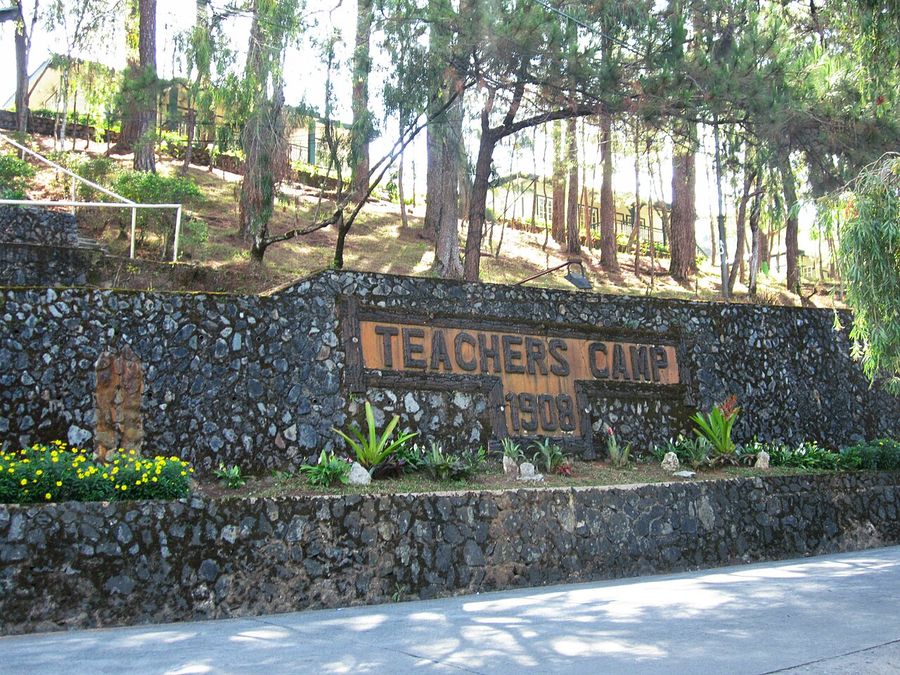
Teachers Camp in Baguio, in the Philippine highlands, was established by American colonial authorities in the early 1900s as a training facility for teachers. It continues to serve as an active venue for events and retreats, giving it an ongoing institutional life that most locations on this list lack. During World War II, Japanese forces occupied the camp and used it to hold prisoners, which introduced a layer of wartime suffering to a site that had been built for an entirely different purpose.
The supernatural reports associated with Teachers Camp reflect the site's layered history. A headless priest, a woman in white who roams the grounds, and a blood-covered woman reported to be standing over sleeping guests at night are among the specific apparitions that visitors and staff have described over the years. The specificity of these figures — each associated with a particular appearance, location, and encounter context — reflects a haunted reputation that has developed in sufficient detail to suggest a well-established local tradition of supernatural reporting.
The fact that Teachers Camp continues to operate as a functioning venue for retreats and events while simultaneously maintaining one of the most developed haunted reputations in the Philippines creates a specific dynamic: visitors arrive for conferences and training programs and encounter ghost stories that the site’s own history substantiates. Educational purpose, wartime trauma, active present use, and persistent supernatural accounts make Teacher’s Camp one of the more unusual entries on this list among places where the haunted reputation and the ongoing practical function exist in direct parallel. Baguio itself is worth noting as a context: the city sits at more than 1,500 meters in elevation in the Cordillera mountains, and its cooler climate and mountain setting give it an atmosphere that naturally lends itself to ghost stories, regardless of specific history. The camp’s continued operation as a venue also means it maintains a staff presence and regular visitors who contribute to the ongoing documentation of ghost sightings.
Chongkian / Wikimedia Commons
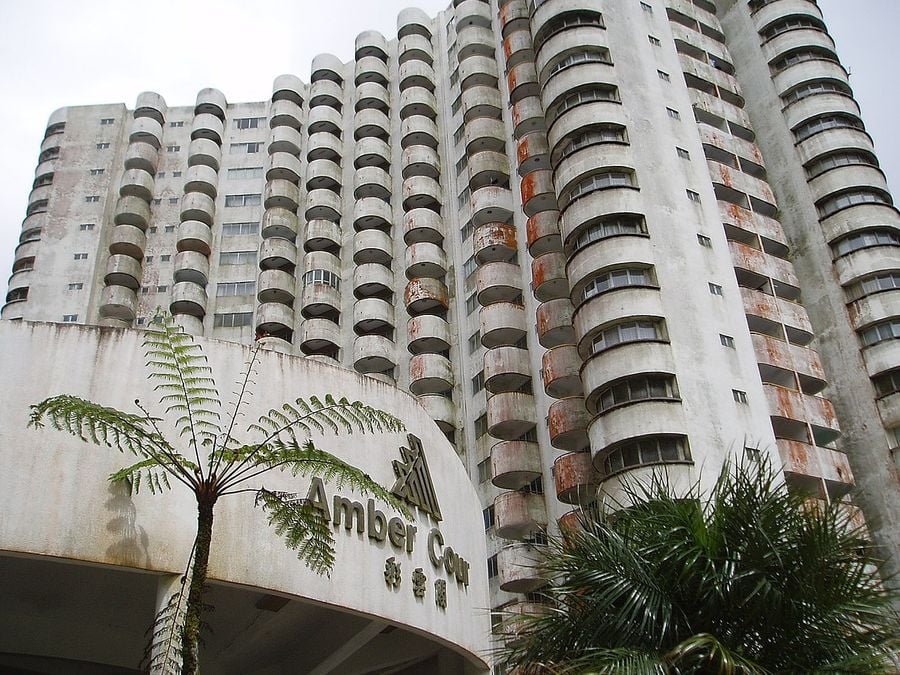
Amber Court in Genting Highlands, Malaysia, was built as a hotel in the 1990s and abandoned shortly after its opening, when the same regional financial crisis that halted Bangkok’s Ghost Tower also stalled this project. During the period of abandonment, algae colonized the building’s exterior, giving the facade a green, deteriorating appearance that visitors found genuinely sinister and that established the physical basis for the building’s haunted reputation. A woman has been repeatedly reported walking through the building and vanishing without a visible exit.
Workers cleaned, renovated, and reopened the building as a residential apartment complex. The ghost stories, however, have persisted through the renovation and into the building’s present life as occupied housing. The current residents live with a supernatural reputation the building acquired during its abandoned phase, a reputation the renovation apparently did not clear. Genting Highlands itself is a resort town built around a 26-acre theme park, which gives Amber Court’s haunted reputation an incongruous commercial context: ghost stories in a leisure destination.
The persistence of ghost reports after renovation and reoccupation is not unusual in Asian supernatural traditions, where the ghost’s attachment lies in the location, not in the structure's physical state. From that perspective, cleaning the algae off the facade and converting the floors to apartments does not alter the conditions that produced the haunting. The current residents’ noted unhappiness with the ghost stories’ persistence reflects the practical problem of living in a building whose reputation took shape during the gap between construction and inhabitation. The resort context of Genting Highlands is also worth noting: the juxtaposition of a theme park, casino hotels, and a building with one of Malaysia’s most persistent haunted reputations within a single resort town is itself a reflection of how Southeast Asian tourism has integrated the supernatural into commercial entertainment, where ghost tourism and theme park tourism occupy the same destination without apparent contradiction.
