
The most iconic dishes you must try in Thailand
From a northern laab with ten-plus spices served at Chiang Mai ceremonies to a coastal rice dish born on Chanthaburi fishing boats
Alexandra Tran / Unsplash
Thai food, as it exists outside Thailand, is a simplified version of one of the world’s most regionally diverse culinary traditions. The pad thai and green curry that appear on Thai restaurant menus in every major city on earth represent a small slice of a cuisine whose flavors, ingredients, and cooking methods shift dramatically between the mountainous north, the coconut-rich south, the palace-influenced center, the fermented-fish culture of the northeastern Isan region, and the seafood-centric eastern seaboard. A traveler who eats only the internationally exported standards during a visit to Thailand will miss the dishes that Thai people themselves consider their most important, most culturally embedded, and most worth eating.
The regional specificity of Thai food is inseparable from Thai geography and history. The north’s proximity to Yunnan province in China and the Mekong River basin gives Chiang Mai’s cuisine its use of dried spices and a complexity of herb blends that the central plains tradition does not replicate. The south’s Muslim communities, concentrated along the Malay border and the Andaman coast, have embedded Malay and Indian culinary influences into the local food culture, creating dishes the Buddhist north has never developed. The northeast, the Isan plateau that borders Laos, shares a culinary identity with its Laotian neighbors, whose fermented fish sauce, pla rah, flavors dishes that the tourist menus of Bangkok rarely feature with the same intensity as the region’s own cooks apply.
The five dishes below appear in Travel + Leisure, each representing one of Thailand’s distinct culinary regions. Recommendations come from chef Phanuphon “Black” Bulsuwan of Blackitch Artisan Kitchen in Chiang Mai, chef Dylan Eitharong of Haawm in Bangkok, chef Weerawat “Num” Triyasenawat of Samuay and Sons in Udon Thani, and celebrity chef Mom Luang Sirichalerm Svasti, known as Chef McDang.
1. Northern laab blends 10-plus spices for special occasions
Alpha / Flickr (CC BY-SA 2.0)
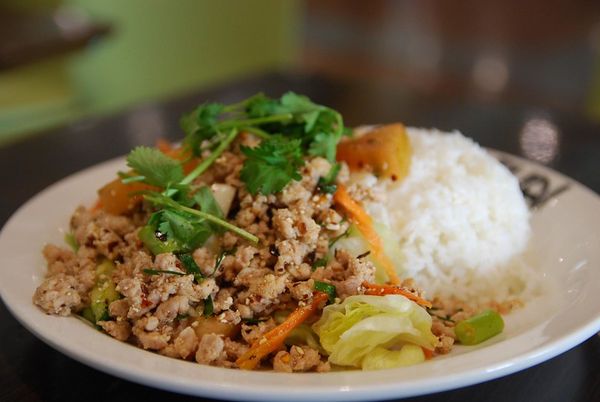
Laab, the minced meat salad that appears on Thai menus around the world, exists in two substantially different regional forms that share a name and a general category while delivering entirely different eating experiences. The version familiar to most international diners is the northeastern Isan style: fiery, tart, and scented with toasted rice powder, its heat and acidity are assertive and immediate. The northern Chiang Mai style, according to chef Phanuphon “Black” Bulsuwan of Blackitch Artisan Kitchen, requires more attention to detail: the meat is chopped into a finer mince, and more than 10 spices and herbs go into the seasoning blend, including cinnamon and the makhwaen, an ash seed whose flavor resembles Sichuan peppercorn in its numbing, citrusy quality.
The cultural context of northern laab gives the dish a weight that its appearance on a lunch menu does not immediately suggest. For generations, hunting for the meat, traditionally wild boar or buffalo, was a rite of passage for young men in the region, and the dish is served only on special occasions, at weddings, at funerals, and at the ceremonial gatherings where community bonds are publicly affirmed. Eating northern laab at a restaurant that takes it seriously is, in this context, eating a dish whose social function and ceremonial history are encoded in its preparation in ways that the casual dining version cannot fully represent.
Bulsuwan recommends Laab Ton Koi in Chiang Mai as the restaurant that best represents northern tradition, where the spice blend’s complexity gives the dish a depth that the simpler Isan version does not. The finer mince and the more elaborate spice composition give northern laab a more nuanced flavor profile that rewards paying attention to each element of the preparation, which is the specific pleasure of a dish whose sophistication has been developed over generations of ceremonial repetition, not the commercial speed imposed by tourism demand on restaurant kitchens.
2. Southern Thailand’s khao yum carries healing herb origins
Teerachai Thaveesuk / Getty Images
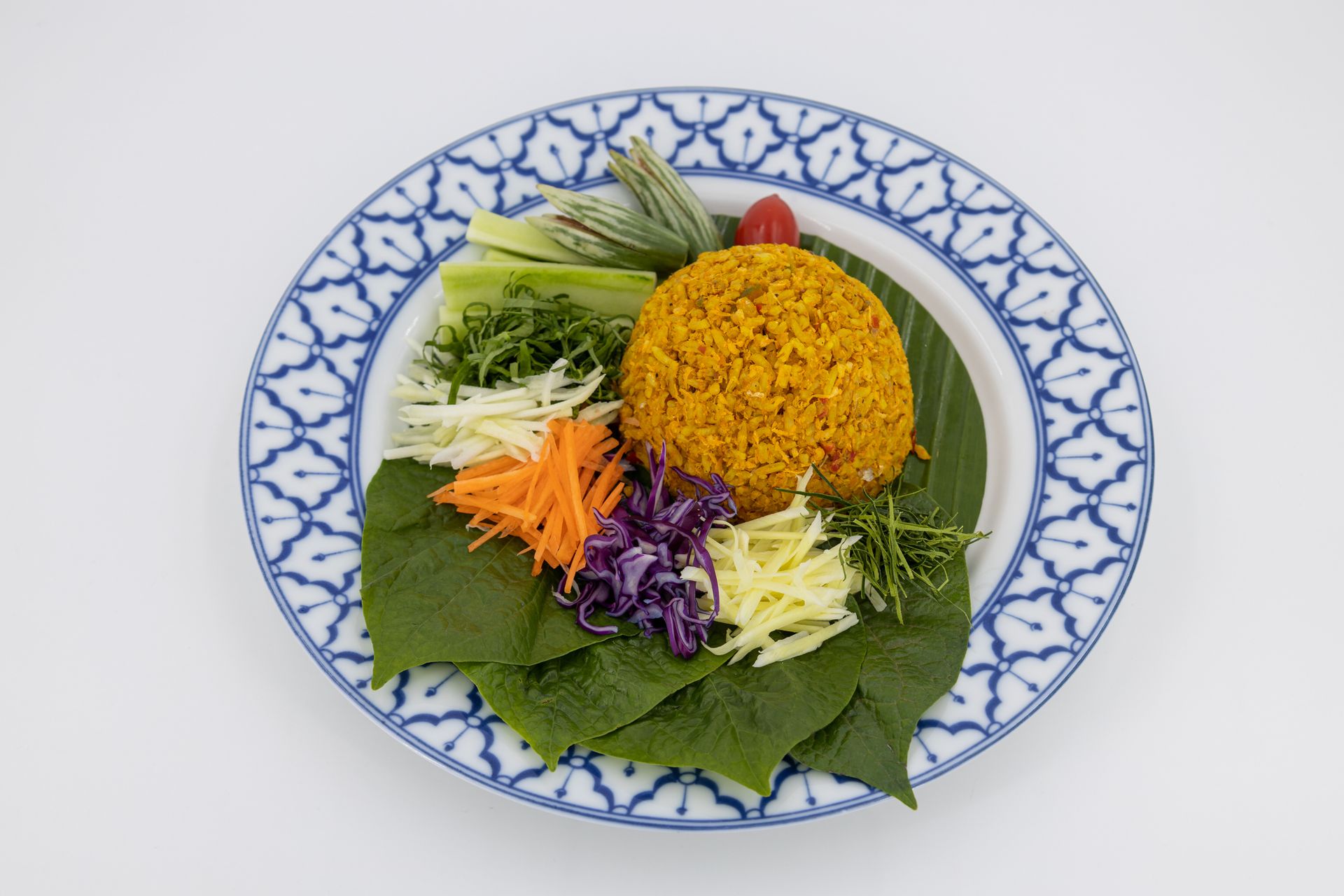
Khao yum is an aromatic, herb-filled rice salad from southern Thailand, seasoned with nam budu, a fermented fish sauce specific to the southern region whose flavor differs from that of the fish sauces used elsewhere in the country. The dish’s origin story, preserved in culinary legend, involves a Muslim ruler who observed his subjects breaking Ramadan fasts with meat and suffering the digestive consequences. He asked his doctor to create a healing culinary response, and the result incorporated moringa flowers, Indian mulberry leaves, and other ingredients understood within the traditional herbal medicine system as restorative. Khao yum was the answer: a dish built around ingredients selected first for their healing properties and second for their flavor, though the two qualities turned out to align well.
The southern Thai culinary tradition that khao yum belongs to reflects the region’s Muslim majority along the Malay border and its specific cultural history as a meeting point of Thai, Malay, and South Asian influences. The use of nam budu as a seasoning, distinct from the central and northern pla rah and the standard Thai fish sauce, gives the southern dishes their specific flavor identity, and khao yum’s aromatic herb component, which varies by cook and by season, gives the dish a botanical complexity that rice salads made with simpler dressings do not approach.
Khao yum has crossed the regional boundary into Bangkok’s fine dining scene, appearing on the menu at Sorn, the two-Michelin-starred restaurant in Bangkok that has built its reputation on southern Thai cuisine executed at the highest technical level. The dish’s presence at Sorn gives khao yum a fine dining context alongside its street-food and home-cooking origins, which illustrates the movement of regional Thai food into the contemporary Bangkok restaurant scene that has made the capital one of the most exciting food cities in the world for travelers interested in understanding Thai cuisine beyond its international export versions. Sorn’s existence as a destination for the dish also makes khao yum accessible to visitors whose Thailand itinerary does not extend south, though the more complete context of the dish requires the southern Thai environment that produced it.
3. Massaman curry emerged from the 17th-century royal palace
Gu Ko / Pexels
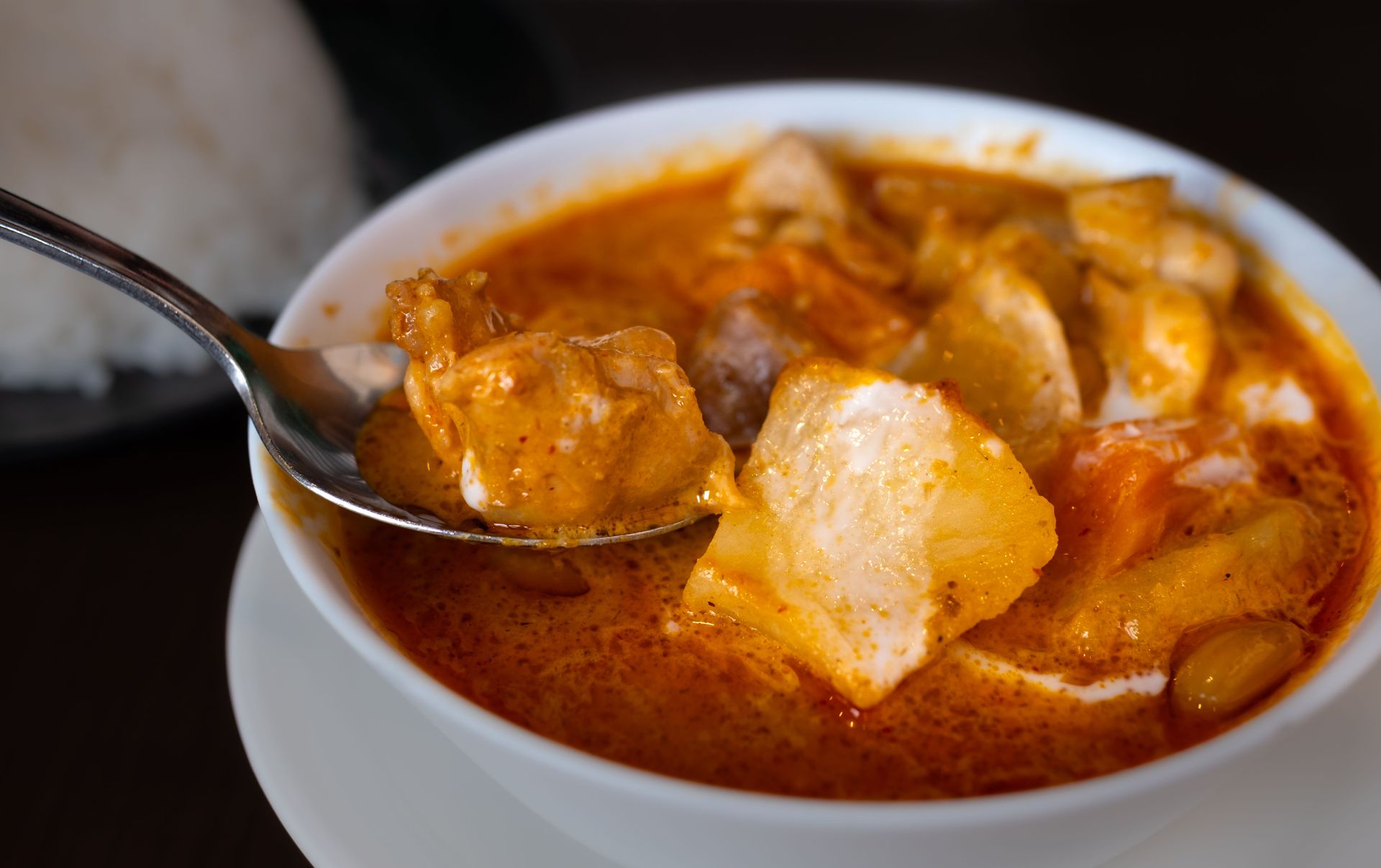
Massaman curry is Thai food’s most globally popular dish and also its most specifically un-Thai, a quality that chef Dylan Eitharong of Bangkok’s Haawm identifies directly: it does not taste like a Thai curry, he says, because most Thai curries rely on fresh herbs while massaman is built on dried spices. The distinction reflects the dish’s origin. Developed in the kitchens of the Thai royal palace in the 17th century, massaman arrived through the Persian and Indian traders who traveled the maritime routes of the Gulf of Thailand, bringing nutmeg, bay leaves, mace, almonds, and raisins to a cuisine that had not previously used them. The royal palace kitchen absorbed these ingredients and produced a curry whose flavor profile bridges two culinary traditions in a form that neither the Persian nor the Thai kitchen would have produced independently.
The contemporary massaman has evolved from the original palace version: coconut milk and peanuts appear in most modern preparations alongside potatoes, and the raisins and almonds of the original have largely disappeared from the commercial recipe, though they survive in the most traditional kitchen versions. The spiced curry paste at the dish’s core retains the character established by the dried-spice tradition, and the velvety coconut milk gives the curry the richness and body that make it the most accessible Thai curry for palates unfamiliar with the sharper freshness of the central Thai green and red curries.
Eitharong goes to Yommana Mutton Shop in Bangkok when he craves massaman, which serves the dish with mutton in a version that reflects one of the curry’s historical forms: the Islamic dietary law followed by the Persian traders who brought the dish’s spicing meant that the original massaman was made without pork, and mutton remains the most historically appropriate protein for the preparation. Eating massaman at a Bangkok specialist gives the visitor the dish in a version that the tourist-facing restaurant version, which typically uses chicken or beef, does not deliver with the same depth.
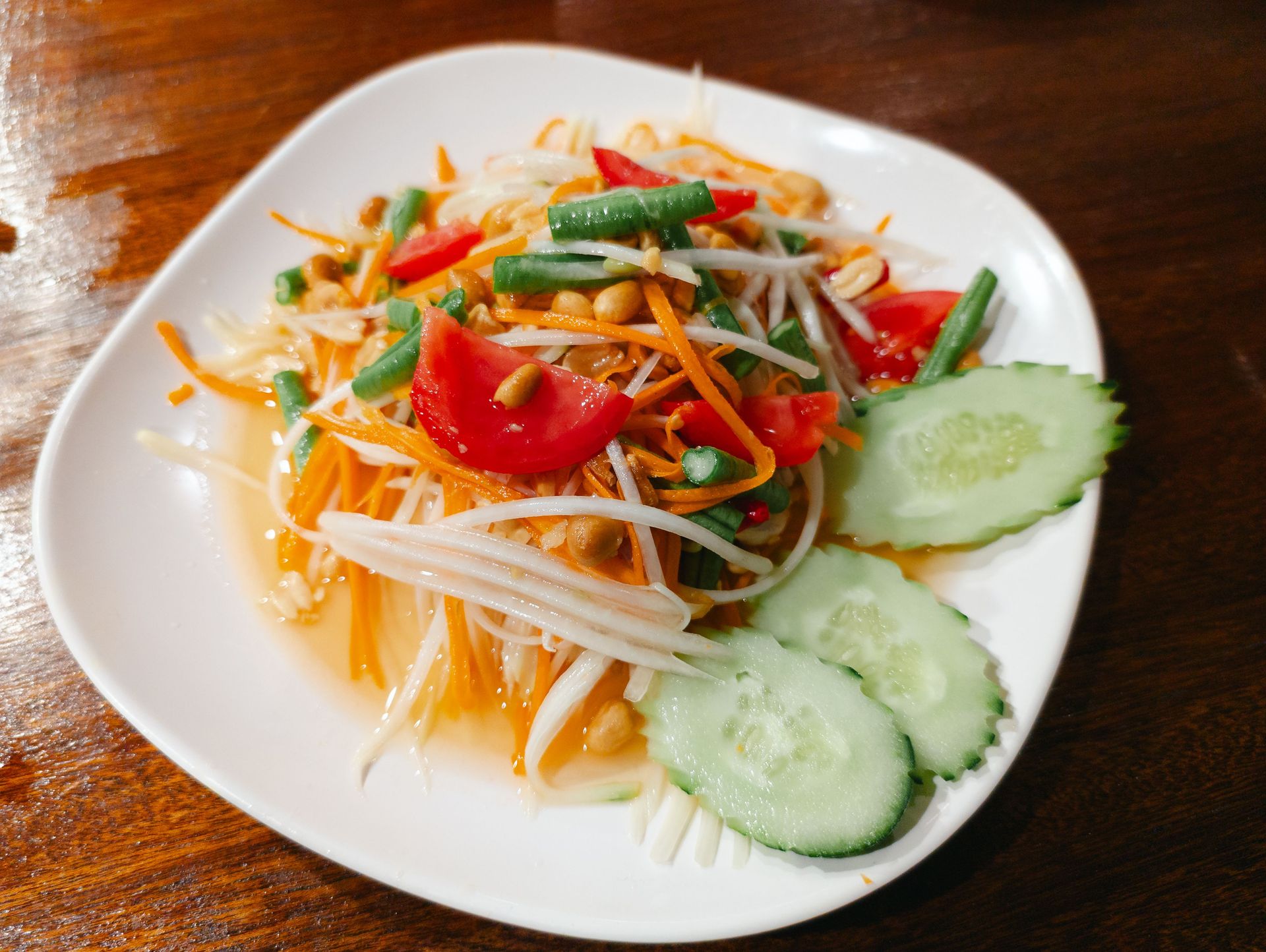
4. Som tum pla rah from Isan leads with fermented fish sauce
Markus Winkler / Pexels
Som tum, the green papaya salad that ranks among the most internationally recognized Thai dishes, is familiar to most visitors in its lighter, tourist-menu version: lime juice, dried shrimp, peanuts, and chili dressing, with shredded green papaya in a balance of sour, salty, sweet, and hot. Som tum pla rah, the Isan version rooted in the northeastern region’s food culture, replaces or heavily supplements the lime juice with pla rah, the fermented fish sauce whose funky, complex, deeply savory flavor gives Isan cuisine its defining character. The result is a dish that shares the structure of the familiar green papaya salad while delivering a completely different flavor experience.
Chef Weerawat “Num” Triyasenawat of Samuay and Sons in Udon Thani, the northeastern city that serves as the Isan region’s gastronomic center, prefers his som tum heavy on the pla rah and light on the lime, which gives the dish its most distinctively Isan flavor. The fermented fish sauce’s depth and funk are not a background note in this version, but the dominant flavor around which the papaya’s mild, slightly vegetal character and the chili’s heat are organized. Som tum pla rah can also be made from any sour fruit, giving cooks flexibility in the primary ingredient while the pla rah remains constant.
Triyasenawat’s recommended destinations for som tum pla rah are Som Tum Benjang and Som Tum Kin Lawe Ruai, both in Udon Thani, where the dish is made for the community that eats it daily and whose flavor calibration reflects local taste. The Isan region’s food culture has a strong Laotian dimension that reflects the cultural continuity across the border, and pla rah is as central to Laotian cooking as it is to Isan Thai. Eating som tum pla rah in Udon Thani gives the traveler the dish in the context of the culture that developed it, with the funk and the fermentation at full intensity. The northeast’s food culture rewards the traveler who arrives willing to eat as the locals do, ordering the most pah-ran-forward versions and discovering why fermented fish sauce is not a flavoring note in Isan cuisine but its defining ingredient.
5. Khao kluk prik kluea started on Chanthaburi fishing boats
Kelvin Zyteng / Unsplash
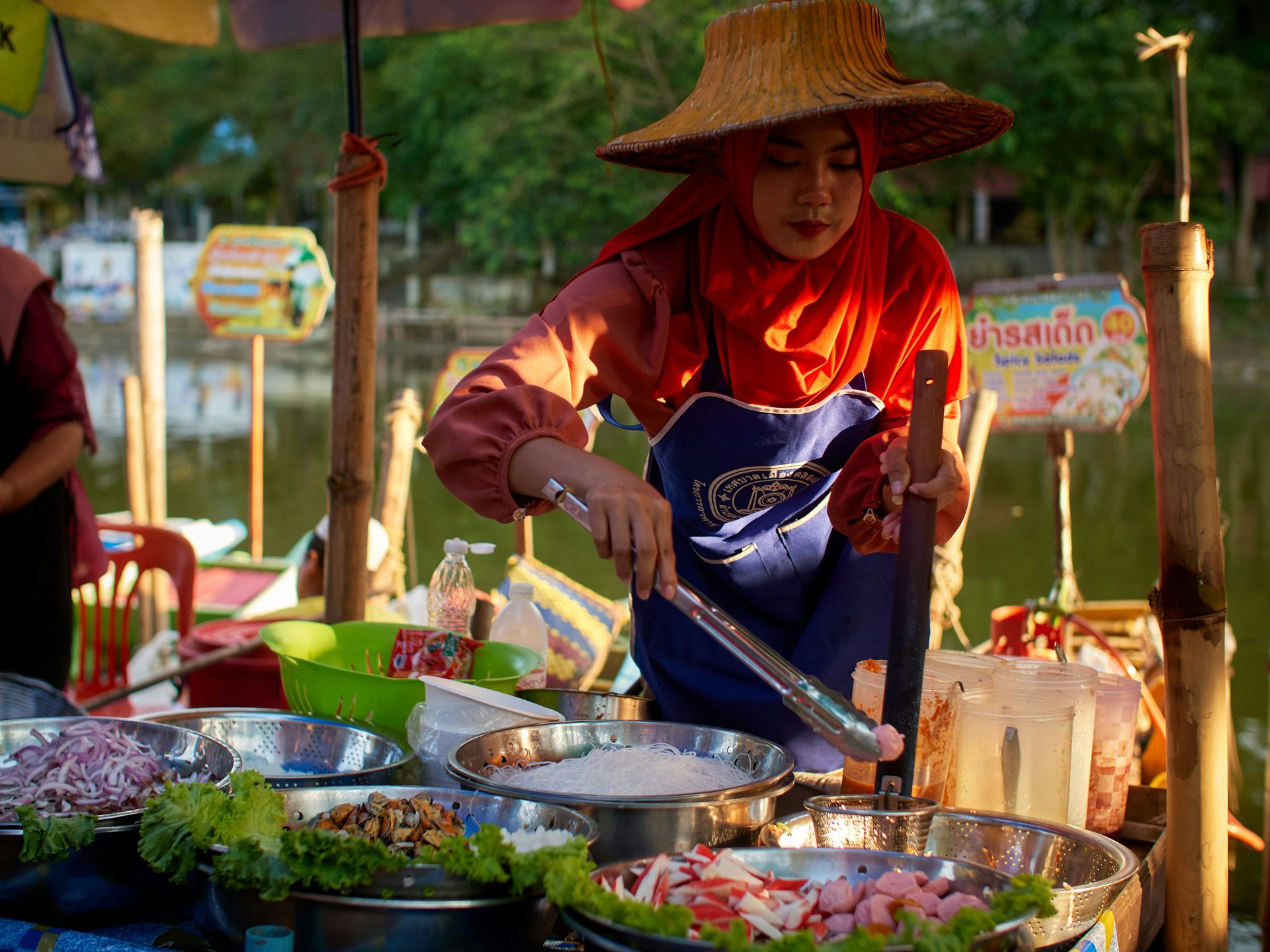
Khao kluk prik kluea, the rice-and-seafood dish from the coastal town of Chanthaburi on Thailand’s eastern seaboard, has an origin story tied to the practical realities of life at sea. Local fishermen, unable to cook on their boats, began pouring prik kluea, a sauce of fish stock, chiles, and lime juice, over the day’s catch to cure it through the acid and salt of the mixture. Back on shore, they mixed the cured seafood with rice, and the combination became a fixture of the region’s food culture sometime around the turn of the 20th century. Celebrity chef Mom Luang Sirichalerm Svasti, known as Chef McDang, describes it as an example of Thai ingenuity: a cooking method born of practical constraint producing a dish whose flavor logic is now considered one of the eastern seaboard’s defining culinary contributions.
Chanthaburi itself is a town that most international visitors to Thailand pass through without stopping, which makes its food culture one of the country’s more genuinely off-the-beaten-path discoveries for the traveler who deliberately seeks it out. The eastern seaboard is home to many of Thailand’s fruit farmers and fishermen, and the freshness of the seafood available in Chanthaburi’s markets gives khao kluk prik kluea its primary quality advantage: the curing sauce works on fish that arrived from the sea that day, which gives the finished dish a clean, bright seafood flavor that the same preparation with less fresh fish does not produce.
Chef McDang recommends the Nampu Night Market in downtown Chanthaburi as the best place to try the dish, where the market setting gives the dining experience its appropriate context: a street-food environment in a working coastal town, surrounded by the produce and seafood markets that supply the region’s restaurants and home kitchens. The eastern seaboard’s relative obscurity on the international food travel circuit, compared to the northern and southern Thai food destinations, gives Chanthaburi a quality of discovery for the dedicated food traveler who has already covered the more prominent stops on the Thai culinary map.