From a Connecticut inn ending a 100-year hotel drought to a Montana wilderness resort with a private gondola and a butler for every guest
Credit: Snake River Sporting Club
American hospitality keeps raising its own bar. The properties opening across the country in 2025 and 2026 reflect a range of regional identities: the white-painted colonial architecture of northwest Connecticut, the frontier-inflected mountain towns of western Montana, the historic neighborhood fabric of coastal South Carolina, the private wilderness of rural Georgia, and the luxury resort corridor of Wyoming’s Jackson Hole. Travel + Leisure editors and reporters visited and reviewed each property on this list, assessing them as part of the magazine’s 2026 It List. The through-line across all six is a conviction that American travel does not require leaving the country to feel genuinely transported: the right property, in the right landscape, can produce the sense of arrival that international travel has historically claimed as its exclusive territory.
The range of formats represented here is as significant as the range of locations. A 31-key historic house in a small Connecticut town operates on entirely different logic from a 240-acre Montana wilderness resort with private gondola access to ski terrain. A rooftop bar and residential-style suites in Charleston share little with four all-inclusive cabins on a Georgia family estate that has been a cattle ranch, a hunting preserve, and a working farm. What unites them is editorial judgment: each property earned its inclusion by delivering an experience that T+L’s reporters found memorable and worth recommending.
These six properties come from Travel + Leisure’s 2026 It List of the best new resorts in the United States, which spans six states and a diverse range of property formats, landscapes, and price points from a 31-key Connecticut inn to a 240-acre Montana wilderness resort, with two Georgia properties, one Wyoming, and one South Carolina, and one Wyoming across the full geographic range in between.
Credit: Belden House
Belden House and Mews in Litchfield, Connecticut, opened in spring 2025 as the town's first luxury hotel in over 100 years. The 31-key property is on a row of white clapboard homes, minutes from the town center, which is on the National Register of Historic Places. Two hours from New York City, Litchfield is a well-established destination for the sophisticated New England weekend, surrounded by hundreds of miles of hiking trails and classic inland landscapes. The hotel’s location in that context — discreet, residential, historically-scaled — reflects a deliberate aesthetic choice about what kind of building belongs in a town such as this one.
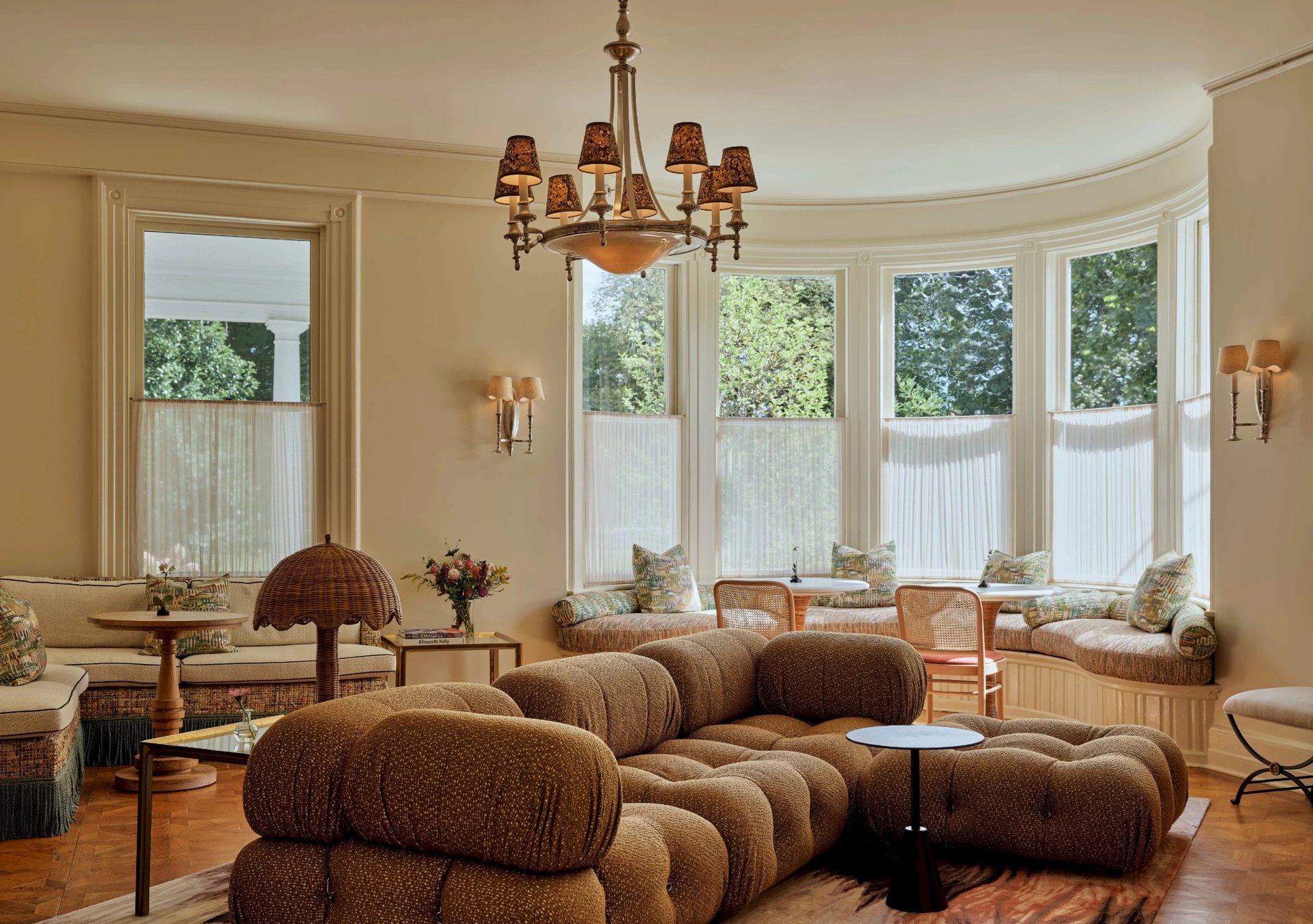
Champalimaud Design transformed the interior of the 1888 house, where its founder, Alexandra Champalimaud, lives in Litchfield. The firm preserved the building’s original architectural details: fireplaces, chandeliers, sconces, and woodwork all remain, layered with custom wallcoverings, striped fabrics, and warm velvets that bring the spaces forward without erasing what was already there. The public rooms are the original dining and living rooms, with bay windows that fill the spaces with natural light throughout the day. A 50-foot pool and manicured gardens extend the experience to the grounds.
Chef Tyler Heckman sources the kitchen from nearby farms, orchards, and Connecticut’s Atlantic waters, giving the food a regional specificity that matches the building’s commitment to its place. The electric green bar is the standout interior moment in the building, and the spa occupies a tiled space that the T+L reviewer describes as a masterpiece. For visitors planning a long weekend in Litchfield County — fresh air, local food, walking trails, historic architecture — Belden House and Mews serves as a proper base that the town has lacked for over a century. The T+L reviewer notes that Litchfield County’s food scene, walking trails, and historic architecture all reward the longer stay that the hotel now makes fully viable for the first time in the modern era.
Credit: Larch House
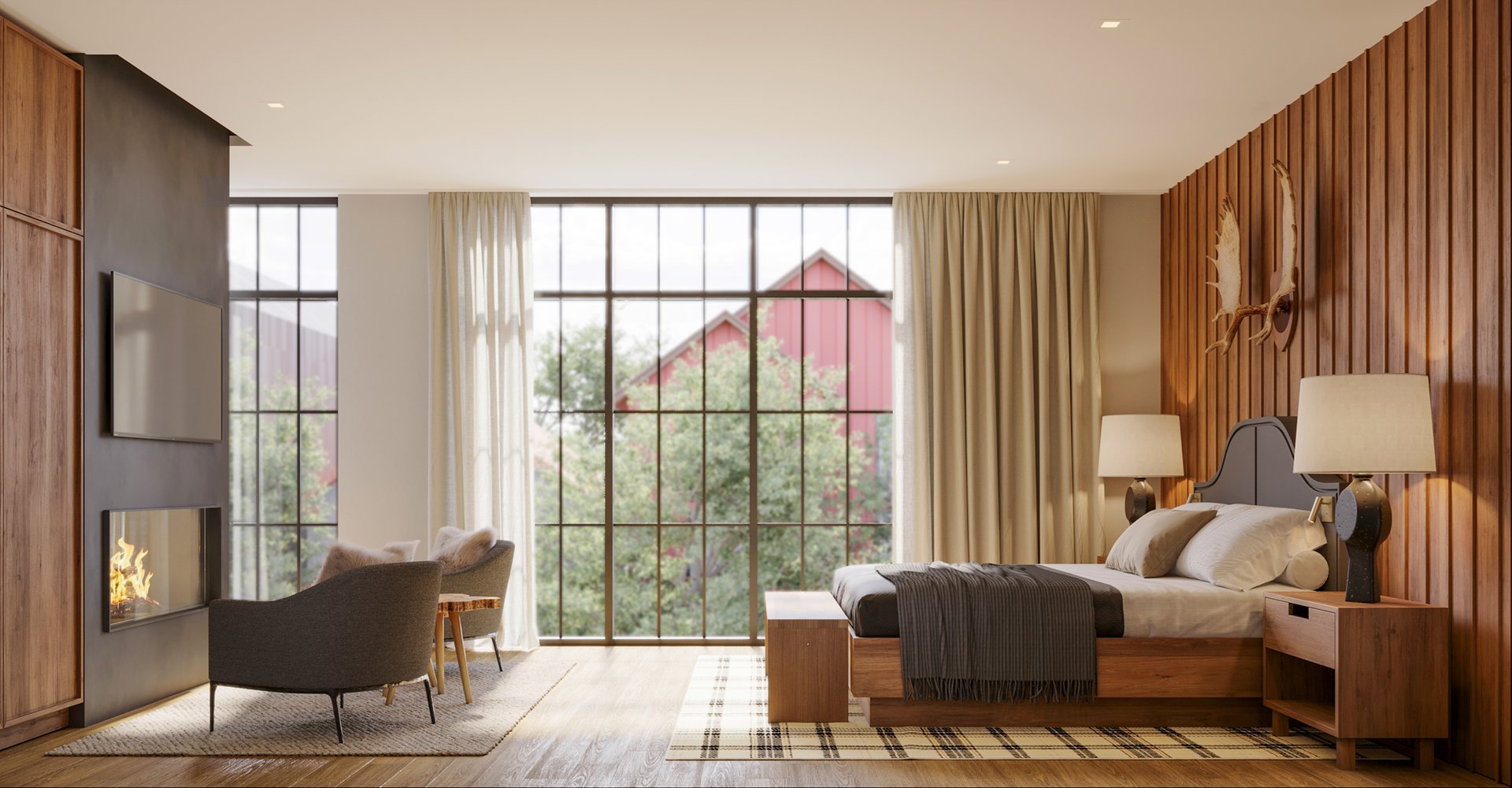
Larch House in Whitefish, Montana, is by the architecture firm Olson Kundig and comprises 39 guest rooms spread across 10 standalone buildings arranged around a central courtyard with a fire pit. The open-campus layout gives the 39-key property a physical character closer to a compound than to a traditional hotel, and the recovered moose antlers placed in every guest room anchor the frontier aesthetic that the precise modern geometry of the Olson Kundig design otherwise works against. The tension between those two sensibilities is deliberate and produces an interior environment that neither pure modernism nor pure romanticism would achieve.
Whitefish is a small mountain town of under 10,000 people, and Larch House sits in its downtown core within walking distance of bakeries, restaurants, bars, and shops. In summer, the surrounding Rocky Mountain landscape offers mountain biking, fly fishing, and river rafting. In winter, Whitefish Mountain Resort’s slopes are accessible for skiing and snowboarding. The hotel’s signature restaurant, Enga, serves alpine-inspired dishes, including an elk chop, and features a cocktail program highlighting local Spotted Bear gin. The T+L reviewer found the restaurant drawing a mix of hotel guests and local Montanans on the night of their visit, with the cocktail menu providing sufficient reason to remain until closing.
The Olson Kundig firm’s involvement gives Larch House a design pedigree that the property’s practical amenities substantiate. The towering lobby hearth is the kind of architectural gesture that the firm is known for, and it sets the tone for a property that takes its design commitments seriously at the scale of a single fireplace as much as at the scale of a building. Whitefish itself is worth noting as context: the town’s small size and downtown walkability mean Larch House guests have immediate access to a functioning community, not just a resort’s amenities, which is a quality most purpose-built mountain resort properties cannot offer.
Credit: The Nickel Hotel
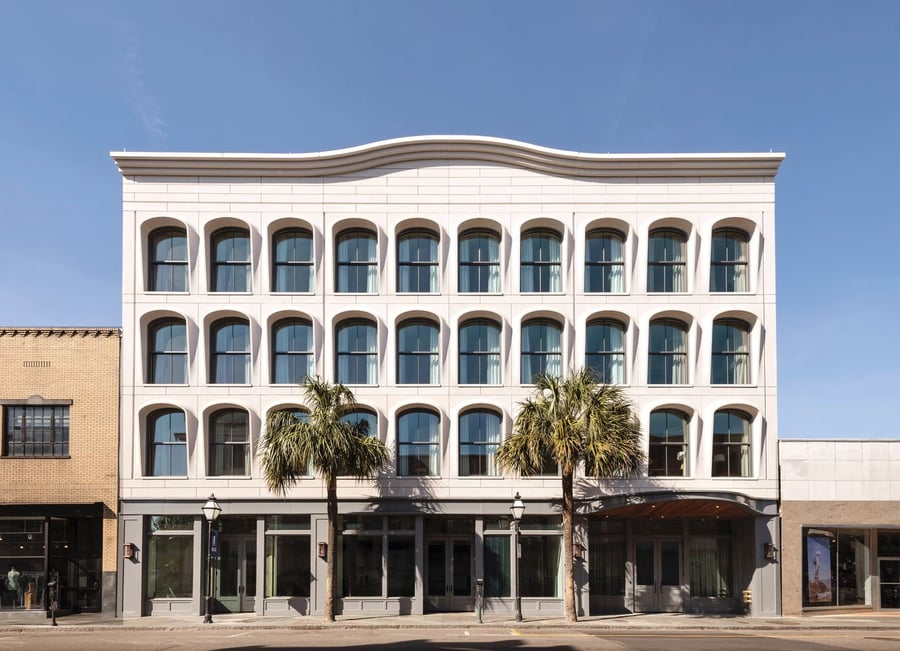
The Nickel Hotel opened on Upper King Street in Charleston’s Cannonborough neighborhood with 50 rooms and a residential design sensibility that extends to full kitchens and in-unit laundry in the suites. The rooftop lounge, The Rosemary Rose, serves cocktails and Mediterranean-inspired small plates and quickly became the T+L reviewer’s most-returned-to space during the stay, drawing a mix of locals and hotel guests and specific dishes, including a Swiss chard pastry described as an unofficial staff favorite and a snapper crudo. Bar Daniel, named for Cannonborough founder Daniel Cannon, occupies the second floor with a quieter atmosphere and lighter fare, including ratatouille toast and chickpea fries.
The hotel’s location within walking distance of Charleston’s most compelling restaurants, bars, and cafés reduces the pressure on the property’s own food and beverage program, while the rooftop lounge provides a social anchor for evenings. Complimentary bicycles are available for guests. Private sailing excursions on Charleston Harbor and in-room massage treatments can be arranged through the hotel. Morning delivery from Callie’s Hot Little Biscuit — a local institution — addresses the breakfast question without requiring a full-service restaurant on the property.
The residential design approach is not unusual in boutique Charleston hospitality, but the full kitchen and in-unit laundry take the apartment comparison further than most hotels do. For visitors spending a week in Charleston instead of a weekend, or for groups who want the flexibility of a self-catering base alongside hotel service, the Nickel’s format addresses a specific kind of stay that most Charleston properties do not accommodate. The hotel’s Upper King Street location also places it within walking range of one of the most rapidly developing culinary neighborhoods in the American South, giving guests daily access to restaurants and bars that no single hotel’s food and beverage program could replicate within a single property of this scale, format, and category, even in a dining-rich city like Charleston.
Credit: One&Only Resorts
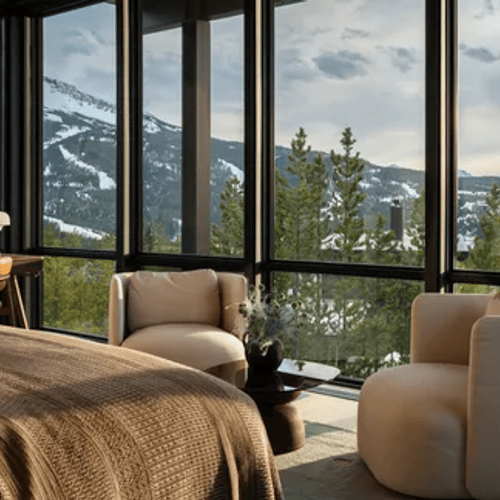
One&Only Moonlight Basin in Big Sky, Montana, marks the brand’s first U.S. property and delivers the level of exclusivity that the One&Only name implies across a 240-acre mountain setting. Every guest receives a personal on-call host who serves as a butler, and the T+L reviewer traveled by ATV from arrival to their 1,000-square-foot cabin. The cabin design uses glass and blackened wood with multiple fireplaces and floor-to-ceiling windows. Eighteen such cabins accompany larger home-format accommodations and 73 guest rooms and suites across three main lodges.
The resort’s private heated gondola provides direct access to Big Sky ski terrain, bypassing public lift queues and giving guests a privileged relationship with the mountain that the standard Big Sky visitor cannot. Multiple pools and hot tubs, a tennis court, and three restaurants make the 240-acre property viable as a self-contained stay, though the resort explicitly markets itself as a year-round destination. The T+L reviewer found the property most compelling in winter, when the private gondola access and the private deck hot tub with views of the Spanish Peaks combined into an experience the reviewer acknowledged would be difficult to replicate any other way.
The One&Only brand’s decision to launch its U.S. presence in Big Sky reflects an understanding that the Montana mountain market has grown significantly in luxury ambition over the past decade, with demand from buyers and visitors who want a level of service and exclusivity that the ski resort town’s earlier infrastructure did not provide. Moonlight Basin aims to meet that demand at the highest available level. The private gondola access is the most operationally significant of the resort’s amenities: it removes the public queue experience from what would otherwise be a standard ski day and positions the resort’s guests on the mountain in a category of access that other Big Sky properties cannot match on arrival day.
Credit: World of Quercus
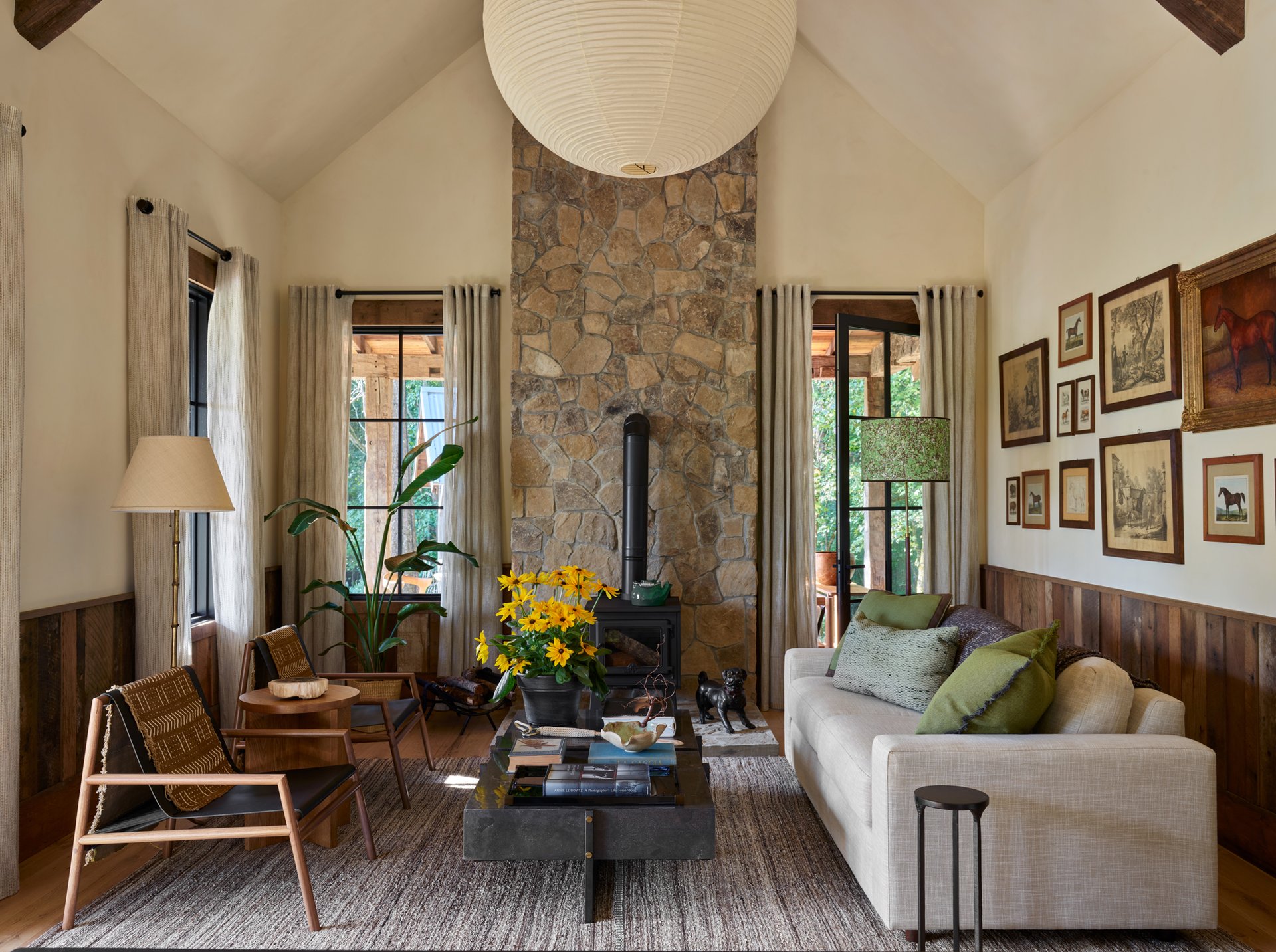
Quercus in Gay, Georgia, sits on 3,800 acres that have belonged to the Visconti di Modrone family for decades, having served as a hunting reserve, a cattle and horse ranch, and a working farm before becoming an all-inclusive luxury resort. The property holds Georgia’s only Relais & Châteaux designation for a hotel and restaurant, placing it within a global network of independently owned properties recognized for exceptional hospitality and culinary excellence. The resort comprises four standalone cabins fitted with organic mattresses, indoor wood-burning stoves, stocked kitchenettes, and front porches.
Chef Ryan Smith and his team operate Uberto, a 30-seat restaurant that sources ingredients from the property’s biodynamic vegetable garden and reflects a culinary philosophy consistent with the estate’s broader commitment to land stewardship. When guests are not at the table or in their cabins, the estate offers fishing, kayaking, rucking, and a liberty training program for connection with horses. Each cabin now features outdoor wood-fired saunas and cold plunges. Four additional rooms, including one with an ADA-compliant suite, will become available later in 2026.
The 3,800-acre scale gives Quercus a quality that most all-inclusive luxury properties cannot offer: genuine spatial separation from neighboring development, a working agricultural landscape visible from the cabins, and the particular silence that comes from being on a private landholding large enough that the property’s edges are not visible from the center. For visitors whose ideal of a luxury stay includes the sense of being on a working estate in a landscape managed for generations, Quercus addresses that preference in a way that purpose-built resort developments cannot replicate. The biodynamic vegetable garden that supplies chef Ryan Smith’s restaurant also provides Quercus with an ingredient supply that is both fresher and more narratively connected to the property than sourcing from regional distributors would be for a kitchen that needs to feed only 30 seats at a time.
Credit: Snake River Sporting Club
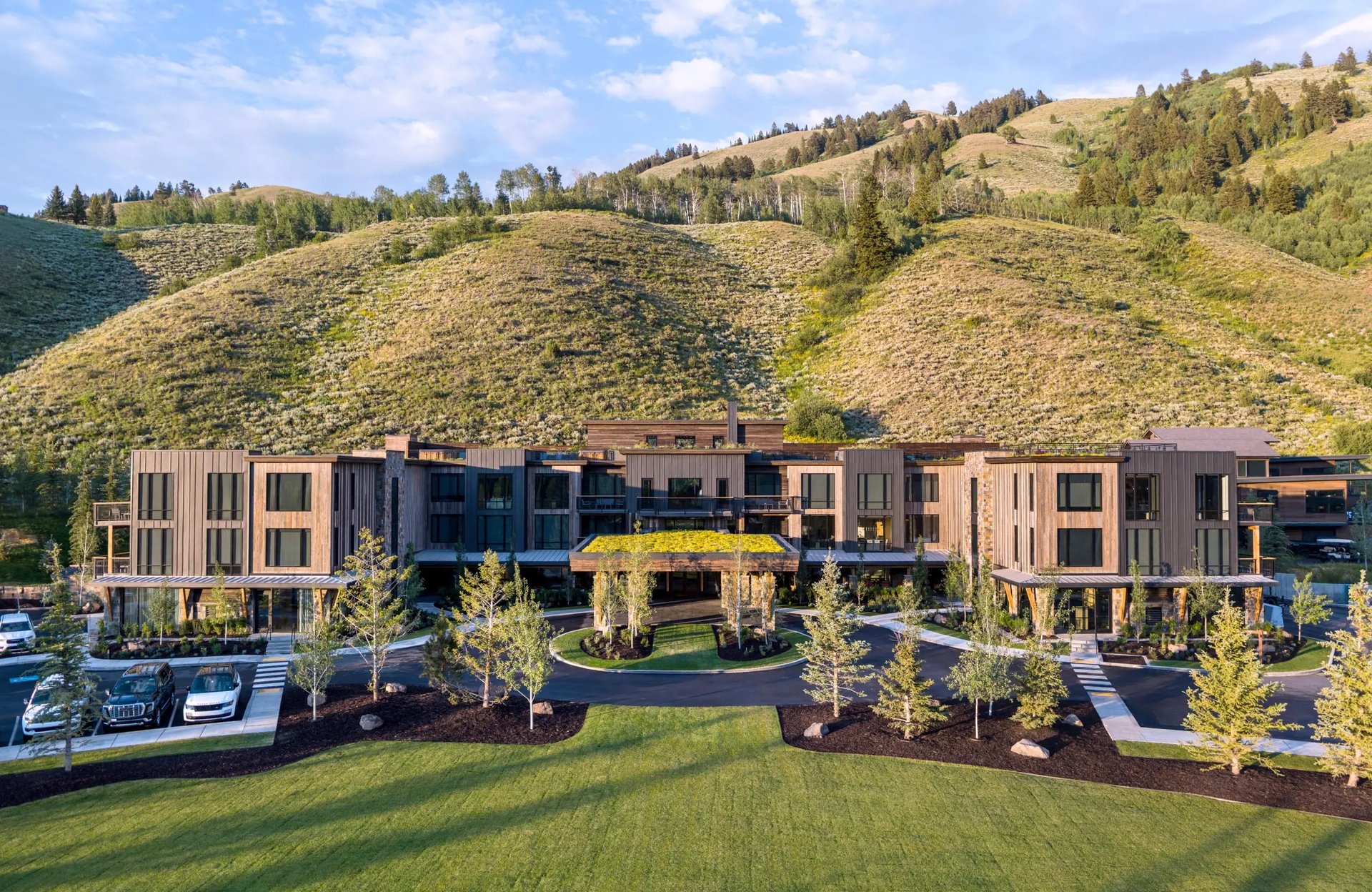
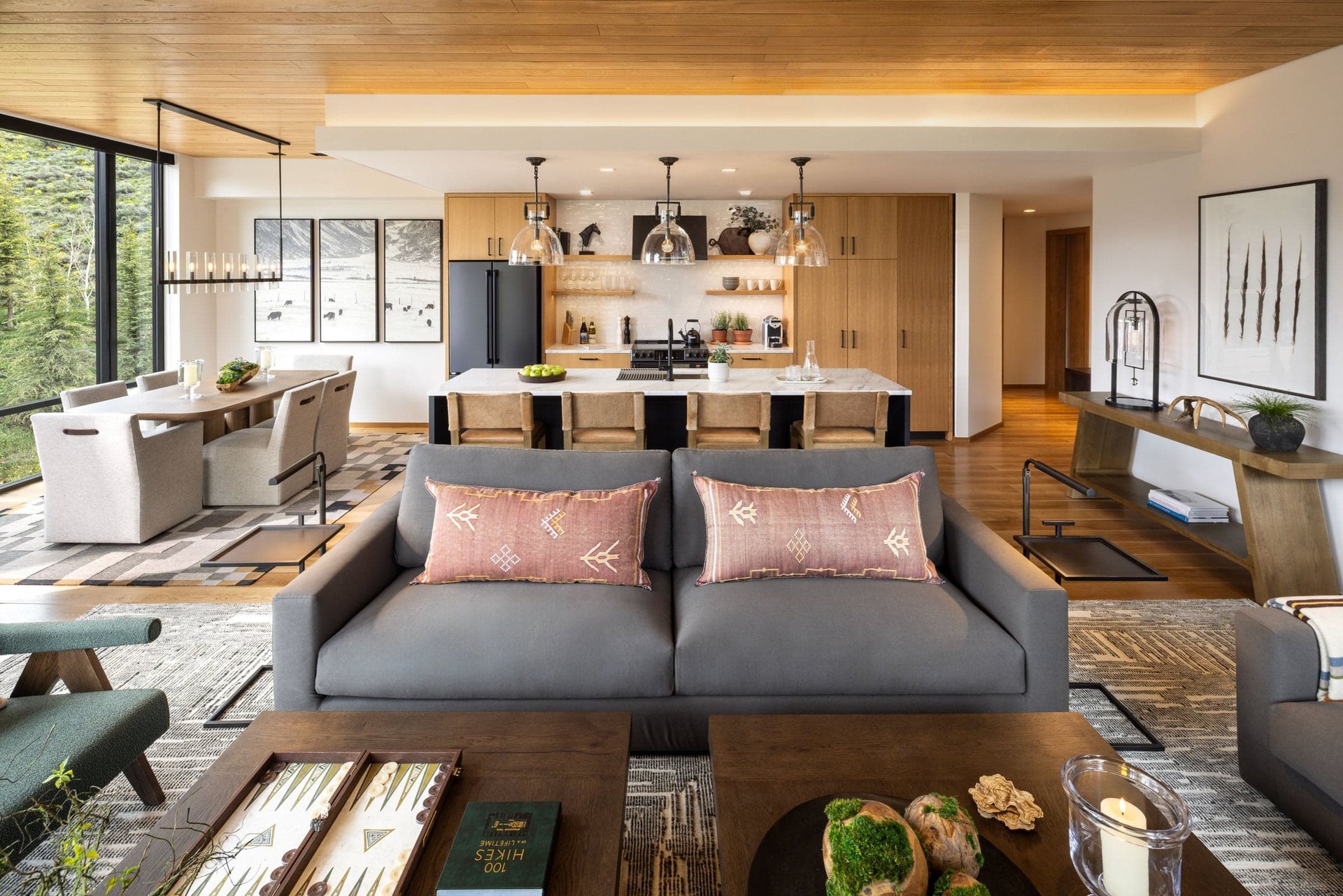
The Sylvan Lodge opened in June 2025 at the Snake River Sporting Club in Jackson Hole, Wyoming, adding a 38-key hotel to a private members' club previously inaccessible to non-members. The name Sylvan — meaning of the woods — runs through the property’s design: each suite takes the name of a local tree, and natural wood finishes appear throughout, including in the 10,000-square-foot spa’s heated pool deck and intimate lounge. Restoration Hardware outfits the property, giving the interiors a distinct furniture vocabulary recognizable to the brand’s customer base.
A reservation at the Sylvan Lodge opens access to club amenities that non-members cannot otherwise reach. These include tee times on the Tom Weiskopf-designed golf course that is otherwise private, a five-stand skeet shooting range, trail rides along the Snake River, and an infinity-edge pool beneath the clubhouse. In winter, the club converts to a cross-country skiing destination. The T+L reviewer identified service as the most impressive element of the stay: housekeeping, front desk staff, and restaurant servers all delivered the kind of consistent attentiveness that the reviewer credited as the differentiating factor in a Jackson Hole luxury market they described as saturated.
Jackson Hole’s luxury hospitality market has expanded rapidly in recent years, and the risk in that expansion is a homogenization of experience: properties that look and feel similar because they draw on the same regional aesthetic vocabulary of stone, wood, and mountain views. The Sylvan Lodge’s integration into a private sporting club with its own history and identity, and its access model based on hotel reservations rather than club membership, gives it a distinct logic that sets it apart from standalone luxury hotels at similar price points in the same market. The Tom Weiskopf golf course, in particular, represents a specific credential: a named designer course that functions as a private members club, an amenity with no easy equivalent in Jackson Hole’s otherwise public resort landscape.
