Credit: Visit Copenhagen
The European food market predates the supermarket by centuries and, in most of the cities on this list, it predates the modern city itself. Bergen’s Fisketorget has been hosting fish traders since 1200. Bologna’s Quadrilatero district has sold cured meats and fresh pasta in the same narrow lanes since the medieval period. The markets that have survived into the 21st century did so because they were essential to daily life, not because they were tourist attractions, and the ones that retained their essential character are the ones that reward the food traveler most directly: they show what a city actually eats, and they show it in the specific ingredients, preparations, and regional products that the supermarket has always been too broad to carry at the same depth.
The European market today exists in several forms. Some, like Bologna’s Quadrilatero and Paris’s Marché d’Aligre, are working neighborhood markets whose stalls serve the residential communities around them first and visitors second. Others, like the Mercado de San Miguel in Madrid and the Mercado da Ribeira in Lisbon, have evolved toward a food hall model whose cooked food and curated presentation are designed for grazing visitors as much as shopping residents. Both models have their merits: the neighborhood market gives the visitor a more accurate picture of how the city eats, and the food hall offers a more concentrated, immediately accessible view of the cuisine.
The 10 markets below appear in Travel + Leisure, drawn from a list nominated by food travel experts and editors across seven countries. They span the full range from medieval street market districts to contemporary architectural food halls, covering both traditional produce markets and curated food experiences with equal depth.
1 / 10
Credit: Official Bologna Tourist Information Website
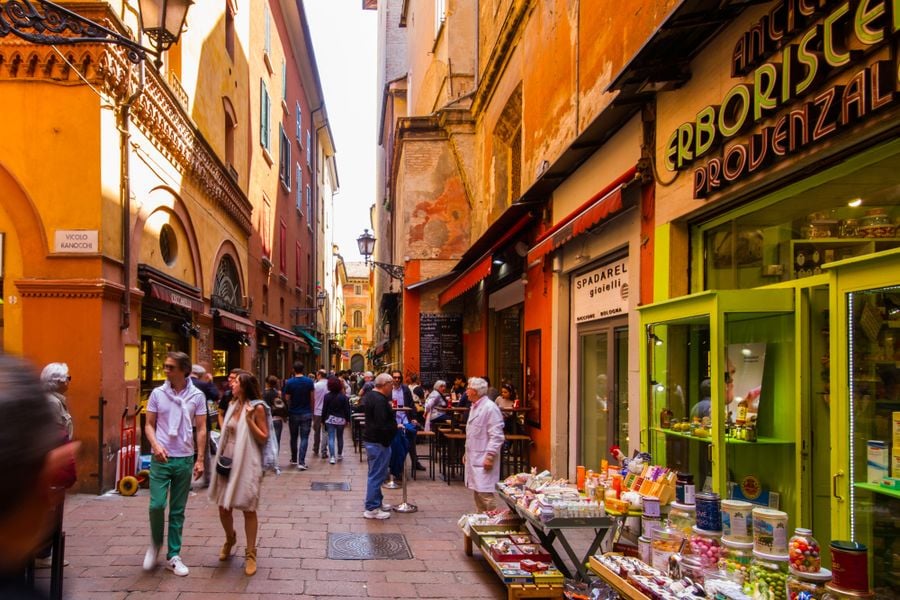
Il Quadrilatero is the medieval market district at the center of Bologna, a city that has earned the nickname La Grassa, meaning the Fat One, through centuries of culinary seriousness that has produced some of Italy’s most celebrated products. The streets of the Quadrilatero, narrow enough in places to pass a shop’s counter on both sides of the lane at once, are lined with salumerias, cheese shops, pasta shops, and fish markets whose products give the visitor an immediate education in the specific geography of Emilian food culture. The Parmigiano Reggiano wheels stacked in the cheese shops are aged to standards specific to the PDO designation that protects the name, and the mortadella sold at the counter is cut to order from whole logs whose fat-marbled cross-section is the visual signature of the product this city invented.
The fresh pasta shops give the Quadrilatero its most specifically Bolognese daily activity: the sfogline, the women who stretch and cut fresh pasta by hand according to a tradition whose physical technique is specific to this city, work at counters visible from the street in several of the lanes’ shops. The tortellini, tagliatelle, and lasagne verde they produce are available by weight for take-home cooking, giving the market its most direct connection to the domestic kitchen tradition that Bologna’s food culture serves. The balsamic vinegar available in the specialty shops ranges from the cooking variety to the aged Aceto Balsamico Tradizionale di Modena, a DOP product aged for a minimum of 12 years and used by the drop, not the spoonful.
The Mercato delle Erbe, the covered market adjacent to the Quadrilatero, provides a sheltered setting for the fruit, vegetable, and butcher program, with daily produce displays that give visitors a clear picture of the seasonal agricultural cycle of the Po Valley that surrounds Bologna. The Quadrilatero in the early morning, before the tourist day begins, gives the market its most specifically local character and the best access to the products that sell out earliest.
2 / 10
Credit: Borough Market
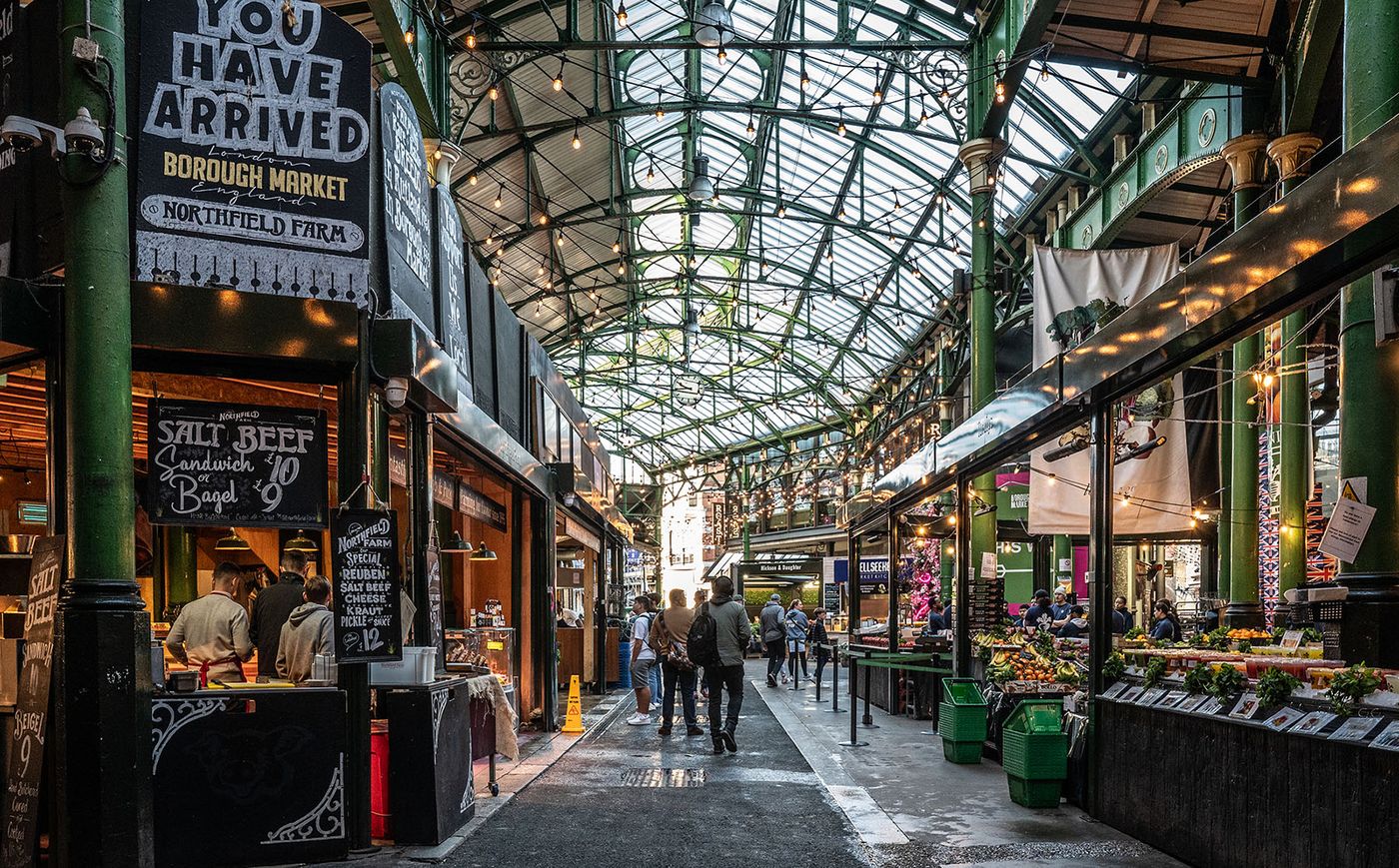
Borough Market in London’s Southwark neighborhood has occupied its current site near London Bridge since at least the 12th century, though the Victorian market halls that give the space its architectural character date from the 1850s. The market operates as a hub for British artisan food producers, importing quality, and street food vendors whose collective breadth gives the visitor a compressed survey of what serious food culture in Britain currently looks like: the cheesemakers, charcuterie producers, spice merchants, and bread bakers who hold stalls alongside the international food vendors who have made Borough a representation of London’s cosmopolitan food scene.
Neal’s Yard Dairy, the London cheesemonger whose Borough Market stall has become the definitive address for British farmhouse cheese, gives the market its single most important individual vendor: the seasonal selection of clothbound Cheddars, territorial cheeses, and soft washed-rind varieties from farms across Britain and Ireland gives the visitor who approaches the counter the best available introduction to what British cheese culture has become in the 40 years since the artisan revival began. The stall’s staff approach the cheese with a specific educational commitment, making the visit as informative as it is delicious.
The international stalls give Borough its urban London character alongside the British artisan focus: Ethiopian curries, handmade Italian pasta, Spanish jamón, and Middle Eastern street food give the market’s social atmosphere a cosmopolitan energy specific to a market operating in one of the world’s most diverse food cities. The covered Victorian halls give the market a distinct architectural setting that distinguishes it from both the purpose-built food hall and the outdoor street market, and the railway arches that bound the market’s perimeter give the Bankside setting its most distinctively London industrial quality. Borough Market’s website lists which vendors operate on which days, as not all stalls are open every day the market runs. The fullest market experience, with the highest vendor count, is concentrated on Thursday, Friday, and Saturday.
3 / 10
Credit: Explore Nice Cote d'Azur
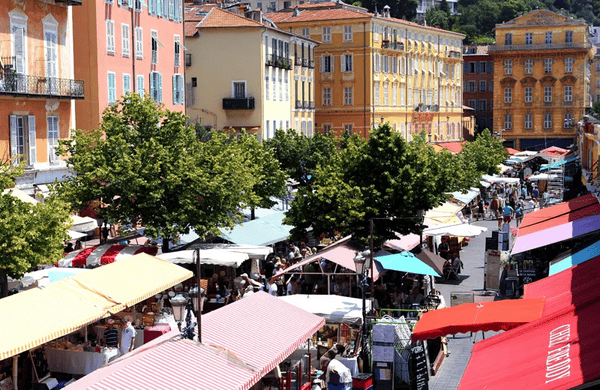
Cours Saleya is the outdoor market that runs along the main street of Nice’s old town, and the pastel Baroque facades that line the square give the market its most immediately photogenic setting in European market photography. The market specializes in the specific flavors of Niçois and Provençal cooking: pissaladière, the onion and anchovy tart specific to Nice, socca, the chickpea flour flatbread cooked on large round pans over wood fire and sold by weight, and petits farcis, vegetables stuffed with herbed breadcrumbs and local meat, give the savory street food program its regional specificity. The locally produced olive oils, whose labels identify the specific variety and the mill that pressed them, give the condiment section its most characteristically southern French expression.
The flower market operates alongside the food stalls in the morning hours, giving Cours Saleya the visual color that makes it among the most photographed outdoor markets in France. The flower stalls thin out by mid-morning and are replaced by the food and antiques vendors who fill the square through the afternoon. The cafes at the square’s edges offer browsing visitors a place to sit, with espresso or rosé providing a natural break in the market circuit. The position of Cours Saleya between the old town and the beach gives the picnic basket the visitor assembles there its natural destination: the Promenade des Anglais beaches are within a five-minute walk, giving the market its most complete logistical arc.
The morning hours on weekdays give the market its most specifically local character: the Nice residents who shop here for the week’s produce give the interaction at the stalls a transactional efficiency that the tourist-heavy weekend mornings do not produce, and the market vendors’ engagement with their regular customers gives the visitor who arrives early a view of how the market actually functions as an ingredient source for the local domestic kitchen. The socca vendor whose queue forms by mid-morning is among the best single things to eat at any market on this list.
4 / 10
Credit: Visit Paris Region
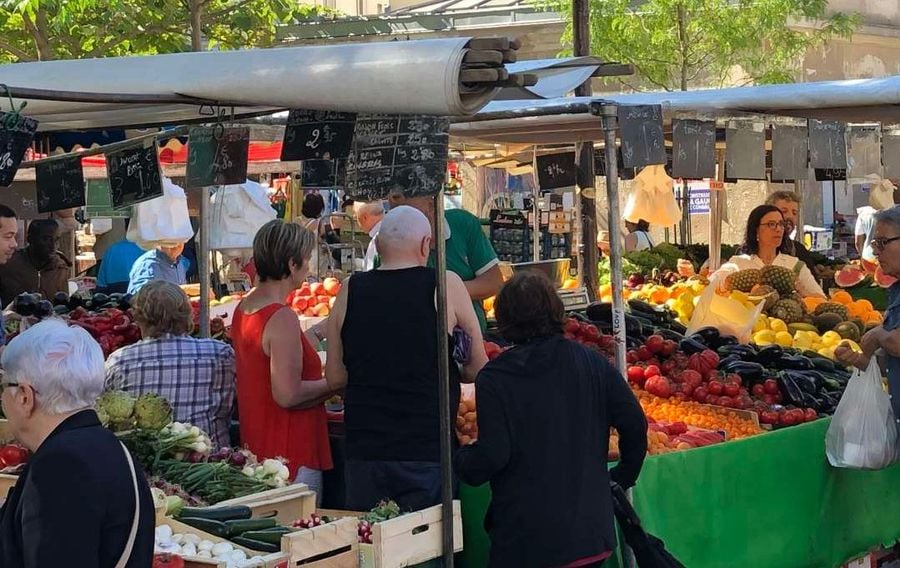
Le Marché d’Aligre in Paris’s 12th arrondissement is the market that the city’s food writers and residents recommend when the question is which market shows Paris how it actually lives, not how it presents itself. The market combines an outdoor street market along the rue d’Aligre with the covered Marché Beauvau, whose butchers, fishmongers, and cheese vendors operate under the 19th-century glass and iron roof, and the wine bar at the market’s edge that opens at 9 a.m. for natural wine gives the browsing program its most specifically Parisian social ritual. The North African spice vendors who have established themselves among the traditional French produce stalls add to the market's demographic complexity, reflecting the neighborhood’s history as one of Paris’s most culturally diverse residential districts.
The seasonal produce, artisan cheeses, and freshly baked bread provide the food shopping program with its essential daily staples. The natural wine selection at the merchants around the market gives the Aligre visit its most specifically contemporary Parisian food culture expression: the natural wine movement’s center of gravity in Paris falls near this arrondissement, and the market’s proximity to the caves and bars that represent the movement gives the food and wine pairing its most local form. The Promenade Plantée, the converted elevated railway line that becomes an urban garden park, runs above the neighborhood and gives the post-market walk its natural continuation: the park’s length from Bastille to the Bois de Vincennes passes above the streets that hold the market, connecting the food culture below to the public green space above.
The Aligre’s accessibility from central Paris, just a few stops on the metro from the Marais, gives it a practical advantage over the more tourist-familiar Bastille and Raspail markets. The daily operations throughout the week, with the Saturday market bringing the highest density of vendors and the most complete expression of what Aligre does, give the visitor multiple timing options for the visit.
5 / 10
Credit: Visit Bergen
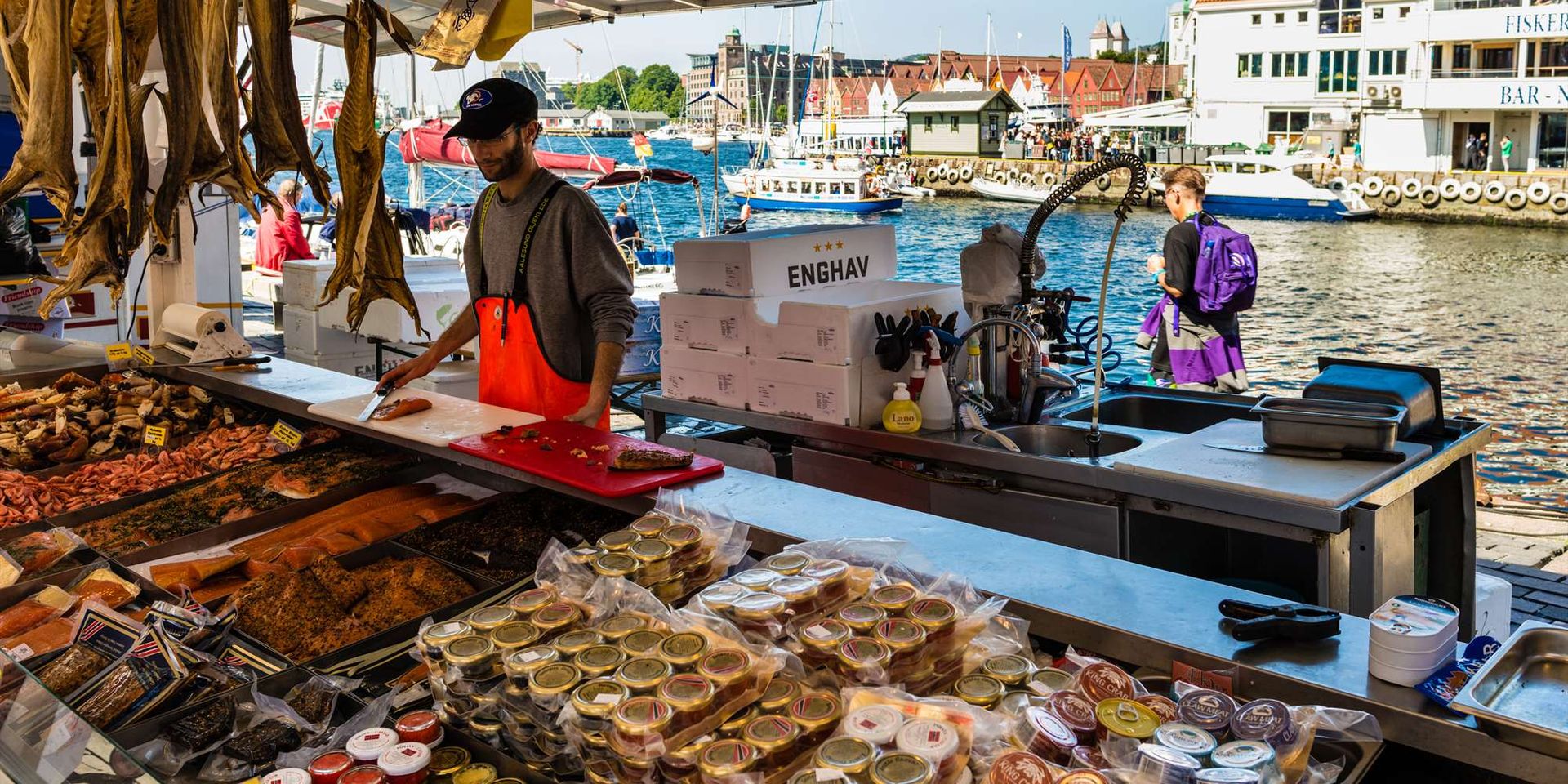
Fisketorget, the Fish Market in Bergen, occupies the central harbor beneath the Bryggen wharf’s colored wooden facades, and has operated continuously since 1200, making it one of the oldest continuously operating markets in Europe. The outdoor market, which runs from spring through autumn, gives the visitor the direct experience of the Norwegian fishing tradition at its most accessible point: the fish and seafood displayed on ice include the specific species of the western Norwegian coast, Atlantic salmon, Norwegian lobster, shrimp, crab, and the brown crabs whose size reflects the cold, productive waters of the North Sea and the Norwegian Sea that the Bergen fishing fleet works.
The year-round indoor market, built alongside the outdoor one in 2012, gives the fish market a winter operation that the weather-dependent outdoor format cannot sustain in the Bergen climate. The specialist restaurants within the indoor hall offer visitors the option of eating seafood prepared at the source, with fish soup, smoked salmon, and shellfish platters available directly from the vendors whose products are on display. Market shopping and immediate consumption together give the indoor Fisketorget a format specific to the evolution of Nordic food market traditions.
The summer months bring a farmers’ market dimension alongside the fish: fresh fruit and vegetables from the surrounding Hardanger fjord farms join the seafood stalls in the outdoor market, giving the Bergen market its most complete seasonal expression. The Hardanger region, visible by ferry from Bergen, is Norway’s primary fruit-growing area, and the strawberries, cherries, and apples available at the summer market give the produce section its most specifically Norwegian agricultural character. The market’s position at the foot of Bryggen, the 14th-century Hanseatic wharf whose UNESCO World Heritage status gives Bergen’s waterfront global recognition, gives Fisketorget a setting whose historical depth amplifies the market’s centuries-old commercial heritage. The Bergen funicular, Fløibanen, accessible from the city center, offers the post-market visitor the most dramatic views of the city, harbor, and surrounding fjords from 1,050 feet above the waterfront.
6 / 10
Credit: Halles d'Avignon
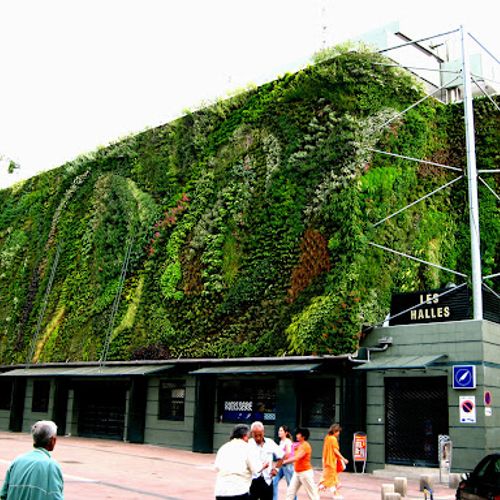
Les Halles d’Avignon is the covered market in the center of Avignon whose exterior is defined by the distinctive living plant wall, a vertical garden installed on the 19th-century market building’s facade, and whose interior gives the Provençal food tradition its most concentrated single presentation in the region. The market operates mornings from Tuesday through Sunday and gives visitors access to the specific seasonal products of the Rhône Valley and the Provence hinterland: truffles, lavender honey, herbes de Provence, and olive oils pressed from the Vallée des Baux olives make up the specialty product section's most regionally specific inventory.
The oysters and fresh fish from the Mediterranean coast give the seafood section its daily character: the shellfish are shucked at the counter and available to eat standing at the vendor’s bar, giving the market visit its most immediately social format. The artisan cheeses, including the fresh goat cheeses specific to the Provence tradition and the aged Comté from the Alps to the north, give the cheese section a range appropriate to a market serving the diverse pastoral territory of the southern Rhône region. The truffle-laced charcuterie offered by several vendors gives the Avignon market a luxury product dimension specific to Périgord and Provence truffle production, which the Rhône Valley’s culinary culture absorbs from both directions.
The Avignon setting gives Les Halles its most historically amplified context: the Palais des Papes, the enormous Gothic palace from which the popes governed the Catholic Church during the 14th-century Avignon papacy, looms above the market building from the adjacent square, giving the morning shopping a historical backdrop whose scale is disproportionate to the domestic pleasures of buying vegetables and cheese directly below it. The Avignon market operates from Tuesday through Sunday mornings, and the Sunday market attracts the most vendors and the highest attendance from local residents and visitors arriving for the day from surrounding Provence villages. The post-market walk through the Avignon old town, with its medieval walls intact on three sides, gives the morning its natural continuation.
7 / 10
Frans Brekelaar / Wikimedia Commons (CC BY-SA 2.0)
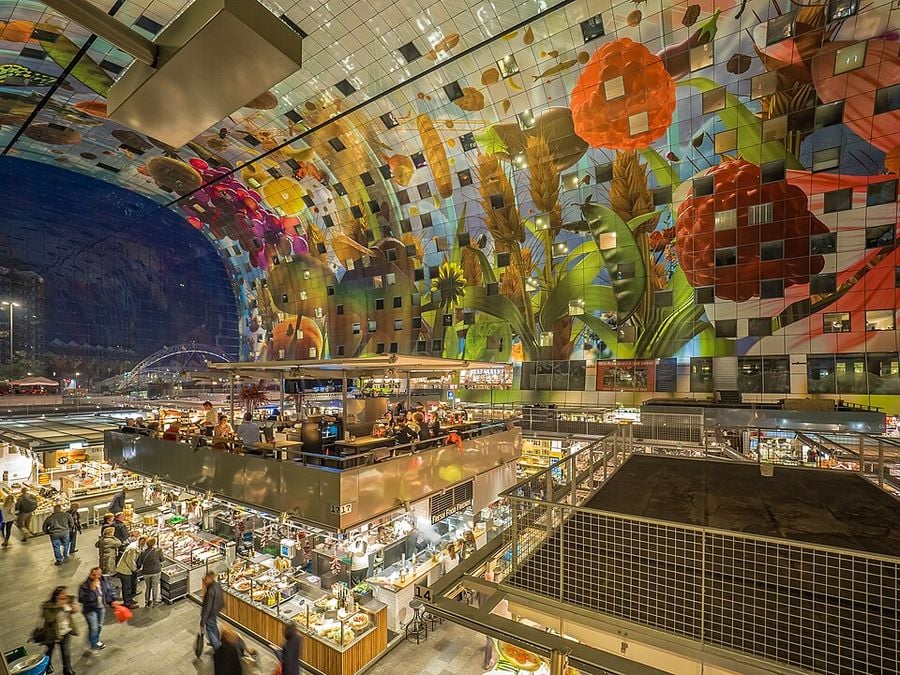
The Markthal in Rotterdam is a food market and residential building whose architectural form, a giant horseshoe-shaped arch whose interior surface is covered by a monumental artwork depicting fruit, vegetables, and insects at a scale visible from the market floor below, gives it a physical character unlike any other food market in Europe. The building, designed by the Dutch firm MVRDV and opened in 2014, houses 100 food stalls and 15 restaurants on the ground level, with 228 apartments in the arch above, creating a residential community whose kitchen windows look down onto the stalls below. The approach of integrating market and housing in a single architectural gesture is specific to Rotterdam’s tradition of using the city’s postwar rebuilding as an opportunity for architectural experimentation.
The food program gives the Markthal a culinary breadth appropriate to a major Dutch port city: Dutch cheeses including Gouda and Edam in their fresher, more complex artisan forms alongside the internationally recognizable commercial versions, stroopwafels made on traditional waffle irons, herring served in the traditional Dutch style with raw onion, and the full spectrum of international cuisines that Rotterdam’s diverse population has brought to the city’s food culture. The fresh produce vendors, butchers, and fishmongers who anchor the traditional market function give the Markthal a working market core alongside the prepared food and specialty product stalls.
Rotterdam’s specific position in Dutch culture gives the Markthal its most interesting context: Amsterdam is more famous and more beautiful, but Rotterdam is the Netherlands’ working city, rebuilt from near-total wartime destruction into one of Europe’s most architecturally ambitious urban environments. The Markthal is the most visited single attraction in Rotterdam and makes the city a food destination that the more conventionally pretty Dutch cities cannot match in terms of architectural and culinary integration. The Cube Houses and the Erasmus Bridge, both within walking distance of the Markthal, give the visitor willing to extend the market visit into a broader Rotterdam architectural tour the program to justify a full day in the city.
8 / 10
Credit: Lisbon Portugal Tourism
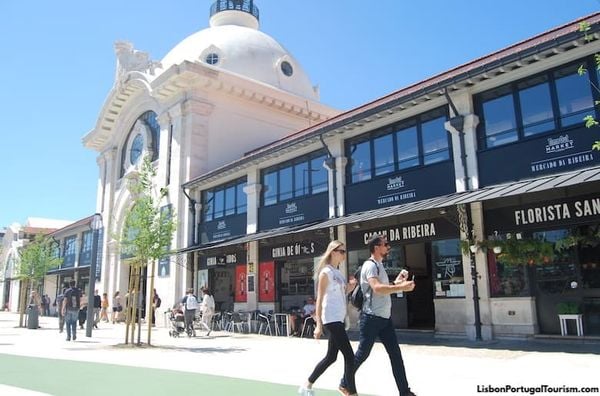
The Mercado da Ribeira in Lisbon’s Cais do Sodré neighborhood is a 19th-century iron market hall that has operated in two distinct modes since 2014, when the Time Out Market opened on its upper floor: the ground level continues the traditional market function, with fish, produce, and flower vendors whose stalls give the market its working Lisbon character, while the upper Time Out Market gives the city’s best restaurant and chef culture a concentrated food hall format accessible to visitors without a restaurant reservation. The juxtaposition of the traditional market below and the curated food hall above gives the Mercado da Ribeira a specific complexity, specific to a city navigating the tension between food heritage and food tourism.
The traditional market level gives the visitor the experience of Lisbon’s daily produce culture: the seafood stalls whose inventory reflects the Portuguese fishing fleet’s catch, the Portuguese cheeses, including the aged sheep’s milk queijo da Serra, and the creamy fresh queijo fresco, and the cured meats give the ground level its working market identity. The pastéis de nata available from vendors specializing in the egg custard tart give visitors the most direct access to Lisbon’s most beloved food product at its most authentic market source. The petiscos, the small plates that serve as the Portuguese version of tapas, give the cooking program its social format.
The Cais do Sodré neighborhood surrounding the market gives the visit its broader Lisbon context: the LX Factory creative hub, the Miradouro de Santa Catarina viewpoint above the river, and the tram lines that connect the neighborhood to Belém and the Alfama give the market visit a natural extension into the wider city, whose food and cultural program rewards the full day. The pastel de nata available within the market’s traditional floor is the specific test of the product’s quality at its source: the version made by the Antiga Confeitaria de Belém, a few tram stops away, is the most famous, but the freshly baked tarts available within the market itself demonstrate the standard the city applies uniformly to its defining pastry.
9 / 10
Credit: Mercado de San Miguel
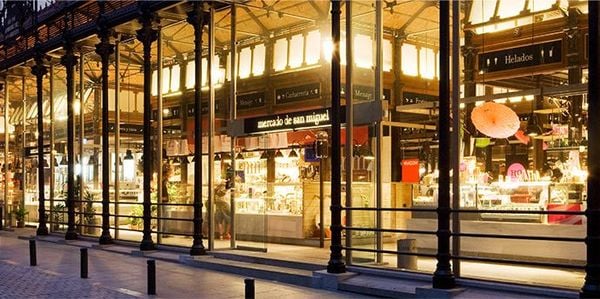
The Mercado de San Miguel in Madrid is a 1916 iron-and-glass market hall adjacent to the Plaza Mayor, whose evolution from a traditional neighborhood market into a curated food hall makes it the most visitor-oriented market on this list. The transformation has been deliberate: the current stalls focus on prepared food, specialties, and tasting-portion presentations designed for browsing visitors, and the result is a market whose jamón ibérico sliced at the counter, freshly prepared tapas, local cheeses, and Galician seafood give the first-time visitor to Madrid an efficient and high-quality introduction to the Spanish culinary repertoire in a single historic building.
The jamón ibérico program gives the San Miguel its most specifically Spanish single product experience: the legs of acorn-fed Iberian pigs hanging above the counter, sliced to order by specialists whose knife technique gives the thin sheets their characteristic texture and whose explanation of the grade system gives the uninitiated visitor the vocabulary for understanding what they are eating, give the ham stall its most educational and most sensory dimension simultaneously. The sherry and wine program that runs alongside the food stalls provides the tapas with the appropriate liquid accompaniment, in the format that Spanish tradition specifically requires.
The San Miguel’s position as the less authentic but more accessible Madrid market experience is acknowledged directly by the source: the residential markets of the city, including the Mercado de Vallehermoso and the Mercado de Antón Martín, give the visitor willing to travel slightly further from the tourist center a more specifically local shopping experience. The San Miguel’s value is for the visitor who wants maximum culinary density in minimum time in the historic center, and for that specific purpose, it is genuinely excellent. The visitor who wants a more authentic Madrid market experience will find it at the Mercado de Vallehermoso in the Chamberí neighborhood or the Mercado de Antón Martín in Lavapiés, both of which operate as genuine neighborhood markets whose stalls serve the residential communities around them and whose produce, meat, and fish vendors give a more accurate picture of how Madrid eats at home.
10 / 10
Credit: Visit Copenhagen
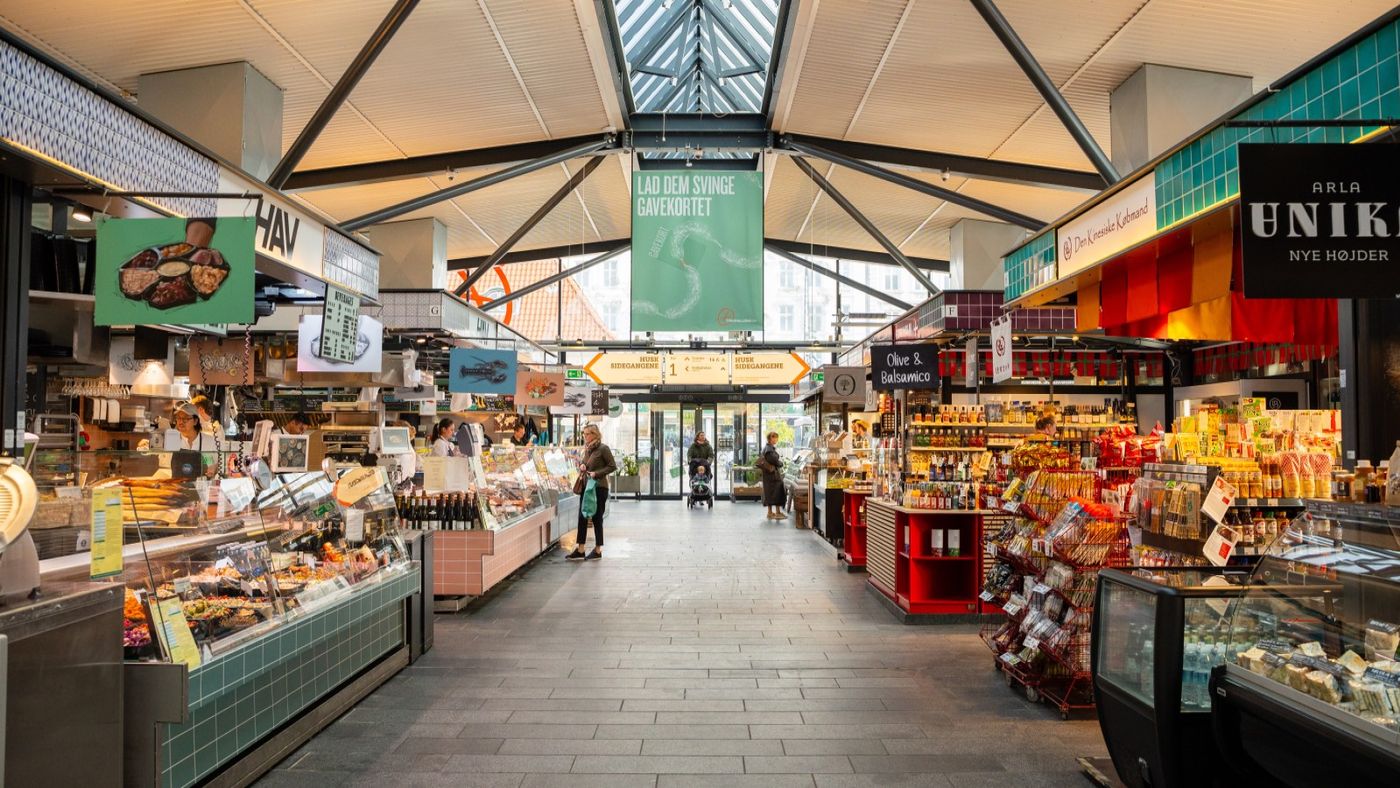
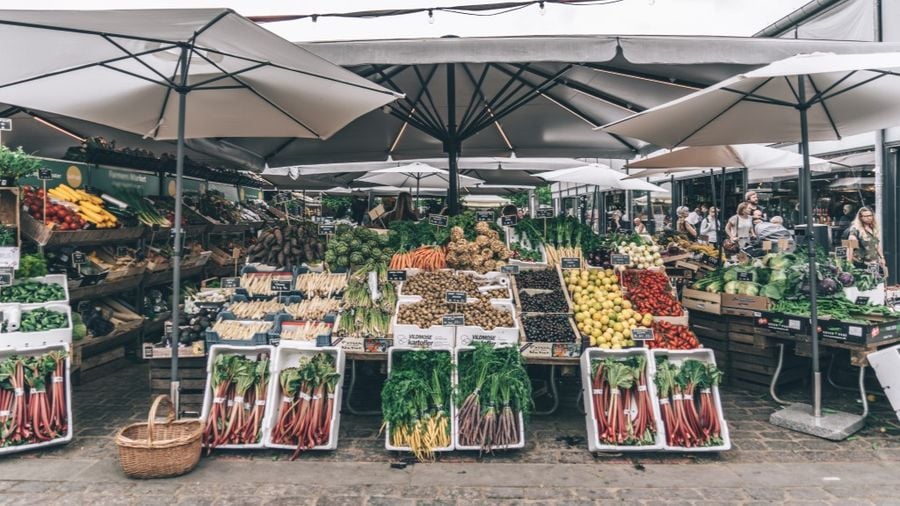
Torvehallerne is the food market at the center of Copenhagen that opened in 2011 in two parallel glass-and-steel market halls flanking an open-air square at Israel’s Plads. The market gives Copenhagen’s reputation as one of Europe’s best food cities its most accessible daily expression: the butchers, fishmongers, bakers, chocolatiers, and produce vendors who anchor the traditional market function sit alongside prepared food stalls whose Danish smørrebrød, the open-faced sandwiches whose toppings range from traditional pickled herring and røget laks to contemporary chef-driven combinations, give the visitor the most concentrated single-location encounter with Danish food culture available in the city.
The coffee culture at Torvehallerne gives the market its social entry point: the coffee stalls at the market’s perimeter serve specialty coffee that Copenhagen’s roasting culture has made a specifically Danish expression of the global third-wave movement, and the morning coffee-and-pastry visit gives the market its most specifically local daily ritual. The Danish pastries, known in Denmark simply as wienerbrød, available from bakers in the market, give the visitor a direct encounter with the source tradition of the form, whose interpretation across the rest of the world the Danish original consistently exceeds.
The market’s location at Israel’s Plads, accessible from the Lakes walking path and adjacent to the Nørreport station, gives Torvehallerne a logistical centrality specific to the Copenhagen neighborhoods whose food culture it serves. The Nørrebro neighborhood’s independent food shops and bakeries, reachable on foot from the market, give the Torvehallerne visit a natural continuation into the surrounding streets, whose food culture the market concentrates but does not fully represent. The Jægersborggade street in Nørrebro, whose independent coffee roasters, natural wine bars, and specialty food shops give it a culinary density uncommon in a residential neighborhood, is accessible on foot from the market in about 20 minutes and gives the food-focused visitor a post-market street that the market itself, concentrated as it is, cannot match for the variety and depth of the independent food businesses that line a single urban lane.
