From Mississippi sailings with no passport required to a Seine cruise with no single supplement for solo travelers
Yiran Ding / Unsplash
River cruises suit older travelers for reasons that go beyond the obvious convenience of unpacking once and letting someone else handle logistics. The passenger demographics skew older than those on ocean cruises, which changes the onboard atmosphere in ways that are hard to quantify but immediately noticeable. The ships are small enough that crowds and long lines don’t exist in the same way. And instead of anchoring offshore and tendering passengers in by tender boat, river ships typically dock directly in the city center, which eliminates an entire category of hassle that can make port days exhausting on larger vessels.
The five cruises below span two continents and five rivers, covering everything from a domestic American sailing that never requires an international flight to a luxury Portuguese voyage through wine country with all-inclusive pricing and accessible cabin options. Each line handles senior-specific concerns differently, and the accessibility details below are worth reading carefully before booking, since mobility accommodations vary considerably across the options.
The five river cruises below appear in U.S. News & World Report, written by cruise rankings editor Nicola Wood, who manages U.S. News’s Best Cruise Lines rankings. The five lines here represent distinct approaches to the senior river cruise experience, from purely domestic sailings to fully all-inclusive luxury European voyages, and the right choice depends on how much international travel complexity a given traveler is comfortable managing. Price points vary considerably across the options, and the accessibility details matter enough that reading them carefully before requesting a brochure or consulting a travel agent is strongly advised. A travel agent who specializes in river cruises can be particularly useful for seniors navigating these choices, since the practical differences between lines are substantial and not always obvious from marketing materials alone.
Credit: American Cruise Lines
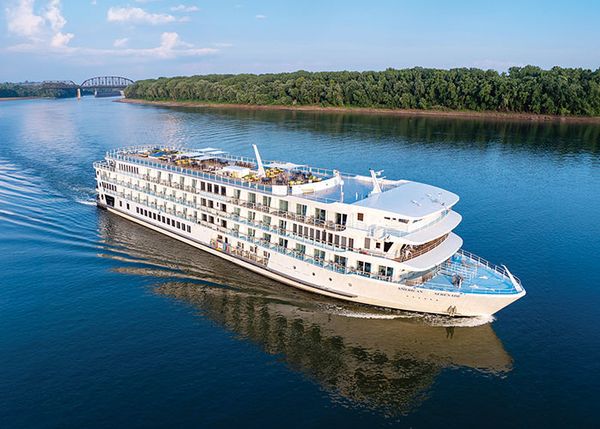
American Cruise Lines is the straightforward choice for seniors who want the river cruise experience without the overseas flights, foreign currency, or navigation of unfamiliar language environments that international sailings require. The line operates on the Mississippi, Ohio, Hudson, Arkansas, Potomac, and Tennessee and Cumberland rivers, departing from accessible cities including New Orleans, Memphis, Portland, and Pittsburgh. Every sailing stays in the United States, which removes a category of planning complexity that can make international cruises feel genuinely daunting.
The practical senior-focused amenities are extensive and specifically designed, not incidental. All fares are all-inclusive. Cabins are spacious with large showers, accessible cabin configurations are available, and every room has a private balcony. A complimentary hotel stay before embarkation, free luggage handling, and included transportation to the ship collectively eliminate several friction points that trip up independent travel. All ships have elevators, common spaces are designed with wide paths for wheelchair users, and shore excursions are tailored to activity levels, from hiking and bicycle tours to a live performance at the Grand Ole Opry.
Onboard programming leans into American history and culture: history presentations, live music, and trivia give the ship’s social life a specific character that fits the domestic itinerary. Meals use fresh local ingredients, and the kitchen accommodates a range of dietary needs. For seniors specifically worried about managing international travel logistics, American Cruise Lines is the most practical starting point on this list. The domestic routes also carry a specific cultural appeal: a Mississippi River journey passes through American history and landscape in a way that resonates with travelers whose relationship to these rivers is personal and long-standing. The Grand Ole Opry shore excursion in Nashville is one of the more distinctive live-music experiences included in any river cruise itinerary, and the culinary program’s emphasis on fresh, local ingredients gives the dining a regional character that shifts as the ship moves through different parts of the country.
Credit: AmaWaterways
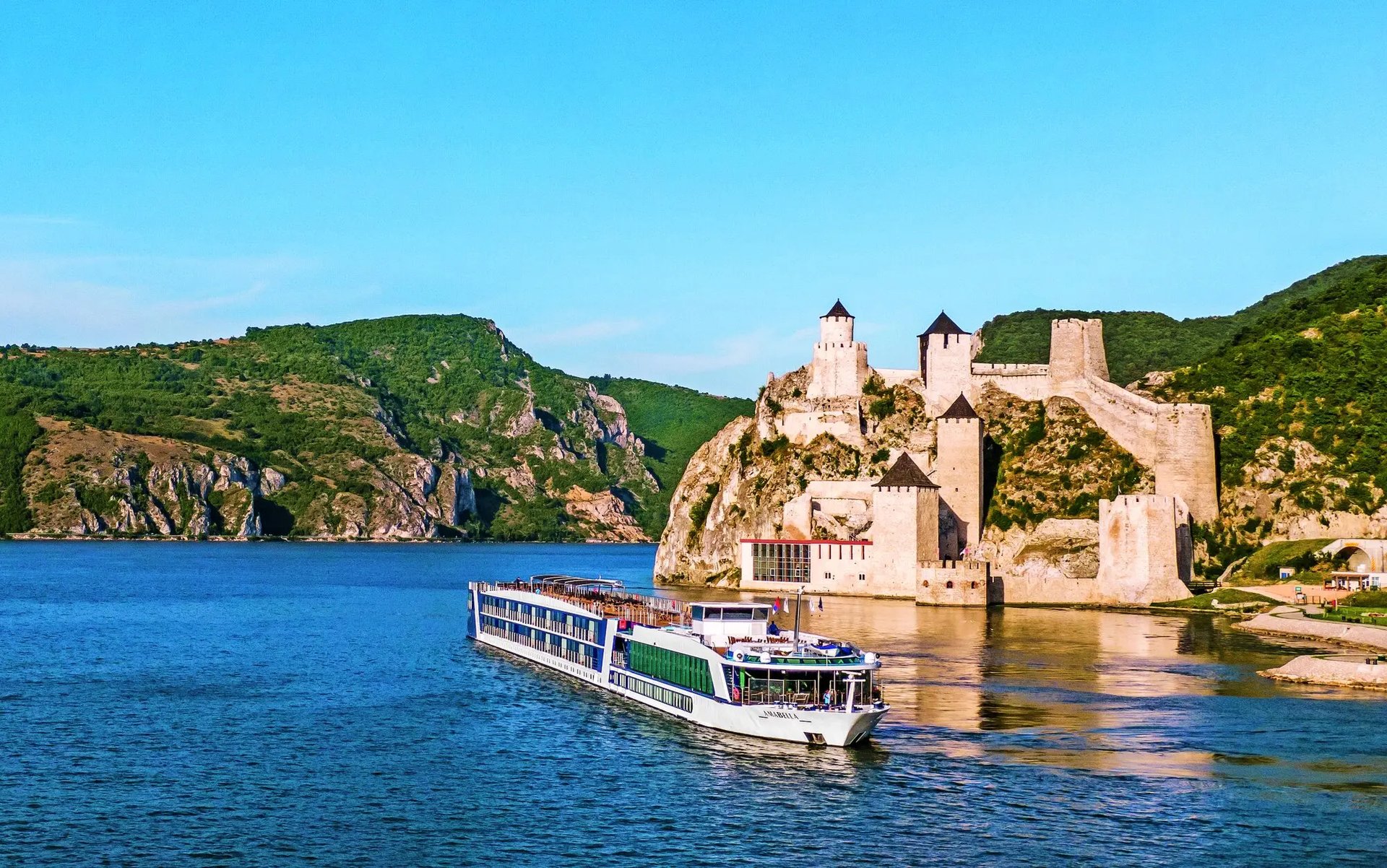
AmaWaterways integrates wellness programming into its river cruises at a level that most cruise lines treat as an afterthought. Complimentary yoga classes run in the mornings, pickleball is available on select vessels, and the ships feature a sun deck that serves as a quiet retreat for passengers who want fresh air without joining organized activities. The line belongs to the La Confrérie de la Chaîne des Rôtisseurs, an invitation-only gastronomy society, which signals the seriousness of its culinary program. Vegetarian, low-sodium, and gluten-free dietary requirements are all accommodated.
The cabins feature a twin-balcony design: a walk-out veranda on one side and a French balcony on the other, which is a more generous arrangement than most river cruise competitors offer at comparable price points. Elevators reach most floors on all European river ships. Shore excursions are organized into Active, Regular, and Gentle Walker categories, allowing passengers to self-select the pace that suits their mobility and energy level, rather than a single assigned group itinerary. Walking sticks and canes are available in limited supply on board.
The Danube specifically suits seniors beyond just the ship’s amenities. Many ports allow ships to dock directly in town, and the cities along the route, such as Budapest, Vienna, and Bratislava, among the most significant, feature largely flat terrain in their historic centers. Passengers with wheelchairs should contact AmaWaterways before booking, as accessibility options at some stops may be limited, and advance planning is necessary for a smooth experience. The Danube route’s appeal extends well beyond its wellness programming: the river connects Budapest, Vienna, and Bratislava in a single sailing that covers three of Central Europe’s most architecturally significant capitals without requiring a single flight. The historic districts of all three are walkable and largely flat, which specifically suits AmaWaterways’ Gentle Walker excursion category and makes the cities accessible to travelers who might otherwise feel excluded from European travel by concerns about cobblestone streets and uneven terrain.

Credit: Viking
Viking River Cruises built its reputation on culture-focused European itineraries for adults-only passengers, and the Rhine route captures that identity well. Medieval castles in Germany, wine regions in France, and walkable historic cities give the itinerary a cultural depth that appeals to travelers whose idea of a good port day is to explore on foot at their own pace, not join high-energy excursion groups. There are no formal dress nights, no butlers, and no white-glove service, which makes Viking’s version of refinement feel genuinely unpretentious.
Every cabin has a private river view, and common spaces, including the Library and Aquavit Terrace, give passengers places to read, socialize, and watch the landscape pass outside without feeling confined to their stateroom. Individual climate controls, heated bathroom floors, and walk-in showers are standard cabin features. Onboard programming includes history lectures and cooking demonstrations. Shore excursions range from exclusive after-hours museum tours to truffle hunts in the forest with a farmer and a dog, offering a broader, more genuinely varied range of optional activities than most river cruise lines offer.
Elevator access is not available on every floor of Viking’s longships, which is worth knowing before booking. Wheelchairs no wider than 22 inches can generally be used on board. Depending on the port, disembarkation may require physical assistance. Passengers with mobility or dietary concerns are advised to contact Viking before booking to confirm what accommodations are available on the specific sailing they’re considering. The Rhine itinerary covers some of the most photogenic river scenery in Europe, with the middle Rhine gorge between Koblenz and Bingen passing beneath dramatic castle ruins at a pace that allows proper appreciation from the ship’s upper deck. Passing through this section in the evening, with the castles lit against the hillside, is one of the more commonly cited visual highlights of any European river cruise. The Rhine’s wine-producing regions, particularly the Moselle valley with its steep slate-soil Riesling vineyards, add an enological dimension to the shore excursion program that complements the castle and city culture with something distinctly local and worth tasting.
Credit: Scenic Cruises
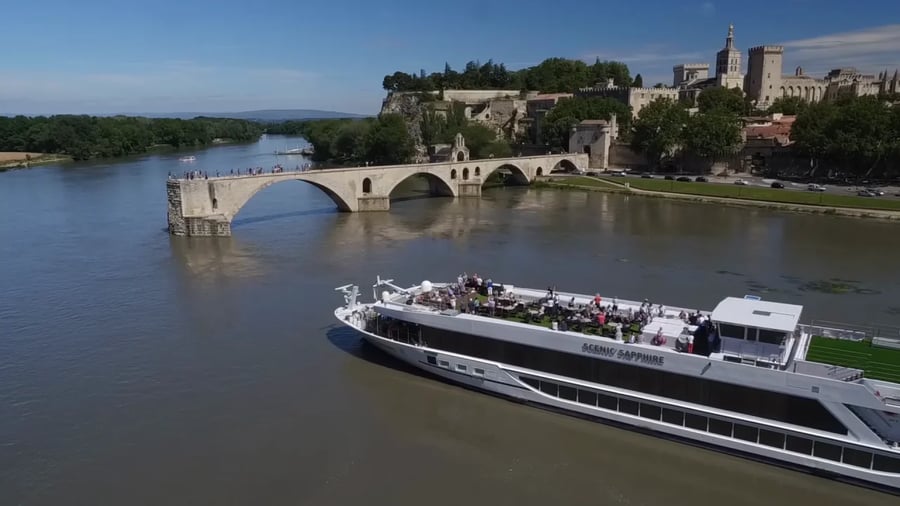
Portugal’s Douro River offers one of the most visually rewarding river cruise routes in Europe: terraced vineyards climbing steep hillsides above the river, ancient stone villages, and the baroque architecture of Porto at the western end of the route. The cruise passes through Pinhão, Régua, and Pocinho, with optional add-on extensions to Lisbon or Madrid for travelers who want more time in Iberia. From the American East Coast, Portugal is among the fastest European destinations to reach by direct flight, with nonstop service from Washington, New York, and Boston cutting the transit time that can make some European cruise itineraries feel front-loaded with travel fatigue.
Scenic’s all-inclusive pricing covers all meals and premium beverages on board, excursions and events, local guides at every stop, return airport transfers when flights and hotels are booked through the company, and all gratuities. The single-fare model removes the budget uncertainty that makes river cruises difficult to plan for passengers managing a fixed income. Passengers who want a spa day or additional relaxation time in the lounges can do so whenever they aren’t ashore.
Accessible suites are available on all Scenic river ships, located near the reception desk and featuring bathtubs with railings, wheelchair-accessible showers, bathroom stools, and wider entry doors. Elevators reach all floors except the sun deck. Shore excursions are offered at various ability levels. For passengers with limited mobility who still want the Douro experience, Scenic’s accessible cabin infrastructure is among the most specifically designed on any river cruise line in this segment. The Douro itself is a genuinely beautiful river, with the terraced vineyards of the Douro Valley wine region, a UNESCO World Heritage Site, climbing steeply above both banks for much of the route. The port wine culture rooted in this valley, with Sandeman, Taylor’s, and other historic producers’ lodges visible from the water in some sections, adds an additional cultural dimension, making the river itself feel like a destination, not simply a means of transportation between stops.
Credit: Tauck
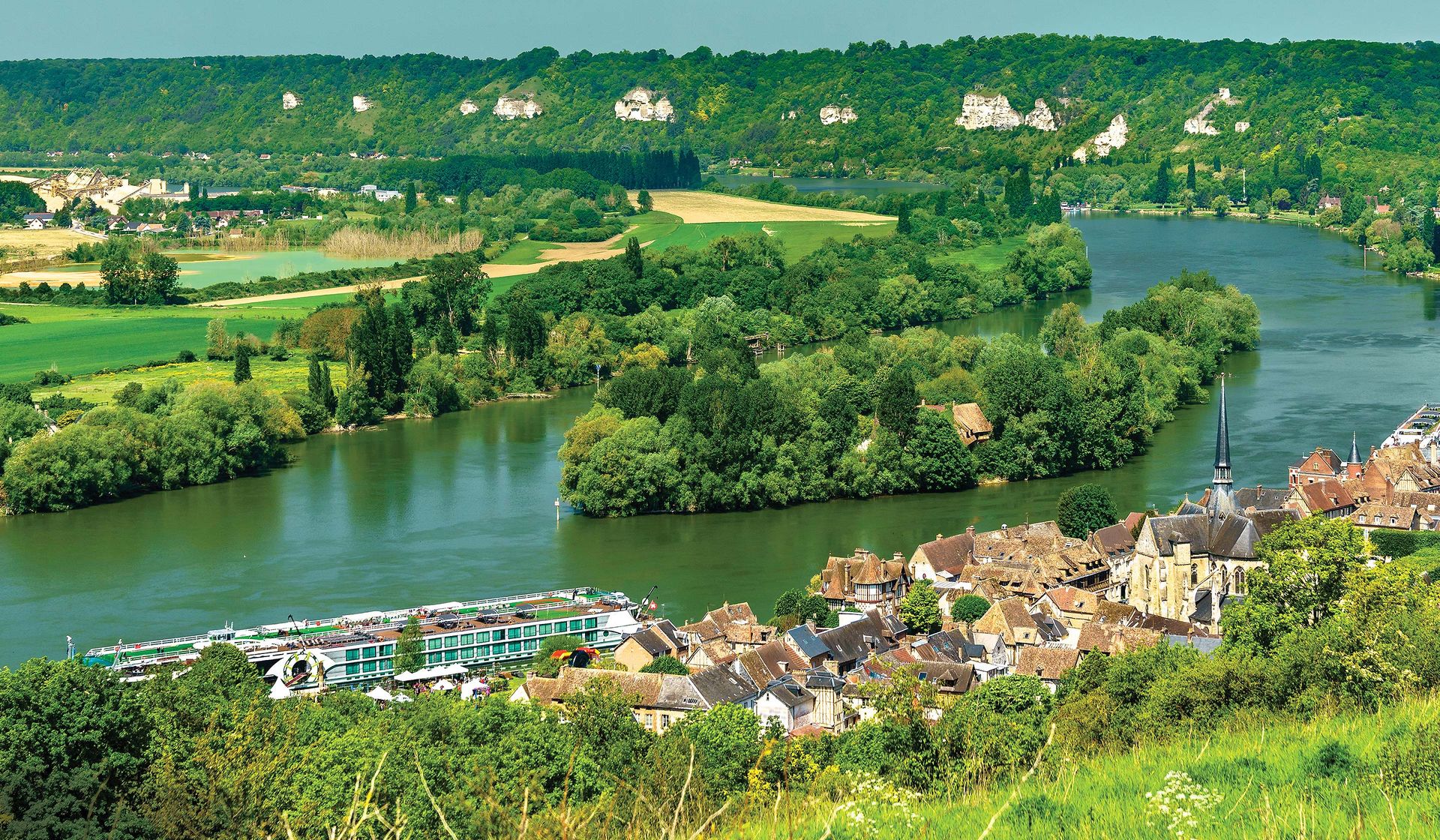
A Seine River cruise with Tauck covers the most historically dense river route on this list: Paris and Versailles, the D-Day beaches of Normandy, and the wine regions of Bordeaux, all depending on the itinerary. Tauck’s all-inclusive fares cover airport transfers, pre-cruise hotel stays, all shore excursions, and concierge service, removing the same post-booking cost surprises that make budgeting difficult on partially inclusive lines.
The solo supplement policy is one of the line’s most genuinely distinctive features for older travelers: there are no single supplements on any of Tauck’s European river cruises. Solo seniors, whether traveling alone by preference or because they no longer have a travel partner, pay the same per-person rate as couples. On a river cruise, where solo travelers often face significant single supplements that effectively penalize independent travel, this policy represents a meaningful cost saving.
Staterooms and suites are spacious, with stylish suites offering separate sleeping and sitting areas, walk-in closets, and private French balconies. Sun decks and whirlpool areas provide social space outside the dining room. The shore excursion program includes exclusive early access to Monet’s Giverny before standard opening times, and the Normandy itinerary adds a particular weight to a part of France whose history resonates particularly strongly with older travelers who grew up in the postwar era.
Tauck is clearest among these five lines about its mobility limitations: the line is not well-suited for full-time wheelchair or motorized scooter users, and it recommends that guests with significant mobility concerns travel with an able-bodied companion. For active seniors without serious mobility limitations, however, it delivers the most curated shore excursion program on this list. The Giverny early access is a specific example of Tauck’s approach: getting passengers into the gardens before the general public arrives removes the crowd density that can make Monet’s most famous site feel rushed and impersonal on a standard timed visit. The Normandy beach itinerary carries a particular emotional weight for older travelers who grew up in the postwar era, and Tauck’s guides approach this part of the trip with the historical seriousness it deserves.
