From a 2020 Ford Ranger with the lowest five-year ownership cost on the list to a GMC Sierra Denali that brought hands-free driving to trucks in 2020
Credit: Nissan
A used pickup truck can save a buyer thousands of dollars compared to a new model, but only if it holds up after the factory warranty runs out. Anyone who buys secondhand inherits another driver’s habits, and a truck bought to tow a trailer, climb a fire road, or haul lumber every weekend needs to prove it can still do that job years down the line. Reliability separates a genuine bargain from a costly mistake, and the stakes are higher with trucks because owners tend to push them harder than with sedans or crossovers. A transmission that slips under a light load in a commuter car turns into a serious problem once it strains against a loaded trailer hitch on a steep grade.
The gap between a truck’s sticker price and its true cost shows up years later, in repair bills, insurance premiums, and fuel receipts. Two trucks with similar price tags can diverge sharply once maintenance costs and breakdown frequency are factored in, and a shopper who ignores that gap risks trading one expense for another rather than avoiding it entirely. Certified pre-owned programs offer a partial hedge, extending manufacturer warranties on used models that meet age and mileage limits, but those windows close fast. A truck that ages out of its CPO eligibility this year won’t qualify again next year, and that timeline puts real pressure on buyers to act while coverage still applies.
The eight trucks below appear in U.S. News & World Report, covering used pickup models from the 2020 through 2023 model years, scored on J.D. Power’s Quality and Dependability index alongside five-year ownership cost estimates. J.D. Power’s scale runs from a Best tier at 91 to 100, down through Great at 81 to 90, Average at 70 to 80, and Fair below that, and every model featured here lands in the Great range without a single truck climbing into Best.
Credit: Ford
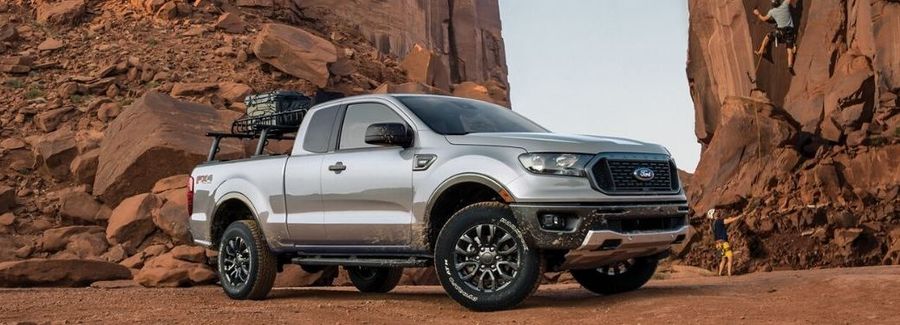
The 2020 Ford $F Ranger posts a J.D. Power dependability score of 88, tying it for the highest mark on this list, and pairs that number with a five-year ownership cost of nearly $27,200, low for its class. Ford brought the Ranger back to the U.S. market in 2019 after a long absence, equipping it with a turbocharged four-cylinder engine as the sole powertrain choice. Buyers can choose a four-person or five-person cab and rear- or four-wheel drive, and the truck’s towing and payload figures rank among the best in the midsize segment.
The Ranger’s interior trades some polish for durability, with a layout that feels spartan next to newer rivals but holds up well against daily wear. Its infotainment system remains easy to navigate despite its age, a detail that matters for a truck likely to spend years in a used buyer’s driveway. Ford backs the Ranger with a Certified Pre-Owned program that covers vehicles up to six years old, and a 2020 model still qualifies for a few more months before it ages out.
An 88 score also happens to represent the ceiling for this entire group of used trucks, since none of the eight models here climbs into J.D. Power’s Best category above 91. This ranking places the Ranger at the top of a tier where every other truck on this list also sits, and the real separation between them comes down to ownership costs rather than raw dependability. For a midsize truck aimed at buyers who need real towing and payload numbers without a full-size price tag, sitting at the top of that shared tier while keeping expenses low gives the Ranger a distinct edge over larger, thirstier rivals that post similar reliability scores.
Buyers cross-shopping midsize trucks should weigh the Ranger’s narrow powertrain lineup against that cost advantage. A single turbocharged four-cylinder simplifies the ownership experience, since there’s no V6 or V8 alternative to compare against, and that simplicity likely contributes to the truck’s low projected maintenance costs. Anyone who values predictable running costs over engine variety will find the Ranger’s straightforward approach easier to budget for than those of pickups with multiple engine choices.
Low upkeep costs and strong towing numbers arrive together in the Ranger, a rare case where affordability and capability don’t trade off against each other. Shoppers who need a truck for regular hauling without a luxury price tag will find few used options that strike a balance between cost and output.
Credit: Toyota
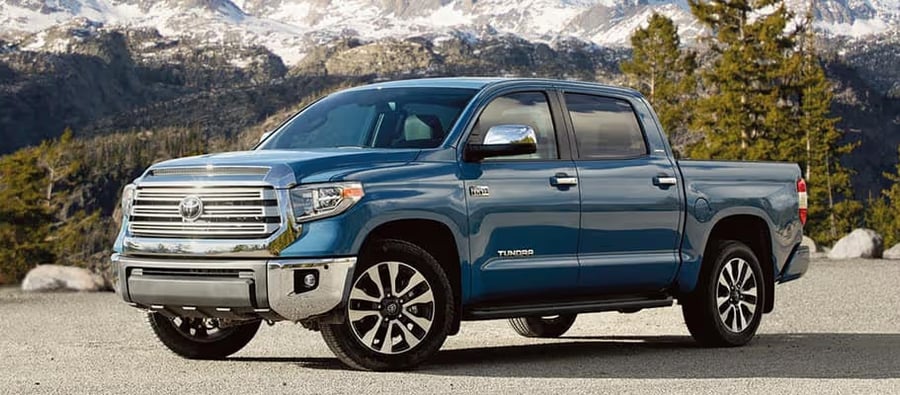
The 2020 Toyota $TM Tundra carries a J.D. Power score of 88, matching the Ranger for the top mark on this list, and is powered by a 5.7-liter V8 engine that has powered the truck with few changes for more than a decade. This mechanical consistency gives the Tundra a reputation for outlasting newer, more complex powertrains, since fewer components means fewer parts that can eventually fail. The cabin dwarfs most rivals in sheer size, giving passengers a roomy feel closer to a full-size SUV than a typical pickup.
Ownership costs tell a different story than reliability alone. Five-year expenses land near $35,400, or about $7,080 annually, driven mostly by the V8’s thirst for fuel alongside insurance and maintenance costs that run higher than most rivals in this segment. The Tundra’s technology feels its age, too, and ride quality remains merely adequate, falling short of exceptional. Toyota did add Apple $AAPL CarPlay and Android Auto starting with the 2020 model year, closing a gap that had frustrated earlier buyers.
Toyota’s Certified Pre-Owned program only covers vehicles six years old or newer, which narrows the window for finding a 2020 Tundra with that extra coverage still intact. Buyers willing to accept higher running costs get a truck whose core mechanicals have already proven themselves across hundreds of thousands of miles in fleet and personal use, a trade-off that favors anyone who values long-term durability over a low monthly fuel bill.
The gap between the Tundra’s $35,400 five-year cost and the Ranger’s $27,200 illustrates how two trucks can share an identical J.D. Power score of 88 while diverging sharply on what they actually cost to own. Fuel economy explains most of that difference, since a naturally breathing V8 simply consumes more gasoline than a turbocharged four-cylinder over the same distance. Buyers drawn to the Tundra for its size and mechanical simplicity should plan around that fuel expense instead of treating the reliability score alone as a proxy for total cost.
Passenger space remains one of the Tundra’s clearest advantages over smaller rivals on this list. The cabin’s dimensions suit families or crews who need to move people as often as cargo, and that interior volume doesn’t come at the expense of the durability that has defined this generation of Tundra since its debut.
Credit: Ford
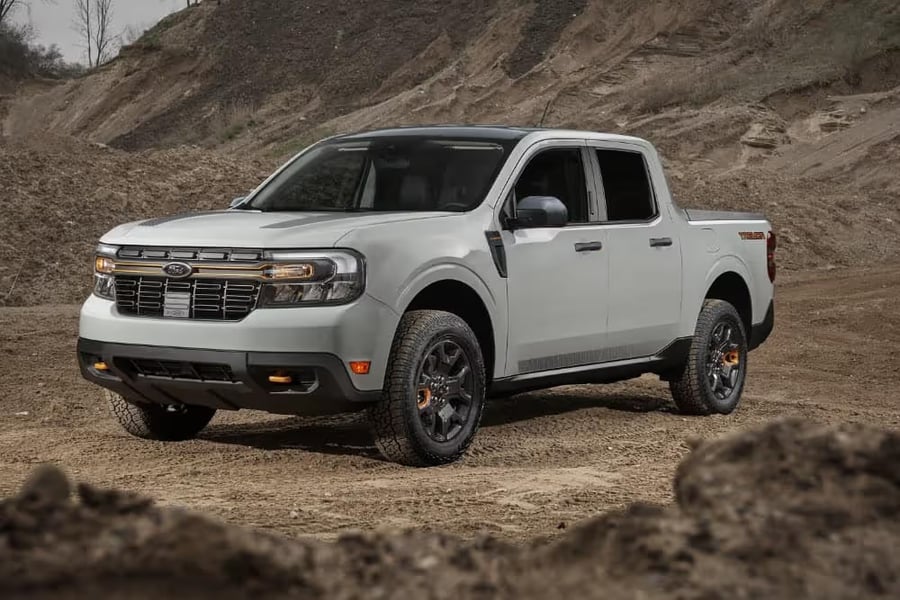
The 2023 Ford $F Maverick earns a J.D. Power score of 85 alongside a five-year ownership cost score of 8.1 out of 10, a pairing that lands it squarely in the Great tier while keeping running costs down. Ford introduced the Maverick for the 2022 model year as a compact, unibody truck built around affordability and efficient packaging instead of maximum size. It still handles most everyday truck duties despite its smaller footprint, a balance that has made it popular with buyers who don’t need full-size hauling capacity.
Ford offered two powertrains, and the choice between them shapes what a used buyer gets. The standard hybrid delivers exceptional fuel economy but comes only with front-wheel drive, limiting its use in snow or off-road conditions. The turbocharged four-cylinder sacrifices some efficiency for available all-wheel drive, making it the pick for buyers who need traction beyond paved roads. Neither engine detracts from the truck’s overall dependability, and both contribute to costs that remain well below those of most competitors in the broader truck market.
Ford’s Certified Pre-Owned coverage extends to vehicles six years old and 80,000 miles, a wide enough window that finding a certified 2023 Maverick shouldn’t prove difficult. Certified models carry a one-year limited warranty plus extended powertrain protection, and hybrid variants add coverage specific to their battery and electric components. For buyers prioritizing fuel savings without giving up truck utility entirely, the Maverick offers a clear path to both.
An 8.1 ownership cost score puts the Maverick near the top of this entire list on that measure, trailing only the Ranger among the eight trucks featured here. Its compact dimensions explain much of that advantage, since a smaller, lighter unibody structure demands less fuel and fewer expensive components than the body-on-frame trucks that dominate the full-size segment. Buyers who don’t need to tow a large trailer or haul heavy equipment regularly stand to save the most by choosing the Maverick over a larger alternative with similar reliability.
The unibody construction that keeps the Maverick efficient also shapes what it can’t do as well as body-on-frame rivals. Maximum towing and payload figures trail the segment’s larger trucks, and buyers who occasionally need to move a boat or heavy trailer should confirm the Maverick’s specific configuration can handle that job before committing. For the daily errands, light hauling, and commuting that make up most truck ownership, though, the Maverick’s efficiency advantage rarely comes with a meaningful trade-off in capability.
Credit: Nissan
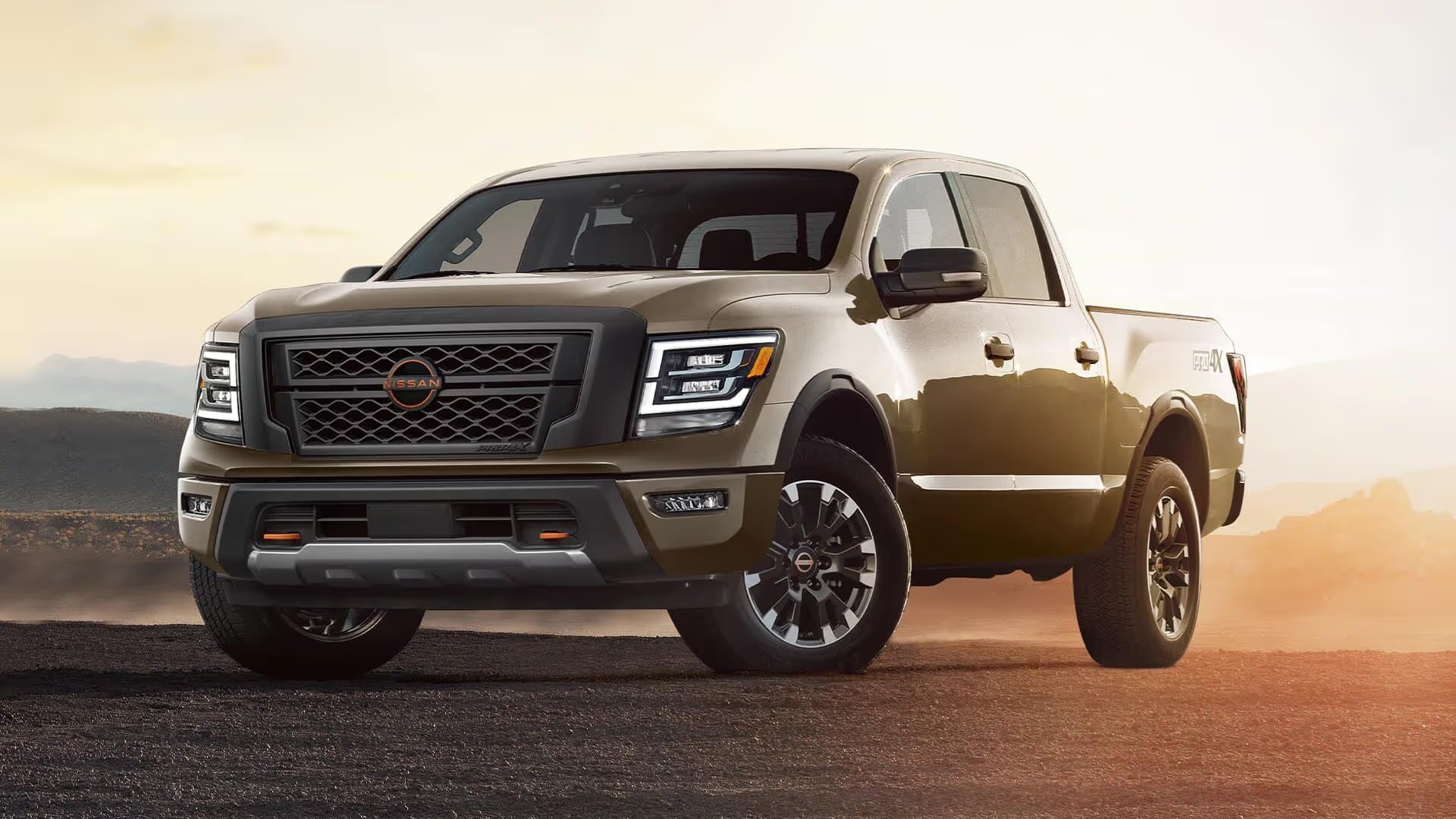
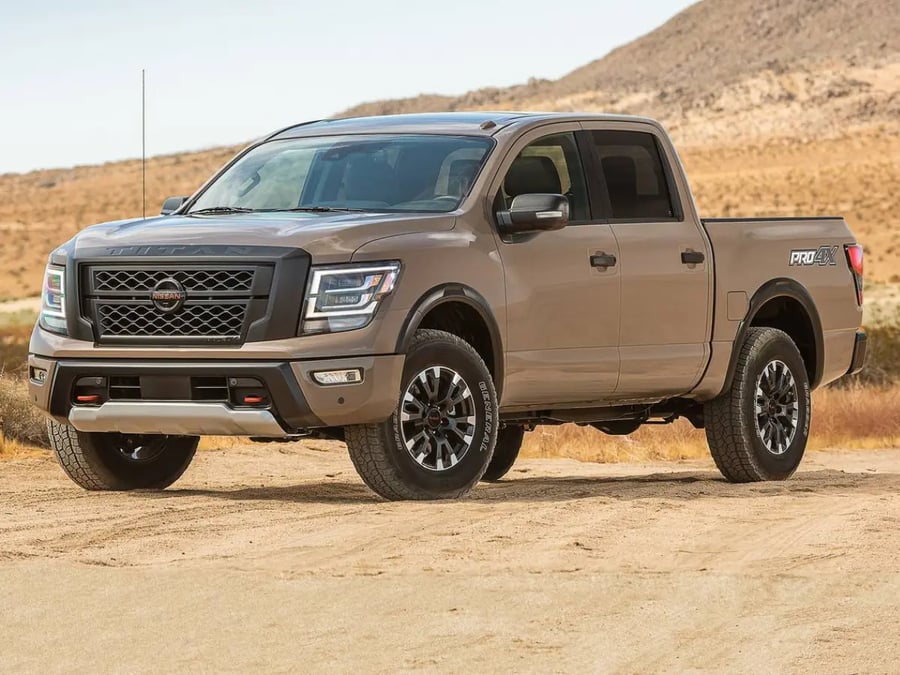
The 2023 Nissan Titan scores 88 on J.D. Power’s dependability index, tying the Ranger and Tundra for the top mark here despite a comparatively lukewarm reception when it launched, and carries an ownership cost score of 7.4 out of 10. Every Titan uses a 5.6-liter V8 engine that has demonstrated durability across rear- and four-wheel-drive configurations alike, and this mechanical consistency has helped the truck build a reputation that outpaced its early reviews. Nissan offered two cab styles and two bed lengths when the Titan was new, giving buyers some flexibility even though its towing and payload figures fall short of class leaders.
The Titan received a full redesign in 2020, and Nissan has made only minor updates since, meaning a 2023 model shares much of its mechanical DNA with trucks that have already logged years of real-world use. Wireless Apple $AAPL CarPlay arrived on higher trims starting in 2023, giving later models a small technology edge over earlier versions of this generation. Buyers cross-shopping within the Titan lineup should weigh that trim-dependent feature against the base model’s lower price.
Nissan’s Certified Pre-Owned program caps eligibility at 80,000 miles and six years of age, and a Titan found within those limits can carry a factory warranty forward. Proven components paired with available CPO backing give buyers a way to secure a full-size truck’s capability while limiting the financial exposure that usually comes with an unproven or newly redesigned model.
A weak early reputation followed by a strong dependability score makes the Titan an unusual entry on this list, since most buyers still associate the nameplate with its lukewarm debut instead of its later track record. This mismatch between perception and performance can work in a used buyer’s favor, since a truck with an underappreciated reputation often carries a lower asking price than rivals with a similar J.D. Power score. Shoppers willing to look past the Titan’s early reviews stand to find one of the better values among full-size trucks on this list.
Credit: Ram
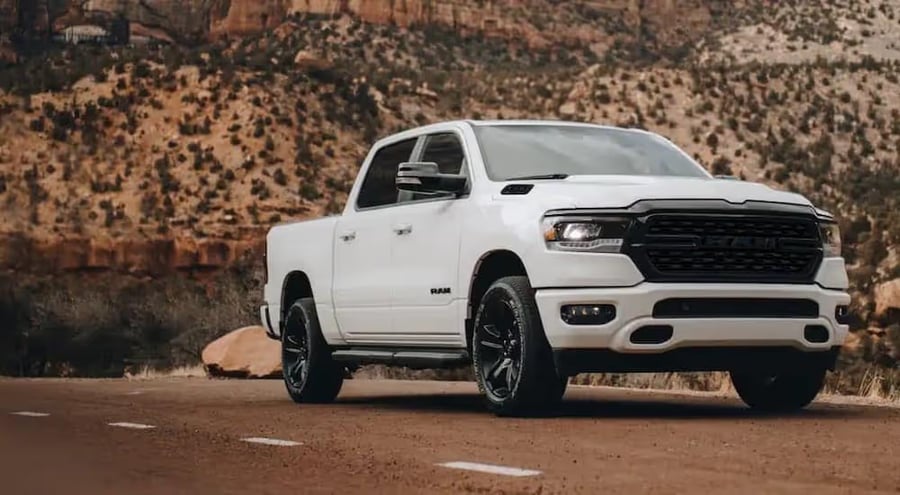
The 2023 Ram 1500 scores 88 in J.D. Power, placing it at the top of the Great tier, and has a five-year ownership cost estimate of 7.3 out of 10. Ram offers this generation with a wider spread of engine options than most rivals, including a base V6, two distinct V8 configurations, and a turbodiesel for buyers who prioritize towing range and fuel economy over outright horsepower. This variety lets shoppers match a specific powertrain to a specific use case, rather than settling for a single, one-size-fits-all engine.
Cab and bed configurations further multiply the Ram’s flexibility, and Ram pairs that mechanical variety with an interior that feels more upscale than most full-size competitors. Ample safety technology comes standard across most trims, and clever cargo solutions, including a bed that adapts to different load shapes, add practical value beyond raw towing numbers. New Ram 1500s have historically performed well in J.D. Power’s ratings, and that pattern holds as the trucks age into the used market.
Ram’s Certified Pre-Owned program covers trucks up to 10 years old with under 120,000 miles, a notably wider window than most competitors offer, though the program’s core protection covers only the powertrain. Ram supplements that with a three-month, 3,000-mile bumper-to-bumper warranty for buyers who want broader short-term coverage. Shoppers who need the security of a warranty that extends beyond typical CPO limits will find the Ram’s extended age and mileage ceilings hard to match elsewhere on this list.
This extended CPO window matters more for the Ram than for most trucks here, since a 10-year eligibility cutoff opens up model years that would already be ineligible under Ford $F, Toyota $TM, or Nissan’s programs. A buyer shopping strictly within CPO coverage gets access to a much larger pool of used Ram 1500s than the pool available for competing full-size trucks, even though the powertrain-only protection covers less than a typical bumper-to-bumper plan. Weighing that broader selection against narrower coverage comes down to how much a shopper values choice over comprehensive protection.
The turbodiesel engine option deserves particular attention for buyers focused on long-distance towing, as it delivers a fuel-economy advantage that none of Ram’s gasoline engines can match. This efficiency comes without sacrificing the dependability score that applies across the lineup, making the diesel a reasonable choice for anyone who tows frequently and wants to minimize fuel stops on long trips.
Credit: Jeep
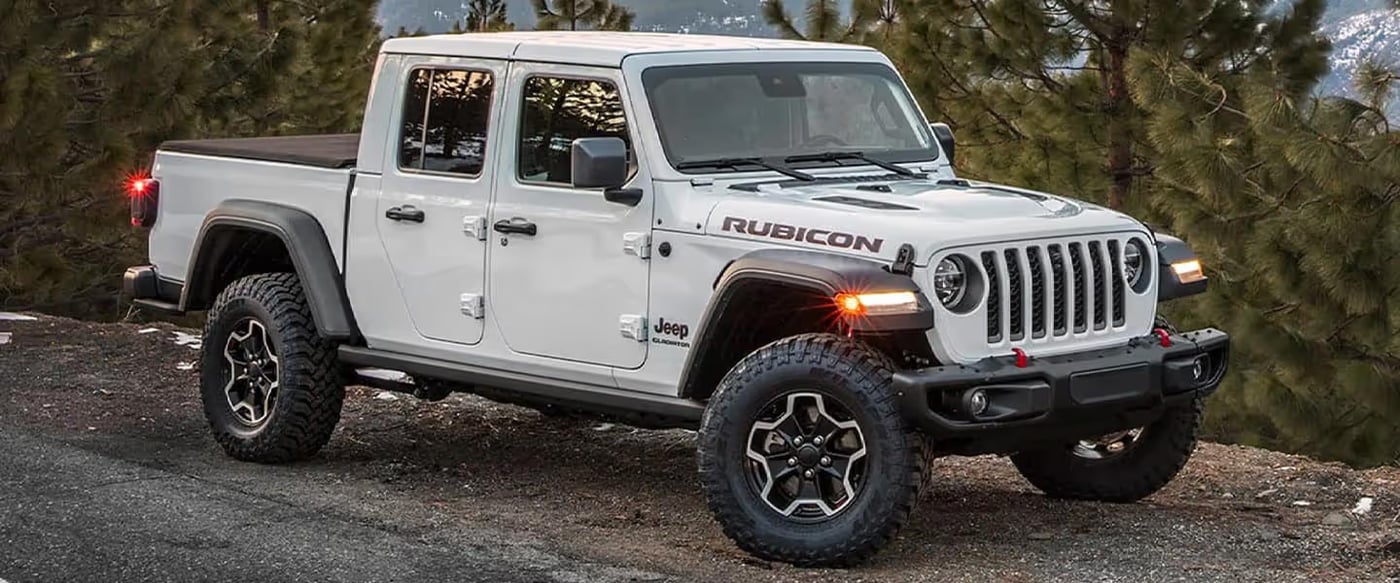
The 2023 Jeep Gladiator posts a J.D. Power score of 87, just below the top tier here, built on a Wrangler body, with a removable top, a truck bed, and a rear suspension borrowed from the Ram 1500. This pairing gives the Gladiator off-road capability that few other trucks on this list can match, along with towing performance that outperforms expectations for a vehicle this size. Buyers can choose a standard V6 or an optional turbodiesel, and V6 models ship with a manual transmission as the default choice, with an automatic available for those who prefer it.
Build quality contributes heavily to the Gladiator’s strong reliability score, and its V6 has proven itself across years of use in both the Gladiator and its Wrangler sibling. The turbodiesel option delivers excellent fuel economy but has developed a reputation for issues as those engines age, a trade-off buyers should weigh against the fuel savings it offers. Anyone cross-shopping the two engines should consider how many miles they plan to log before deciding which trade-off suits them.
Jeep’s Certified Pre-Owned program covers vehicles up to five years old, making a 2023 Gladiator an easy candidate for certification given its recent model year. This accessibility, combined with strong build quality and class-leading off-road credentials, makes the Gladiator a standout pick for buyers whose truck needs extend beyond pavement and into terrain that would challenge most other options on this list.
The Gladiator occupies a niche that none of the other seven trucks here directly fills, since none pairs a removable top and doors with genuine towing capability and a dependability score in the Great range. This pairing costs buyers some of the cargo volume and interior refinement that dedicated trucks such as the Ranger or Silverado offer, since the Wrangler-derived body prioritizes open-air versatility over maximum bed space. Buyers should treat the Gladiator less as a direct alternative to a conventional midsize truck and more as a distinct category built around a specific kind of use.
Manual transmission availability on V6 models sets the Gladiator apart from every other truck on this list, all of which ship exclusively with automatics in their most common configurations. Drivers who prefer manual control, particularly in low-speed off-road situations where precise throttle input matters, will find the Gladiator one of the few new-generation trucks still offering that option. Buyers who don’t need or want a manual transmission can still opt for the automatic without sacrificing any of the truck’s off-road hardware.
Credit: Chevrolet
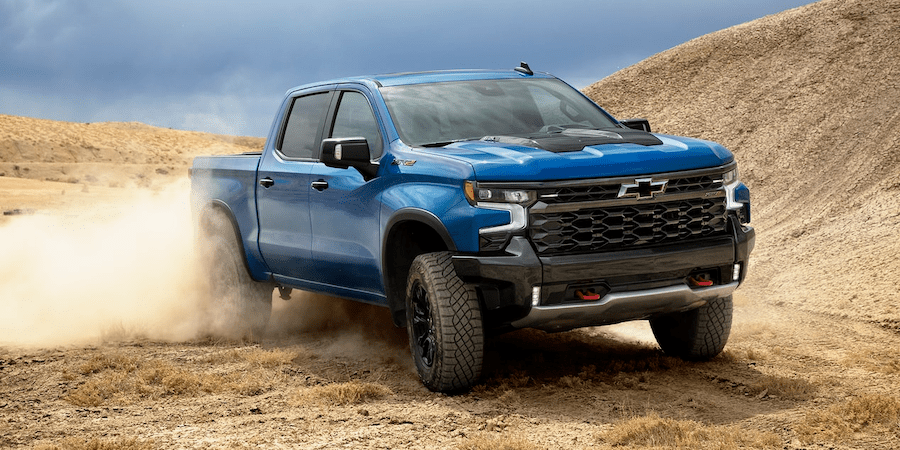
The 2022 Chevrolet Silverado 1500 carries a J.D. Power score of 87 and a five-year ownership cost rating of 7.2 out of 10, figures that place it firmly in the Great tier for full-size trucks. Chevrolet refreshed the Silverado’s exterior styling for 2022 and updated interiors across most trims, giving the model year a noticeably different feel from its immediate predecessors. Engine choices span a turbocharged four-cylinder, two V8 options, and a turbodiesel, giving buyers a wide spread of capability and efficiency to choose from within a single model year.
Technology saw meaningful upgrades for 2022 as well, and GM’s hands-free Super Cruise driving system became available on top-tier High Country trims, a feature that other GM models had previously claimed exclusively. The off-road-focused ZR2 trim also debuted this year, adding a genuine off-road competitor to the Silverado lineup. Buyers should know that ongoing supply chain disruptions during this production year left some trucks without certain features, such as heated seats, though factory updates or dealer retrofits later fixed many of those omissions.
Chevrolet’s Certified Pre-Owned program covers trucks under six years old with fewer than 75,000 miles, and a 2022 Silverado found within those limits qualifies for the extra protection that CPO status provides. Given the strong reliability score and the added coverage available through certification, buyers have a clear incentive to seek out a CPO-eligible Silverado over a comparable model that falls outside the program’s mileage cutoff.
Engine variety gives the 2022 Silverado a level of flexibility that few trucks on this list can match, spanning a fuel-efficient turbocharged four-cylinder at one end and a torque-heavy turbodiesel at the other, with two V8 configurations filling the space between. Buyers can effectively choose their own balance of economy and capability within a single model year, a rare degree of choice compared with trucks that offer only one or two engine options. The Silverado’s dependability score holds steady across that entire range, suggesting the variety doesn’t come at the cost of consistency.
The supply chain shortages that affected some 2022 builds mean shoppers should inspect individual trucks carefully rather than assume every unit matches the full factory specification sheet. A missing feature, such as heated seats, doesn’t affect the truck’s underlying mechanical reliability, but it can affect resale value and day-to-day comfort, so buyers should confirm exactly which features a specific used Silverado includes before finalizing a purchase.
Credit: GMC
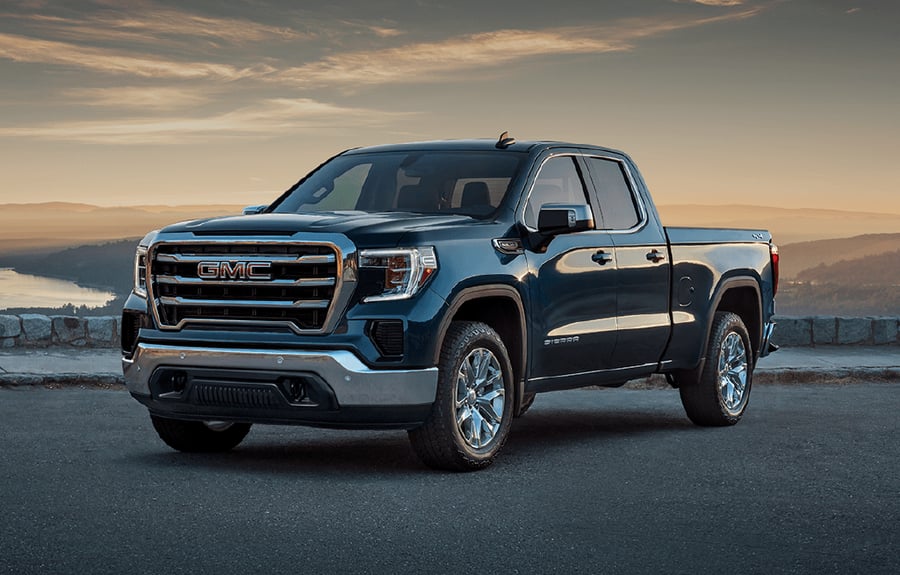
The 2020 GMC Sierra 1500 earns a J.D. Power score of 86, placing it in the Great tier alongside most other full-size trucks on this list, while its ownership cost estimate comes in at $34,000 over five years, above average for the class. GMC builds the Sierra on the same platform as the Chevrolet Silverado, sharing powertrains but differentiating the truck through its own styling and trim strategy. Engine choices span a turbocharged four-cylinder, a turbodiesel, a V6, and two distinct V8 options, giving buyers nearly as much mechanical variety as its Chevrolet counterpart offers.
The top-tier Sierra Denali trim transforms the truck from a work-focused vehicle into something closer to a luxury cabin, without sacrificing the towing and hauling capability that defines the rest of the lineup. Denali models introduced GM’s Super Cruise hands-free driving system for the first time in 2020, a feature that later spread to other trims and models across the brand. This early adoption gives a used 2020 Denali a technology edge that took competitors years to match.
Higher projected costs mean buyers should budget carefully. Roughly $34,000 across five years covers fuel, insurance, maintenance, and repairs, a total that runs above what similarly reliable rivals such as the Ranger or Maverick typically demand. GMC’s Certified Pre-Owned program covers trucks up to six years old, so a 2020 Sierra still qualifies now, though that window is closing the same way it has for other trucks from this model year.
Positioning explains much of the Sierra’s higher cost relative to its Silverado platform-mate, since GMC markets the Sierra toward buyers seeking a more premium experience and prices it accordingly across most trims. This positioning shows up in ownership costs, even though the underlying mechanical components and dependability score closely track those of the Chevrolet version. Buyers who want the Silverado’s reliability without the Sierra’s added expense should compare both directly, since choosing between them often comes down to styling and trim preferences rather than any meaningful difference in durability.
Shared engineering with the Silverado means most maintenance and repair procedures apply equally to both trucks, so parts availability and mechanic familiarity shouldn’t differ much between them. A used Sierra buyer inherits the same fundamental reliability as a Silverado buyer while paying a premium mainly for GMC’s styling, trim exclusivity, and the Denali’s upscale features, a trade-off worth weighing against a comparable Silverado configuration before settling on either truck.
