
From a supercar-fast Lucid Gravity to a Ram 1500 whose back seat rivals a luxury lounge, the best six-seaters for every need
Credit: Hyundai
The six-seat vehicle market is considerably wider than most shoppers assume. When the family outgrows a five-passenger car but a full eight-seat SUV feels excessive — or when the cargo area keeps losing the argument to the third row — a six-passenger configuration hits a useful middle point. The options include not just three-row SUVs but also pickup trucks with front bench seats, which broadens the category beyond the crossover segment that dominates most similar rankings.
The case for a six-seater often comes down to a single practical detail: the ability to configure the second row as captain’s chairs without eliminating a seat entirely. In a standard five-seater, adding a bench in a vehicle that wasn’t designed for it is usually not an option. In a six-seater, the front bench seat or second-row configuration is a deliberate design choice that the manufacturer built around, so the legroom, sightlines, and ergonomics reflect engineering intent, not accommodation. That distinction matters over the years of daily use, especially for passengers in the middle seat.
These seven models come from U.S. News and World Report’s selection of the best six-seater vehicles, spanning luxury electric SUVs, full-size pickup trucks, midsize three-row SUVs, and large family SUVs. The list covers a wide range of price points and use cases, evaluated on U.S. News overall scores, interior scores, and category-specific criteria including safety, fuel economy, and passenger space, drawn from a review of both established nameplates and vehicles new to the segment for 2026 and 2027. The list spans two pickup trucks, four three-row SUVs, and one two- or three-row luxury EV, with model years ranging from 2025 to 2027, compiled using U.S. News overall scores, category-specific award credentials, and firsthand reviewer assessments from U.S. News vehicle testers across seven models.
Credit: Lucid
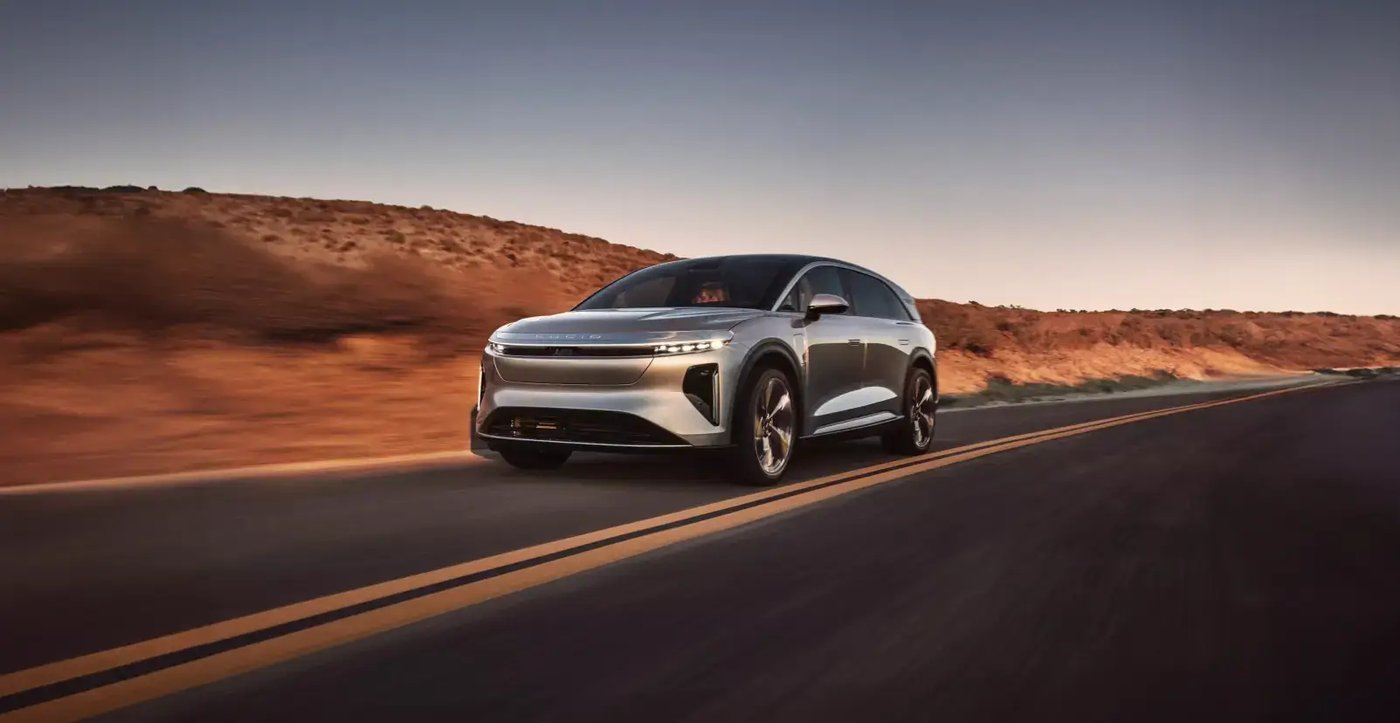
The Lucid $LCID Gravity earns a perfect 10 out of 10 U.S. News overall rating alongside an interior score of 9.8 out of 10, the highest scores of any vehicle on this list. Senior Editor John Vincent describes the Gravity’s performance as exceptional and notes that its maximum range of 450 miles far outpaces most electric competitors. The second row offers 42.6 inches of legroom, and the third row provides 33.9 inches, both generous figures for a three-row configuration.
The Gravity comes standard with two rows of seating but is available with three, which is the configuration relevant to this list. The base dual-motor powertrain produces 560 horsepower with all-wheel drive, and the upgraded powertrain reaches 828 horsepower, also with all-wheel drive. Vincent characterizes the vehicle as powerful enough to feel like a supercar while still delivering the practicality and space of a minivan, a description that captures the unusual position the Gravity occupies in the market.
A new, more affordable Touring base trim arrives for 2026, though the Gravity remains expensive by most households’ standards. The perfect overall rating, the class-leading range, and the dual powertrain structure covering buyers at two very different performance levels give the Gravity a portfolio of credentials that no other three-row EV currently assembles in a single model. U.S. News designates it the best six-passenger vehicle on this list. The Gravity’s 450-mile range is also a specific advantage over EVs that benchmark closer to 300 miles, since it gives families with longer travel patterns a buffer that most electric competitors cannot provide. Families who put the vehicle into regular long-distance use will find the difference between 300 and 450 miles of range measurable in the number of charging stops they need to plan around. That range also eliminates a common objection to three-row EVs: that passenger load and cargo weight together will degrade range to the point where the vehicle becomes impractical for family road trips.
Credit: Ford
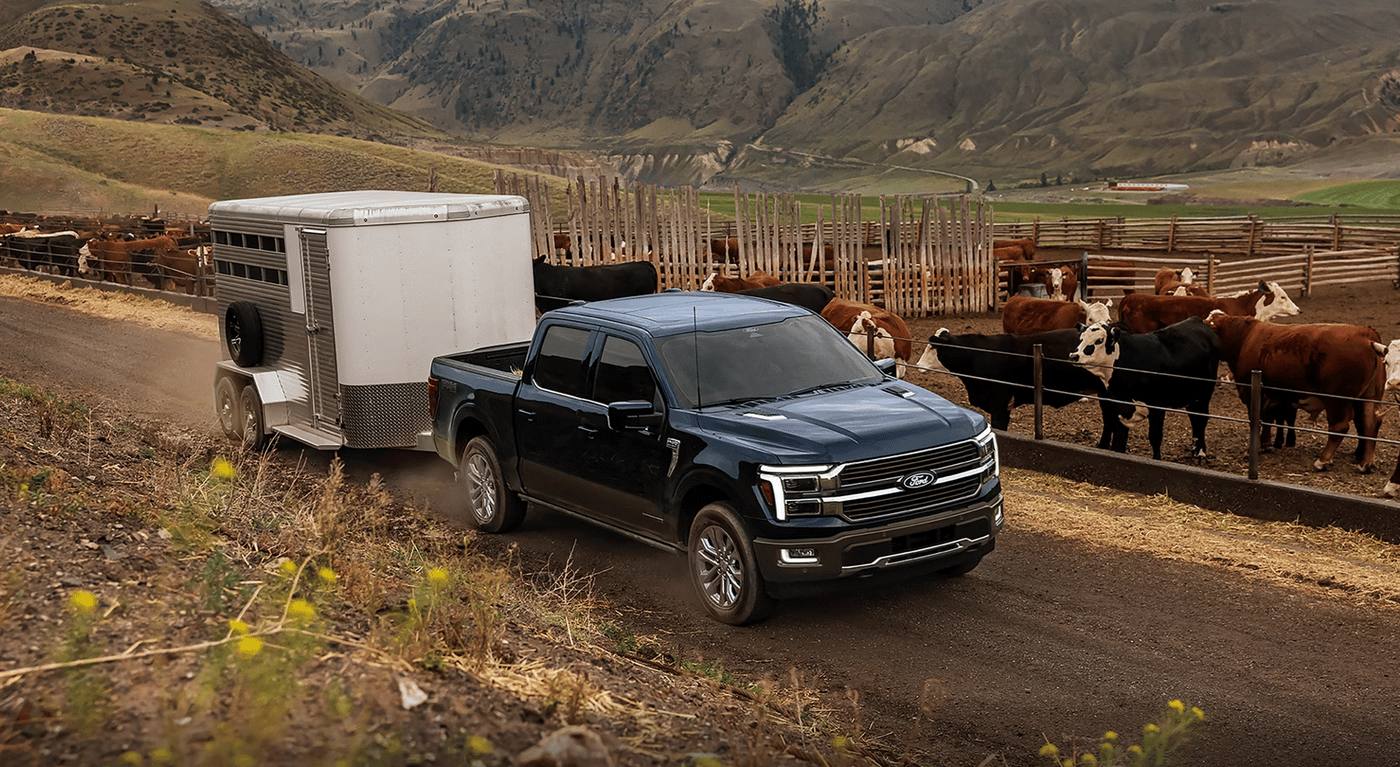
The Ford $F F-150 earns a U.S. News overall rating of 9.6 out of 10 with an interior score of 8.6 out of 10. The truck’s six-seat configuration depends on a specific option: the SuperCab and SuperCrew cab variants can be fitted with a front bench seat, which pushes capacity from five to six. The second row offers 33.5 inches of legroom, and the truck’s wide range of powertrains, technology, and comfort configurations means buyers can tailor it from a practical work truck to something close to a luxury cabin on wheels.
The F-150 holds the 2026 Best Full-Size Pickup Truck for the Money award from U.S. News, a credential that reflects its value across multiple trim levels. The more affordable F-150 configurations handle the six-seat brief without requiring a buyer to pay for the higher-end packages, though those upgrades are available for buyers who want them. Worth noting: the fully electric F-150 Lightning does not qualify here, as Ford offers it only in a five-seat Crew Cab configuration.
The F-150’s presence on a six-seater list makes a specific point about what that category can include. Most buyers searching for six-passenger vehicles gravitate toward SUVs and crossovers, and the truck’s ability to carry the same passenger count while also providing bed utility gives it a distinct use case. For buyers who need both genuine cargo-hauling capability and a six-person passenger load, the F-150 is the only option on this list that delivers both without a third row. The F-150’s 2026 Best Full Size Pickup Truck for the Money award also confirms that this six-seat capability comes at a price point that doesn’t require buyers to step into premium trim territory to access the front bench option. A buyer who prioritizes utility during the week and passenger capacity on weekends can do both in the same vehicle, which no three-row SUV on this list can replicate.
Credit: Hyundai
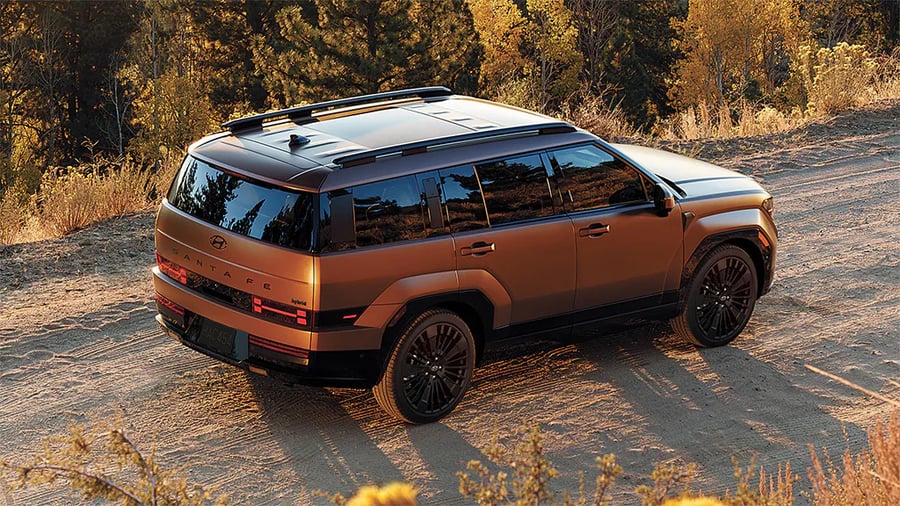
The Hyundai Santa Fe carries a U.S. News overall rating of 9.3 out of 10 and an interior score of 8.4 out of 10. Vehicle Testing Editor Zach Doell notes that the base model delivers the most value-oriented configuration on the list, and that the first two rows feel warm and welcoming even in standard trim. The second row offers 41.5 inches of legroom. Standard features are plentiful even at the entry level, which supports the value case.
The third row is the Santa Fe’s acknowledged limitation. At 30 inches of legroom, it trails every other three-row SUV on this list, and Doell’s characterization is direct: it puts passengers in a position comparable to a cut-rate economy airline seat. Hyundai made a deliberate trade-off here, allocating that space to the cargo area instead, which gives the Santa Fe competitive luggage room for a vehicle of its size.
The Santa Fe earned finalist status for the 2026 Best 3-Row SUV for the Money award, which reflects the overall package accurately: it is a sharp-looking midsize SUV with strong value credentials and a well-equipped cabin, built for buyers who need the sixth seat occasionally and the cargo space consistently. Buyers who intend to carry three-row passengers on a regular basis should weigh the 30-inch third-row legroom honestly before committing. The Santa Fe’s strong standard feature content across all trims means buyers who do use that third seat occasionally — for children, shorter adults, or short trips — get a fully equipped vehicle at the most accessible entry point on this list. The Santa Fe’s value orientation also means it competes effectively against more expensive three-row SUVs, whose additional features buyers in this segment may not need. The Santa Fe also earns a U.S. News overall rating of 9.3 out of 10, which places it among the higher-rated vehicles in the midsize three-row SUV class despite its value positioning.
Credit: Hyundai
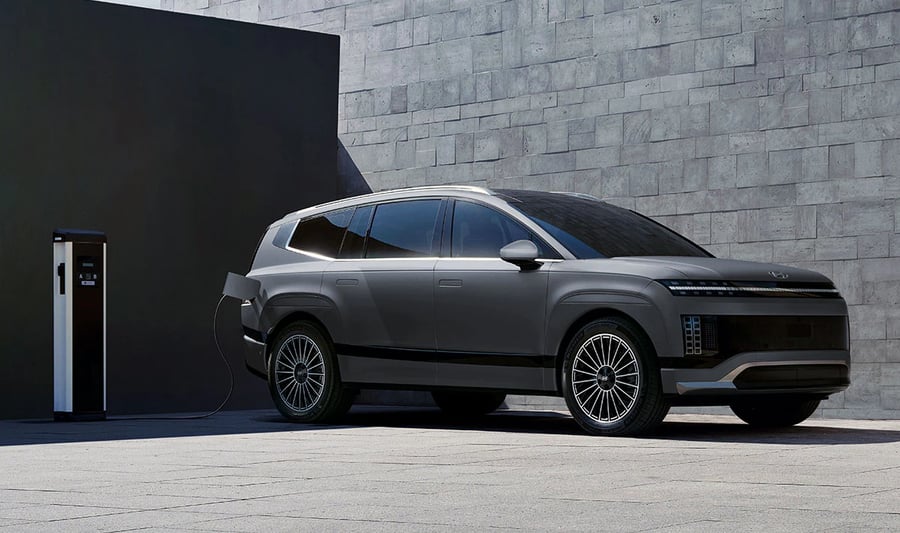
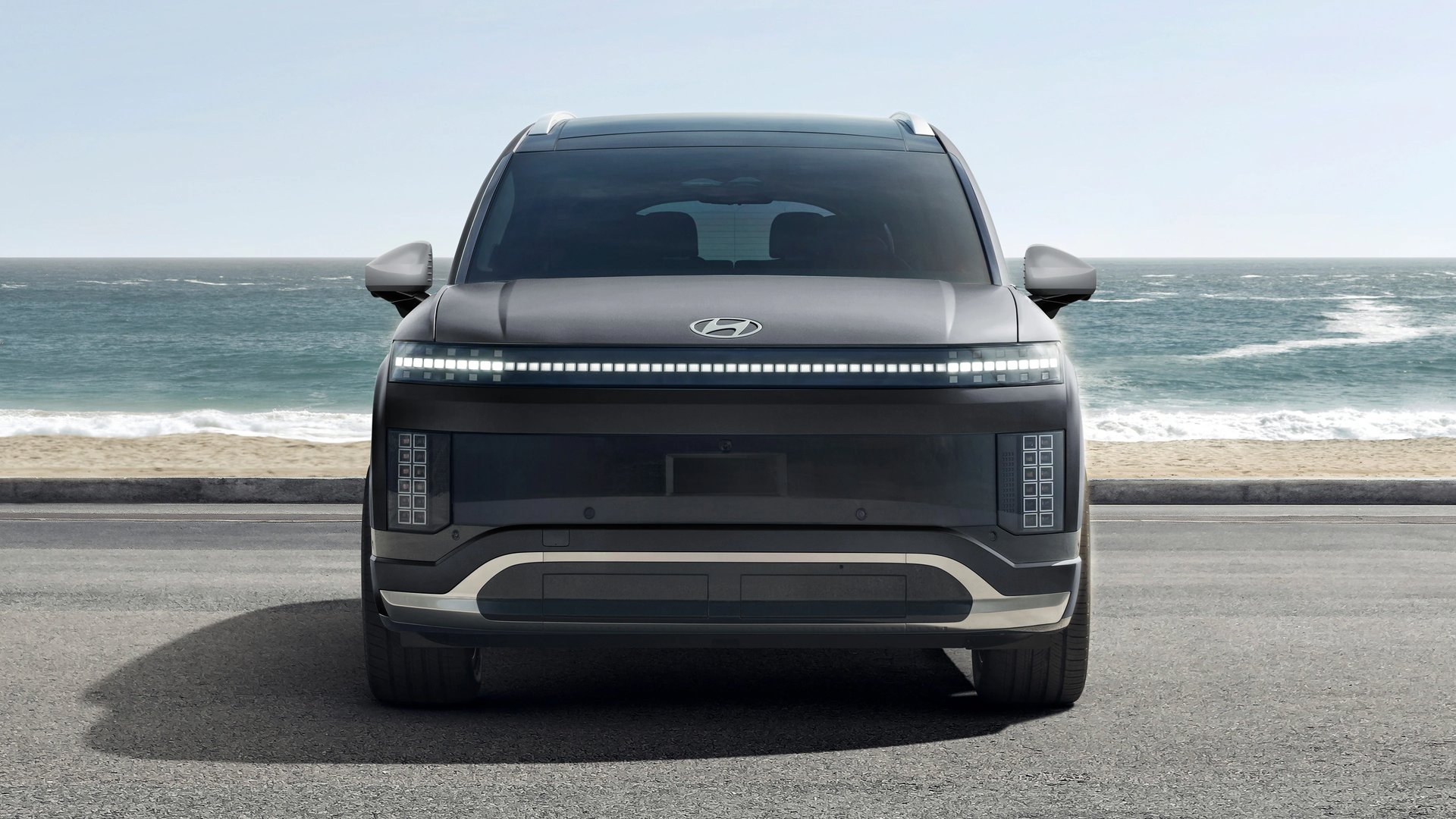
The Hyundai Ioniq 9 is all new for the 2026 model year and earns a perfect safety score of 10 out of 10 from U.S. News, the highest safety figure on this list. The score reflects excellent crash-test results alongside a strong roster of standard and available safety features. The overall U.S. News rating is 9.2 out of 10, with an interior score of 8.7 out of 10. The second row provides 42.8 inches of legroom, the most of any vehicle on this list, and the third row offers 32 inches.
Senior Editor John Vincent describes the Ioniq 9 as sleek and tech-forward while remaining welcoming and comfortable. He makes that observation specifically because many EVs push technology so prominently into the cabin experience that it can feel disorienting. The Ioniq 9 integrates its tech features in a way that feels consistent with a conventional SUV interior, which Vincent identifies as a specific design achievement given how much technology the vehicle actually contains.
All powertrain configurations deliver at least 300 miles of range on a full charge, and all three rows accommodate adult passengers. The Ioniq 9 arrives as a genuinely new vehicle with no prior-generation compromises to work around, which gives it a structural advantage over models that carry legacy design decisions forward from earlier versions. The perfect safety score in a debut year is an unusually strong opening credential. New models typically take a year or two to accumulate the crash-test data and safety equipment evaluation that drives scores to the top of the range, so arriving at 10 out of 10 immediately gives the Ioniq 9 a safety case that more established models on this list have not yet matched. All-adult third-row seating combined with 300-plus miles of range and a 10-out-of-10 safety score makes the Ioniq 9 one of the most complete family EV packages available in 2026.
Credit: Kia
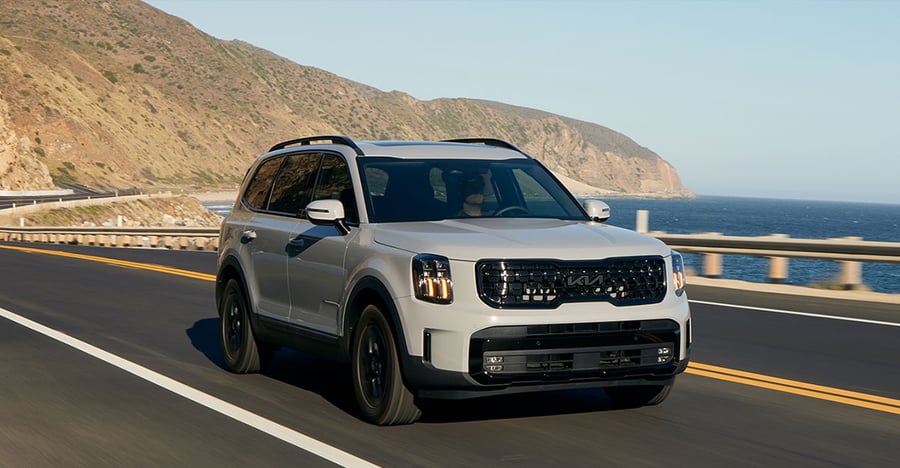
The Kia Telluride Hybrid is all new for the 2027 model year and delivers fuel economy ratings of up to 35 mpg combined, the highest efficiency figure on this list. The overall U.S. News rating is 9.3 out of 10, and the interior score of 9.6 out of 10 is the second highest on the list. The second row provides 41.4 inches of legroom, and the third row offers 32.1 inches.
Managing Editor Alex Kwanten describes the Telluride Hybrid as better than the gas-only Telluride in nearly every meaningful way. The powertrain pairs a turbocharged four-cylinder engine with two electric motors and a six-speed automatic transmission, producing 329 combined horsepower and 339 pound-feet of torque, with front- or all-wheel drive available. Kwanten characterizes acceleration as smooth and notes that the hybrid system makes the Telluride more powerful and more enjoyable to drive than the non-hybrid version, which is a meaningful claim for a fuel-economy entry in a six-seater comparison.
The standard gas Telluride also received a full redesign for 2027, so both versions of the nameplate enter the year as new products. Kwanten acknowledges the Hybrid costs more than the gas model but argues the performance and driving dynamics the hybrid system adds justify the premium. For buyers who intend to cover high annual mileage, the fuel economy advantage compounds into meaningful savings over time, and the 35 mpg combined figure achieves that without sacrificing the passenger space or interior quality that makes the Telluride a consistent presence in three-row SUV rankings. The 2027 redesign of the gas-only Telluride running alongside the new Hybrid means both versions of the nameplate enter the model year as fresh products, which gives the Hybrid the advantage of a newly developed platform and avoids the engineering compromises that come with grafting a hybrid powertrain onto a vehicle architecture that was not designed to accommodate one from the start.
Credit: Ram
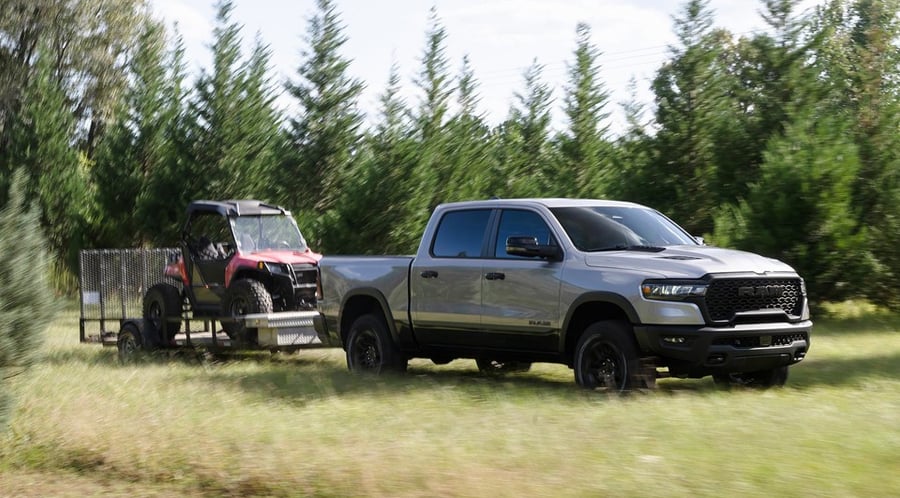
The Ram 1500 earns a U.S. News overall rating of 9.5 out of 10 and an interior score of 9.4 out of 10. The Crew Cab configuration delivers 45.2 inches of second-row legroom, the most of any vehicle on this list. Like the F-150, the Ram is a full-size pickup truck that adds a sixth seat through a front bench seat option, putting it in a different category from the three-row SUVs alongside it.
Senior Editor John Vincent describes the Ram 1500’s range of configurations as spanning from practical work-truck trims to cabins “barely shy of palatial.” The wide range means a buyer who wants maximum seating comfort can find it here without looking elsewhere, and a buyer who wants to prioritize utility over luxury can do the same. Vincent notes that the Ram falls short of Ford $F and Chevrolet competitors in terms of raw capability, but frames that as a deliberate choice: Ram prioritizes comfort, and a significant portion of full-size truck buyers prefer that.
The base Tradesman trim provides straightforward, user-friendly infotainment without extensive complexity. Upgrades in powertrain and interior content are available throughout the trim lineup for buyers who want them. The 45.2 inches of second-row legroom in the Crew Cab means even the tallest adult passengers should find a comfortable position, which makes the Ram 1500 the strongest full-size truck option on this list for buyers whose priority is rear-passenger comfort over bed utility. The Ram’s interior score of 9.4 out of 10 also puts it closer to the Gravity and Kia Telluride Hybrid in cabin quality than its truck classification might suggest, reflecting Ram’s deliberate strategy of targeting buyers who want a truck that drives and feels like a luxury SUV. That interior score of 9.4 places the Ram ahead of four other vehicles on this list in cabin quality, despite the truck’s positioning as a work-capable vehicle.
Credit: Jeep
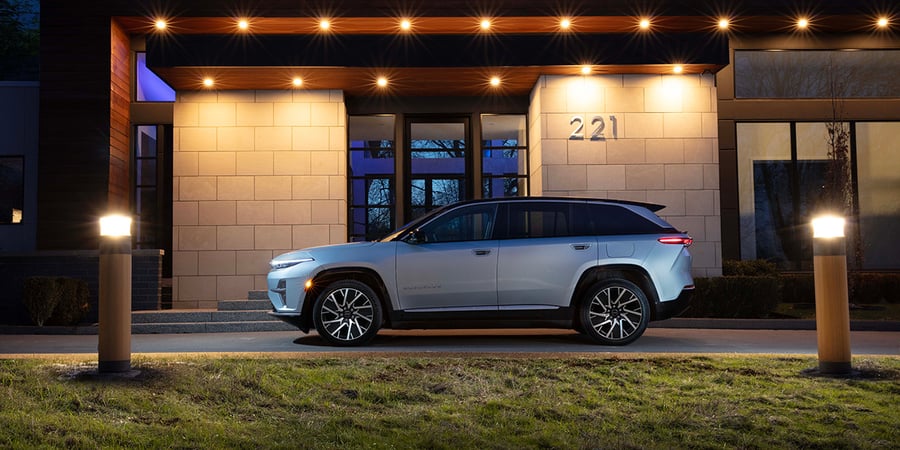
The Jeep Wagoneer earns a U.S. News overall rating of 9.3 out of 10 and an interior score of 9.2 out of 10. Reviewer Kristin Shaw identifies versatility as the Wagoneer’s defining quality, noting that it handles both comfort and off-road capability better than most competing large SUVs. The third row offers 36.6 inches of legroom, the most of any vehicle on this list, and the second row provides 42.7 inches. The Wagoneer holds the 2025 Best Large SUV for Families award.
The standard configuration seats eight passengers, but the second row is available with captain’s chairs, which reduces capacity to six while adding personal space and comfort for second-row occupants. Shaw specifically notes that Jeep delivers on upscale features, pointing to the optional premium audio system as a standout. The Wagoneer enters its fourth year on the market for 2025 with updated standard and optional content designed to keep the lineup current for buyers who want the latest technology and features.
The Wagoneer’s third-row legroom figure is particularly notable for buyers who genuinely use all three rows on a regular basis. At 36.6 inches, it offers more rear-row space than the Ioniq 9, the Telluride Hybrid, and the Santa Fe, all of which offer between 30 and 33.9 inches. For families where adults or older teenagers occupy the third row on a daily basis, the Wagoneer’s rear legroom advantage is a concrete differentiator that the overall scores and award credentials alone do not convey. Buyers choosing between the Wagoneer and the other three-row options on this list will find that the rear legroom gap is especially noticeable on long trips, where the difference between 30 inches and 36.6 inches defines whether passengers in the back row arrive at the destination comfortable or cramped. The Wagoneer’s rear legroom advantage over the Santa Fe is more than six inches, which represents a substantive physical gap.