From a Kia K5 with 46 inches of front legroom to a Mercedes-Benz S-Class with the largest passenger space envelope of any production sedan
Credit: Audi
Sedans are genuinely underrated when interior space is the primary concern. The crossover and SUV segment has dominated family vehicle purchasing for the past decade, driven by perceived space, an elevated seating position, and the marketing momentum that has made the SUV the default answer to almost any vehicle need. But plenty of sedans deliver equivalent or superior passenger dimensions at a lower starting point and with better fuel economy than the comparable crossover or SUV, and the family that has concluded it needs a three-row SUV because sedans are too cramped for four passengers may not have checked the rear legroom figures of a full-size luxury sedan recently.
The Mercedes-Benz S-Class, the BMW 7 Series, and the Audi A8 each deliver rear legroom that most crossovers do not approach, regardless of their exterior dimensions. The Honda $HMC Accord and the Kia K5 offer genuinely generous passenger space at starting prices below the average new-vehicle transaction price. The Subaru Legacy adds standard all-wheel drive to its midsize sedan dimensions at a price point that makes it worth cross-shopping against compact alternatives. The roomy sedan category spans a wider range of starting prices, powertrains, and intended use cases than the crossover-focused family-vehicle conversation typically acknowledges.
The 10 sedans below appear in U.S. News & World Report, ranked by front-row headroom and second-row legroom as the primary metrics. The top five receive a designation based on their specific strength. All interior dimension figures are in inches, and U.S. News overall ratings are on a 10-point scale. For buyers who have concluded that a crossover is the only practical vehicle for their family, these sedans offer a compelling counterargument, supported by specific, verifiable interior dimensions.
Credit: Mercedes-Benz
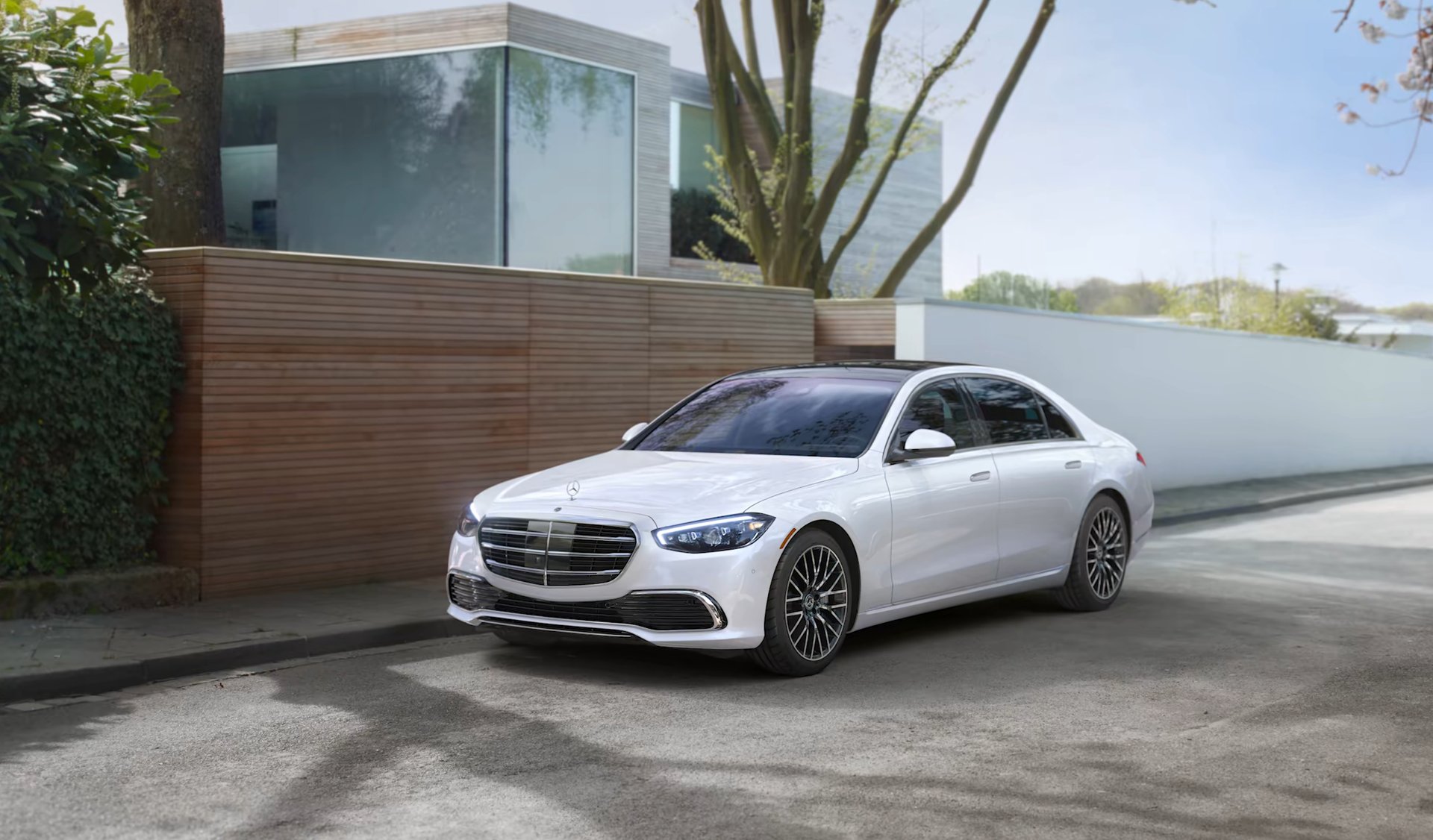
The Mercedes-Benz S-Class earns a 9.5 U.S. News overall rating and tops the roomy sedan list with interior dimensions that no other sedan currently available matches: 42.1 inches of front headroom, 41 inches of front legroom, 39.4 inches of rear headroom, and 43.8 inches of rear legroom give the S-Class the largest passenger space envelope available in any production sedan. What distinguishes the S-Class from vehicles that are merely large is the degree to which every other dimension of the car matches those interior figures: the upholstery and trim quality, the acoustic insulation, the breadth of powertrain options spanning from a 442-horsepower turbocharged inline-six to the AMG-spec 791-horsepower hybrid V8, and the commanding presence the car projects give buyers a vehicle that earns its dimensions rather than simply having them.
The Maybach extended-wheelbase version changes the interior layout from five to four seats and adds reclining rear seats with neck warmers, representing the apex of what the full-size luxury sedan category delivers to rear passengers. The standard S-Class, however, makes no meaningful concession in rear comfort: 43.8 inches of rear legroom gives the standard back seat more space than most crossovers provide, regardless of their additional height, and the acoustic insulation engineering that the source specifically identifies as a defining S-Class quality gives the cabin a removal from the outside world that the interior dimensions alone do not fully describe. For buyers whose budget extends to the luxury large sedan category, the S-Class provides the most complete version of what that category can be.
The powertrain variety, spanning naturally aspirated and turbocharged six-cylinder, V8, and AMG performance configurations, gives different buyers within the S-Class range a specific character of car suited to their driving priorities while sharing the same interior architecture. The consistency of the cabin experience across powertrains, combined with the availability of the extended-wheelbase Maybach for buyers who want the absolute maximum, gives the S-Class a coherence across its range that reflects a vehicle designed around a clear understanding of what its buyers want.
Credit: Lucid
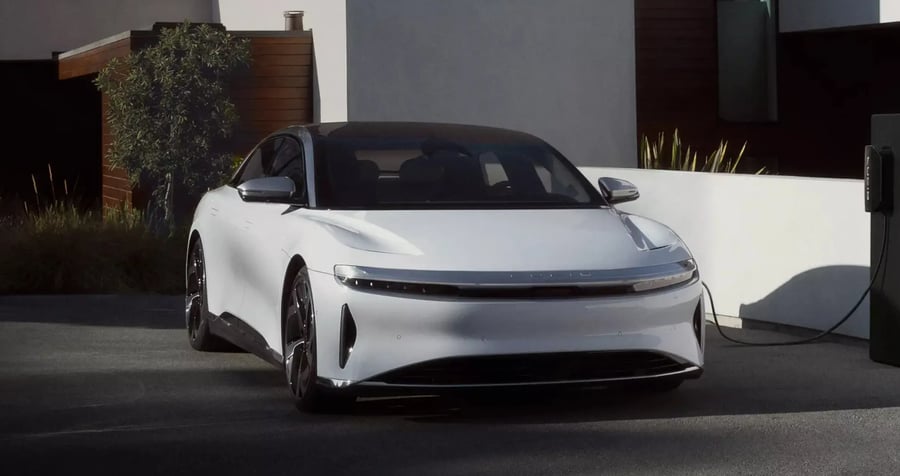
The Lucid $LCID Air earns a 9.6 U.S. News overall rating, the highest on this list, and earns the editor’s personal pick designation for the specific reason that every encounter with the car, whether driving or riding, produces a desire to spend more time in it. The surprise that the Air delivers to buyers who have not yet experienced it comes from the gap between its exterior proportions and its interior: from outside, the car reads as closer to midsize than full-size, but the 39.6 inches of front headroom, 45.4 inches of front legroom, a supportive seating position, and a well-designed cockpit give the interior a presence and comfort level that the exterior does not predict. The abundant light from the large glass area keeps the cabin from feeling dark or enclosed, regardless of the chosen color specification.
The powertrain performance figures give the Air an identity that no other luxury sedan, electric or otherwise, currently matches on the same vehicle: the quickest configuration covers 60 miles per hour from a stop in 1.89 seconds, and the maximum range of 512 miles on a full charge gives the Air both the fastest acceleration and the longest range of any electric sedan available. For experienced EV drivers who have become accustomed to the instant torque that electric powertrains provide, the Air’s specific combination of performance level and range extends the EV performance conversation into territory that other electric sedans have not yet reached.
The cabin’s specific qualities extend beyond the dimensions to the overall execution: the well-designed cockpit positions controls within reach without requiring the driver to search for them, and the base trim’s relatively limited upholstery options are the primary concession at the entry level in a car that otherwise delivers a quality of experience that its 9.6 overall rating reflects across multiple independent assessments. The Air’s combination of the highest overall rating, the longest electric range, the quickest acceleration, and the editor’s personal endorsement gives it the strongest multi-dimensional case of any vehicle on this list.
Credit: Honda
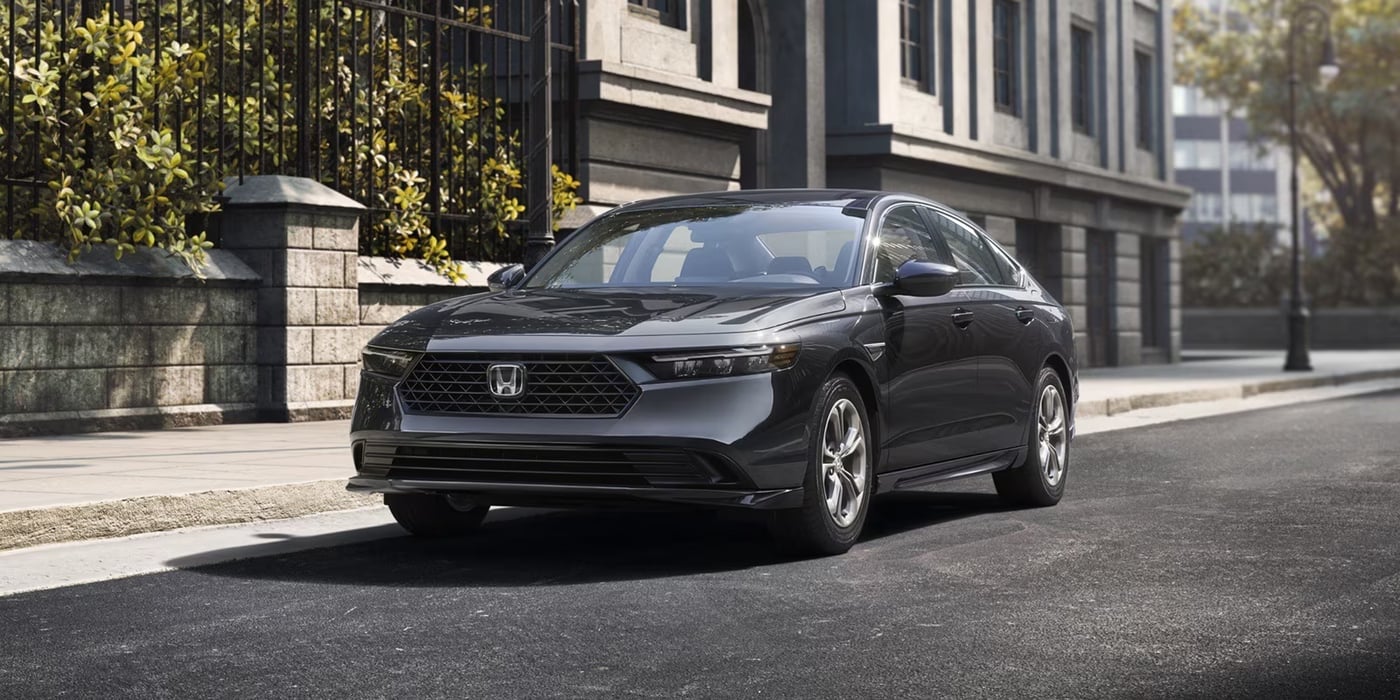
The Honda $HMC Accord earns a 9.8 U.S. News safety score, the strongest on this list, alongside a 9.5 overall rating and two 2026 awards: Best Midsize Car for the Money and Best Midsize Car for Families. The safety score reflects both published crash-test ratings and the breadth and availability of safety technology as standard equipment, and the Accord’s performance across both dimensions at an accessible starting point gives buyers who prioritize crash protection alongside interior space a vehicle that does not require paying a luxury premium to achieve the combination. The awards validate the value case with an external assessment rather than simply a price-point position.
The passenger dimensions are strong for the midsize sedan category: 39.5 inches of front headroom, 42.3 inches of front legroom, 37.3 inches of rear headroom, and 40.8 inches of rear legroom give the rear seat a real-world spaciousness that Vehicle Testing Editor Zach Doell, at 6 feet 2 inches tall, describes as comfortable after hours of testing. This is the specific practical validation that dimensional figures alone do not always provide: a vehicle can measure generously but fit awkwardly due to seat bolstering, roof contour, or floor height, and the Accord’s confirmed comfort for a tall driver gives the numbers their most useful grounding.
The mechanical specification is deliberately straightforward: a turbo-four engine, front-wheel drive, and a continuously variable automatic transmission give buyers a simple, reliable package without the choice complexity that more expensive, more elaborately optioned competitors offer. The Accord Hybrid, reviewed separately, extends the platform for buyers who want improved fuel economy alongside the safety and space credentials. For buyers whose priorities are safety, interior space, value, and mechanical simplicity, the Accord delivers all four at a single, accessible starting point that no other vehicle on this list comes close to. The dual 2026 award recognition from U.S. News gives the value case the external validation that internal assessments alone cannot provide with the same authority.
Credit: BMW
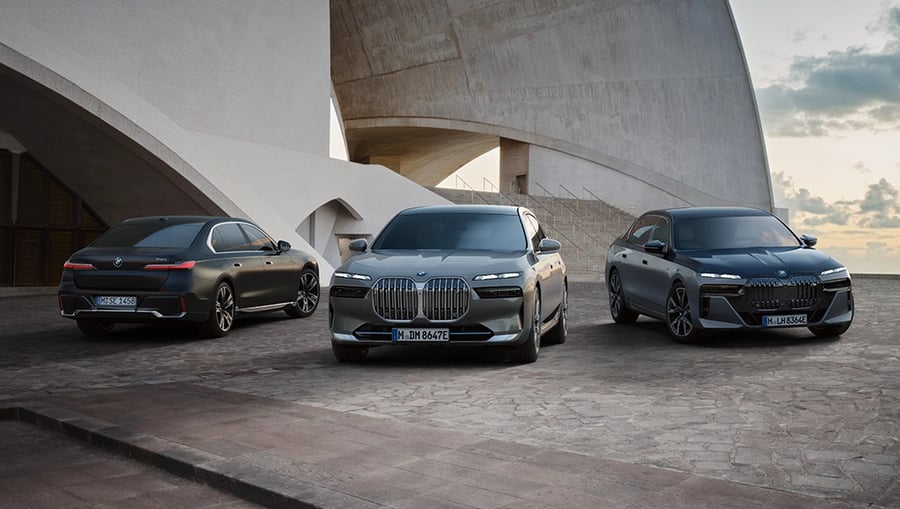
The BMW 7 Series earns a 9.3 U.S. News overall rating and a J.D. Power predicted reliability score of 86 out of 100, placing it in the Great reliability category and making it the most reliable sedan on this list. The reliability score gives the 7 Series a long-term ownership case that complements its space and luxury credentials: a large luxury sedan whose dependability is uncertain produces less satisfaction across a typical ownership period than its appointments suggest, and the 7 Series’s J.D. Power score removes that uncertainty at a level that few vehicles in the luxury large sedan category consistently achieve. Managing Editor Alex Kwanten identifies the 7 Series as the largest sedan currently on sale in the U.S., a scale that translates directly into interior space rather than being absorbed by styling complexity.
The second row, with 43.3 inches of legroom, gives the rear seat the capacity for the executive use case that the 7 Series specifically serves: the lounge-like amenities available for the back seat, including an optional theater system, give rear passengers an environment suitable for working or relaxing during longer journeys in a way that positions the 7 Series as a legitimate alternative to the chauffeured livery vehicles that this class of sedan competes with. Kwanten specifically notes that the car feels considerably lighter on the road than its actual dimensions would suggest, with deft handling and a smooth ride that give the driving experience a quality appropriate to the 7 Series’s dual identity as both a driver’s car and a passenger’s car.
The powertrain options, spanning a turbocharged inline-six, a V8, and a plug-in hybrid, give different buyers within the 7 Series range the mechanical character suited to their priorities. The polarizing exterior styling that Kwanten identifies reflects a design philosophy that divides opinion without affecting the interior quality, space, or reliability that most 7 Series buyers prioritize above exterior consensus.
Credit: Subaru
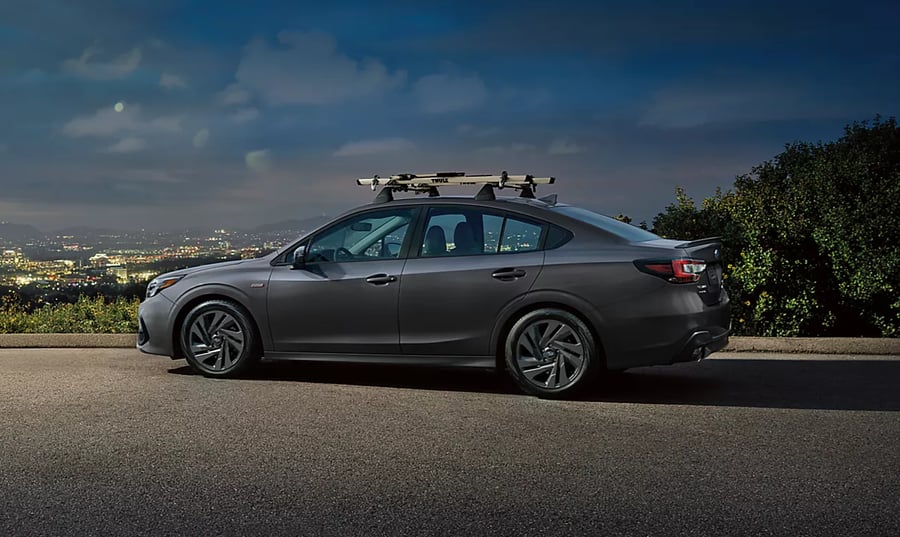
The Subaru Legacy earns an 8.8 U.S. News overall rating and occupies the most accessible starting point among the five editorially designated vehicles on this list. The interior dimensions give the Legacy a genuine case for the roomy sedan category: 39.4 inches of front headroom, 42.8 inches of front legroom, 37.2 inches of rear headroom, and 39.5 inches of rear legroom deliver passenger space that the budget positioning does not compromise relative to more expensive midsize alternatives, and the standard all-wheel drive that comes with every Legacy trim gives buyers in winter climates or regions with variable road conditions a traction capability that front-wheel-drive alternatives at similar prices require additional cost to match.
The Legacy’s honest limitations include a base specification of cloth upholstery and manually adjustable seats, which are the expected concessions at this price point, and a trunk capacity of 15.1 cubic feet that falls slightly below the midsize sedan class average of approximately 16 cubic feet. These limitations are worth understanding before purchase but represent the predictable tradeoffs of a vehicle whose value proposition centers on interior space, standard all-wheel drive, and an accessible starting point. Buyers who want heated seats and other comfort upgrades will find them available through the trim hierarchy rather than requiring a more expensive vehicle.
The source’s description of the Legacy as the least exciting vehicle on the list and one of the least exciting in Subaru’s own lineup is honest and accurate: the Legacy is a steady, predictable commuter whose engineering prioritizes reliability and practicality over driving engagement or visual excitement. For buyers whose priorities align precisely with those qualities, including standard all-weather traction, generous passenger space, and a low entry cost, the Legacy delivers them without requiring any compromise on the specific things that matter most to its target buyer. Cross-shopping the Legacy against some compact sedans, as the source specifically suggests, gives buyers who are focused on space per dollar a favorable result that the midsize classification’s higher base pricing would not predict without the comparison.
Credit: Audi
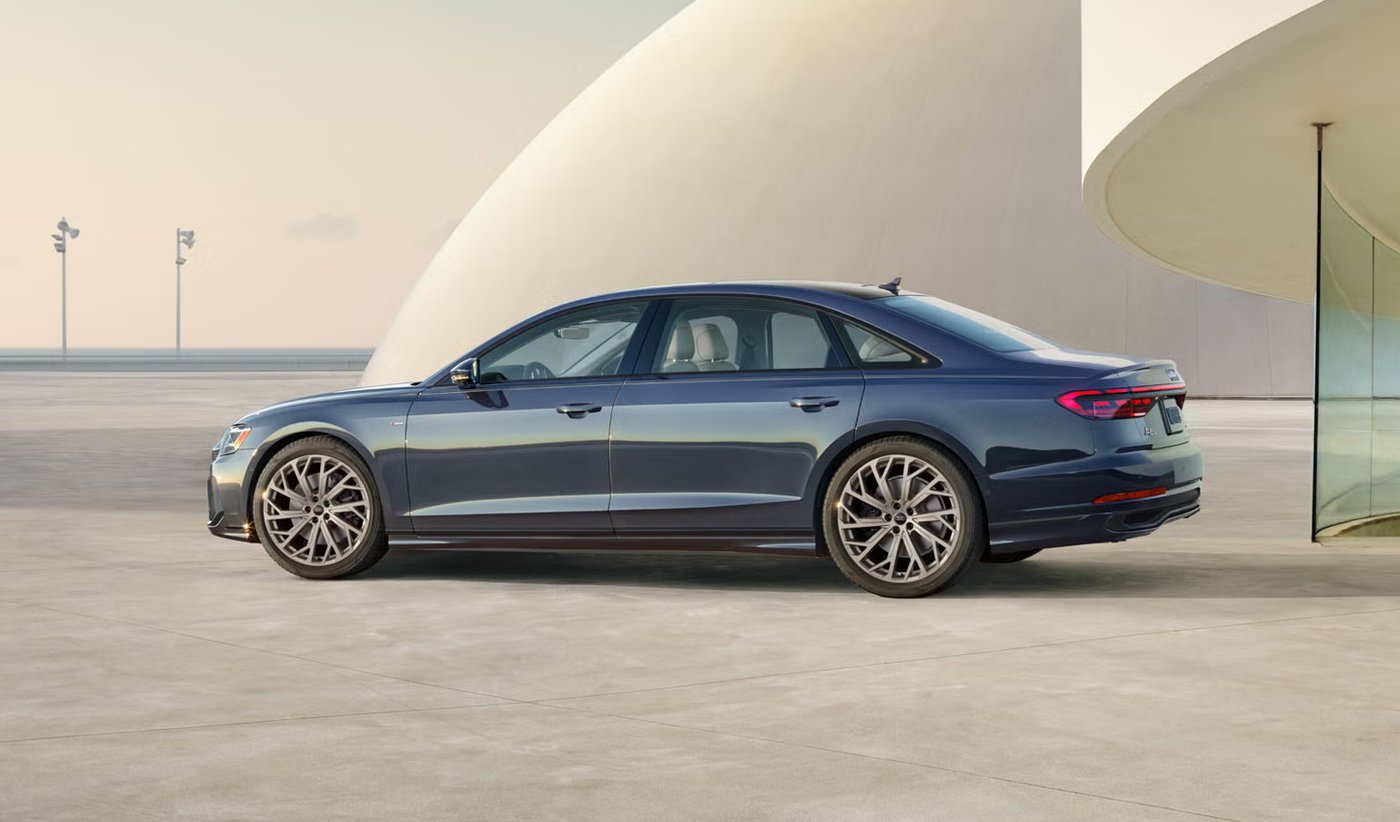
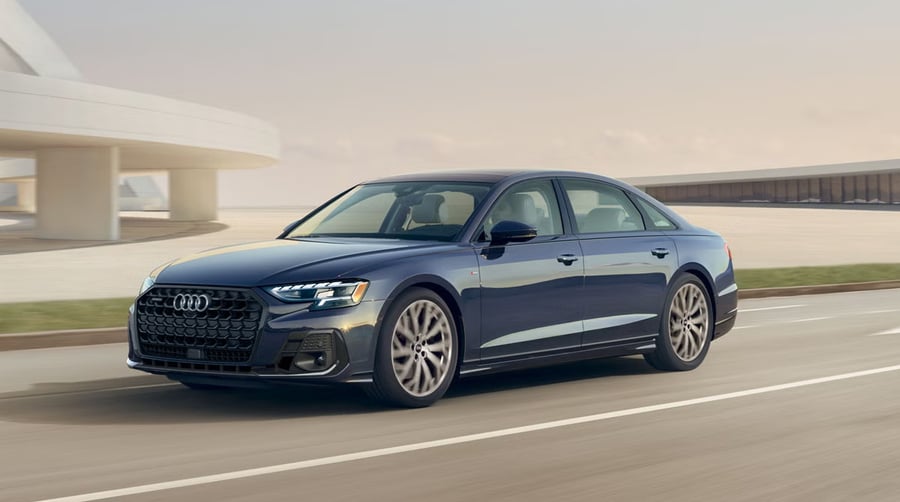
The Audi A8 earns an 8.6 U.S. News overall rating and delivers 44.3 inches of rear legroom, the most generous rear passenger space of any vehicle on this list, which reflects the A8’s specific positioning as a car designed to be ridden in as much as driven. The five- and four-seat layout options give the A8 the flexibility to balance full passenger capacity with the dedicated rear luxury configuration that executive and livery use cases require, and the four-seat layout concentrates the rear-row space on two passengers with the full luxury treatment. The cabin is less visually dramatic than some German luxury contemporaries, a deliberate design restraint that gives it a polished, understated character that a specific buyer profile specifically prefers over more ostentatious alternatives.
Standard equipment sets a high baseline: premium leather upholstery, 22-way power-adjustable front seats with memory settings, and heated and ventilated front seats give the base specification a level of comfort technology that positions the A8 well above the entry requirements for the luxury large sedan category. The available options extend considerably further, including massaging seats in both rows, heated armrests, a rear-seat remote control for climate and comfort functions, and extra-premium leather upholstery, giving buyers who want the maximum specification a clear upgrade path within the same model.
The turbocharged V6 engine with a 48-volt mild-hybrid system and Quattro all-wheel drive gives the A8 a smooth, comfortable driving character that the source describes as somewhat behind European competitors in outright performance, but it delivers composed, quiet highway cruising that the sedan’s executive positioning prioritizes over dynamic engagement. The Quattro system’s standard inclusion gives the A8 a traction advantage over rear-wheel-drive European luxury alternatives that buyers in variable-weather markets specifically value. For buyers who want the maximum rear legroom available in any sedan on this list,, alongside all-wheel-drive standard and a restrained luxury aesthetic, the A8 delivers all three simultaneously in a way no other vehicle here replicates.
Credit: BMW
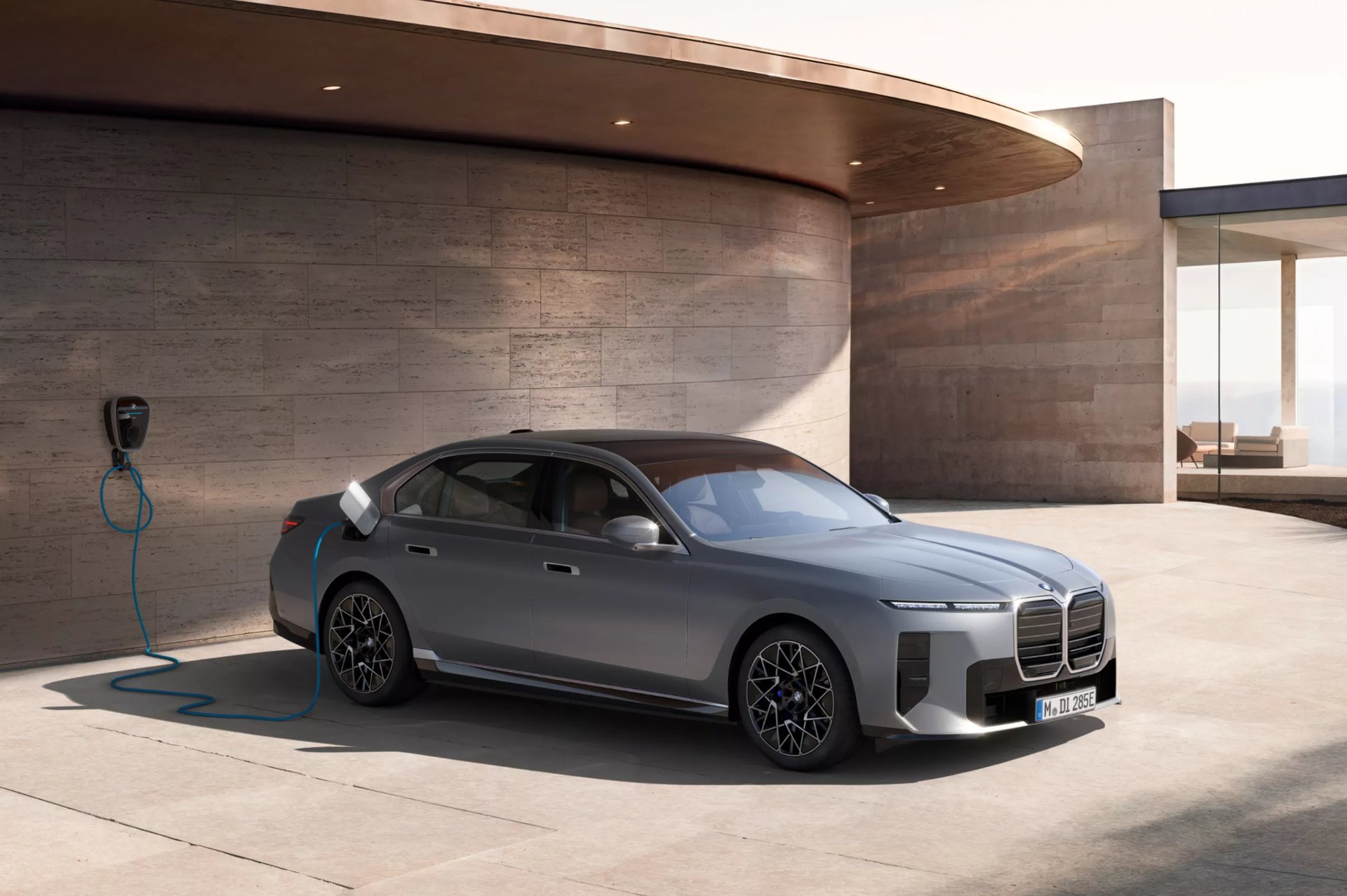
The BMW i7 earns a 9.1 U.S. News overall rating as the electric version of the BMW 7 Series, sharing the gas model’s exterior design, interior architecture, and overall dimensional philosophy while replacing the combustion powertrain with an electric one whose specific acoustic qualities change the character of the cabin experience in ways that the passive insulation engineering of the gas model approaches but does not fully replicate. Managing Editor Alex Kwanten describes the interior as aircraft-carrier-sized, an assessment that the 42.8 inches of rear legroom and the optional theater system with a lie-flat rear seat add specific luxury content alongside the dimensional description.
The lie-flat rear seat option, which converts the second row into a reclining position similar to business-class pods on international flights, gives the i7 a specific rear-passenger capability that the gas 7 Series does not offer in the same form and that positions the electric sedan as the superior choice for buyers whose primary concern is the rear-seat experience on longer journeys. The cashmere upholstery option, alongside the standard leather, gives the interior specification range an aspirational ceiling that the brand’s flagship positioning justifies, and the overall execution delivers the i7 a cabin quality level consistent with its role as the most premium expression of the 7 Series platform.
The powertrain options span single- and dual-motor configurations from 449 to 650 horsepower, and Kwanten notes that each version delivers more power than the corresponding gas 7 Series trim, while the substantial additional weight from the electric components moderates the acceleration advantage that the power figures suggest in isolation. The driving character that results, smooth and refined rather than dramatically quicker than the gas equivalent, suits the executive sedan purpose of the i7 better than an outright performance focus would, and the absence of engine noise at any speed gives the theater system and the lie-flat rear seat an acoustic context that the gas alternatives cannot provide.
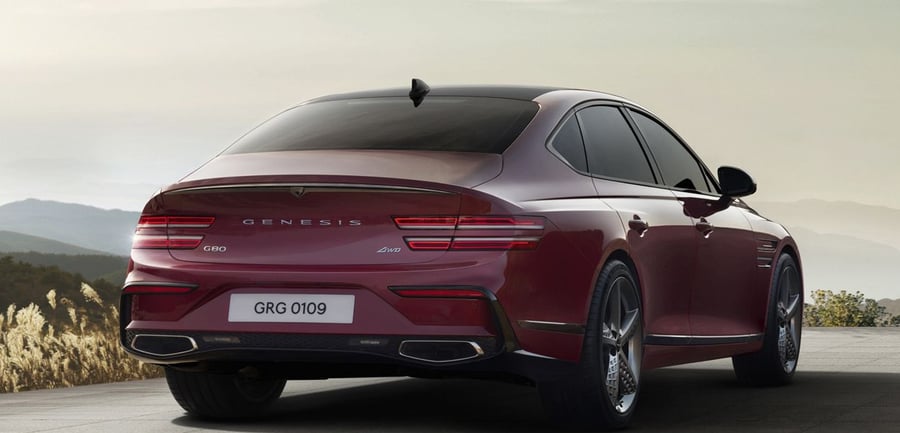
Credit: Genesis
The Genesis G80 earns a 9.0 U.S. News overall rating and offers the luxury midsize sedan category a Korean alternative to German competition, with 40.9 inches of front headroom and 42.2 inches of front legroom, giving the first row generous dimensions. Reviewer Emme Hall describes the overall design as sophisticated, with standard equipment including heated and ventilated seats and power soft-close doors, giving the G80 a luxury baseline appropriate to its segment positioning. The optional upgrades, including carbon-fiber trim, alloy pedals, and two-tone upholstery with red accents, give buyers who want a more visually distinctive specification a path to it within the existing model.
The Ergo Motion seat technology that Genesis offers in the G80 is designed to automatically adjust based on both the passenger’s posture and the vehicle’s driving dynamics, a genuinely innovative concept whose execution Hall assesses as limited in practice: she did not notice significant adjustment in real-world use. The technology’s aspiration is more impressive than its current delivery, which is worth understanding as a feature that may improve in subsequent model-year updates rather than one that reliably delivers on its stated purpose.
The engine options, a turbo-four and a turbocharged V6, give the G80 adequate power for the midsize luxury sedan use case without delivering the sporting driving character that the angular exterior styling might suggest. Hall describes the G80 as a soft cruiser whose suspension tuning prioritizes ride comfort over cornering engagement, which is a valid choice for the luxury sedan category’s core use case but may disappoint drivers expecting an athletic experience from a visually dynamic car. The starting point below comparable German luxury sedans gives the G80 its most specific competitive advantage, and buyers who evaluate the G80 on its own terms, as a comfort-focused luxury midsize sedan with sophisticated styling, will find the value case more compelling than those who approach it expecting the driving dynamics of a BMW or an Audi.
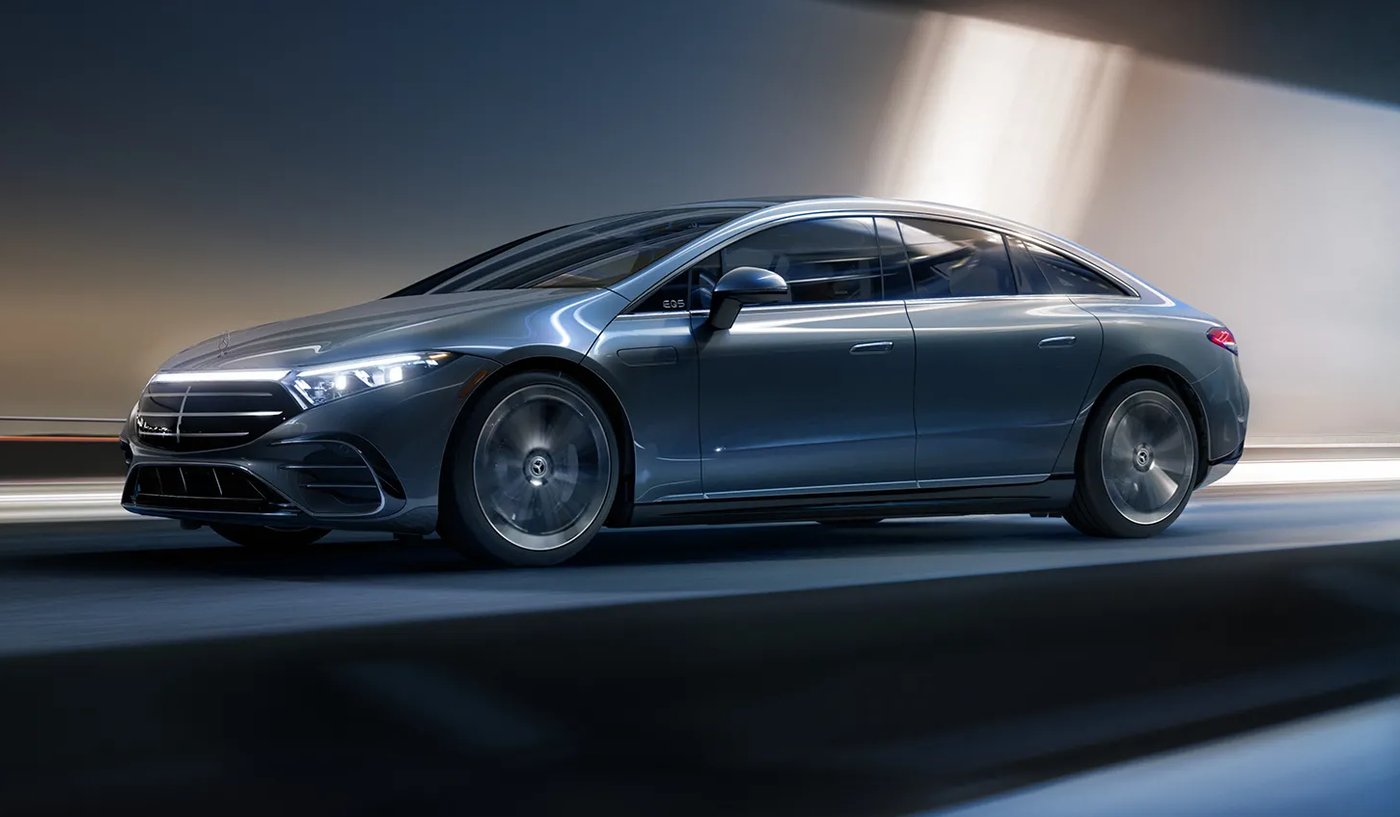
Credit: Mercedes-Benz
The Mercedes-Benz EQS Sedan earns an 8.6 U.S. News overall rating and reviewer Mike Hagerty’s description as a sunny, happy place to be. The 40.4 inches of front headroom, 41.7 inches of front legroom, and 40.4 inches of rear legroom give the EQS strong passenger dimensions across both rows, and the fastback-styled roofline that gives the sedan its distinctive silhouette also creates generous cargo space, as the storage figures reflect. The 56-inch span of digital displays that Mercedes-Benz calls the Hyperscreen makes a technological statement, and the light-colored upholstery options Hagerty recommends provide a visual counterweight: the combination of the expansive display and the pale, airy upholstery palette gives the interior a sunny quality that his description captures.
The specific limitation Hagerty identifies is the absence of a front trunk: the frunk storage space that many EVs provide is occupied in the EQS by an advanced cabin air filtration system, which he would trade for the additional storage. The filtration system is a meaningful feature for buyers who prioritize cabin air quality as a health or comfort consideration, but for those who specifically want the frunk storage that competing EVs such as the Lucid $LCID Air provide, the EQS does not offer it, which is worth understanding as a comparison point when evaluating the two electric luxury sedan options on this list.
The four available trims range from the base powertrain to the AMG performance configuration, and Hagerty specifically recommends the EQS 450 for its all-wheel-drive option on the base powertrain as the best combination of capability and value within the lineup. The electric powertrain’s near-silent operation gives the EQS an acoustic quality that amplifies the already-strong passive insulation of the Mercedes-Benz large sedan platform. For buyers who want the Mercedes-Benz large sedan experience in an electric format with the Hyperscreen’s technological statement and the fastback roofline’s cargo advantage, the EQS delivers a specific combination that the S-Class, for all its interior supremacy, does not replicate in electric form at any configuration.
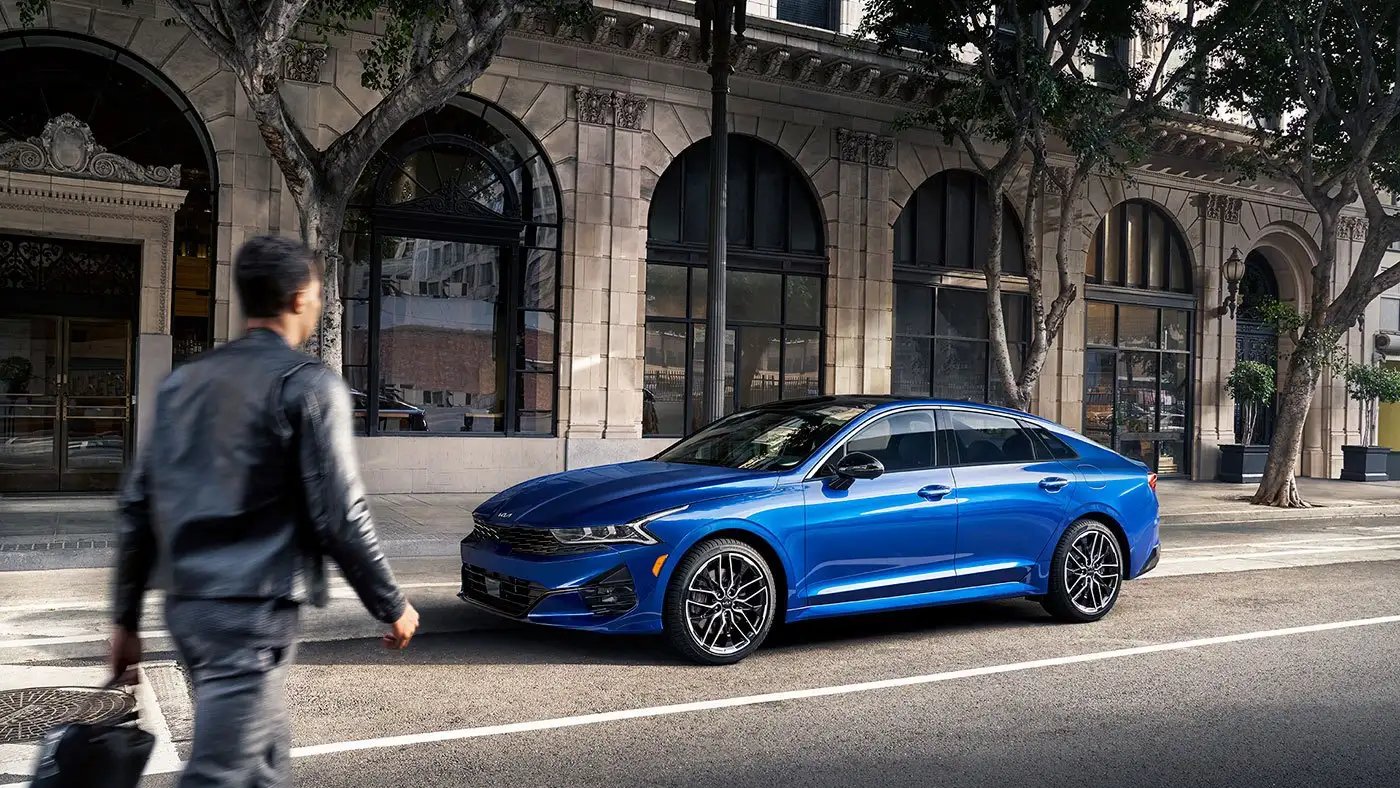
Credit: Kia
The Kia K5 earns an 8.9 U.S. News overall rating and delivers a front legroom figure of 46.1 inches, which is the largest of any sedan on this list, giving the driver and front passenger the most generous forward space available in the midsize sedan category at any price point. Contributor Brontë Wieland describes the front seats as supportive with plenty of space, confirming that the 46.1-inch measurement translates into a genuinely comfortable seating position rather than simply a dimensional figure that ergonomic design partially offsets. The wide rear door openings give the rear entry and exit a practical accessibility advantage that the rear seat’s 35.2 inches of legroom, the most limited figure on this list, makes relevant: getting in and out of the back seat is easier than the legroom figure suggests once seated.
The cabin quality that Wieland describes as nice for the price acknowledges the presence of hard plastic surfaces in lower trim levels without treating them as disqualifying for a vehicle in the K5’s price bracket. The overall design execution at the midsize sedan level gives the K5 an interior that reads above its entry price, though hard plastics in specific locations partially offset it. The cargo space of 15.6 cubic feet is approximately class-average for the midsize sedan segment, with a wide trunk opening that Wieland specifically identifies as making the storage easy to access.
The turbo-four engine options producing 191 or 290 horsepower give the K5 a performance range that spans from an efficient base commuter to a genuinely quick GT-Line performance sedan with available all-wheel drive. Wieland describes the ride as comfortable in either configuration, with the base specification particularly well-suited to daily commuting and highway cruising, which represent the K5’s most common use cases. For buyers who specifically want the maximum front-seat legroom in a midsize sedan at an accessible starting point, the K5’s 46.1-inch front legroom figure is a specific credential that no other vehicle on this list provides.
