Canada's best national parks, from Banff's year-round Rockies to an Arctic wilderness where the land never melts
Marc Guitard / Getty Images
Canada contains some of the most dramatic and varied landscapes on the planet, and its national park system is the vehicle through which much of that geography becomes accessible. The country spans six time zones and encompasses arctic tundra, Pacific rainforest, Atlantic coastline, prairie grassland, and the full geological spectacle of the Rocky Mountains. Within this range sits a network of parks that protect everything from the world’s largest non-polar icefield to a stretch of New Brunswick shoreline where the ocean floor becomes walkable at low tide. No other country offers this breadth of protected wilderness at this scale, and for travelers who want to experience Canada’s defining landscapes, the national parks are the most direct and rewarding way in.
Deciding which parks to visit is not straightforward. Some of Canada’s most celebrated parks — Banff chief among them — draw millions of visitors annually and offer the full infrastructure of an established tourist destination, with ski resorts, boat rentals, and hot springs accessible within a single afternoon’s drive. Others demand genuine expedition planning: reaching Auyuittuq National Park requires a flight to one of Canada’s remotest territories, a second flight to a small Inuit village, and then a guided journey by boat or snowmobile through fjords before the park even comes into view. The gap between the most accessible and the least accessible parks on this list is wide enough to represent entirely different categories of travel experience.
The 10 parks below come from U.S. News & World Report’s ranking of the best national parks in Canada, which evaluated each park based on scenic beauty, accessibility, expert opinion, and traveler sentiment. The ranking covers parks from the Yukon in the northwest to Nova Scotia in the east, and from British Columbia’s Pacific coastline to Nunavut’s Arctic interior. Visitors planning to travel between parks in different provinces should note that each park operates on its own seasonal schedule, and conditions — especially at higher elevations and in remote northern locations — can change significantly from month to month.
surangaw / Getty Images
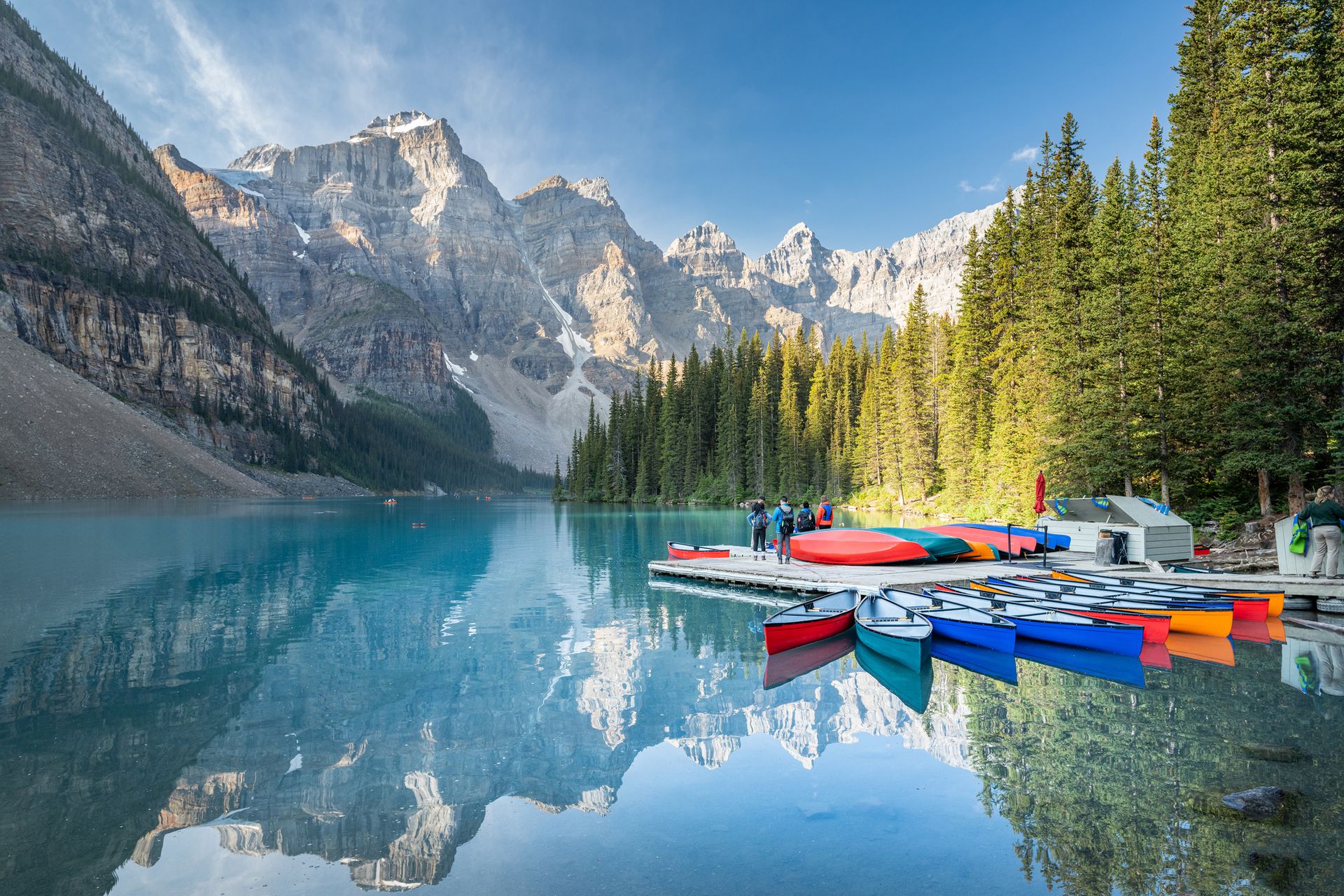
Banff National Park in Alberta offers virtually every outdoor activity across all four seasons, a range that no other park on this list matches in breadth and accessibility. The park encompasses wetlands, mountain terrain, wildflower meadows, hot springs, and dense pine forests, each offering its own distinct set of recreational opportunities. Winter visitors can ski the Canadian Rockies at full-service resorts and soak in the natural hot springs afterward. Summer opens the lakes to canoeing and, beneath the surface of Lake Minnewanka, to scuba diving in conditions that attract divers from across the country.
The park’s accessibility from Calgary — approximately 90 minutes by road — gives Banff a visitor volume that reflects its dramatic scenery and practical infrastructure working together. The town of Banff within the park offers hotels, restaurants, and outfitters at a density that supports visitors who prefer not to camp, extending the park’s reach to travelers who would find more remote parks logistically challenging. The infrastructure also means that Banff functions as a natural base for multi-park itineraries, since Yoho National Park sits just west of Lake Louise and Jasper lies to the north along the Icefields Parkway. The park’s accessibility and scale make it a practical choice for visitors planning their first Canadian Rockies trip.
The park’s variety across seasons means that a visitor who arrives in January and one who arrives in July will find completely different versions of Banff, with no overlap in the primary activities available to them. The hot springs, the ski slopes, and the winter wildlife viewing that define the cold months give way to lake kayaking, mountain hiking, and wildflower meadow walks once the snow retreats. Banff’s ability to sustain high visitor satisfaction across the full calendar year — not just during peak summer months — reflects a depth of natural assets that single-season mountain parks cannot replicate.
Francesco Riccardo Iacomino / Getty Images
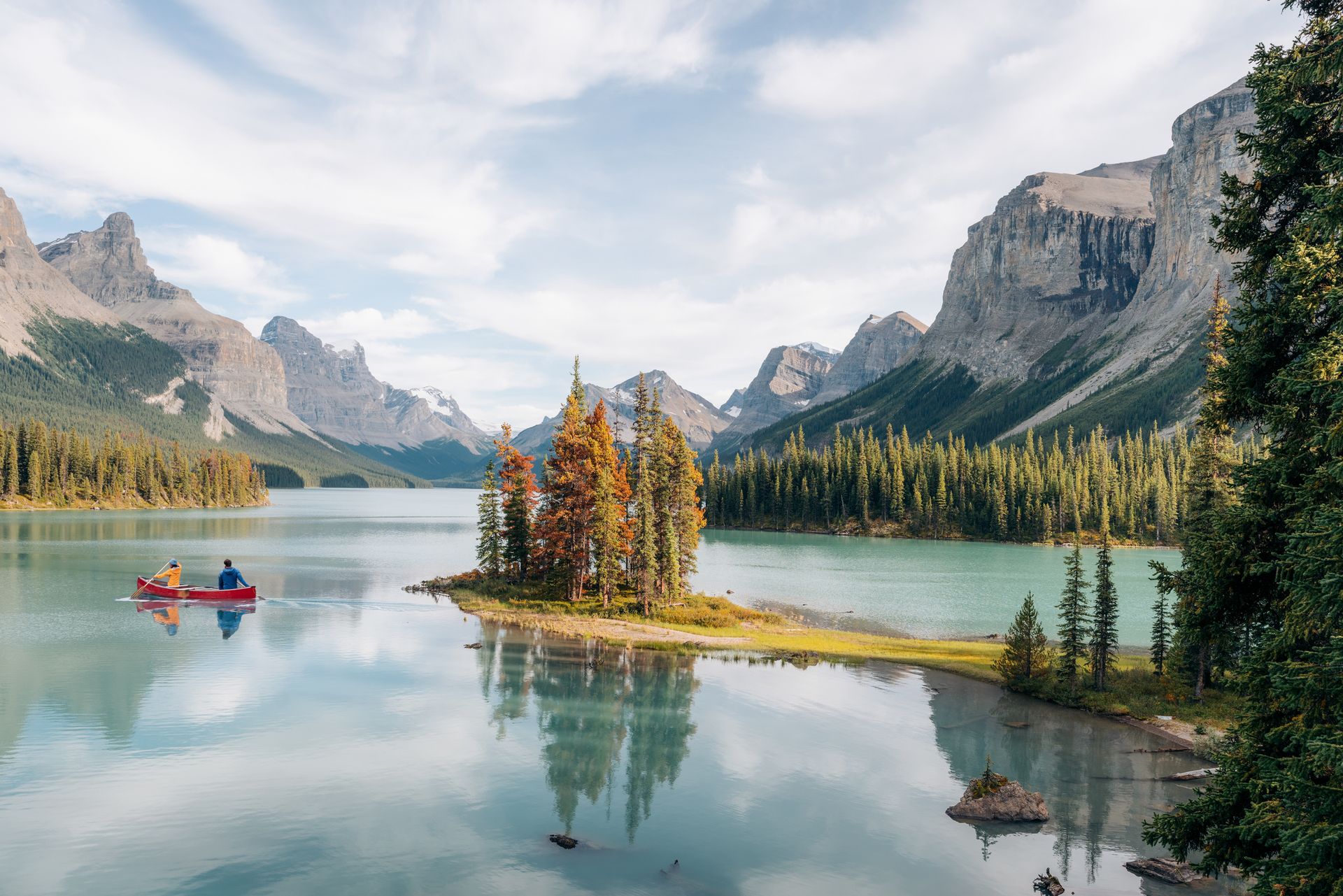
Jasper National Park, the largest national park in the Canadian Rockies and one of the best places in the world to experience Rocky Mountain scenery, holds the distinction of being the world’s second-largest dark sky preserve. The park’s remote location in Alberta, its distance from major urban light pollution, and its park-wide lighting management give it exceptional conditions for stargazing year-round, and the dark-sky designation draws astronomers and casual stargazers alike, for whom the night sky is as significant as the mountain landscape.
The Icefields Parkway, which connects Jasper to Lake Louise in Banff National Park, runs through the park and is consistently ranked among the most scenic drives in the world. The route passes glaciers, waterfalls, and mountain vistas that reward slow driving and frequent stops. Hiking, biking, boating, and wildlife watching across the park’s vast terrain give Jasper a daytime activity profile comparable to Banff’s, while the dark sky programming gives it an evening dimension that the more illuminated Banff townsite cannot provide at the same quality level.
A practical note shapes any trip planning for Jasper in 2026: portions of the park remain closed following a significant wildfire in 2024, and visitors should confirm current access conditions before finalizing their itinerary. The closure does not eliminate the park’s core attractions, but it may limit access to specific trails and areas that would otherwise be included in a standard Jasper itinerary. The Icefields Parkway, the world-class dark-sky preserve status, and the Rocky Mountain scale of the park’s terrain together give Jasper a dual identity. The daytime mountain scenery and the nighttime stargazing are equally compelling reasons to stay multiple days, which makes a multi-day visit more rewarding than a single-day drive-through. For visitors who have already seen Banff and want the Canadian Rockies at lower crowd levels and with dedicated astronomical programming, Jasper delivers both conditions in one park.
Francesco Riccardo Iacomino / Getty Images
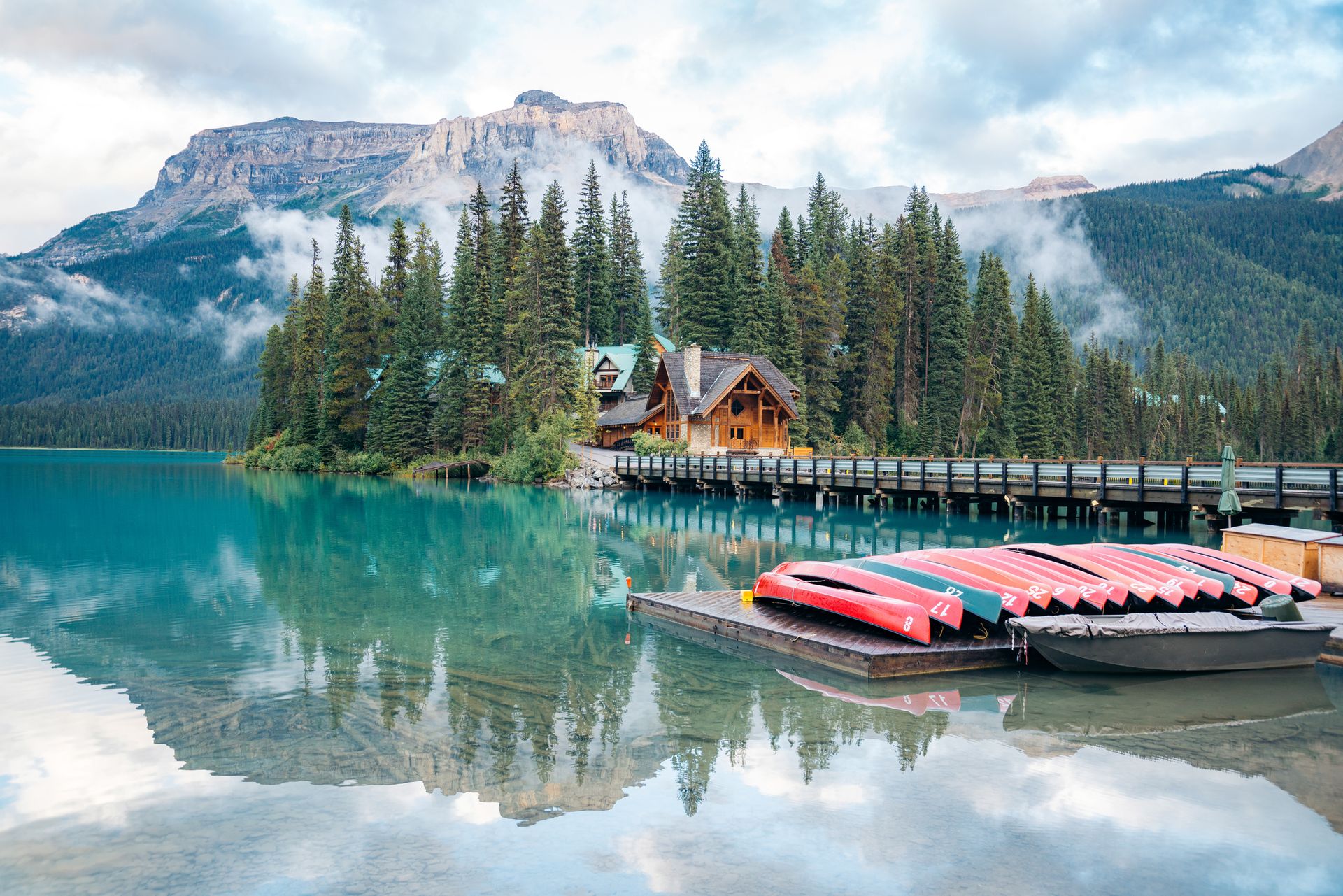
Yoho National Park in British Columbia’s Rocky Mountains takes its name from a Cree First Nations exclamation of awe, and the park’s collection of natural highlights justifies that origin. Takakkaw Falls, one of the highest waterfalls in Canada, gives the park an immediate dramatic focal point. Emerald Lake, the park’s largest, earns its name from the vivid turquoise color produced by glacial sediment in the water. And the Burgess Shale fossil beds, estimated to be more than 500 million years old, preserve one of the world’s most significant records of early multicellular life, accessible to visitors willing to hike to the site.
The Burgess Shale fossils are the park’s most scientifically distinctive feature. The Cambrian-era preservation provides researchers and visitors with access to organisms that predate the dinosaurs by hundreds of millions of years, and the site’s UNESCO recognition reflects its global paleontological significance. Guided tours of the fossil beds give visitors a structured way to engage with material that requires expert interpretation to be fully appreciated.
Yoho’s proximity to Banff National Park — located just 13 miles west of Lake Louise — makes it a practical addition to any Banff itinerary without requiring a separate travel day. Visitors who drive the route between Banff and Yoho pass through some of the Canadian Rockies’ most concentrated alpine scenery, and the two parks’ complementary highlights — Banff’s hot springs and lakes, Yoho’s waterfalls and fossils — give a multi-park trip genuine variety and not repetition of the same landscape type. Yoho’s smaller scale relative to Banff and Jasper also means that its major highlights are more easily covered within a single day for visitors on compressed itineraries. The Burgess Shale alone gives Yoho a scientific significance that the more famous neighboring parks cannot match on geological grounds. The site’s fossils represent creatures from an era before fish, before land animals, and before the Cambrian explosion that gave rise to most of modern animal life’s body plans.
Seth K. Hughes / Getty Images
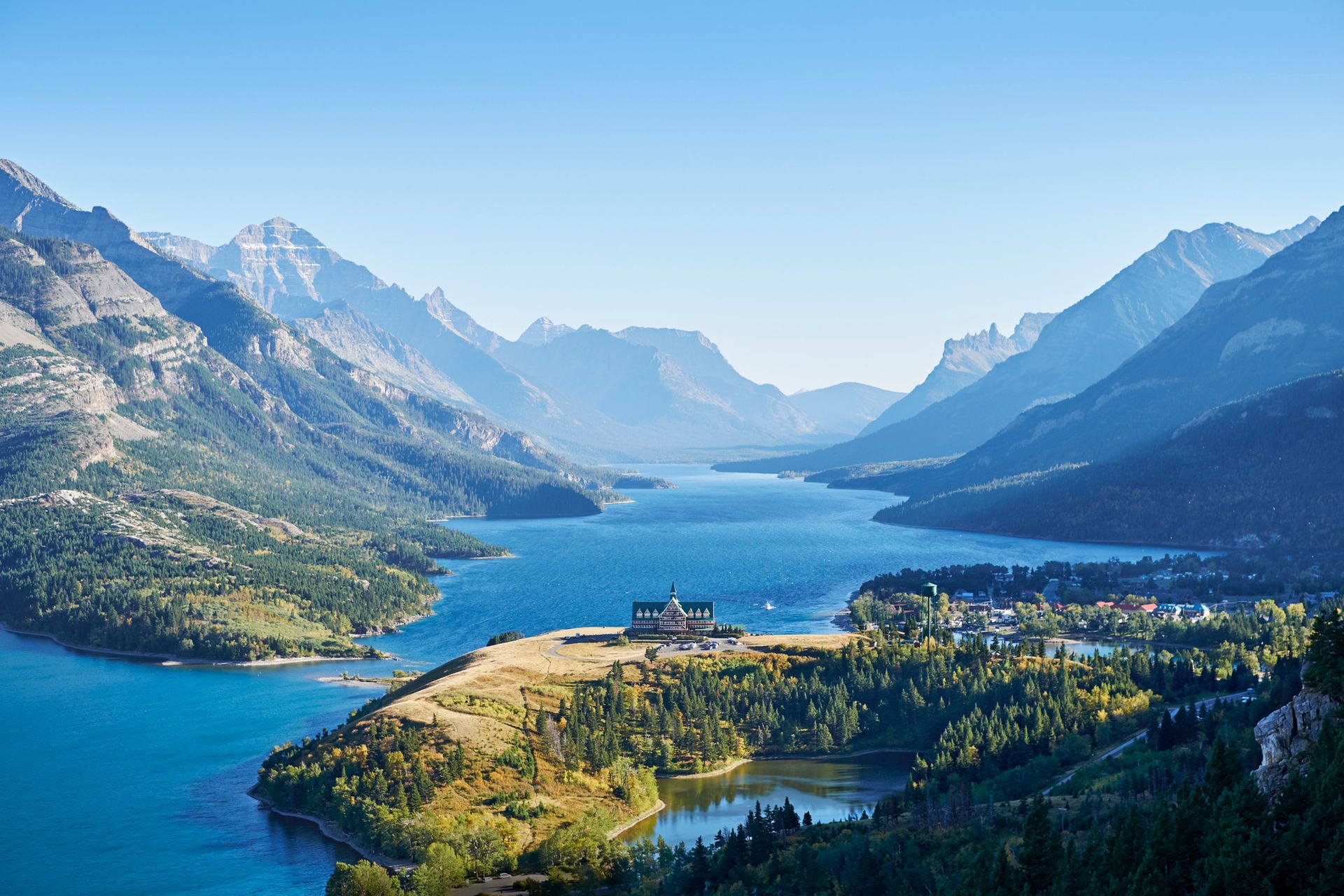
Waterton Lakes National Park, in the southwestern corner of Alberta, packs waterfalls, mountains, wildflowers, and wildlife into nearly 125,000 acres despite being the smallest national park in the Canadian Rockies. The park borders Montana’s Glacier National Park to the south, forming the Waterton-Glacier International Peace Park, a UNESCO World Heritage Site that straddles two countries and two national park systems. The shared designation gives the area a cross-border ecological identity that no other park on this list shares with an American counterpart.
The Chief Mountain lookout offers one of the park’s most visually striking perspectives: the point where the Rockies’ mountain terrain transitions seamlessly into the flat prairie, offering a geological contrast that draws the eye from one extreme landscape to the other in a single glance. The Red Rock Parkway, a paved road through the park, offers straightforward access to views of Mount Blakiston, the park’s highest peak, along a route that requires no hiking for the main viewpoints.
Waterton Lakes’ position at the meeting point of three ecosystems — Rocky Mountain, prairie, and parkland — produces a biodiversity that parks confined to a single landscape type cannot match. The wildflowers that bloom across the transition zones, the wildlife that moves between the mountain and prairie environments, and the wind that characterizes the area’s weather all reflect an ecosystem at an interface. The UNESCO Peace Park designation adds a political and cultural dimension. The park exists specifically to symbolize the peaceful border between Canada and the U.S., a distinction unique among the parks on this list. The wildflowers that bloom across the transition zones, the wildlife that moves between the mountain and prairie environments, and the wind that characterizes the area’s weather all reflect an ecosystem at an interface, and Waterton’s relatively compact size makes covering its highlights in a focused two-day visit more achievable than at the larger Rocky Mountain parks to the north.
dszc / Getty Images
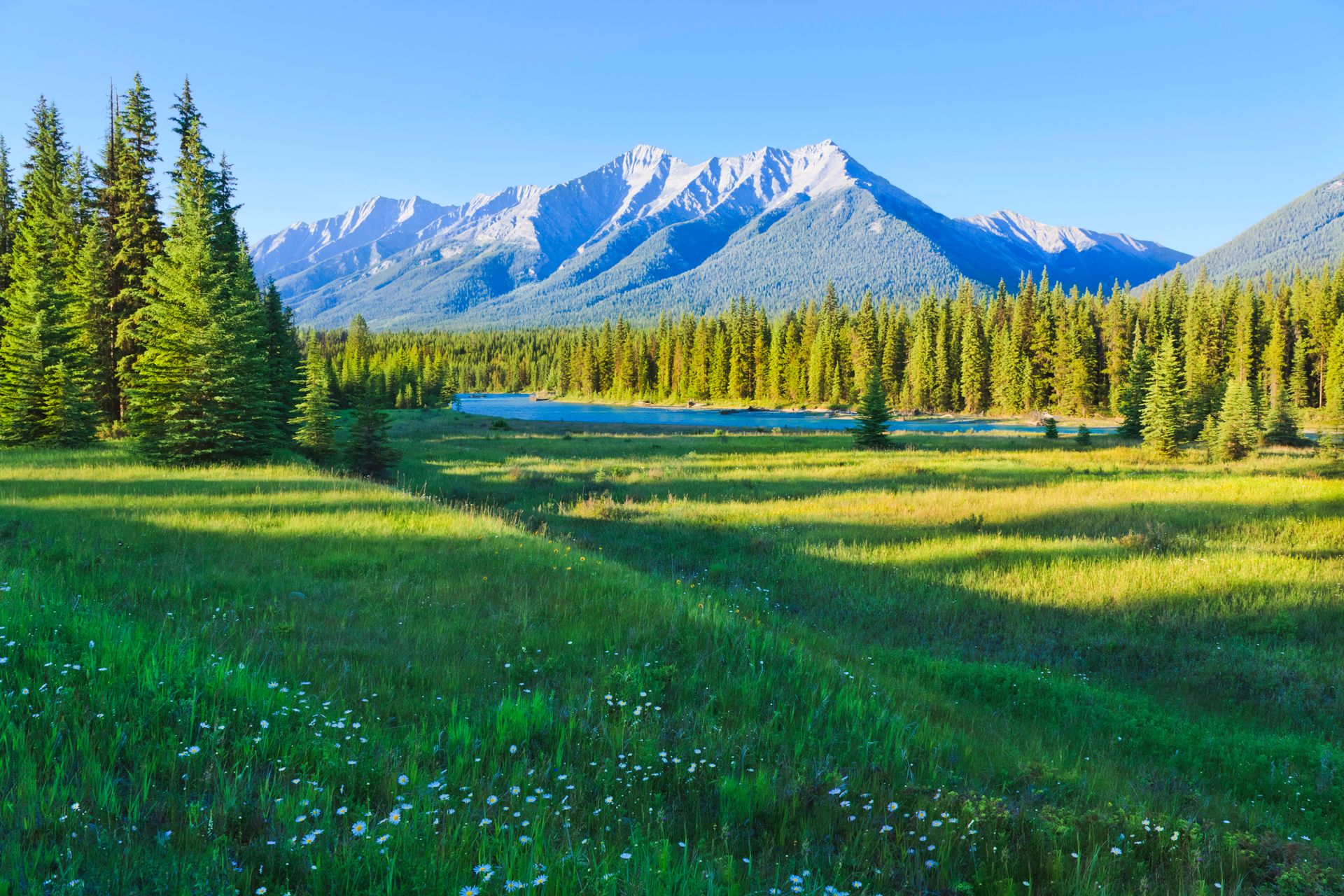
Kootenay National Park in British Columbia occupies a section of the Canadian Rockies directly south of Banff and offers the same mountain landscape with substantially lower visitor numbers. Radium Hot Springs, within the park, offers visitors seeking relaxation an alternative to Banff’s famous hot springs without the accompanying crowds. The Stanley Glacier trail leads to another site where Burgess Shale fossils are found, providing a complementary fossil experience to Yoho’s UNESCO beds at a lower elevation and with more moderate hiking demands.
The Marble Canyon trail, which traverses a limestone-and-dolomite canyon, gives the park a geological attraction distinct from any other on this list. The canyon’s colors — the white and grey of the marble-effect rock contrasting against the blue-green water below — produce a visual experience that the park’s more famous Rockies neighbors do not replicate. Wildlife watching, scenic drives, and winter cross-country skiing and snowshoeing give the park a year-round activity profile that justifies a standalone trip despite its relative obscurity compared to Banff.
The practical case for Kootenay is straightforward for travelers who have already visited or plan to visit Banff: the scenery is comparable, the hot springs are operational, the fossils are present, and the hiking trails are uncrowded. Visitors who time their Rocky Mountain trip to avoid peak-season congestion in Banff will find Kootenay delivers the fundamental experience — mountain air, alpine lakes, hot springs, and wildlife — without the reservation pressure and trail volume that characterize summer visits to its more famous neighbor. Kootenay’s lesser-known status is its primary practical virtue, and the source explicitly frames the park as the crowd-free alternative for Rocky Mountain travelers who know to look for it. The Marble Canyon trail’s limestone and dolomite colors, the Radium Hot Springs, and the Burgess Shale presence give Kootenay three distinct attractions that each justify the visit independently, making it more than a consolation prize for visitors who couldn’t get Banff reservations.
Marc Guitard / Getty Images
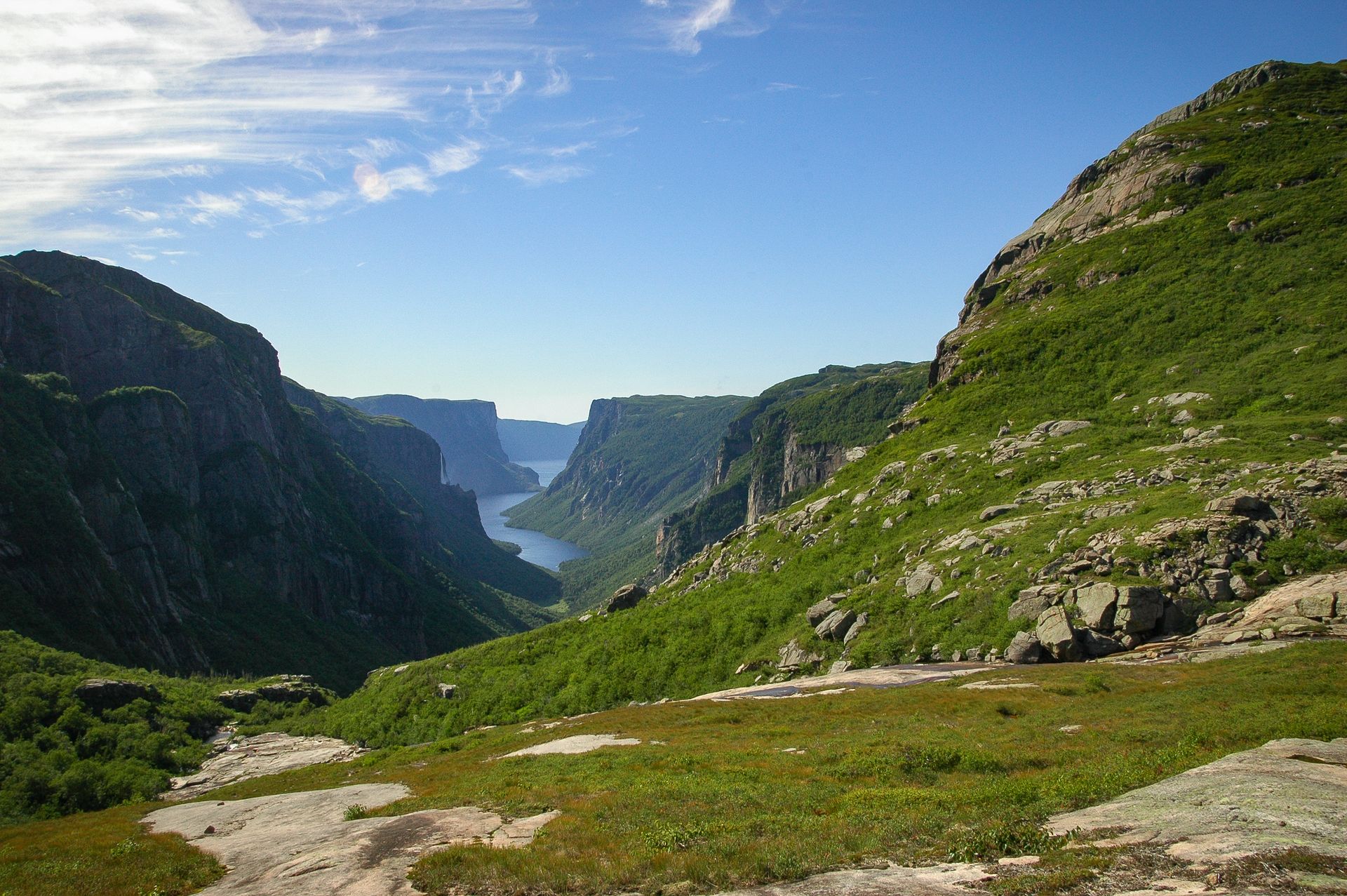
Gros Morne National Park on the island of Newfoundland earned its UNESCO World Heritage designation for a geological feature that no other park on this list contains: the Tablelands, a plateau where tectonic movement has pushed a section of the Earth’s mantle to the surface, allowing visitors to walk on rock that normally lies kilometers below the ocean floor. The distinctive red-orange color of the mantle rock, contrasting with the green of the surrounding landscape, makes the Tablelands visually unmistakable as a place where ordinary geology does not apply.
The park’s fjords give Gros Morne a Scandinavian-scale waterway landscape that Canada’s other national parks do not replicate. Western Brook Pond, despite its understated name, is a landlocked fjord of considerable size whose vertical cliff walls rise hundreds of meters from the water — an experience most accessible by boat tour, which the source identifies as appropriate for visitors who prefer scenic viewing without demanding hikes. The Coastal Trail along the Gulf of St. Lawrence gives hikers access to Atlantic coastline scenery alongside the inland fjords and mantle plateau.
Ambitious hikers can summit Gros Morne Mountain, the park’s highest point, which rewards the climb with panoramic views across the fjord landscape that makes the park famous. The Tablelands’ unique mantle exposure, the fjord scenery of Western Brook Pond, and the coastal access to the Gulf of St. Lawrence together give Gros Morne three distinct geographic experiences within a single park visit. No other park on this list can claim a feature as scientifically distinctive as exposed Earth’s mantle, and the UNESCO designation reflects the global geological significance of what Newfoundland visitors can walk across on a clear afternoon. The park’s Atlantic location also makes it the most accessible UNESCO World Heritage site for visitors arriving from the eastern seaboard of North America. Visitors who fly to St. John’s or Halifax and drive to Gros Morne will find a park that justifies the road trip in its first hour on the Tablelands.
Alan Majchrowicz / Getty Images
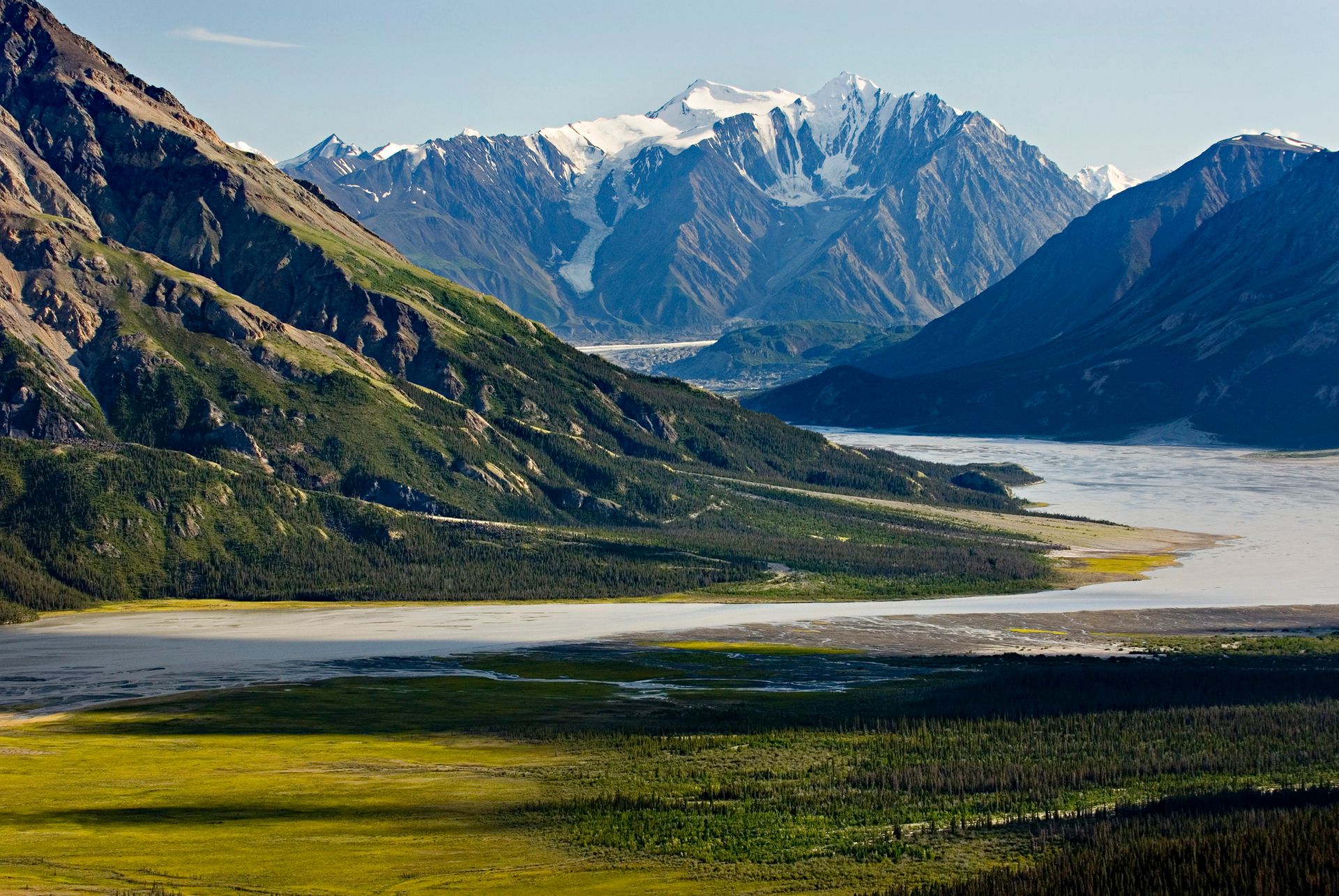
Kluane National Park and Reserve in Yukon contains 17 of Canada’s 20 highest mountains, including Mount Logan. Mount Logan is the highest peak in the country and the second-highest in North America. The park is also home to the world’s largest non-polar icefield, a feature that gives it a glacial scale matched by only a handful of protected areas worldwide. More than 20 trails and routes, ranging from half-hour walks to multi-day backcountry treks, offer hikers a range of engagement levels with this extreme terrain.
The Alsek River, which runs through the park’s wilderness, provides a rafting experience in proximity to active glaciers. The setting is one that no other river on this list can match for its remoteness and natural drama. Flightseeing excursions over the icefield give visitors who cannot access the terrain on foot an aerial perspective on the glacial landscape, covering more ground in an hour than a week of hiking could. The accessible half-hour trails alongside multi-day backcountry routes give Kluane an unusual span of engagement levels for a park this remote. Most wilderness parks at Kluane’s level of isolation offer only expert-level access; the shorter trail options give non-specialists a way to experience the icefield landscape without committing to an expedition.
Kluane’s location in Yukon places it far from the established Rocky Mountain park infrastructure of Alberta and British Columbia, which means reaching it requires more logistical planning than visiting Banff or Jasper. The effort of reaching Kluane is proportionate to the scale of what the park contains: 17 of Canada’s 20 highest peaks, the world’s largest non-polar icefield, and a river rafting experience through glaciated wilderness, putting it in a category of wilderness parks that delivers on its promises at a scale most visitors underestimate before arriving. For travelers committed to experiencing Canada’s most extreme mountain environment, Kluane is the destination that the source identifies as essential.
AscentXmedia / Getty Images
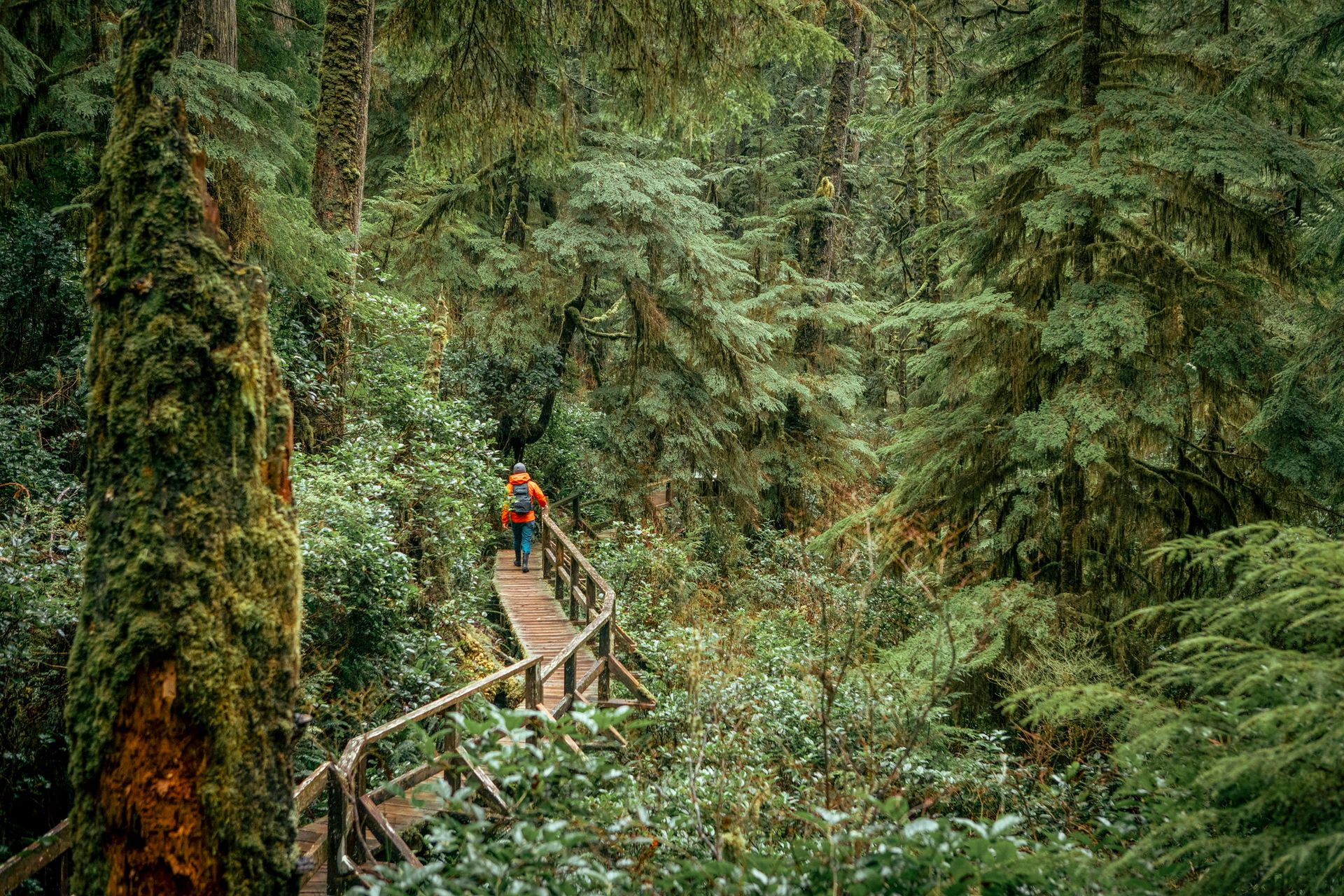
Pacific Rim National Park Reserve on the west coast of Vancouver Island in British Columbia stands out among Canada’s national parks for the active cultural presence of the First Nations communities who inhabit and protect the area. The Nuu-chah-nulth, Tla-o-qui-aht, Tseshaht, and Ditidaht peoples maintain a living relationship with the park’s land that predates and extends beyond the park’s designation as a federal reserve. Some of these nations offer cultural experiences and guided tours to visitors, while others maintain Beach Keepers — an ancient coastal stewardship tradition — who assist travelers in navigating and staying safe along the park’s beaches.
The physical landscape of the Pacific Rim complements the cultural dimension with cedar groves, rocky coastal outcrops, tide pools, and sandy beaches that create an environment distinct from the mountain parks that dominate this list. The West Coast Trail, nearly 50 miles long, traverses this coastal terrain as one of the most demanding and celebrated long-distance hiking routes in Canada. The trail’s reputation draws experienced hikers from across the country and internationally, and the permit system that manages its capacity reflects the volume of interest.
The park’s position on the edge of the Pacific gives it weather patterns and coastal ecology that the inland mountain parks do not share. Sightings of marine wildlife — grey whales, sea otters, and tide pool creatures — give Pacific Rim a biodiversity oriented toward the ocean environment. The presence of living First Nations communities in active stewardship roles gives the park an Indigenous cultural dimension that is more immediate and participatory than commemorative plaques or museum displays. Pacific Rim is the most culturally complex park on this list, where the natural environment and a continuing human relationship with the land are equally central to the experience. The Beach Keepers program in particular represents a form of visitor engagement guided by Indigenous stewards, not park rangers, that no other Canadian national park currently offers in the same form.
Posnov / Getty Images
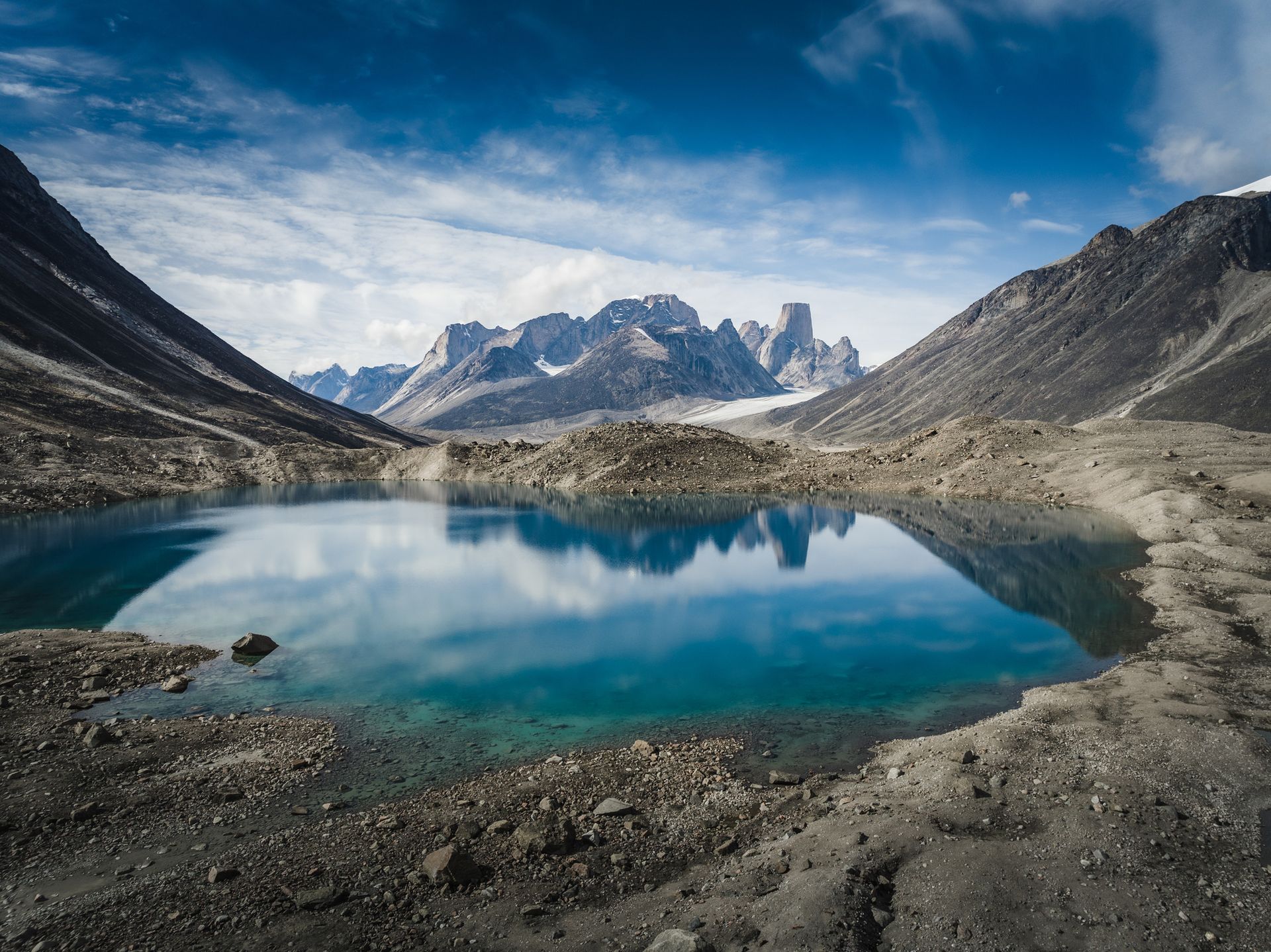
Auyuittuq National Park in Nunavut, whose name translates from Inuktitut as “the land that never melts,” requires more logistical effort to reach than any other park on this list. Visitors must fly to Iqaluit, the remote capital of Nunavut across the Hudson Strait from Quebec province, then take a second flight to one of two small Inuit villages, where local adventure outfitters guide groups by boat or snowmobile through the park’s sky-high fjords to reach the interior. The journey to the park is itself an expedition through one of the least-traveled corners of Canada.
The landscape inside the park justifies the effort. Granite peaks rise above glaciated valleys in a terrain that operates on an Arctic scale, where distances between features are vast, and the silence is total except for the wind. Polar bears and arctic foxes inhabit the park’s tundra environment, and wildlife encounters in this setting carry a weight that zoo-adjacent wildlife experiences at more accessible parks cannot approach. The absence of trails, marked routes, and visitor facilities beyond the outfitter-guided entry points means that Auyuittuq functions as a true wilderness park. Managed recreation infrastructure does not exist here, and visitors who enter do so on terms set by the terrain and guided by local expertise. The park’s position within the Arctic Circle gives it phenomena available nowhere else on this list: extended summer daylight that allows hiking at midnight, and deep winter darkness that makes the northern lights visible on clear nights.
The park’s position within the Arctic Circle gives it phenomena available nowhere else on this list: extended summer daylight that allows hiking at midnight, and deep winter darkness that makes the northern lights visible on clear nights. Auyuittuq does not offer the recreational variety of Banff or the cultural depth of Pacific Rim, but it delivers something none of those parks can: the experience of standing in one of the most remote inhabited territories on Earth, surrounded by Arctic granite and ice, with no other tourists in sight. The name’s promise — the land that never melts — confronts visitors with the scale of what climate change now threatens in a way that a ranger talk at a southern park cannot replicate.
Diana Robinson Photography / Getty Images
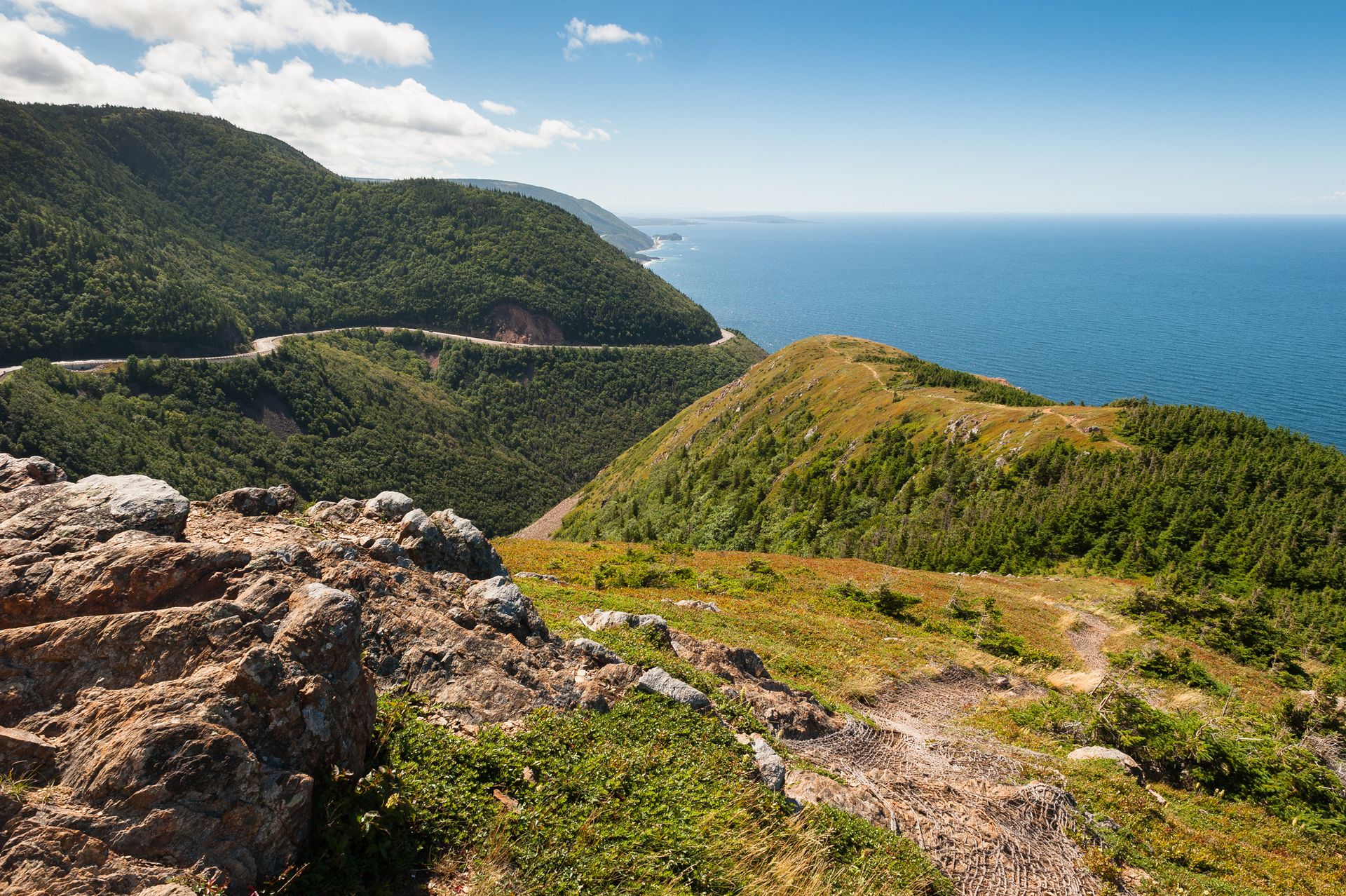
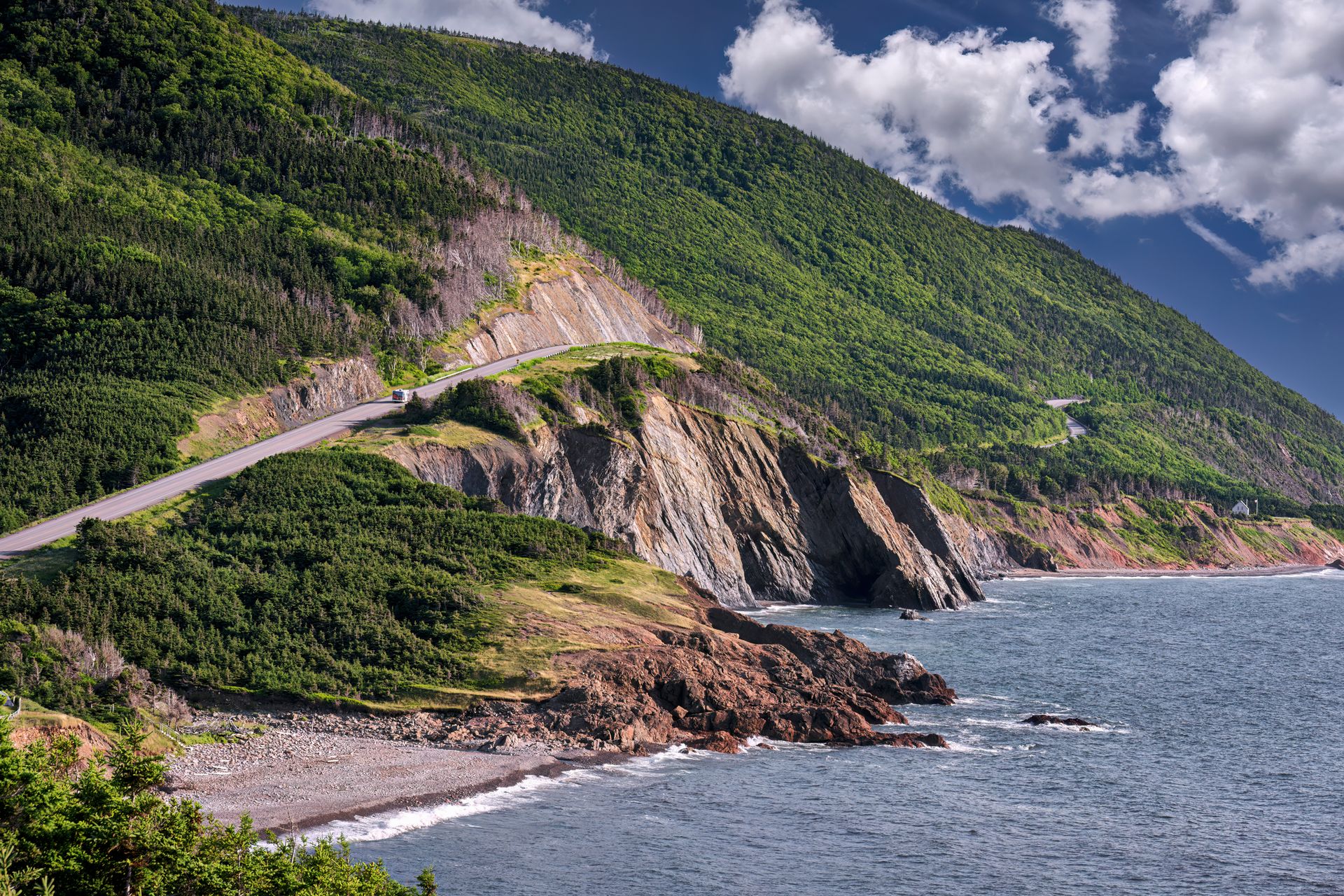
Cape Breton Highlands National Park on the northern tip of Nova Scotia earns the informal description that Canadians give it — “where the mountains meet the sea” — through the Cabot Trail, a paved road that winds along towering coastal cliffs and through the forested highlands that cover the park’s interior. The trail offers drivers a rare opportunity to engage with both mountain terrain and Atlantic Ocean scenery simultaneously, without having to choose between them, and the coastal cliff sections in particular offer viewpoints that rank among the most dramatic road-trip vistas in eastern Canada.
The park maintains 26 hiking trails of varying difficulty and character, with the Skyline Trail providing the most celebrated experience: an oceanfront route best completed at sunset, when the light over the Atlantic gives the cliff-top views a photographic quality that draws visitors back at the same hour on consecutive evenings. The park’s golf courses, freshwater lakes, saltwater beaches, and fishing opportunities give it a recreational range suited to visitors with different outdoor preferences, and the variety keeps family and mixed-interest group trips from fragmenting around a single activity.
Cape Breton’s position in Nova Scotia gives it a cultural context distinct from the Rocky Mountain parks that dominate the top of this list. The Celtic heritage of Cape Breton Island, the Acadian history of the surrounding region, and the Mi’kmaw presence that predates European settlement all exist in proximity to the park without being the park’s primary identity. Visitors who spend several days in the area can combine the Cabot Trail’s coastal mountain drive with the cultural and historical layers of the broader Cape Breton landscape. The park’s accessibility by road from Halifax or by ferry to the island gives it a practical reach that the more remote parks on this list cannot match for eastern Canadian travelers. The Cabot Trail’s reputation as one of Canada’s great scenic drives also gives Cape Breton Highlands a visitor entry point that requires no hiking ability or wilderness preparation — a car and a clear day are sufficient to experience the park’s defining feature.
