From the Acropolis and Delphi's oracle ruins to a Cycladic island with empty volcanic beaches, Greece's most beautiful destinations
Alexander Mils / Unsplash
Greece presents a particular challenge for the traveler with limited time: nearly every part of the country rewards a visit, and the destinations compete not just in beauty but in the kind of beauty they offer. The whitewashed villages and party beaches of the Cyclades occupy one register. The archaeological sites of the Peloponnese, where the foundations of Western civilization are physically present in stone, occupy another. The monasteries of Meteora, perched on rock formations that seem structurally improbable even after you have seen them, occupy a third. The northern port city of Thessaloniki, urban and historically layered in ways that island tourism does not prepare visitors for, offers something different again.
This variety is what makes Greece difficult to summarize and deeply rewarding to explore. A first trip that tries to cover Athens, several islands, and the Peloponnese in ten days will find each destination offering more than the itinerary allows. The traveler who returns to Greece specifically for Meteora, for the quiet beaches of Milos, or for the ancient theater at Epidaurus during its summer festival finds that the country rewards depth as much as breadth. The most beautiful places in Greece are beautiful in ways that differ from each other, and choosing which kind of beauty to pursue is the first decision any Greek itinerary requires.
The 10 destinations below appear in Travel + Leisure, drawn from a list of 15 covering the country’s islands, mainland cities, and archaeological sites. Each earns its place through a distinct combination of natural beauty, historical depth, and the specific quality of experience it offers visitors who arrive with time to engage with it properly.
David Tip / Unsplash
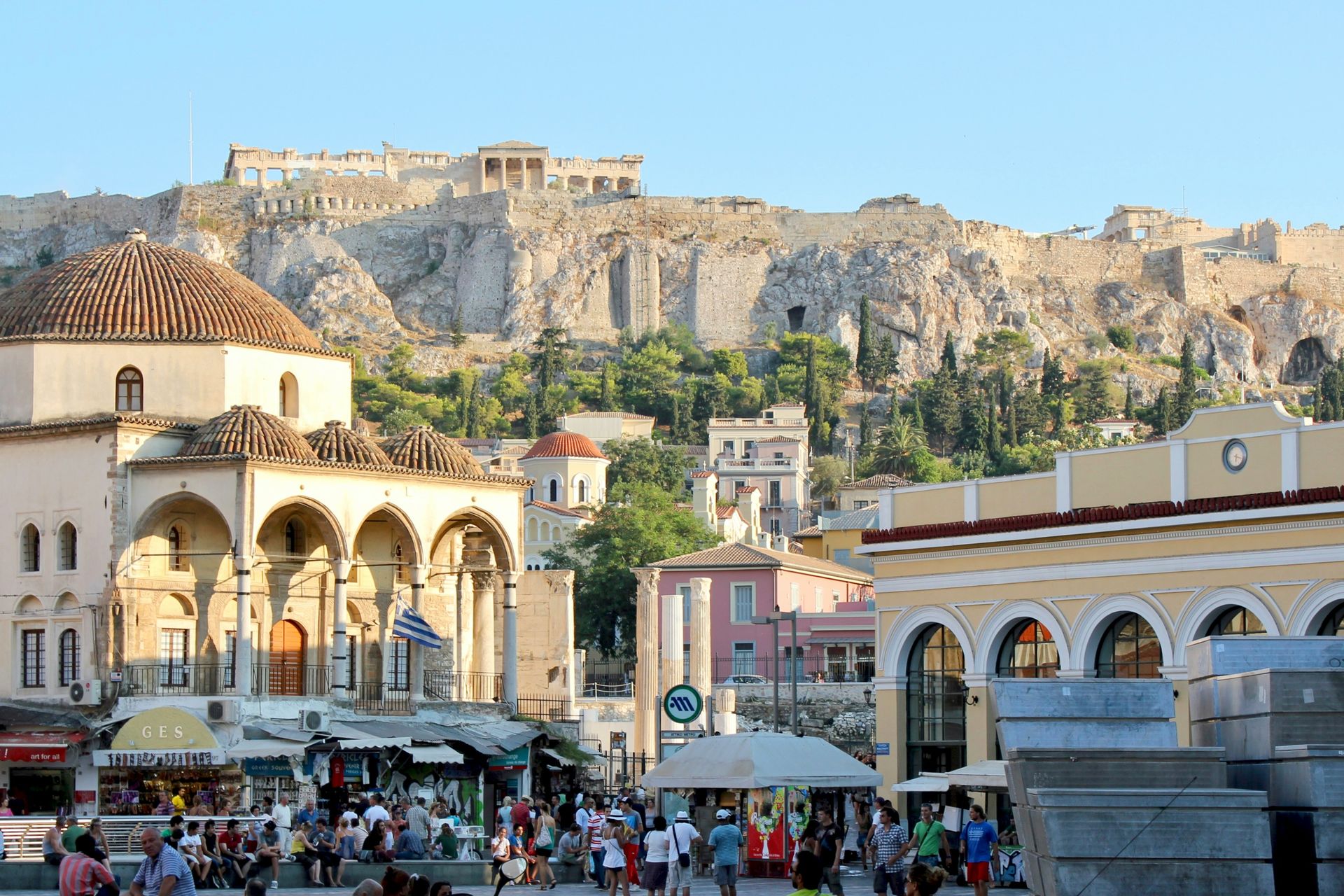
Athens is where most Greek itineraries begin, and the city rewards the two or more days that a thorough first visit requires. The Acropolis and the Parthenon are the obvious starting point: these are among the most significant surviving structures from the ancient world, and their position on a rock above the city gives the ruins a visual authority over the surrounding urban landscape that photographs suggest but presence confirms. Standing on the Acropolis hill and looking out over the city toward the sea gives a traveler the geographic orientation to understand why this location was chosen, a knowledge that the archaeological site conveys more effectively than any history text.
The neighborhoods below the hill give Athens a contemporary identity that its ancient monuments sometimes overshadow. Exarcheia, known for its bohemian character, street art, and independent bookshops, gives the city a politically engaged and culturally alive neighborhood that functions in a register entirely distinct from the tourist-dense areas around the Plaka and Monastiraki. Contemporary art galleries and museums distributed across the city give visitors whose interests extend beyond the ancient a modern cultural dimension that Athens’s archaeological profile does not always make apparent.
The city’s food scene, which has developed significantly in recent decades into a culinary destination in its own right, gives Athens a gastronomic reason to linger that the ancient sites and the bohemian neighborhoods complement rather than exhaust. The central market at Varvakios, the mezze culture of the tavernas, and the newer wave of restaurants applying Greek ingredients to contemporary techniques give the eating a range across budget levels and culinary philosophies that make Athens worth staying in rather than departing from as quickly as possible toward the islands.
George Tasios / Unsplash
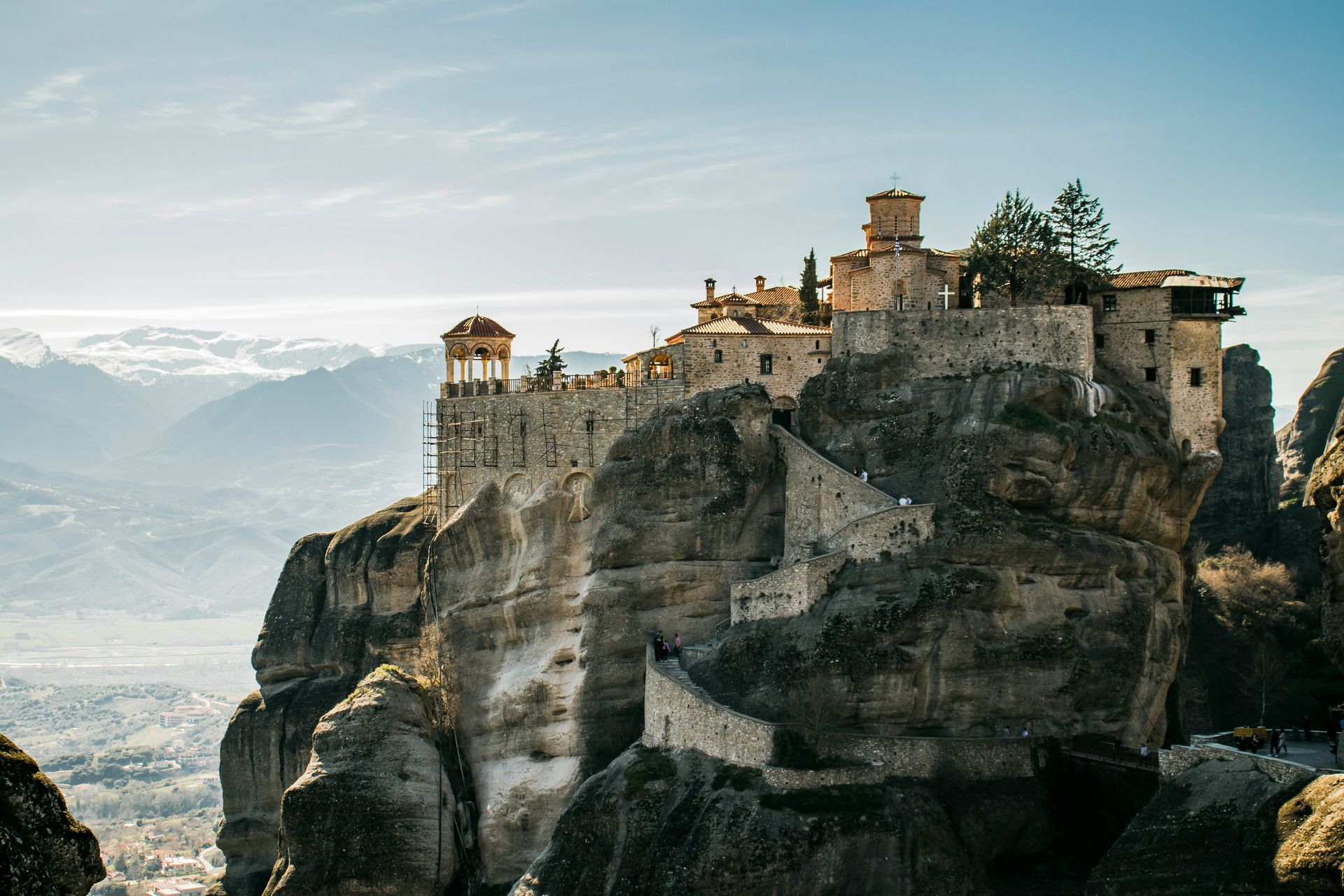
Meteora, in the Thessaly region of central Greece, is one of the most visually singular landscapes in Europe: massive sandstone pillars, formed by millennia of geological process, rise from the plain below to heights that gave the Byzantine monks who first climbed them access to a proximity to the sky that the word meteora, meaning “suspended in the air,” captures precisely. Six monasteries, part of the broader UNESCO World Heritage Site, occupy the summits of these formations, and the approach to each by the road that winds up the rock gives the arrival a quality of earned elevation that helicopter or aerial approaches cannot replicate.
The monasteries themselves, built from the 14th century onward, give the geological spectacle a human and historical dimension that the rock formations alone would not provide. The frescoes, icons, and religious objects preserved within the active monastic communities that still inhabit four of the six monasteries give the visit a living practice dimension that purely archaeological sites, where the human activity that produced the structures has long ceased, cannot sustain. Dress codes apply at all monasteries and are enforced: covering the shoulders and knees is a practical requirement for entry, not a suggestion.
The sunrise and sunset light that the rock formations catch give Meteora a photographic environment that changes dramatically throughout the day. The late afternoon light, which catches the orange-red of the sandstone and the monastery walls simultaneously, gives the landscape its most compelling visual quality. Arriving in Kalambaka, the town at the base of the formations, the evening before a planned visit gives travelers the option of the early morning light and the thinner visitor numbers that the midday and afternoon crowds that coaches bring do not share.
DiChatz / Unsplash
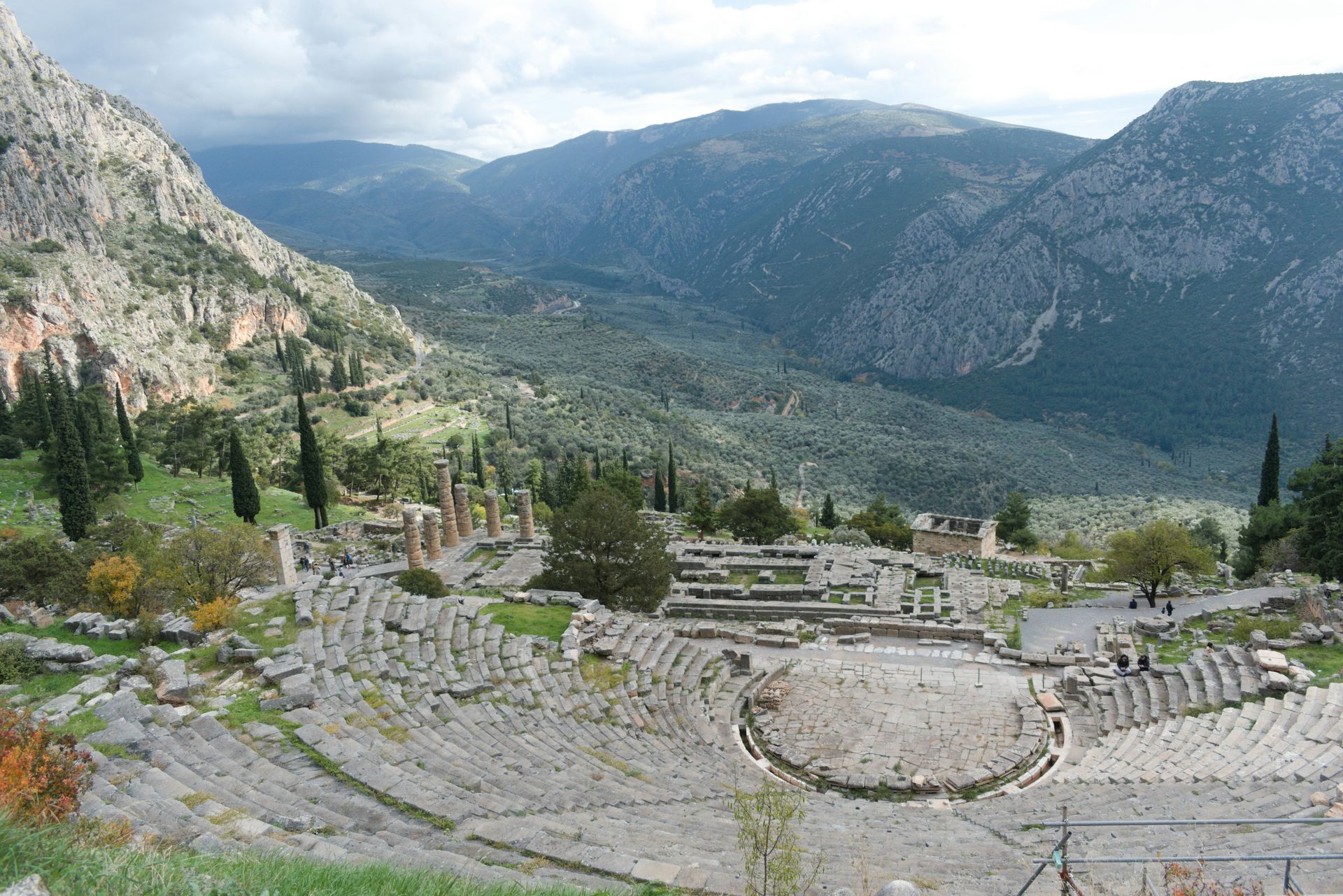
Delphi, about a 2.5-hour drive northwest of Athens through the mountains above the Gulf of Corinth, occupies a site that the ancient Greeks considered the center of the world. The Oracle $ORCL of Delphi, through whom the god Apollo was believed to communicate with mortals, drew supplicants from across the Mediterranean for centuries: kings, generals, and city-states consulted the Pythia priestess before major decisions, which gave Delphi a political and cultural influence that its physical remoteness from the major Greek city-states amplified rather than diminished. The ruins of the Temple of Apollo, the ancient theater, and the stadium give this history a physical presence that the site’s dramatic setting on the slopes of Mount Parnassus, with the Gulf of Corinth visible far below, makes genuinely awe-inspiring.
The archaeological museum adjacent to the main site holds the objects excavated from the sanctuary that the ruins themselves cannot display in situ. The bronze Charioteer of Delphi, one of the best-preserved bronzes from antiquity, gives the museum a central object of extraordinary quality, and the site’s hillside architectural remains prepare visitors to encounter it with appropriate context. The museum and the site together constitute a full day’s visit, and the drive from Athens makes a practical excursion rather than an overnight stay. Arriving the evening before and staying in the village of Delphi gives the site the advantage of an early morning visit before the day-trip coaches arrive.
The setting that surrounds the ruins gives Delphi a natural environment that the ancients’ choice of this specific site and the mythology around it make legible in retrospect. The valley of olive trees that descends from the sanctuary toward the sea, the mountain ridge above, and the quality of the light that the south-facing slope catches throughout the day give the ruins a landscape context that reinforces the sense that this was a place chosen for reasons beyond human convenience.
Jeet Dhanoa / Unsplash
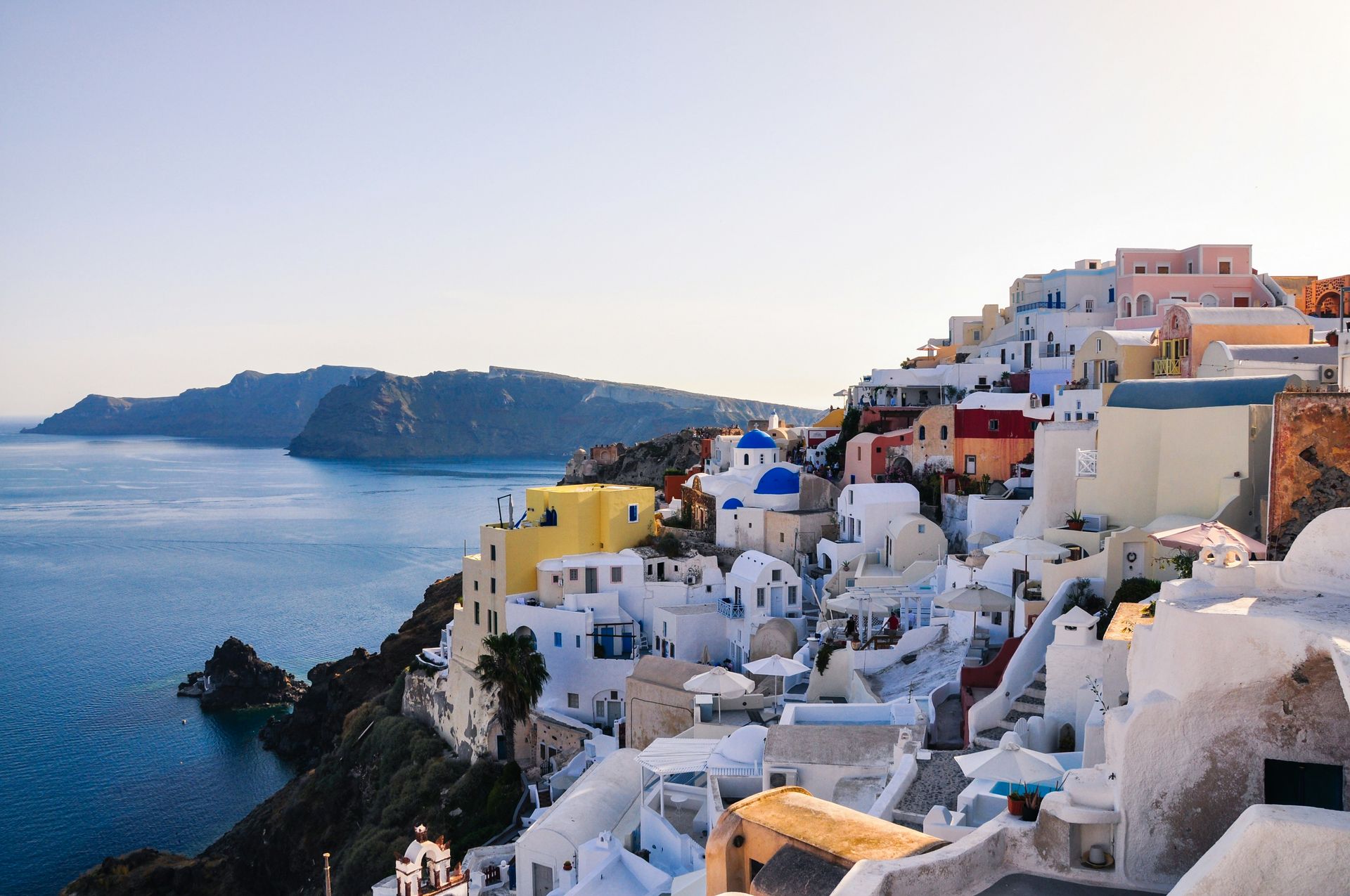
Mykonos is among the most recognized Greek islands internationally, and its reputation for its summer party scene is well deserved: the island hosts beachside festivities that extend through the night and into the following day during peak season, attracting a summer crowd whose energy gives the island a distinct character unavailable at quieter Cycladic destinations. For travelers whose Greek island vision includes this kind of social intensity, Mykonos delivers it at a scale and consistency that the island’s infrastructure, developed specifically around summer tourism, fully supports.
Beyond the party culture, Mykonos holds the visual character that makes the Cyclades internationally recognizable: whitewashed cubic buildings, blue-domed churches, and narrow lanes that the island’s settlement pattern, designed to confuse pirates, make a genuine maze to navigate on foot. Kato Mili, a row of five massive windmills built by the Venetians in the 16th century, stands on a hill above the harbor, its silhouette becoming the island’s most reproduced image. The windmills give the island a historical layer beneath its contemporary reputation, a layer made tangible by the Venetian construction’s survival across five centuries.
The beaches that ring Mykonos give travelers who want both the island’s social scene and genuine swimming and sunbathing quality a range of options across different levels of crowd density and organized beach club infrastructure. The more organized southern beaches suit the party-adjacent beach experience; the less developed northern beaches give visitors who want calmer water and thinner crowds an alternative within the same island. Mykonos is accessible by a 40-minute direct flight or a roughly 2.5-hour high-speed ferry from Athens, offering the logistical convenience that its international profile attracts.
David Tip / Unsplash
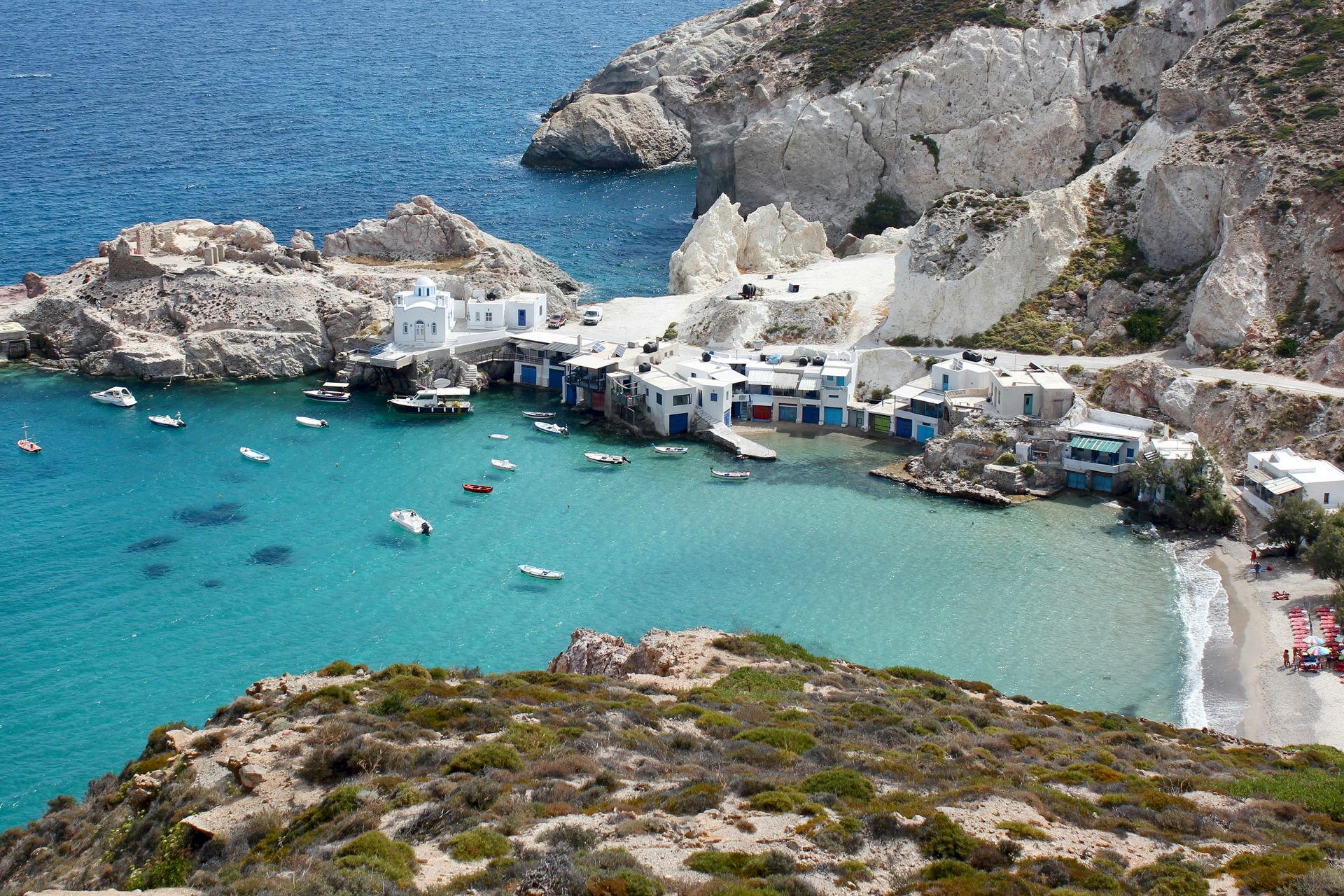
Milos has attracted attention in recent years among travelers seeking the Greek island experience that mass tourism has altered on Mykonos and Santorini, without fully eroding the beach quality that drew visitors to those islands in the first place. The island’s volcanic geology gives it a coastline of extraordinary variety: craggy cliffs in ochre, white, and grey shelter coves where the water runs through shades of turquoise produced by rock-reflected light. Beaches tucked between these formations remain empty through conditions that comparable beaches on more famous Cycladic islands have not seen for decades.
The island is accessible by a 40-minute flight or a 2.5-hour high-speed ferry from Athens, giving it logistical accessibility comparable to the more famous Cycladic islands but without the high-season crowd density that the comparison might suggest. Arrivals who book accommodation in Plaka, the island’s main village on the hilltop above the port, find a slower pace of island life that the lower visitor numbers sustain through the peak summer months in a way that Mykonos and Ios do not.
The island’s fishing tradition gives the local food culture a specific product to work with: octopus dishes, fresh fish prepared simply, and the local cheese and caper plants that the Milos landscape produces give the eating a regional character that the more heavily touristed Cycladic islands have increasingly supplemented with international menus aimed at visitor expectations rather than local tradition. Quiet evenings on a restaurant terrace above the water, with local wine and the sun declining into the Aegean, give Milos the experience of Greek island life that the island’s accumulated reputation promises and that its current visitor numbers still deliver.
Andy Fluet / Unsplash
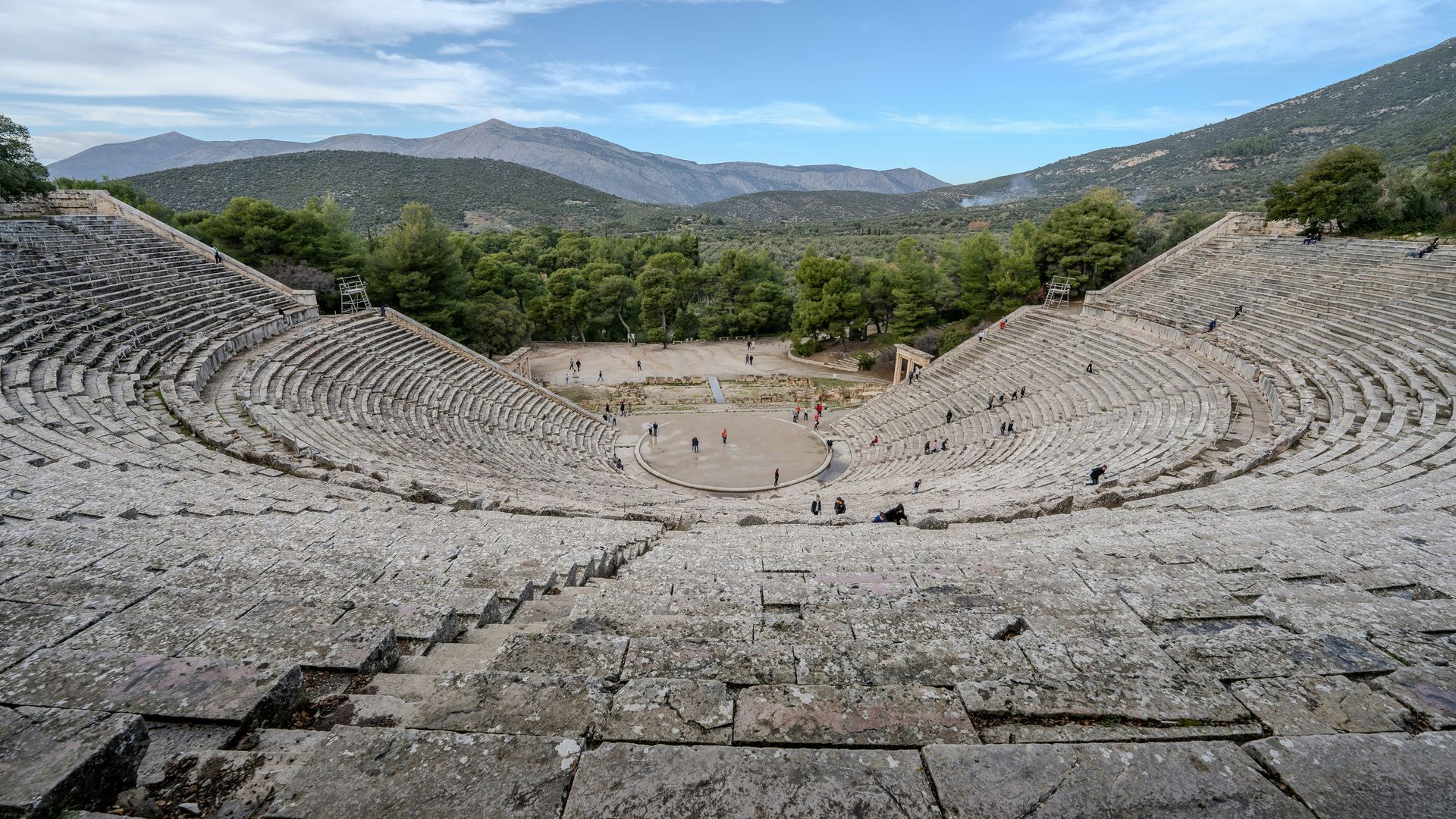
The theater at Epidaurus, built in the fourth century BCE as part of the Sanctuary of Asclepius, holds a consistent claim on the title of the best-preserved ancient Greek theater in the world: the seating for 14,000 spectators, the circular orchestra, and the acoustics that carry a whisper from the stage to the uppermost rows all survive in a state that gives visitors a direct encounter with ancient theatrical architecture at its most complete. The theater's acoustic quality, demonstrated by standing at the center of the orchestra and speaking at a normal volume, provides ancient engineering with a physical verification that most archaeological sites cannot offer through simple observation.
The Athens Epidaurus Festival, held annually from June through August, returns the theater to active use with performances of ancient drama, musical concerts, and children’s events. Attending a performance of Sophocles or Euripides in a theater built when those playwrights’ work was recent rather than ancient gives the dramatic text a spatial context that no modern theater can replicate. The festival’s programming gives the archaeological visit a temporal depth that transforms the ruins from a place where culture happened into a place where culture continues to happen.
The UNESCO World Heritage Sanctuary of Asclepius, which surrounds the theater, extends the site beyond the theater itself to include the sanctuary buildings, the ancient stadium, and the archaeological museum that houses objects excavated from the site. The Asclepion was a healing sanctuary as much as an entertainment venue. Patients came to be healed through sleep and dream interpretation as well as through theatrical performance, which the ancient Greeks understood as therapeutic, giving the site a complexity of purpose that the theater’s survival alone does not fully convey.
Uta Scholl / Unsplash
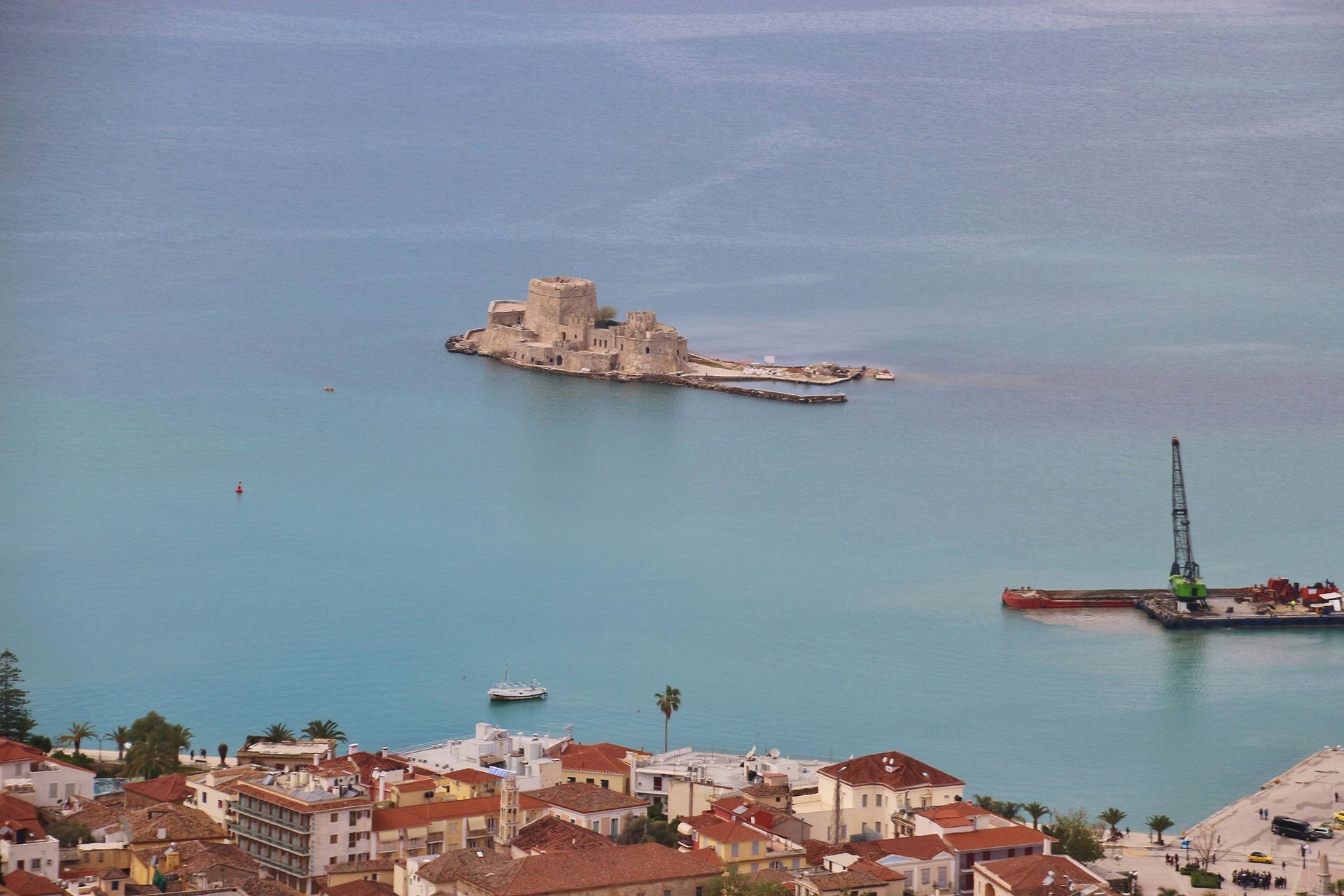
Nafplio, on the northeastern coast of the Peloponnese, played a role in Greek history that its current modest size as a city does not immediately suggest. According to local tradition, Poseidon’s son Nafplios founded the town; the city appears in accounts of both the Trojan War and the voyage of the Argonauts; and it served as the first capital of the modern Greek state after independence. The physical evidence of this layered history is distributed across the old town’s medieval streets, the Venetian fortresses on the surrounding hills, and the Bourtzi castle on an island in the harbor, visible from the seafront promenade.
The old town’s neoclassical buildings, narrow lanes, and the stepped streets that climb the rock give Nafplio a physical character that the Peloponnese’s more purely archaeological sites do not provide. The castles that overlook the town, including Palamidi, accessible by 999 steps from the town below, and the older Akronafplia, offer elevated views over the Argolic Gulf and the surrounding coastline, with the authority of fortifications built across different periods of the town’s history. The evening atmosphere on the waterfront, where locals and visitors share the same seafront restaurants and cafes, gives Nafplio a social life that overnight stays reward in ways day-trip visits from Athens or Epidaurus cannot.
The proximity to Epidaurus, about 16 miles away, gives Nafplio a natural pairing for travelers exploring the northeastern Peloponnese. Using Nafplio as a base for the Epidaurus theater and festival, and extending the stay to include the town’s own historical sites and waterfront life, gives the region a visit structure that neither destination alone fully justifies, but that the combination makes deeply rewarding.
Corfu Diary / Unsplash
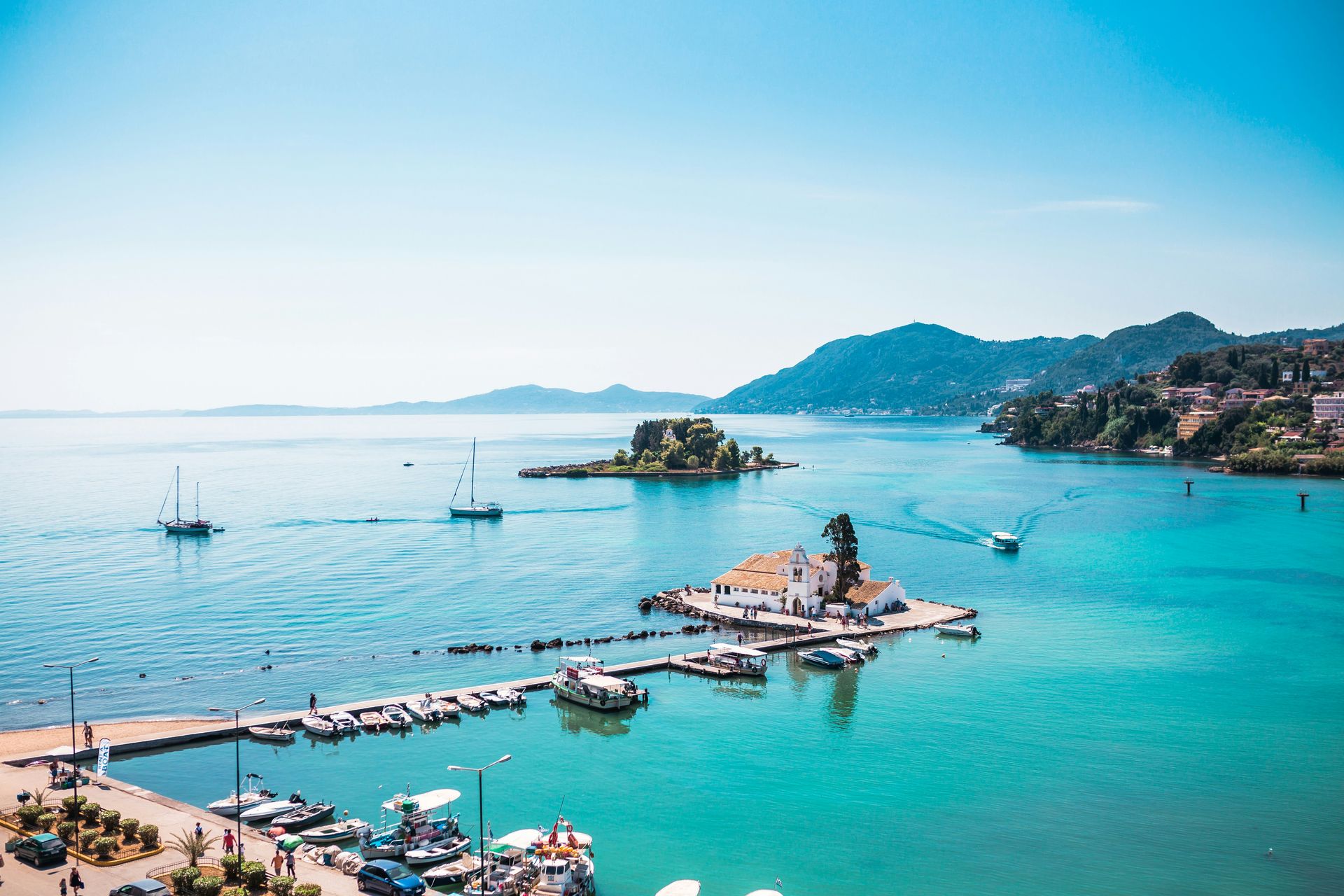
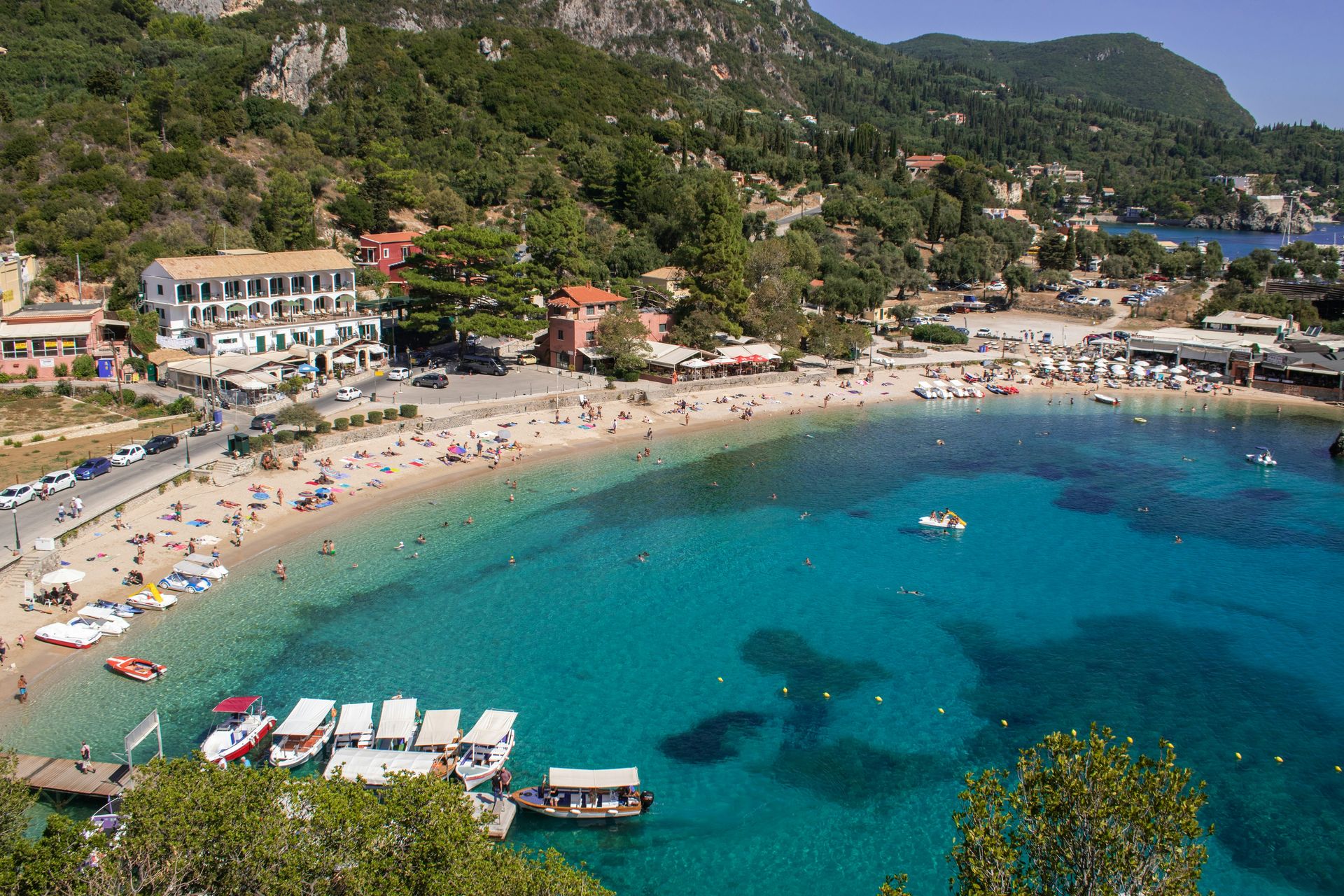
Corfu’s proximity to the Italian coast and its history of Venetian rule from the 14th through the 18th centuries give the island a character that distinguishes it within the Greek archipelago. The architecture of Corfu Town, a UNESCO World Heritage Site, reflects the Venetian influence in its colonnaded Liston promenade, its narrow-fronted buildings in Italian palazzo shades, and the two Venetian fortresses that frame the old town from opposite ends. The island’s cuisine, shaped by the same Italian connection, introduces flavors and preparations that the purely Greek-influenced Cycladic and Dodecanese islands do not share.
The landscape of Corfu’s interior, with its cypress trees, olive groves, and the specific green that the island’s higher rainfall, compared to the drier Aegean islands, produces, gives the island a lushness that visually distinguishes it from the more arid Cycladic landscape. The beaches on the island’s west coast, particularly in the Paleokastritsa area, where the rocky coastline frames coves of clear water, give Corfu’s natural environment the Mediterranean beauty that its Venetian-influenced culture complements rather than overshadows.
The fishing villages distributed around the island’s coastline give visitors who move beyond Corfu Town a quieter, more local version of the island that the main town’s tourism concentration does not represent. The island’s accessibility by short flight from major European airports gives it logistical convenience for travelers coming from elsewhere in Europe, making Corfu a viable destination for trips too short to justify the full Athens connection.
Tony Hanks / Unsplash
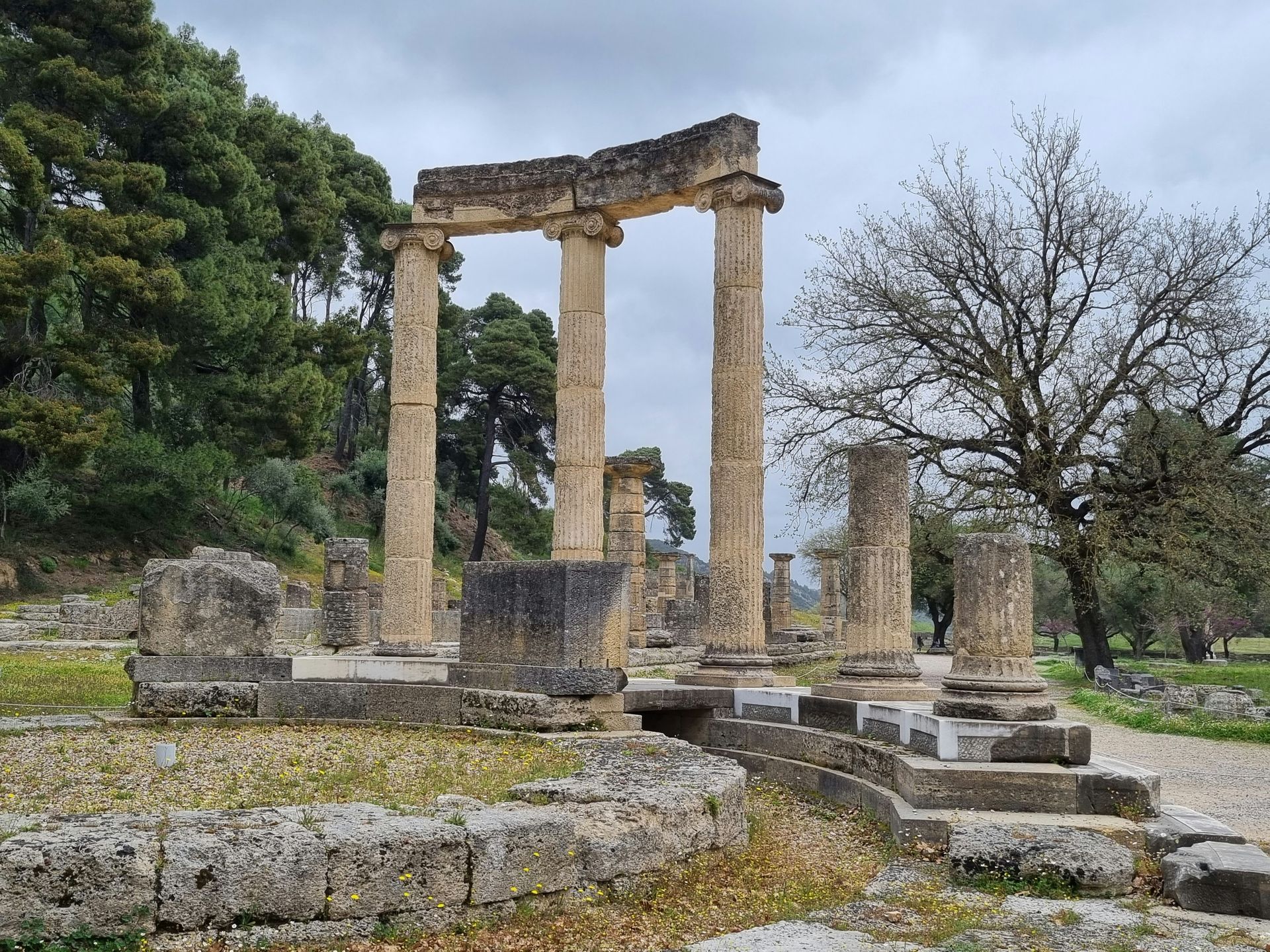
Olympia, in the western Peloponnese, was the site of the original Olympic Games, held there from 776 BCE through the late Roman period, a span of more than a millennium of athletic competition at the same location. The ancient stadium, whose starting and finishing lines are still visible in the preserved track, gives visitors a physical encounter with the space where the athletes of antiquity competed. The site’s scale and the density of ruins, including the temples of Zeus and Hera, the gymnasium, the palaestra, and the treasuries of the city-states that competed here, give the archaeological visit a complexity reflected in the UNESCO World Heritage designation.
The temple of Zeus once housed one of the Seven Wonders of the Ancient World: a gold-and-ivory statue of Zeus by the sculptor Pheidias, now lost. The archaeological museum adjacent to the site houses the pediment sculptures from the temple, recovered from the ruins, which give the museum visit a specific connection to the structure, as the temple’s ruined columns on the site provide context. The Nike $NKE of Paeonius, another sculptural highlight of the museum, demonstrates the quality of work that the sanctuary attracted during its period of maximum importance.
The charming main street of the modern village of Olympia, with its cafes and shops, and the Archimedes Museum, with its interactive exhibits on the third-century mathematician and engineer, provide practical infrastructure around the archaeological site that makes a full day’s visit comfortable. The 90-minute drive from Kalamata Airport and the 3.5-hour drive from Athens offer two approach options, depending on the broader Peloponnese itinerary a traveler is following.
Anastasius / Unsplash
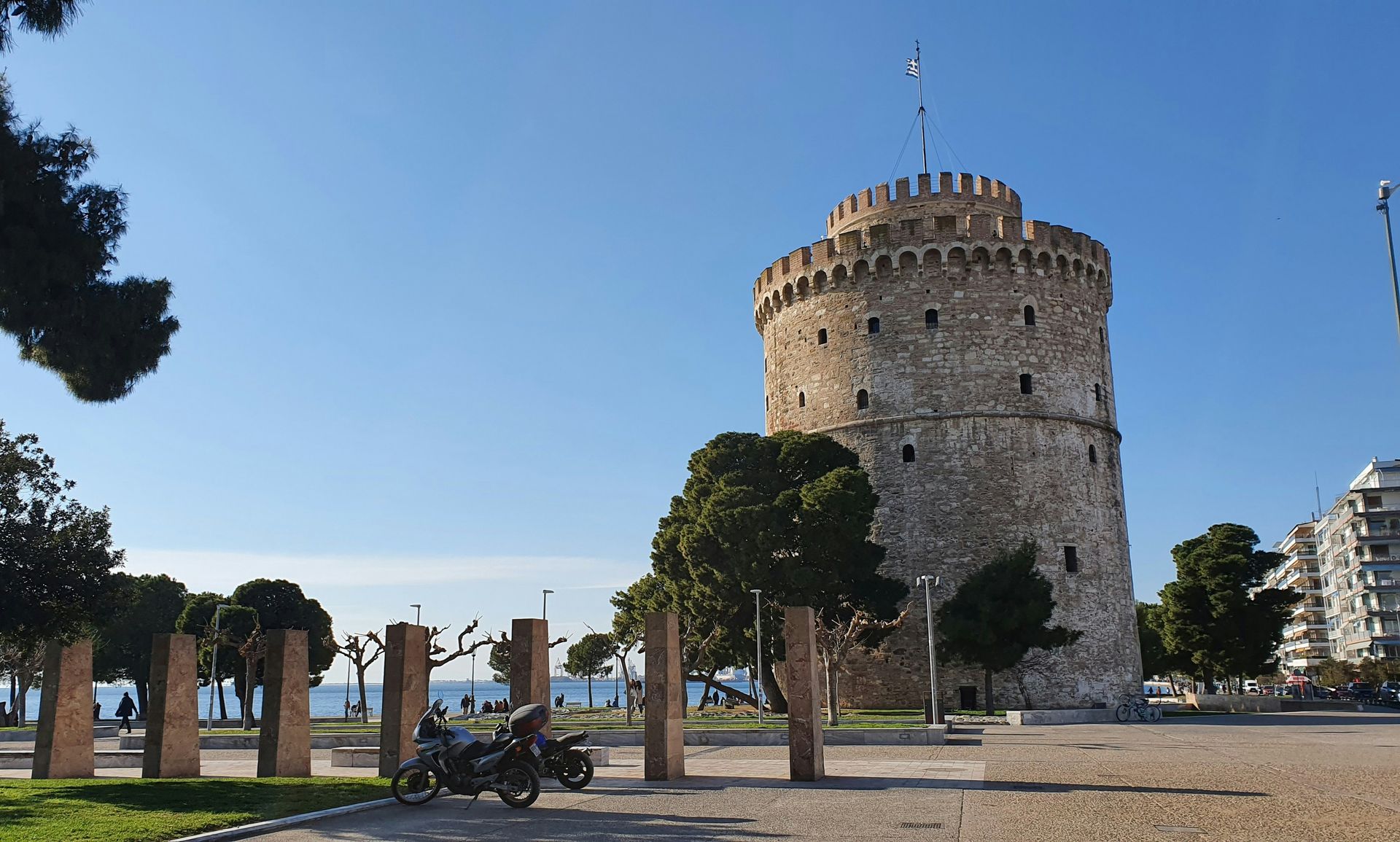
Thessaloniki, Greece’s second-largest city and its northern port, offers a version of Greek urban life that Athens’s concentration of international tourism partially obscures: a city where residents and visitors share the same cafes, the same waterfront, and the same weekend rituals, producing a social texture that the tourist-dense areas of the capital do not always sustain. The White Tower of Thessaloniki, the Byzantine walls, and the Arch of Galerius give the city an ancient monument layer that the centuries of Roman, Byzantine, Ottoman, and Jewish cultural presence have built over and around in ways that give Thessaloniki’s historical landscape a density of layering that purely Greek-era cities do not share.
The city’s food culture, which consistently ranks Thessaloniki among the best eating cities in Greece and gives it a claim to certain dishes, including bougatsa, koulouri, and the specific style of mezze that its Ottoman heritage contributed, gives the visit a gastronomic program that rewards slow exploration through the city’s market areas and neighborhood restaurants. The world-class restaurants that the MOMUS-Museum of Contemporary Art anchors, giving Thessaloniki a cultural infrastructure appropriate to a major European city rather than a regional capital.
The 55-minute flight from Athens gives Thessaloniki logistical accessibility for travelers building a Greece itinerary around both Athens and the north, and the six-hour drive offers a route through the Greek countryside that the flight’s efficiency trades for a landscape experience. The city’s position near Mount Olympus, the Vergina royal tombs of ancient Macedonian kings, and the beaches of Halkidiki give Thessaloniki a surrounding region that extends a stay well beyond the city itself for travelers with time to explore.
