From Hallstatt's Alpine lake to a Cycladic island with Santorini's beauty and none of the crowds, Europe's most beautiful villages
Aswathy N / Unsplash
The most beautiful European villages share two qualities: a scenic location provided by the surrounding landscape, and a distinctive character built over centuries. The first quality is a matter of geography: whether the village sits on a fjord, a lake, a clifftop, or a river plain determines the visual frame within which it operates. The second quality is a matter of history: the specific architecture, building materials, industries, and cultural traditions that make one medieval Alsatian village unmistakably different from another. The villages that endure on traveler itineraries are those that satisfy both criteria simultaneously, with a setting that amplifies the human-built environment and a built environment that justifies the effort of reaching the setting.
Overtourism has transformed several of Europe’s most famous small villages into crowded queues of visitors shuffling past souvenir shops and overpriced restaurants. The antidote is not to avoid small villages but to look one step beyond the most obvious destinations: the coastal alternative to Cinque Terre, the Greek island that delivers the same visual elements as Santorini without the crowds. Several villages on this list occupy exactly that position: geographically near or visually similar to a famous, overcrowded neighbor, but quieter and more rewarding for the traveler willing to go slightly farther.
These 10 villages come from Travel + Leisure’s selection of fairy-tale villages across Europe with stunning scenery and old world charm, representing the first 10 from the full list of villages across 15 countries, spanning fjords, island archipelagos, river valleys, mountain passes, and Atlantic coastlines, covering a geographic breadth that illustrates how diverse the category of European village beauty actually is, with no single landscape type or architectural tradition defining what qualifies as the ideal.
Samuele Bertoli / Unsplash
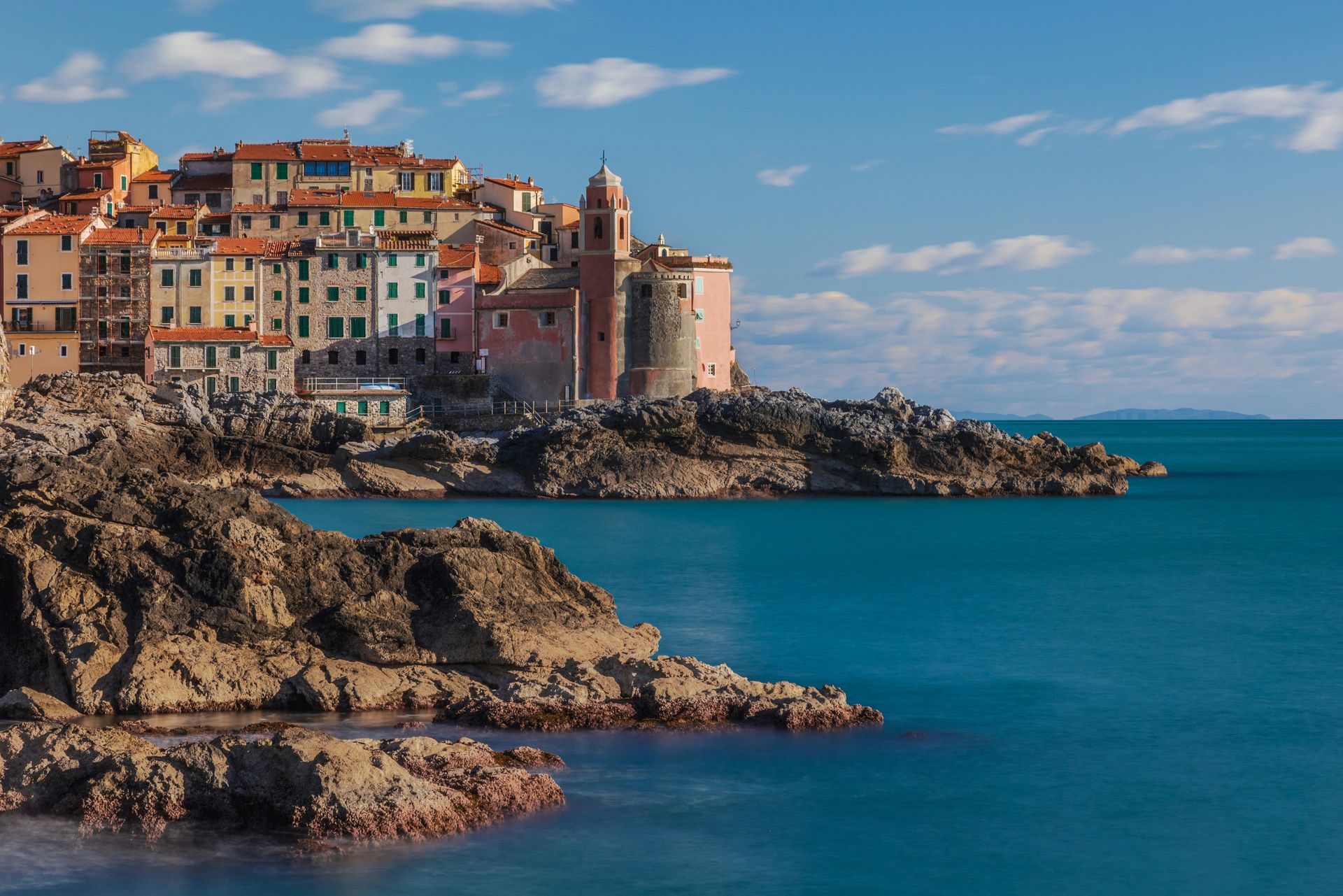
Tellaro sits on the Ligurian coast of Italy, protected from mass tourism by the same physical characteristics that make it beautiful: cliff-top approach roads too narrow and winding for large tourist coaches, and a harbor too small to accommodate the volume of visitors that neighboring Vernazza and Portofino receive. Pastel-colored buildings cling to the sheer coastal cliffs, producing the same cliff-hugging visual effect as those better-known destinations without the accompanying crowds.
The village sits on the Golfo dei Poeti, the Bay of Poets, a name that reflects the coastline’s literary associations. Lord Byron and D.H. Lawrence were among the writers who found inspiration in this stretch of the Mediterranean, and the bay’s name preserves that history in the landscape itself. The same quality that drew writers seeking solitude continues to make Tellaro appealing: the relative difficulty of reaching it filters the visitor population, drawing in those who made a specific effort.
The physical comparison to Cinque Terre is worth making directly. The Cinque Terre villages are roughly an hour’s drive up the coast, and the summer experience there has become notoriously crowded. An evening stroll in peak season feels more like navigating an amusement park than exploring a seaside village. Tellaro offers the same essential elements: pastel buildings, dramatic cliffs, a small harbor, and the Ligurian coastline, at a scale and crowd level that actually allows the experience those elements should produce. The cliff-top roads that protect Tellaro also make the approach drive a destination in itself: the coastal road from La Spezia offers elevated views of the Ligurian coastline that the village's interior does not. Arriving at Tellaro from above, before descending to the harbor, provides a visual prologue that sets the place's scale correctly. Tellaro is small enough to walk in an hour, making it a realistic half-day stop on a broader Ligurian itinerary.
Magda Vrabetz / Unsplash
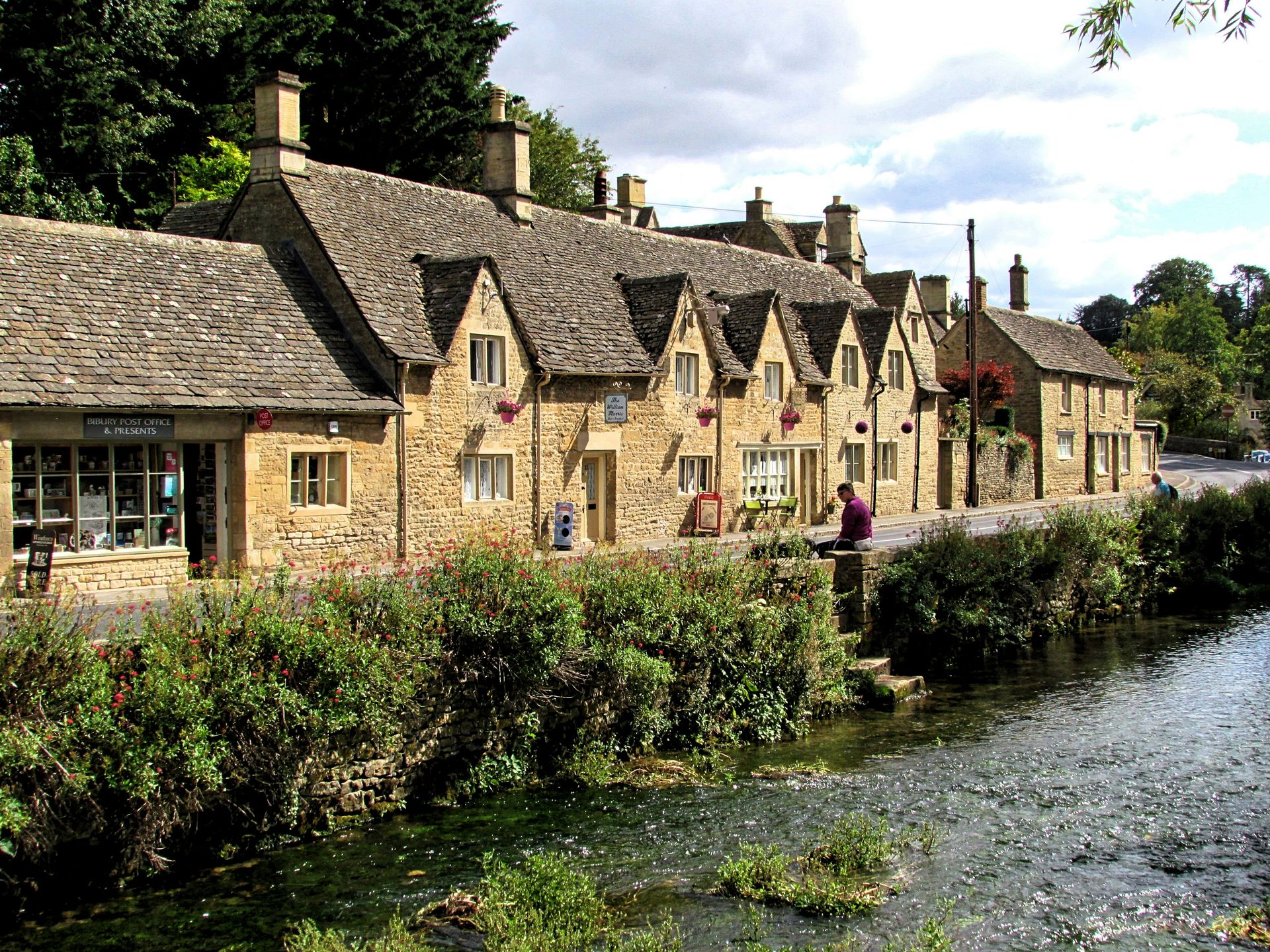
Bibury sits in the Cotswolds, the region of southwestern England designated an Area of Outstanding Natural Beauty, and it delivers what that designation implies: verdant meadows abutting medieval stone cottages with steeply pitched roofs, bisected by the River Coln. The river teems with trout, and clear water, stone bridges, and cottage gardens together create a visual coherence that the Cotswolds are known for at their finest.
The most scenic single element is Arlington Row, a lane of cottages built in the 17th century to house weavers from the nearby Arlington Mill. The sepia-hued stone of the buildings has aged in a way that makes them appear to grow from the landscape rather than sit as foreign additions upon it. The Row is among the most photographed streetscapes in England, and the photographic record barely exaggerates what the visit delivers in person.
The Cotswolds’ designation as an Area of Outstanding Natural Beauty is a formal land-use classification that restricts development across more than 800 square miles of English countryside, which is why villages like Bibury have remained visually intact while comparable villages elsewhere in England have absorbed modern development. The classification is the structural reason these villages look the way they do: not nostalgia or preservation effort, but a protected status that limits what can be built and demolished across the entire region. The River Coln’s trout population is also worth noting for fly fishing enthusiasts: several stretches near Bibury offer managed day tickets on one of the Cotswolds’ most picturesque beats. The Arlington Mill itself is also open as a museum, giving visitors who want more historical context for the weaving industry that shaped Bibury’s architecture a dedicated space to explore beyond Arlington Row. The Cotswolds as a region also lends itself to combining multiple village visits in a single day trip from London, and Bibury pairs naturally with nearby Bourton-on-the-Water and Burford.
Masmik Ghazaryan Olson / Unsplash
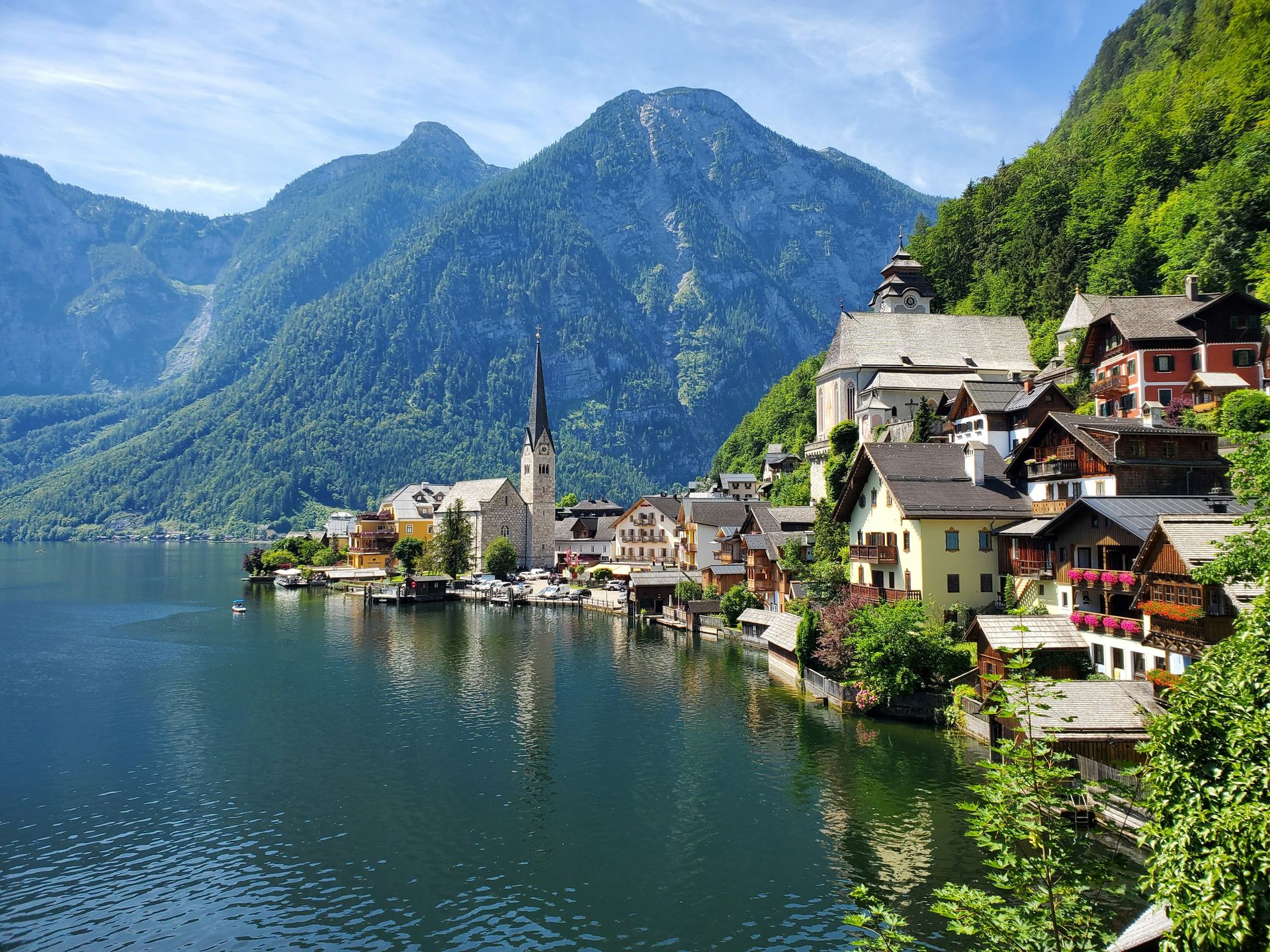
Hallstatt occupies a narrow strip of land on the bank of the Hallstätter See in central Austria, pressed between a pristine Alpine lake and a mountain that rises steeply from the water’s edge. The setting is the kind of visual composition that appears in travel photography as an idealized version of what European villages can look like, and the village, unlike many such photographs, delivers the setting at actual scale.
Salt mining at Hallstatt dates back thousands of years, making the town’s salt heritage among the oldest documented industrial activities in Europe. That sustained economic activity over millennia translated into the kind of accumulated prosperity visible in the market square: ivy-covered buildings surrounding a well-maintained public space that reflects centuries of investment in the communal environment. The village’s beauty is not the product of recent restoration efforts but of long-term prosperity that kept the buildings intact across successive generations.
Hallstatt has also become genuinely famous in East Asia, particularly in China and South Korea, to the point where a replica of the village was built in China’s Guangdong province. That level of international recognition has brought significant visitor pressure during peak season. Arriving early in the morning or visiting in the shoulder seasons of spring and autumn gives access to the same storybook setting without the midday congestion that summer peak hours produce. The boat tours that depart from Hallstatt village offer visitors an alternative view of the lakeside architecture from the water, showing how the buildings press against the mountain’s base in a way the shore-level view does not. The salt mine tours available from Hallstatt also take visitors underground into the working archaeological site, where the documented history of salt extraction stretches back far beyond the Roman period. The lake also offers swimming from the village waterfront in summer, though the Alpine water stays cold well into the warmer months.
Chris Ouzounis / Unsplash
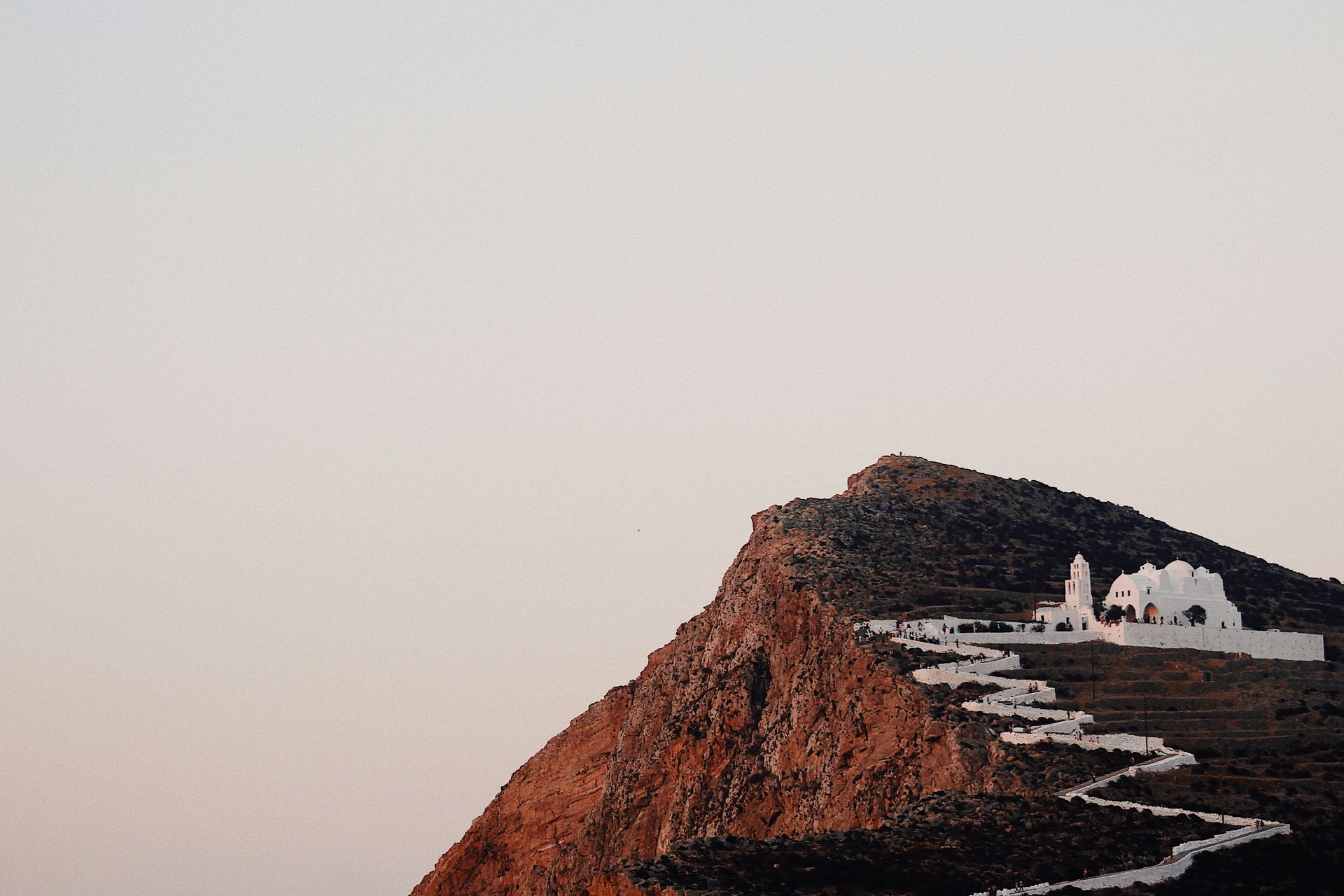
Folegandros belongs to the Cyclades island group in Greece, the same archipelago as Santorini, and offers the same fundamental visual vocabulary: slate-paved streets, whitewashed buildings adorned with colorful flowers, and Greek Orthodox churches with bright blue domes. The difference is visitor volume. Santorini’s streets have become burdened by the volume of tourists the island attracts, particularly in summer, while Folegandros remains comparatively overlooked and quiet.
For a secluded swim, visitors can hike to Katergo Beach, a sheltered cove where gentle blue-and-emerald waves reach a pebbly shore. The beach’s relative inaccessibility, reached by hiking rather than by the water taxis and tourist boats that serve Santorini’s beaches, keeps it from reaching the crowding levels that the more accessible Cycladic beaches attract in peak season.
The comparison to Santorini is the most useful frame for prospective visitors: Folegandros offers the same kind of Greek island experience that has made Santorini one of the most visited destinations in the Mediterranean, but at a human scale and crowd density that allow the experience to feel like a genuine discovery, not managed tourism. Travelers $TRV who have been to Santorini and found the crowds overwhelming may find that Folegandros provides what they were actually looking for. The island’s smaller scale also makes it more navigable on foot than Santorini, where the distances between the main villages require transport. Folegandros’s main village of Chora perches above the sea on a cliff, with views comparable to Santorini’s famous caldera views but without the cruise ship fleet anchored in the foreground. The hiking trails that connect Folegandros’s villages also give active travelers a way to move between the island’s settlements at ground level, experiencing the landscape and the villages themselves. The island’s manageable size — crossable end to end in a long walk — also makes Folegandros one of the few Greek islands where arriving without a rental vehicle is entirely practical.
Hilbert Simonse / Unsplash
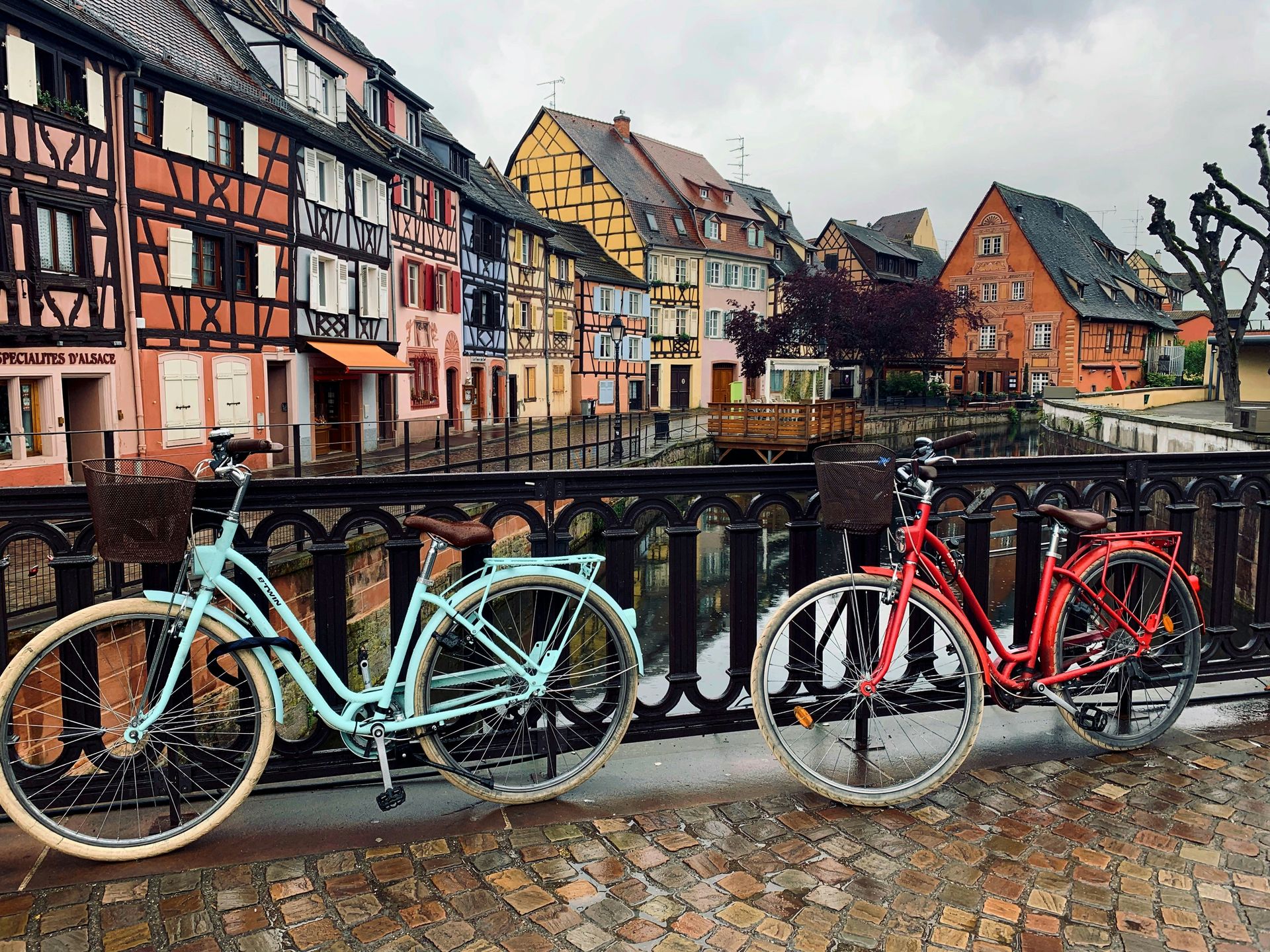
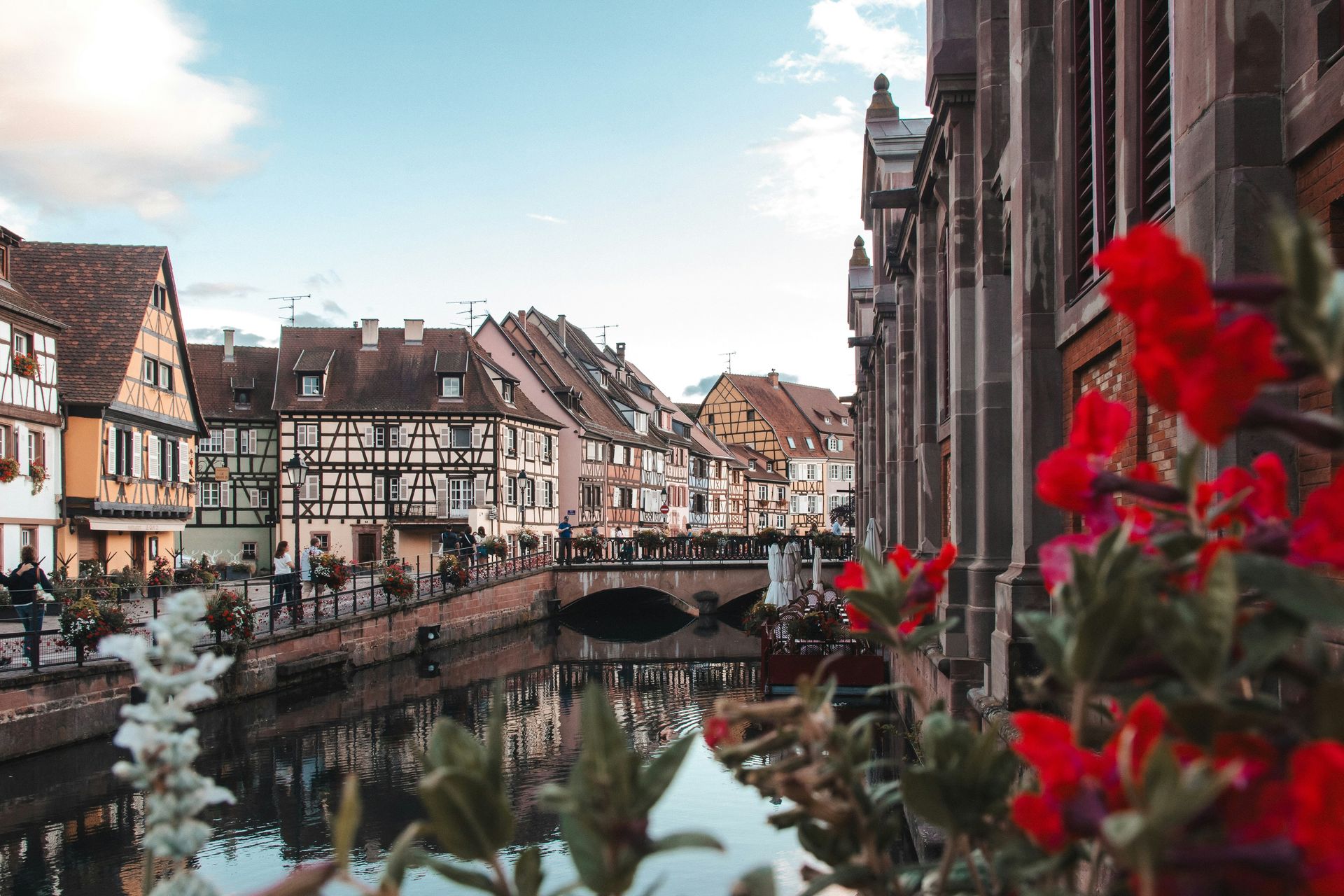
Colmar is an Alsatian village in northeastern France where French and German cultural influences have coexisted across centuries of shifting borders. The bakeries sell both French croissants and Alsatian kugelhopf cake, and the restaurants specialize in both French foie gras and Alsatian choucroute. The architecture of the old town spans German Gothic and French Neo-Baroque styles, reflecting the region’s position as a place where two national traditions have merged, not one supplanting the other.
The survival of Colmar’s old town through World War II is the defining historical fact of the village’s current appearance. The cobblestone lanes, quiet canals, and half-timbered houses that make the old town visually exceptional were specifically identified as reasons to spare Colmar from the destruction that consumed other Alsatian towns during the conflict. The village’s beauty, in other words, was sufficient to influence the military decisions that determined whether it survived, a specific and unusual claim on historical significance.
The canals running through the old town give Colmar a physical character similar to the Alsatian Venice comparisons it sometimes attracts, with boat tours offering views of the half-timbered facades from the water. The intersection of French culinary tradition and German architectural tradition, in a setting that war preserved intact, makes Colmar a destination where multiple layers of cultural history are accessible within a very compact area. The canal boat tours available in Colmar’s Little Venice district give visitors access to the half-timbered waterfront facades from the water, an angle that makes the architectural variety of the old town legible in a way that street-level walking does not always achieve. The Christmas market that Colmar hosts each winter transforms the old town into one of the most celebrated seasonal markets in France, drawing visitors specifically for the half-timbered architecture alongside traditional Alsatian market culture. The market runs across several squares in the old town simultaneously, giving visitors a route through the village that covers the architecture in winter light.
Marek Piwnicki / Unsplash
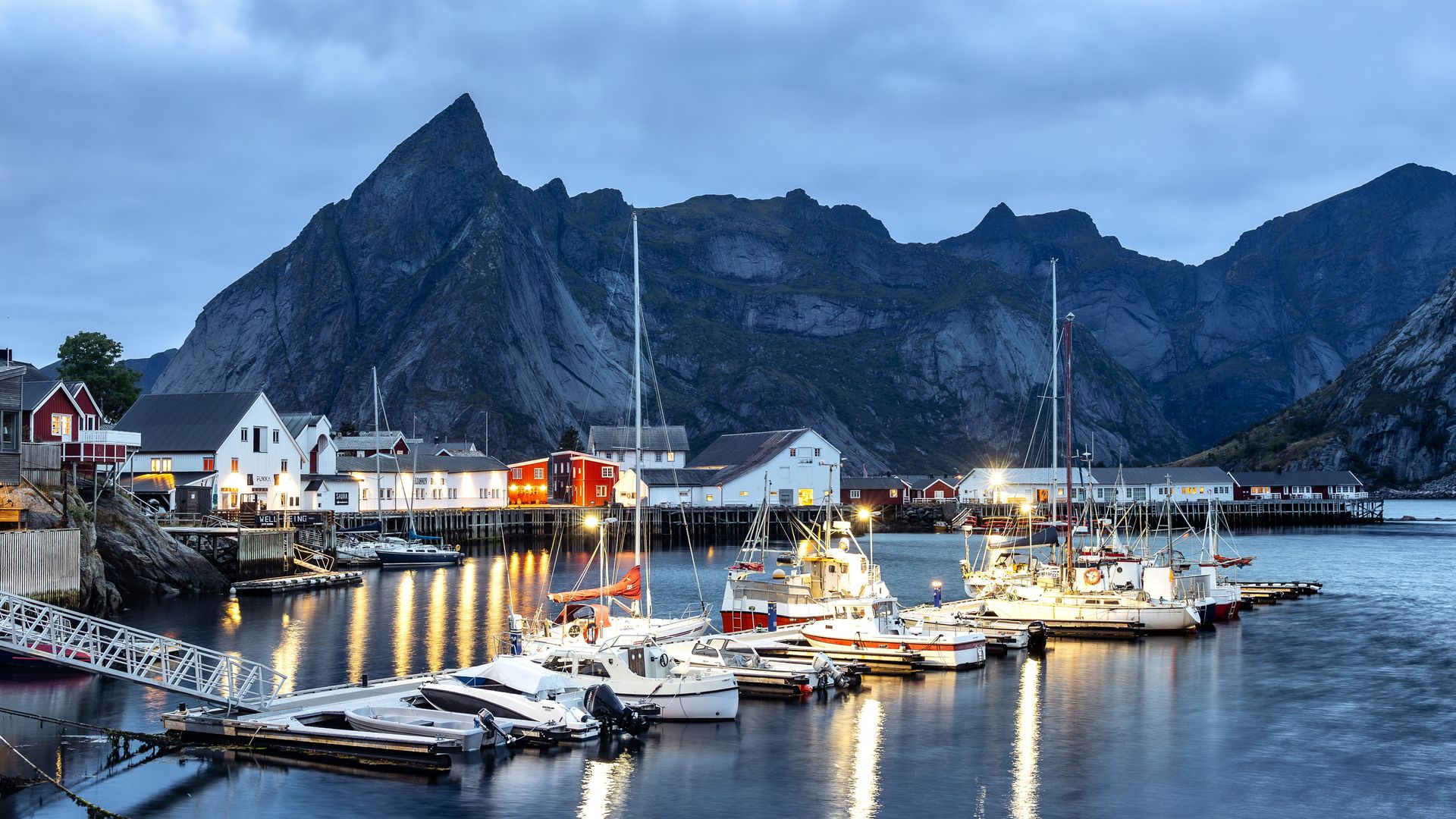
Reine sits north of the Arctic Circle in the Lofoten archipelago of Norway, a setting of Nordic wilderness where sapphire bays fill the fjords and mountain peaks rise sharply from the water. The village’s traditional fishermen’s cabins, called rorbuer, are painted in the distinctive deep red that characterizes Norwegian coastal architecture. Many of these cabins now function as visitor accommodation, giving travelers direct access to the Norwegian Sea from the same structures that working fishermen occupied for generations.
The Lofoten archipelago’s position north of the Arctic Circle creates two distinct seasonal experiences. In summer, the midnight sun means continuous daylight during the warmest months, and the rorbuer provide front-row access to skies that never fully darken. In winter, the same cabins offer a base for watching the northern lights, which appear above the dark fjord water and mountain silhouettes in displays that the flat, light-polluted landscapes of most European destinations cannot replicate.
The conversion of traditional working cabins into visitor accommodation represents a preservation approach that keeps the physical structures in active use, rather than leaving them as museum exhibits or allowing them to fall into disuse. Visitors who stay in a converted rorbuer are inhabiting a specific piece of Norwegian maritime history, not viewing it from outside. The Lofoten landscape, which the source describes as a starkly beautiful Nordic wilderness, amplifies the village's experience beyond what it would be in a less dramatic setting. The rorbuer cabins’ position directly on the water also means that fishing, kayaking, and boat access to the surrounding fjords are available from the accommodation itself, rather than requiring a separate excursion from the village. The Lofoten archipelago’s position also gives Reine access to world-class fishing, and several operators offer deep-sea fishing trips from the village harbor throughout the season. Reine’s harbor itself, where the rorbuer cabins cluster around the quay, also provides the classic Lofoten postcard view that appears most often in photography of the archipelago.
Tomasz Anusiewicz / Unsplash
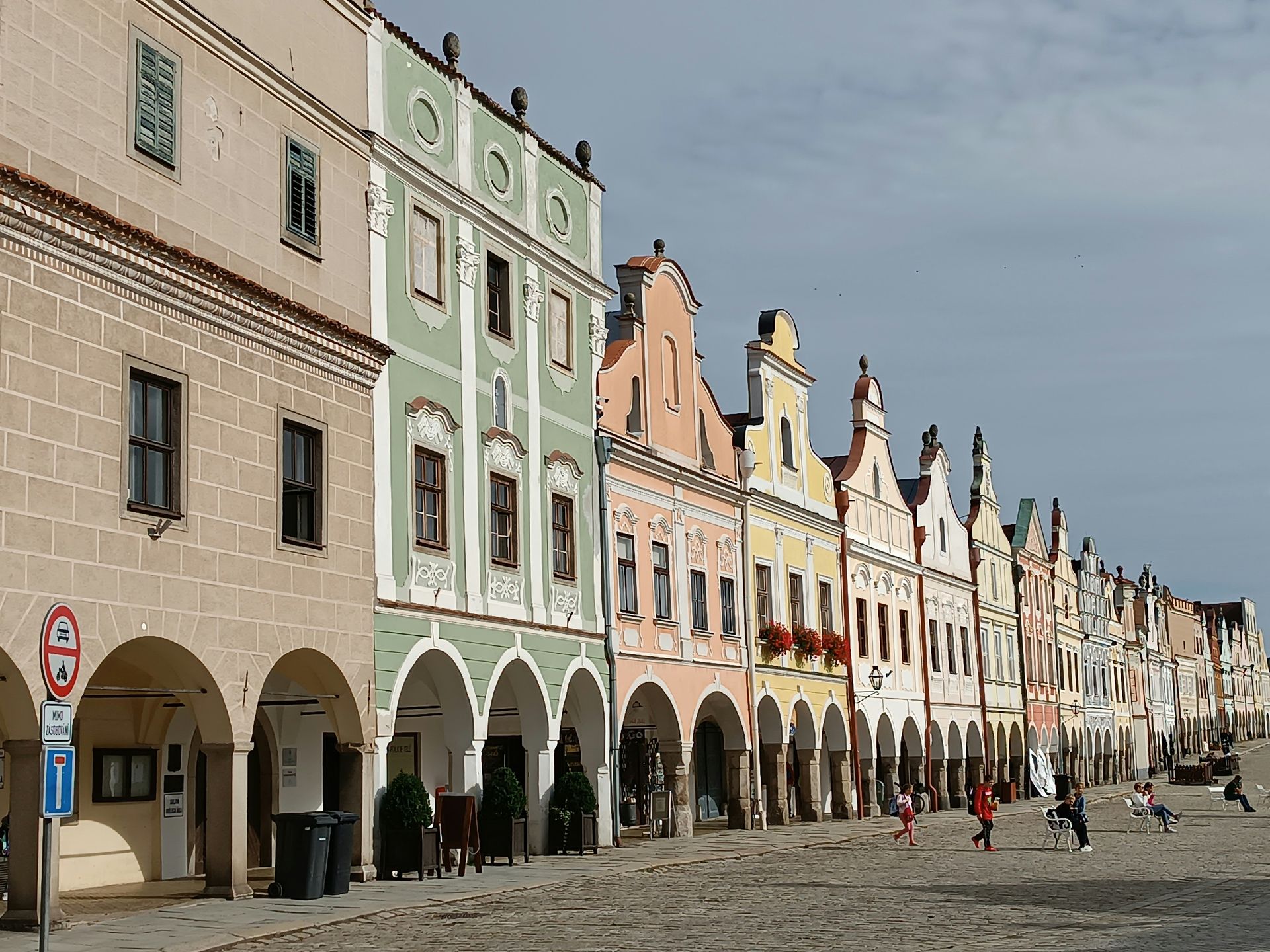
Telč sits in the Vysočina region of the Czech Republic with a main square that reflects the competitive civic pride of its historic residents: every building on the elongated square is, as the source notes, lovelier than the one before it. The Baroque and Renaissance facades, with their high gables painted in pale pastels, now house small shops and cafés at street level, while the architecture above conveys the investment made by past residents in the appearance of the public space.
Large fish-filled ponds surround the town center, extending the visual composition of the village beyond the square itself, giving Telč an unusual spatial character in which the built environment is set within a natural one. At one end of the square, a grand Renaissance château presides over the composition. This larger structure anchors the linear arrangement of pastel facades and is recognized as exceptional by the UNESCO World Heritage designation the town holds.
The ponds surrounding Telč are not decorative: they are working fish ponds that have supplied the town with a food source for centuries, reflecting the same practical ingenuity in landscape use that characterizes many of Central Europe’s most visually striking historic towns. The visual result, where fish-pond water mirrors a Renaissance town square while a château closes the view at one end, is the kind of composed setting that most European towns can only approximate. Telč holds a UNESCO World Heritage Site designation, which places it in the same recognition category as Hallstatt and Blenheim Palace, and the UNESCO citation specifically recognizes the integrity of the square’s architectural ensemble. The château’s interior is also open for tours, giving visitors access to Renaissance rooms whose furnishings and decorative program match the exterior’s ambition. Visitors with a full day in Telč can also walk the fish ponds that ring the historic center, a circuit that gives the market square facades a different perspective from the water’s edge.
Angel Santos / Unsplash
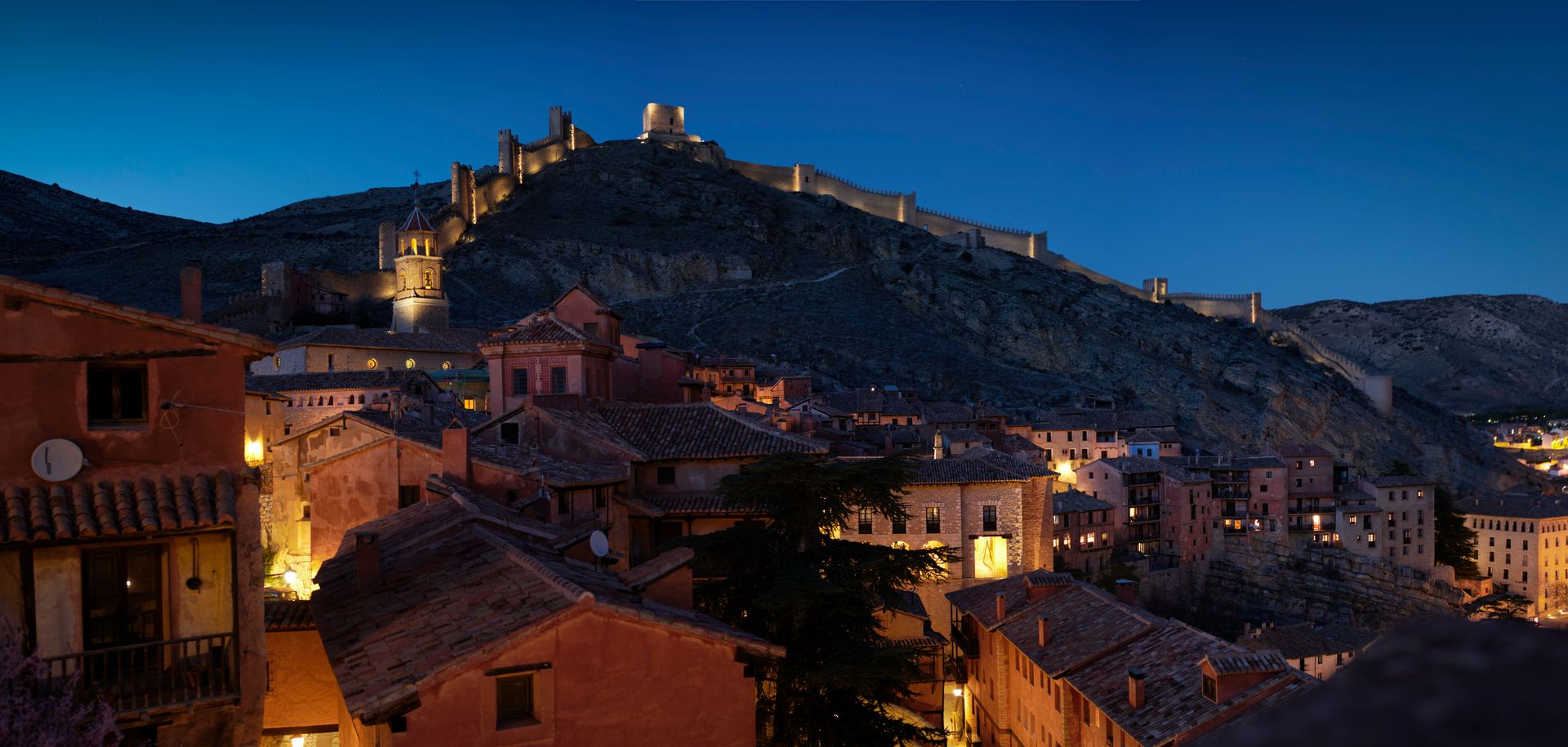
Albarracín occupies a defensible position in the hilly region of central Aragon in Spain, enclosed within fortified walls that have preserved the medieval character of the village against the development pressures that have altered comparable Spanish towns. The narrow alleys and winding lanes within the walls contain ancient stone towers, ocher-hued castles, and chapels that reflect the Moorish influence on the region’s architectural history.
The walls themselves are walkable, and following them provides access to views up to the old Moorish castle above the village, a vertical relationship between the defensive perimeter and the hilltop fortress that creates a visual layering characteristic of medieval Iberian military architecture. The ocher color of the stone, derived from local geology, gives Albarracín a visual warmth that contrasts with the gray limestone of many northern European medieval towns, making the village immediately distinctive in photography.
Albarracín’s relative obscurity within Spain — it sits in the interior of Aragon, well away from the coastal tourism that dominates Spanish travel — means it sees significantly fewer visitors than the country’s more famous medieval villages. For travelers who have already visited Toledo, Segovia, or Cuenca, Albarracín offers a comparable density of medieval heritage in a setting that the relative difficulty of reaching it has kept more intact and quieter than those more-visited destinations. The medieval walls themselves extend well beyond the immediate village perimeter, and following their full circuit provides a physical understanding of the scale of the original defensive system that a walk through the interior alleys alone cannot. The surrounding landscape of central Aragon is also worth incorporating into a broader visit: the hilly terrain and dramatic skies of inland Spain give the journey to and from Albarracín a visual character that coastal Spanish travel does not. The village also hosts an annual medieval fair each August that draws visitors specifically for the period re-enactments staged within the original fortified walls.
Dreamer4787 / Getty Images
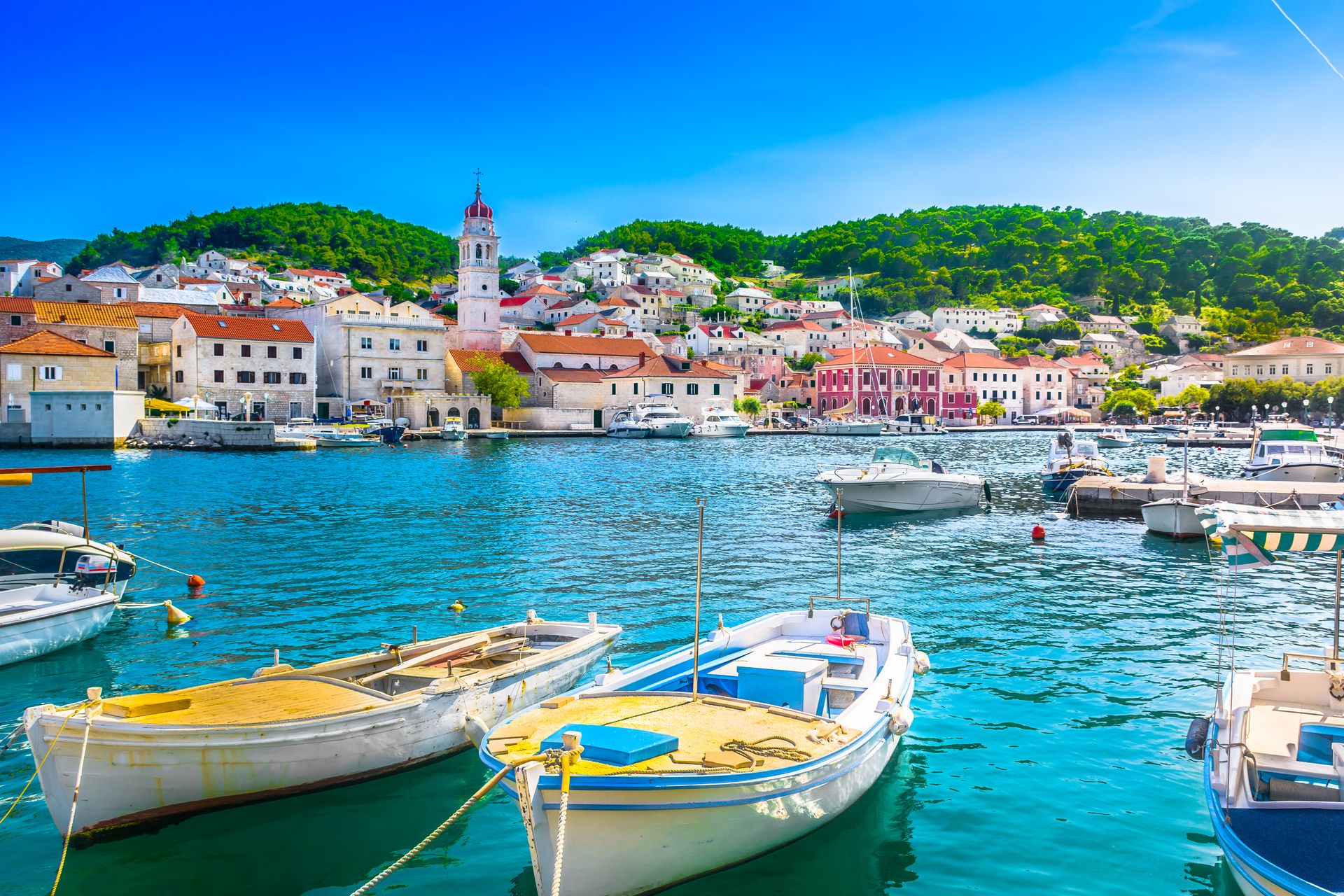
Pučišća sits on the island of Brač along Croatia’s Dalmatian coast, where cruise ships and tour buses disgorge travelers eager to reach Dubrovnik and the ancient island village of Hvar. Fewer visitors make the additional effort to reach Pučišća, and those who do find white stone villas with terracotta roofs, narrow cobblestone alleys, and a stone-paved main square that delivers the Dalmatian coastal village experience at a scale and pace that the headline destinations cannot replicate.
The swimming in the Adriatic off Pučišća is one of the village’s specific practical draws. Multiple prime spots for entering the water directly from the village make it a functional base for a day split between the stone streets and the sea. The crystal clarity of the Adriatic along this stretch of coast is itself a visual spectacle, and the absence of the crowding that Dubrovnik’s waterfront and Hvar’s beaches attract in summer means the experience of the water matches its appearance.
The island of Brač is also significant for the white stone used in its construction, the same Brač limestone that builders used for Diocletian’s Palace in Split and, famously, in the construction of the White House in Washington. The stone villas of Pučišća are thus built from one of the most historically traveled building materials in the world, a specific connection that gives the village’s white architecture a significance beyond its immediate visual appeal. The relative ease of reaching Brač by ferry from Split also makes Pučišća accessible as part of a broader Dalmatian itinerary without requiring a separate dedicated trip to the island. The Brač limestone quarry near the village of Pučišća also offers tours that explain how quarrymen extracted and worked the stone over the centuries, providing a production context for the village’s white architecture. The ferry from Split to Brač runs multiple times daily, making Pučišća reachable as a day trip from the mainland for visitors already based in Split.
Credit: Galway Tourism
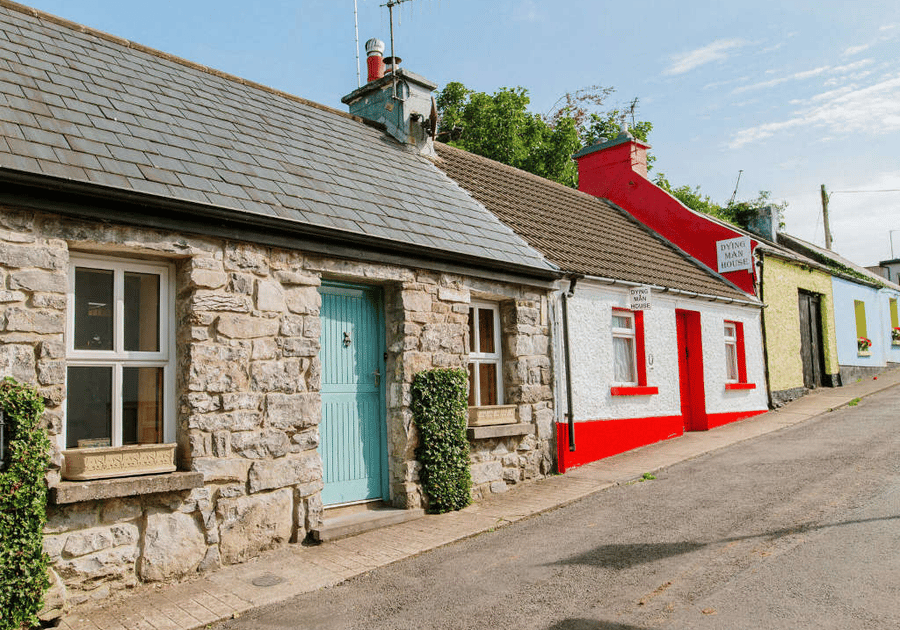
Cong straddles the border between County Mayo and County Galway in western Ireland, encircled by streams and set in a landscape of lakes and vibrant green meadows dotted with grazing sheep. Within the village, stone bridges cross the streams, the ruins of a medieval abbey provide a visual anchor for the historic center, and the occasional thatched-roof cottage contributes the vernacular architectural element that the Irish countryside is internationally associated with.
The Ashford Castle at the edge of Cong adds a specific counterpoint to the village’s quiet vernacular character. Dating from the 13th century and expanded substantially during the Victorian era, the castle now operates as a luxury resort hotel. It is possible, in other words, to visit a medieval Irish village with a ruined abbey and thatched cottages and then sleep the night in a Victorian castle on the same property, a range of historical registers within a single destination that few Irish villages offer.
Cong also sits at the gateway to Connemara, one of Ireland’s most dramatically beautiful landscapes, making it a practical base for exploring the wider region and the village itself. The streams that encircle the town are themselves worth a visit: clear, fast-moving water running through a landscape of this greenness produces a quality of light and color that Irish landscape photography seeks to capture, and the streams at Cong are accessible from the village without a drive into the countryside. Cong also served as a filming location for the 1952 film The Quiet Man, which has given the village an additional cultural association that draws visitors interested in Irish cinema history alongside those who come for the landscape and the abbey ruins. The medieval abbey ruins in the village center are also freely accessible, giving visitors with an interest in Cistercian monastic architecture a site that does not require admission fees or guided tours.
