
From the Ioniq 5's retro-futurist pixelated silhouette to the Bronco's removable doors and deliberately old-fashioned proportions
Credit: Mazda
The aesthetics of the SUV have become a genuine competitive battleground in a segment that spent its first two decades treating appearance as secondary to capability and cargo volume. The boxy, squared-off trucks of the 1990s gave way to the aerodynamically smoothed crossovers of the 2000s and 2010s, which have now given way to a more stylistically varied landscape where some of the most talked-about vehicles are deliberately angular and intentionally retro while others are aggressively futuristic in ways that would have been unmarketable a decade ago. The Hyundai Ioniq 5 and Ioniq 9, the Rivian $RIVN R1S, and the Cadillac Lyriq look like nothing the SUV category produced before their arrival, while the Ford $F Bronco, the Lexus GX, and the Ineos Grenadier make the opposite argument: that the rugged, body-on-frame aesthetic is its own form of good design.
Automotive aesthetics are not objective, and the list below does not claim to represent a scientifically determined ranking of exterior design quality. It represents the editorial team at U.S. News spending sufficient time arguing about which vehicles they found most appealing until a consensus emerged on a final set. The methodology is transparent about its subjectivity in a way that automotive design coverage rarely manages, and the resulting list is more honest for it.
The 10 vehicles below appear in U.S. News and World Report, selected from vehicles across every major SUV category: subcompact, compact, midsize, luxury, and electric. The list is notable for what it argues implicitly as much as for what it states: that the current SUV market has produced a genuinely diverse range of visual identities, and that aesthetic appeal and functional capability are no longer as mutually exclusive as the category’s early decades suggested, and that the current generation of SUV buyers expects both from the same vehicle.
Credit: Hyundai
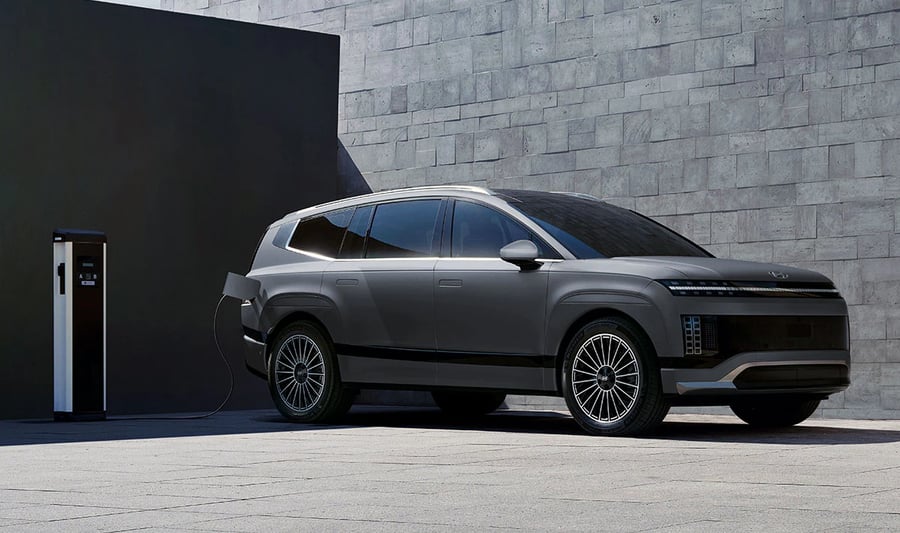
The 2026 Hyundai Ioniq 9 is the source’s editor’s choice and carries a U.S. News rating of 9.2 out of 10. The exterior styling draws a direct visual comparison to a luxury yacht: a clean-cut front end flows into a raked roofline whose sweep gives the large three-row electric SUV a silhouette more typically associated with premium European sedans than with family-oriented crossovers. Hyundai has consistently applied a specific design philosophy to the Ioniq lineup in which each vehicle is visually distinctive from its stablemates while maintaining a family identity, and the Ioniq 9 applies that approach at a scale larger than any previous Ioniq.
The visual appeal is not the vehicle’s only credential. The Ioniq 9 delivers over 300 miles of estimated driving range, giving it the practical operational range that earlier long-range EVs required compromises to achieve. The cargo space is generous, the ride is smooth, and the seats are supportive across all three rows, qualities that the U.S. News Best Midsize Electric SUV for Families award, which the Ioniq 9 won for 2026, reflects in aggregate form. The standard features list is extensive, giving the base trim a technology baseline that competing vehicles can only achieve through optional packages.
The Ioniq 9 functions as the larger sibling to the Ioniq 5, sharing the platform’s architectural logic while extending it to accommodate three rows and a significantly larger interior volume. The design language that makes the Ioniq 5 one of the most recognized electric SUV silhouettes in the market scales upward to the Ioniq 9 without the proportional awkwardness that larger versions of distinctive designs sometimes produce. The interior’s flat-floor architecture, a benefit of the electric skateboard platform’s lack of a conventional driveshaft tunnel, gives the cabin a distinct spatial quality that improves passenger comfort in all three rows and creates a visual openness that conventional drivetrain packaging forecloses. The lounge-style seating configuration available on some trim levels extends this flat-floor advantage into a specific social use of the interior space that the Ioniq 9’s competitors have not yet replicated.
Credit: Mazda
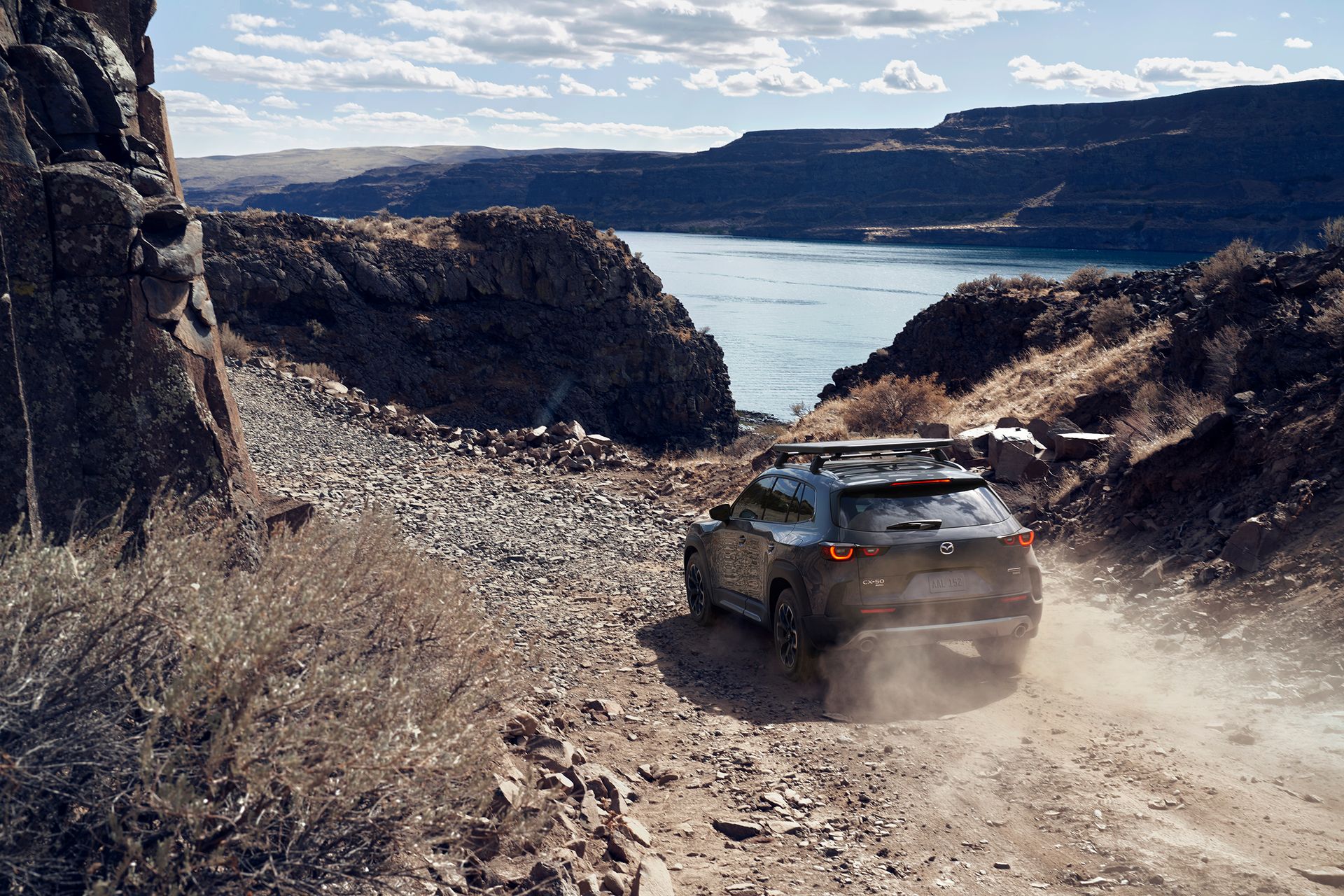
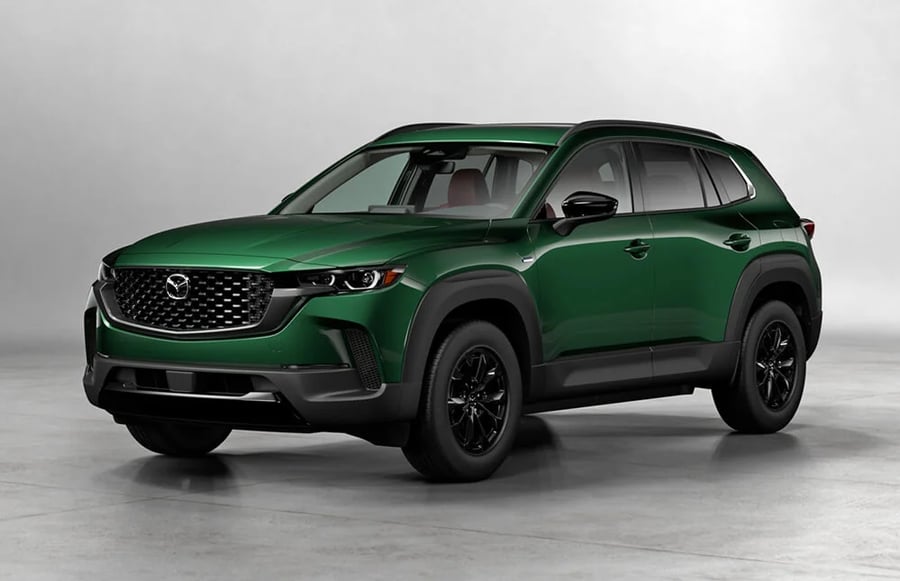
The 2026 Mazda CX-50 carries a U.S. News rating of 8.8 out of 10 and is the only vehicle on the source list with a starting price under $30,000, making it the most accessible entry point to SUV styling that is genuinely distinctive, not generically inoffensive. The CX-50’s design reflects Mazda’s Kodo design philosophy, which emphasizes flowing, sculpture-inspired surfaces, distinguishing the brand’s vehicles from competitors' more angular approaches. The exterior is athletic and taut, giving the compact crossover a visual tension specific to Mazda’s design language.
The driving dynamics complement the athletic visual: the CX-50 is light-footed and responsive, with handling that vehicle testing editor Zach Doell describes as suggesting the interior would feel at home in an entry-level luxury vehicle. The ride is firm in service of the athletic character, not cushioned for maximum comfort, which makes the CX-50 a more engaging driving proposition than the segment’s comfort-prioritizing competitors at the cost of some ride quality over rough pavement.
Two engine options give the powertrain range from adequate to genuinely spirited, and the interior materials quality exceeds what the price point typically produces in the compact crossover category. The rear seats are tighter than the front, and the cargo capacity runs slightly below the compact crossover segment average, but neither limitation undermines the vehicle’s primary case: the best-looking and best-driving compact crossover available at its price point. Mazda’s Kodo design philosophy, which the brand describes as Soul of Motion, produces exterior surfaces that reward attention in a way that the generic crossover’s smooth, uninterrupted sheet metal does not: the CX-50’s hood lines, the way the body creases catch light at different angles, and the overall visual coherence of the design give it a presence on the road disproportionate to its segment and price position, and one that more expensive vehicles from competing brands do not consistently match. The interior’s quality exceeds what the price suggests, as a close inspection reveals, in the specific materials and assembly details, giving the CX-50 a premium feel that the sticker price does not adequately support.
Credit: Genesis
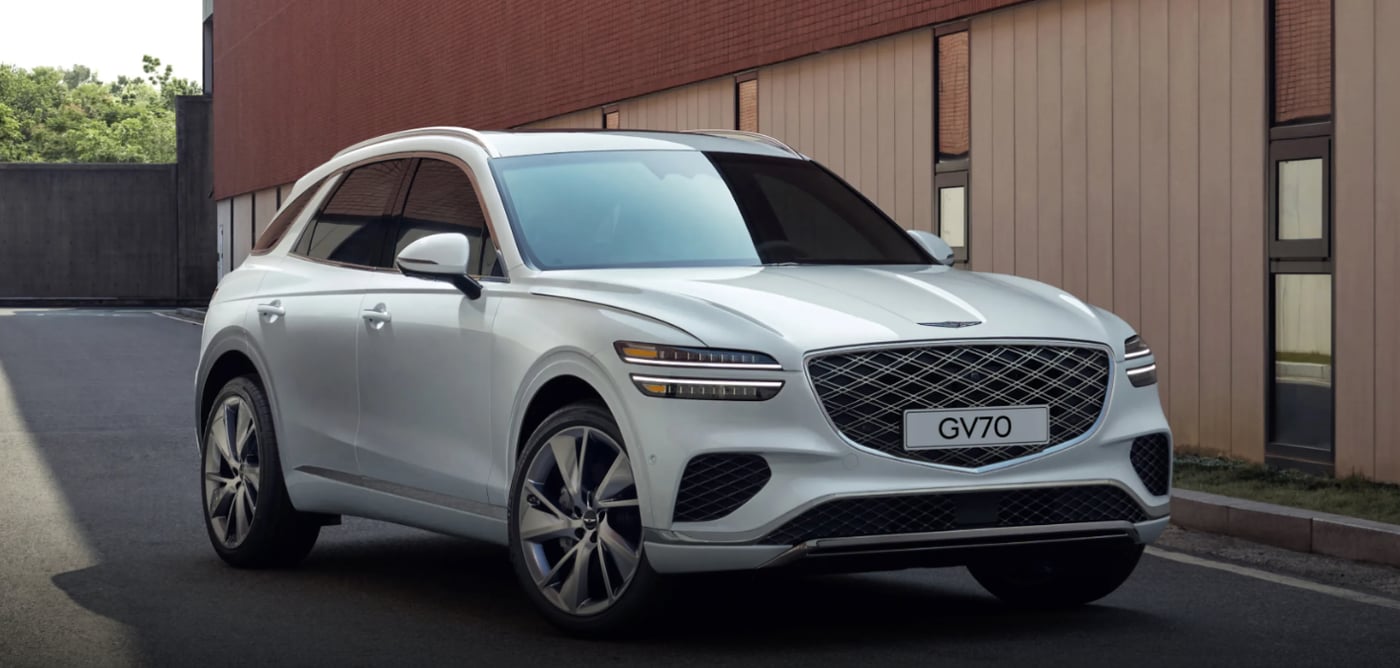
The 2026 Genesis GV70 carries a U.S. News rating of 9.2 out of 10 and leads the luxury compact SUV rankings ahead of vehicles from Mercedes-Benz, BMW, Porsche, and Audi. The exterior received a styling refresh for 2026 with redesigned grille and headlights, and the result continues Genesis’s established visual identity of athletic elegance: the GV70 is recognizably a Genesis without being derivative of any German luxury competitor, which is a significant achievement for a brand that entered the luxury market only a decade ago.
The interior gives the GV70 its most complete case. The cabin is posh, and the front seats are comfortable and supportive across a generous range of adjustment. Vehicle testing editor Zach Doell, who stands 6'2 ", confirms adequate headroom and legroom in the front row, which gives the GV70 a credential for taller drivers who find luxury compact SUV interiors restrictive. The ride quality is cushioned, giving the GV70 a comfort profile befitting its luxury-segment positioning.
The fuel economy is a known limitation: 20 miles per gallon in the city and 28 on the highway trails most luxury compact SUV competitors, whose turbocharged four-cylinder engines return better urban numbers. The rear seats are somewhat snug, a recurring constraint in the luxury compact class’s preference for longer front overhangs and more dramatic hood lines. Both compromises are real and worth acknowledging, but neither undermines the GV70’s position at the top of its segment’s overall quality rankings. Genesis’s dual-wing crest grille, which debuted with the brand and has been refined through successive model years, gives the GV70 a front-end identity that is immediately recognizable without referencing any German luxury competitor’s established visual language, which is a significant design achievement for a brand that entered the premium market from a standing start. The 2026 refresh’s updated headlights reinforce this identity with a lighting signature specific to the current generation. The refreshed grille design gives the GV70 a bolder front presence that the pre-2026 version’s more restrained treatment did not fully convey, lending the updated model visual authority consistent with its position at the top of the luxury compact rankings.
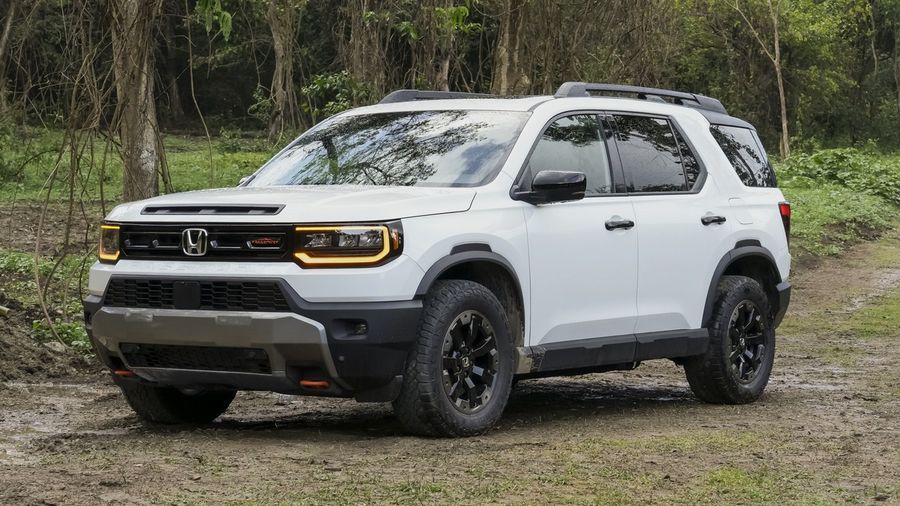
Credit: Honda
The 2026 Honda $HMC Passport has a U.S. News rating of 9.1 out of 10, and a J.D. Power predicted reliability score of 82 out of 100, the highest on this list. The 2026 redesign gave the Passport a comprehensive makeover inside and out, moving toward the boxy, wide-stance aesthetic that has gained significant market traction as buyers have signaled a preference for more visually assertive vehicle profiles. The aggressive stance is specifically calibrated for the weekend adventurer that Honda targets with the Passport: a vehicle that looks capable of trail work before the driver opens the door.
The V6 engine gives the Passport the powertrain substance to back up the visual promise: capable trail performance and sufficient power for most off-road situations, though the Jeep Wrangler-level technical capability that the hardcore off-road segment demands is not part of the Passport’s design brief. Vehicle testing editor Zach Doell describes the Passport as able to get most drivers wherever they need to go, from a trailhead to a remote camping spot to the office on a snowy day, a characterization that captures the vehicle’s positioning accurately.
The cabin is upscale, with comfortable seating and a user-friendly 12.3-inch touchscreen infotainment system. The cargo capacity, at over 80 cubic feet with the rear seats folded, gives the Passport a practical hauling capacity that aligns with the vehicle's exterior’s adventure-oriented positioning and its overall identity. The highest predicted reliability on this list, combined with the newly competitive exterior design, gives the 2026 Passport a case that no previous Passport generation has been able to make. The wide-body stance that the 2026 redesign adopted gives the Passport a visual width that the previous generation’s softer proportions did not convey, and the aggressive front fascia treatment gives the grille and headlight arrangement a purposeful geometry that reads as confident on the road in a way that the previous Passport’s more restrained front end never achieved across its own generation.
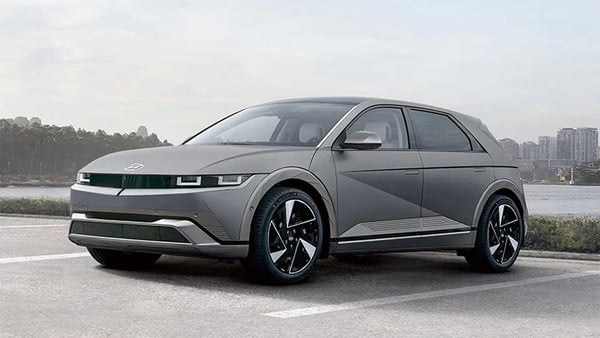
Credit: Hyundai
The 2026 Hyundai Ioniq 5 carries a U.S. News rating of 9.4 out of 10, the highest on this list, and won the 2026 Best Compact SUV for Families award. The 2025 refresh added more standard features and extended the maximum driving range, and the 2026 model year brings a significant price reduction that makes the Ioniq 5 more accessible without altering the specification that earned it the top ranking in its segment. The exterior design maintains the retro-futurist aesthetic that made the Ioniq 5 the most visually discussed electric SUV at its 2021 debut: boxy proportions, flush door handles, distinctive pixelated lighting signatures, and a silhouette that references 1980s hatchback proportions through a contemporary electric vehicle lens.
Vehicle testing editor Zach Doell describes the Ioniq 5 as the electric SUV he regularly suggests to prospective EV buyers, specifically because it makes the adjustment from a conventional powertrain easier than most alternatives. The practical dimension supports the visual case: the vehicle charges quickly on DC fast chargers, the interior is spacious and well-finished, and the available all-wheel drive gives the powertrain winter-weather capability that single-motor configurations do not.
The five-seat interior across two rows gives the Ioniq 5 a specific packaging advantage over larger three-row electric SUVs: the absence of a third row allows the second row to extend its legroom and recline angle to levels that make long trips genuinely comfortable for rear passengers. The sporty stance and sleek hatchback profile that the exterior delivers give the Ioniq 5 a visual identity distinct from both the conventional crossover and the conventional hatchback, occupying a category the vehicle effectively created. The distinctive 20-inch wheel designs available on upper trims give the Ioniq 5’s exterior its most complete expression, filling the wheel wells in a way that the smaller standard wheels leave visually unresolved, and completing the retro-futurist design language from the roofline down to the contact patch.
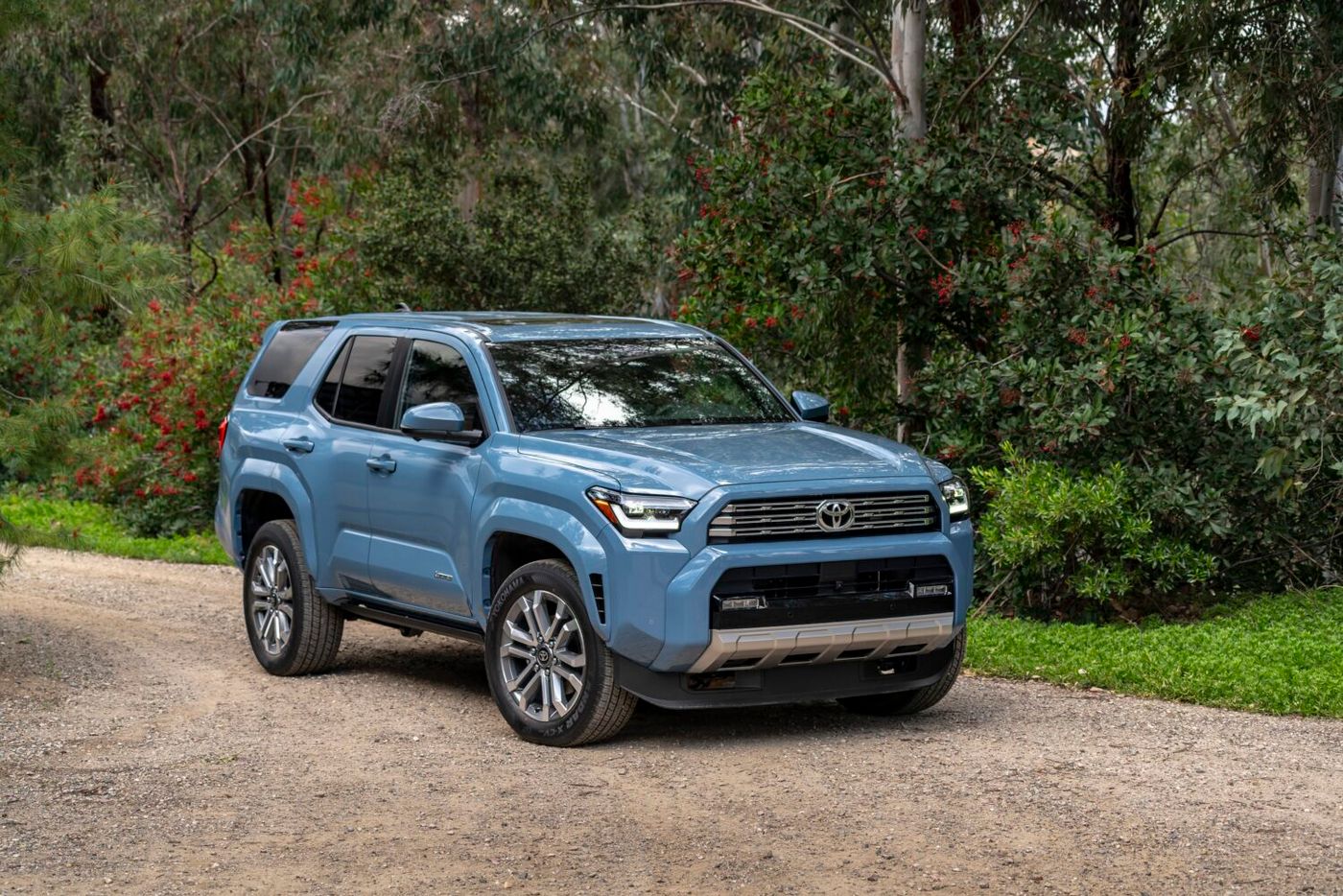
Credit: Toyota
The 2026 Toyota $TM 4Runner carries a U.S. News rating of 8.3 out of 10, reflecting the trade-offs inherent in a body-on-frame SUV competing in a segment where unibody crossovers dominate the mainstream rankings. The full redesign that arrived for 2025 gave the 4Runner its most significant update in over a decade, adding contemporary technology and safety systems to a platform whose off-road credentials have accumulated across five generations. Senior vehicle testing correspondent John M. Vincent describes the remade 4Runner as far more modern, with significant advances in infotainment, capability, and safety systems.
The standard turbocharged four-cylinder powertrain delivers adequate power for both on and off-road use, and the available hybrid setup gives buyers who prioritize efficiency a powertrain option specific to the 4Runner’s latest generation. The ride is comfortable, handling is competent, and the cabin is well-built. Two- and three-row seating configurations give buyers the choice between maximum cargo flexibility and passenger capacity, with the first two rows generous in both dimensions.
The optional third row is undersized for adult passengers on longer trips, a recurring limitation of midsize SUV third rows whose space allocation reflects packaging constraints rather than deliberate exclusion of adult passengers. The cargo capacity is competitive for the class, and the infotainment system is straightforward to use, improvements from the pre-2025 generation whose dated technology was a persistent competitive weakness. The 4Runner’s exterior design, deliberately angular and visually distinct from the crossover-styled competitors in the segment, gives it an aesthetic identity that the redesign updated without abandoning. The available Trailhunter trim gives the 4Runner’s exterior its most overtly adventure-oriented specification, with factory-installed lift, all-terrain tires, and a roof rack that give the visual identity its most specific off-road expression without requiring owner modification. The Trailhunter’s specific visual package, produced in coordination with Toyota’s own overland equipment partners, gives the factory trim level a coherence that the aftermarket-modified alternatives, however capable, do not achieve at the same level of fit and finish.
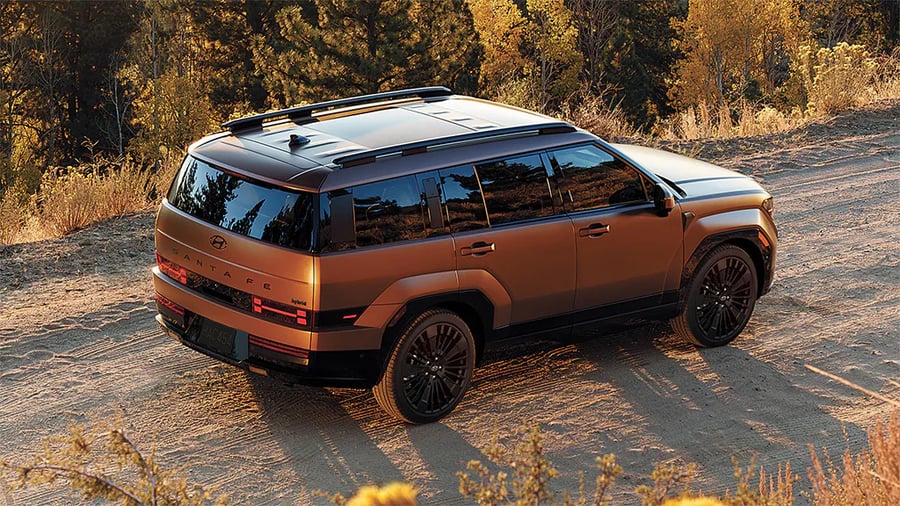
Credit: Hyundai
The 2026 Hyundai Santa Fe carries a U.S. News rating of 9.3 out of 10, the second-highest on this list, and Hyundai’s most compelling midsize SUV argument for the family buyer who wants visual interest alongside practical capability. Vehicle testing editor Zach Doell describes the Santa Fe’s driving character as swift acceleration, comfortable ride, reasonable handling, and good fuel economy for a family hauler, qualities that the midsize SUV segment consistently struggles to deliver simultaneously. The turbocharged engine delivers power with an urgency that the segment’s naturally aspirated alternatives do not match.
The boxy exterior profile that gives the Santa Fe its visual appeal also provides the interior with its most direct functional benefit: the squared-off roofline and vertical rear glass translate into usable headroom and sightlines that the sloping-roofline crossover designs trade away for aerodynamic aesthetics. The standard third row, which the Santa Fe’s boxy proportions make genuinely available in the midsize class, gives the family buyer a seating capacity that the aerodynamic two-row crossovers require stepping up to a larger vehicle to achieve.
The large windows that the boxy profile allows give the cabin an airy, welcoming quality, with visibility for both front and rear passengers. The technology package elevates the interior to a contemporary standard, as reflected in the Santa Fe’s competitive ranking. Exterior visual appeal, interior practicality, and the driving dynamics that Doell describes give the Santa Fe a case across all three dimensions simultaneously, which is the specific achievement that justifies a 9.3 rating in a competitive segment. The Santa Fe’s distinctive squared-off styling is a deliberate choice Hyundai made with the most recent generation, moving away from the softer, rounded crossover aesthetic the previous Santa Fe shared with most of its segment. The result gives the current model a visual personality that the generic crossover form has never achieved, and the market’s positive response to the boxy Santa Fe confirms that the decision to depart from the category norm was the right one.

Credit: Ineos
The 2025 Ineos Grenadier Station Wagon carries a U.S. News rating of 7.0 out of 10, the lowest on this list, and the rating reflects the specific trade-offs the vehicle makes in pursuit of its primary design purpose: serious off-road capability delivered in a form that also looks genuinely distinctive on the street. The exterior is unambiguously utilitarian, with proportions and surface treatments that communicate capability rather than aerodynamic efficiency or crossover-segment visual conformity. For the buyer who finds that aesthetic genuinely appealing, the Grenadier is among the most specific and most visually coherent vehicles in the segment.
The turbocharged six-cylinder engine is tuned for off-road work, which results in a sluggish character on pavement and fuel-economy ratings of 15 miles per gallon in both city and highway driving. Senior vehicle testing correspondent John M. Vincent notes that the Grenadier’s old-school recirculating-ball steering mechanism gives a handling feel that differs significantly from that of most modern vehicles and requires an adjustment period. Both characteristics are predictable results of engineering choices made for the off-road use case and are consistent with the vehicle’s design intent.
The cabin materials are listed on a specific quality register, described by the source as straddling the line between luxury and durability, which gives the interior a substance appropriate to a vehicle that will actually be used in the environments its exterior suggests. The seats are well-bolstered and comfortable, and the cargo capacity is respectable. The infotainment system is feature-rich but complex, and it can be occasionally unresponsive. The Grenadier’s low overall rating reflects its specialization, not a failure to deliver on its own terms. The exterior’s visual appeal is inseparable from its mechanical identity: the exposed roof rack attachment points, the external spare tire mounting on some configurations, the deliberately industrial door handles and body hardware all communicate the vehicle’s purpose in a way that the softened, aerodynamic SUVs on this list do not. For the buyer who finds that form of visual honesty appealing, the Grenadier is the purest expression of it currently available.
Credit: Ford
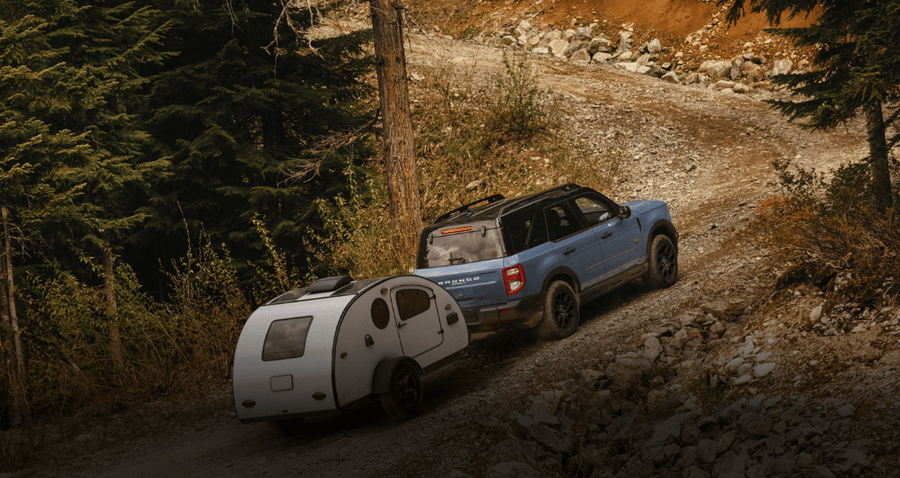
The 2026 Ford $F Bronco carries a U.S. News rating of 8.4 out of 10 and occupies a specific position in the current SUV landscape: the vehicle that most successfully reconciles the retro aesthetic of the classic American utility truck with the performance expectations and safety technology of the contemporary market. Reviewer Perry Stern’s observation that one look at the Bronco makes clear it is built for off-road adventures captures the design language precisely: the flat hood, the removable doors, the circular headlights and their protective housings, and the deliberately old-fashioned proportions all communicate capability without irony.
The configurability is the Bronco’s most distinctive market characteristic. Two- and four-door body styles, cloth and hard roof options, themed trim levels with their own visual identities, and a range of colors that includes options unavailable in the segment’s more conservative competitors give buyers the ability to configure the vehicle’s appearance with greater granularity than most SUVs do. Special editions have expanded configurability over the years the Bronco has been in production, giving the used market a variety of appearance-specific models that maintain the base vehicle’s visual interest.
The off-road performance backs up the visual identity: the Bronco’s purpose-built capability across multiple trim levels gives it a trail performance argument that the more visually moderate off-road SUVs cannot match at the same level of credibility. The vehicle looks equally good on pavement and in the dirt, which the source specifically notes as a quality worth acknowledging, given that off-road styling can create a disconnect between visual identity and actual use in competing designs. The removable roof and doors available on both the two-door and four-door models give the Bronco configurability that transforms the vehicle’s aesthetic from a closed SUV to an open-air experience, a design flexibility no other vehicle on this list offers in the same structurally integrated form. The stripped-down configuration, doors and roof panels removed and stored, gives the Bronco an open-air utility that defines the vehicle’s identity at its most essential level and distinguishes it from every modern SUV whose structural design treats the roof as permanently fixed.
Credit: Lexus
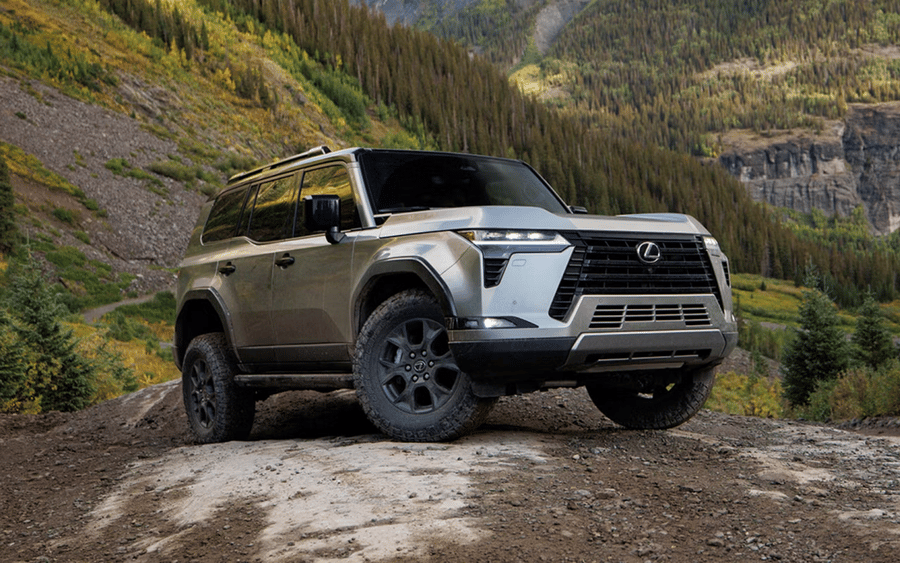
The 2026 Lexus GX carries a U.S. News rating of 8.6 out of 10 and offers the luxury midsize segment its most visually distinctive off-road SUV: a deliberately squared-off profile that the source notes the editorial team’s aesthetic preferences gravitate toward. The aggressive exterior precisely matches the vehicle’s rugged mechanical nature, giving the GX a visual coherence that purely aesthetic designs without corresponding capability cannot achieve. Reviewer Perry Stern describes confidently taking the GX on a snow-covered trail with no traction concerns, proving the off-pavement identity the exterior suggests.
The interior accommodates up to seven passengers, with seating quality and build materials appropriate to the Lexus luxury standard. The cabin’s purposeful design reflects the vehicle’s orientation toward genuine outdoor use alongside the luxury expectations of the Lexus buyer, and the available comfort amenities give the GX a feature set that the off-road positioning does not compromise. The standard features list is extensive, reflecting Lexus’s consistent approach of equipping base trims at a level that competing luxury brands reserve for mid-tier models.
The fuel economy is a genuine weakness, a consequence of the body-on-frame construction and the V6 that the GX retains for its off-road capabilities. The on-pavement driving dynamics are occasionally cumbersome, reflecting the same mechanical choices. The GX ranks near the middle of its luxury midsize rankings, not at the top, and both limitations are the reason. For the buyer whose primary argument for a luxury SUV is actual off-road capability alongside a luxury interior, the GX’s position on a best-looking list makes the case that appearance and purpose-built design are not mutually exclusive. The GX’s optional Two-Tone exterior treatment, available in several color configurations that pair the body color with a contrasting roof, gives the exterior an additional visual dimension that the single-tone specification, however well-designed, does not provide in the same terms, and gives the GX a specific visual identity that makes it immediately identifiable in traffic.