From Zambia's walking safaris along the Zambezi to a Rwandan park where rhinos were absent for decades before a landmark reintroduction
Ron Dauphin / Unsplash
African safaris have become one of the fastest-growing segments of American luxury travel, and the consequences of that growth are visible in the most famous destinations. Kenya’s Maasai Mara and Tanzania’s Serengeti remain extraordinary wildlife environments, but the concentration of vehicles at game sightings, the density of camps near park entry points, and the logistical complexity of peak-season travel have introduced crowding problems that affect the quality of the experience for everyone present. A pride of lions eating a kill surrounded by twenty minibuses is still a lion sighting — but it is not the intimate encounter with wildlife in an undisturbed natural setting that most people imagine when they book a safari months or years in advance.
The solution, according to a travel advisor with more than a decade of experience planning African trips, is to choose the right destination before addressing any other variables. Lesser-known regions offer wildlife encounters of equivalent quality in settings where genuine solitude is still achievable — sometimes to the degree that a vehicle can be the only one visible from any direction at a sighting, for as long as the sighting lasts. Private concessions and conservancies within these regions further amplify the advantage, hosting fewer guests and offering activities that national parks with higher visitor volumes often restrict. Timing also contributes: shoulder seasons in May, September, and October deliver the dry weather favorable for game-viewing while reducing the peak-season crowds that concentrate at the best-known destinations.
The five destinations below appear in Travel + Leisure, drawn from the recommendations of a travel advisor with a decade of Africa-focused experience, specifically focused on finding the crowd-free version of the safari experience. Each offers wildlife and landscape quality that matches the famous alternatives, at a fraction of the visitor density.
Dmitrii Zhodzishskii / Unsplash
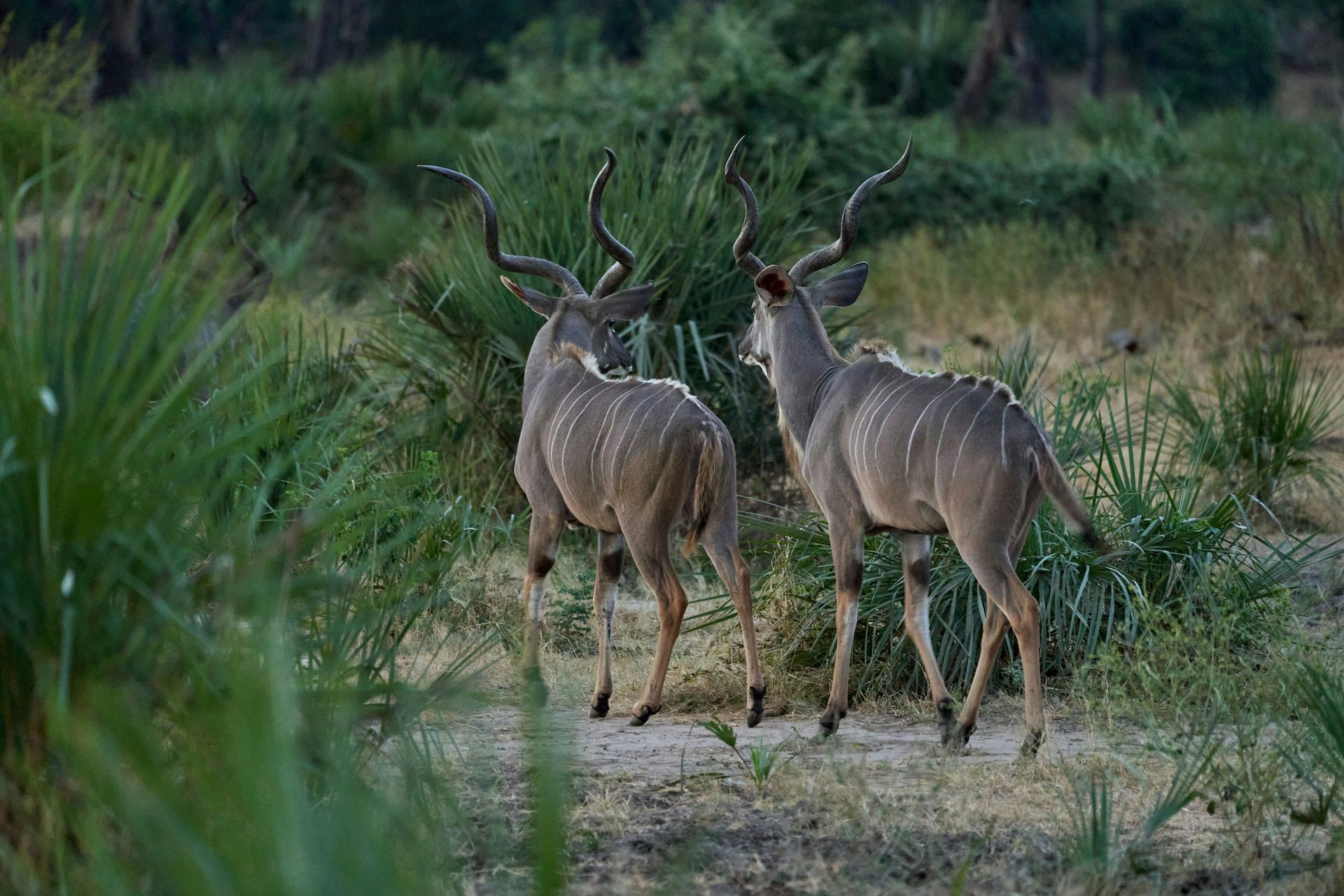
The Lower Zambezi region of Zambia holds a specific historical claim: it is where the walking safari originated, making it the source of the wildlife encounter form that requires leaving the vehicle and tracking animals on foot with an armed guide. The walking safari’s specific quality comes from the change in physical scale: moving at human pace through vegetation at ground level, reading tracks in the soil, learning to identify animals by sounds and movement through the bush rather than by spotting them at distance from an elevated seat, produces a quality of attention and presence in the landscape that even the best game drive cannot replicate. The vulnerability is real, which is why the activity is conducted only with qualified guides, and the authenticity that vulnerability creates is what draws serious safari travelers to walking specifically.
The Zambezi River gives Lower Zambezi a water dimension that most safari destinations lack entirely. Canoe safaris along the river allow wildlife viewing from water level, offering encounters with elephants drinking at the bank, crocodiles sunning on exposed sandbars, and hippos surfacing from the river in ways that neither walking nor driving approaches can achieve. The silence of a canoe allows an approach to animals that engine noise forecloses, and the river’s own wildlife density gives the canoe safari a program independent of the terrestrial game provided by the surrounding wilderness. For anglers, October tigerfish fishing on the Zambezi is an activity the advisor specifically highlights — tigerfish are among the most aggressively fighting freshwater fish in Africa, and the Zambezi is one of the world’s recognized destinations for the pursuit.
Large elephant concentrations make Lower Zambezi consistently reliable for heavyweight game viewing, and the tented camp format characteristic of the region’s lodges gives accommodation an immersive bush quality that the old-school safari ethos the region maintains values over resort-style construction. Dulini Anabezi offers private plunge pools and viewing decks overlooking the river and floodplains, providing guests with a continuous, passive wildlife encounter from the accommodation itself. Lolebezi, positioned along the Zambezi and known for its leopard sightings, offers luxury suites or villas, with the riverine habitat that leopards favor giving the camp its distinctive game-viewing strength.
Aron Marinelli / Unsplash
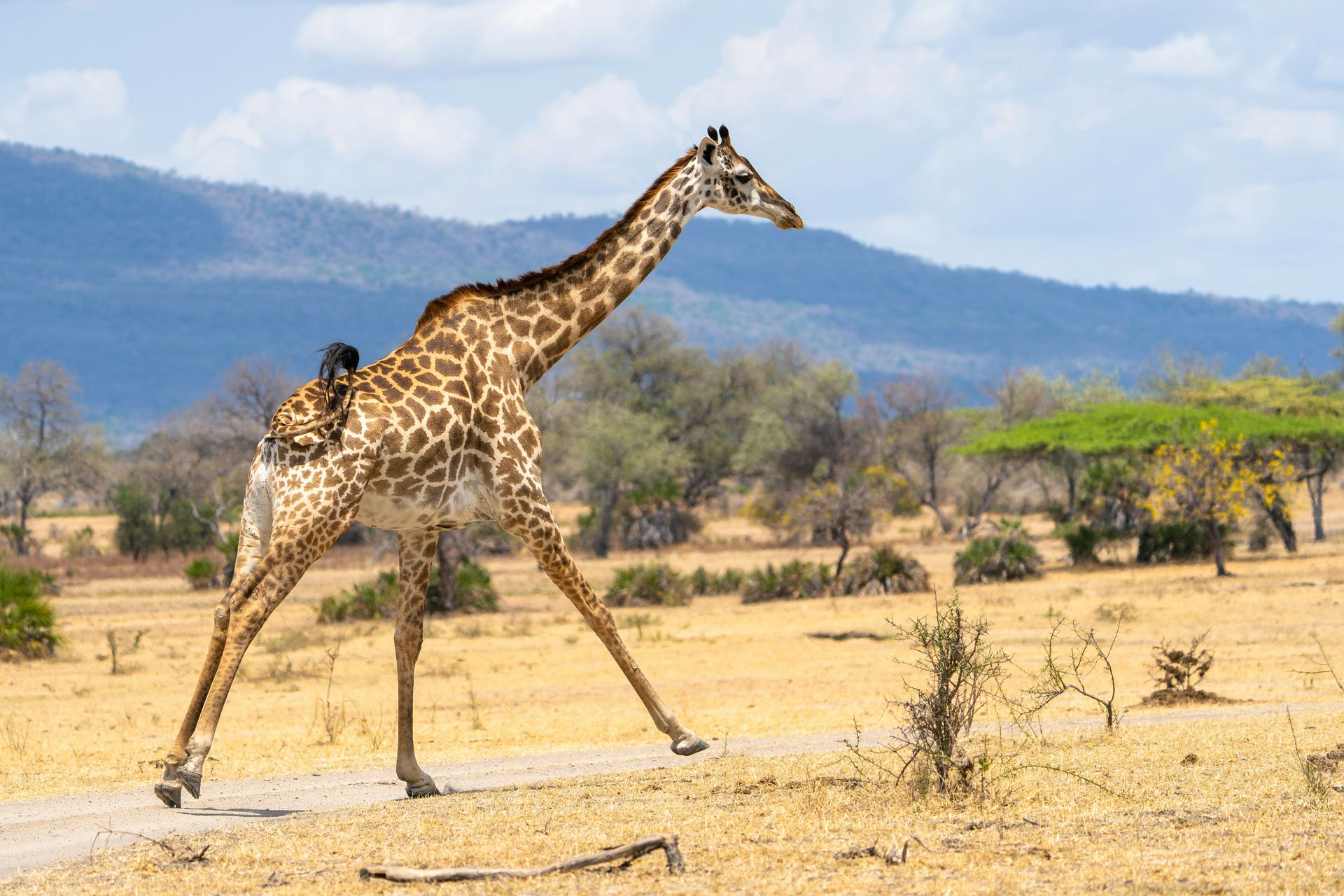
Southern Tanzania occupies a paradoxical position in the safari market: it is a game-viewing environment of exceptional quality that the Serengeti’s gravitational force has kept largely invisible to the international travelers whose itineraries automatically route northward. The remoteness that causes it to be overlooked is the same condition that gives it its primary advantage — a visitor density low enough that solitude at sightings is the norm rather than the exception, and wildlife behavior undisturbed by the vehicle concentrations that the Serengeti’s most famous game areas generate across the peak season.
Nyerere National Park, formerly the Selous Game Reserve and one of Africa’s largest protected areas by total land mass, gives walking safari practitioners a wilderness at a scale where the activity can be conducted with a genuine sense of immersion rather than proximity to visible camp infrastructure. Nyerere also holds approximately one-third of the world’s remaining wild dog population, the endangered painted predator whose pack-hunting behavior and social complexity make it one of Africa’s most compelling wildlife subjects for travelers who have moved beyond the Big Five as their primary objective. Wild dog sightings in the Serengeti are rare; in Nyerere, the species is a reasonable expectation across a multi-day stay.
Ruaha National Park, further inland and more arid in character, concentrates elephants, lions, and buffalo in terrain with sparse vegetation, making visibility excellent during the dry season. Kigelia Camp Ruaha, simple but elegantly positioned within high-density wildlife terrain, gives guests proximity to animals that the camp's location within the park determines more than any design consideration. Ikuka Safari Camp’s seven rooms and panoramic views offer the luxury option with boutique intimacy, appropriate to a destination whose entire operating philosophy prizes uncrowded encounters. Traveling in June or October targets dry-season windows when animal concentrations around water sources are highest, and the low tourist volume gives the wildlife encounters the intimacy that makes the journey worthwhile. For travelers who want the Serengeti’s reputation for game density without its reputation for vehicle density, Southern Tanzania is the most direct answer available in East Africa.
Christian Ruehmer / Unsplash
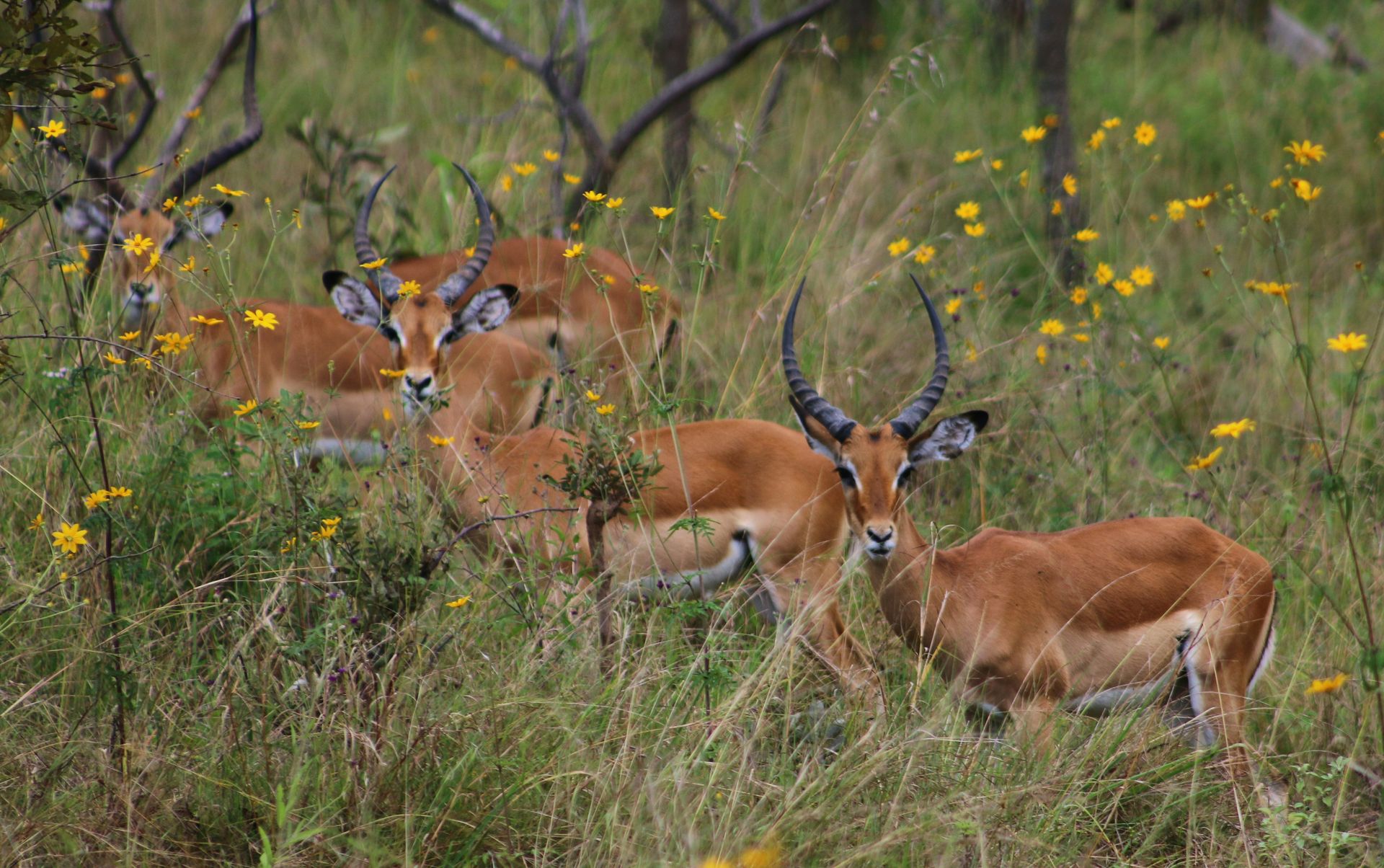
Akagera National Park in eastern Rwanda carries a conservation history that gives a visit there a significance extending well beyond the quality of the wildlife viewing, though the wildlife viewing itself is exceptional. Poaching and the human conflict that defined Rwanda in the 1990s had effectively eliminated the park’s wildlife population, and the regenerative project that followed restored the animal community to a condition that now supports reliable Big Five encounters, particularly strong in leopard and rhino sightings. The rhino population specifically represents one of Africa’s successful reintroduction outcomes: absent from Rwanda for decades, a 2017 translocation effort established a population that has grown and stabilized, and seeing a rhino in Akagera is not simply a wildlife sighting but a visible outcome of sustained conservation investment and community partnership.
The low tourist density that the park’s relative obscurity produces gives game drives a character that the advisor describes with specific precision: a vehicle can appear to be the only one in the park across an entire game drive, which eliminates the radio-coordinated vehicle convergence at sightings that the Mara and Serengeti produce at peak season as a structural feature of their operations. The experience of watching wildlife behave naturally, without a ring of idling vehicles around them, changes what the sighting means, and Akagera delivers this condition as the norm rather than the exception. Behind-the-scenes conservation tours of the park headquarters give guests direct access to the ongoing work of population management, anti-poaching operations, and community engagement required by the regeneration project, rather than as a completed historical event.
Ruzizi Tented Lodge on the banks of Lake Ihema incorporates local artisan design and offers night drives and boat excursions on the lake, giving guests options that extend the safari day beyond the standard morning and afternoon game drives. Wilderness Magashi Camp, also within Akagera, supports conservation and sustainability through its operating model while delivering the quality of accommodation that the Wilderness brand consistently delivers across its Africa-wide properties. Gorilla trekking in Rwanda’s Virunga Mountains pairs naturally with an Akagera stay as a complete Rwanda itinerary that combines two of Africa’s most distinct wildlife experiences in a single country.
Colin Watts / Unsplash
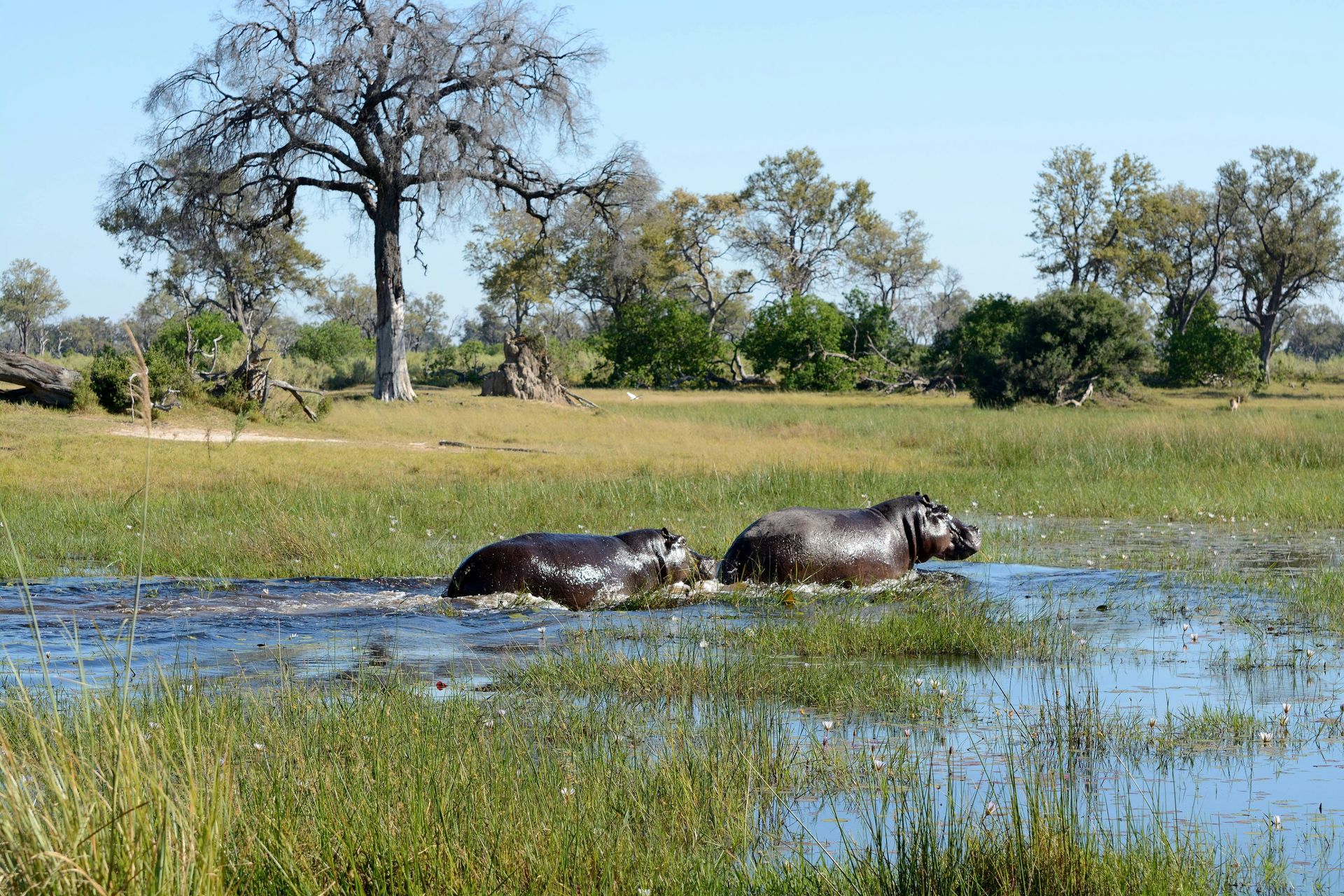
Botswana built its safari economy on the explicit principle of limiting visitor numbers and charging accordingly, which made the Okavango Delta the defining crowd-free safari destination for decades. The delta’s most accessible areas have become busier as the safari market has expanded, but the private concession system that underpins Botswana’s tourism model still delivers the isolation that the Okavango has always offered at its best: some camps occupy entire private islands within the delta, with their own airstrips and their own game-viewing areas that no competing vehicle can legally enter. The advisor’s recommendation to travel in the shoulder seasons of May or September and to stay on a private concession specifically addresses the crowding problem that the general Okavango recommendation now requires qualification for.
The mokoro excursion gives Botswana a mode of wildlife encounter available nowhere else in Africa at an equivalent quality. These traditional dugout canoes, poled silently through papyrus channels by guides whose families have navigated the delta’s waterways for generations, allow an approach to wildlife from water level and without engine noise that produces experiences with crocodiles, hippos, elephants crossing channels, and the waterbird diversity of the delta’s floodplain system that no other safari activity format provides. The silence of the mokoro approach is the operative variable: animals that register a game drive vehicle’s noise and adjust their behavior at 200 meters will often continue undisturbed when approached by a poled canoe at a fraction of that distance. The intimacy this produces is the most specific experience available in African wildlife travel and is available only here.
Wilderness Mombo, on a private concession in the Moremi Game Reserve, is consistently placed among Africa’s finest safari camps on the strength of its game viewing quality, with the elephant, lion, wild dog, and leopard populations of the concession giving it a wildlife density that the managed private land makes possible and that public park areas of equivalent size cannot replicate. Duba Plains Camp, on its own private concession, offers five 1920s-inspired suites opening directly onto the floodplains, creating an unmediated visual relationship between accommodation and the game-rich landscape that the camp’s construction specifically prioritizes.
Photos by Beks / Unsplash
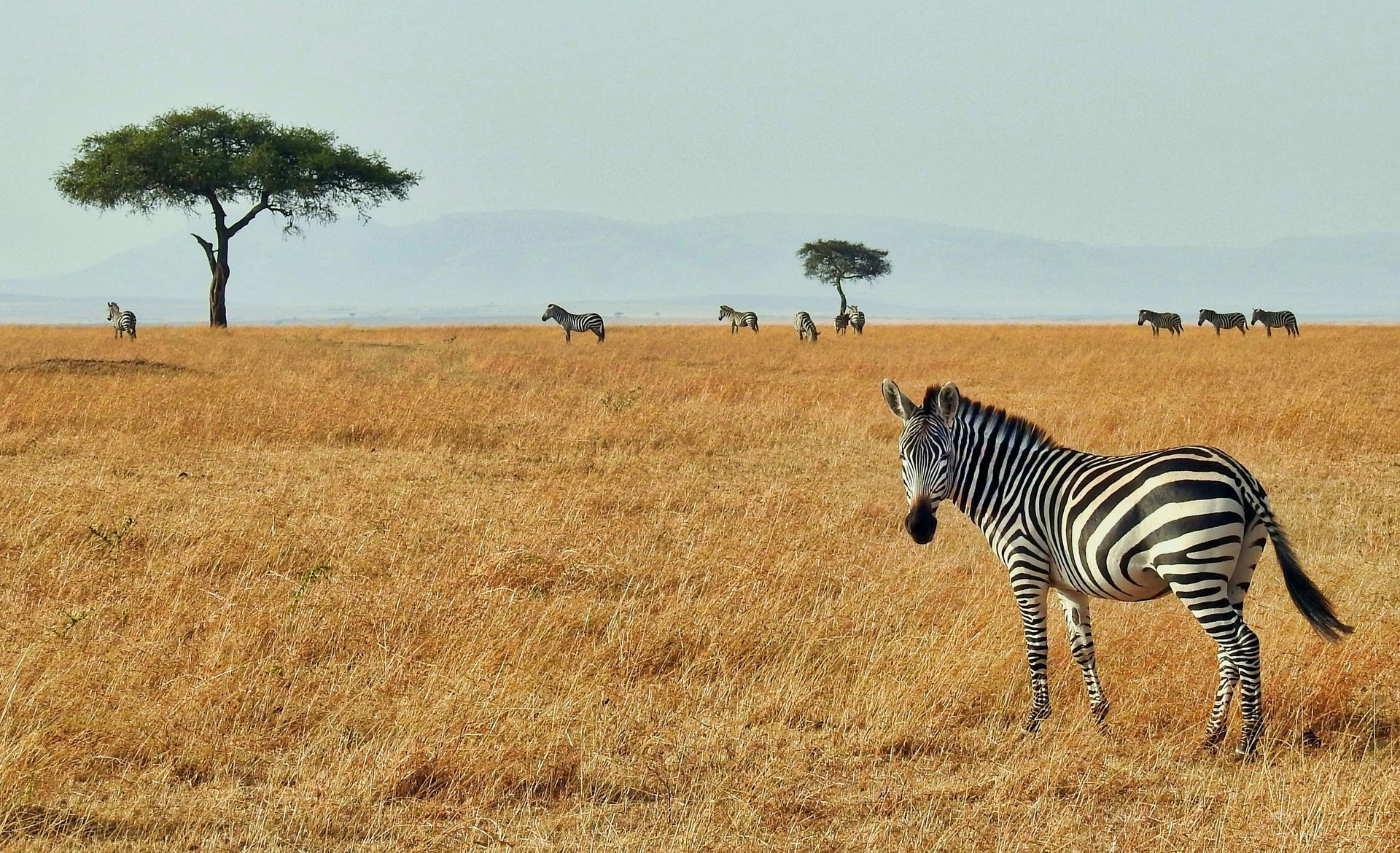
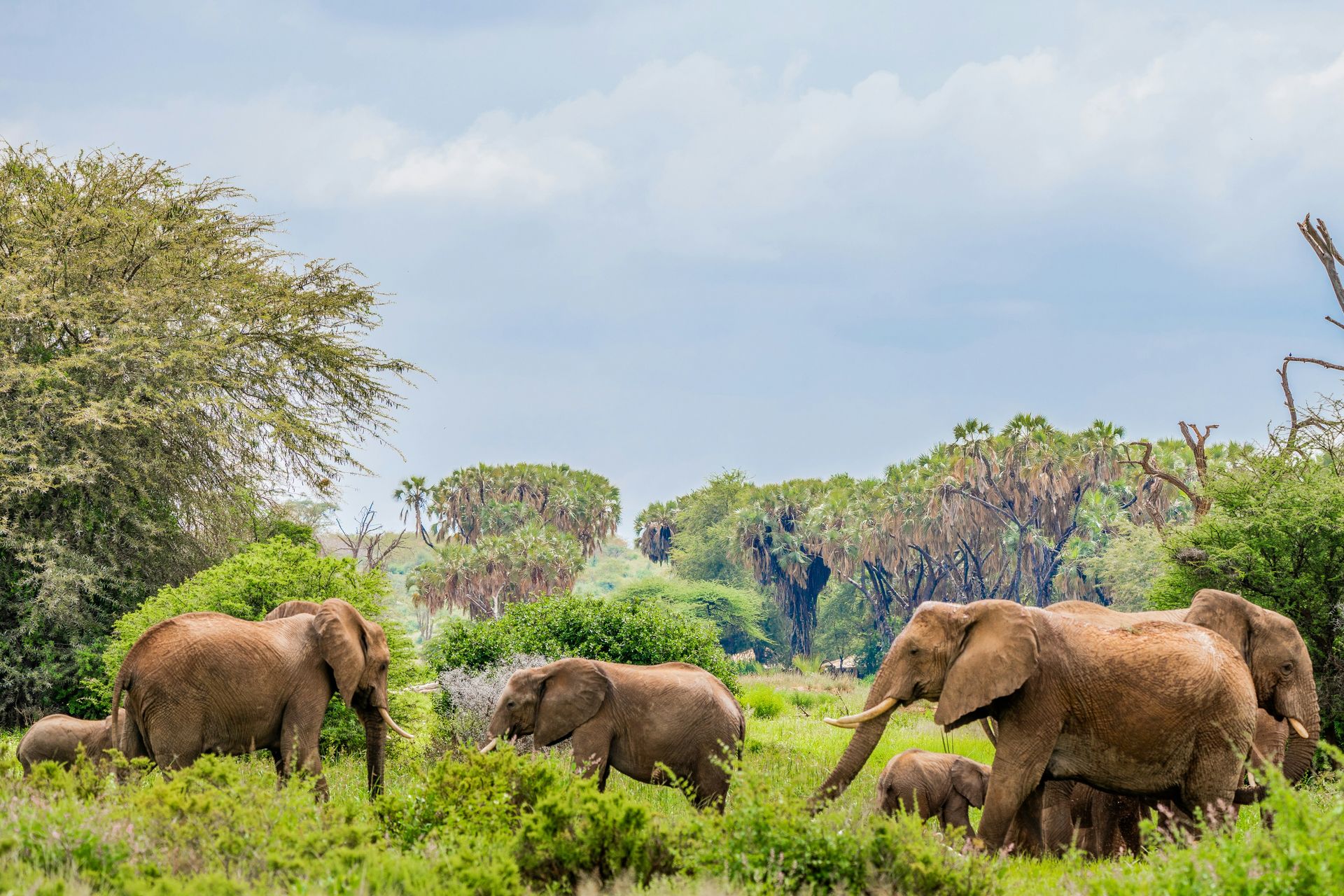
Northern Kenya offers travelers who continue beyond the Maasai Mara a landscape, wildlife, and cultural encounters that the famous reserve, however impressive, does not. The Laikipia Plateau, the semi-arid Samburu ecosystem, and the Matthews Mountain Range constitute a distinct ecological zone from the Mara’s grassy plains, with acacia thornbush and rocky highland terrain supporting a wildlife community whose northeastern African endemic species draw dedicated travelers specifically because they cannot be seen in the Serengeti or the Mara. The special five of Samburu, as the region’s rare species grouping is known, includes the Grevy’s zebra, the Somali ostrich, the reticulated giraffe, the gerenuk, and the beisa oryx — each a distinctive animal whose specific geographic distribution makes northern Kenya the appropriate destination for anyone who has already encountered the standard East African species in sufficient numbers to want something genuinely different.
The Samburu people, semi-nomadic pastoralists whose territory overlaps with the national reserve, maintain cultural traditions and practices that the advisor specifically identifies as worth engaging with during a northern Kenya stay. The relationship between the Samburu community and the wildlife that share their landscape gives the destination a living dimension of human-wildlife coexistence that national parks, where human habitation is excluded from the protected area, cannot provide. Witnessing the daily interactions among cattle herding, beadwork tradition, and wildlife that international travelers have come to observe gives northern Kenya’s safari a social and cultural context that purely game-viewing-focused destinations lack.
Helicopter safaris to remote areas, including Lake Turkana, the vast alkaline lake at the northern edge of the Kenyan Rift Valley, give travelers who want to reach the most inaccessible terrain a means that ground transport cannot match across the distances and roads involved. The community-owned Reteti Elephant Sanctuary, staffed by Samburu women and men, gives the conservation visit a social mission alongside its wildlife mission, with the community's investment in elephant rescue and rehabilitation reflecting the relationship between the Samburu’s own cattle-herding culture and the elephants that share the same water sources and landscape. Ol Malo ranch lodge and family-owned Lewa House in the Lewa Wildlife Conservancy offer accommodation that combines landscape quality with cultural depth, in the specific balance that northern Kenya uniquely offers.
