Credit: David Vives / Pexels
The case for planning a trip around a museum rather than squeezing one in between other stops is stronger than it might first appear. A great museum is not just a building full of objects — it is a concentrated argument about what a civilization valued, what it feared, what it made, and what it lost. Spending a full day, or even two, inside one is a fundamentally different experience from the dash-through most travelers manage.
Museums have also become among the most compelling architectural commissions in the world. The Guggenheim Bilbao transformed not just a city's tourism economy but its entire self-image when it opened in 1997. The Zeitz Museum of Contemporary Art Africa changed the conversation about where cultural power sits on a global map. The Grand Egyptian Museum, years in the making and finally fully open, reframes the relationship between a country and its own ancient past. Buildings like these are worth traveling to see before you've considered a single object inside.
The 25 institutions on this list were chosen for their collections, their cultural and historical significance, the quality of their presentation, and — in several cases — for the fact that nothing else quite like them exists anywhere. Some are the obvious giants: the Louvre, the Met, the British Museum. Others are less commonly on itineraries outside their home countries but offer something that the headline institutions cannot — specificity, depth, and the sense that you are seeing a story told entirely on its own terms.
The list spans six continents and covers art, natural history, science, archaeology, and anthropology. It includes institutions that have been collecting for centuries and one that opened its full galleries within the past year. What they share is that making them the focal point of a trip — rather than a side trip — is not a compromise. It is, in many cases, the best reason to go.
A note on planning: most of these institutions are large enough that a single visit cannot cover everything. Prioritize what interests you most, and accept that return visits are part of the deal. Almost every museum on this list rewards coming back.
1 / 25
Credit: bassel zaki / Pexels
The Louvre receives close to nine million visitors a year, which makes it the most visited museum on earth by a significant margin — and also, for stretches of any given day, one of the more overwhelming places to try to look at art. The crowds are a real planning consideration. But they are also a testament to something genuine: this is one of the great repositories of human creative achievement, and there is no substitute for it.
The collection spans roughly 380,000 objects, of which about 35,000 are on display at any time, across eight curatorial departments covering antiquities, Islamic art, paintings, sculptures, prints, and decorative arts. The building itself — a former royal palace that began its transformation into a public museum during the French Revolution — is part of the experience. The Denon Wing, where the Mona Lisa hangs in its own chamber, draws the densest crowds. The Richelieu Wing, which holds Northern European paintings and French sculpture, tends to be quieter.
The Winged Victory of Samothrace, positioned at the top of a grand staircase, is arguably more impressive in person than any photograph suggests — a two-meter marble figure of the goddess Nike $NKE, dating to around 200 BCE, carved with such precision that the fabric of her garments appears to move. The Venus de Milo, from around 100 BCE, occupies a relatively quiet gallery and rewards slow looking in a way that the Mona Lisa's crowded presentation does not always permit.
The Islamic art department, housed in the Cour Visconti under a shimmering golden undulating roof designed by Mario Bellini and Rudy Ricciotti and opened in 2012, is one of the most beautiful spaces in the museum and holds one of the largest collections of Islamic art in the world, with more than 18,000 objects. The Egyptian antiquities collection is among the most important outside Egypt itself.
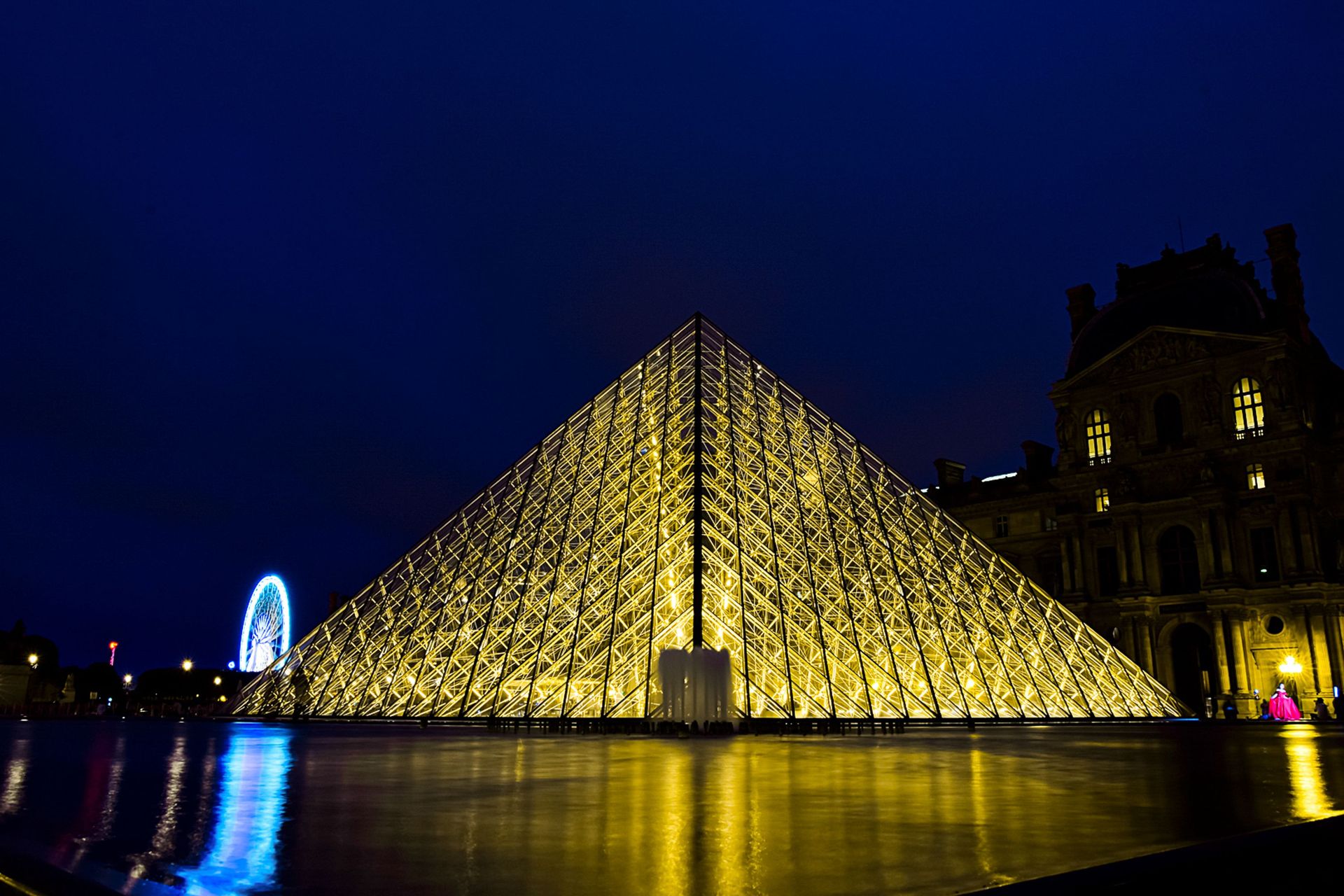
For visitors who want to avoid the worst of the crowds, booking the first morning slot on a Wednesday or Friday — when the Louvre stays open until 9:45 pm — tends to allow for a less pressured experience in the major galleries. The I.M. Pei glass pyramid entrance, often depicted as a controversial addition when it opened in 1989, now reads as an elegant solution to a genuinely difficult logistical problem: how to give a palace-sized institution a single, legible point of entry without diminishing what surrounds it.
Spending a full day here means accepting that you will not see everything. The better approach is to choose two or three departments and give them proper attention, rather than covering the whole museum at a march.
2 / 25
Credit: Etienne Méndez / Pexels
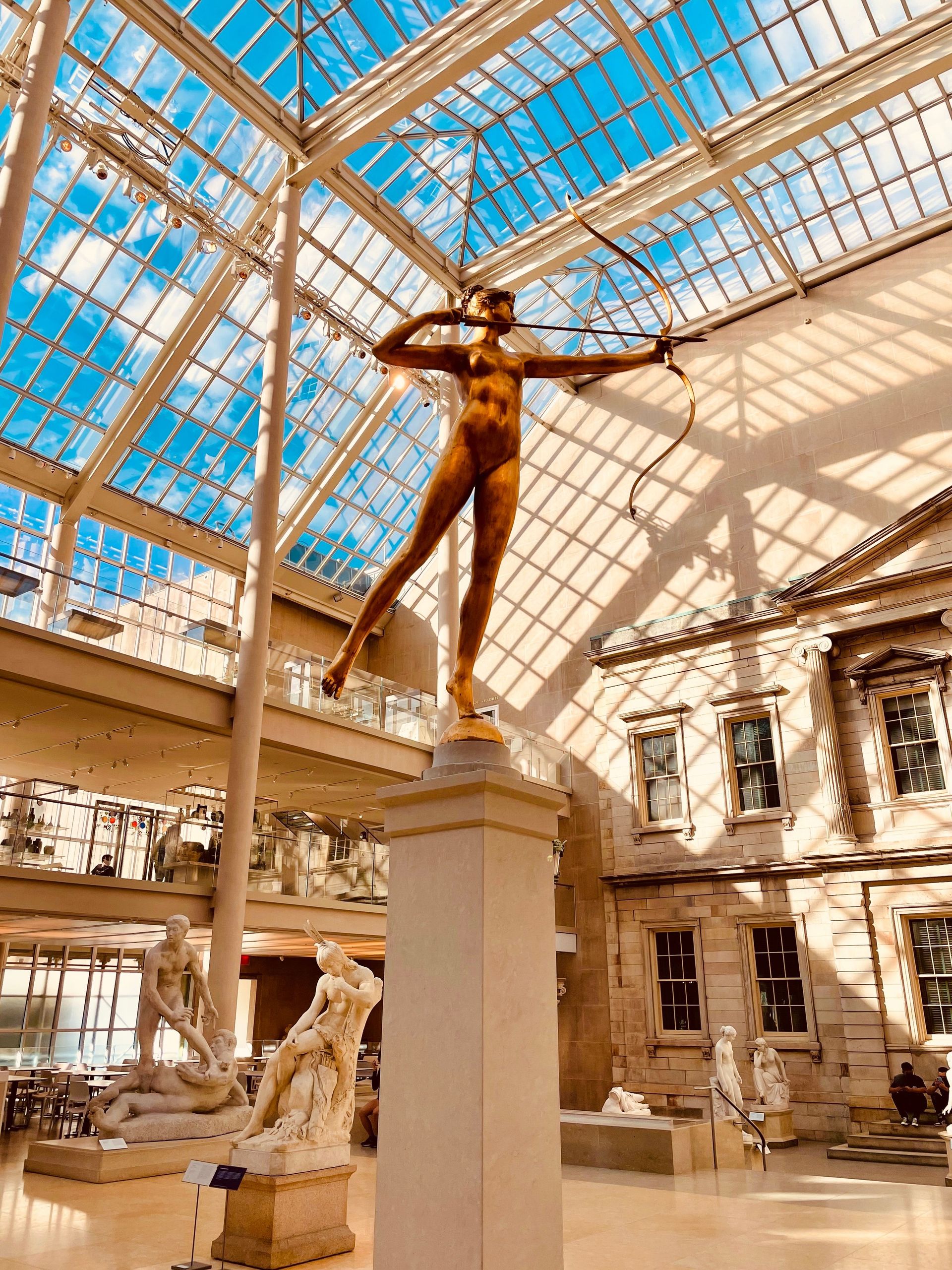
The Met is the largest art museum in the Western Hemisphere and one of the few institutions in the world where you can move from ancient Egyptian temples to medieval European armor to Japanese ink paintings to contemporary photography within a single afternoon without it feeling incoherent. The collection encompasses more than two million objects spanning five thousand years of human culture, drawn from every part of the globe.
The Temple of Dendur, a Roman-era Egyptian temple dating to around 15 BCE, was gifted to the United States by Egypt in 1965 in recognition of American assistance in the effort to relocate monuments threatened by the construction of the Aswan High Dam. It now sits in the Sackler Wing, in a vast glass-walled hall overlooking Central Park. The space is one of the more disorienting in any museum — an ancient temple inside a modern building, bathed in natural light, in the middle of Manhattan — and it is worth sitting with for a while.
The European paintings galleries hold one of the finest collections on the American continent, with works by Vermeer, Rembrandt, El Greco, Caravaggio, and a large number of French Impressionists. The Greek and Roman galleries, redesigned in the early 2000s, are elegant and well-organized. The American wing covers painting, furniture, and decorative arts across several centuries and includes a reconstructed facade of a branch of an old New York bank.
The Met operates across three sites in New York: the main Fifth Avenue building, The Met Breuer (now called The Met's modern and contemporary art space at The Breuer), and The Met Cloisters in Fort Tryon Park in upper Manhattan. The Cloisters is a museum dedicated to medieval European art and architecture, housed in a building that incorporates actual architectural elements from five medieval French cloisters. It holds the Unicorn Tapestries, a set of seven large Flemish wool-and-silk tapestries from around 1500 that are among the most studied works of medieval art in existence.
The Fifth Avenue building runs a suggested admission policy — visitors can pay what they wish, though a recommended admission price is listed. Non-New York State residents pay the recommended price by default. The museum is closed on Tuesdays.
3 / 25
Credit: Canva Images
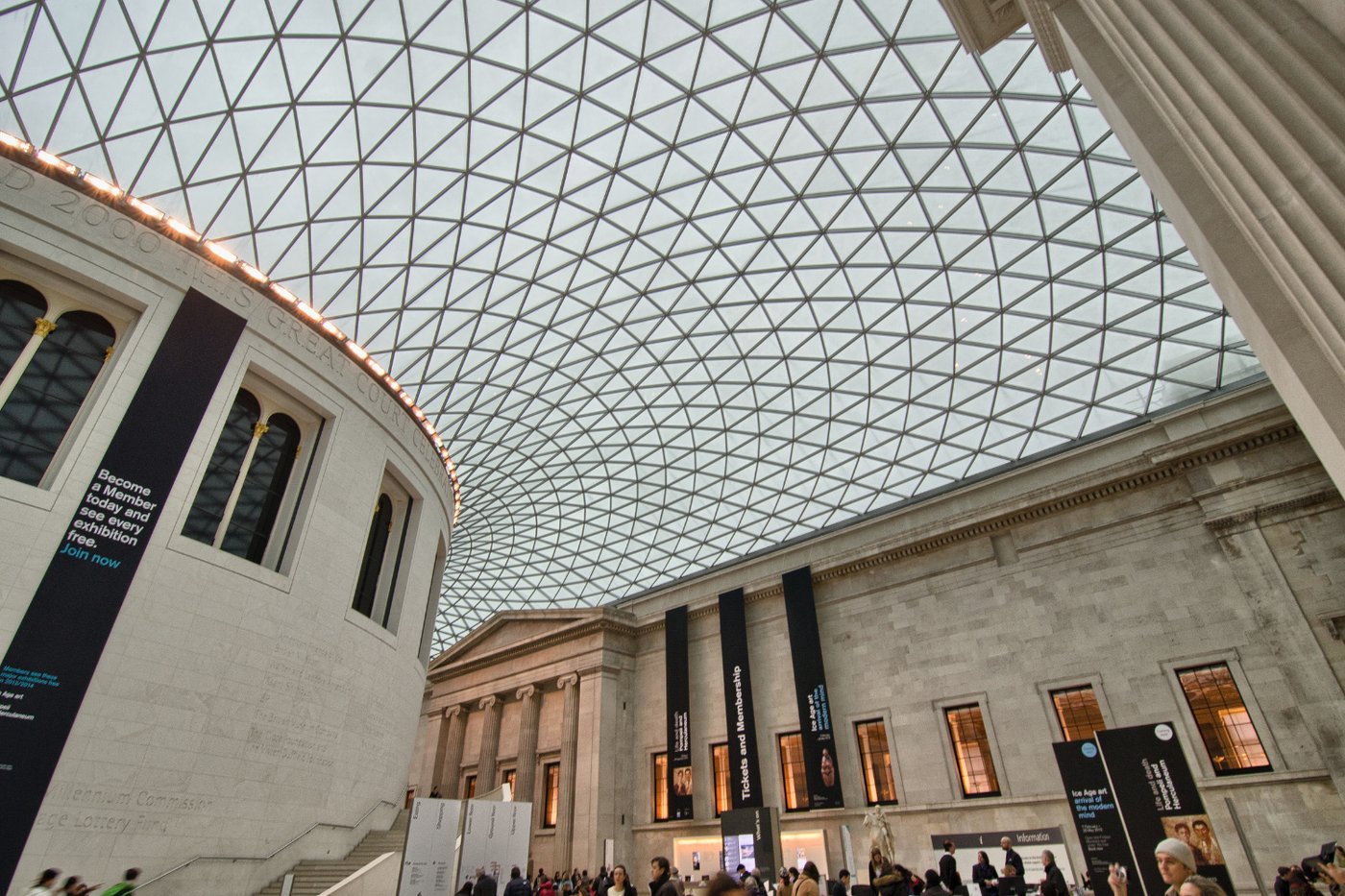
The British Museum holds around eight million objects and displays about 80,000 of them at any time — a collection so large that it requires some forethought to navigate well. The building, a grand neoclassical structure in Bloomsbury opened in 1759, makes it the oldest public national museum in the world. The Great Court, redesigned by Norman Foster and opened in 2000 with a spectacular tessellated glass roof enclosing the central courtyard, is one of the finest public spaces in London.
The Rosetta Stone, a granodiorite stele bearing the same decree in three scripts — Ancient Egyptian hieroglyphs, Demotic script, and Ancient Greek — and dating to 196 BCE, is the most visited object in the collection. It was the key that allowed scholars to decipher hieroglyphics in the early 19th century, making it one of the most consequential archaeological finds in history. It sits in Room 4, usually surrounded by visitors photographing it, but taking the time to read the interpretive panels around it gives the object considerably more weight.
The Elgin Marbles — more formally, the Parthenon sculptures — occupy a long, purpose-built gallery on the ground floor. The debate over their return to Greece is one of the most prominent in museum ethics and has continued for decades. Seeing them in London and then visiting the Acropolis Museum in Athens, where the context of the Parthenon is made explicit and the gaps left by the removed sections are clearly marked, gives the question a vividness that no amount of reading can fully replicate.
The museum's Egyptian collection, the Lewis Chessmen (a set of 78 medieval chess pieces carved from walrus ivory, found in Scotland in 1831 and believed to be of Norse origin), the Sutton Hoo helmet, the Mold Gold Cape, the Portland Vase, and the Lindow Man — a preserved Iron Age body discovered in a peat bog in Cheshire in 1984 — are among the specific objects worth planning time around. Admission is free, which places it among the best-value institutions of its kind anywhere in the world.
4 / 25
Credit: Alina Rossoshanska / Pexels
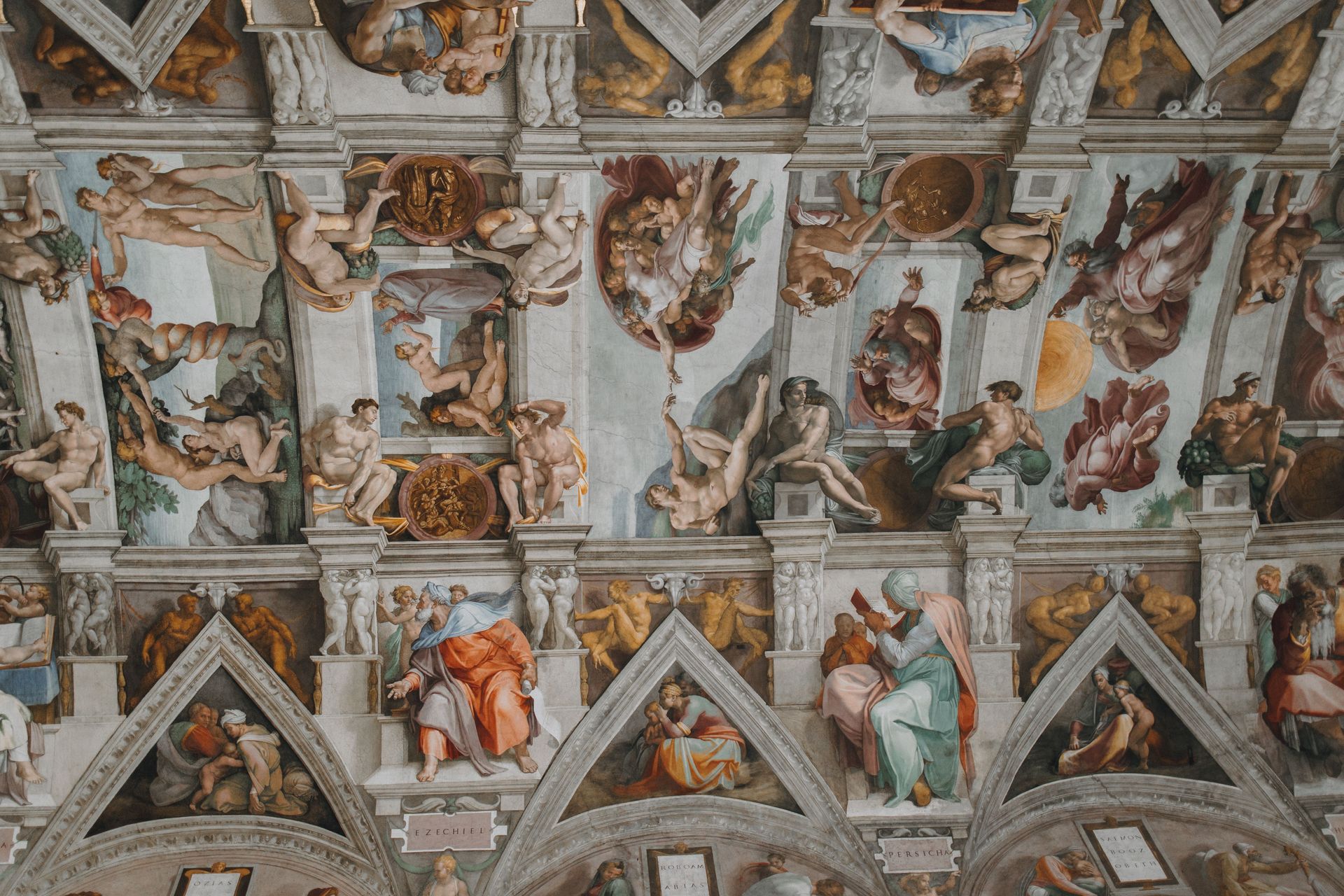
The Vatican Museums are not a single museum but a complex of galleries, apartments, libraries, and chapels that together constitute one of the greatest collections in the world, built up over more than five centuries of papal patronage. They receive around six million visitors a year, making them the second most visited museum complex on earth. The collections are housed within the Vatican Palace, meaning that the buildings themselves — decorated by Raphael, Michelangelo, and generations of artists working under papal commission — are part of what is on display.
The Sistine Chapel, which every visitor to the Vatican Museums passes through, contains Michelangelo's ceiling frescoes (painted between 1508 and 1512) and his Last Judgment on the altar wall (1536–1541). The ceiling depicts scenes from Genesis, including the Creation of Adam, a composition so familiar from reproduction that it can be difficult to see it fresh. Looking at it in the physical space — a large, dimly lit chapel with hundreds of other people, everyone's head tilted back — is a different experience from encountering it as an image. The scale and the continuity of the whole program, rather than any single figure, is what registers most.
The Raphael Rooms are four papal apartments decorated by Raphael between 1509 and 1524. The School of Athens, in the Room of the Signatura, is a fresco depicting a gathering of ancient Greek philosophers and is considered among the finest works of the High Renaissance. Raphael included portraits of his contemporaries among the figures: the brooding figure of Heraclitus in the foreground is a portrait of Michelangelo.
The collection of classical sculpture, including the Laocoön Group (discovered in Rome in 1506 and depicting the Trojan priest Laocoön and his sons being attacked by sea serpents) and the Apollo Belvedere, are displayed in the Cortile del Belvedere. Booking timed entry tickets in advance is mandatory for most of the year; walk-up entry is difficult to obtain and not worth relying on.
5 / 25
Credit: John (Giannis) Tekeridis / Pexels
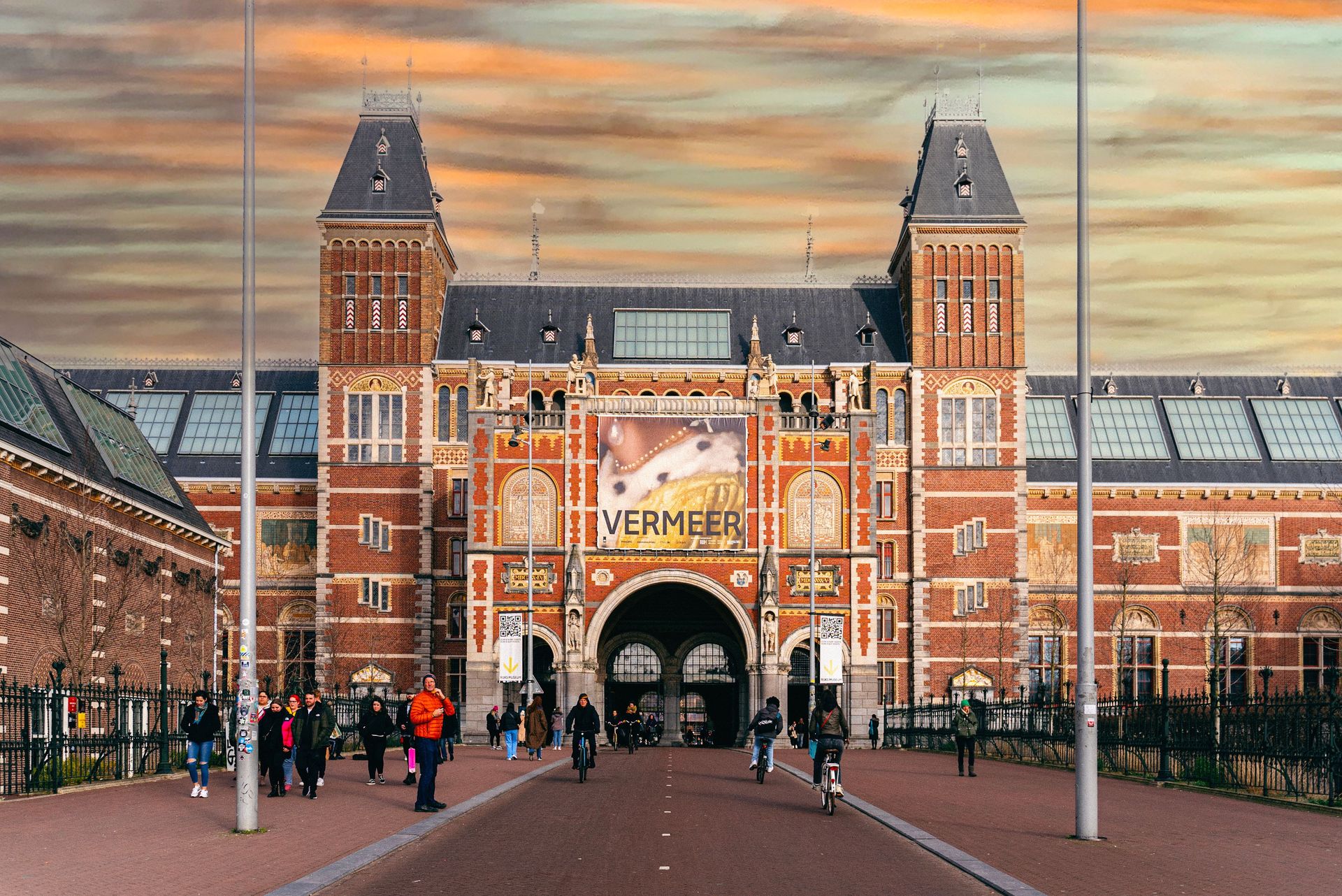
The Rijksmuseum is the national museum of the Netherlands, and its collection of Dutch and Flemish Golden Age painting is the finest in the world. Opened in its current building — a grand neo-Gothic and neo-Renaissance structure designed by Pierre Cuypers — in 1885, and extensively renovated between 2003 and 2013, it holds around one million objects, of which about 8,000 are on display. The building itself is worth looking at closely: its decorated vaulted ceilings, tiled floors, and stained glass windows were designed as a unified whole.
Rembrandt van Rijn's Night Watch, painted in 1642, is the museum's most celebrated work and one of the largest and most technically complex paintings of the Dutch Golden Age. It depicts a company of city guards in Amsterdam, frozen mid-movement, and is notable for its use of light, its sense of action, and the individuality of its figures. The painting has its own hall, large enough to view from a distance, which is necessary given its dimensions: approximately 3.6 meters by 4.4 meters.
The collection also holds a large number of works by Johannes Vermeer — more than any other institution — including The Milkmaid and Woman Reading a Letter. Vermeer's work rewards extended looking in a way that is sometimes difficult in larger, more crowded galleries; the Rijksmuseum's arrangement allows for this. The collection of Delftware, Dutch silver, ship models, and historical artifacts from the Dutch East India Company trade gives the museum a depth beyond painting that is often underrepresented in popular discussion of it.
The museum restaurant and the gardens, which include a pavilion by the Dutch firm MVRDV, are worth building into a visit. The museum is free for visitors under 18.
6 / 25
Credit: Canva Images
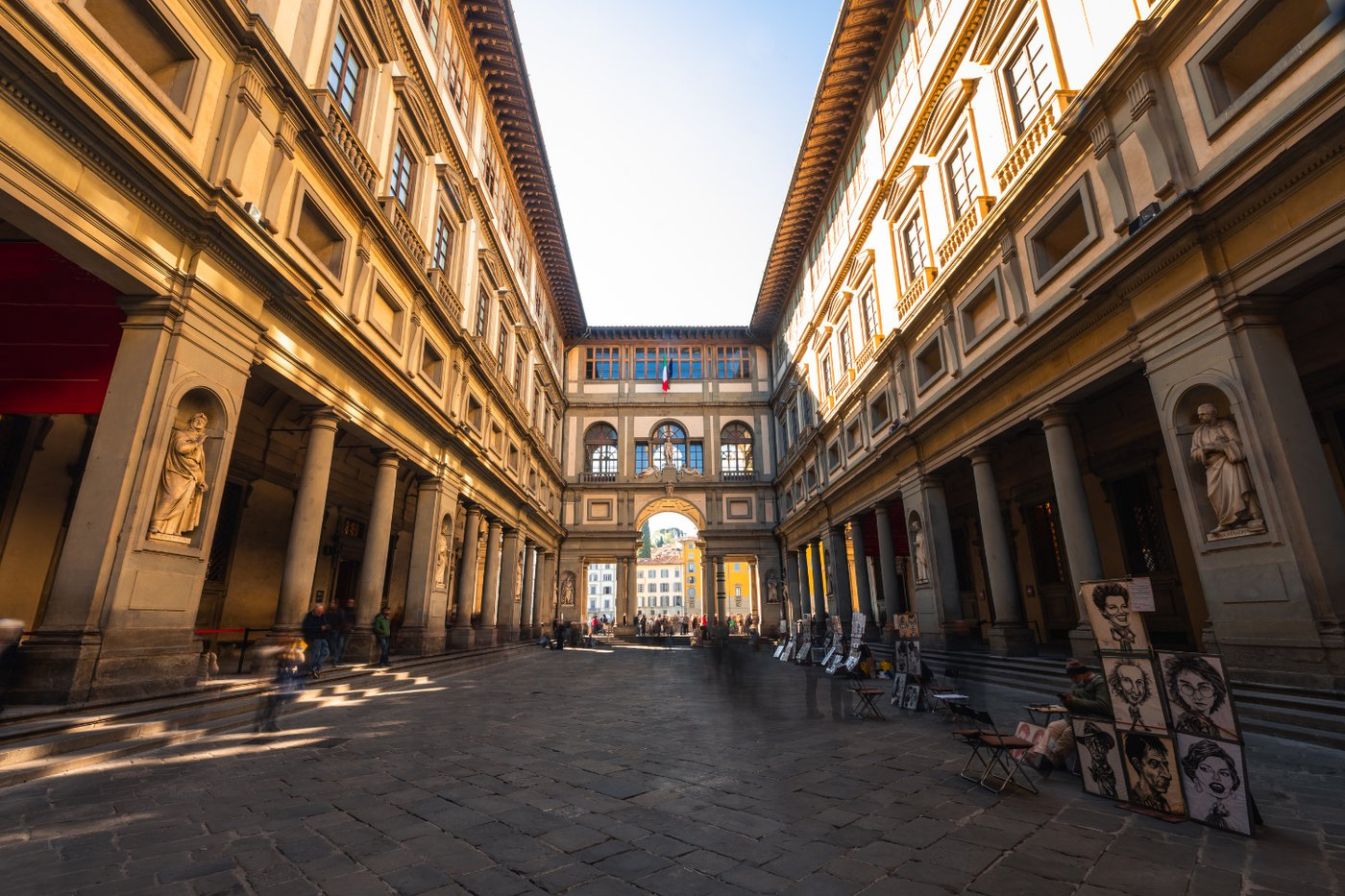
The Uffizi holds what many art historians consider the finest collection of Italian Renaissance painting in the world. The building was designed by Giorgio Vasari beginning in 1560 as an administrative center for the Medici government of Florence, and the Medici family's art collection — accumulated over several generations — forms the core of what is now on display. The institution opened to the public in the late 18th century, making it one of the first public art museums in Europe.
Sandro Botticelli's The Birth of Venus (c. 1484–1486) and Primavera (c. 1477–1482) are housed in the same room — Room 10–14 — and together constitute what is probably the most important grouping of works by a single artist in any museum. The Birth of Venus depicts the goddess emerging from the sea on a shell, accompanied by allegorical figures of wind and season. Its pale, luminous quality and the idealized figure of Venus are immediately recognizable even to viewers with limited exposure to Renaissance painting; seeing the original, at roughly 1.8 by 2.8 meters, has a physical presence that reproduction does not convey.
The collection also holds Titian's Venus of Urbino, Leonardo da Vinci's Annunciation and Adoration of the Magi, Raphael's Madonna of the Goldfinch, Caravaggio's Medusa and Sacrifice of Isaac, and a substantial collection of works by Giotto, Cimabue, and other pre-Renaissance painters that show the progression toward the humanist tradition that the Uffizi embodies.
The museum expanded significantly with the opening of the New Uffizi, which added galleries in the building's upper floors and courtyard. Booking tickets in advance is strongly advised; during peak season, same-day entry is effectively impossible. The museum is closed on Mondays.
7 / 25
Credit: Canva Images
The Acropolis Museum, which opened in 2009 at the foot of the hill below the Parthenon, was designed specifically to house the surviving sculptures and artifacts from the Acropolis of Athens. The building, designed by Swiss architect Bernard Tschumi and Greek architect Michalis Photiadis, is deliberately oriented so that the top floor — where the Parthenon Gallery sits — aligns precisely with the temple above. From inside, visitors can look up at the Parthenon through floor-to-ceiling glass while looking at the sculptures that once adorned it.
The Parthenon Gallery is the museum's central achievement. The original marble frieze, metopes, and pediment sculptures are displayed in their correct positions on a scale model of the temple's exterior, interspersed with high-quality plaster casts in the places where the originals were removed — primarily by Thomas Bruce, the 7th Earl of Elgin, in the early 19th century and sold to the British Museum. The museum's design makes the incompleteness of the collection visible in a way that functions as a clear, ongoing argument about where these objects belong.
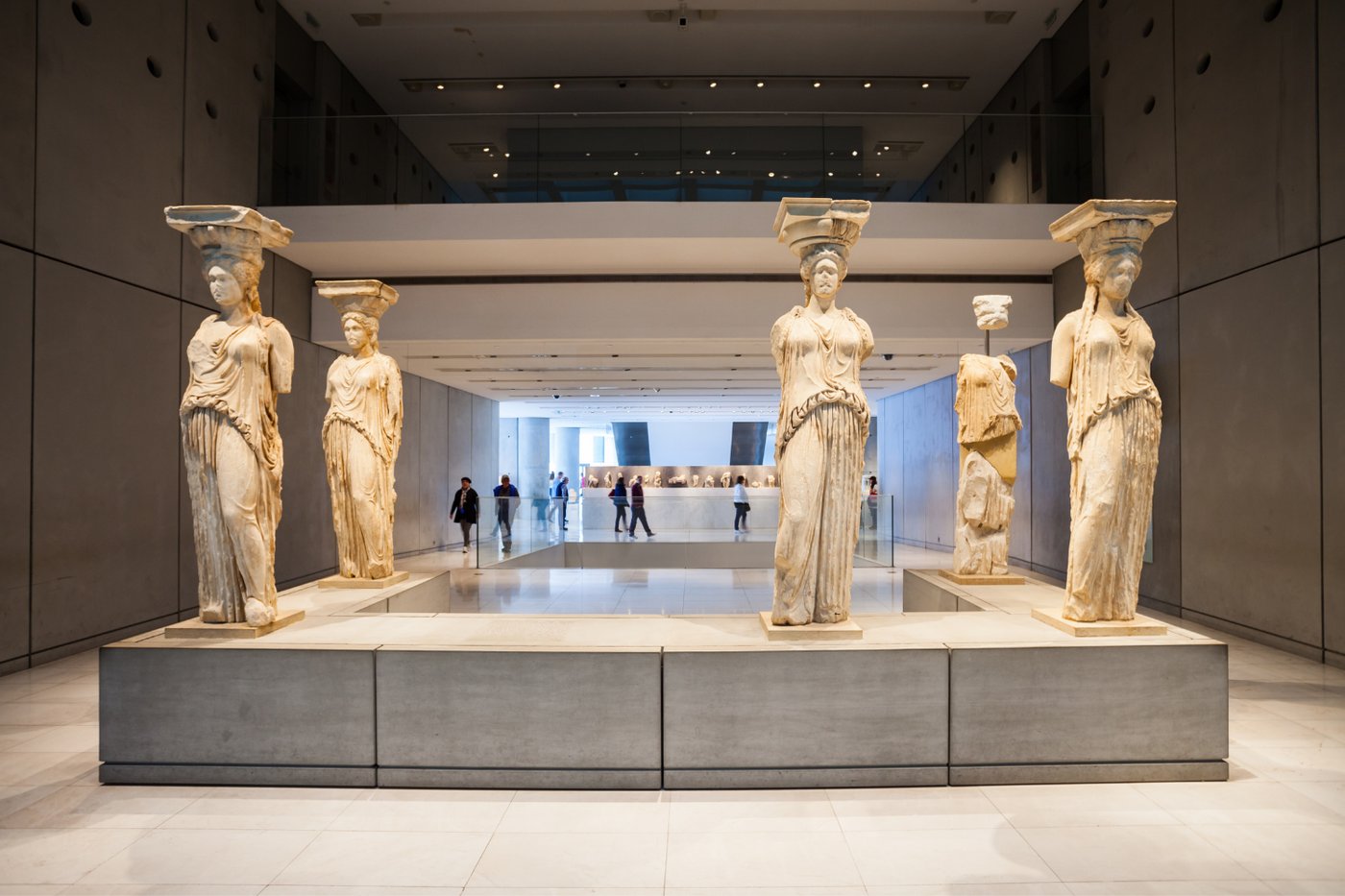
The Caryatid Porch of the Erechtheion, one of the most recognizable architectural elements of ancient Athens — a porch supported by six female figures rather than columns — is represented in the museum by five of the original six caryatids, preserved indoors to protect them from pollution. The sixth is in the British Museum.
The museum also holds artifacts from the Archaic and Classical periods found during excavations on the Acropolis, including painted pottery, bronze votive figures, and architectural elements. The ground floor is built over an active archaeological site, and glass floor sections allow visitors to look down at the excavations below, adding a physical sense of the layers of history beneath the city. Admission is free on certain Sundays throughout the year.
8 / 25
Credit: Canva Images
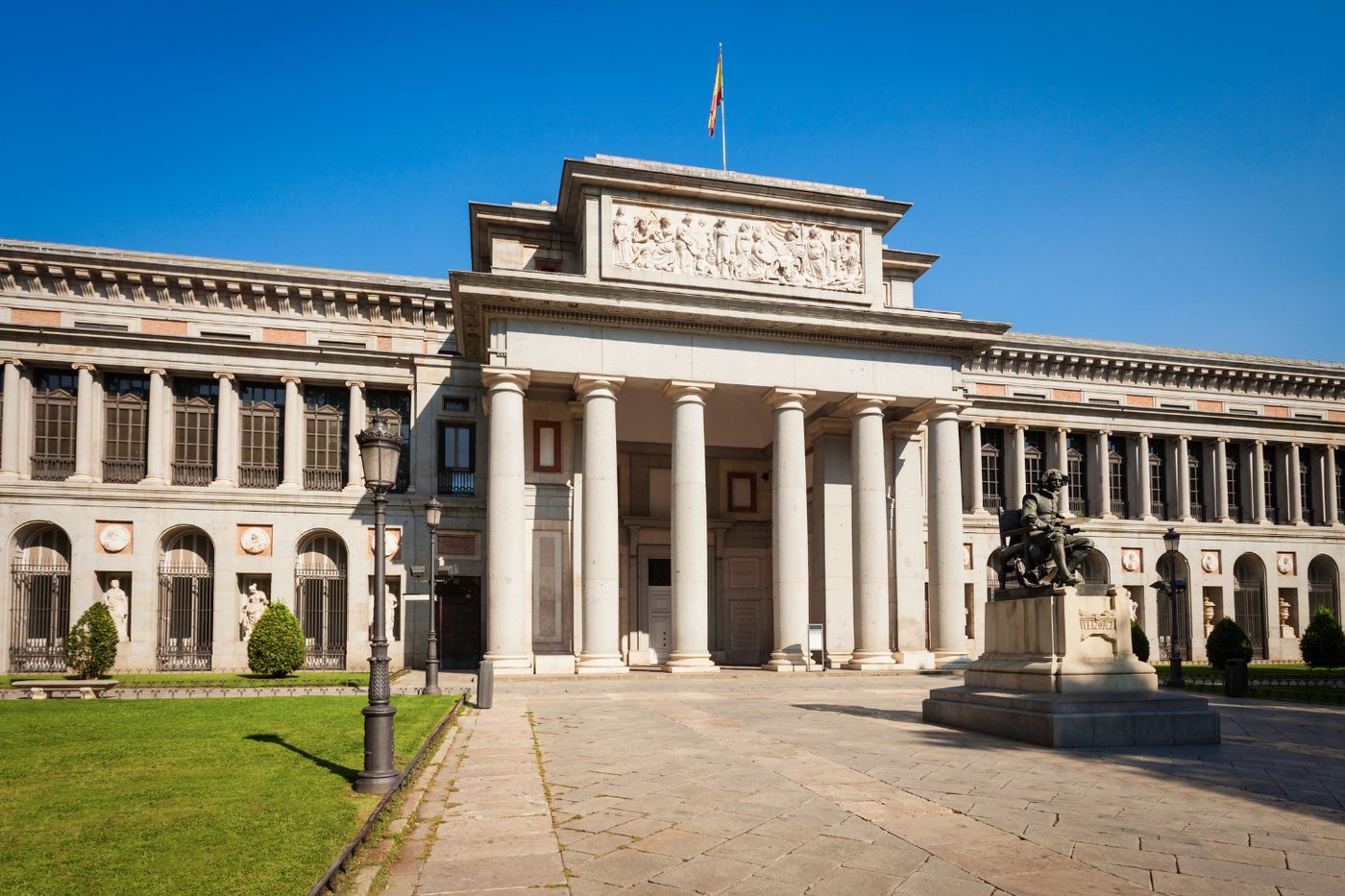
The Prado holds one of the finest collections of European painting in the world, with particular depth in Spanish, Italian, and Flemish work from the 16th through the 19th centuries. The building, designed by Juan de Villanueva and completed in 1819, is a neoclassical structure on the Paseo del Prado, a broad avenue in central Madrid that also houses the Thyssen-Bornemisza Museum and the Reina Sofía — making the surrounding area one of the densest concentrations of art museums in any city.
Francisco Goya's Saturn Devouring His Son, painted directly onto the walls of his house near Madrid between 1819 and 1823 and later transferred to canvas, is among the most psychologically intense paintings in any collection. It depicts the titan Saturn consuming one of his sons — a dark, violent image rendered with a looseness of brushstroke and a palette of blacks and browns that places it technically and emotionally apart from almost everything else in the museum. Goya's Black Paintings, of which Saturn is one, occupy their own room and constitute a coherent body of work that is unlike anything produced in European painting up to that point.
Diego Velázquez's Las Meninas (1656) is one of the most analyzed paintings in art history. It depicts a scene in the Spanish royal court — the Infanta Margarita surrounded by her ladies-in-waiting, a dwarf, and a dog, with Velázquez himself visible in the background at a large canvas — and raises questions about representation, perspective, and the relationship between painter and viewer that critics and art historians have been working through for centuries. The painting hangs in a dedicated room that allows for the distance it requires.
The museum also holds the largest collection of paintings by El Greco outside Toledo, a substantial body of work by Rubens, Hieronymus Bosch's The Garden of Earthly Delights, and Titian's series painted for Philip II. Entry is free daily from 6 pm to 8 pm.
9 / 25
Credit: Илья Закиров / Pexels
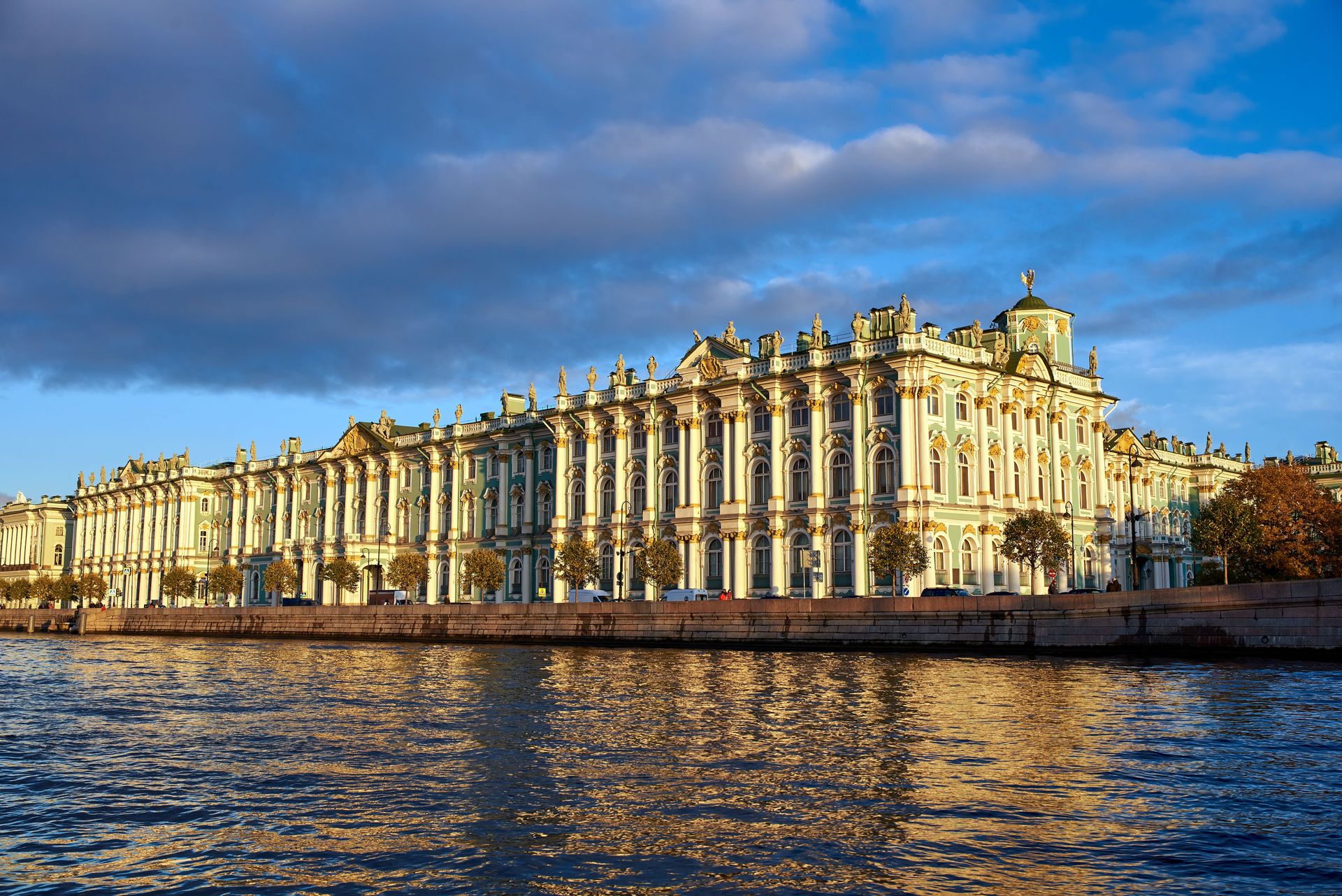
The State Hermitage in St. Petersburg is one of the largest museums in the world by floor space and collection size, housed in a complex of six historical buildings along the Neva River, the most prominent of which is the Winter Palace — the former official residence of the Russian tsars. The collection spans more than three million objects across art, archaeology, natural history, and decorative arts, though only a fraction is on display at any time.
The history of the collection begins with Catherine the Great, who purchased several large European art collections in the 1760s and 1770s and began the practice of displaying them in a purpose-built extension to the Winter Palace. The institution opened to the public in 1852. What followed over the next century and a half was a process of accumulation, nationalization, loss, and recovery that makes the collection one of the most historically layered in any institution.
The Impressionist and Post-Impressionist collection — assembled primarily from the collections of the Russian merchants Sergei Shchukin and Ivan Morozov, both of whom bought heavily from Matisse and Picasso in the early 20th century before their collections were nationalized — is one of the finest in the world. The third floor of the Winter Palace holds works by Monet, Renoir, Cézanne, Gauguin, Van Gogh, and a large number of early Picasso and Matisse works that are rarely discussed in proportion to their quality.
The State Rooms of the Winter Palace — the Malachite Hall, the Small Throne Room, the Pavilion Hall with its Peacock Clock — are worth visiting as historical and architectural objects independent of the paintings they contain. Building in at least two full days for the Hermitage is not excessive.
10 / 25
Credit: Jesus Toledo / Pexels
The Museo Nacional de Antropología in Chapultepec Park in Mexico City holds the most important collection of pre-Columbian art and archaeological artifacts in the world. Opened in 1964 in a building designed by Pedro Ramírez Vázquez, the museum is organized around the cultures of ancient Mexico, with dedicated rooms for the Olmec, Maya, Aztec, Zapotec, Mixtec, Toltec, and other Mesoamerican civilizations. The Aztec Sun Stone — commonly but inaccurately called the Aztec Calendar — is the collection's most famous object and one of the most recognized artifacts from the ancient Americas.
The Sun Stone, carved from basalt in the early 16th century and discovered buried in Mexico City's central plaza in 1790, measures roughly 3.6 meters in diameter and weighs approximately 24 tons. The carved reliefs represent cosmological and calendrical concepts from Aztec culture, and the central face is generally identified as the sun deity Tonatiuh. It is displayed vertically in the Mexica room, which is the largest gallery in the museum.
The Maya room holds a replica of the tomb of Pakal the Great, a 7th-century Maya ruler whose burial chamber was discovered at Palenque in 1952 by Alberto Ruz Lhuillier. The original tomb, carved with hieroglyphic inscriptions and reliefs depicting Pakal's descent into the underworld, remains in situ at Palenque; the replica in the museum provides an accessible version for visitors who have not made the journey to the Chiapas ruins.
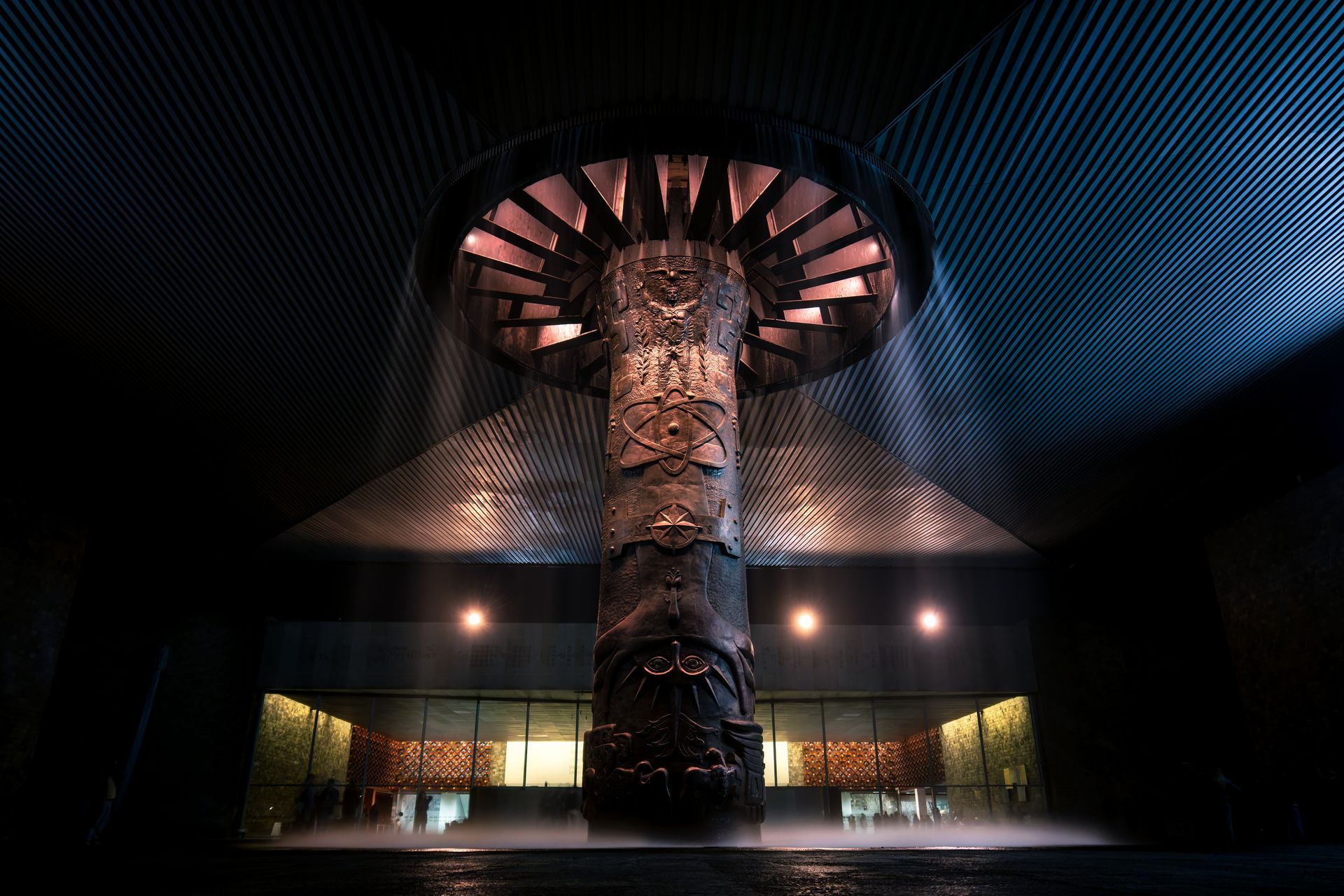
The building's architectural design centers on a large open courtyard covered by a single enormous roof canopy supported by a central column from which water cascades, known as the "umbrella." The effect is both functional and symbolic. The museum's 23 galleries are arranged around this courtyard, allowing natural light and air into the spaces between exhibitions. Admission is free for Mexican citizens and low-cost for international visitors.
11 / 25
Credit: David Vives / Pexels
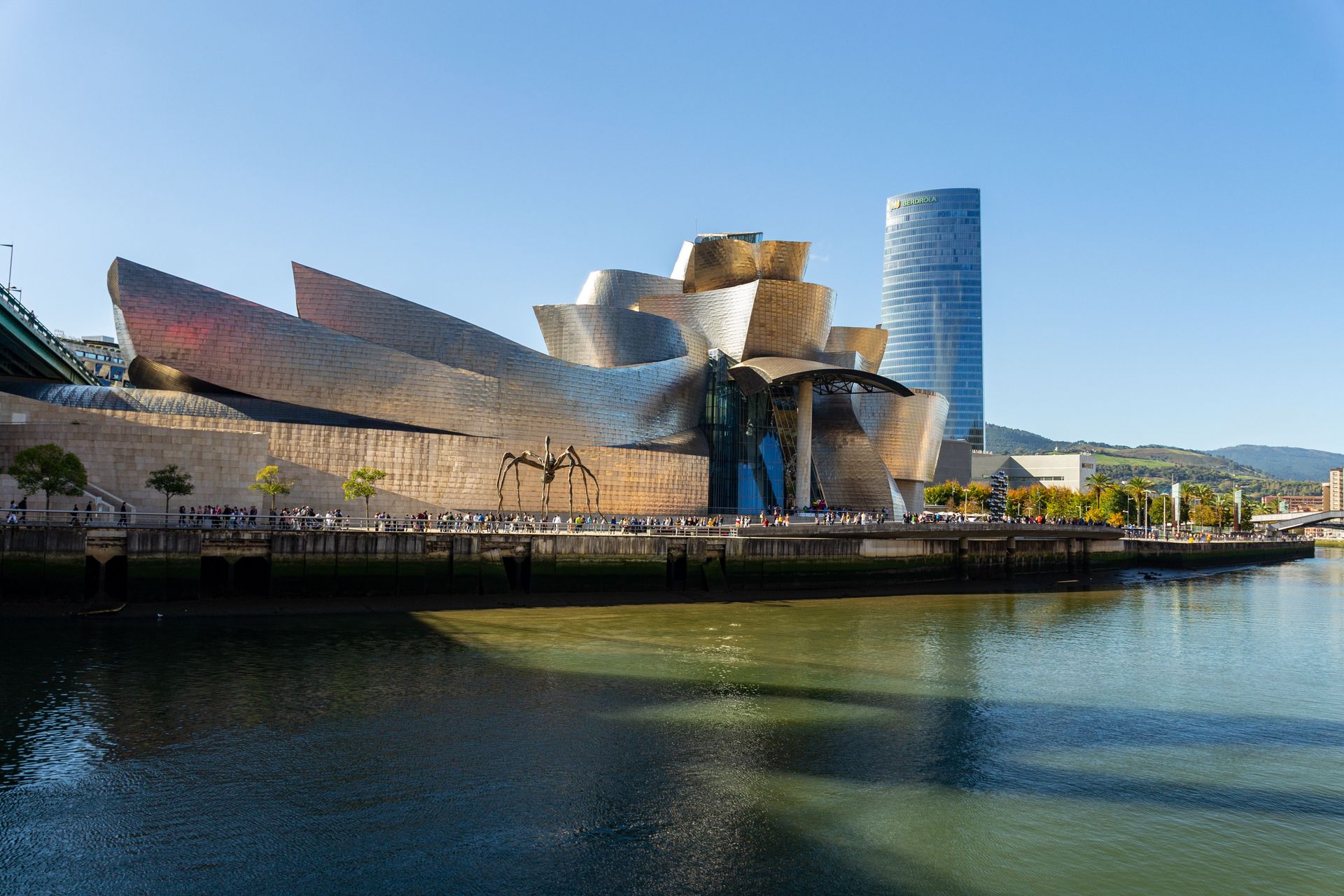
The Guggenheim Museum Bilbao, which opened in 1997, is the most discussed example of architecture as urban catalyst in recent history. Frank Gehry's building — clad in curved titanium panels, jutting glass volumes, and limestone blocks along the bank of the Nervión River — changed not just the museum's international profile but Bilbao's. The city, an industrial port that had been struggling economically after the decline of its shipbuilding and steel industries, used the museum as the anchor of a broader regeneration effort. The phrase "Bilbao effect" entered urban planning discourse as shorthand for the idea that a single transformative building can revive a city's economy and identity.
The building justifies the attention. Seen from across the river, from the La Salve Bridge, or from the plaza below, it reads differently at each angle — the titanium panels shift color with the light, from silver to gold to gray. Inside, the central atrium rises 50 meters and gives the building a quality of interior drama that almost no other museum can match. Richard Serra's The Matter of Time — a series of eight large-scale weathering steel sculptures installed in the 134-meter-long gallery known as the "fish gallery" — was made specifically for the space and is effectively impossible to experience elsewhere.
The permanent collection rotates between Bilbao and the Guggenheim's other locations — New York, Venice, and Abu Dhabi — but the temporary exhibitions are consistently significant. Jeff Koons's Puppy, a 12-meter floral sculpture of a West Highland terrier that stands in the plaza outside the museum's main entrance, has become one of the more photographed objects in contemporary art.
The surrounding neighborhood has developed into one of the better urban walks in northern Spain: the Abandoibarra waterfront, the pedestrian bridge, and the Azkuna Zentroa cultural center (a repurposed wine warehouse) are all within walking distance. For a city that was not on most international cultural itineraries before 1997, Bilbao now sustains a visit of several days without difficulty.
12 / 25
Credit: Michael Rowe / Wikimedia Commons (CC BY-SA 4.0)
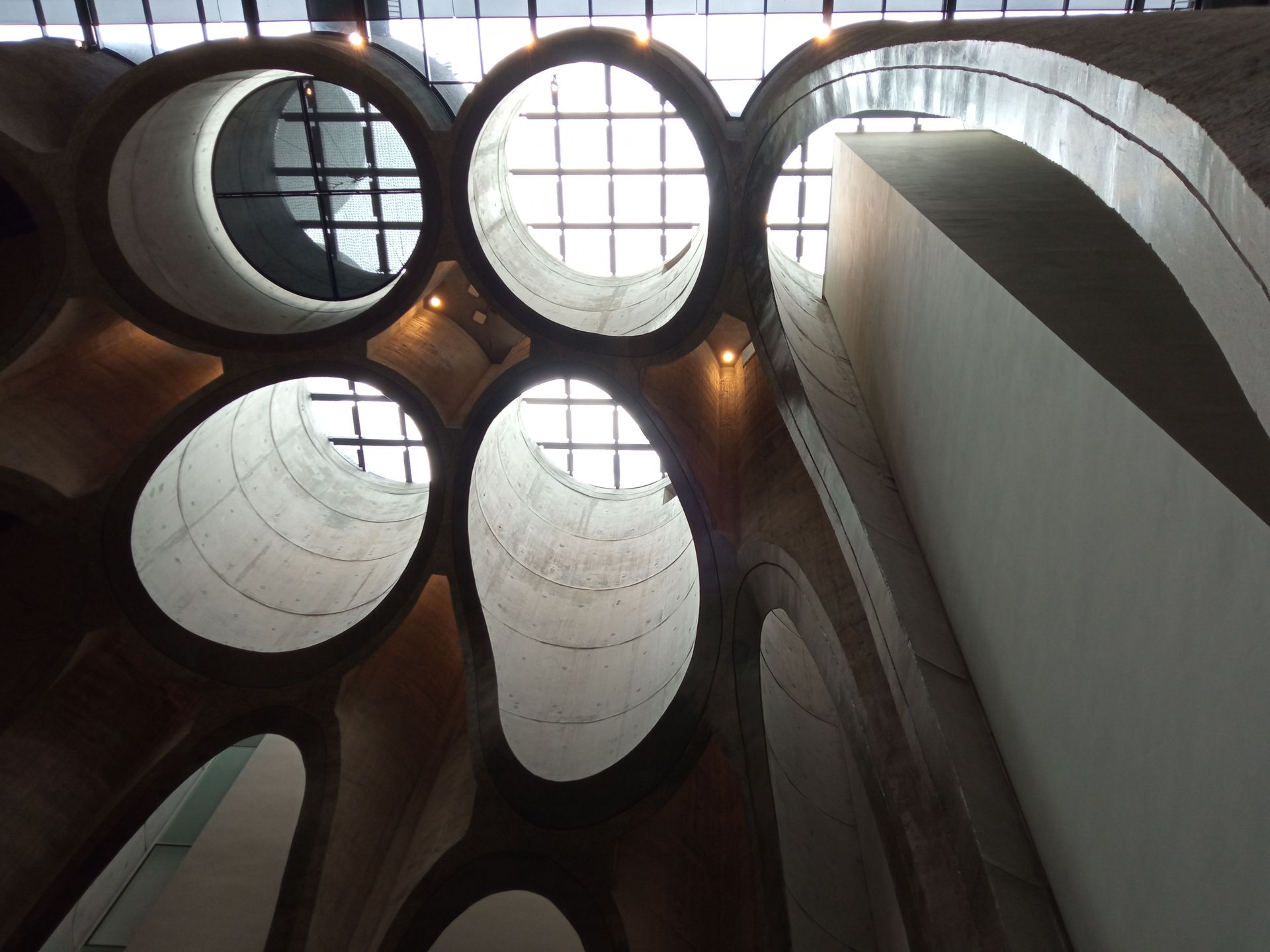
The Zeitz MOCAA, which opened in 2017, is the largest museum of contemporary African art in the world. It is housed in a former grain silo on the V&A Waterfront in Cape Town — a cylindrical complex of 42 concrete silos that were built in the 1920s and dominated the waterfront for nearly a century. The conversion was carried out by the London-based studio Heatherwick Studio, which carved a cathedral-like atrium from the interior of the silos, exposing the tubular concrete cells and creating a dramatic central space that remains one of the most striking museum interiors built in the past decade.
The collection, co-founded by German businessman Jochen Zeitz and the V&A Waterfront, focuses on art from Africa and its diaspora. The museum holds work by artists from across the continent and the wider African diaspora, including El Anatsui, William Kentridge, Zanele Muholi, and Wangechi Mutu. It operates across nine floors and 80 galleries, with the collection organized by geography, medium, and theme rather than strict chronology.
The Zeitz MOCAA's significance extends beyond its collection. Museums dedicated to contemporary African art have historically been underfunded and underrepresented in the global conversation about contemporary art, which has been dominated by institutions in North America, Europe, and increasingly East Asia. The museum's scale and ambition represent a deliberate reorientation of that conversation, and its programming — which has expanded since opening to include performance, residency, and digital work — has made it one of the more dynamic institutions in the world in terms of what it is actively doing rather than what it already holds.
The building's relationship to its location on the harbor, with views of Table Mountain, the working waterfront, and the Atlantic Ocean, is part of the experience. There is no comparable institution anywhere on the African continent.
13 / 25
Credit: Wiiii / Wikimedia Commons (CC BY-SA 3.0)
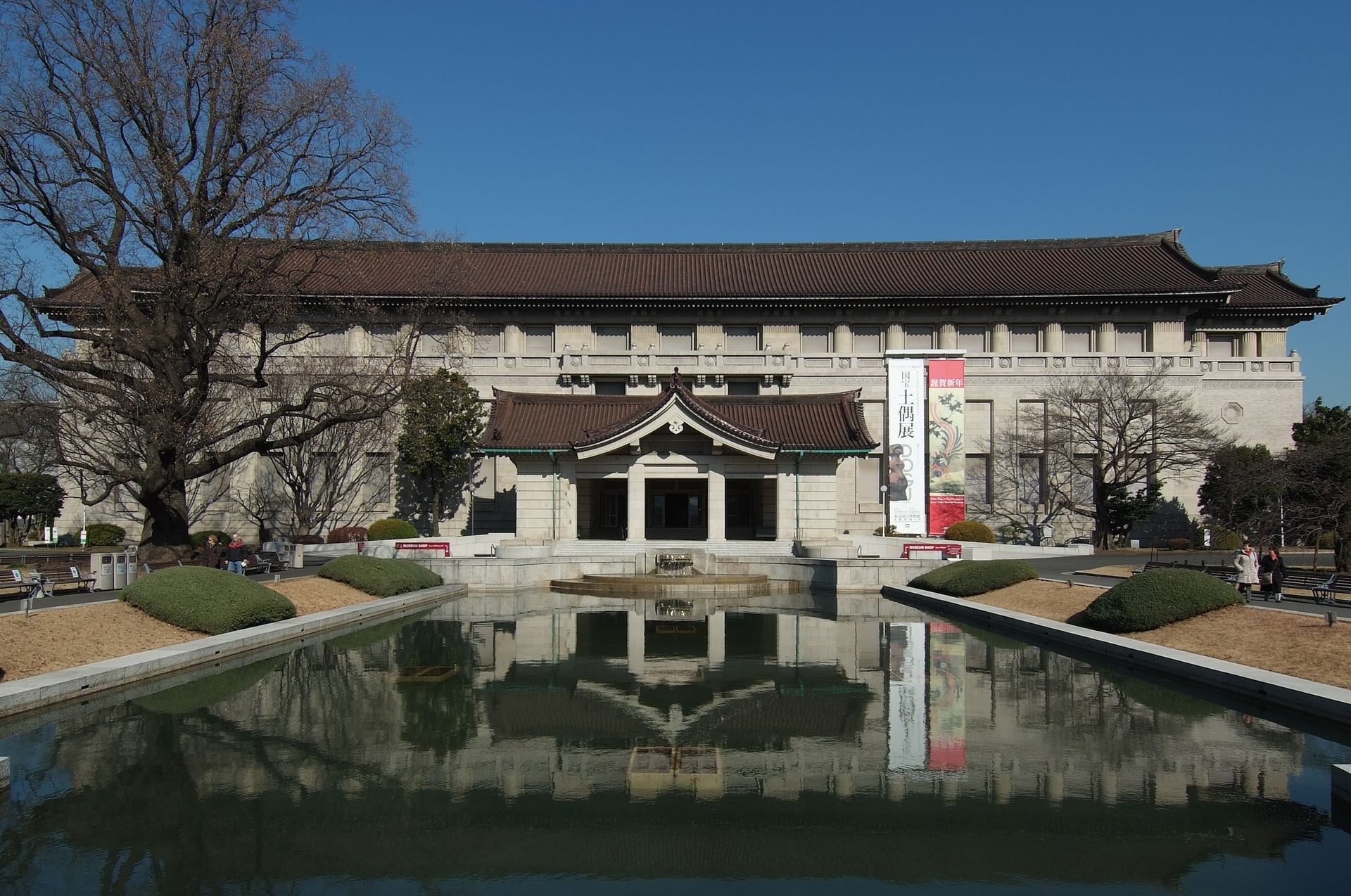
The Tokyo National Museum in Ueno Park is the oldest and largest museum in Japan, holding a collection of more than 120,000 objects spanning Japanese, Asian, and ancient Near Eastern cultural history. Established in 1872, it occupies a complex of several buildings in Ueno Park, the largest of which — the Honkan, or Japanese Gallery — was designed in the 1930s in a style that the museum describes as "Imperial Crown style," blending Western neoclassical structure with Japanese architectural elements.
The collection's depth in Japanese art is unmatched. The museum holds approximately 89 objects designated as National Treasures of Japan and 648 objects designated Important Cultural Properties — numbers that are substantially higher than any other single institution in the country. The holdings include lacquerware, ceramics, textiles, armor, swords, calligraphy, and painting spanning more than a thousand years of Japanese artistic production.
The Heiseikan building hosts the Japanese Archaeology Gallery, which covers prehistoric Jōmon culture through the Yayoi and Kofun periods to the Nara and Heian eras. The Tōyōkan building holds art from China, Korea, Southeast Asia, Central Asia, and the ancient Near East, providing context for Japanese art within broader Asian cultural history. The Hyokeikan, built in 1909 in Western Baroque style for the visit of Crown Prince Yoshihito, is now used for special exhibitions and ceremonies.
The museum's garden, open to the public during spring and autumn, holds several traditional Japanese structures including teahouses and a reconstruction of a Noh stage. Ueno Park itself contains several other significant institutions — the Tokyo Metropolitan Art Museum, the National Museum of Western Art (a Le Corbusier building that is a UNESCO World Heritage Site), and the National Science Museum — making it one of the densest cultural precincts in the world.
14 / 25
Credit: Richard Mortel / Wikipedia (CC BY 2.0)
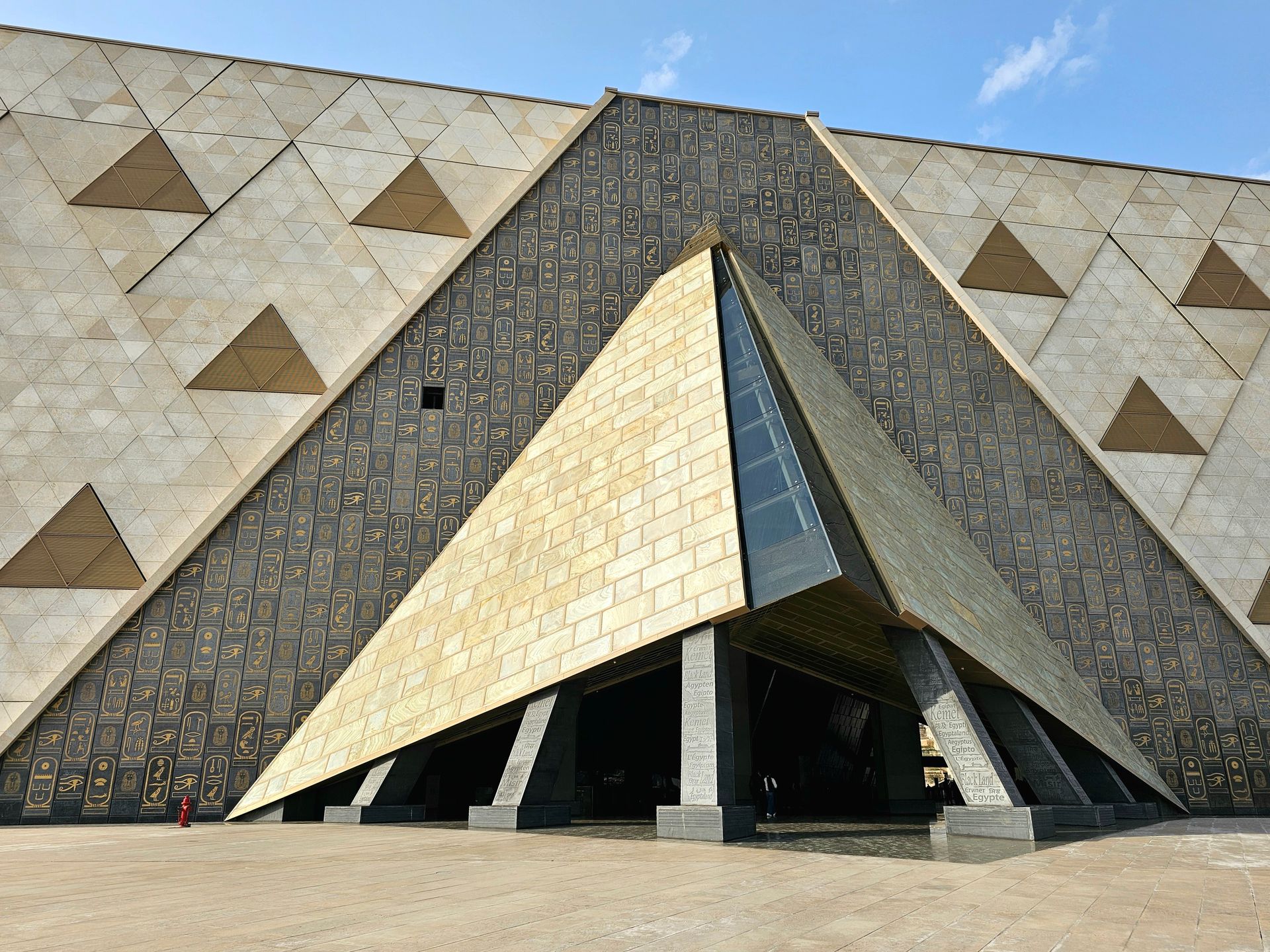
The Grand Egyptian Museum, which completed its full opening in late 2024, is the largest archaeological museum in the world, built at a site adjacent to the Giza plateau, approximately two kilometers from the Pyramids of Giza. The project took more than two decades from initial design to full completion, at a cost of roughly one billion dollars. The building, designed by the Irish firm Heneghan Peng Architects, is a vast triangular structure clad in translucent alabaster panels that diffuse light across the interior and reference the form of the pyramids visible from the roof terrace.
The collection holds more than 100,000 artifacts from ancient Egyptian civilization, including a large number of objects that were previously held in storage at the Egyptian Museum in Tahrir Square $SQ in central Cairo and had not been on public display in decades. The centerpiece is the complete Tutankhamun collection — all 5,398 objects found in the boy king's tomb by Howard Carter in 1922, displayed together for the first time since their discovery. This includes the golden death mask, the canopic chest, the innermost gold coffin, and objects such as the decorated alabaster chest and the miniature golden shrine, which are of extraordinary craftsmanship.
The Grand Staircase, which runs through the heart of the museum, is lined with approximately 87 monumental statues of ancient Egyptian kings and deities, creating a processional axis that leads visitors through Egyptian history. A 3,200-year-old colossal statue of Ramses II, standing approximately 11 meters tall and weighing around 83 tons, greets visitors at the entrance.
The museum's location means that a visit can be paired with the Pyramids themselves, the Sphinx, and the Solar Boat Museum, making the Giza plateau a multi-day destination in its own right. The opening of the Grand Egyptian Museum represents the most significant development in Egyptian cultural presentation in a generation.
15 / 25
_(51395759113)-1920x1920.jpg)
Credit: ajay_suresh / Wikimedia Commons (CC BY 2.0)
The Museum of Modern Art opened in 1929 and defines, for many people, what a modern art museum should look and feel like. Its collection of around 200,000 works is the most comprehensive overview of modern and contemporary art in any single institution, spanning painting, sculpture, photography, film, design, architecture, and performance. The building, which has been expanded multiple times — most recently in a 2019 renovation and expansion by Diller Scofidio + Renfro — integrates interior gallery space with the outdoor sculpture garden in a way that makes the whole campus feel porous.
The Abby Aldrich Rockefeller Sculpture Garden is one of the most successful public spaces in Manhattan, open to museum visitors and used for concerts in summer. The garden holds works by Rodin, Matisse, Picasso, and a number of significant postwar sculptures. It provides a counterpoint to the enclosed experience of the gallery floors and is worth including in any visit.
The painting and sculpture galleries cover the period from approximately 1880 to the present, and the sequence of rooms across the fifth and fourth floors follows a broadly chronological logic while allowing for cross-referencing between movements and geographies. Vincent van Gogh's The Starry Night, Georges Seurat's A Sunday on La Grande Jatte (on extended loan from the Art Institute of Chicago), Pablo Picasso's Les Demoiselles d'Avignon, Salvador Dalí's The Persistence of Memory, and Andrew Wyeth's Christina's World are among the works that draw consistent attention.
The design and architecture galleries on the third floor are distinctive — MoMA was one of the first major art institutions to treat industrial design, furniture, and graphic design as objects worthy of museum collection — and hold significant examples from the Bauhaus tradition, postwar American design, and contemporary product design. The film program, which operates out of two screening rooms, is among the most respected repertory cinema programs in New York.
16 / 25
Credit: Sdfery / Wikimedia Commons (CC BY-SA 4.0)
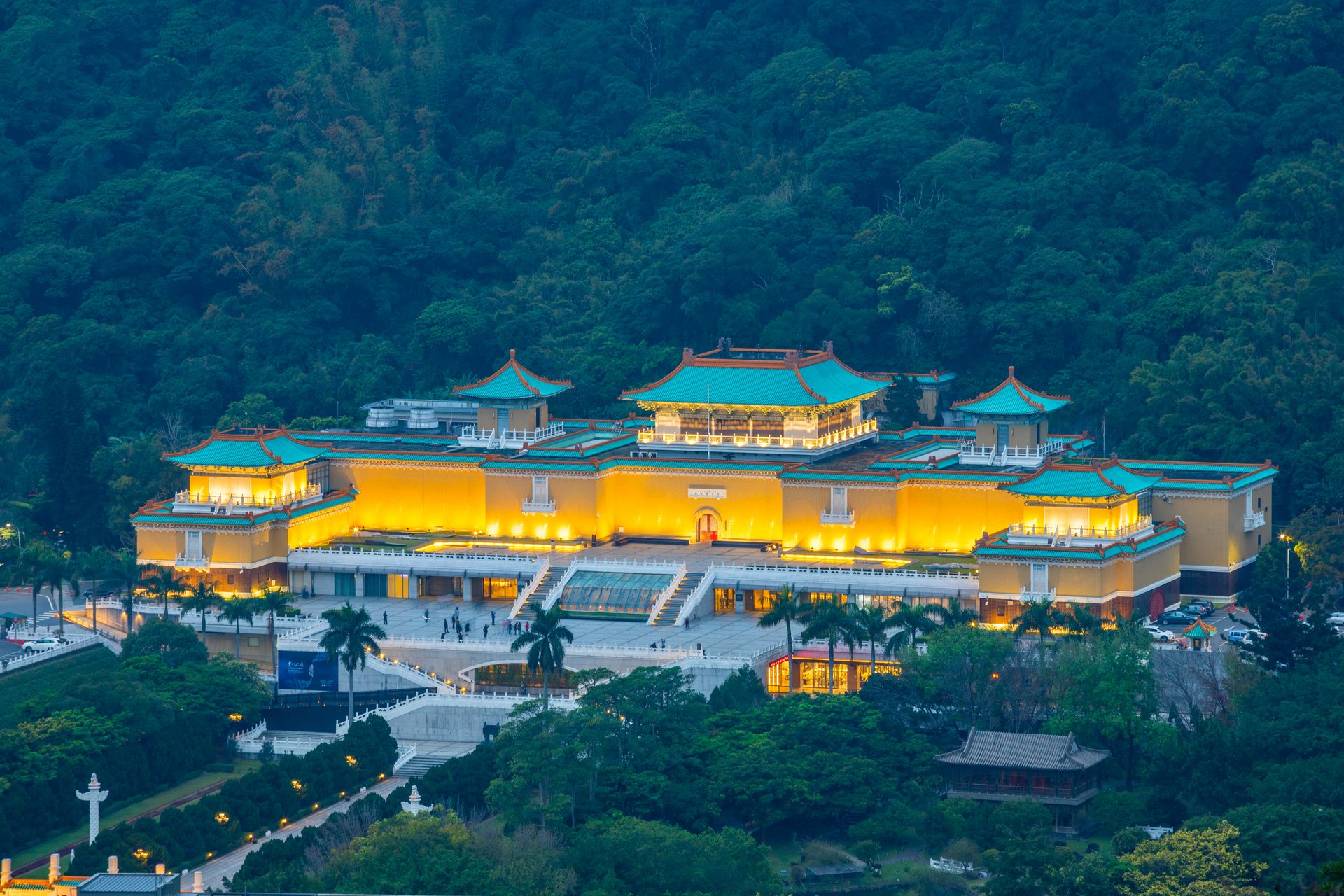
The National Palace Museum in Taipei holds one of the most significant collections of Chinese imperial art in the world — a collection that was assembled by the Chinese imperial court over centuries, removed from Beijing during World War II, and transported to Taiwan following the end of the Chinese Civil War in 1949. The approximately 700,000 objects in the collection include paintings, calligraphy, bronzes, ceramics, jade, lacquerware, and rare books and documents spanning eight thousand years of Chinese cultural history.
The Jadeite Cabbage, a small carving of a Chinese cabbage made from a single piece of jadeite dating to the late Qing dynasty (late 19th century), is the collection's most popular object. It is roughly the size of a real cabbage — approximately 18.7 centimeters tall — and is carved with two insects, a locust and a katydid, perched on the leaves. It was part of the dowry of a Qing imperial concubine. The Meat-shaped Stone, a piece of jasper carved and dyed to resemble a piece of braised pork belly, is the other frequently cited example of the collection's capacity for disciplined virtuosity.
The museum's collection is so large that only a fraction is displayed at any time; the holdings are rotated on a regular basis, meaning that multiple visits will yield different experiences. The collection of Song dynasty ceramics is of particular note — celadon wares, blue-and-white porcelain, and the Ru ware pieces, of which only around 90 examples survive worldwide, are among the finest in any collection.
A southern branch of the museum in Chiayi County, opened in 2015, focuses on Asian art from beyond China, including Japanese, Korean, and Southeast Asian works. The main Taipei building is in Shilin District, accessible by bus from the city center.
17 / 25
Credit: MuffinLand / Pexels
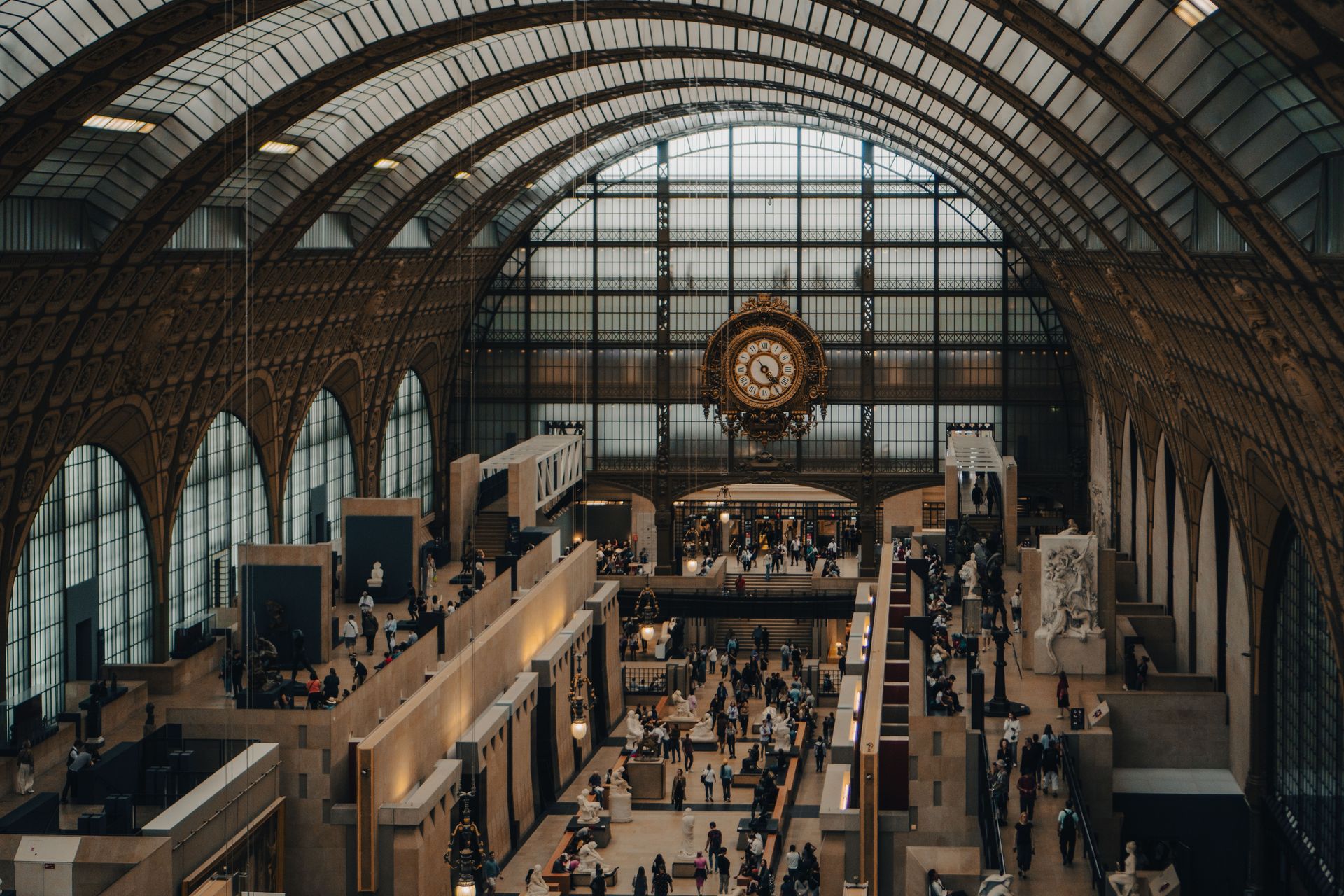
The Musée d'Orsay holds the largest collection of Impressionist and Post-Impressionist paintings in the world, housed in a former railway station — the Gare d'Orsay — on the Left Bank of the Seine. The station, built for the 1900 World's Fair, was designed by architect Victor Laloux in a Beaux-Arts style that conceals the iron-and-glass structure behind a stone facade. It was decommissioned as a railway station in 1939, used for various purposes including as a film set, and converted into a museum that opened in 1986.
The conversion maintained the building's central hall, a vast iron-and-glass nave running the length of the building at ground level, while inserting gallery floors along the sides and adding a central upper floor. The result is a museum where the building is constantly visible — the clock faces at either end of the nave, the vaulted ceiling, the iron columns — in a way that contextualizes the art within the period of its production.
The collection covers the period from approximately 1848 to 1914. The Impressionist paintings — by Monet, Renoir, Degas, Pissarro, Sisley, and Berthe Morisot — are displayed on the top floor in rooms with natural light. The concentration of work here is remarkable: Monet's series paintings, Renoir's Bal du moulin de la Galette, Degas's ballet and café scenes, and several of the large-scale canvases that Impressionist painters produced in dialogue with the academic Salon are all present. The museum holds 29 works by Vincent van Gogh, including his Self-Portrait (1887) and Bedroom in Arles.
Georges Seurat's A Sunday Afternoon on the Island of La Grande Jatte (the original, as opposed to the version on loan to MoMA) is held at the Art Institute of Chicago; the Orsay holds Seurat's Bathers at Asnières, his other major large canvas. The museum also holds a significant collection of Art Nouveau decorative arts and furniture, and sculpture by Rodin, Claudel, and Carpeaux.
18 / 25
-1920x1281.jpg)
Credit: Anthony Quintano / Wikimedia Commons (CC BY-SA 2.0)
The National Air and Space Museum is the most visited museum in the United States and, most years, among the most visited in the world, drawing around eight million visitors annually in its pre-pandemic peak years. It is part of the Smithsonian Institution and operates two facilities: the main building on the National Mall in Washington, and the Steven F. Udvar-Házy Center near Dulles Airport in Virginia, which holds the larger objects in the collection.
The collection documents the history of flight and space exploration from the Wright Brothers' Flyer — the actual aircraft that Orville Wright piloted for 12 seconds at Kitty Hawk, North Carolina, on December 17, 1903 — to the Apollo 11 command module Columbia, which carried Neil Armstrong, Buzz Aldrin, and Michael Collins on the first crewed lunar mission in 1969. Both objects are on display in the main Mall building. The command module is smaller than most people expect — roughly the size of a compact car — and the reentry scorching on its exterior is visible.
The Udvar-Házy Center holds the Space Shuttle Discovery, the most flown spacecraft in history, which flew 39 missions between 1984 and 2011. It also holds the Enola Gay, the Boeing $BA B-29 Superfortress that dropped the first atomic bomb on Hiroshima on August 6, 1945. The Enola Gay's display has been the subject of historical and ethical debate since the museum's initial exhibition plans in the 1990s were revised following controversy over how the bombing and its consequences were to be framed.
Admission to both facilities is free, though timed entry passes for the Mall building are required.
19 / 25
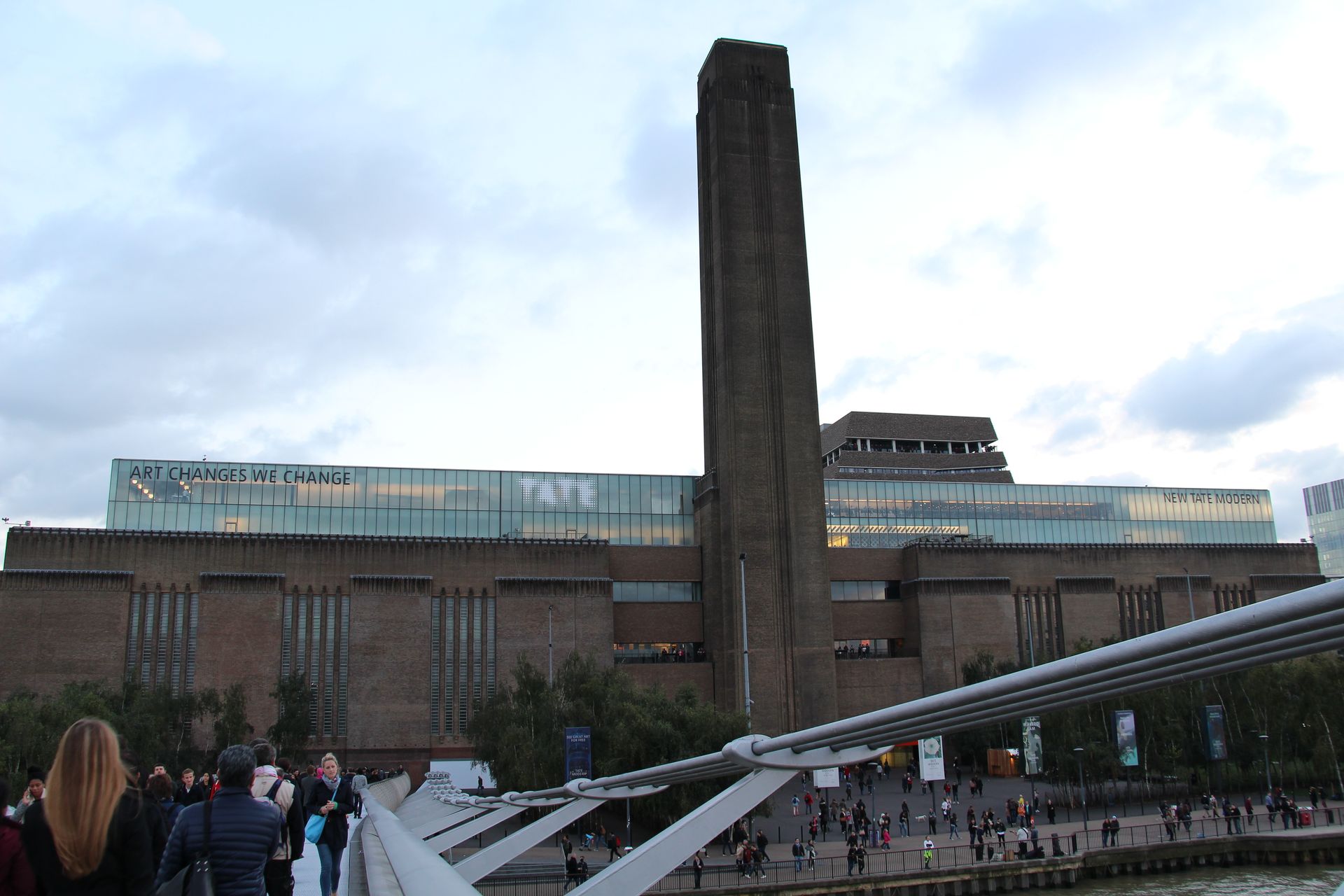
Credit: Fred Romero / Wikimedia Commons (CC BY 2.0)
Tate Modern opened in May 2000 in the former Bankside Power Station, a massive brick building on the South Bank of the Thames designed by Giles Gilbert Scott and decommissioned in 1981. The conversion by Swiss architects Herzog & de Meuron retained the building's chimney, its exterior brickwork, and its vast central turbine hall, which became the most significant feature of the new museum — a 3,400-square-meter space approximately 35 meters tall that has since been used as a platform for large-scale commissioned installations by artists including Olafur Eliasson, Louise Bourgeois, Doris Salcedo, and Ai Weiwei.
The Turbine Hall commission, which runs for approximately six months per year, has become one of the most anticipated events in the international art calendar. The commissions are free to enter and have drawn some of the largest individual audiences for any single artwork in Britain. Eliasson's The Weather Project (2003), which filled the hall with a large semi-circular disc of sodium lamps and a mirrored ceiling that created the illusion of a setting sun, was seen by more than two million people during its five-month run.
The permanent collection spans international modern and contemporary art from 1900 to the present, with particular strength in postwar abstraction, Conceptual art, and work from underrepresented regions. The museum's policy of organizing its collection by theme and association rather than chronology or nationality — rooms that place a Rothko next to a Howard Hodgkin next to a work by a Brazilian concrete artist — has been influential on how other institutions present contemporary art.
A second building, the Switch House (now the Blavatnik Building), opened in 2016 and added 60 percent more display space. Admission to the permanent collection is free; temporary exhibitions charge a fee.
20 / 25
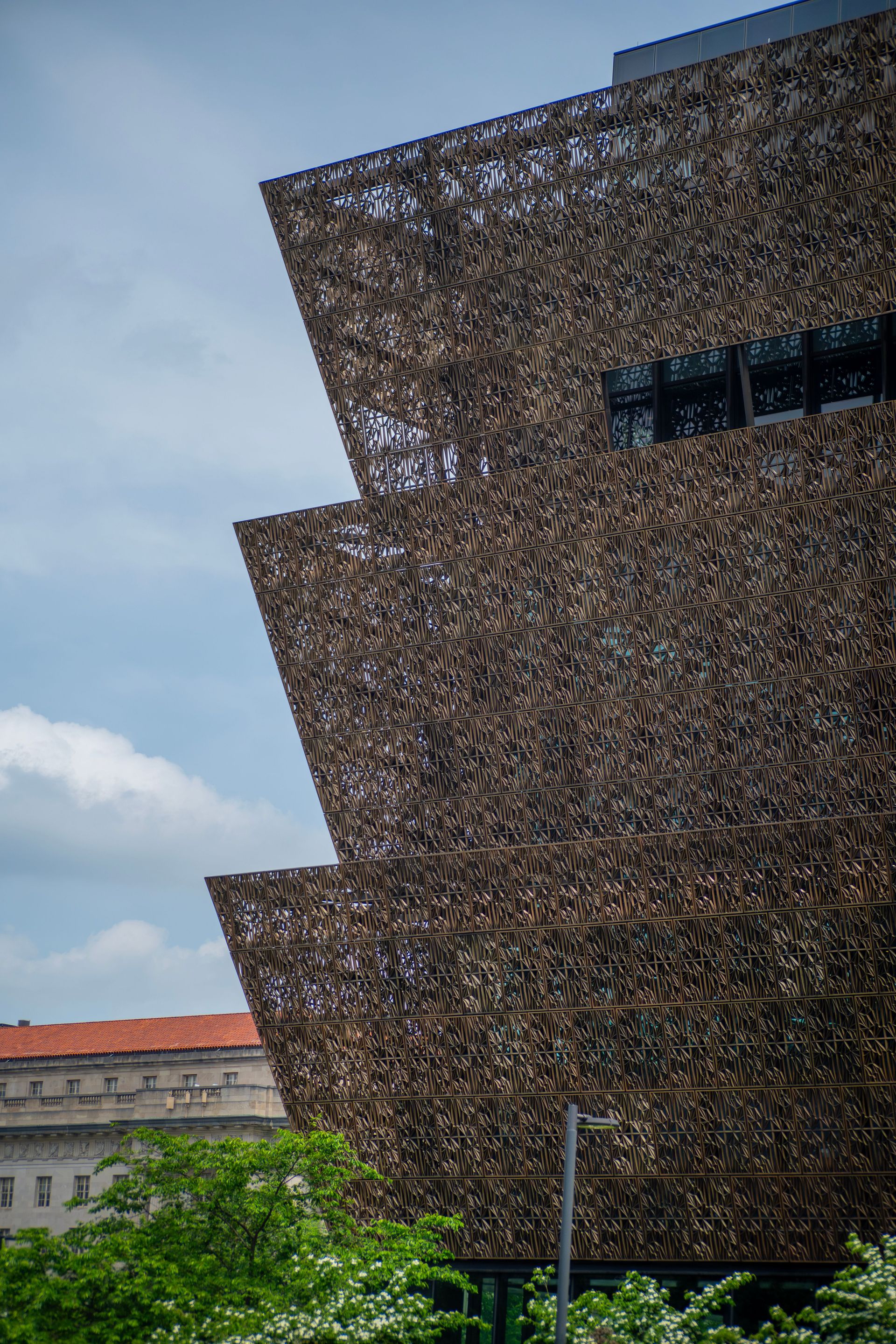
Credit: Ramaz Bluashvili / Pexels
The National Museum of African American History and Culture on the National Mall opened in 2016 after more than a century of advocacy for a dedicated institution. The building, designed by Adjaye Associates in collaboration with Phil Freelon, David Adjaye, and the Freelon Group, draws on the forms of Yoruba art from West Africa and on the wrought iron tradition of the American South in its three-tiered bronze-colored corona. It is the only institution in the United States dedicated exclusively to the history, culture, and contributions of African Americans.
The collection of approximately 40,000 objects is organized across 12 exhibitions on four below-ground levels and five above-ground levels. The below-ground levels cover history chronologically, from the origins of the transatlantic slave trade through slavery, the Civil War, Reconstruction, the Jim Crow era, the civil rights movement, and the present. The above-ground levels cover culture — music, sport, visual art, community life, and the experience of military service.
Among the most significant objects in the collection are a slave cabin from Edisto Island, South Carolina (c. 1853), a guard tower from Louisiana State Penitentiary at Angola, Harriet Tubman's shawl, the casket of Emmett Till (the open casket in which Till's mother displayed his body at his 1955 funeral in Chicago, a decision that was influential in the early civil rights movement), and a range of objects related to Black music and performance history, including Chuck Berry's red Cadillac and costumes from James Brown and Michael Jackson.
Timed entry passes are required and, during peak periods, must be booked weeks in advance. The museum has consistently been among the most in-demand entry reservations in Washington since it opened.
21 / 25
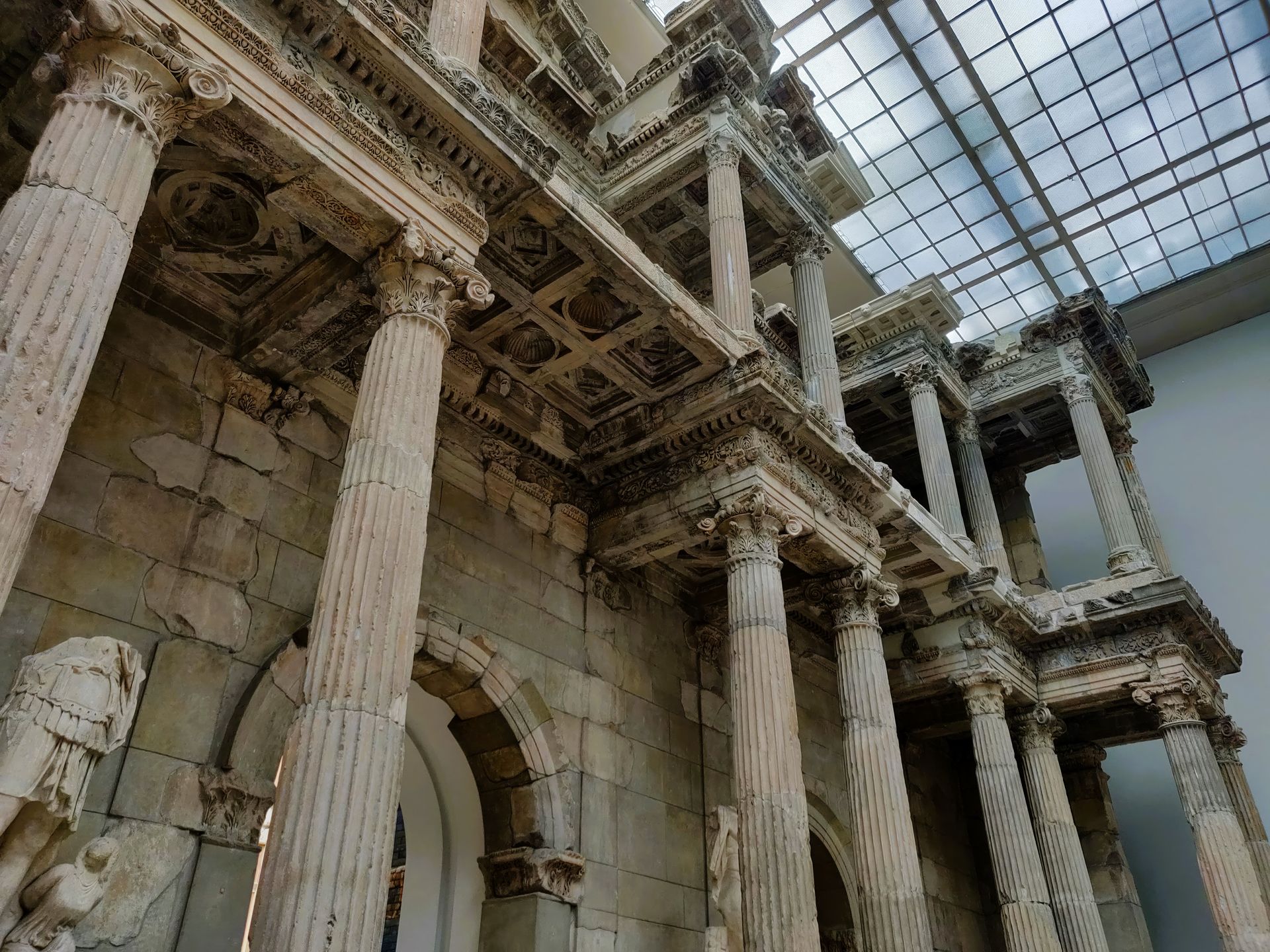
Credit: Manuel Campagnoli / Pexels
The Pergamon Museum on Museum Island in Berlin holds a collection of large-scale reconstructed ancient architectural structures that has no equivalent anywhere. The museum opened in its current form in 1930 and takes its name from its most famous exhibit: the reconstructed Pergamon Altar, a massive Hellenistic altar from the ancient city of Pergamon in modern-day Turkey, dating to the second century BCE. The altar's frieze, carved in high relief and depicting the Gigantomachy — the battle between the Olympian gods and the giants — runs around the exterior of the structure for approximately 113 meters and is considered among the finest examples of Hellenistic sculptural work.
The museum also holds the Ishtar Gate of Babylon, a major ceremonial entrance to the ancient city of Babylon, reconstructed from glazed tiles brought to Berlin in the early 20th century. The gate, built under King Nebuchadnezzar II around 575 BCE, is covered in a deep lapis blue glaze with reliefs of dragons and aurochs in alternating rows. Walking through the reconstructed gate and along the Processional Way that leads to it — its walls lined with relief lions — is one of the more transporting experiences in any European museum.
The Market Gate of Miletus, a Roman gate from the second century CE, is the third major architectural reconstruction in the collection. The gate was destroyed in an earthquake in the Byzantine period; the pieces were excavated and brought to Berlin in the early 20th century.
The Pergamon is undergoing a major renovation — the central hall housing the Pergamon Altar has been closed since 2023 and will remain closed until at least 2027. The Ishtar Gate and Processional Way remain accessible. Visitors planning a trip specifically for the altar should check the museum's current access status in advance.
22 / 25
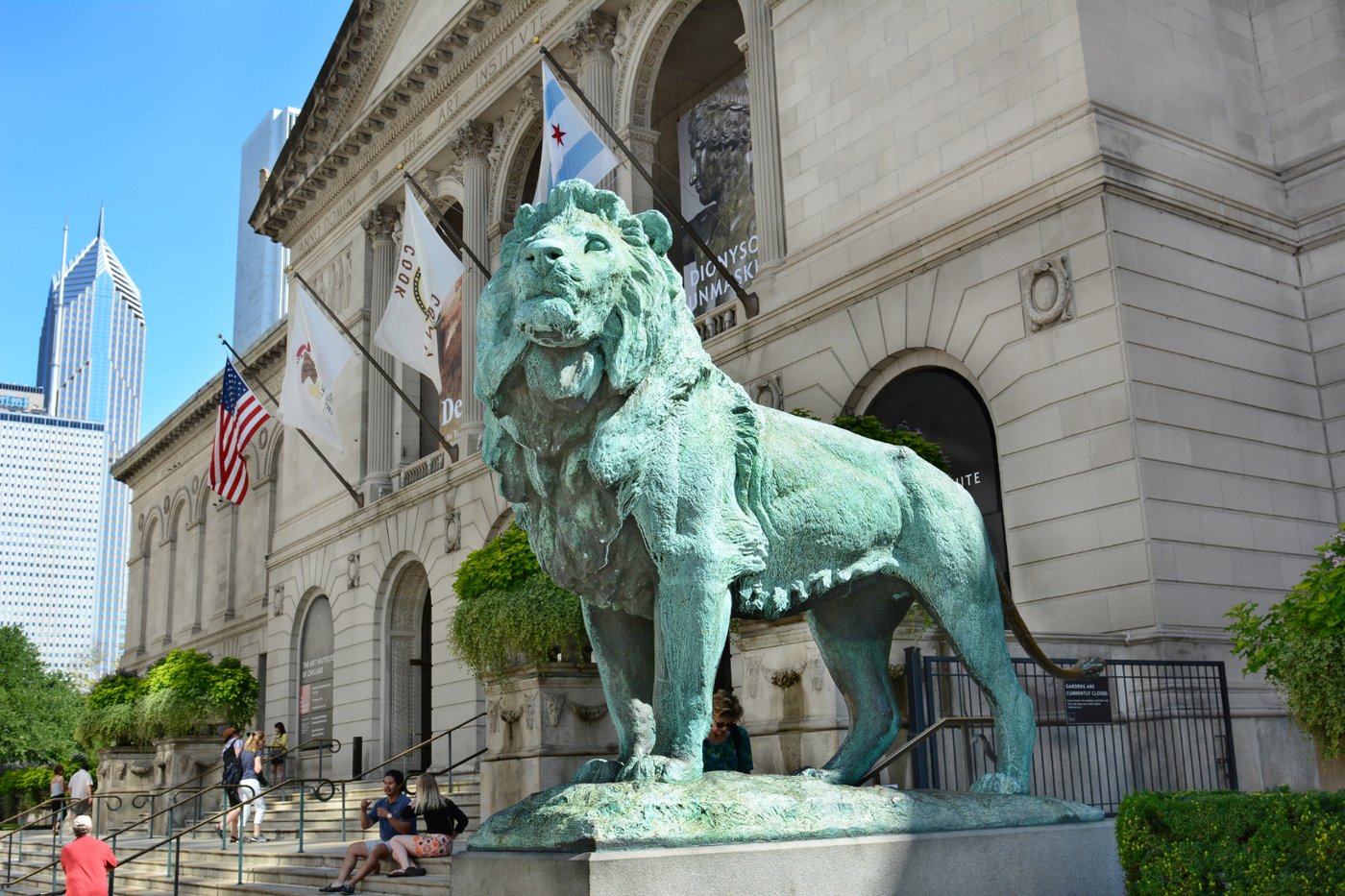
Credit: Canva Images
The Art Institute of Chicago, founded in 1879, holds one of the ten largest art collections in the United States and one of the finest collections of Impressionist and Post-Impressionist painting outside France. The original building, a grand Beaux-Arts structure on Michigan Avenue, was built for the 1893 World's Columbian Exposition and expanded multiple times, most recently with the addition of the Modern Wing by Renzo Piano in 2009, which added approximately 264,000 square feet of gallery space.
Georges Seurat's A Sunday on La Grande Jatte — 1884 is the collection's most famous work. Painted over two years and exhibited at the final Impressionist exhibition in 1886, it is one of the largest canvases of the Impressionist period (approximately 2 meters by 3 meters) and the fullest statement of Seurat's Pointillist method, in which the entire surface is built from small dots of pure color. The painting hangs in its own large gallery that allows for the distance its scale and technique require.
Grant Wood's American Gothic (1930) and Edward Hopper's Nighthawks (1942) are the two most recognizable works in American painting and both are in the collection. Seeing them together in the same institution, alongside the broader collection of American art, provides a context for their particular qualities — the rural severity of Wood's Iowa couple and the urban isolation of Hopper's diner — that reproductions do not convey.
The collection is also strong in medieval and Renaissance European art, Japanese prints, photography, and architectural drawings. The Thorne Miniature Rooms — 68 rooms reproduced in miniature at a scale of one inch to one foot, documenting the history of European and American interior decoration — are a distinctive feature of the museum that attracts consistent attention and is unlike anything in any other collection.
23 / 25
-1920x1440.jpg)
Credit: Leoboudv / Wikimedia Commons (CC BY-SA 3.0)
The Museum of Anthropology at the University of British Columbia in Vancouver holds the most important collection of Northwest Coast Indigenous art in the world, housed in a building designed by Arthur Erickson and opened in 1976. Erickson's building, which draws on the structural forms of traditional Northwest Coast post-and-beam architecture, uses expansive glass walls to bring natural light into the Great Hall, where totem poles and large carved works stand against a backdrop of forest and sea.
The collection covers cultures from the Northwest Coast of North America — including the Haida, Musqueam, Kwakwaka'wakw, Nuu-chah-nulth, Tsimshian, and Coast Salish peoples — alongside holdings from cultures around the world, including South and Southeast Asia, the Pacific, Africa, and the Americas. The museum operates on the traditional territory of the Musqueam people, and the institution's relationship with Indigenous communities in the region is central to its operations and programming.
The Haida artist Bill Reid's large bronze sculpture The Raven and the First Men (1980), which depicts the Haida creation story in which the Raven coaxes the first humans out of a clamshell, is housed in a rotunda designed specifically for it and is considered one of the great works of Northwest Coast art. Reid's work in the museum's collection, including jewelry, goldwork, and smaller sculptures, represents the full range of his practice.
The Multiversity Galleries, opened in 2010, display approximately 10,000 objects from the museum's world cultures collection in open, visible storage, allowing visitors to examine objects that would otherwise be in closed storage. The approach — making the breadth and density of a collection physically apparent — is an alternative to conventional gallery arrangement that several other institutions have since adopted. The museum is a 30-minute bus ride from downtown Vancouver.
24 / 25
Credit: MING / Unsplash
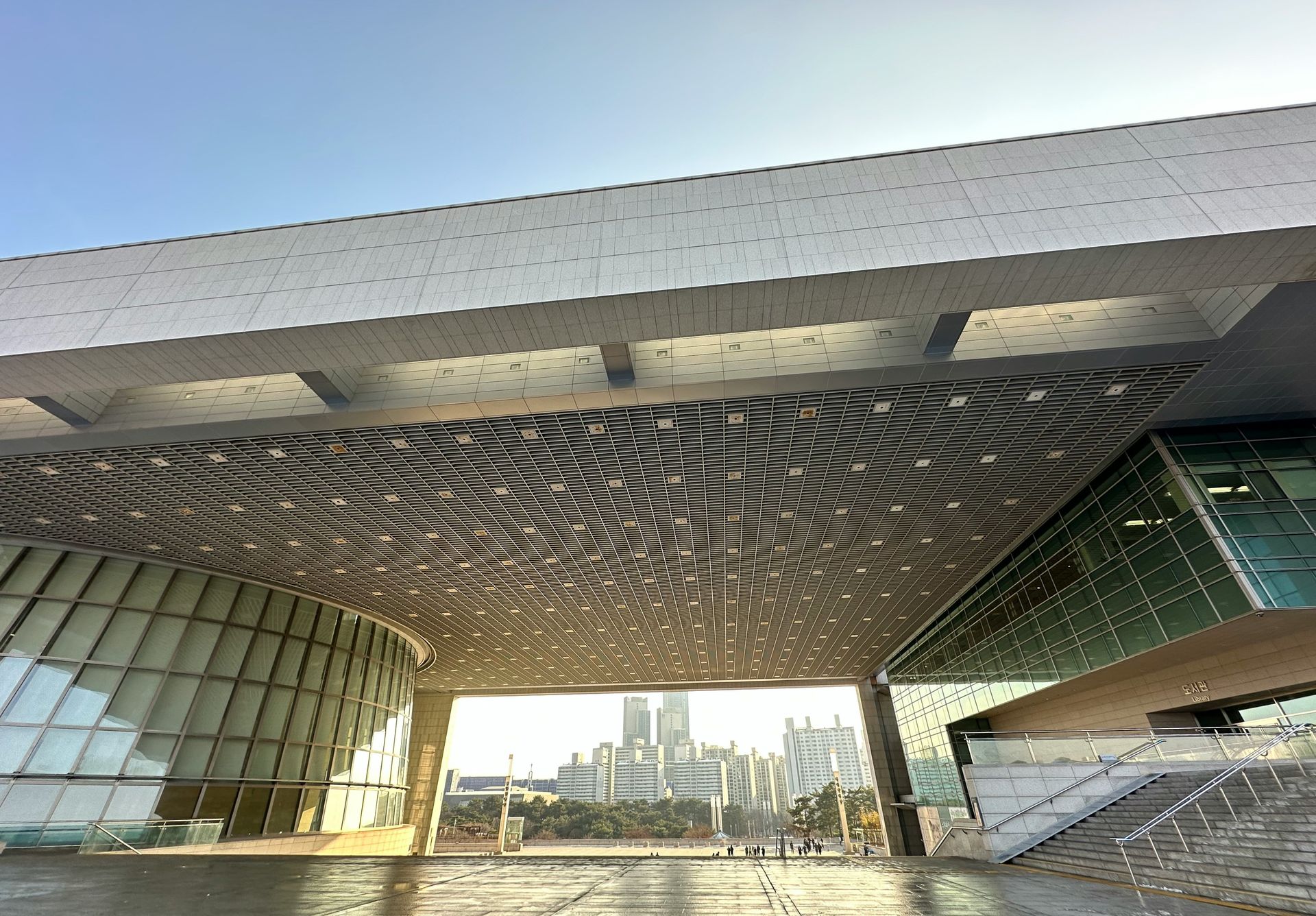
The National Museum of Korea in Yongsan, Seoul, is the largest museum in South Korea and one of the largest in Asia, holding a collection of more than 430,000 objects documenting the history and culture of the Korean peninsula from the Paleolithic period to the modern era. The building, which opened in 2005, is a large, low-lying structure in a parkland setting that deliberately recalls the horizontal lines of traditional Korean architecture. It is surrounded by an outdoor sculpture garden and several outdoor exhibition spaces, and the park setting makes it a destination that works as a half-day cultural visit combined with time outside.
The collection is organized chronologically across three floors, beginning with prehistoric and ancient Korean civilization and moving through the Three Kingdoms period (Goguryeo, Baekje, and Silla, roughly 57 BCE to 668 CE), the Unified Silla period, the Goryeo dynasty, and the Joseon dynasty, which lasted from 1392 to 1897. The Silla Kingdom is particularly well represented; the kingdom's capital at Gyeongju produced extraordinary gold work — crowns, earrings, belts, and vessels — that is among the most refined metalwork produced anywhere in the ancient world.
The Goryeo dynasty celadon ceramics, produced between the 10th and 14th centuries, are among the finest examples of ceramic art in any collection. Goryeo celadon is distinguished by its jade-green glaze — achieved through a precise reduction-firing process — and by the inlaid decoration technique called sanggam, in which designs are carved into the clay and filled with black or white slip before glazing. The museum holds hundreds of pieces, from simple cups and bowls to elaborately decorated wine vessels and incense burners.
The Calligraphy and Painting Gallery holds significant examples of Korean ink painting and court painting from the Joseon period, including genre scenes, landscapes, and portrait paintings. The museum's donation galleries display objects contributed by private collectors and provide a sense of how Korean material culture has been valued and preserved outside institutional collections. Admission is free for the permanent collection. The museum is accessible by subway and is located near several other significant cultural sites in central Seoul.
25 / 25
Credit: Niklas Jeromin / Pexels
The Natural History Museum in South Kensington holds a collection of approximately 80 million specimens across five departments: botany, entomology, mineralogy, paleontology, and zoology. It is one of the largest natural history collections in the world and functions simultaneously as a public museum and an active scientific research institution, with more than 300 scientists on staff carrying out taxonomy, ecology, and conservation research.
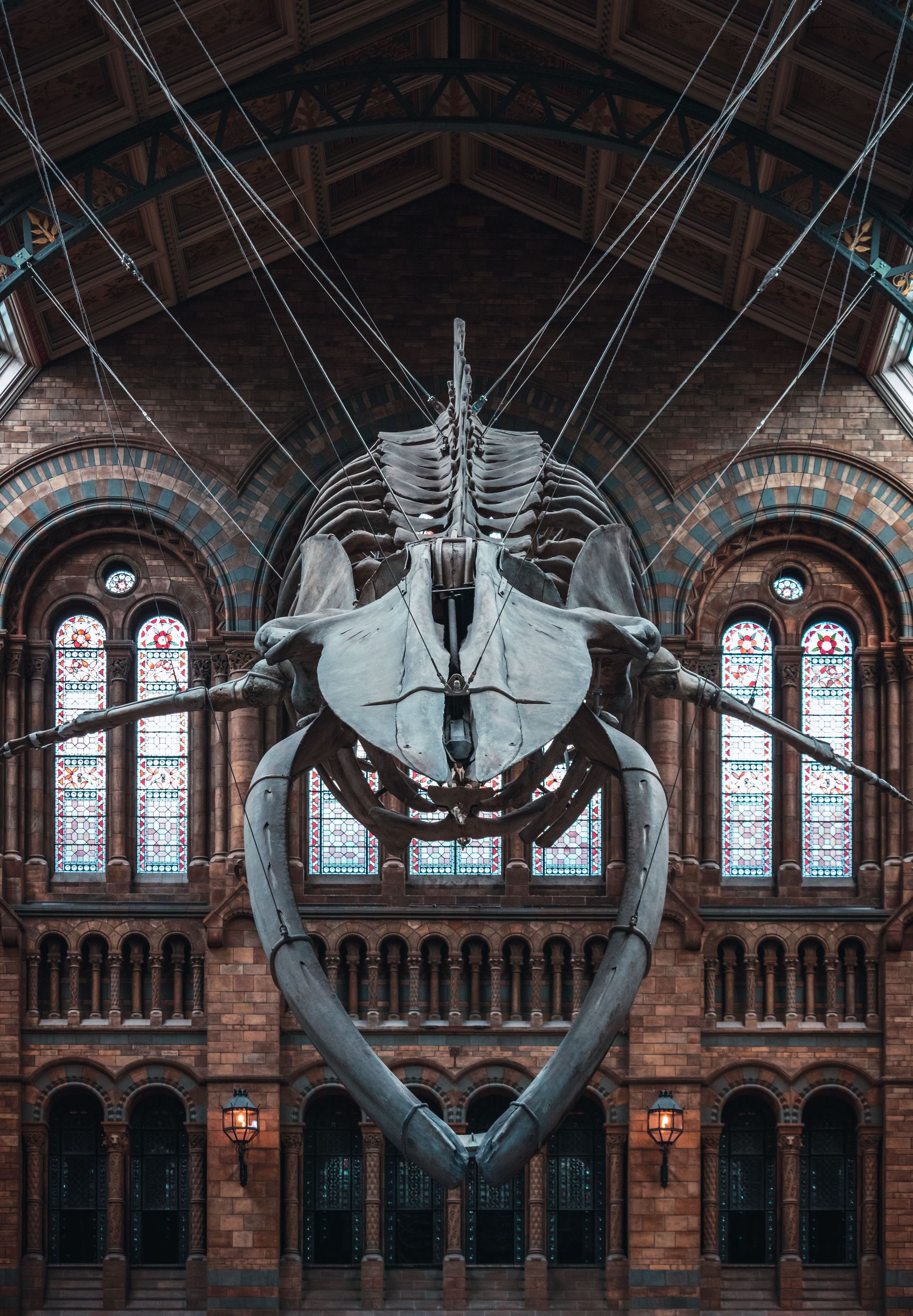
The Central Hall, which greets visitors entering through the main Cromwell Road entrance, is a cathedral-like space in Romanesque style, designed by Alfred Waterhouse and completed in 1881. A cast of a diplodocid dinosaur known as "Dippy" — a Diplodocus carnegii skeleton donated to the museum in 1905 — was the centerpiece of the hall from 1979 until 2017, when it was replaced by a blue whale skeleton, suspended from the ceiling and measuring 25.2 meters in length. The whale, which beached on the Irish coast in 1891, is one of the museum's most photographed objects.
The Dinosaur Gallery holds one of the finest collections of dinosaur fossils in Europe, including a nearly complete Stegosaurus specimen, a large Iguanodon, and a Triceratops skull. The Vault, a high-security gallery that holds the museum's most valuable geological and mineralogical specimens, includes the Aurora Collection — 296 rhodonite specimens, including what are considered some of the finest examples in the world — and the Medusa Emerald, a large Colombian emerald of exceptional clarity.
The Hope Entomological Collection, named after 19th-century entomologist Frederick Hope, holds approximately six million specimens of insects and is one of the largest and most important insect collections in existence. Admission to the permanent galleries is free; temporary exhibitions charge a fee. The museum is closed on December 24–26.
