Sergio Amiti / Getty Images
Filipino dessert culture does not observe the Western convention of reserving sweets for after a meal. The concept of panghimagas — from himagas, the act of washing away a lingering savory taste with something refreshing — describes one occasion for dessert, but it is far from the only one. Sweets arrive at merienda, the mid-afternoon snack hour, whenever the heat of the day calls for something cold, and at any point during a meal when the kitchen decides the timing is right. The Philippines carries a well-documented national sweet tooth, and the country’s desserts reflect it: they are bold in color, layered in texture, and built from a set of ingredients — purple yam, plantain, coconut jelly, carabao milk — that give Filipino sweets a character distinct from any other dessert tradition in Southeast Asia.
The history embedded in these desserts runs deep. Spanish colonialism left its mark in custards made from surplus egg yolks. Japanese migrants introduced a shaved-ice format that Filipino cooks immediately transformed into something more exuberant and local. Chinese culinary influence shaped the spring roll wrapper that encases one of the country’s most beloved street snacks. The result is a dessert canon that records centuries of cultural contact in every ingredient decision, and that Filipino chefs now interpret, reframe, and elevate without losing the essential character that makes each dish recognizable.
The five desserts below come from the Michelin Guide’s selection of must-try Filipino desserts and where to enjoy them in the Philippines, which identified each dish based on its cultural significance, its presence in the country’s culinary tradition, and its representation across Michelin-recognized restaurants. The list spans shaved ice, custard, street ice cream, fried snacks, and a native yam, covering the full range of Filipino dessert culture from casual roadside carts to multi-course Michelin-Star tasting menus.
1 / 5
bugking88 / Getty Images
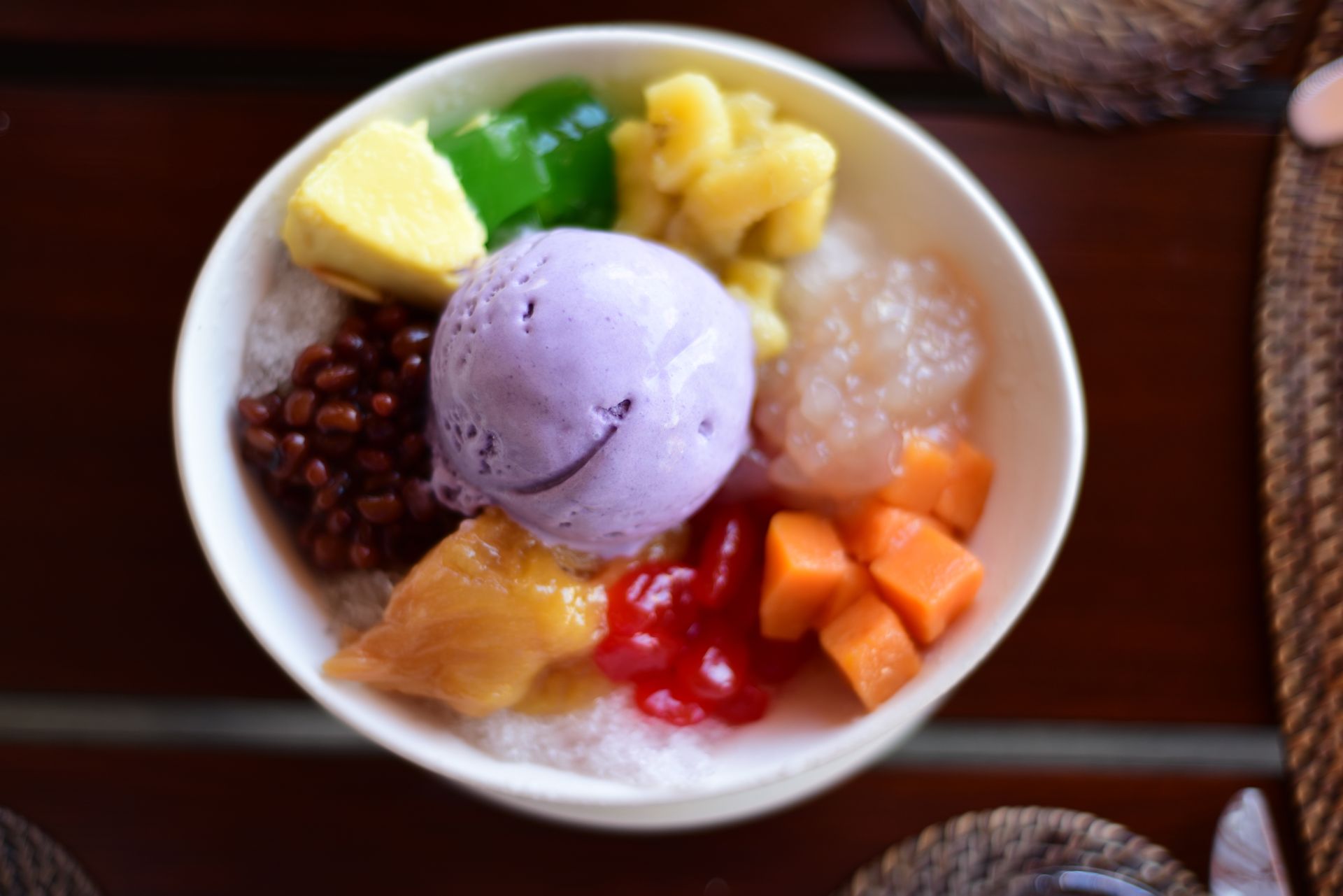
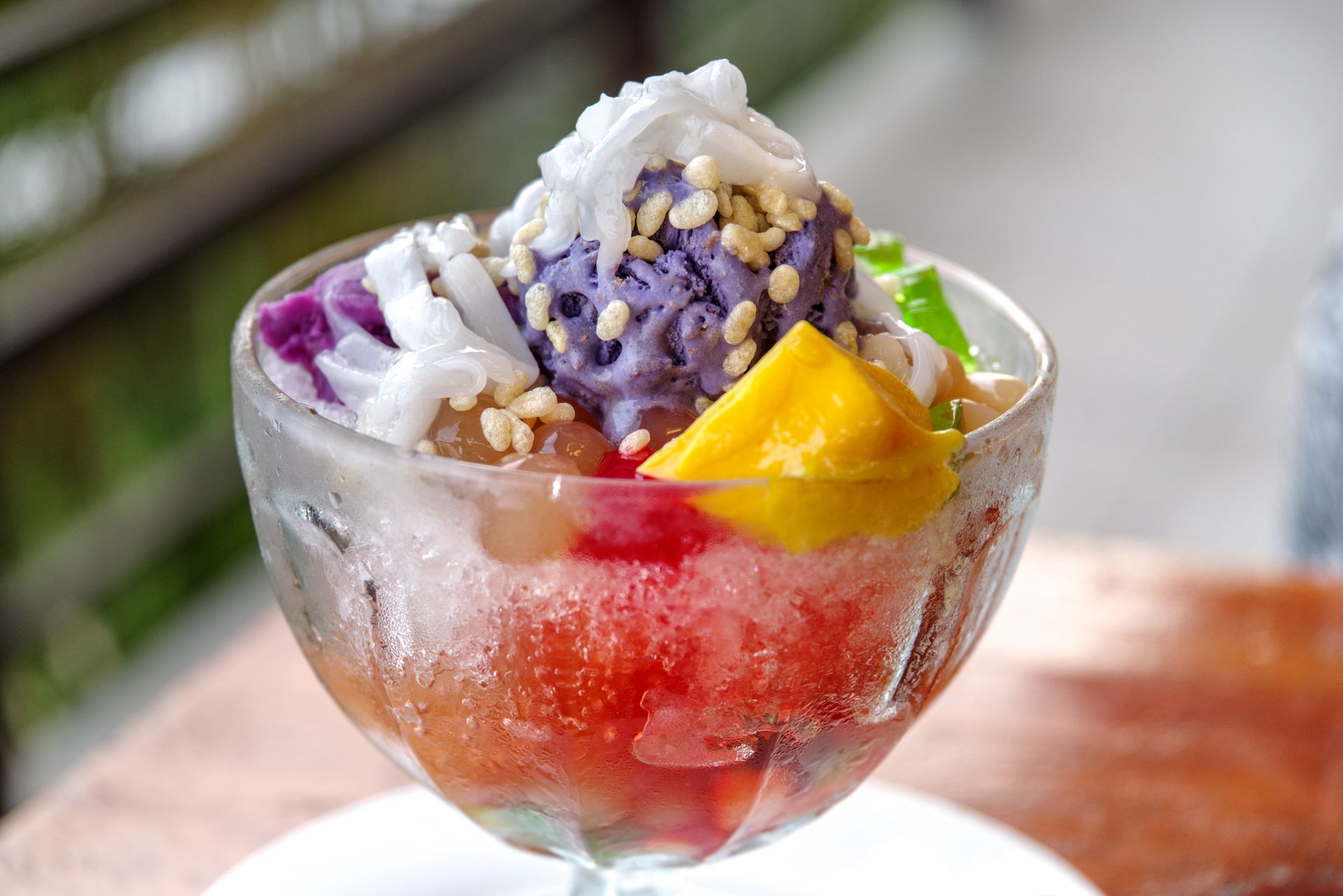
Halo-halo is the most visually dramatic dessert on this list: a tall glass of shaved ice concealing a dense, colorful foundation of local ingredients that the diner mixes together before eating. The name translates in two ways: as the act of mixing repeatedly, and as a description of the joyful assortment of components thrown together. Both translations accurately capture the dessert’s character. The mixing is the method, and the exuberance is the point. The source describes the result as one of the most exuberant desserts anywhere.
The origin story connects halo-halo to the kakigori, the Japanese shaved ice dessert that migrants introduced to the Philippines in the 1920s and 1930s, before the Second World War. The Japanese version placed sweet mung beans and syrup on top of the ice. Filipino cooks inverted the structure, placing local components — saba (plantain), nata (coconut jelly), gulaman (seaweed jelly), coconut strips, and red and green jellies — beneath the ice. The repositioning served a practical function: ingredients below the ice mix more easily with the milk and syrup poured over the top, giving the diner a better-integrated result when the mixing begins.
The base halo-halo recipe extends upward, with optional toppings such as leche flan, ube halaya (Filipino purple yam jam), and scoops of ice cream layered on top of the shaved ice. In Zamboanga, a province in the Southern Philippines, a fruit-forward variant called the knickerbocker adds mango, watermelon, banana, and other seasonal fruits alongside generous scoops of ice cream. Michelin-recognized restaurants, including Hapag, Cabel, and Palm Grill in Diliman, feature the knickerbocker on their menus as a tribute to Southern Philippine tradition. Across the Michelin restaurant network in the Philippines, halo-halo appears at Lampara, Manam at the Triangle, Sarsa, Esmeralda Kitchen, Lantaw in Compostela, and Locavore in Taguig. The breadth of that restaurant list reflects how thoroughly halo-halo has crossed from its street and home-kitchen origins into formal dining contexts without losing the exuberance that defines it.
2 / 5
MDV Edwards / Getty Images
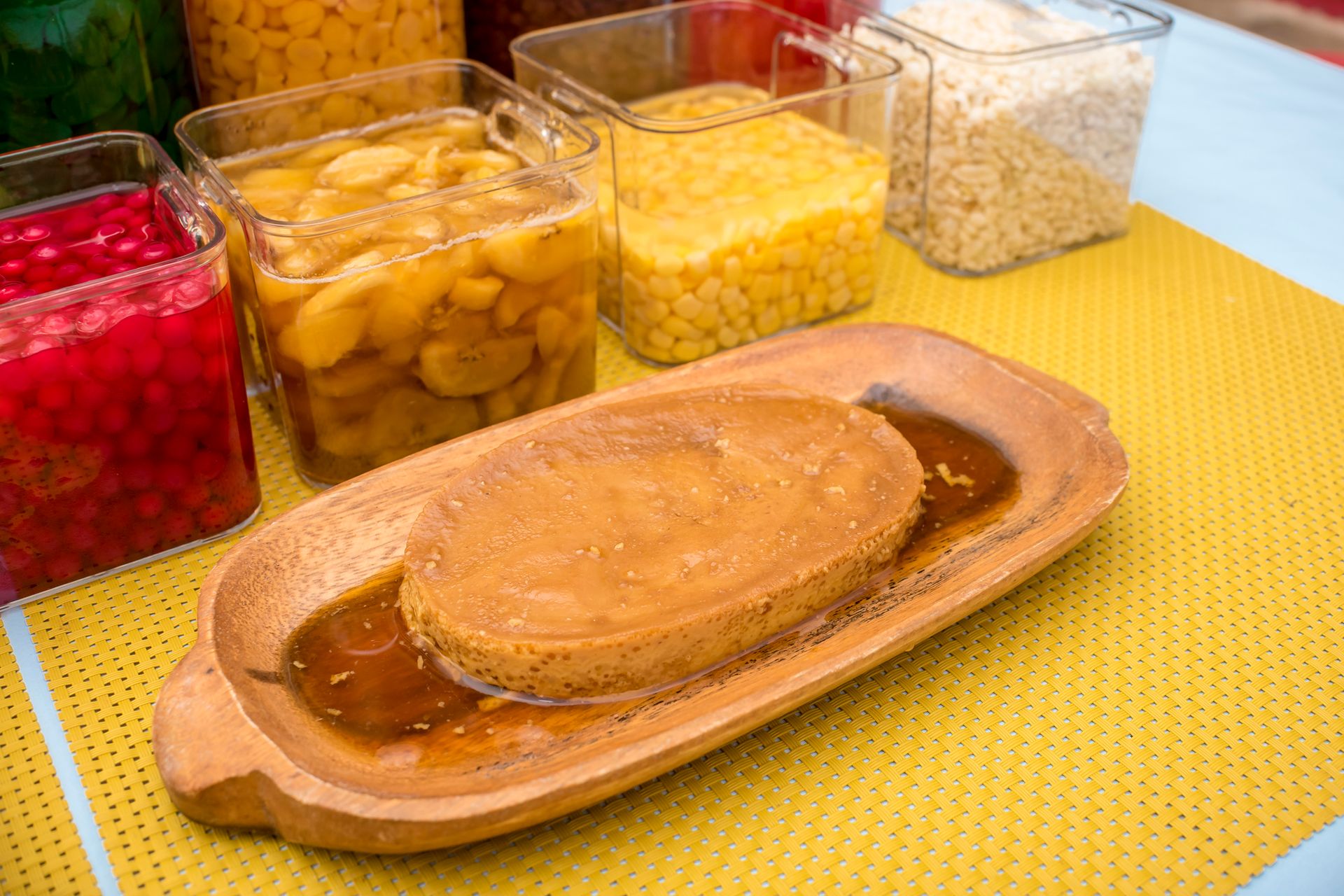
Leche flan’s origin lies in one of the more specific material circumstances in culinary history: the construction of stone churches across the Philippine archipelago during the Spanish colonial period, which began in the 16th century, required egg whites as mortar. The surplus of leftover yolks posed a practical challenge that colonial kitchens solved by combining them with carabao milk to produce a steamed custard in oval tin molds called llaneras. A dessert born of waste-reduction became a fixture at both regal banquets and town fiestas, giving it a social range that stretched across class lines from the moment of its invention.
The silky, firm texture that defines a well-made leche flan comes from the steaming method and the richness of carabao milk, which produces a creamier result than standard dairy. The caramel layer on top, formed when the mold is inverted before serving, gives the custard its visual signature: a glossy amber glaze over pale yellow custard. The sweet caramel and the dense, slightly savory depth of the egg-and-carabao-milk base give leche flan a flavor profile more complex than its ingredient list suggests.
At One-Michelin-Starred Hapag, leche flan arrives mid-course, not at the end of the meal, delivered partway through a 12-course tasting menu celebrating the flavors of Zamboanga, Basilan, and Tawi-Tawi. Small slices arrive on intricate latal platters as a palate cleanser. The custard receives a glaze of dark muscovado and a brightening layer of calamansi and lemongrass granita. The calamansi — Philippine lime — gives the acidic note that cuts through the richness. Beneath the custard lies a pickled onion or scoby, a fermented component that introduces an unexpected savory depth. Leche flan also appears at Inatô, Locavore in Taguig, Manam at the Triangle, and Sarsa. The dessert’s 16th-century origin in colonial construction waste and its continued presence across Michelin-recognized kitchens today trace one of the longest unbroken culinary lineages in Philippine food history.
3 / 5
MDV Edwards / Getty Images
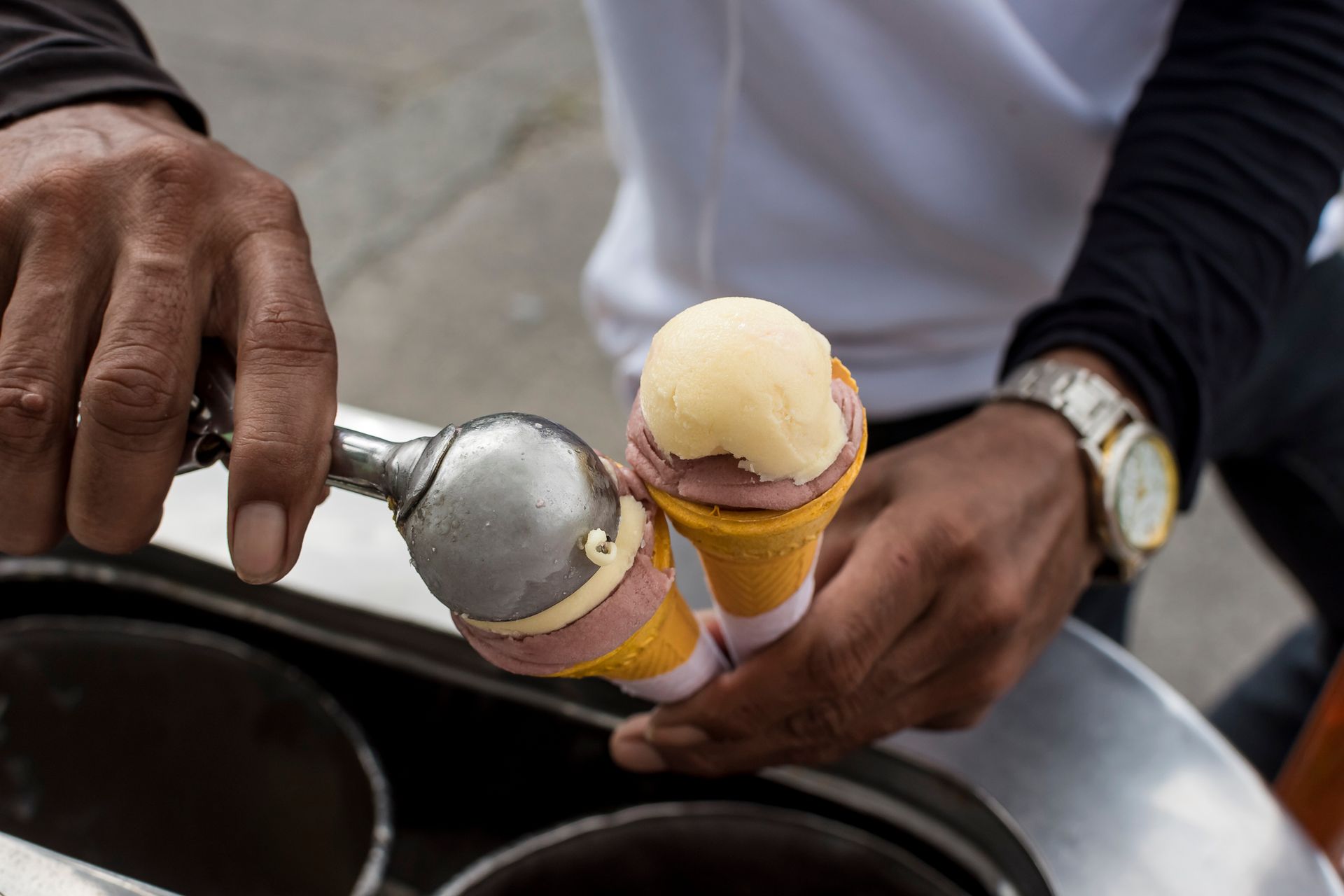
Sorbetes, the Filipino version of ice cream, emerged as a popular treat in the late 19th century as ice became more accessible and the product shifted from a luxury available only to the wealthy into something vendors could sell on city streets. The substitution of carabao milk for dairy milk and the addition of cassava flour as a stabilizer gave sorbetes a slightly grainy texture that distinguished it from the smoother ice cream of higher-end establishments, but the flavor — carried by traditional varieties such as queso, ube, and buko pandan — gave the street version a distinctive local identity.
Sorbeteros sold their product from hand-painted wooden carts housing metal canisters and rang a small bell to signal their presence in the neighborhood, a sound the source identifies as iconic across Philippine communities to this day. The name “dirty ice cream,” which was attached to the product because of its street origin, was a misconception: sorbetes was always made in small batches and was always safe to eat. The source notes that the product appeared at the presidential banquet of Emilio Aguinaldo in 1898, which gives the street treat a direct connection to the founding moment of Philippine national identity.
Contemporary Filipino chefs have absorbed the nostalgia of sorbetes into a range of inventive reinterpretations. Michelin-selected Offbeat developed the Gatas Ice Cream, churned with lemongrass ice and flavored with “milk shards” and polvoron. Polvoron is a crumbly sweet made from toasted flour, sugar, and milk. One-Michelin-Starred Toyo Eatery serves leche flan ice cream with asin tibuok, a salt made from coconut husks, while Kása Palma offers flavors such as salted chestnut, corn madeleine, and purple yam with foie gras. Sorbetes also appears at Inatô, Bolero, Manam at the Triangle, and Locavore in Taguig. The arc from Gen. Emilio Aguinaldo’s presidential banquet in 1898 to foie-gras-flavored ice cream at a contemporary Michelin-recognized kitchen reflects both how far Filipino cuisine has traveled and how consistently sorbetes has remained a reference point throughout that journey.
4 / 5
Joshua Quillo / Getty Images
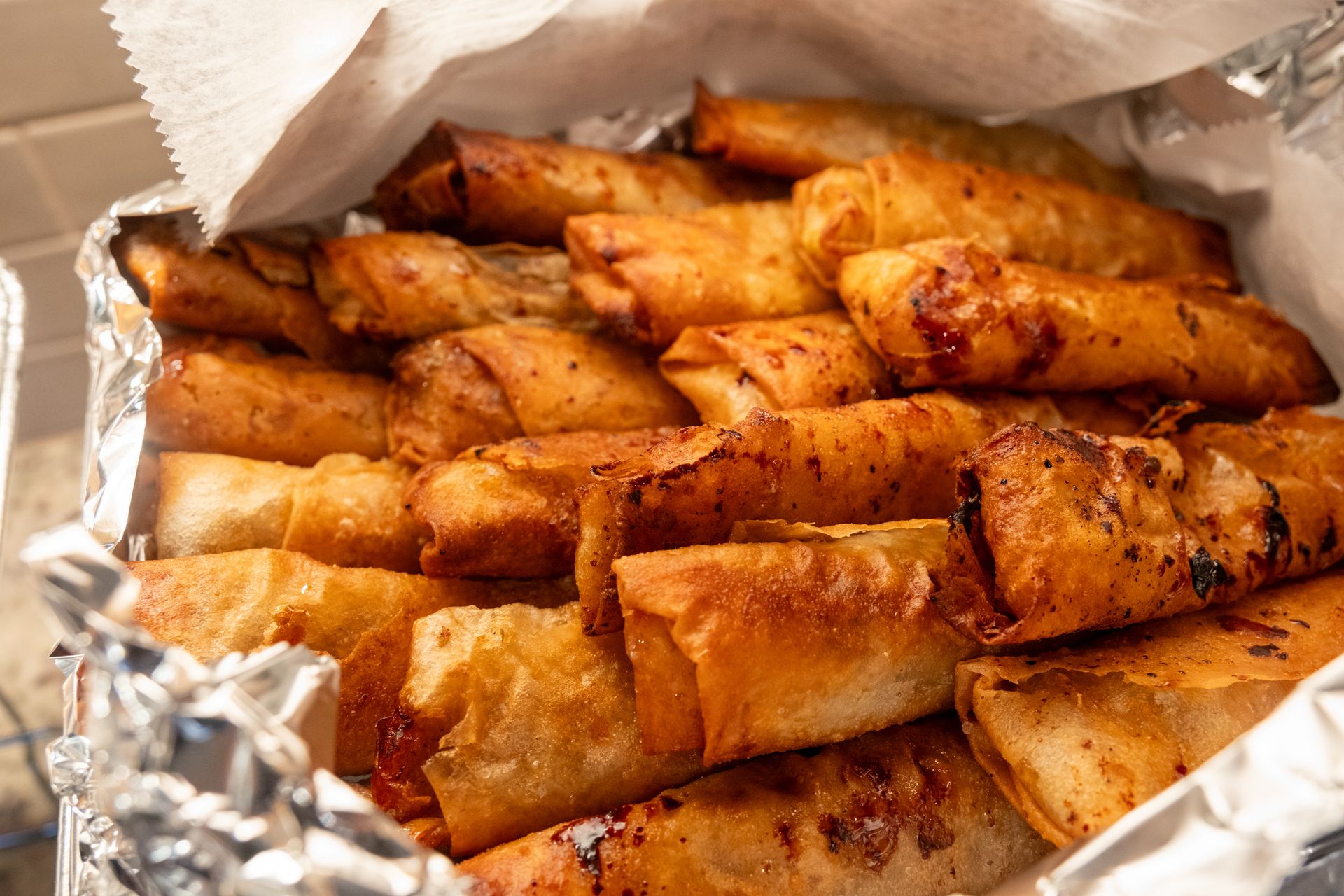
Turon emerged from practical necessity, a response to surplus saba (plantain) harvests that needed to be used before the fruit turned. The solution drew on both Spanish and Chinese culinary influences — the frying tradition and the spring roll wrapper — and produced one of the Philippines’ most enduring street snacks. Ripe bananas, sliced lengthwise and sometimes layered with strips of jackfruit, are wrapped in lumpia paper, coated in brown sugar, and deep-fried until the sugar caramelizes on the exterior, producing the crisp shell and yielding an interior that defines a well-executed turon.
The dessert’s street-market character gives it a social context that connects it to the labor force rather than to restaurant dining. Roadside eateries sell turon as a budget-friendly afternoon snack, affordable enough for workers who want something sweet and satisfying without committing to a full dessert order. The simplicity of the ingredients — plantain, jackfruit, lumpia wrapper, and brown sugar — reflects the Filipino approach to dessert, which maximizes flavor from what the land provides in abundance without requiring expensive imported ingredients.
Restaurants are elevating the turon. Adding vanilla ice cream to turon à la mode is a common restaurant upgrade. At Bib Gourmand-recognized Lasa in Cebu, the Ube Pastillas Turon brings multiple panghimagas together in a single inventive dessert. At Michelin-selected Esmeralda Kitchen, the Ube Sweet Corn Turon Sundae pairs boiled sweet corn with ube halaya in turon form. Turon appears across the Michelin restaurant network at Manam at the Triangle, Sarsa, Locavore in Taguig, and Lore. The turon’s persistence across street carts and Michelin-recognized kitchens alike reflects how thoroughly a dessert born from agricultural surplus has embedded itself in the full range of Filipino food culture. No other dessert on this list illustrates the Filipino principle of creating abundance from scarcity as directly as turon does in every ingredient it contains.
5 / 5
Candice Bell / Getty Images
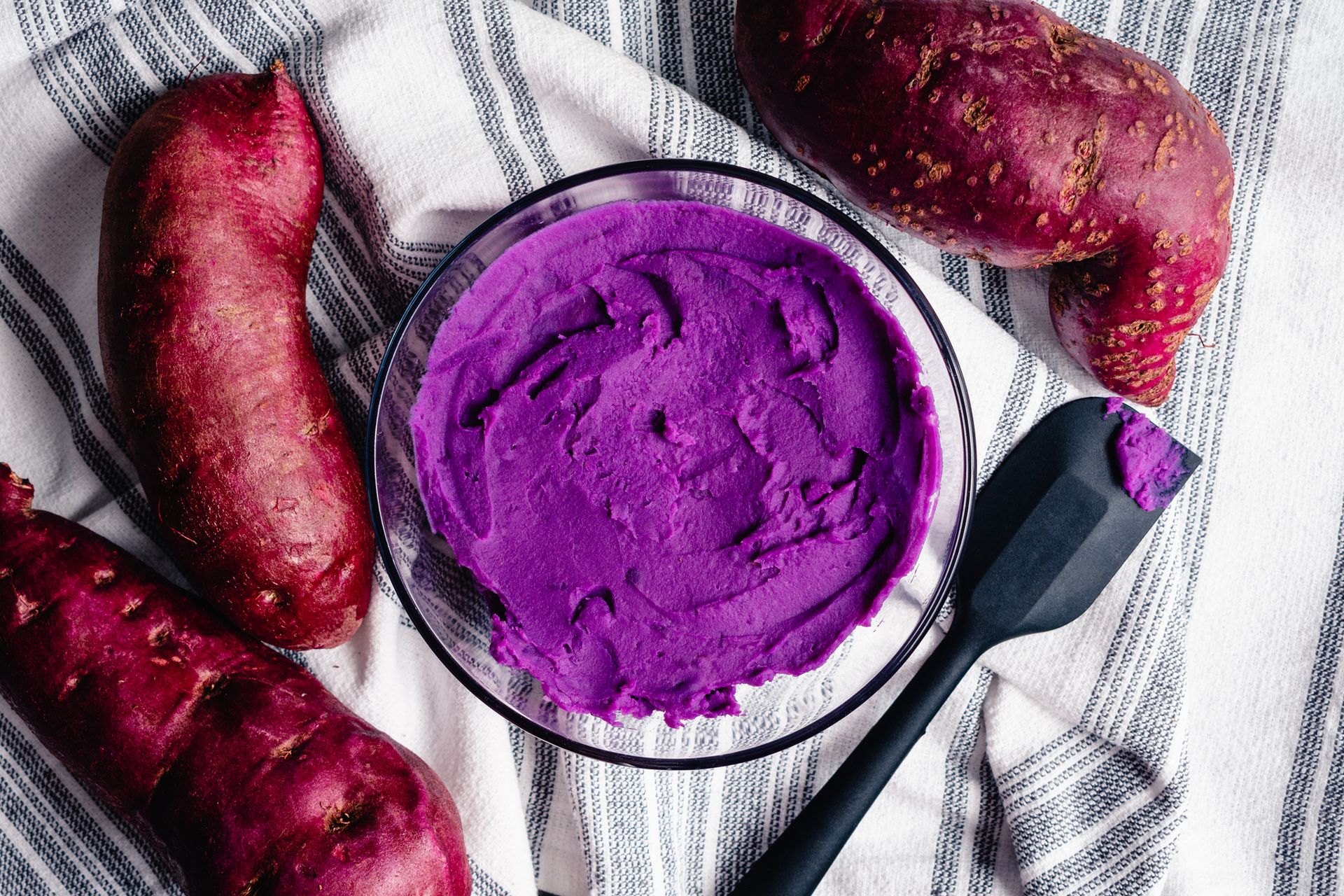
Ube is a sweet purple yam native to the Philippines, celebrated for a flavor the source describes as mildly earthy and creamy — similar to vanilla but with a darker, nuttier finish — and for a deep purple pigment that gives any preparation it enters an immediate and unmistakable visual identity. The tuber’s versatility has made it the most omnipresent ingredient in Filipino dessert culture: it can be boiled and mashed into halaya or jam for eating directly with a spoon, folded into cakes and pastries, baked into bread, churned into ice cream, or rolled into pastillas.
The kinampay variety from Bohol holds a special status in Philippine culinary culture, known as the “Queen of Yams” and prized for its flavor compared to other ube variants. At One-Michelin-Starred Toyo Eatery, ube kinampay appears at the close of a multi-course dinner as an interactive dessert experience. Diners crush balikutsa — muscovado candy — with a mortar and pestle at the table, then add the crushed candy to the ube kinampay, which is slowly stirred over low heat with coconut milk. The interactive format gives the diner a participatory role in preparing the dish, extending the dessert experience beyond passive consumption.
At Kása Palma, ube moves entirely outside the dessert category in a preparation called “Ube in Three Textures,” which appears as a savory course. The purple yam arrives as a silky purée, an airy espuma, and a delicate crisp, layered with sweet halaan clams and finished with Oscietra caviar and clam emulsion. The savory application demonstrates how thoroughly Filipino chefs have expanded the ingredient’s possibilities beyond its traditional role as a sweet component, using ube’s color, earthiness, and textural versatility to build a course that occupies an entirely different register from halaya spooned out of a jar. Ube’s migration from mashed jam to caviar-garnished savory espuma in a single generation of Philippine restaurant culture captures, in one ingredient’s trajectory, the ambition and creative range of contemporary Filipino cooking.
