
U.S. stocks fell sharply on Tuesday, with the Nasdaq $NDAQ Composite dropping 3% and the S&P 500 losing 1.7% as a one-day rebound in chip stocks reversed course and optimism over a possible U.S.-Iran deal gave way to fresh uncertainty.
Major indexes had opened higher on hopes for a U.S.-Iran deal, then reversed as tech stocks wiped out earlier gains
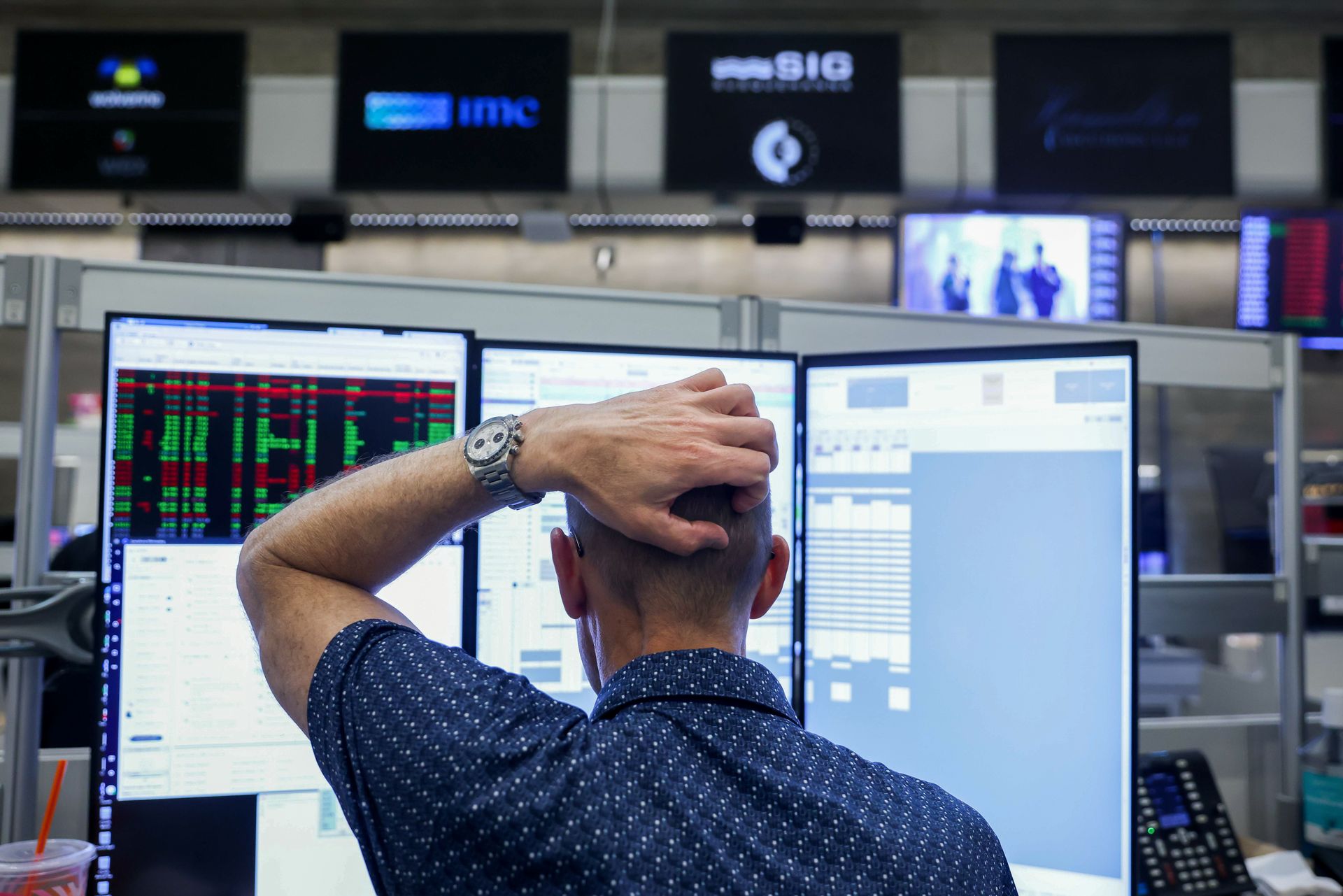
Bloomberg / Getty Images
U.S. stocks fell sharply on Tuesday, with the Nasdaq $NDAQ Composite dropping 3% and the S&P 500 losing 1.7% as a one-day rebound in chip stocks reversed course and optimism over a possible U.S.-Iran deal gave way to fresh uncertainty.
The Dow Jones Industrial Average shed roughly 354 points, or 0.7%. Markets had opened higher and oil prices had retreated Tuesday after President Donald Trump told reporters on Monday that the two sides were "very close to having a good strong powerful deal" that could reopen the Strait of Hormuz. Trump later said Tuesday that the U.S. "must respond" to Iran shooting down a U.S, military aircraft over the contested waterway, contributing to the reversal in stocks.
Chip stocks led the decline. After staging a 6% recovery on Monday, the iShares Semiconductor ETF reversed sharply, falling nearly 7%. The PHLX Semiconductor Index fell 7%. Marvell Technology stock dropped 14%, Micron $MU Technology stock fell about 8%, and Broadcom $AVGO stock lost 5%. Apple $AAPL, Intel $INTC, and AMD $AMD stock each fell 3% or more.
Both stocks had suffered severe losses earlier in the week: Micron's two-day slide last week totaled around 20%, with Friday accounting for a 13% plunge, while Broadcom endured a comparably punishing stretch over the same period.
Late Monday, OpenAI submitted a confidential IPO filing, adding another marquee name to a busy week for markets. Friday's expected stock market arrival of SpaceX — valued at $1.75 trillion and widely seen as a hybrid space-and-AI enterprise — would set a record as the biggest public offering in history.
Tehran's foreign ministry said that Iran had stood down its military campaign against Israel on Monday, though it reserved the right to restart strikes should Israeli operations in Lebanon press on. Netanyahu pushed back on any suggestion the fighting was finished, saying Monday evening that the standoff with Iran and Hezbollah remained unresolved.
Join 500,000+ readers who start their day with Quartz.
By subscribing, you agree to our Terms of Service and Privacy Policy.