
10 things every new dog owner wishes someone had told them
Every new dog owner should know these 10 things about training, health risks, socialization windows, and the real cost of owning a dog

Credit: Susanne Jutzeler, suju-foto / Pexels
A dog does not come with an instruction manual, and most new owners figure out the basics through a stressful first few weeks of trial and error. Some of that trial and error is unavoidable. Every dog is different, and every household adjusts on its own timeline. But a large share of the stress that comes with a new dog is avoidable, because it traces back to a handful of misunderstandings that show up again and again: how long house training actually takes, what a crate is really for, which common foods are dangerous, and why a puppy's early weeks matter more than most new owners realize.
This list covers 10 of those things, drawn from established veterinary and behavioral guidance rather than anecdote. Some are practical, like the schedule for early vaccinations or the real cost of ownership beyond food and a single vet visit. Others are about expectations, like how long it actually takes a rescue dog to feel at home, or why a chewing puppy is not being defiant. None of them require a specific breed, a certain living situation, or a particular kind of dog to apply. They hold whether the dog in question is an eight-week-old puppy or a three-year-old shelter adoption learning a new house for the first time.
The goal is not to turn a new owner into a veterinarian or a professional trainer overnight. It is to close the gap between what a new dog actually needs in its first few months and what a first-time owner tends to assume it needs, so the early mistakes are smaller and the early worries are fewer. Some of this will be familiar to anyone who has owned a dog before. Much of it is the kind of thing longtime owners wish someone had told them plainly before their first dog came home, instead of learning it the hard way.
The 3-3-3 rule for dog adjustment

Credit: Pixabay / Pexels
A dog, especially one adopted from a shelter or rescue, generally needs about three days to decompress, three weeks to learn a household's routine, and three months to feel fully at home. This rough timeline, commonly used by shelters and rescue organizations, sets realistic expectations for how long real adjustment takes.
In the first three days, a dog is often overwhelmed. It may hide, refuse food, sleep more than expected, or seem withdrawn rather than immediately affectionate. This is not a sign that the dog dislikes its new home or that something has gone wrong. It is a normal stress response to a sudden change in environment, smells, sounds, and people. The best response during this window is to keep things calm and predictable: a quiet space, a consistent feeding schedule, and minimal visitors.
By the three-week mark, most dogs start settling into a routine. They begin to learn where the food and water bowls are, when walks happen, and who lives in the house. Behavior during this stage can shift, sometimes in ways that surprise new owners. A dog that seemed shy in week one may become more confident, playful, or even a little pushy as it tests boundaries in its new environment. This is a normal part of a dog figuring out where it stands, not a personality change to worry about.
The three-month mark is when most dogs feel genuinely at home. Trust has built up, routines are established, and the dog's true personality tends to be fully visible by this point. New owners who expect a dog to feel settled within days often misread normal adjustment behavior as a bad fit or a training failure. Patience during this window matters more than any single training technique. A dog that seems anxious or standoffish in its first week is very often a completely different animal three months later, once it has learned that its new home and routine are stable and predictable.
House training takes weeks, not days

Credit: Canva Images
Reliable house training typically takes four to six months for a puppy, and sometimes longer, even with consistent effort. Setbacks and accidents during this period are normal and do not mean training has failed.
Puppies have small bladders and limited physical control over them, which is a physical limitation rather than a training problem. A general guideline used by veterinarians is that a puppy can typically hold its bladder for about one hour for every month of age, up to roughly six months old. That means an eight-week-old puppy may need to go outside every one to two hours during the day, including during the night in the early weeks.
Consistency matters more than any specific method. Taking a puppy outside first thing in the morning, immediately after meals, after naps, after play sessions, and last thing before bed builds a predictable pattern the puppy can learn. Rewarding the dog immediately after it eliminates outside, with a treat or praise, reinforces the connection between going outside and a positive outcome. Punishing accidents indoors, especially after the fact, does not speed up learning and can make a dog afraid to eliminate in front of its owner at all, which sometimes leads to hiding accidents rather than avoiding them.
Adult dogs adopted from a shelter may already be house trained, or they may need to relearn the routine in an unfamiliar home. Either way, the same principles apply: frequent opportunities to go outside, immediate rewards for success, and no punishment for accidents. A consistent schedule, rather than a specific brand of training pad or a particular app, is what actually drives progress. Owners who expect house training to be finished within the first couple of weeks are often blindsided by a normal, ongoing process, when in fact four to six months of consistent routine is a realistic and common timeline even for a dog that is otherwise catching on quickly.
Crate training is not the same as punishment
Credit: Canva Images
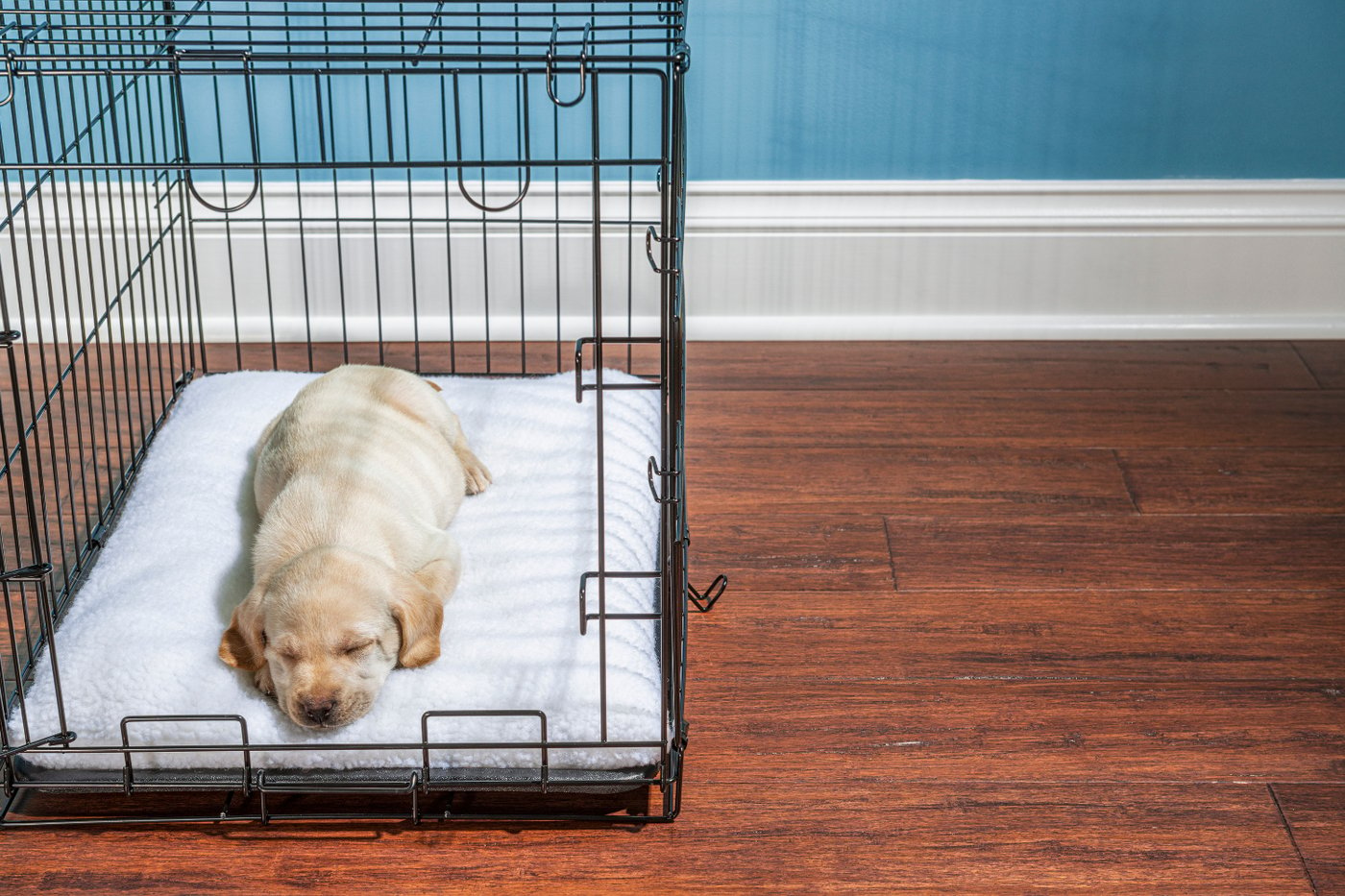
A crate, used correctly, functions as a safe den-like space rather than a cage for confinement or punishment. Dogs are den animals by instinct, and a properly introduced crate often becomes a place a dog chooses to rest in voluntarily, even with the door open.
The key word is "correctly." A crate should never be used as a place to send a dog after misbehavior, because that teaches the dog to associate the crate with punishment rather than safety. Instead, a crate should be introduced gradually, with treats, meals, and short positive periods inside it while the owner is present, building up to longer stretches and eventually time when the owner leaves the house. A crate that is properly sized allows a dog to stand up, turn around, and lie down comfortably, but should not be so large that the dog treats one corner as a bathroom.
Crate training supports house training directly, because most dogs are instinctively reluctant to eliminate in the same small space where they sleep. This makes a crate a practical tool during the early months, particularly overnight or when an owner cannot supervise a puppy directly. It is not meant to be a long-term solution for hours on end during a workday. A general guideline is that an adult dog should not be crated for more than about four to six hours at a stretch during the day, and puppies need far more frequent breaks than that.
Some dogs never need a crate long-term and eventually transition to having free run of a room or the house. Others continue to use a crate as a preferred resting spot well into adulthood, by choice rather than necessity. Either outcome is normal. What matters most is that the crate was introduced as a positive, safe space rather than a consequence, since a dog that fears its crate will resist going inside and may develop anxiety around it that undoes any of its practical benefits.
Puppy vaccinations follow a strict early schedule
-1400x933.png)
Credit: Canva Images
Puppies need a series of core vaccinations, typically starting around six to eight weeks old and continuing every three to four weeks until about 16 weeks old, to be fully protected. Skipping or delaying this schedule leaves a young dog vulnerable during exactly the period when its immune system is weakest.
Puppies are born with some temporary immunity passed from their mother, but that immunity fades gradually and unpredictably over the first several weeks of life. Core vaccines typically protect against distemper, parvovirus, adenovirus, and, depending on location, other diseases common in the area. Because researchers cannot pinpoint exactly when a specific puppy's maternal immunity wears off, vaccines are given in a series rather than as a single shot, so that at least one dose lands after maternal immunity has faded and the puppy's own immune response can take over.
Rabies vaccination timing varies by location, but many places require it once a puppy reaches around 12 to 16 weeks old, with local law dictating the exact requirement. A veterinarian will typically map out the full schedule at a puppy's first visit, and missing an appointment in the series does not mean starting over, but it does mean catching up as soon as possible rather than waiting for the next scheduled milestone.
This window also happens to overlap with the period when many trainers recommend early socialization, which can create tension for new owners who have heard that puppies should avoid public spaces until fully vaccinated. Many veterinarians now recommend a middle path: attending puppy socialization classes in clean, controlled environments and avoiding areas with unknown dogs, like public parks, until the vaccination series is further along. A new owner's veterinarian is the best source for how to balance socialization needs against infection risk for that specific puppy and region, since local disease prevalence varies.
Chocolate, grapes, onions, and xylitol are toxic to dogs

Credit: Kate / Pexels
Several common foods that are harmless to people are dangerous to dogs, including chocolate, grapes and raisins, onions and garlic, and xylitol, an artificial sweetener. Even small amounts of some of these can cause serious illness, and new owners should keep them well out of reach.
Chocolate contains theobromine, a compound dogs metabolize far more slowly than humans do, which allows it to build up to toxic levels. Darker chocolate and baking chocolate contain more theobromine than milk chocolate, making them more dangerous in smaller amounts. Symptoms of chocolate toxicity can include vomiting, diarrhea, rapid heart rate, and in severe cases seizures.
Grapes and raisins can cause acute kidney failure in dogs, and the mechanism is not fully understood, which is part of why there is no known safe amount. Some dogs have eaten grapes with no apparent effect, while others have developed kidney failure from a small quantity, and veterinarians cannot currently predict which dogs are at risk in advance. This unpredictability is why the standard veterinary advice is to avoid grapes and raisins entirely rather than treat them as an occasional treat.
Onions, garlic, leeks, and chives, whether raw, cooked, or powdered, contain compounds that damage a dog's red blood cells and can lead to anemia if consumed in sufficient quantity. This includes foods that contain onion or garlic powder as an ingredient, not just the raw vegetables themselves, which catches some owners off guard when checking labels.
Xylitol, found in some sugar-free gum, candy, peanut butter, and baked goods, causes a rapid release of insulin in dogs, leading to a dangerous drop in blood sugar and, in some cases, liver failure. Even a small piece of gum can be enough to affect a small dog. Any suspected ingestion of these foods warrants an immediate call to a veterinarian or a pet poison control hotline, since prompt treatment significantly improves the outcome.
Chewing is a normal part of teething, not bad behavior
Credit: Hannah Barata / Pexels
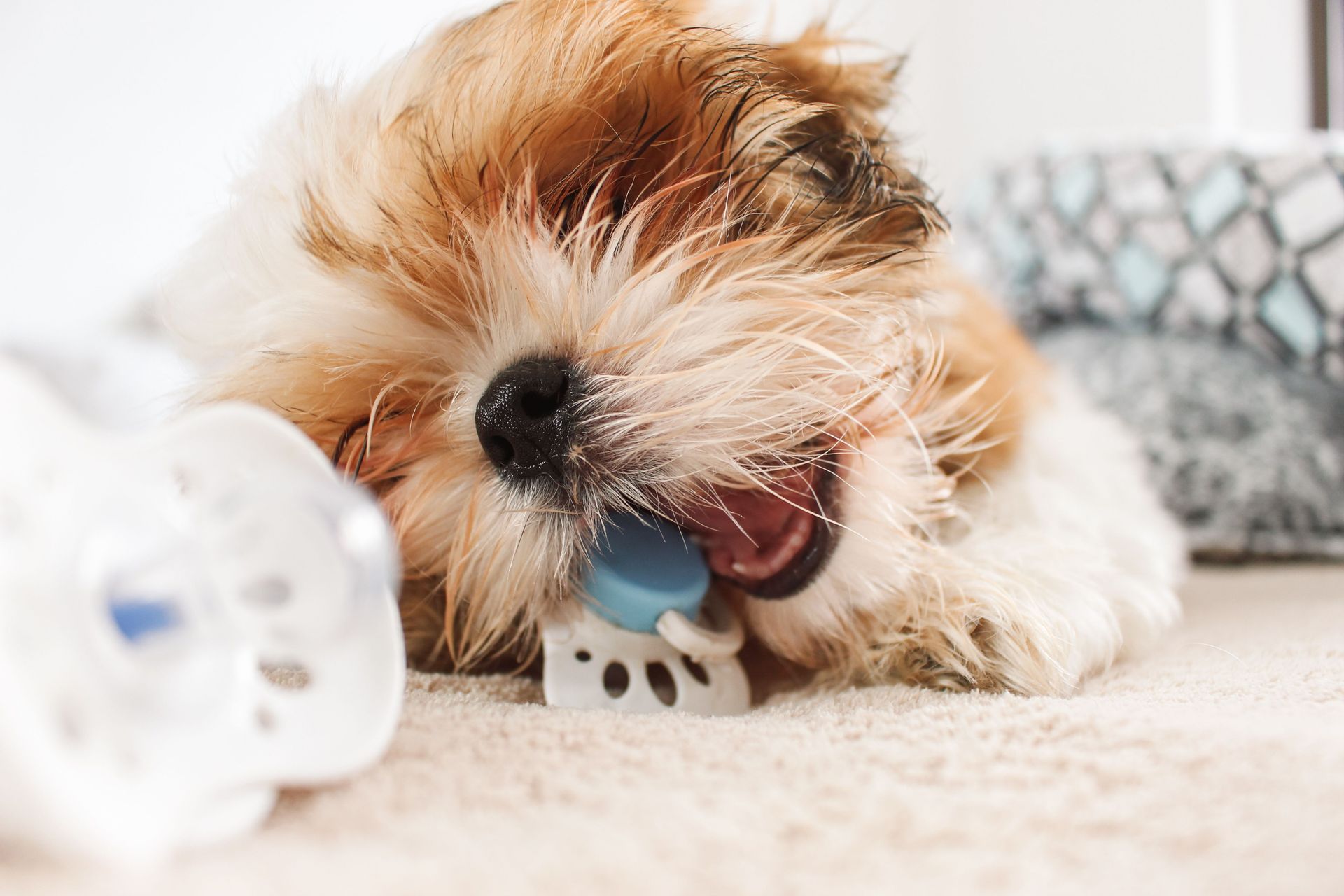
Puppies chew heavily during teething, which generally runs from around three months old, when baby teeth begin falling out, to about six or seven months old, when the adult set of 42 teeth is fully in. Chewing during this period relieves discomfort and is a developmental stage rather than a behavior problem.
Adult teeth typically finish coming in by around six months, though the exact timeline varies by breed and individual dog. During this stretch, a puppy's gums are sore, and chewing on firm objects provides relief in much the same way teething does for a human infant. This is why puppies often target furniture legs, shoes, baseboards, and anything else within reach, rather than because they are being destructive on purpose.
Redirecting this instinct is far more effective than trying to eliminate it, since chewing itself cannot realistically be stopped during this developmental window. Providing a variety of appropriate chew toys, in different textures and firmness levels, gives a puppy an acceptable outlet. Some owners find that toys that can be chilled in a freezer offer extra relief for sore gums. Puppy-proofing a home during this period, by keeping shoes, cords, and small objects out of reach, prevents both destroyed belongings and the more serious risk of a puppy swallowing something harmful.
Chewing does not fully stop once adult teeth arrive. Adult dogs continue to chew for reasons that include boredom, anxiety, and simple enjoyment, and it remains one of the most natural canine behaviors throughout a dog's life. What typically decreases after the teething period is the intensity and indiscriminate nature of it. An adult dog that suddenly starts chewing destructively, after having grown out of the puppy stage, is often signaling stress, boredom, or a lack of adequate exercise, rather than reverting to a puppy phase, and that shift is worth paying attention to as a behavioral cue rather than dismissing as typical chewing.
Puppies have a critical socialization window before about 14 weeks old

Credit: Tahir Xəlfəquliyev / Pexels
Puppies go through a critical socialization period, generally cited as lasting from around three to 14 weeks of age, during which positive exposure to new people, animals, sounds, and environments has an outsized effect on adult temperament. Missing this window does not guarantee behavior problems, but it meaningfully raises the odds of fear or reactivity later on.
This concept traces back to research on canine development, including early studies by researchers John Paul Scott and John Fuller, which identified a sensitive period in puppy development when the brain is especially receptive to new experiences. During this window, positive, low-stress exposure to a range of people, other vaccinated and healthy dogs, everyday sounds like vacuum cleaners or traffic, and different surfaces and environments helps a puppy build resilience and confidence.
The word "positive" matters as much as the word "exposure." Flooding a puppy with overwhelming or frightening experiences during this period can backfire, creating fear rather than confidence. The goal is calm, manageable introductions, not maximum exposure as fast as possible. A puppy that is clearly frightened during a socialization attempt should be given space and a slower reintroduction, rather than being forced to stay in an uncomfortable situation.
Dogs adopted as adults did not have a new owner present during this window, and any gaps in their early socialization cannot be fully undone later, though a great deal of progress is still possible with patience and, in some cases, help from a professional trainer. This is one reason adult rescue dogs sometimes show fear or wariness around specific triggers, like men in hats or loud trucks, that trace back to missing or negative experiences during puppyhood that occurred long before the current owner was involved. Understanding this can help new owners respond with patience rather than frustration when an adopted dog reacts strongly to something that seems ordinary.
Separation anxiety is common and largely preventable
Credit: K / Pexels
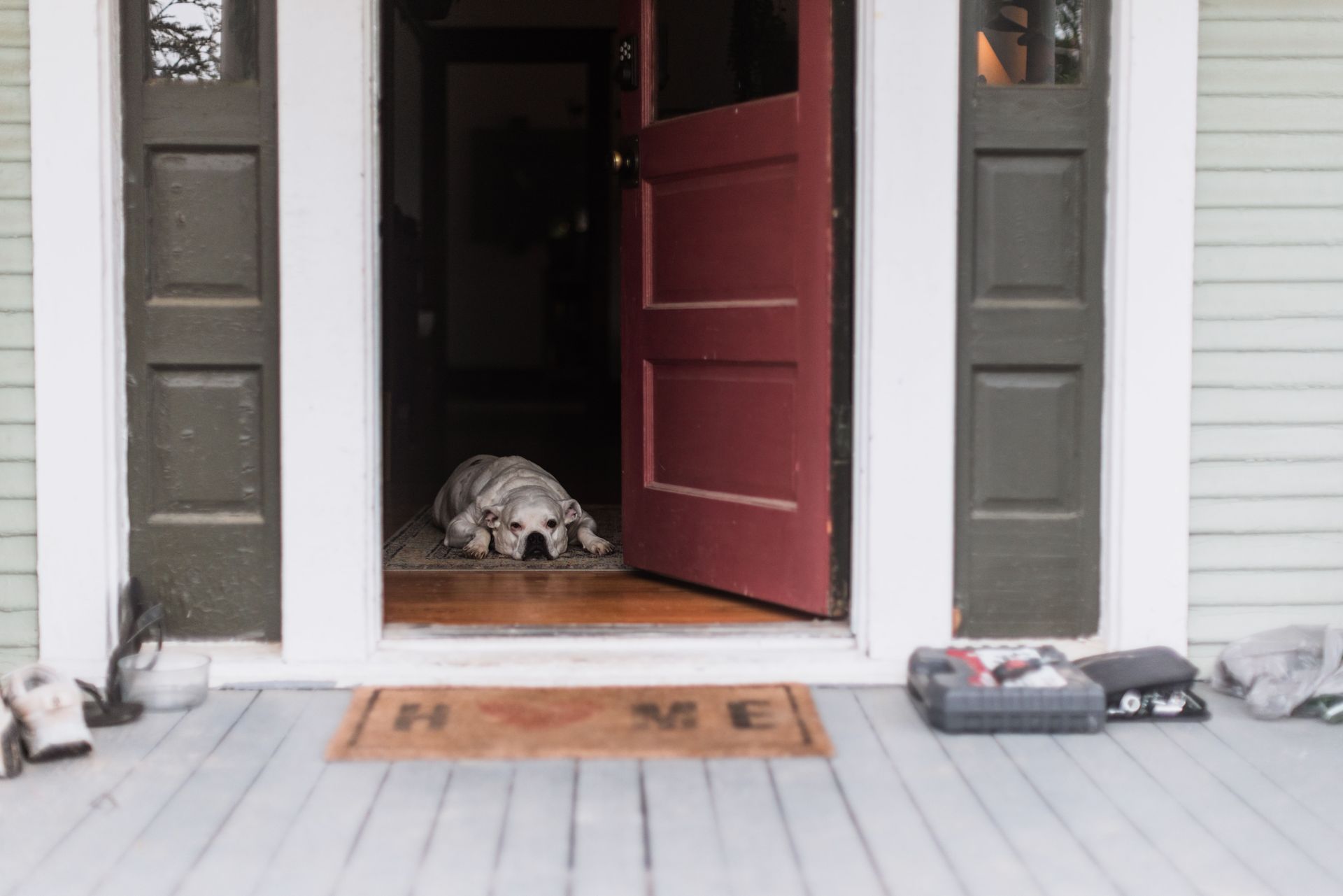
Separation anxiety, in which a dog becomes distressed when left alone, is one of the most common behavior issues new owners encounter, and it is largely preventable with gradual training from the start. Signs include excessive barking or howling, destructive chewing near doors and windows, and accidents from a dog that is otherwise house trained.
The behavior tends to develop when a dog has little or no practice being alone, which has become more common as many people brought puppies home during periods of remote work and then returned to an office. A dog that has never experienced short, calm absences can find a sudden long absence overwhelming, and the resulting anxiety is a real physiological stress response, not defiance or spite.
Prevention works best when it starts early and gradually. Leaving a dog alone for very short periods, starting with a few minutes, and gradually extending the time as the dog stays calm, teaches the dog that an owner's departure is temporary and unremarkable. Keeping departures and returns low-key, rather than long, emotional goodbyes and greetings, helps prevent a dog from associating an owner's absence with a major event worth being anxious about.
For a dog that already shows signs of separation anxiety, gradual desensitization, sometimes with guidance from a professional trainer or veterinary behaviorist, is generally more effective than punishment, which tends to worsen anxiety rather than resolve it. A consistent routine, adequate exercise before a long absence, and a safe, comfortable space to wait in all help. In more severe cases, a veterinarian may discuss anti-anxiety medication as a short-term aid alongside behavioral training, rather than as a standalone fix. Catching early signs, like mild whining during short departures, and addressing them before they escalate is far easier than reversing an established pattern of severe anxiety later.
Exercise needs vary enormously by breed and age
Credit: Skyler Ewing / Pexels
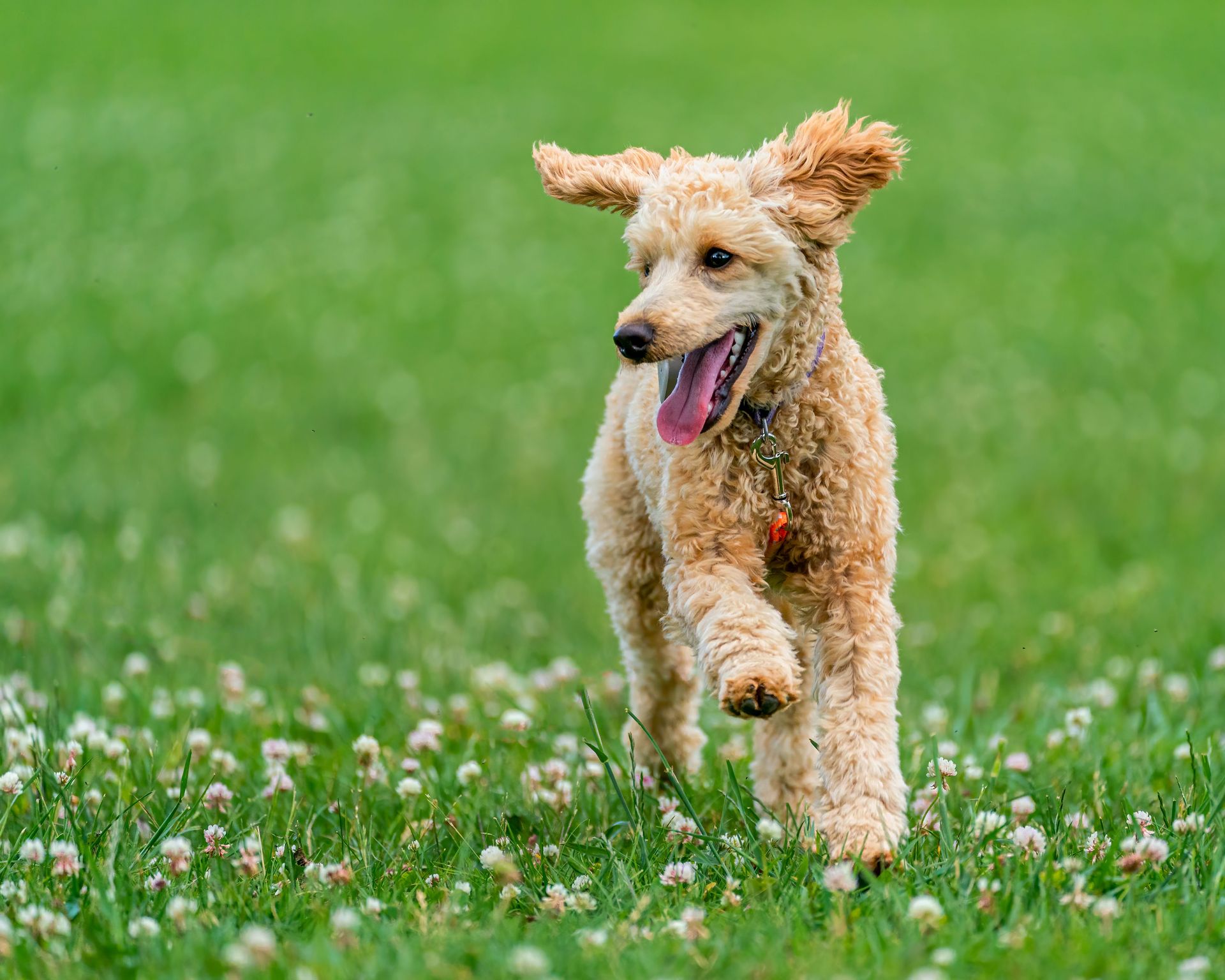
A dog's exercise requirements depend heavily on breed, age, and individual energy level, ranging from short daily walks for some toy breeds to well over an hour of vigorous activity for working and sporting breeds. Matching activity to a specific dog's needs matters more than following a single general rule.
High-energy working and herding breeds, including border collies, Australian shepherds, and many retrievers, were bred for jobs that involve sustained physical and mental activity throughout the day. Dogs from these breeds that only receive a short walk often develop destructive or anxious behaviors, not because something is wrong with them, but because their physical and mental needs are not being met. For these breeds, structured activities like fetch, agility, or scent work can be as valuable as pure distance walked.
At the other end of the spectrum, brachycephalic breeds, including bulldogs, pugs, and some smaller breeds with short snouts, have physical limitations that make intense exercise, especially in heat, potentially dangerous. Their airway structure makes it harder for them to cool themselves through panting, so shorter, gentler sessions, timed to avoid hot weather, are more appropriate than long or vigorous outings.
Age changes exercise needs considerably as well. Puppies have bursts of energy followed by long naps, and too much structured exercise, particularly high-impact activity, before their growth plates close can affect joint development in some breeds, especially larger ones. Veterinarians often recommend keeping formal exercise sessions short and play-based for growing puppies rather than long runs. Senior dogs typically need gentler, shorter sessions than they did as adults, and new owners of an older rescue dog should watch for signs of fatigue or stiffness rather than assuming a lower energy level means low activity is appropriate. Consulting a veterinarian about a specific dog's ideal activity level accounts for breed, age, and any health conditions that a generic guideline cannot capture.
Dog ownership costs more than food and one vet visit

Credit: Canva Images
The ongoing cost of owning a dog extends well beyond food and occasional vet visits to include routine preventive care, grooming, training, pet-sitting or boarding, and the possibility of unplanned emergency treatment. New owners who budget only for the visible, recurring costs are often surprised by the larger, less frequent ones.
Routine veterinary care includes annual or twice-yearly checkups, core vaccinations, and preventive medication against parasites like fleas, ticks, and heartworm, which is an ongoing monthly cost in most climates rather than a one-time expense. Dental care, including professional cleanings under anesthesia as a dog ages, is another recurring cost that new owners frequently underestimate, since dental disease is common in dogs and can affect overall health if left untreated.
Emergency and unexpected veterinary costs are the least predictable and often the largest. A single visit for a swallowed object, a serious illness, or an injury can be a significant expense, and pet insurance exists specifically to offset this risk, with premiums that vary based on a dog's breed, age, and location, and policies that vary in what conditions and treatments they cover. Reviewing a policy's exclusions and waiting periods before an emergency happens matters more than comparing premiums alone.
Beyond veterinary costs, grooming needs vary by breed, with some longer-haired or curly-coated breeds needing professional grooming every few weeks, while short-haired breeds need very little. Training classes, whether basic obedience or help with a specific behavior issue, are a cost some new owners do not anticipate at all. Boarding or a pet sitter for travel, a crate and other starting supplies, and eventually replacing worn-out toys and gear all add up over a dog's lifetime. None of these costs need to be dealt with all at once, but understanding the fuller picture before bringing a dog home helps a new owner budget realistically rather than being caught off guard a few months in.