
New York's law requiring advertisers to disclose when they use AI-generated people in place of real actors took effect Tuesday, making it the first such statute in the country.
The first-in-the-nation law, signed in December, carries fines of up to $5,000 for ads that fail to flag AI-generated people
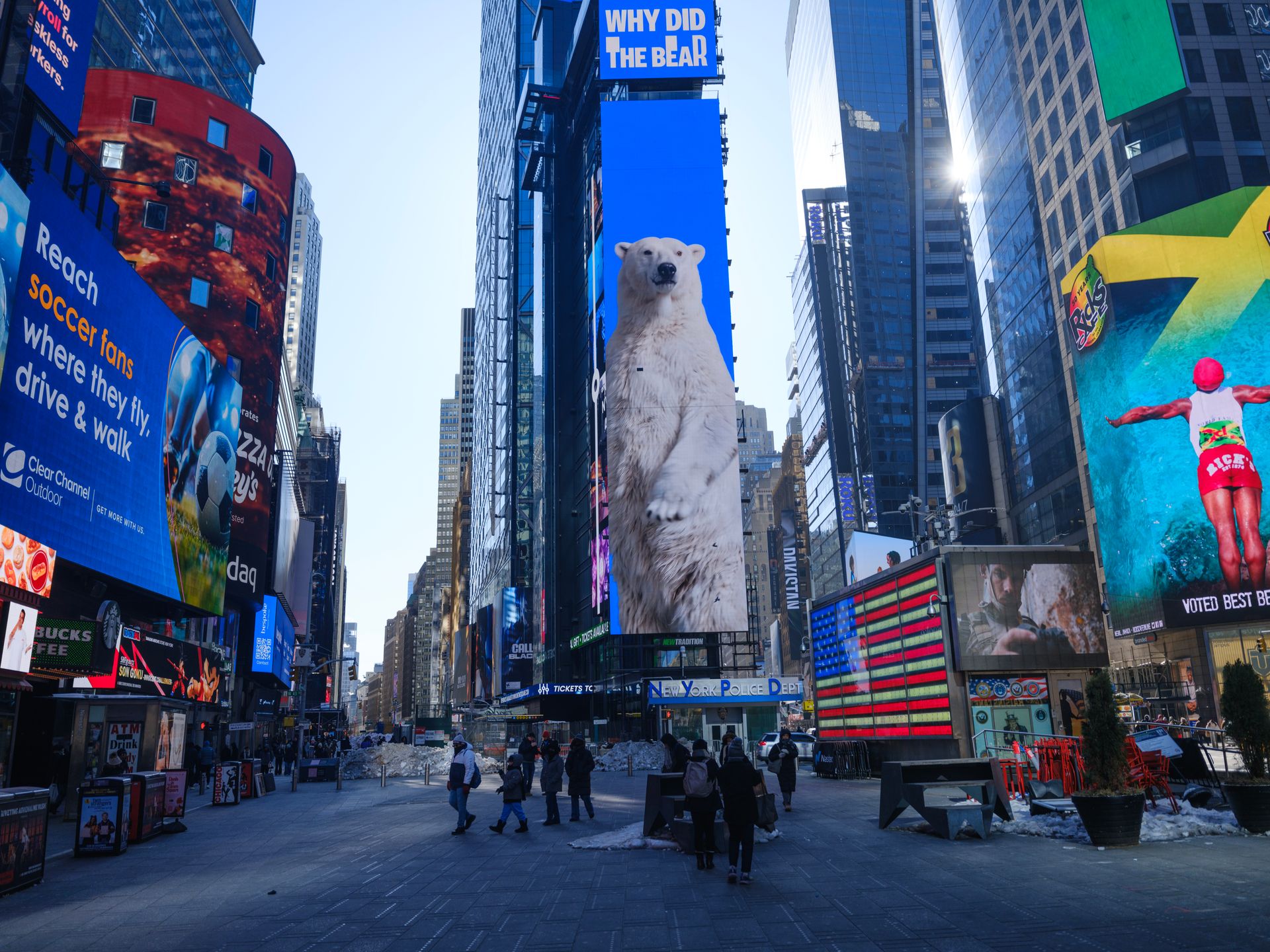
Andrew Lichtenstein / Getty Images
New York's law requiring advertisers to disclose when they use AI-generated people in place of real actors took effect Tuesday, making it the first such statute in the country.
Governor Kathy Hochul signed the measure in December. Under the statute, the term "synthetic performers" covers digitally created media that resembles a real person, with the disclosure requirement extending to advertising in every format and channel. Penalties under the law start at $1,000 for an initial offense and climb to $5,000 for any repeat violations where a synthetic performer goes undisclosed, according to the Associated Press.
"In New York, we are setting the rules of the road instead of letting AI run the show," Governor Hochul said in a statement. "Requiring simple, honest disclosure when an ad uses synthetic performers protects consumers, respects our creative workforce and keeps New York at the forefront of responsible innovation."
The law includes several carve-outs. Among the exemptions: promotional materials for films, TV series, streaming titles, and video games in which synthetic performers are woven throughout the whole production are excluded, as are audio-only spots and any ad where artificial intelligence is deployed strictly to translate spoken or written language.
SAG-AFTRA was the law's most prominent backer. The actors' union's Chief Labor Policy Officer and New York Local Executive Director Rebecca Damon said in a statement that the law "protects consumers and workers from the risks posed by rapidly developing AI technologies" and "mitigates performance replacement" and "prevents consumer deception."
Not everyone welcomed the measure. The American Association of Advertising Agencies and other industry groups opposed the bill as it moved through the legislature, arguing it would create compliance uncertainty and burden brands and their agencies. The New York State Broadcasters Association, while welcoming the exemptions that legislators added during the amendment process, has not fully dropped its objections, citing the statute's expansive definition of what qualifies as a synthetic performer. The organization's president, David Donovan, told the Associated Press that local broadcast stations are ready to comply.
New York's law comes at a time when states and the federal government disagree on how to regulate AI. Soon after Governor Hochul signed the bill in December, President Donald Trump issued an executive order against state-level AI rules. He was concerned that different rules in each state could hurt the U.S. AI industry and weaken the country's lead over China.
Join 500,000+ readers who start their day with Quartz.
By subscribing, you agree to our Terms of Service and Privacy Policy.