
Business customers will now be able to lock in sustained access to computing resources through a new initiative OpenAI unveiled Tuesday called Guaranteed Capacity, designed to support AI products, agents, and workflows over extended periods.
The new program lets customers lock in compute access for up to three years, with discounts tied to the length of commitment
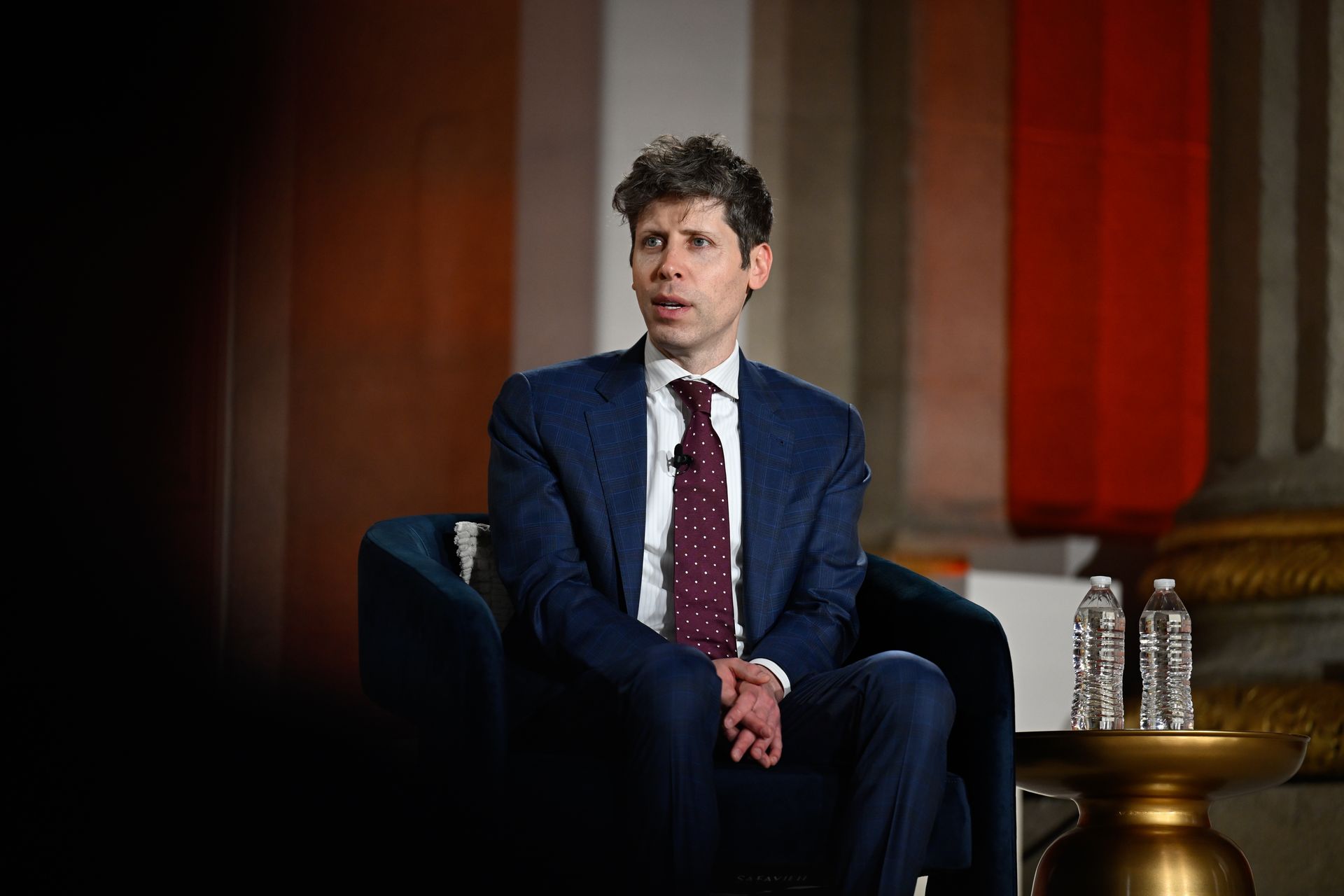
Bloomberg / Getty Images
Business customers will now be able to lock in sustained access to computing resources through a new initiative OpenAI unveiled Tuesday called Guaranteed Capacity, designed to support AI products, agents, and workflows over extended periods.
The program is structured around annual tiers — one, two, or three years — and pricing is designed so that longer commitments yield steeper discounts, according to the company. OpenAI CEO Sam Altman said the program will be available until the current allocation sells out, with plans to offer it again in the future.
"Customers are increasingly asking us for certainty on capacity. As models get better, we expect that the world will be capacity-constrained for some time," Altman wrote in a post on X $TWTR. He described the arrangement as a "big win-win," saying it would help OpenAI plan ahead. Altman added that OpenAI will ensure enough capacity remains available for its own products, including ChatGPT and its coding assistant Codex.
Training and running large AI models demands enormous computational resources — what the industry calls compute — and assembling that infrastructure at meaningful scale requires vast capital and is notoriously hard to execute. According to CNBC, OpenAI has told investors it is targeting roughly $600 billion in total compute spending by 2030.
OpenAI's move to sell guaranteed compute access comes as the company faces scrutiny over its ability to sustain its infrastructure ambitions. The company missed its own targets for revenue and user growth, raising concerns internally about whether it can meet its data center commitments, according to The Wall Street Journal. OpenAI CFO Sarah Friar has told colleagues that slower revenue growth could leave the company unable to honor future computing contracts, The Wall Street Journal reported. OpenAI pushed back on that characterization, with Friar and Altman saying in a joint statement that they were aligned on acquiring as much compute as possible.
Separately, OpenAI sent a memo to investors arguing that its computing infrastructure gives it a structural lead over rival Anthropic, placing its own 2025 capacity at 1.9 gigawatts — three times its prior-year figure — while putting Anthropic's equivalent at 1.4 gigawatts.
With a private valuation exceeding $850 billion, according to CNBC, a possible public offering looms on the horizon for OpenAI, giving the company added incentive to accelerate its revenue growth.
Join 500,000+ readers who start their day with Quartz.
By subscribing, you agree to our Terms of Service and Privacy Policy.