
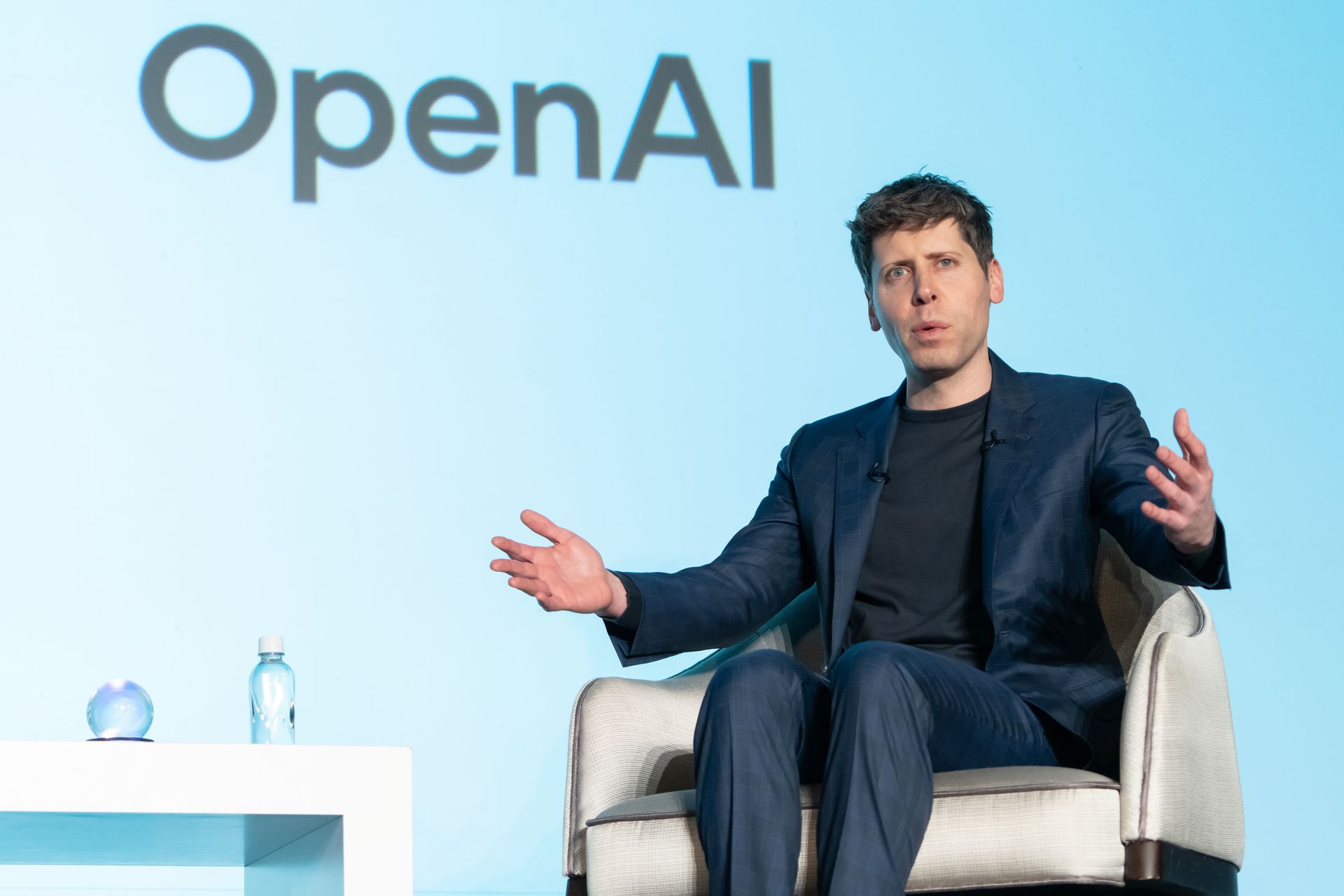
OpenAI is leaning toward delaying its initial public offering until 2027, according to The New York Times.
The Times, citing unnamed sources, reports that the company's advisers presented CEO Sam Altman with two options: wait until 2027 to go public at a $1 trillion valuation, or accept a lower valuation in exchange for a faster listing. Altman told advisers that any reduction in the trillion-dollar target was a nonstarter.
Internal preparations had targeted a listing window as early as this fall, with legal and banking teams enlisted toward that goal, and Altman pressing for a price tag of $1 trillion — nearly $270 billion above the $730 billion figure attached to the company's most recent private fundraising round. Chief Financial Officer Sarah Friar had told some associates the company was aiming for a 2027 listing, according to Reuters.
Several factors have prompted OpenAI's advisers to urge caution. Among the warning signs cited by advisers was the trajectory of SpaceX's shares: the Elon Musk-led company made history with its debut this month, pulling in over $85 billion at a $1.77 trillion valuation, yet by Thursday's close the stock had dropped to $153 — well below the $202 peak it hit just a week earlier. Broad volatility in technology stocks has also raised doubts about whether retail investors would welcome OpenAI's shares at the valuation the company is targeting.
OpenAI filed confidential listing documents with U.S. securities regulators earlier this month, with Goldman Sachs $GS and Morgan Stanley $MS leading the process. In a statement at the time, the company said it had "not decided on timing yet" and that the filing "gives us the option to go public sooner if that ends up being best." Reaching a $1 trillion public market valuation — a figure that would put OpenAI ahead of Walmart $WMT by that measure — would be a remarkable feat for a money-losing startup still burning cash on data center construction.
OpenAI's financial position adds complexity to its IPO calculus. The company posted a net loss of $38.5 billion in 2025 on $13.07 billion in revenue, with total costs and expenses of $34 billion. Alongside a roughly $600 billion AI infrastructure commitment stretching to 2030, the company has been directing substantial resources toward expanding its physical computing capacity, growing its brand presence, and competing aggressively for top engineering hires. OpenAI reported $2 billion in monthly revenue earlier this year and said it hopes to triple its 2025 revenue figure in 2026.
SoftBank Group, which has committed approximately $65 billion to OpenAI, saw its stock fall more than 12% on Friday following the IPO delay report — its largest intraday decline in more than three months. SoftBank carries a $40 billion bridge loan taken on to fund its OpenAI commitments, with repayment due in March 2027.