
Rolling versus folding, the compression cube debate, the specific math behind capsule wardrobes — the packing techniques that actually create space, not just the illusion of it
Timur Weber / Pexels
Fitting a week's worth of clothing into a carry-on bag is less a matter of owning the right bag and more a matter of applying a specific set of techniques that most casual travelers have never been taught systematically. The difference between a carry-on that closes with room to spare and one that requires sitting on the zipper is rarely about the size of the bag; it is about whether the packer is using space-creating techniques or simply placing folded clothes into a rectangular container and hoping for the best.
The techniques in this list are used consistently by frequent travelers — flight crew, business travelers who fly weekly, and travel writers who pack for a living — and they share a common logic: clothing takes up more space when packed the way it comes out of a dresser drawer than it needs to, and the gap between those two states is where an entire week of additional outfits can fit.
Each entry covers a specific technique, why it creates more usable space than the alternative, and the practical detail that makes it work.
Timur Weber / Pexels
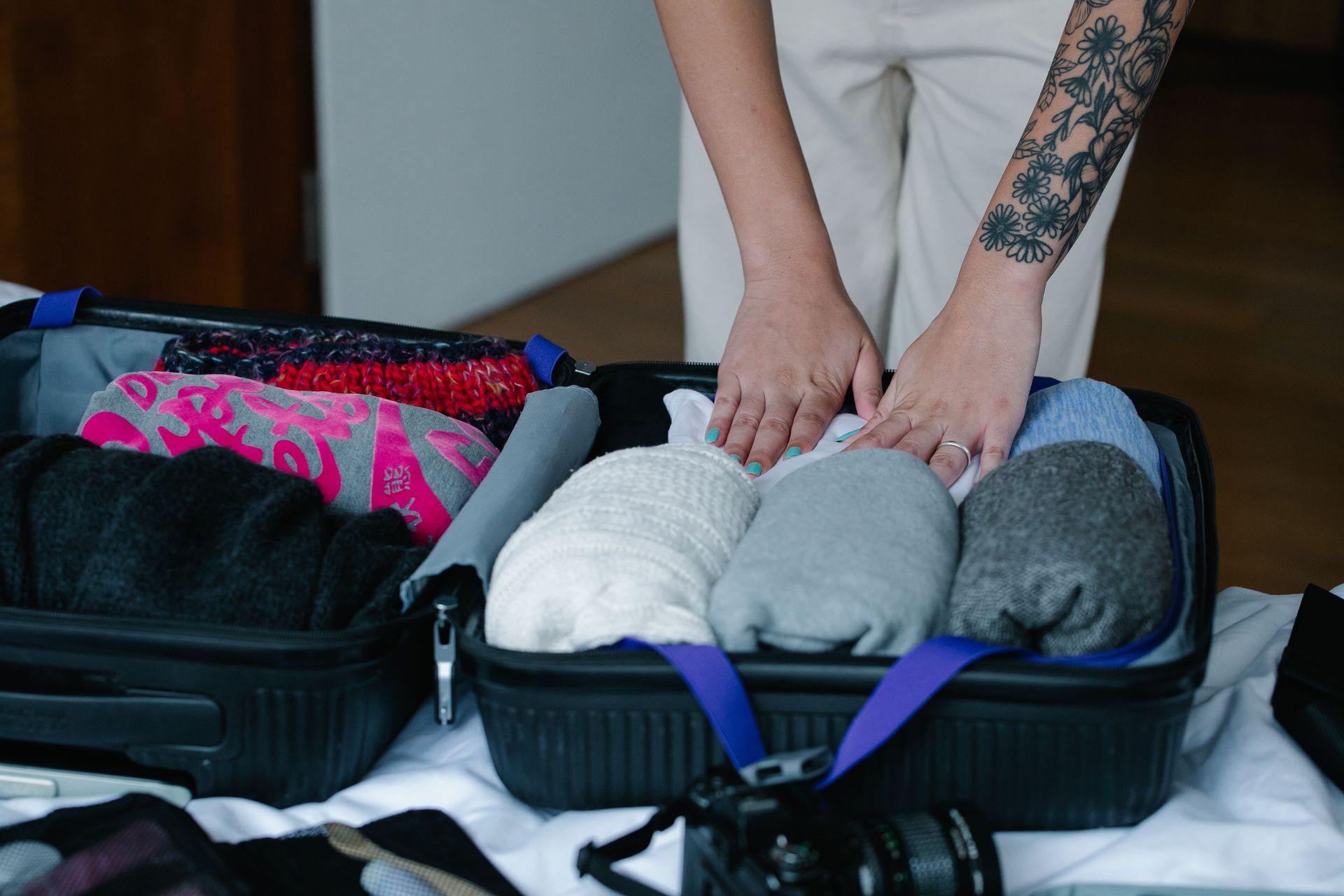
Rolling clothing rather than folding it is the single most consistently recommended packing technique among frequent travelers, and the reason is straightforward: rolled clothing compresses into a smaller overall volume than folded clothing of the same items, while also reducing the deep creasing that folding produces at fixed fold lines, since a rolled garment distributes its bend across a continuous curve rather than a sharp crease.
The specific items that benefit most from rolling are casual clothing made from cotton, synthetic blends, or knit fabrics — t-shirts, casual pants, athletic wear, and underwear — all of which roll into compact cylinders that can be packed tightly against each other, filling the irregular gaps in a suitcase (around shoes, in corners) far more efficiently than folded rectangles, which only stack efficiently against other flat rectangles and waste the irregular space elsewhere in the bag.
Structured items — blazers, dress shirts, anything with a stiff collar or tailored shape — are the exception: these hold their shape and resist wrinkling better when folded using specific techniques (the shirt-folding method that tucks the sleeves behind the body of the shirt, for instance) than when rolled, which can produce awkward creasing at the shoulders and collar of tailored garments. The practical approach most experienced packers use is a hybrid: roll the casual, flexible items and fold the structured ones.
Vlada Karpovich / Pexels
A capsule wardrobe — a small number of garments chosen specifically because they combine with each other in multiple ways — is the specific strategy that allows a week's worth of distinct outfits to be assembled from a much smaller number of individual items than a week would otherwise require, and the mechanism that makes this work is a single, disciplined color palette rather than simply packing "fewer clothes."
The specific math: a capsule wardrobe built around two or three neutral colors (navy, gray, black, or similar) plus one or two accent colors allows five tops and three bottoms to combine into 15 distinct outfit combinations, compared to the same eight items in mismatched colors, which might realistically produce only five or six wearable combinations because most items don't coordinate with most other items. The constraint is not fewer clothes; it is clothes deliberately chosen to multiply against each other.
The practical building process starts with the bottoms (since most travelers pack fewer bottoms than tops and therefore have more riding on each one working with multiple tops), selecting two or three pairs of pants or skirts in colors that coordinate with every top being packed, then selecting tops that each work with every bottom — a deliberate cross-compatibility check that a more casual, aesthetic-only packing approach typically skips.
Gustavo Fring / Pexels
The single largest space-saving decision available to a carry-on packer is not a packing technique inside the bag at all: it is wearing, rather than packing, the bulkiest items in the wardrobe — a jacket, the heaviest pair of shoes, a sweater — since anything worn on the body does not count against the bag's available volume, regardless of how bulky it is.
This technique is particularly significant for footwear specifically, since shoes are consistently one of the least space-efficient items to pack (their rigid shape does not compress and their irregular form wastes surrounding space in a way that soft clothing does not), meaning that wearing the bulkiest pair of shoes on travel days, rather than packing them, frees up disproportionate packing volume relative to the relatively small effort of simply wearing a slightly heavier shoe for a travel day.
The same logic applies to outerwear: a jacket or coat that would otherwise consume a significant volume of a carry-on's interior space can instead be worn onto the plane and either kept on, draped over a seat, or folded into the overhead bin space that is separate from the under-seat carry-on allowance many airlines enforce — meaning the item is transported without ever counting against the bag's packed capacity at all.
Timur Weber / Pexels
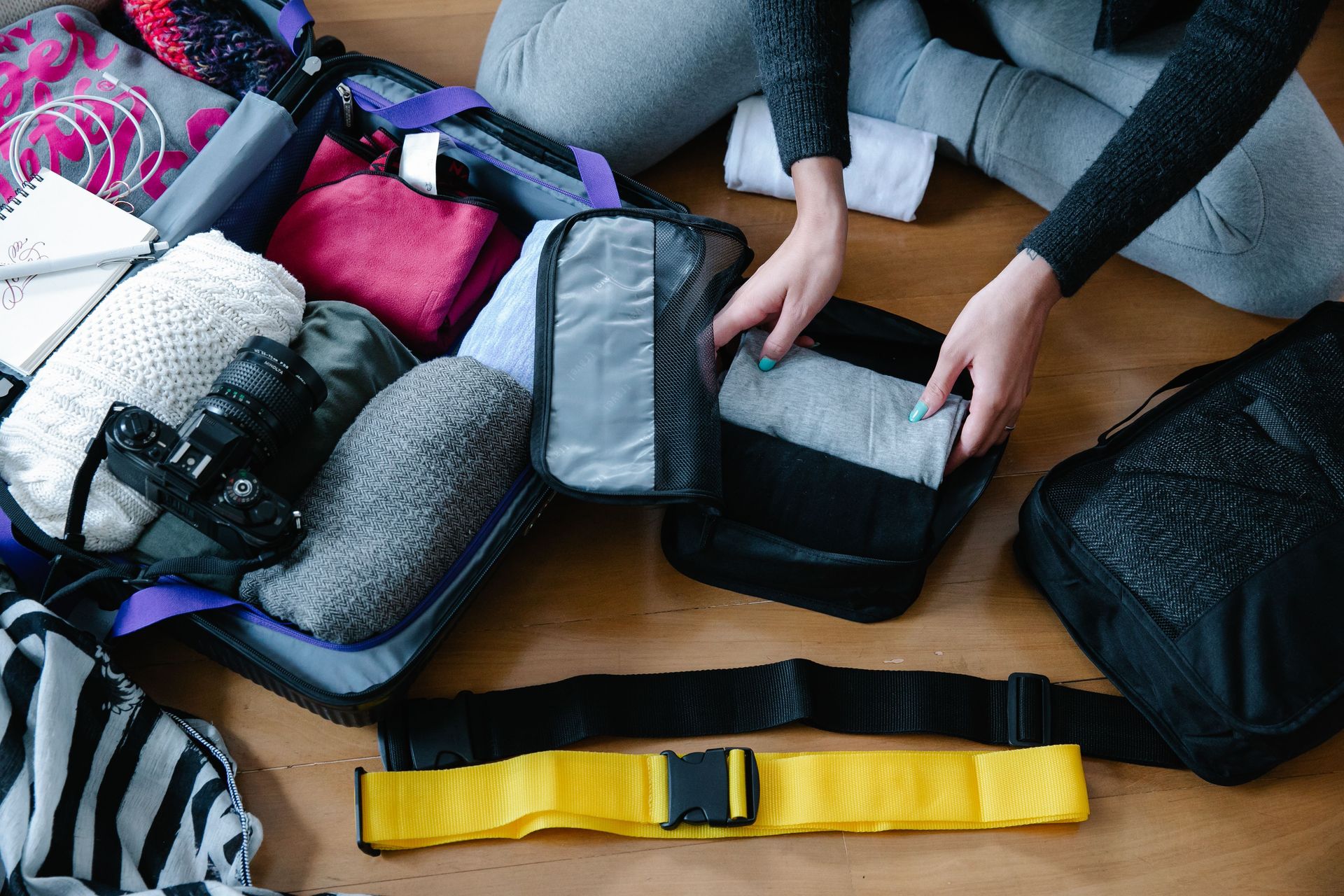
Packing cubes are frequently marketed and understood primarily as an organizational tool — separate compartments for different clothing categories — but their more significant function for carry-on packing specifically is compression: cubes with a compression zipper (a second zipper that, once closed, forces excess air out of the cube and compacts its contents into a meaningfully smaller volume) can reduce the packed size of a given set of clothing by a noticeable margin compared to the same clothing loose or in a non-compression cube.
The specific mechanism worth understanding is that clothing packed loose in a suitcase, even when neatly folded or rolled, retains pockets of trapped air between and within garments, and this trapped air is functionally wasted volume — space the clothing is not actually using but that the bag's interior treats as occupied. A compression cube physically forces this air out, and the resulting size reduction is often substantial enough that a compressed cube of the same clothing takes up 20 to 30% less volume than the identical items packed loose.
The practical technique is to sort clothing into categories before compressing (tops in one cube, bottoms in another, undergarments in a third) rather than compressing a mixed cube, since sorted compression cubes also solve the organizational problem that packing cubes are more commonly known for, meaning the same tool addresses both the space problem and the "living out of a suitcase" disorganization problem simultaneously.
Arina Krasnikova / Pexels
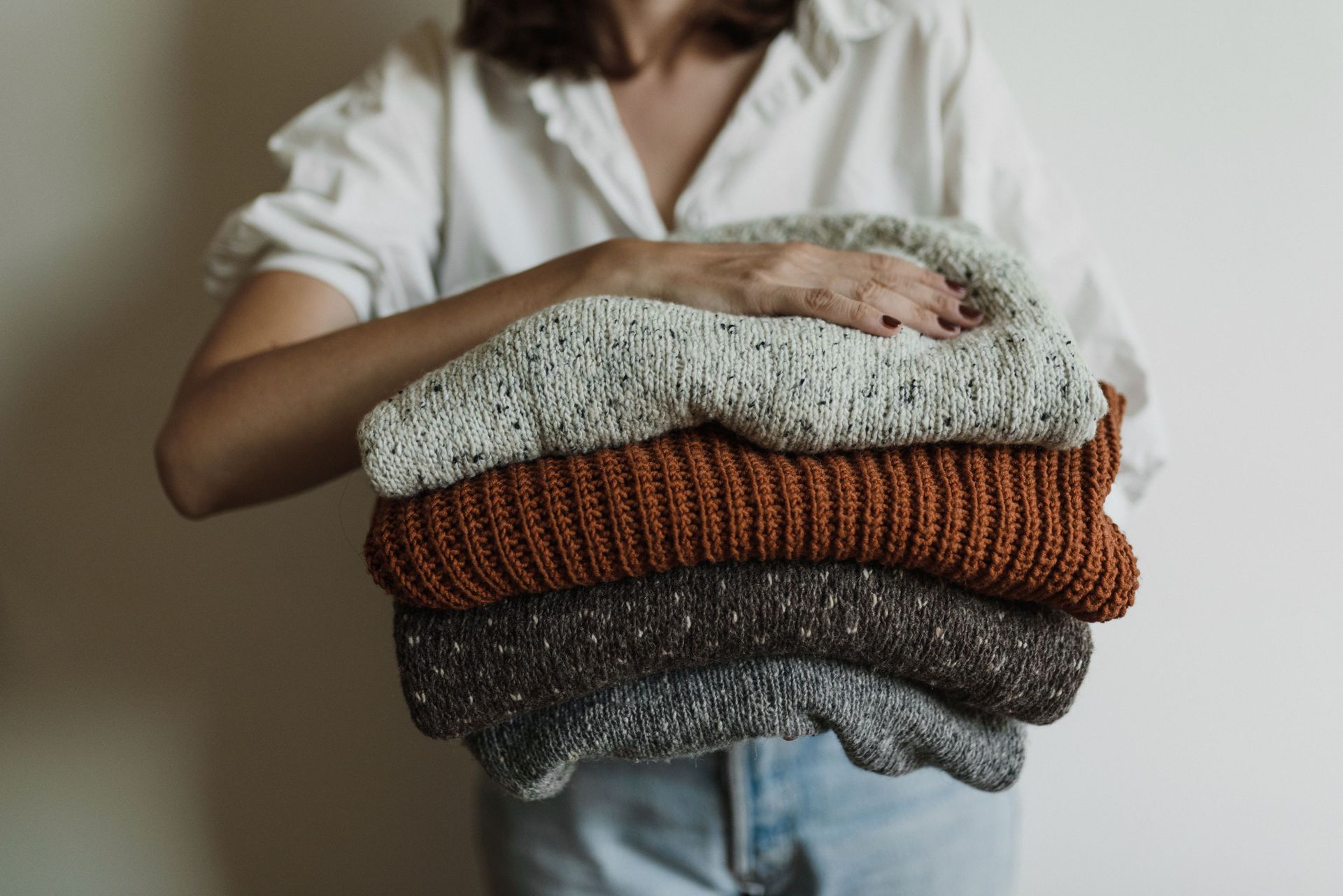
The specific fabric composition of the clothing being packed has a significant effect on how much space a week's wardrobe actually requires, independent of any folding or rolling technique: synthetic blends, merino wool, and certain technical travel fabrics compress into a meaningfully smaller volume than cotton, linen, or heavier natural fiber fabrics of comparable garment style, while also resisting the wrinkling that heavier, less resilient fabrics develop under the compression that carry-on packing requires.
Merino wool specifically has become a favored fabric among frequent travelers for a combination of reasons directly relevant to carry-on packing: it compresses into a very small volume relative to its warmth (a merino sweater packs considerably smaller than an equivalently warm cotton or synthetic fleece sweater), it resists odor retention significantly better than cotton (allowing a single garment to be worn multiple times between washes without becoming unpleasant, reducing the total number of garments needed for a week), and it resists wrinkling in a way that makes it particularly well-suited to being rolled or compressed without requiring careful unpacking and pressing on arrival.
The practical selection principle for a carry-on-only trip is to deliberately favor these more packable, more resilient fabrics when choosing what to bring, even at the expense of a preferred cotton or linen item that might be more comfortable in isolation but that takes up more space and requires more careful handling to avoid arriving wrinkled.

Sarah Chai / Pexels
Every item that serves only one function competes for carry-on space with every item that serves multiple functions, and the specific discipline that separates efficient carry-on packers from inefficient ones is a deliberate preference for versatile items — a scarf that functions as a blanket, an accessory, and neck warmth; a dress that can be worn casually during the day and dressed up for an evening with different shoes and accessories; a jacket that works for both cool mornings and as a layer against air conditioning — over items that serve a single, narrow purpose.
The specific test experienced packers apply to any item before including it is whether it can serve at least two distinct purposes across the trip: a single garment or accessory that can transition between a casual daytime look and a more formal evening look effectively does the packing work of two separate garments while occupying the space of only one, and this multiplication effect compounds across an entire wardrobe far more significantly than any single space-saving technique applied to individual items.
This principle extends beyond clothing to the accessories and toiletries packed alongside clothing: a travel-sized product that serves multiple functions (a moisturizer with SPF, doing the work of two separate products) or a piece of technology that replaces multiple single-purpose devices reduces the total volume of non-clothing items competing for the same limited carry-on space that the clothing-focused techniques above are working to free up.