
Palantir $PLTR Technologies CEO Alex Karp said Wednesday that OpenAI and Anthropic have fundamentally mispriced their AI services, arguing the token-based model has left enterprise customers frustrated and empty-handed.
The Palantir CEO said the token-based model has left enterprise customers frustrated and empty-handed
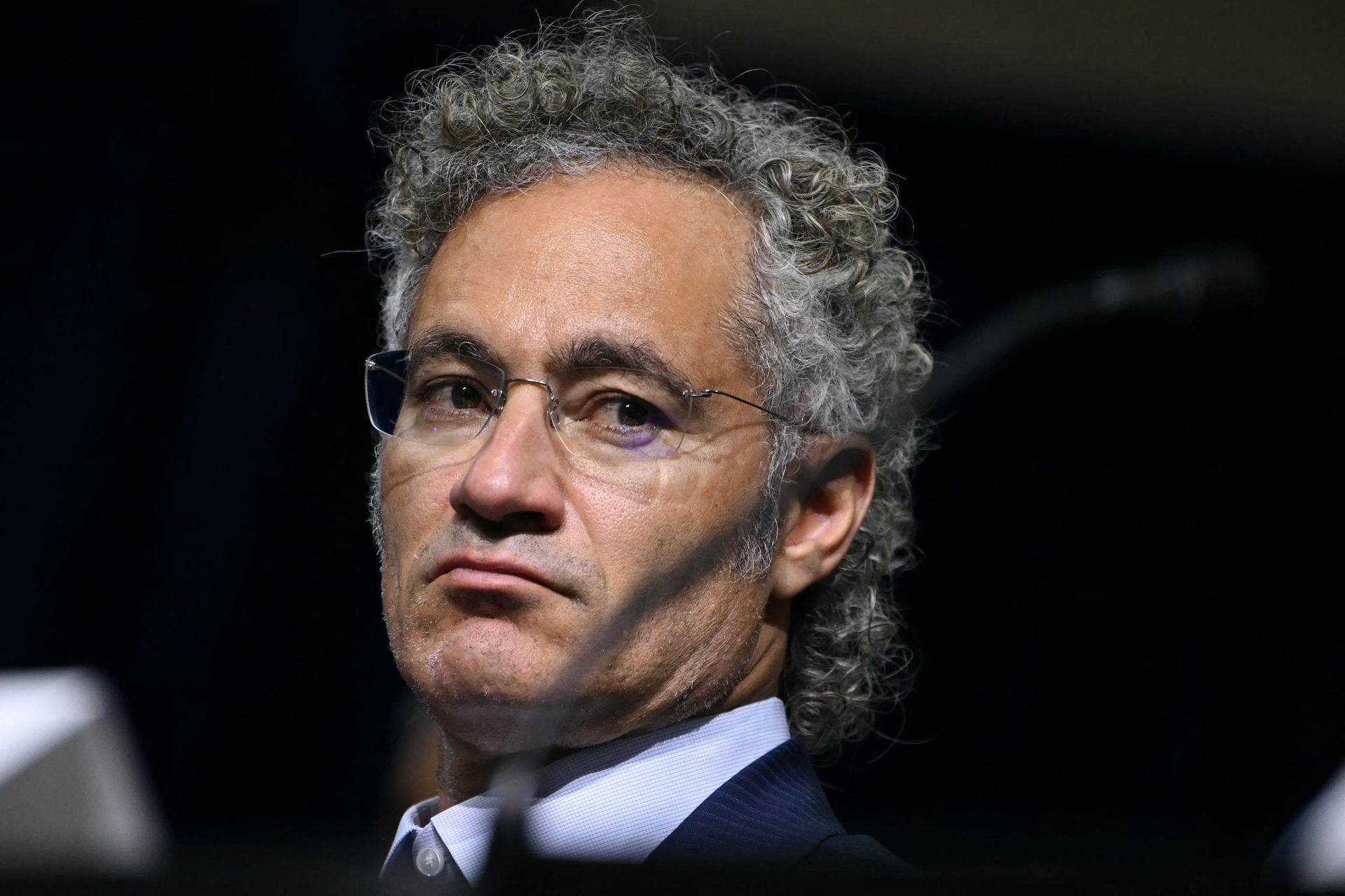
ANDREW CABALLERO-REYNOLDS/AFP via Getty Images
Palantir $PLTR Technologies CEO Alex Karp said Wednesday that OpenAI and Anthropic have fundamentally mispriced their AI services, arguing the token-based model has left enterprise customers frustrated and empty-handed.
On CNBC's "Squawk Box," Karp put it bluntly: "Something has gone completely wrong." He said the prevailing attitude among U.S. businesses has become one of resignation — that they will burn through tokens, generate no value, and hand over their intellectual property in the process.
He stopped short of personally targeting AI executives — quipping that he finds private debates with Anthropic CEO Dario Amodei entertaining — while nonetheless insisting that the underlying models have been "completely, irresponsibly, oversold." In private conversations, he said, executives have confided that token spending yields nothing useful, and that engaging with AI labs puts their proprietary data and market advantages at risk.
"Data retention is your treasure. Transfer it at your own peril," Palantir's recently published nine-point manifesto on AI sovereignty reads.
After co-anchor Becky Quick suggested he seemed furious, Karp pushed back with a reframe: The frustration he was expressing, he said, belonged not to him personally but to corporate America broadly — "the voice of American business that is being channeled through me." To illustrate how widespread the discontent runs, Karp suggested anyone skeptical should ring a CEO and relay what they had just heard on air — the response, he predicted, would be that the executive was at least twice as livid as Karp himself appeared.
Karp pointed to open weight models as an alternative path for enterprises seeking more control. Speaking to CNBC, Karp framed the Nvidia $NVDA alignment as a shared belief in customer ownership: technically sophisticated clients, he said, want sovereignty over their compute, models, data, and competitive edge — not a setup where those assets quietly migrate elsewhere. The remarks followed a deal unveiled earlier this week in which Palantir and Nvidia agreed to bring Nvidia's open Nemotron models into U.S. government agencies and critical infrastructure, pairing Nvidia's compute capabilities with Palantir's data and AI stack across classified and air-gapped settings.
Karp's remarks land amid a broader pullback from the tokenmaxxing era, when some of the largest companies in the world prioritized burning as many AI tokens as possible with little attention to returns. Companies including Uber $UBER and Microsoft $MSFT have capped or restricted employee access to expensive AI coding tools after budgets blew out. A growing number of enterprise customers have also been cutting spending on OpenAI and Anthropic, switching to cheaper alternatives and demanding clearer returns on investment.
Join 500,000+ readers who start their day with Quartz.
By subscribing, you agree to our Terms of Service and Privacy Policy.