
20 photographs that changed history
From the Crimean War to the Syrian refugee crisis, these 20 photographs shifted public opinion, shaped policy, ended careers and changed how the world sees itself
Credit: The U.S. National Archives Administration / PICRYL
A single photograph can do what a thousand dispatches cannot. It can collapse a distant war into one face, turn an abstract policy debate into a human being, and force a public to look at something it would rather ignore. Since the medium's invention in the 19th century, photographs have ended political careers, accelerated legislation, launched movements and redefined how nations remember their own past. Governments have understood this power from the beginning, which is why so many of the images on this list were censored, suppressed or contested the moment they appeared.
The 20 photographs collected here span 160 years, from a cannonball-strewn road in Crimea in 1855 to a Turkish beach in 2015. They include images made by professional photojournalists on assignment, by government-employed documentarians, and in two cases by astronauts holding cameras a quarter of a million miles from home. What unites them is measurable consequence. Each one changed something concrete: a law, a war, a public consensus, a way of seeing.
Some of these images are difficult. War, famine, lynching and terrorism appear here because photography's greatest documented influence has often come from its hardest subjects. Editors agonized over whether to publish several of them, and the debates those decisions triggered — about dignity, consent, exploitation and the public's right to see — remain live questions in journalism today. Several photographers on this list were haunted by their most famous frames. At least one subject spent decades wishing her picture had never been taken.
This list also traces the evolution of the medium itself. It begins when exposures took so long that action was impossible to capture, and war could only be shown through its aftermath. It ends in the smartphone era, when a news photograph could circle the planet on social media within hours. The technology changed completely. The underlying dynamic did not: a still image, seen at the right moment by enough people, can move history. These are 20 that did.
1 / 20
The valley of the shadow of death (1855)
Credit: J. Paul Getty Museum / PICRYL
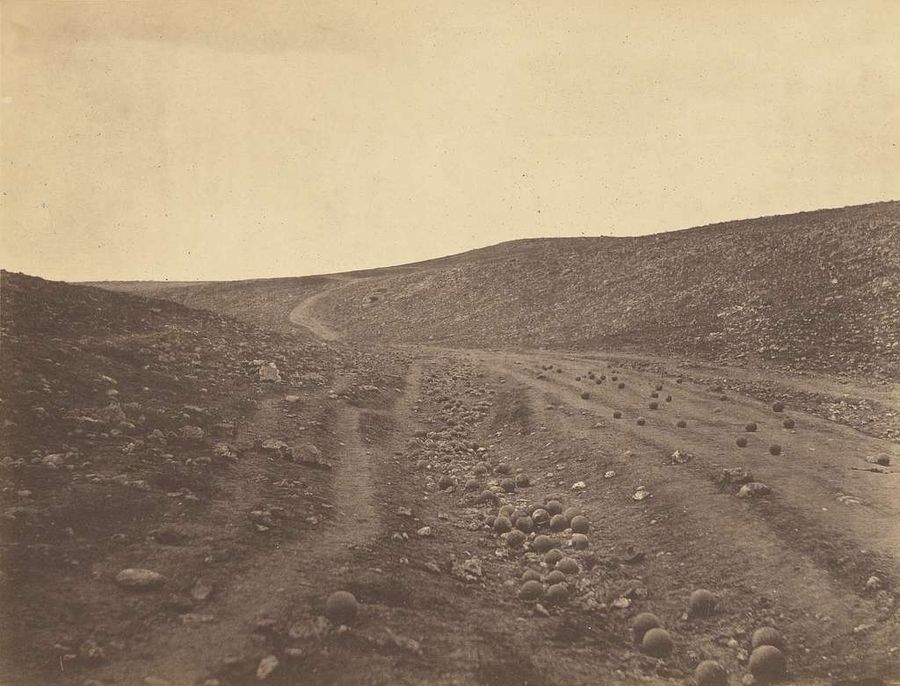
Roger Fenton traveled to the Crimean War in 1855 with a horse-drawn wagon converted into a portable darkroom, financed by the Manchester print publisher Thomas Agnew & Sons. He returned to Britain with roughly 360 photographs, making the conflict between Russia and the allied forces of Britain, France and the Ottoman Empire one of the first wars ever documented by camera.
His most famous image shows no soldiers at all. It depicts a barren ravine near Sevastopol that British troops nicknamed after Psalm 23 because Russian artillery raked it so relentlessly. The road and ditch are littered with cannonballs. Nothing else moves. The emptiness was partly technical — exposures of the era took too long to freeze action — but the result was a new visual language for war, one built on aftermath and absence rather than combat.
The photograph has also become a foundational case study in photographic truth. Fenton made two exposures of the scene: one with cannonballs scattered across the road, one with the road mostly clear. For decades, critics including Susan Sontag argued about whether Fenton or his assistants moved the balls onto the road to heighten the drama. The filmmaker Errol Morris spent months investigating the question in 2007, analyzing the position of small rocks in both frames, and concluded that the version with cannonballs on the road was taken second.
That debate matters because it began an argument that has followed war photography ever since: where documentation ends and staging begins. Fenton's images, exhibited in London and sold as prints, showed the British public that a distant war could be seen rather than merely read about. Every photographer on this list works in the tradition he started — and under the scrutiny his two frames made permanent. Prints of both frames now sit in the Library of Congress, where researchers still compare the two versions stone by stone.
2 / 20
The dead of Antietam (1862)
Credit: Jerry Butler / Pexels
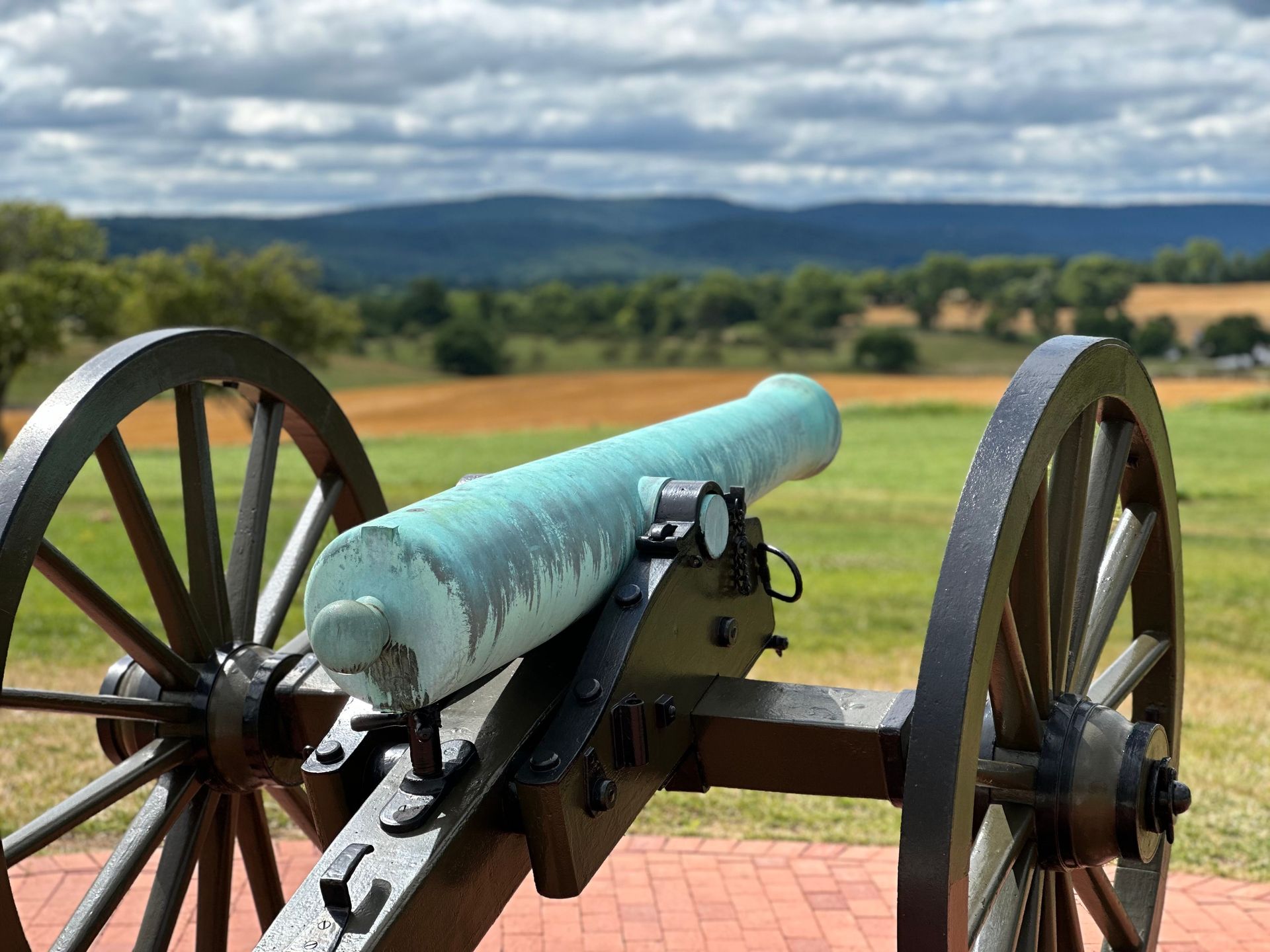
The Battle of Antietam, fought near Sharpsburg, Maryland, on September 17, 1862, remains the bloodiest single day in American history, with roughly 23,000 soldiers killed, wounded or missing. Two days later, photographers Alexander Gardner and James Gibson, working for Mathew Brady's studio, arrived on the field and photographed Confederate dead where they had fallen, before burial crews finished their work.
In October 1862, Brady exhibited the images at his New York gallery under the title "The Dead of Antietam." Nothing like it had been shown to the American public before. Civilians who had absorbed the war through casualty lists and engraved illustrations now confronted photographic corpses — swollen, contorted, anonymous. Crowds filled the gallery. The New York Times wrote that Brady had brought home the war's terrible reality, comparing the effect to laying bodies along the doorsteps of the city.
The exhibition changed what war meant to the people funding and supplying it. Photography stripped away the romantic conventions of battle painting. The dead in Gardner's frames did not look heroic. They looked like farmers and clerks left in the sun.
Gardner himself soon left Brady's employ, in part because Brady credited the studio rather than the men behind the cameras, and went on to photograph Gettysburg and the aftermath of Abraham Lincoln's assassination. His Antietam work established a precedent that governments and militaries have wrestled with ever since: whether the public should see the bodies its wars produce. The U.S. later restricted images of flag-draped coffins from Iraq for nearly two decades, a policy debate that traces in a direct line back to that New York gallery in the autumn of 1862. The battle's political consequences compounded the photographic ones. The Union's strategic victory gave Abraham Lincoln the opening to issue the preliminary Emancipation Proclamation five days later, binding the war the public could now see to the cause of ending slavery.
3 / 20
Lewis Hine's child labor photographs (1908–1924)
Credit: Library of Congress / PICRYL
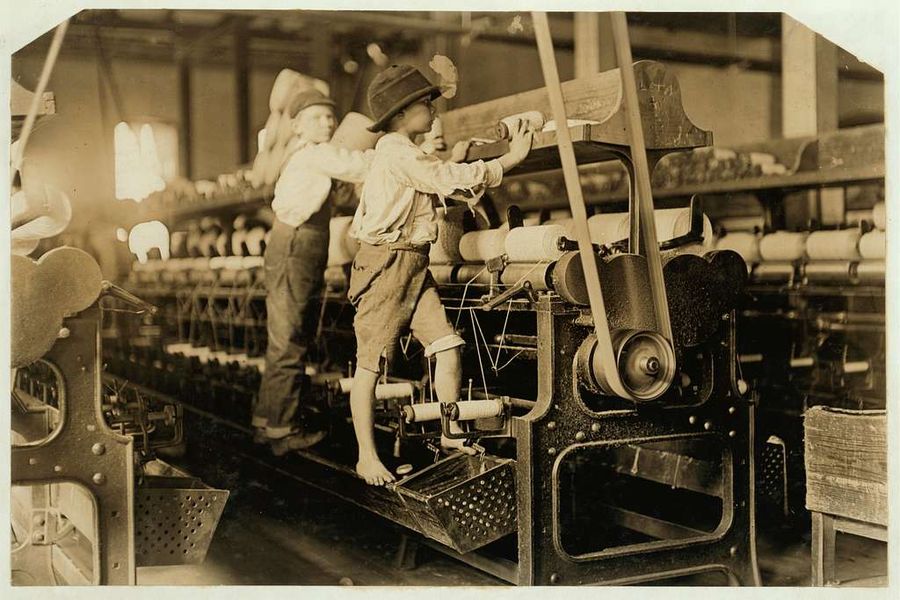
Lewis Hine was a schoolteacher and trained sociologist who came to believe a camera could accomplish what statistics could not. In 1908 he became the staff photographer for the National Child Labor Committee, a reform organization campaigning against the employment of children in American industry. Over the following 16 years he traveled tens of thousands of miles, photographing children in cotton mills, coal breakers, glass factories, canneries and fields across the U.S.
Factory owners did not welcome documentation. Hine gained access by posing as a fire inspector, a Bible salesman or an industrial photographer cataloging machinery. He interviewed the children while pretending to check equipment, recording their ages, heights, wages and hours in meticulous captions. A famous image shows Sadie Pfeifer, a cotton spinner in Lancaster, South Carolina, dwarfed by the row of machines she tended. Others show breaker boys, their faces blackened, sorting coal in Pennsylvania.
The captions were the weapon. Hine paired each photograph with verifiable detail, making the images difficult to dismiss as propaganda. The committee circulated them through pamphlets, exhibitions, lantern-slide lectures and newspapers, putting faces on a practice that employed roughly two million American children in the early 1900s.
Reform followed slowly. States tightened their labor codes. Congress passed the Keating-Owen Act in 1916, restricting child labor in interstate commerce, though the Supreme Court struck it down two years later. Durable federal protection arrived with the Fair Labor Standards Act of 1938, which set minimum ages for employment. Historians of the movement consistently credit Hine's photographs with building the public pressure that made those laws possible.
Hine died in poverty in 1940, his work largely forgotten at the time. His archive, now held by the Library of Congress and other institutions, is treated as the founding body of American social documentary photography. Late in his career he turned to labor of another kind, documenting the construction of the Empire State Building from its own girders.
4 / 20
Migrant mother (1936)
Credit: Lange, Dorothea, photographer / PICRYL
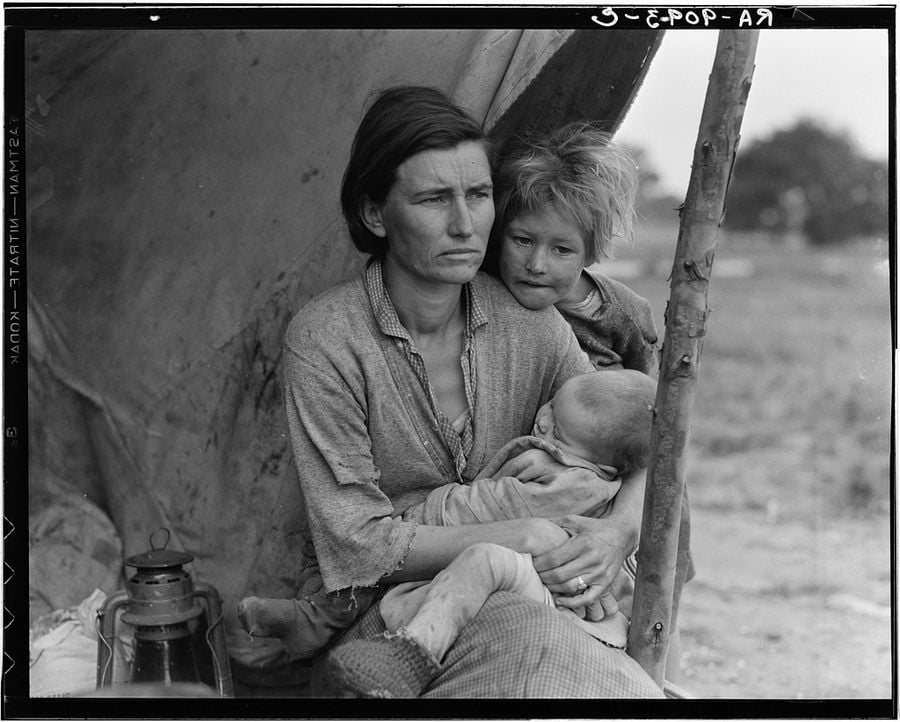
In March 1936, Dorothea Lange was finishing a month of fieldwork for the federal Resettlement Administration, documenting agricultural hardship in California. Driving home, she passed a sign for a pea-pickers camp in Nipomo, where a freeze had destroyed the crop and left workers stranded without income. She almost kept driving. Twenty miles down the road, she turned around.
At the camp she photographed a 32-year-old mother sitting in a lean-to tent with her children. Lange made six exposures in about 10 minutes. In the final frame, the woman gazes past the camera, hand at her chin, two children turned away against her shoulders. Lange did not record her name.
The San Francisco News published the images within days, reporting that thousands of pea pickers were starving in Nipomo. The federal government rushed food to the camp. The photograph then took on a second life as the defining image of the Great Depression, reproduced so widely that it became shorthand for the era itself. It now sits in the Library of Congress and the Museum of Modern Art.
The woman was identified in 1978 as Florence Owens Thompson, a Cherokee mother of seven who had survived the Depression through relentless field work. Her feelings about the image were complicated. She told interviewers she regretted that Lange had taken it, noting that she never received compensation while the photograph became one of the most reproduced in American history. Some details in Lange's field notes also proved inaccurate.
The image demonstrated the political power of federal documentary photography, and the Farm Security Administration program that grew from Lange's unit produced roughly 170,000 negatives chronicling American rural life. It also opened a lasting debate about the gap between a photograph's public meaning and its subject's private reality. Thompson died in 1983; donations from strangers who recognized her from the photograph helped cover her medical bills in her final months.
5 / 20
The Hindenburg disaster (1937)
Credit: Spaarnestad Photo / PICRYL
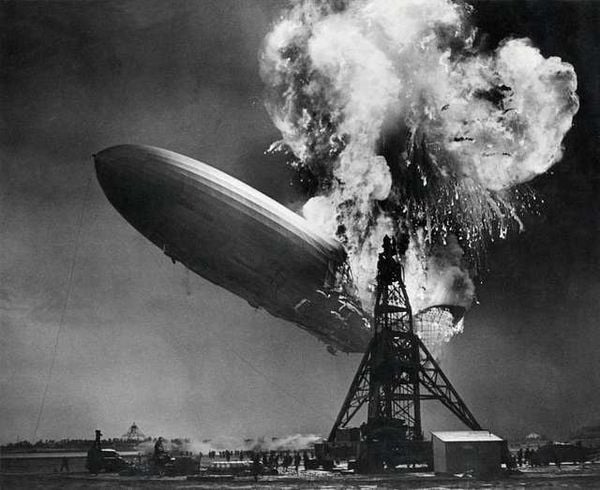
On May 6, 1937, the German airship Hindenburg — the largest aircraft ever built — approached its mooring mast at Naval Air Station Lakehurst in New Jersey after a transatlantic crossing from Frankfurt. Airship arrivals were still media events, so roughly two dozen photographers and newsreel cameramen were waiting on the ground. At 7:25 p.m., as the ship hovered near the mast, flames erupted near the tail. The hydrogen-filled craft was destroyed in less than a minute. Thirty-five of the 97 people aboard died, along with one member of the ground crew.
Sam Shere of International News Photos had time for a single shot. He later said he did not even raise the camera to his eye — he fired from the hip as the fireball bloomed. His frame, showing the burning ship collapsing toward the mooring mast, ran on front pages around the world and became the disaster's defining image, though more than a dozen photographers captured the scene.
The photographs did not act alone. Newsreel footage of the crash played in cinemas, and radio reporter Herbert Morrison's anguished live description for Chicago station WLS — recorded on scene — became one of broadcasting's most famous documents. Together they made the Hindenburg the first major disaster experienced by the public through coordinated mass media: still image, moving image and sound.
The commercial consequence was immediate and total. Public confidence in hydrogen passenger airships collapsed with the ship itself. The Hindenburg's sister ship was retired from passenger service, and the era of the great airships ended within months, ceding long-distance travel to the airplane. Aviation historians generally agree that airships were already losing the technological race, but the photographs turned a gradual decline into an abrupt verdict. Few images in history have terminated an entire industry so quickly. A memorial at Lakehurst now marks the spot where the ship fell, its outline set into the ground.
6 / 20
Raising the flag on Iwo Jima (1945)
Credit: Alex Bernard Aronson / Wikimedia Commons (CC BY-SA 4.0)
On February 23, 1945, five days into the battle for Iwo Jima, U.S. Marines fought their way to the summit of Mount Suribachi, the volcanic peak dominating the island. A patrol raised a small American flag that morning. Hours later, a second patrol was sent up with a larger flag so it could be seen across the island. Associated Press photographer Joe Rosenthal climbed with them.
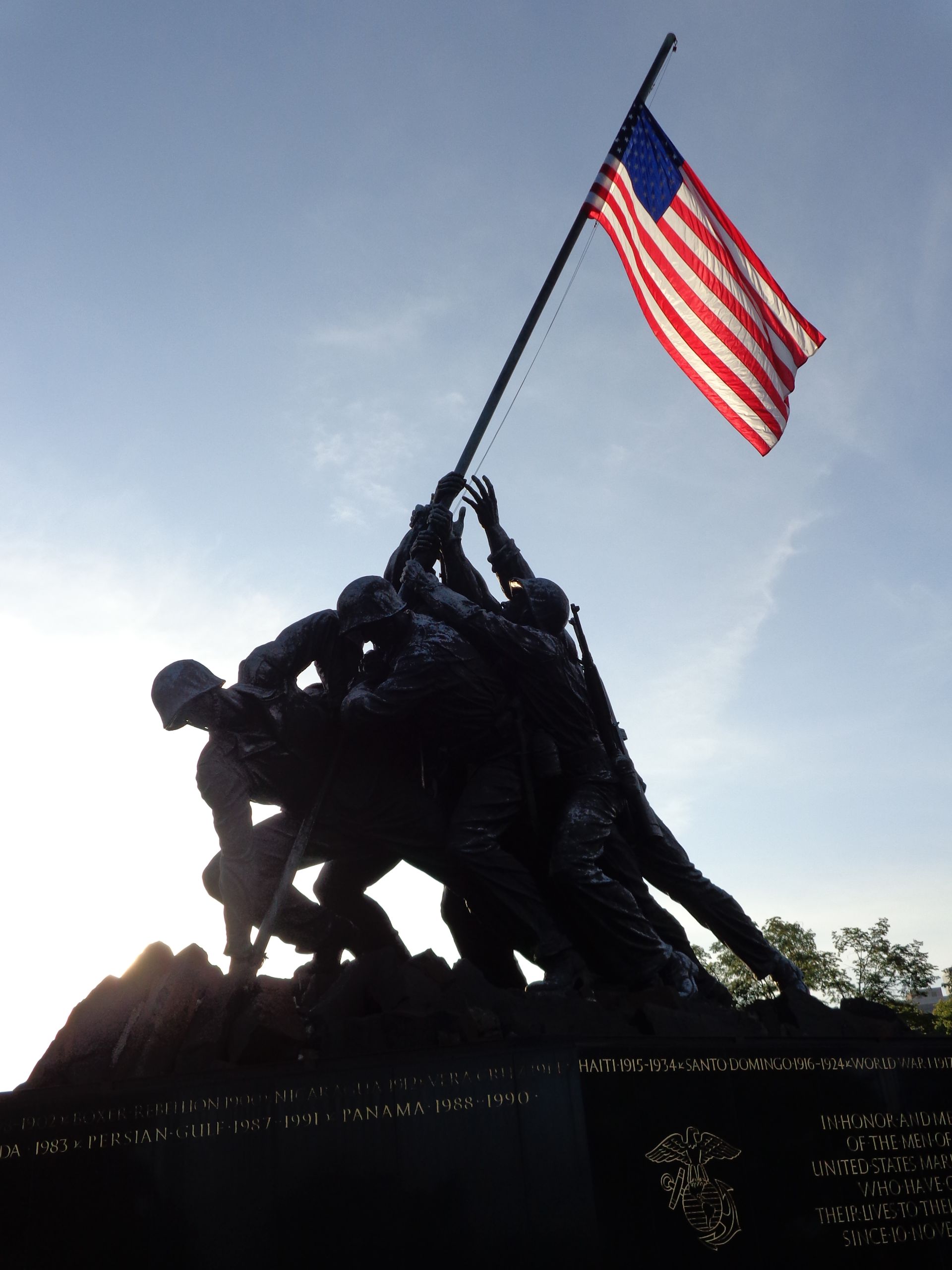
As six servicemen heaved the pipe bearing the second flag upright, Rosenthal swung his camera and fired in 1/400th of a second, without time to compose through the viewfinder. He did not know what he had until the film was developed on Guam. The image — six figures straining in unison, the flag catching the wind — was on American front pages within days and won the Pulitzer Prize the same year, the only photograph ever to do so in the year it was taken.
The U.S. Treasury made it the emblem of the Seventh War Loan drive, printing it on millions of posters as the campaign raised more than $26 billion. The photograph later became the model for the Marine Corps War Memorial in Arlington, Virginia, dedicated in 1954.
The image carried grief inside it. Three of the six flag raisers were killed on Iwo Jima before the battle ended, part of a fight that cost nearly 7,000 American and roughly 20,000 Japanese lives. Identifying the six correctly took decades; the Marine Corps corrected the official record in 2016 and again in 2019 after historians re-examined the evidence.
A persistent rumor held that Rosenthal staged the shot. He did not. The confusion arose because he photographed a posed group of cheering Marines minutes after the raising, and a misunderstanding over which frame was which followed him for the rest of his life. Rosenthal died in 2006, having spent six decades defending the authenticity of a photograph made in a fraction of a second.
7 / 20
V-J Day in Times Square (1945)
-900x713.jpg)
Credit: U.S. National Archives and Records Administration / PICRYL
On August 14, 1945, news of Japan's surrender ended the Second World War, and New York's Times Square $SQ filled with celebrating crowds. Alfred Eisenstaedt, a Life magazine photographer known for working fast and unnoticed, moved through the crush looking for a picture that could hold the day. He found a sailor grabbing and kissing a woman in a white uniform, and made four exposures in seconds. A U.S. Navy photographer, Victor Jorgensen, captured the same moment from another angle.
Life published Eisenstaedt's version across a full page, and it became the defining American image of the war's end — spontaneous, kinetic and anonymous. Because Eisenstaedt had no time to gather names, the identities of the pair became one of photography's longest-running puzzles. Dozens of men and women claimed to be the couple over the decades. The most widely accepted identification, supported by facial-recognition analysis and forensic studies, is George Mendonsa, a Navy quartermaster, and Greta Zimmer Friedman, a dental assistant. Friedman died in 2016 and Mendonsa in 2019.
The photograph's meaning has shifted with time. Friedman said in oral-history interviews that the kiss was not her choice — a stranger seized her amid the celebration — and that she was not romantically involved with the sailor. In recent years the image has been discussed as much as a document of its era's norms as a celebration, and a statue based on it in Sarasota, Florida, was vandalized with a protest slogan in 2019.
The picture endures because it compressed a global event into a single human gesture, which is precisely why its complications matter. It remains a fixture of photojournalism history and a case study in how an image's public meaning can diverge from the experience of the people inside the frame. Eisenstaedt photographed dozens of Life covers across a long career, but no other frame of his approached the circulation of this single street exposure.
8 / 20
Emmett Till's open casket (1955)
_at_Burr_Oak_Cemetery-1920x1772.jpg)
Credit: Nick Number / Wikimedia Commons (CC BY 4.0)
Emmett Till was a 14-year-old from Chicago visiting relatives in Money, Mississippi, in August 1955 when a white shopkeeper, Carolyn Bryant, accused him of flirting with or whistling at her. Days later, her husband Roy Bryant and his half-brother J.W. Milam abducted Till from his great-uncle's home. His body was recovered from the Tallahatchie River, beaten beyond recognition, shot, and weighted with a cotton-gin fan.
His mother, Mamie Till-Mobley, made a decision that altered American history. She insisted on an open-casket funeral in Chicago so the world could see what had been done to her son. Tens of thousands of mourners filed past. She permitted photographers from the Black press to document the body, and Jet magazine published David Jackson's photographs in September 1955, alongside coverage in the Chicago Defender. Most white-owned publications declined to run them.
The images detonated through Black America. An all-white Mississippi jury acquitted Bryant and Milam that September after deliberating for barely an hour; the two men then confessed to the murder in a paid 1956 interview with Look magazine, protected by double-jeopardy rules. The contrast between the photographs and the verdict became a rallying point. Rosa Parks later said she was thinking of Emmett Till when she refused to give up her bus seat in Montgomery three months after the trial, and organizers across the emerging civil rights movement cited the case as a catalyst.
The photographs' influence has never faded. Till's story figured in the congressional push that produced the Emmett Till Antilynching Act, signed into law in 2022, which made lynching a federal hate crime. Till-Mobley's choice — to make the country look — remains one of the clearest demonstrations that controlling an image's visibility can be a political act in itself. In 2023, President Joe Biden designated a national monument honoring Till and his mother across sites in Illinois and Mississippi.
9 / 20
Guerrillero heroico (1960)
Credit: Redthoreau / Wikimedia Commons (CC BY-SA 3.0)
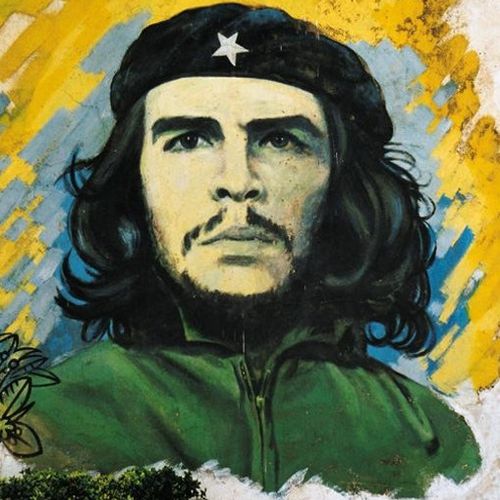
On March 4, 1960, the French freighter La Coubre exploded in Havana harbor while unloading munitions, killing scores of people. At the memorial rally the next day, Alberto Korda, a fashion photographer turned chronicler of the Cuban revolution, was covering the speeches for the newspaper Revolución. As Fidel Castro spoke, Ernesto "Che" Guevara stepped briefly into view on the platform. Korda made two quick frames of his face — jaw set, eyes fixed on the middle distance, beret with a single star — before Guevara stepped back.
The newspaper did not run the portrait prominently, and it sat in Korda's studio for years. Its transformation began after Guevara was captured and executed in Bolivia in October 1967. The Italian publisher Giangiacomo Feltrinelli, who had obtained a print from Korda, produced thousands of posters of the cropped image as news of the death spread. In 1968 the Irish artist Jim Fitzpatrick turned it into the high-contrast red-and-black graphic that became inescapable on student walls from Paris to Mexico City during that year's global protest wave.
The photograph became one of the most reproduced images in the world, printed on flags, T-shirts, murals and eventually every category of merchandise, detaching almost entirely from the historical Guevara — a figure whose record, including his role in executions during the revolution's early years, remains deeply contested. The image's journey from newspaper outtake to global commodity is now a standard case study in how photographs acquire meanings their makers never intended.
Korda, a supporter of the revolution, never collected royalties for decades of reproduction. He drew one line: in 2000 he sued Smirnoff over an advertisement using the image to sell vodka, won a settlement in a London court, and donated the money to Cuba's healthcare system. He died the following year. Korda's original uncropped frame includes a stranger's profile and palm fronds at the edges — details the world's most reproduced portrait quietly shed.
10 / 20
The burning monk (1963)
-1920x1282.jpg)
Credit: DẤU ẤN VIỆT GROUP / Pexels
In the spring of 1963, South Vietnam's Buddhist majority was in open confrontation with the government of President Ngo Dinh Diem, a Catholic whose administration had banned the flying of Buddhist flags and whose forces had killed protesters in Hue in May. On June 10, Associated Press correspondent Malcolm Browne received word that something significant would happen the next morning at a Saigon intersection. He was one of the few Western journalists who showed up.
On June 11, a 66-year-old monk named Thich Quang Duc seated himself in the lotus position in the middle of the street. Fellow monks poured gasoline over him, and he struck a match. Browne photographed the entire self-immolation as the monk burned without moving or crying out. His images moved on the AP wire within hours and appeared on front pages worldwide.
The effect on American policy was direct. President John F. Kennedy remarked that no news picture in history had generated as much emotion around the world, and he ordered a reassessment of U.S. support for Diem. The photograph undercut the administration's ability to present its ally as a defensible partner. When Diem's own generals launched a coup that November — with tacit American acquiescence — the monk's protest was widely understood as the moment the regime's fate turned. Diem was killed on November 2, 1963.
Browne's photograph won the World Press Photo of the Year for 1963, and he shared a Pulitzer Prize for his Vietnam reporting. The image established self-immolation as a form of protest legible to global media, and it has been invoked by dissidents and artists for six decades since, appearing everywhere from political posters to an album cover by Rage Against the Machine. The film had to be flown out of Vietnam and transmitted onward from Manila, reaching front pages within a day — remarkable speed for 1963.
11 / 20
Saigon execution (1968)
Credit: hookbrother / Wikimedia Commons (CC BY 2.0)
On February 1, 1968, the second day of the Tet Offensive, Associated Press photographer Eddie Adams was walking through Saigon with an NBC camera crew when South Vietnamese soldiers brought a bound prisoner down the street. The prisoner was Nguyen Van Lem, a Viet Cong officer. Brigadier General Nguyen Ngoc Loan, chief of South Vietnam's national police, drew his revolver and shot Lem in the head. Adams pressed his shutter at the instant the bullet struck.
The photograph ran on front pages across the U.S. the next morning, while NBC's film of the killing aired on television. Arriving at the peak of the Tet Offensive — which had already shattered official assurances that the war was being won — the image crystallized a growing conviction that the conflict had descended into lawless brutality. It became a fixture of the antiwar movement and won Adams the Pulitzer Prize for spot news photography in 1969.
The story behind the frame was more tangled than its first impression. Lem was reported to have led a squad that killed the family of one of Loan's fellow officers hours earlier. Loan made no attempt to hide the execution, carried out in front of journalists, and never expressed regret.
Adams spent the rest of his life uneasy about the picture. He argued that photographs are half-truths, and that his frame showed the general killing a man but not what the man had done. Loan emigrated to the U.S. after the war and ran a pizza restaurant in Virginia, where his past eventually became known; he died in 1998. Adams wrote a eulogy in Time magazine apologizing to Loan's family, saying two people died in that photograph — the man who was shot, and the general whose life the image consumed. In retrospectives, the frame is still paired with NBC's footage, a reminder that the still image rather than the film is what lodged in public memory.
12 / 20
Earthrise (1968)
Credit: The U.S. National Archives Administration / PICRYL
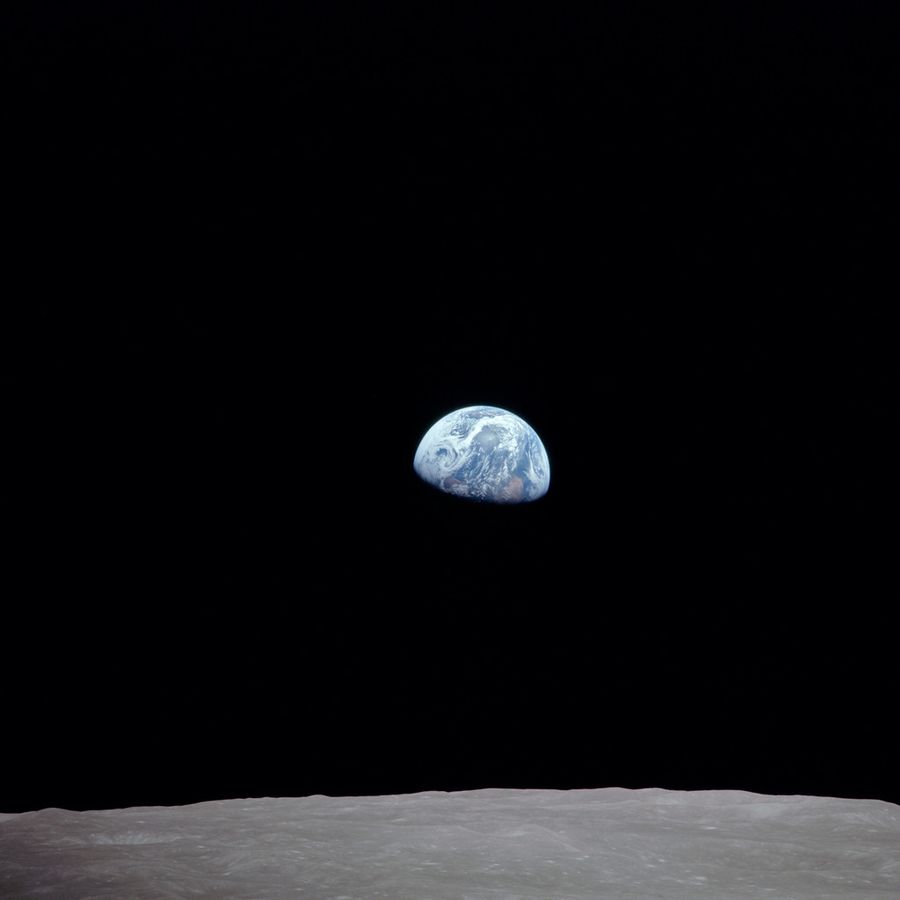
Apollo 8 launched in December 1968 as the first crewed mission to leave Earth's orbit and circle the moon. On December 24, during the crew's fourth lunar orbit, the spacecraft's rotation brought the Earth into view above the moon's gray horizon. Astronaut William Anders, responsible for photography, called out for a roll of color film and shot the planet rising over the lunar surface: a blue-and-white sphere against black, half in shadow.
No human had seen the sight before, let alone photographed it. When the film was developed after splashdown, NASA released the image to a world that had spent 1968 absorbing assassinations, war and upheaval. The photograph ran globally and appeared on a U.S. postage stamp within months.
Its deepest impact was on how people thought about the planet itself. Earthrise inverted the mission's premise: a voyage to the moon produced, as its most consequential result, a portrait of Earth — small, whole, borderless and visibly finite. Anders later reflected that the crew had gone to explore the moon and instead discovered their own planet.
Environmental historians draw a direct line from the image to the surge of ecological consciousness that followed. The first Earth Day was held in April 1970, the U.S. Environmental Protection Agency was created that December, and landmark clean air and water legislation passed in the early 1970s. The nature photographer Galen Rowell called Earthrise "the most influential environmental photograph ever taken."
The picture also marked a turning point in the purpose of space photography. Cameras had gone to space to document missions and scan other worlds. Earthrise demonstrated that their most powerful subject was the one behind them, a lesson NASA repeated four years later with the Blue Marble. In 2018, on the mission's 50th anniversary, the International Astronomical Union named a lunar crater "Anders' Earthrise" in honor of the frame.
13 / 20
Kent State (1970)
Credit: The U.S. National Archives / PICRYL
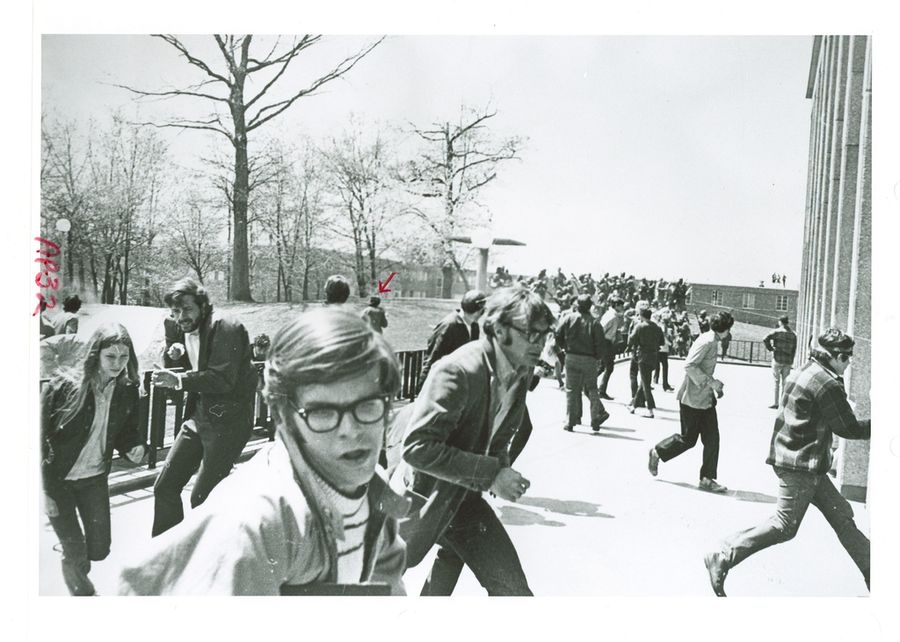
On April 30, 1970, President Richard Nixon announced that U.S. forces had entered Cambodia, expanding the Vietnam War he had promised to wind down. Protests erupted on campuses nationwide. At Kent State University in Ohio, days of demonstrations led the governor to deploy the National Guard. On May 4, guardsmen confronting a noon rally turned and fired 61 to 67 shots in 13 seconds. Four students — Allison Krause, Jeffrey Miller, Sandra Scheuer and William Schroeder — were killed, and nine others were wounded. Two of the dead were walking to class.
John Filo, a photojournalism student, was in the parking lot where Jeffrey Miller fell. As he photographed the body, a 14-year-old runaway named Mary Ann Vecchio dropped to her knees beside it, arms open, screaming. Filo's frame ran on front pages nationwide the next day and won the Pulitzer Prize in 1971.
The image gave the shootings a face and helped drive the largest student strike in U.S. history: roughly four million students walked out, and hundreds of colleges and universities closed for days or the remainder of the term. The photograph became the defining evidence, in the public mind, that the war had come home — American troops firing on American students.
A presidential commission on campus unrest concluded later that year that the shootings were unjustified. No guardsman was convicted; a civil settlement in 1979 included a statement of regret. Vecchio, whose identity emerged quickly, was pilloried by politicians and harassed for years, and has spoken about the burden of appearing in the frame. She and Filo met publicly decades later. The photograph remains among the most reproduced images of the Vietnam era, and its afterlife shaped how universities, governors and guardsmen have approached campus protest since. The image carried its own controversy: in some later reproductions, a fence post that appeared to rise behind Vecchio's head was retouched out, a darkroom alteration that itself became a case study in photo ethics.
14 / 20
The terror of war, or napalm girl (1972)
-1920x1475.jpg)
Credit: Israel Press and Photo Agency (I.P.P.A.) / Dan Hadani collection, National Library of Israel / CC BY 4.0
On June 8, 1972, South Vietnamese aircraft attacked the village of Trang Bang, northwest of Saigon, after mistaking fleeing civilians for enemy troops. Napalm fell on a group that included nine-year-old Phan Thi Kim Phuc, burning her back and arms so severely that she tore off her flaming clothes as she ran down Route 1 toward the journalists positioned outside the village.
Nick Ut, a 21-year-old Vietnamese photographer for the Associated Press whose older brother had been killed covering the war, photographed her mid-stride — naked, arms outstretched, screaming, with other children and soldiers around her. He then put down his camera, gathered the injured children into the AP van, and drove them to a hospital, insisting doctors treat Kim Phuc.
AP editors debated whether the photograph could run at all, since it showed frontal nudity. They transmitted it with the judgment that its news value overrode the policy. It appeared on front pages worldwide, won the Pulitzer Prize in 1973 and was named World Press Photo of the Year. Arriving as U.S. involvement wound down, it hardened public exhaustion with the war and became one of the most cited images in debates over American policy in Vietnam.
Kim Phuc survived 17 surgical procedures and years of pain. She later defected to Canada while traveling in 1992, was granted asylum, and became a UNESCO goodwill ambassador and founder of a foundation aiding child victims of war. She has described a long journey from resenting the photograph to embracing it.
The image made news again in 2016, when Facebook $META deleted a Norwegian author's post containing it for violating nudity rules, then reversed course after Norway's prime minister and the country's largest newspaper protested — a collision between historic photojournalism and algorithmic moderation. On the photograph's 50th anniversary in 2022, Kim Phuc wrote publicly about making peace with the image and appeared alongside Ut as prints were exhibited worldwide.
15 / 20
The blue marble (1972)
Credit: NASA / Defense Visual Information Distribution Service / PICRYL
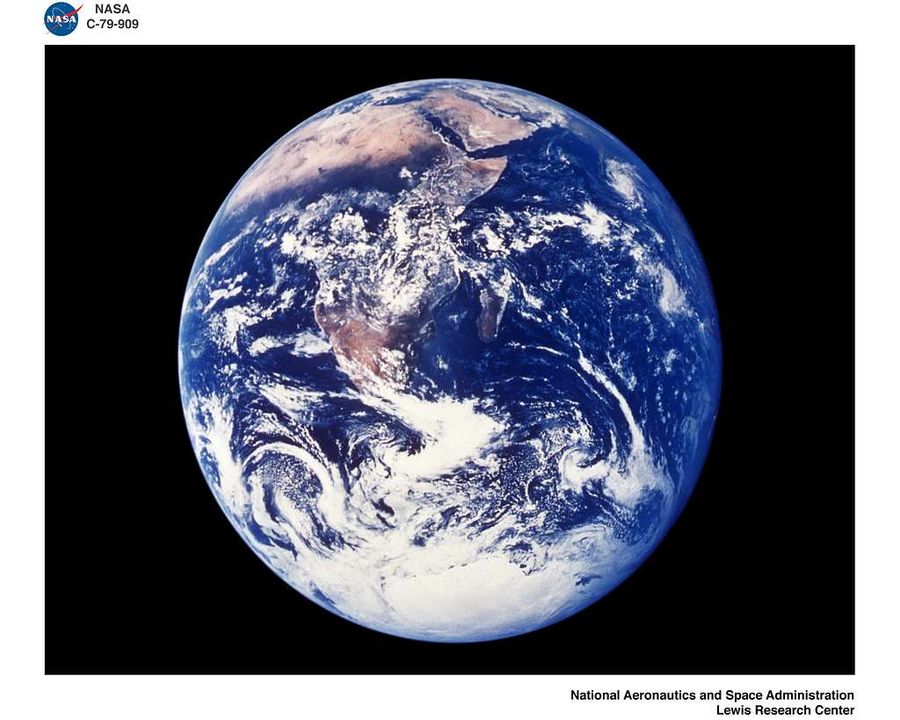
On December 7, 1972, about five hours after launch, the crew of Apollo 17 — the final crewed mission to the moon — looked back from roughly 29,000 kilometers out and saw something no previous mission had: the entire Earth, fully illuminated, with the sun directly behind them. One of the astronauts photographed it with a handheld Hasselblad. NASA credits the crew collectively, and the frame became known as the Blue Marble.
The photograph shows Africa and the Arabian Peninsula at center, Madagascar off the coast, and the Antarctic ice cap glowing at the bottom, since the southern hemisphere was tilted toward the sun in December. Swirls of cloud wrap the oceans. No borders, lights or human traces are visible.
It is frequently described as one of the most reproduced photographs in existence. Unlike Earthrise, which showed the planet as a distant refuge above an alien horizon, the Blue Marble presented Earth as a complete, self-contained object — a single system. The environmental movement adopted it almost immediately; it appeared on the flag of Earth Day organizations, on posters, in textbooks and eventually as the default imagery of globalization itself, gracing everything from UN reports to the loading screens of digital devices.
The image carries a quiet historical footnote: no human has been far enough from Earth to take such a photograph since. Every whole-Earth image produced after December 1972 has come from uncrewed satellites or been assembled digitally from multiple passes. For more than five decades, the Blue Marble has remained the last portrait of the planet made by a person looking at it directly.
Its influence runs through climate politics, systems thinking and popular culture. When policymakers and scientists speak of "one Earth," the mental picture they are invoking was taken through a spacecraft window in 1972. NASA released an updated composite version in 2002, stitched together from satellite data — an homage that underscored the original's singularity.
16 / 20
Afghan girl (1984)
Credit: Olaf Torsu / Flickr (CC BY 2.0)
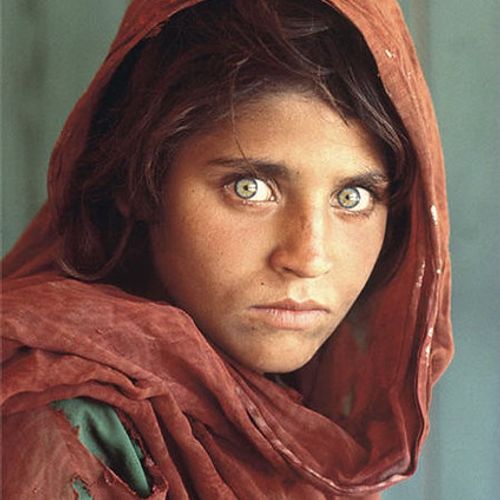
In late 1984, National Geographic photographer Steve McCurry was working in the Nasir Bagh refugee camp near Peshawar, Pakistan, documenting Afghans displaced by the Soviet war. In a tent serving as a girls' school, he photographed a student of about 12 with a tattered red shawl and startling sea-green eyes. He did not learn her name.
The portrait ran on National Geographic's cover in June 1985 and became the most recognized image in the magazine's history. For Western audiences, the photograph became the face of the Afghan refugee crisis — at the time one of the largest displacements in the world, with millions of Afghans in camps in Pakistan and Iran. It drew attention and donations to refugee causes for years and was endlessly compared to a painted portrait for its composition and gaze.
For 17 years the subject remained anonymous. In 2002, a National Geographic team returned to the region and located her, confirming the match through iris-recognition analysis of the original photograph. She was Sharbat Gula, then a married mother living in Afghanistan. She had never seen the picture that made her face famous, and she recalled being angry the day it was taken; she had rarely been photographed by a stranger.
Her later life traced the region's continuing turmoil. In 2016, Pakistani authorities arrested her for holding forged identity papers — a common survival measure among long-term refugees — and deported her to Afghanistan, drawing international criticism. After the Taliban retook Kabul in 2021, Italy evacuated her, and she was resettled in Rome.
The photograph's arc, from anonymous icon to identified woman with her own account of the encounter, has made it a central case in debates over consent, compensation and the ethics of portraiture in crisis zones. McCurry has called it the defining picture of his career; Gula's own accounts of what the fame brought her have been far more ambivalent.
17 / 20
Tank man (1989)
Credit: Serena Xu / Pexels
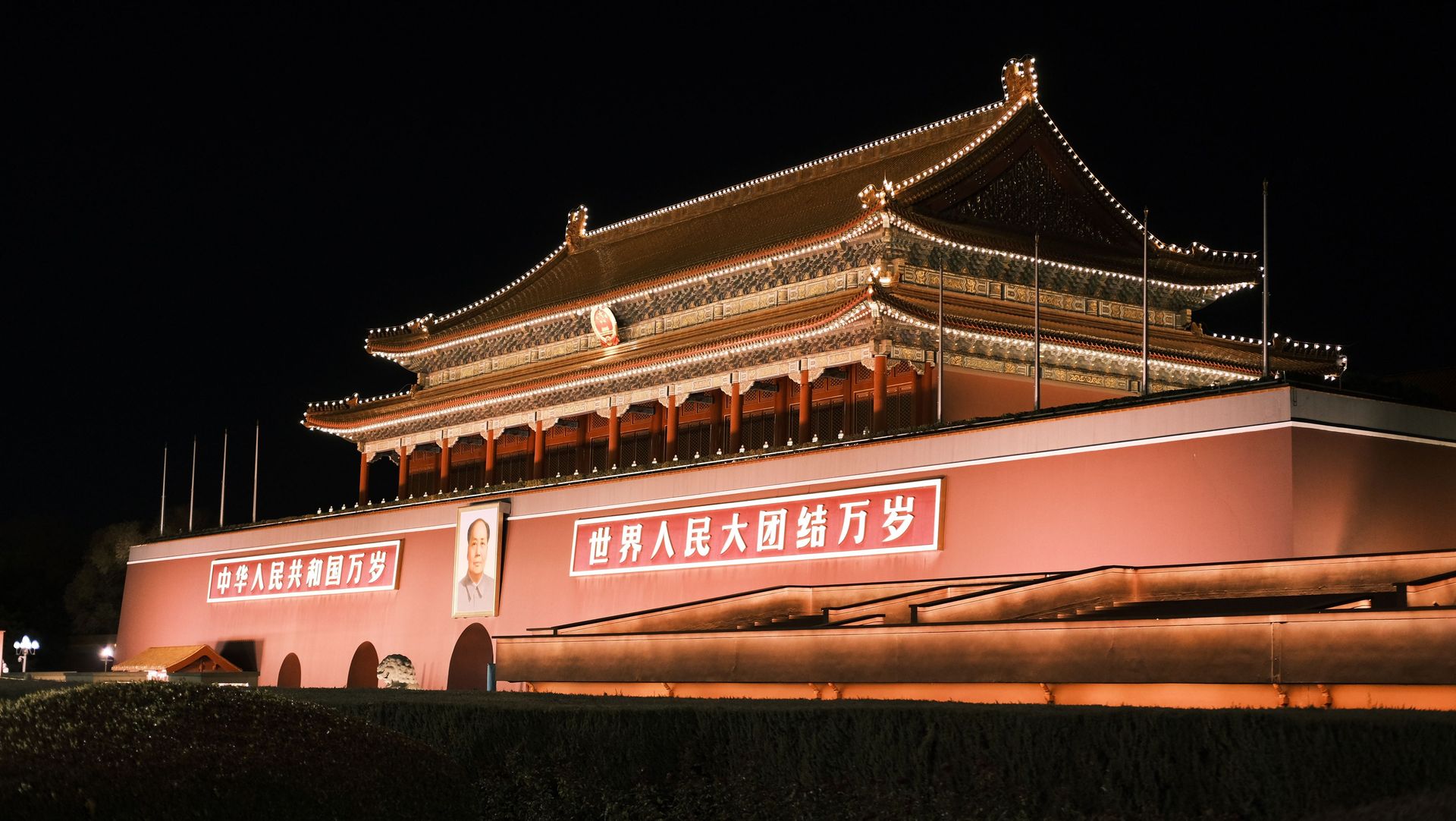
On June 4, 1989, Chinese troops and tanks cleared pro-democracy demonstrators from Beijing's Tiananmen Square $SQ, killing hundreds and by some estimates more than a thousand people in the surrounding streets. The following day, June 5, a column of tanks rolled east along Chang'an Avenue. A lone man in a white shirt and dark trousers, carrying shopping bags, stepped into the road and stopped in front of the lead tank.
When the tank tried to steer around him, he moved to block it again. He climbed onto the hull, appeared to speak with the crew, climbed down and resumed his position until bystanders pulled him away. Photographers watching from balconies of the Beijing Hotel captured the confrontation, among them Jeff Widener of the Associated Press, Stuart Franklin of Magnum, Charlie Cole of Newsweek and Arthur Tsang of Reuters. Widener's frame became the most widely published; Cole's version won the World Press Photo of the Year.
Getting the film out required smuggling. Cole hid his roll in a hotel toilet tank while Chinese security searched his room; other rolls left the country with students and tourists.
The man's identity and fate have never been established, despite decades of investigation. He is known only as Tank Man, or the Unknown Rebel, the name Time magazine used when it placed him among the 100 most important people of the 20th century.
Inside China, the image is systematically censored; searches, social media posts and even oblique visual references are scrubbed, and studies of Chinese students have found many do not recognize the picture. Outside China, it became the era's defining emblem of individual defiance against state power, and it continues to shape how the world remembers a massacre the Chinese government still declines to acknowledge. Widener's frame, made with a borrowed roll of film while he was concussed from a stray rock days earlier, very nearly did not exist at all.
18 / 20
The vulture and the little girl (1993)
Credit: Doug R. W. Dunigan / Pexels
In March 1993, South African photojournalist Kevin Carter traveled to Ayod, a famine-stricken village in southern Sudan during the country's civil war, alongside fellow photographer Joao Silva. Near a UN feeding center, Carter saw a small, emaciated child who had collapsed on the ground en route to the station. As he framed the picture, a vulture landed behind the child. Carter waited quietly, hoping the bird would spread its wings; it did not, and after making his exposures he chased it away.
The New York Times published the photograph on March 26, 1993, with a report on the famine. Reader response was immediate and unusual: hundreds contacted the paper asking what had happened to the child. The Times ran an editor's note stating the child had recovered enough to resume the walk to the feeding center, though the ultimate fate was unknown. In 2011, the Spanish newspaper El Mundo reported that the child was a boy named Kong Nyong, who had survived that famine and died of illness years later.
The image won the Pulitzer Prize for feature photography in May 1994 and drove global attention to the Sudanese famine. It also ignited one of photojournalism's fiercest ethical debates. Critics attacked Carter for photographing rather than intervening; defenders noted that journalists in the region were instructed not to touch famine victims for disease-control reasons, and that the photograph accomplished what aid appeals had not.
Carter did not survive the year. Struggling with financial pressure, drug use, the accumulated trauma of covering violence in South Africa's townships, and the death of his close colleague Ken Oosterbroek, he died by suicide in July 1994 at 33. The photograph is now taught in journalism programs worldwide as the central case study of the photographer's dilemma. Silva, who stood beside Carter in Ayod, later co-wrote a memoir of their circle of conflict photographers, The Bang-Bang Club, which was adapted into a feature film.
19 / 20
The falling man (2001)
Credit: Anthony Quintano / Wikimedia Commons (CC BY 2.0)
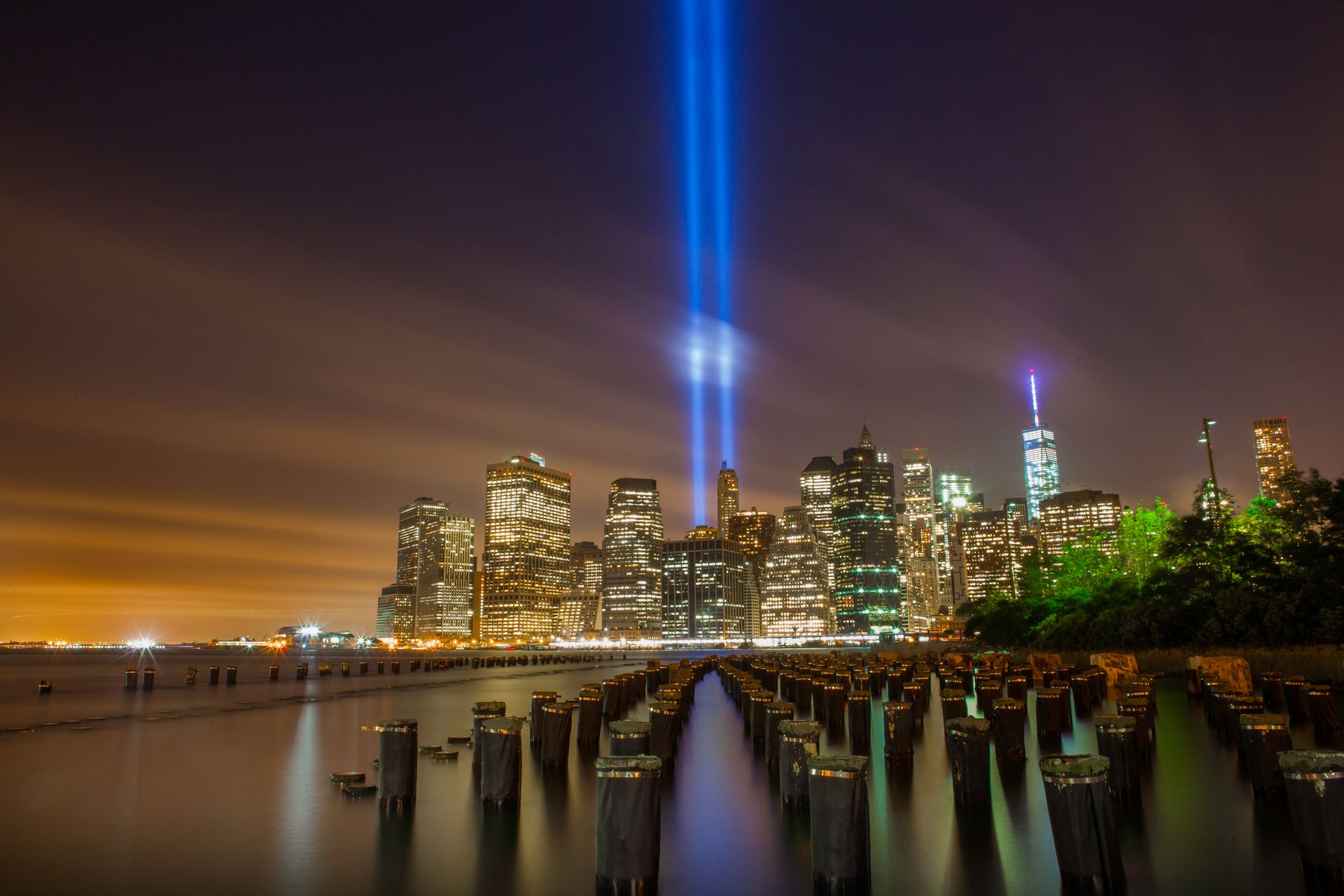
On the morning of September 11, 2001, Associated Press photographer Richard Drew was diverted from a fashion assignment to the World Trade Center after hijacked planes struck both towers. Standing on the street, he photographed people who fell or jumped from the burning upper floors of the North Tower, where heat and smoke had made the offices unsurvivable. At 9:41 a.m. he captured a sequence of one man's descent. In a single frame, the man appears vertical, almost composed, aligned with the tower's columns behind him.
The photograph ran on page seven of the New York Times on September 12 and in newspapers around the world. The backlash was immediate. Readers called it exploitative and voyeuristic, editors were accused of stripping a dying man of dignity, and within days the image largely vanished from American media — a self-imposed erasure nearly unique among major news photographs.
The writer Tom Junod re-examined the picture in a 2003 Esquire essay titled "The Falling Man," which explored efforts to identify the subject. Reporting pointed toward Jonathan Briley, a sound engineer at the Windows on the World restaurant, but no identification has ever been confirmed, and Junod argued the man stands for all of the victims — USA Today estimated that at least 200 people fell or jumped that morning — whom the country preferred not to picture.
The photograph's suppression became its historical significance. It exposed the limits of what a society will allow itself to see of its own catastrophe, in contrast to images of the burning towers, which were shown continuously. Over two decades, the frame has moved from taboo to memorial, the subject of a documentary and sustained scholarship, and a permanent question about which deaths the record is allowed to contain. Drew, who as a young photographer had witnessed Robert Kennedy's assassination in 1968, continued working for the AP for decades and has consistently defended the frame as a record rather than an intrusion.
20 / 20
Alan Kurdi (2015)
Credit: Muhammet Cengiz / Unsplash
Before dawn on September 2, 2015, a small inflatable boat carrying Syrian refugees left the Turkish coast near Bodrum for the Greek island of Kos, a few kilometers away. It capsized within minutes. Among the dead were three-year-old Alan Kurdi, his five-year-old brother Ghalib and their mother Rehanna, a Kurdish family that had fled the war in Syria. Only the father, Abdullah, survived.
Hours later, Nilufer Demir, a photographer for Turkey's Dogan News Agency, found Alan's body lying face-down at the waterline, in a red shirt and blue shorts, and photographed him along with a Turkish gendarme carrying the body away. The images spread across social media within hours and led front pages worldwide the next morning, forcing editors into urgent debates over whether to show a dead child.
The political response was measurable and fast. The photograph appeared at the peak of Europe's refugee crisis, as hundreds of thousands of people crossed the Mediterranean in 2015. Days after publication, British Prime Minister David Cameron, under intensified public pressure, announced the U.K. would resettle 20,000 Syrian refugees over five years. Donations to refugee charities surged across Europe within days of publication.
The family's story reverberated hardest in Canada, where Alan's aunt, Tima Kurdi, lived near Vancouver and had tried to sponsor relatives. The case erupted into the ongoing federal election campaign, and the incoming government of Justin Trudeau made Syrian resettlement a signature commitment, admitting more than 25,000 Syrian refugees by early 2016.
The photograph is now studied as a defining example of a single image altering policy in the social media era — and of how quickly such attention can fade, as Mediterranean crossings and drownings continued in the years that followed. Abdullah Kurdi later settled in Iraqi Kurdistan, where he and Tima Kurdi established a foundation in the children's names to assist refugee families.