From Caesar crossing the Rubicon to Gorbachev refusing to fire a single shot, these are the choices that made the world we live in
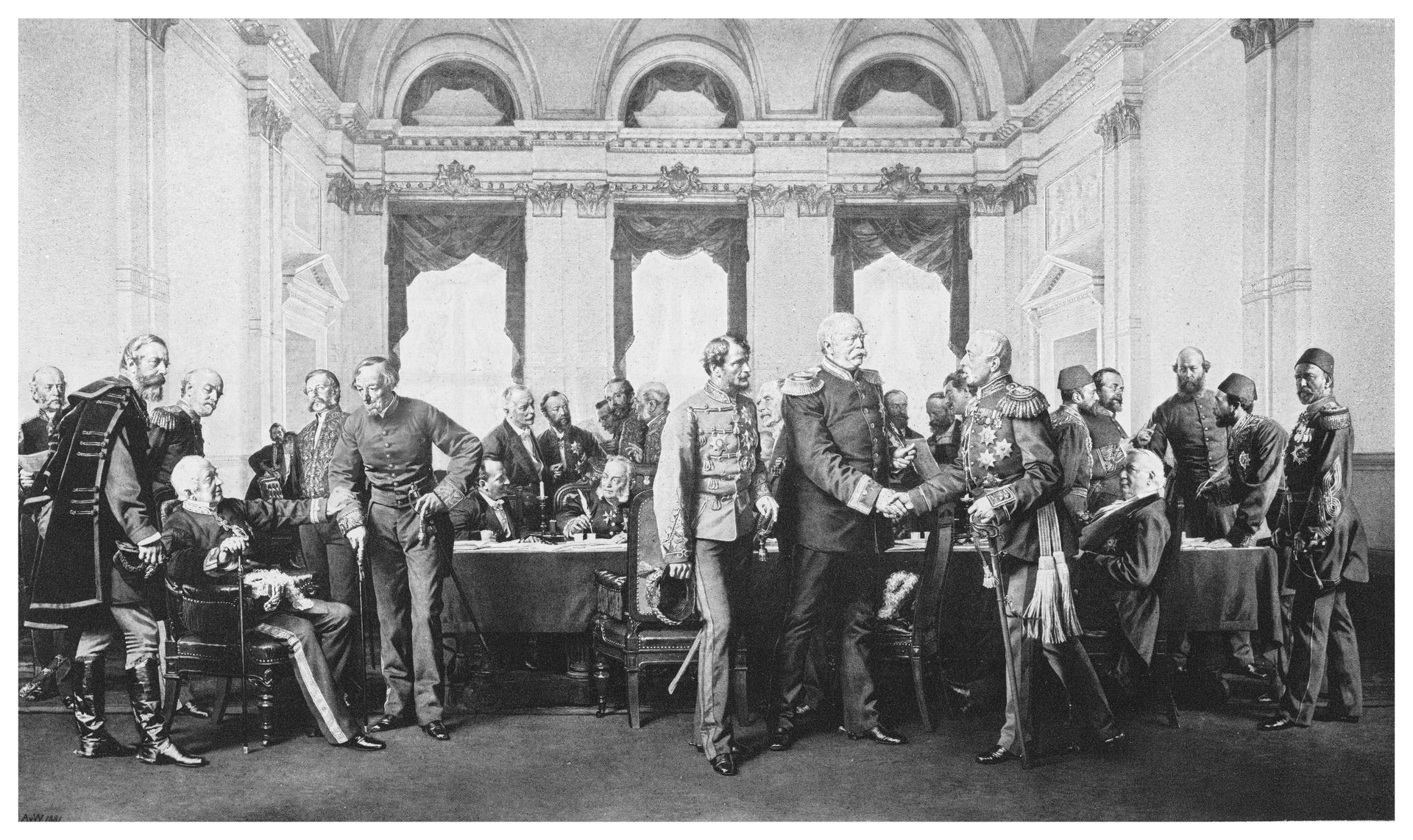
mikroman6 / Getty Images
History has a way of making the past seem inevitable. Napoleon was always going to fall. The Roman Republic was always going to give way to empire. The Cold War was always going to end peacefully. But that sense of inevitability is an illusion produced by outcome bias — because we know how things ended, we assume they could not have ended any other way.
They could have. The cases below are drawn from more than two millennia of recorded history, and what they share is the same unsettling quality: a different decision at a pivotal moment would have produced a fundamentally different world. Not a minor variation, but something almost unrecognizable. A Europe that never became Christian. An American Revolution that was never sparked. A nuclear war in 1962 that consumed much of the northern hemisphere.
The decisions collected here were made under pressure — in the fog of war, in cabinet rooms with competing intelligence reports, in the grip of ideological conviction, or simply in the heat of a moment that no one recognized as historic. Some were made quickly, in hours. Others were agonized over for weeks. A few were made by individual leaders whose authority was absolute. Others emerged from the messy machinery of deliberation and coalition politics. What they have in common is that they were not foreordained, that real alternatives existed — some of them actively debated at the time — and that the choice actually made rippled forward through decades and centuries.
There is an old tension in historical scholarship between the role of individuals and the role of structures. Economic forces, geography, climate, and technology shape the conditions within which leaders operate. No single person, the argument goes, can truly change the direction of history for long — if not Napoleon, another conqueror; if not Columbus, another navigator. The argument has merit. But structures do not make decisions. People do. And in each of the following cases, the person who held power at a particular moment chose a path that was not the only path available. The alternatives were real, not theoretical. Some of them came within hours or days of being chosen instead.
That is what makes these moments worth studying — not as curiosities or counterfactual games, but as a serious reminder that human choices carry consequences and that the world we inhabit today could have been otherwise.
mikroman6 / Getty Images
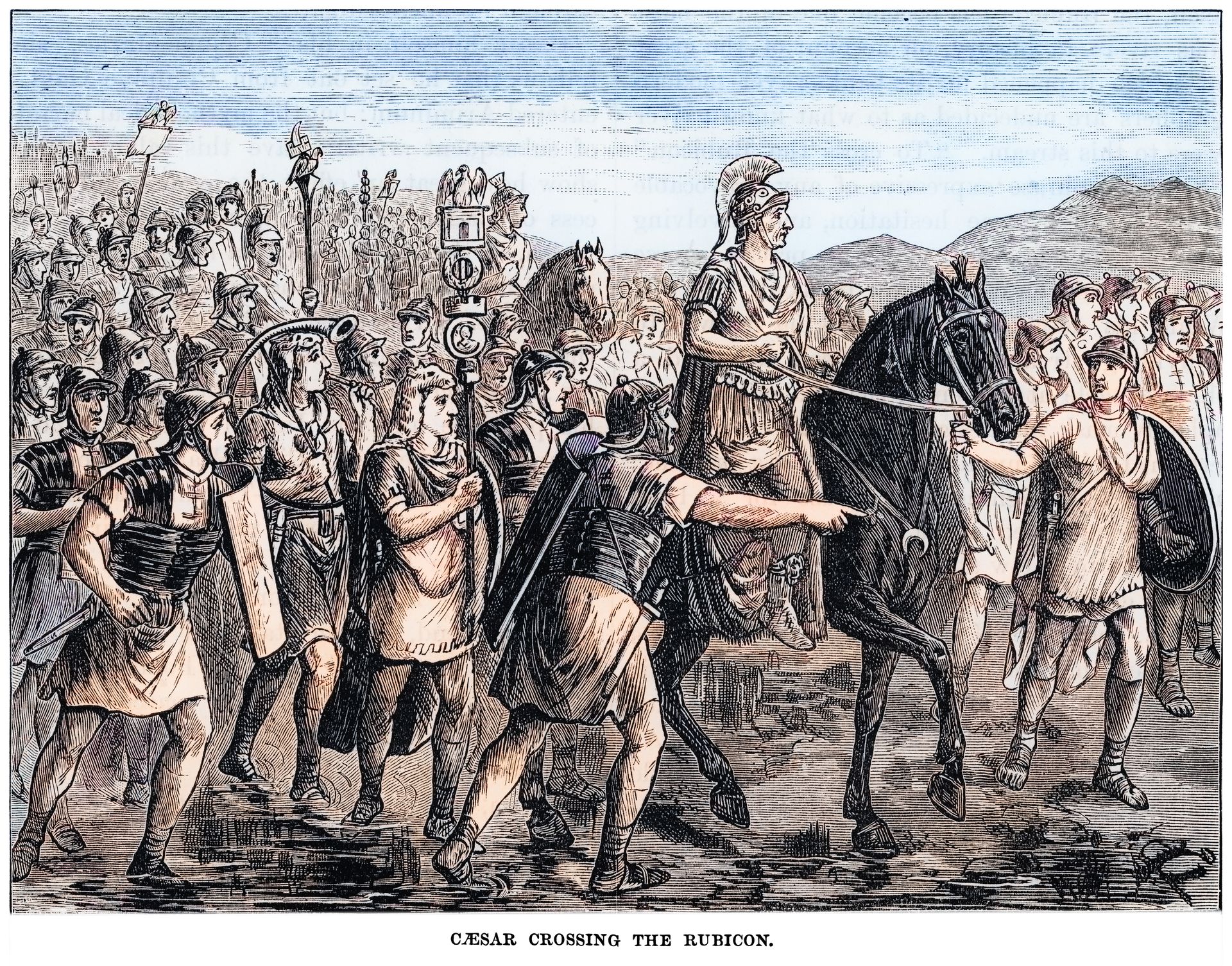
In January of 49 BC, Julius Caesar stood at the northern bank of a shallow river in northeastern Italy called the Rubicon. Under Roman law, this narrow waterway marked the boundary between the province of Cisalpine Gaul and Italy proper. For a Roman general to cross it with a standing army was a capital crime — an act of war against the Roman state. Caesar was aware of this. So was his army. And he crossed anyway.
The Senate had ordered Caesar to disband his legions and return to Rome as a private citizen, where he would have faced prosecution for alleged crimes committed during his command. His enemies had maneuvered to strip him of his legal immunity. The choice before him was stark: surrender and face ruin, or march south and gamble everything. He chose to march.
The consequences unfolded with remarkable speed. His rival Pompey, who had boasted he could raise armies simply by stamping his foot, fled Rome without a fight. Caesar swept down the Italian peninsula in a matter of weeks, encountering almost no resistance. The civil war that followed lasted several years and ended with Caesar as dictator perpetuo — dictator in perpetuity — before his assassination on the Ides of March in 44 BC.
But the crossing of the Rubicon did something more consequential than simply bring Caesar to power. It ended the Roman Republic as a functioning institution. The Republic had already been weakened by a century of political violence and by the precedent of Sulla's earlier march on Rome in 88 BC. Caesar's crossing confirmed what Sulla had demonstrated: that Roman law could not restrain a general who commanded the loyalty of his troops. After Caesar's death, Rome slid into another round of civil wars, and then into the long era of the emperors. The Republic never recovered. Augustus, Caesar's adopted heir, completed what the Rubicon crossing had made possible.
"The die is cast," Caesar reportedly said as he crossed. Whether he said it is disputed. What is not disputed is what happened next. The world the Republic had built — a world of senatorial deliberation, of elected magistrates, of checks and balances among Roman aristocrats — was over. In its place came 400 years of imperial rule that shaped European law, language, governance, and culture in ways that persist to the present day.
The word "Caesar" became a title. The Russian "Tsar" and the German "Kaiser" are both derived from it. The decision made on a riverbank in January changed the political architecture of the ancient world and, through the Roman Empire that followed, set conditions for the development of Europe, North Africa, and the Near East that no other single choice could have produced. A different decision — submission, exile, political compromise — would have preserved a Republic that, for all its flaws, had governed a Mediterranean superpower for five centuries.
Bill Ross / Getty Images
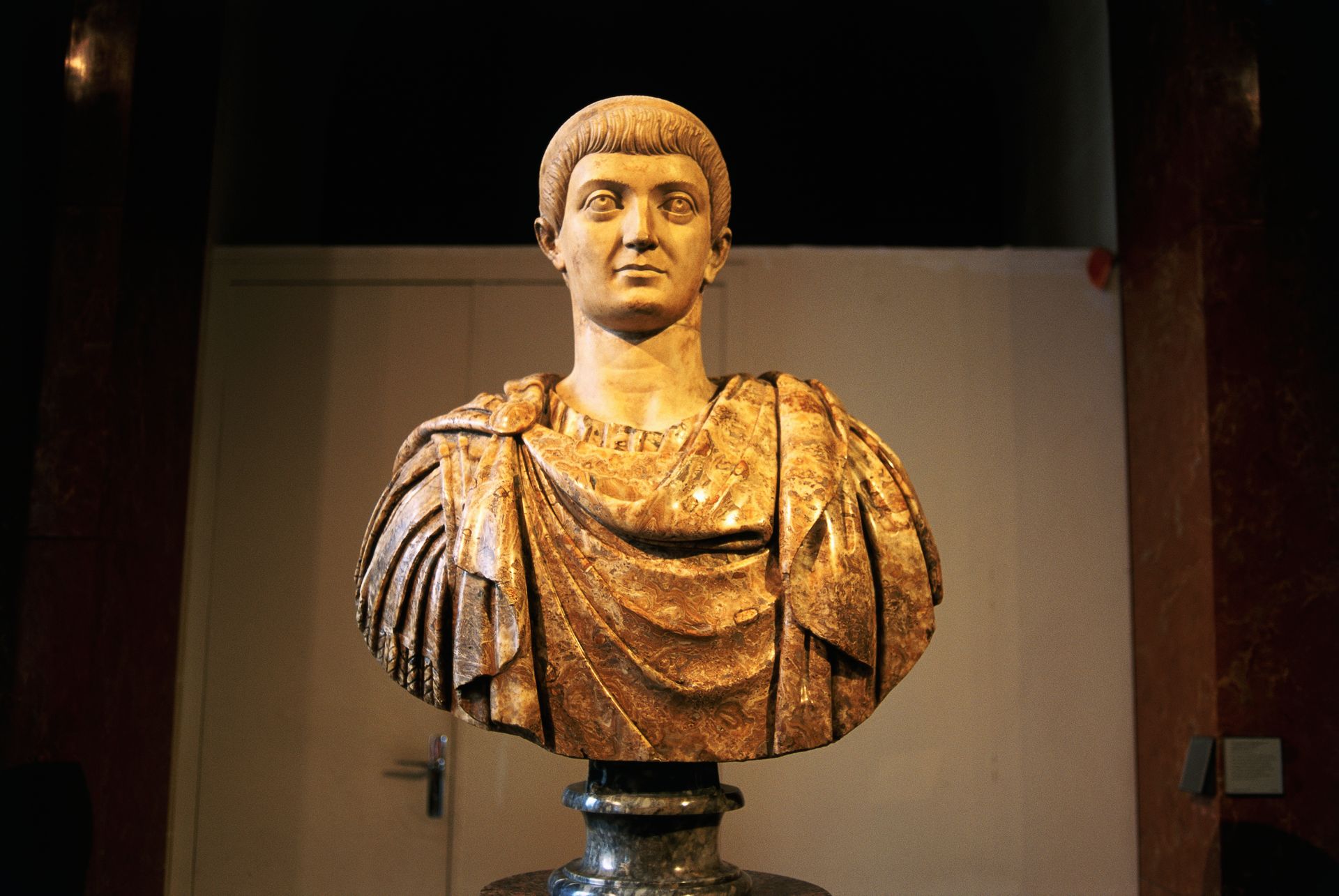
In February of 313 AD, two Roman emperors — Constantine I in the west and Licinius in the east — met in Milan and issued a joint declaration that changed the religious history of the world. The Edict of Milan granted legal toleration to all religions within the Roman Empire, with particular protections for Christianity, which had been intermittently persecuted for the previous two centuries.
Constantine had already converted to Christianity the year before, following his vision before the Battle of Milvian Bridge in 312 AD — a vision that led him to fight under the Chi-Rho symbol, a monogram representing Christ. His victory over his rival Maxentius cemented his control of the western empire and his personal commitment to the new faith.
The decision to legalize and then actively patronize Christianity transformed it from a persecuted minority religion into the dominant faith of the Roman state. Within decades, the emperors who followed Constantine made Christianity the empire's official religion. Pagan temples were closed. Pagan worship was suppressed. The machinery of the Roman state — its administration, its legal codes, its resources — was brought to bear in support of the church.
The long-term consequences are almost impossible to overstate. Christianity's dominance of Europe for more than a thousand years — the medieval church, the Crusades, the Inquisition, the Reformation, the colonization of the Americas in the name of the faith — all flow from the window that Constantine's decision opened. The church became the primary institution of education, governance, and cultural production in Europe after Rome's western half collapsed in the fifth century.
Without imperial patronage, it is far from certain that Christianity would have survived and spread in the way it did. Other religions competed for adherents in the late Roman Empire. Mithraism was popular among soldiers. Various mystery religions drew educated converts. Judaism was well-established. The religious landscape was competitive. Constantine's patronage tilted that competition decisively.
The world that might have emerged from a different choice — an emperor who continued to favor the traditional Roman gods, or who backed a different minority faith — is genuinely difficult to imagine. European civilization as it actually developed was shaped at almost every level by Christian doctrine, Christian institutions, and Christian conflicts. Science, philosophy, law, art, architecture, music, and political theory all bear its imprint. The decision made in Milan in 313 was not merely a policy choice. It was the founding act of a civilization.
PHAS / Getty Images
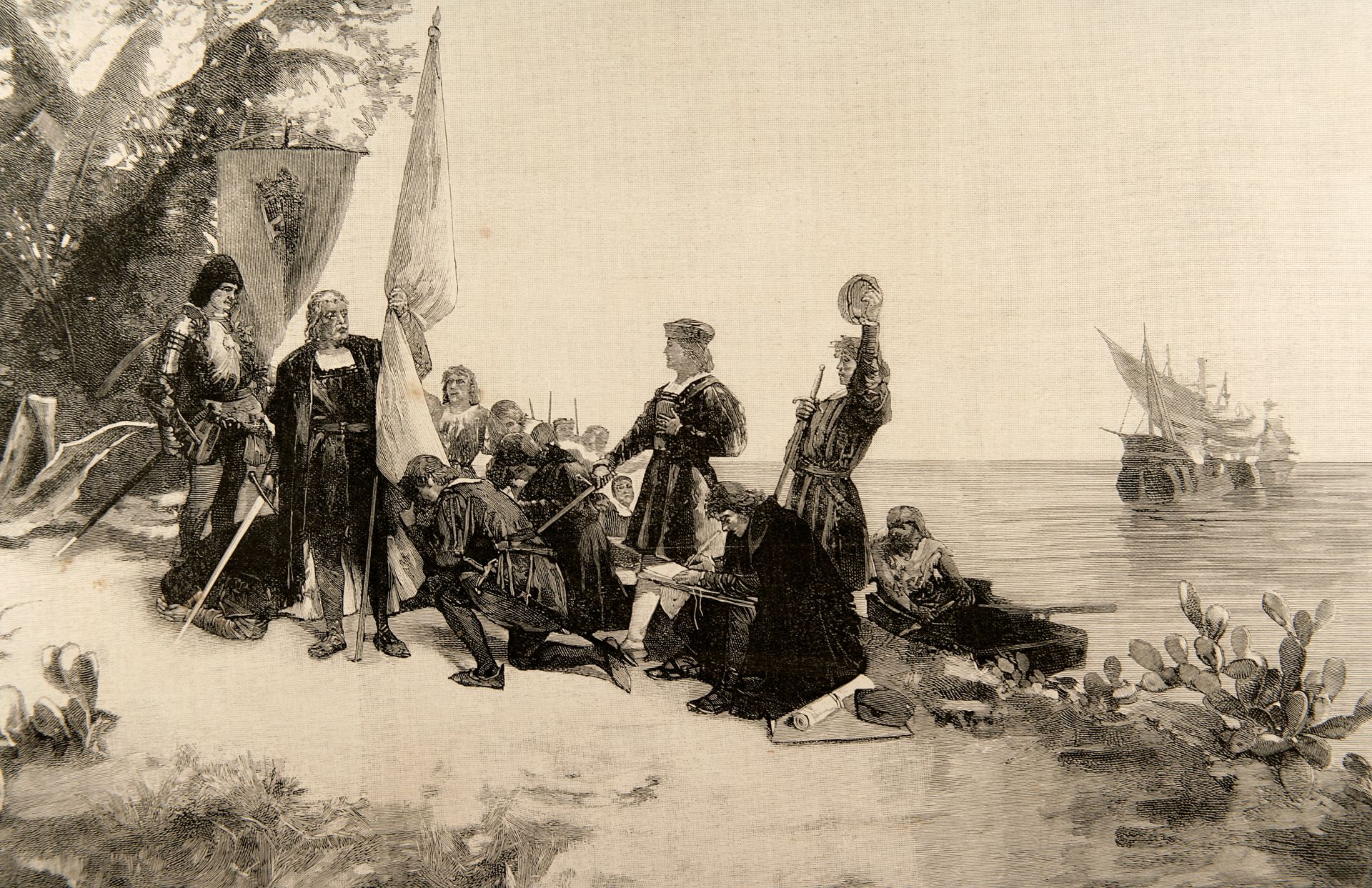
In August of 1492, Christopher Columbus departed the port of Palos de la Frontera in southern Spain with three ships and about 90 men, heading west into the Atlantic. He believed he was charting a new route to Asia. He was wrong about where he was going and wrong about how far away it was. But he sailed anyway, and on October 12, 1492, he made landfall in the Bahamas.
Columbus had spent years shopping his proposal to European courts before the Spanish monarchs Ferdinand and Isabella agreed to fund the expedition. Portugal had turned him down. Spain's own advisers had initially rejected his calculations as unrealistic — which, ironically, they were. Columbus badly underestimated the circumference of the Earth. Had the Americas not been in the way, his crew almost certainly would have run out of food and water before reaching Asia.
The consequences of the voyage are among the most sweeping in recorded history. Contact between the Eastern and Western hemispheres — which had been effectively separated for roughly 12,000 years — produced an exchange of plants, animals, diseases, technologies, and peoples that reshaped every continent. Smallpox and other European diseases devastated Indigenous populations across the Americas. Millions died. The population decline in some regions within a century of contact was catastrophic in scale.
At the same time, the exchange brought crops that transformed the diets and economies of the Old World. Maize, potatoes, tomatoes, and cacao all traveled east. European crops, livestock, and invasive species traveled west. The potato alone is credited with fueling population growth across Europe in the following centuries.
The political consequences were equally profound. Spain and Portugal built empires across the Americas, followed by Britain, France, and the Netherlands. Colonialism reshaped the demographics, languages, and institutions of the Western Hemisphere. The transatlantic slave trade — which transported approximately 12.5 million Africans to the Americas between the 15th and 19th centuries — emerged directly from the plantation economies that colonialism built.
Other European navigators might have reached the Americas eventually. But the timing of contact matters enormously. The specific moment at which diseases, technologies, and imperial ambitions collided determined which civilizations survived and which collapsed, which languages became dominant, and which populations were enslaved or exterminated. Columbus's crossing set the clock.
Universal History Archive / Getty Images
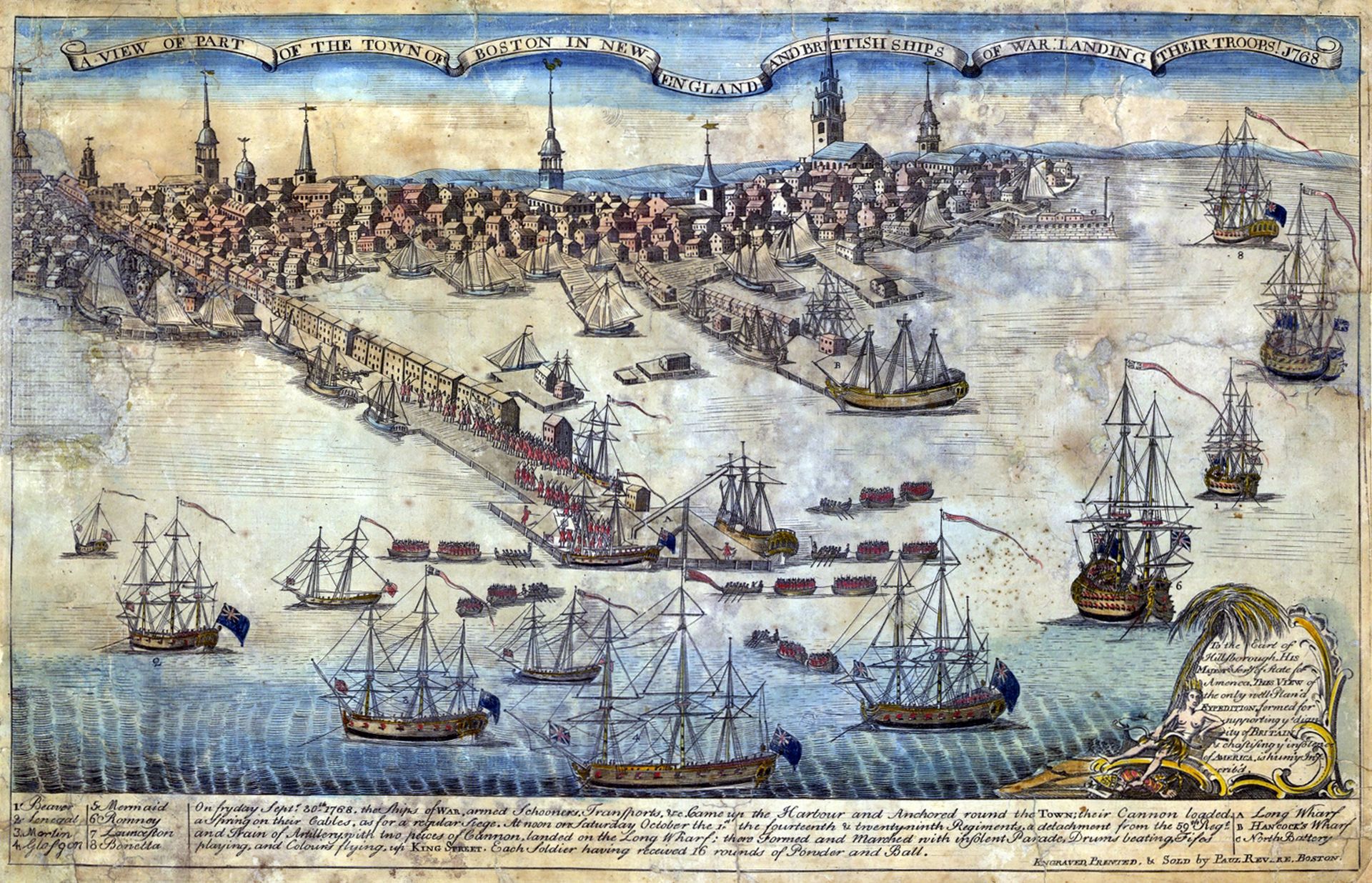
In March of 1765, the British Parliament passed the Stamp Act, a law requiring colonists in British North America to pay a tax on all printed materials — newspapers, legal documents, pamphlets, even playing cards — using paper bearing an official revenue stamp. The tax was designed to help offset the military costs of the Seven Years' War, a global conflict that had left Britain deeply in debt.
Parliament had taxed the colonies before, but always through trade duties imposed on imported goods. The Stamp Act was different. It was a direct internal tax — imposed on transactions that occurred entirely within the colonies, without any colonial representation in Parliament. The reaction in the colonies was immediate and fierce.
Colonial assemblies passed resolutions declaring that only their own elected bodies had the right to tax them. The phrase "no taxation without representation" became a rallying cry. Stamp distributors were threatened and attacked. A coalition called the Sons of Liberty organized resistance across the colonies. Merchants signed nonimportation agreements, refusing to buy British goods. The Stamp Act Congress — a gathering of delegates from nine colonies — met in New York and issued a declaration of rights and grievances.
Parliament repealed the Stamp Act in 1766 but simultaneously passed the Declaratory Act, asserting its absolute right to legislate for the colonies "in all cases whatsoever." The repeal resolved the immediate crisis while leaving the underlying dispute unresolved. More provocations followed — the Townshend Acts, the Boston Massacre, the Tea Act, and ultimately the Coercive Acts — each ratcheting up the conflict until the first shots were fired at Lexington and Concord in April 1775.
Had Parliament declined to pass the Stamp Act, or crafted a different approach to colonial taxation — one that acknowledged colonial assemblies as the appropriate taxing bodies — the political crisis that produced the American Revolution might never have developed in the way it did. Colonial loyalty to the Crown was strong at the time the Stamp Act passed. Many colonists thought of themselves as Britons. The Revolution was not an inevitable product of colonial grievance. It was produced by a specific political miscalculation made in London in 1765.
The country that emerged from that revolution became, within 150 years, the dominant military and economic power on Earth. Its founding documents influenced democratic movements on every continent. The British decision to impose the Stamp Act set all of that in motion.
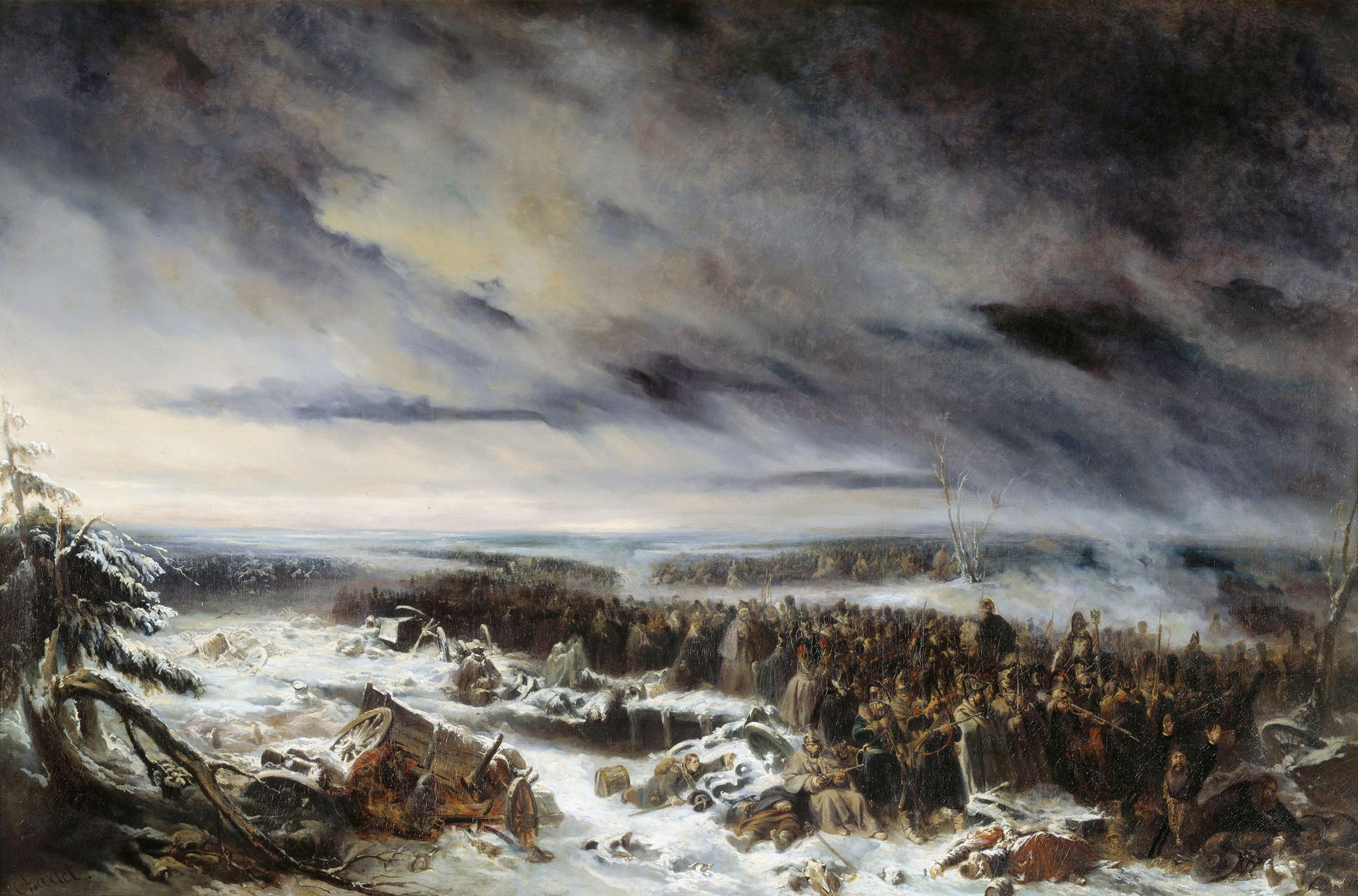
Photo Josse / Leemage / Getty Images
By the spring of 1812, Napoleon Bonaparte controlled most of continental Europe. France had defeated Prussia, Austria, and Spain. Britain remained unconquered across the Channel but posed no immediate threat on land. The Continental System — Napoleon's attempt to strangle Britain economically by closing European ports to British goods — was leaking badly, and Russia was the biggest leak of all.
Tsar Alexander I had initially agreed to the Continental System at Tilsit in 1807 but had grown increasingly unwilling to enforce it, because it was devastating the Russian economy. Napoleon decided the only solution was military. In June of 1812, he led an army of roughly 680,000 men — the largest assembled in European history to that point — across the Niemen River into Russia.
His advisers were not uniformly enthusiastic. Several senior generals warned about the risks of campaigning in Russia's vast interior, about the logistical challenges of supplying such a large force over such distances, and about the Russian military's capacity to retreat deeper into its own territory indefinitely. Napoleon overrode these concerns.
The campaign was a catastrophe. The Russians refused to stand and fight a decisive engagement until Borodino in September, by which point the French army had already been depleted by disease, desertion, and the scorched earth the Russians left in their wake. Napoleon entered Moscow to find it largely empty and on fire. He waited six weeks for a Russian peace offer that never came. When he retreated in October, he led his army directly into the Russian winter. By the time the remnants of the Grande Armée crossed back into friendly territory, somewhere between 400,000 and 500,000 men had died or been captured.
The defeat destroyed the myth of Napoleon's invincibility. Prussia, Austria, and the other European powers that had submitted to French dominance saw an opportunity and formed a new coalition. Napoleon was defeated at Leipzig in 1813, abdicated in 1814, returned briefly in 1815, and was finally defeated at Waterloo. He died in exile on Saint Helena in 1821.
The Europe that emerged from the Congress of Vienna in 1815 was deliberately constructed to prevent any single power from achieving the dominance Napoleon had briefly held. That settlement shaped European politics for a century — until the catastrophic decisions of 1914 undid it.
Education Images / Getty Images
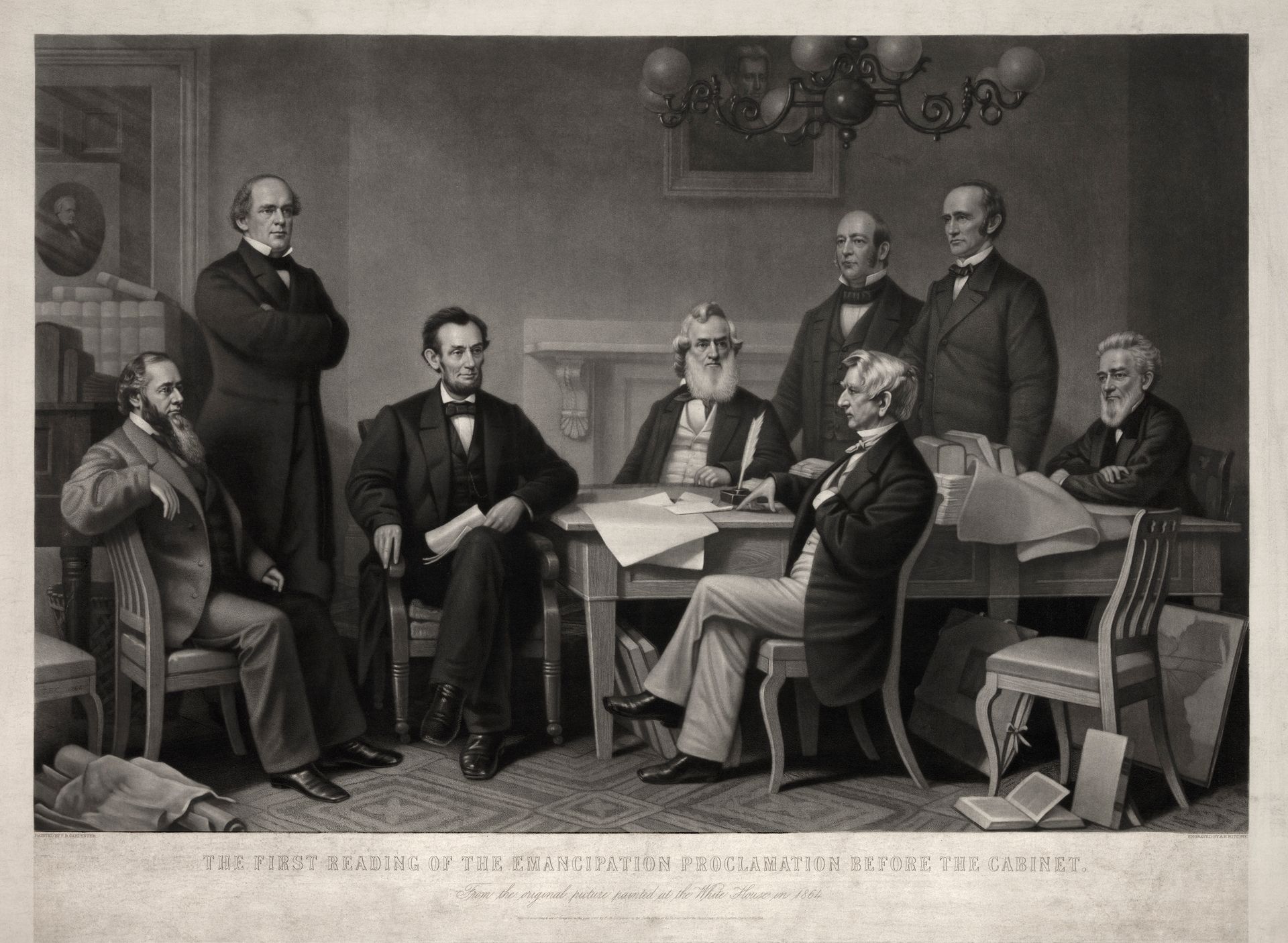
On January 1, 1863, President Abraham Lincoln issued the Emancipation Proclamation, declaring that all enslaved people in Confederate states still in rebellion against the United States were free. The proclamation did not immediately free a single enslaved person — it applied only to areas under Confederate control, where the federal government had no enforcement power. And yet it was one of the most consequential decisions any American president ever made.
Lincoln had resisted issuing such a proclamation for most of the war's first two years. His stated goal at the outset of the Civil War was to preserve the Union, not to end slavery. He was deeply concerned about the border states — Delaware, Maryland, Kentucky, and Missouri — slave states that had remained in the Union. He worried that an emancipation proclamation would drive them toward the Confederacy.
What changed his mind was partly military, partly political, and partly moral. On the military side, the Union needed additional troops, and Black Americans were eager to fight for their own freedom. On the political side, Britain and France had been considering recognizing the Confederacy, which would have been a severe blow to the Union cause. Both countries had abolished slavery, and it was difficult for them to recognize a government fighting explicitly in slavery's defense once the Union framed the war as a struggle for emancipation. The proclamation cut off Confederate hopes of European recognition.
The proclamation also transformed the war's meaning. What had been, in Lincoln's own framing, a war to preserve the Union became also a war to end slavery. That transformation had lasting effects on how the Civil War was remembered, on the political demands that Black Americans could make, and on the legal and moral framework that eventually produced the 13th, 14th, and 15th Amendments to the Constitution.
Without the Emancipation Proclamation, the Civil War might still have ended in Union victory. But the terms of peace — and the subsequent history of Reconstruction and the legal status of formerly enslaved people — would almost certainly have been different. The proclamation inserted into the war's outcome a commitment to emancipation that constrained what any post-war settlement could look like.
Lincoln's decision did not guarantee equality. But it made equality a constitutional demand — one that the 20th century's civil rights movement would eventually use to hold the country to its stated ideals.
DEA / A. DAGLI ORTI / Getty Images
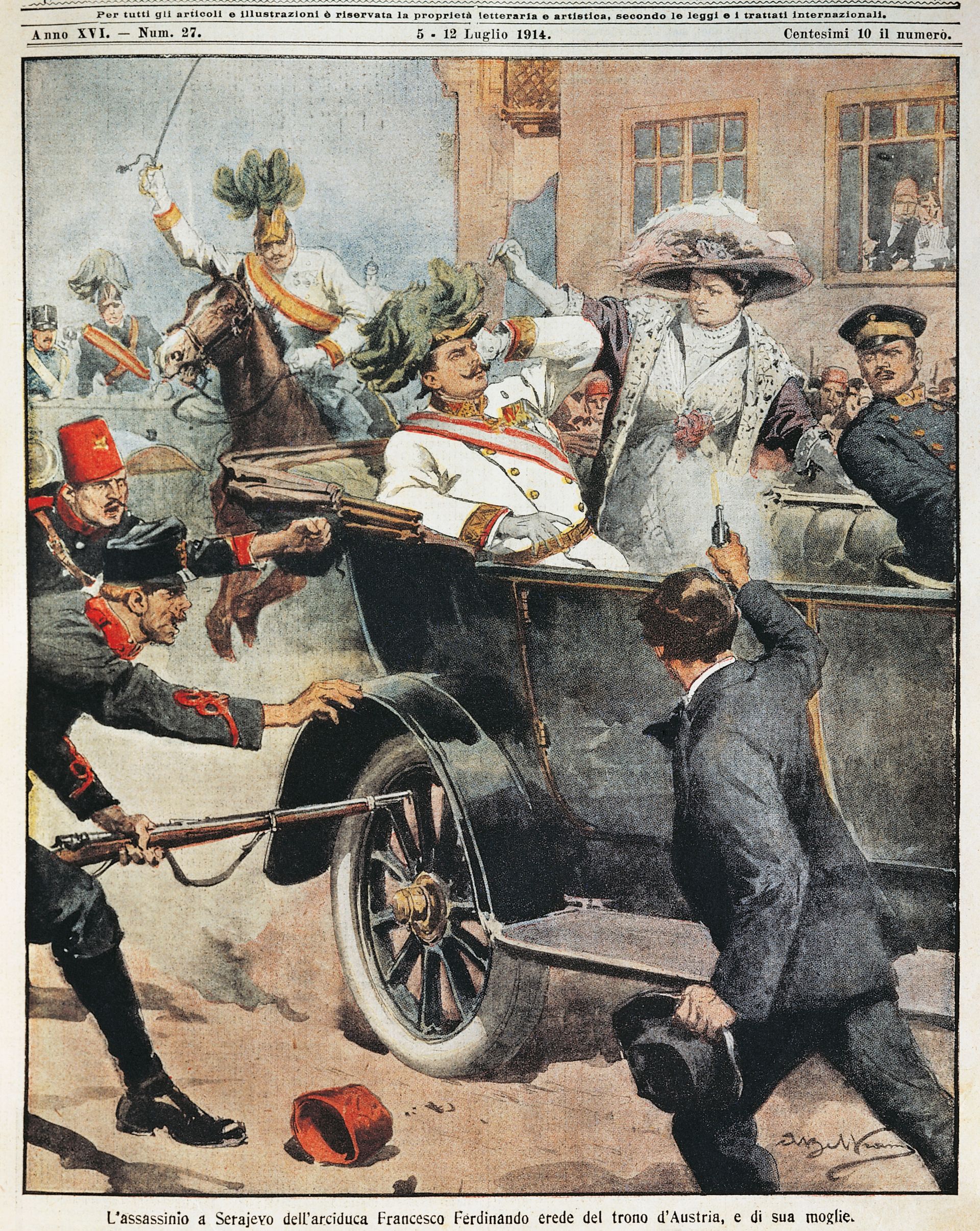
On June 28, 1914, Archduke Franz Ferdinand, heir to the Austro-Hungarian throne, was assassinated in Sarajevo by Gavrilo Princip, a Bosnian Serb nationalist with ties to a secret society called the Black Hand. The assassination was the trigger. What followed was a decision.
Austria-Hungary's leaders, with the backing of Germany — in what became known as the "blank check" of German support — decided to use the assassination as a pretext to crush Serbia once and for all. They issued an ultimatum to Serbia on July 23, 1914, with conditions so severe that Serbian acceptance would have effectively ended Serbian sovereignty. Serbia accepted most of the conditions. Austria-Hungary rejected the response and declared war anyway on July 28.
Within days, the alliance system of Europe snapped into motion. Russia began mobilizing in support of Serbia. Germany declared war on Russia. France, bound by treaty to Russia, was drawn in. Germany invaded Belgium on its way to France, bringing Britain into the war under its treaty obligations to Belgium. By August 4, 1914 — 37 days after the assassination — the major European powers were at war.
The First World War killed approximately 20 million people and wounded tens of millions more. It destroyed four empires — the Austro-Hungarian, Ottoman, Russian, and German — and redrew the map of Europe and the Middle East in ways that produced conflicts that continue to the present day. The post-war carve-up of the Ottoman Empire's Arab territories drew borders across the region with little relation to ethnic, tribal, or religious realities — an imposition that contributed to a century of instability.
The war also directly produced the conditions for the Second World War. The punitive terms imposed on Germany at Versailles in 1919 created the resentments that Adolf Hitler exploited. The Russian Revolution of 1917, which the strains of the war made possible, produced the Soviet Union and 70 years of Cold War.
None of this was the inevitable result of Princip's shots in Sarajevo. Franz Ferdinand's assassination was a crisis. The decision to turn it into a general European war was Austria-Hungary's — backed by Germany and resisted, insufficiently, by statesmen across Europe who could see where it was heading. A different decision in Vienna in late July 1914 might not have prevented all conflict. But it would have prevented the specific catastrophe that followed.
Universal History Archive / Getty Images
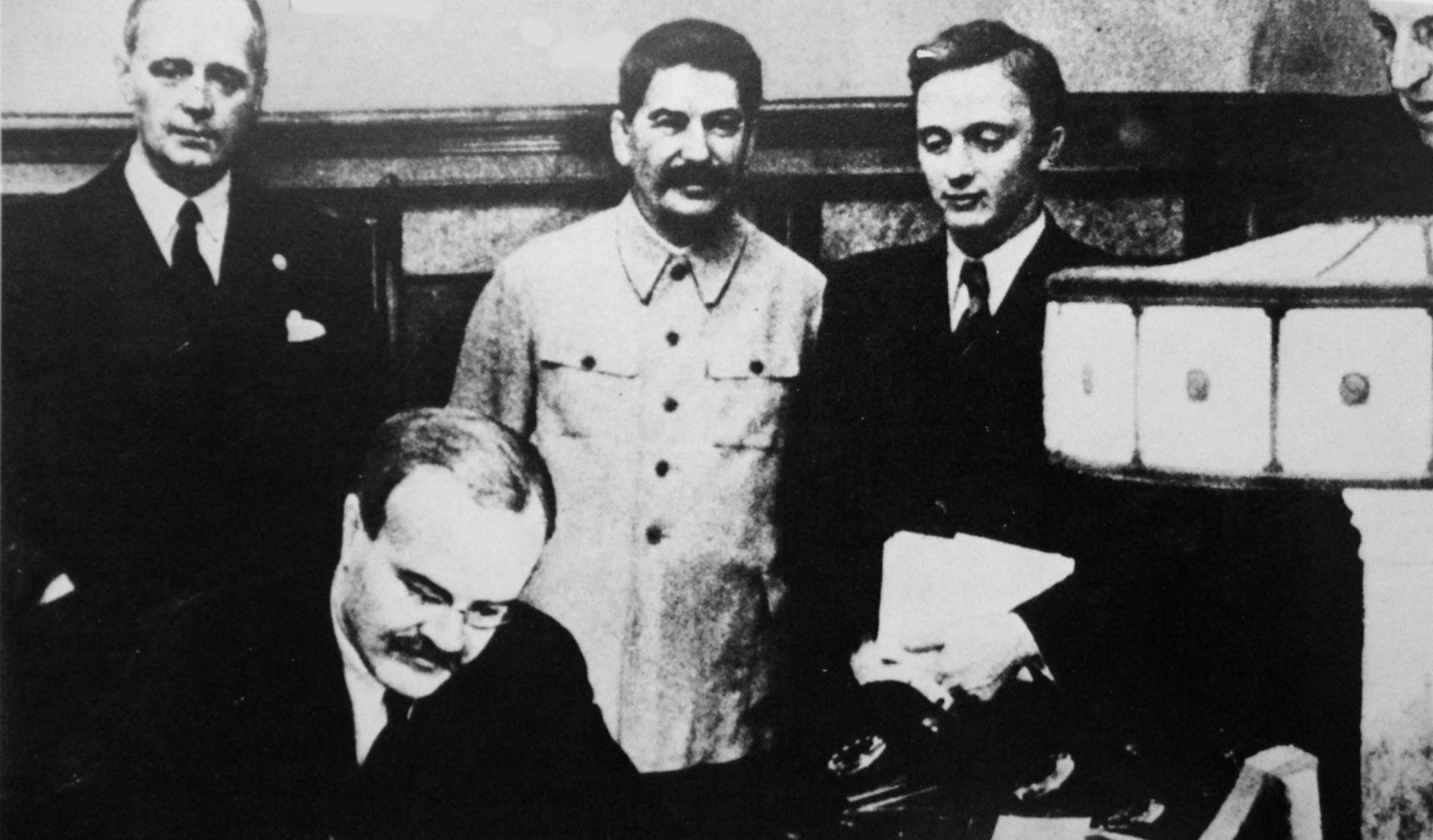
On August 23, 1939, the foreign ministers of Nazi Germany and the Soviet Union signed a non-aggression pact in Moscow. Vyacheslav Molotov signed for the Soviets; Joachim von Ribbentrop for Germany. Joseph Stalin and Adolf Hitler — ideological enemies whose movements had spent years denouncing each other — had made a deal.
The public text of the pact pledged that neither country would attack the other or support a third party in an attack against either. A secret protocol, which the Soviet Union denied until 1989, divided Eastern Europe into German and Soviet spheres of influence. Poland was to be partitioned between them. Finland, Estonia, Latvia, and Lithuania were assigned to the Soviet sphere. Germany received a free hand in the west.
Nine days after the pact was signed, Germany invaded Poland. Britain and France declared war on Germany. The Second World War had begun.
The pact mattered for several reasons beyond simply enabling the invasion of Poland. It removed Hitler's fear of fighting on two fronts simultaneously, at least in the short term. The First World War had exhausted Germany partly because it had to fight in both the east and west at once. The pact eliminated the eastern threat and freed Germany to focus on Western Europe. France fell in six weeks.
From Stalin's perspective, the pact was meant to buy time — time for the Soviet Union to rebuild its military after the purges of the late 1930s had decimated its officer corps. It also gave Stalin territorial gains in Eastern Europe that served as a buffer against future German aggression. But the calculation was badly wrong. Hitler invaded the Soviet Union in June 1941, less than two years after the pact was signed. The war that followed killed an estimated 27 million Soviet citizens.
Had Stalin chosen to align with Britain and France in 1939 — as he had explored during talks in the spring and summer of that year — the strategic calculus of the war would have looked entirely different. Hitler would have faced the prospect of a two-front war from the outset. Whether he would have invaded Poland under those circumstances is genuinely uncertain. The pact did not merely fail to prevent the war. It actively structured the conflict's opening phase in ways that made Germany's early conquests possible.
Fox Photos / Getty Images
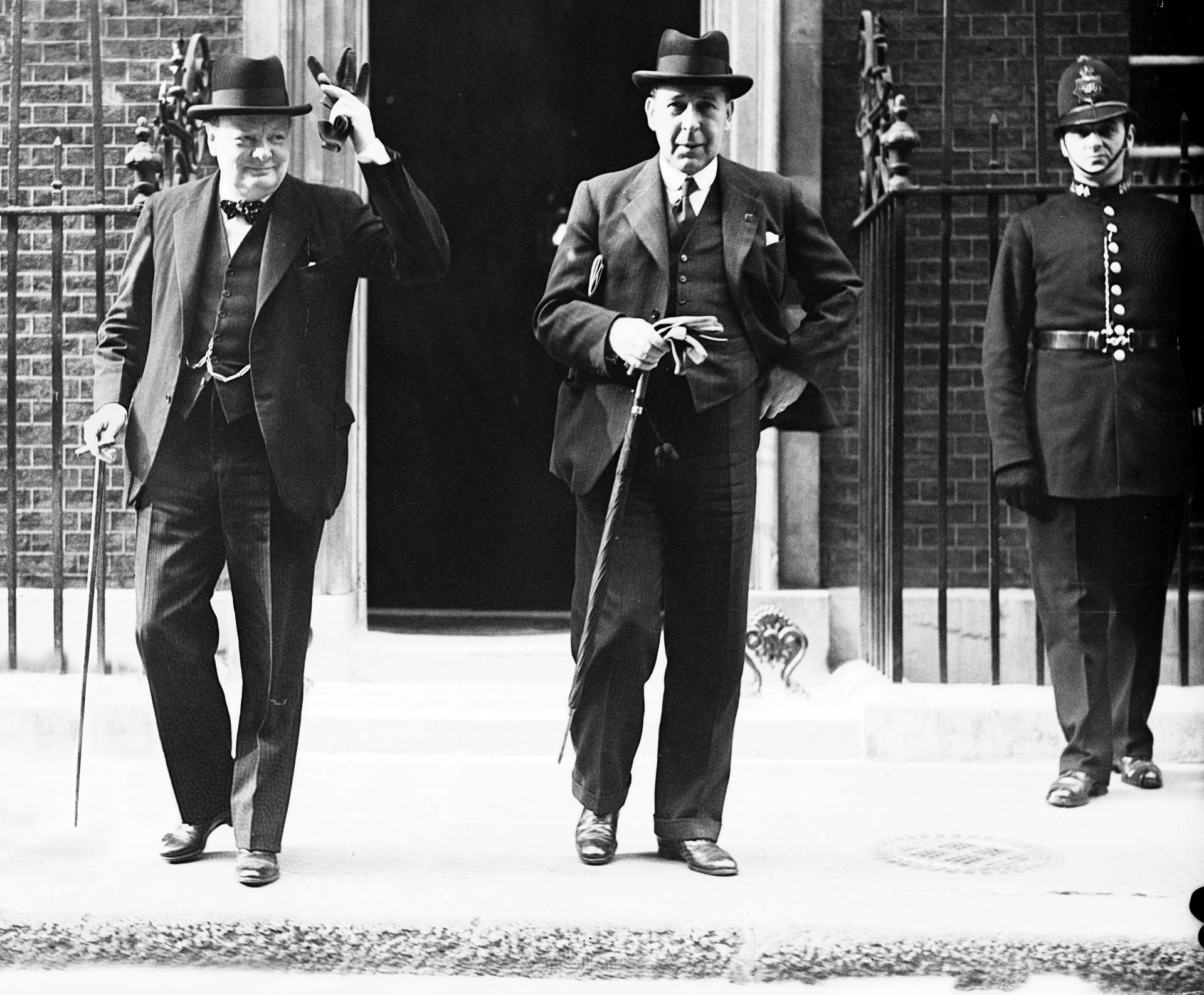
In late May of 1940, with the British Expeditionary Force trapped at Dunkirk and France on the verge of collapse, the War Cabinet of the United Kingdom held a series of meetings that have since become one of the most examined episodes in modern political history. At the center of the debate was a single question: should Britain seek terms from Germany through Italian mediation, or should it fight on?
Lord Halifax, the Foreign Secretary and a senior member of the War Cabinet, argued that it was worth exploring what terms Hitler might offer. Halifax was not a coward or a fool. He was a realist, looking at a military situation that appeared desperate. France was falling. Britain stood alone. The United States was neutral. An inquiry through Mussolini, Halifax argued, cost nothing and might produce terms that preserved British sovereignty and the empire.
Winston Churchill, who had been Prime Minister for just 16 days, disagreed. His position — argued over the course of five separate War Cabinet meetings between May 26 and 28 — was that any approach to Hitler would destroy Britain's will to fight, that Hitler could not be trusted to honor any terms offered, and that continued resistance remained viable. He told his Cabinet that "if this long island story of ours is to end at last, let it end only when each one of us lies choking in his own blood."
The Cabinet sided with Churchill. The Dunkirk evacuation succeeded in rescuing more than 338,000 troops. Britain fought on. The Battle of Britain, fought in the skies over England through the summer and autumn of 1940, prevented a German invasion. The survival of Britain as a belligerent gave the Allied cause a base from which to prosecute the war — including the eventual landings in Normandy in June 1944.
A British request for terms in May 1940 would not automatically have produced peace. Hitler might have demanded conditions that Britain could not accept. But the act of approaching him would almost certainly have shattered the national consensus for resistance, as Churchill argued it would. A Britain that sought terms — even unsuccessfully — was a different Britain from the one that rejected negotiation outright.
The decision made in those five Cabinet meetings preserved the one Allied power capable of sustaining the war in the west until the United States entered it 18 months later.
Keystone / Getty Images
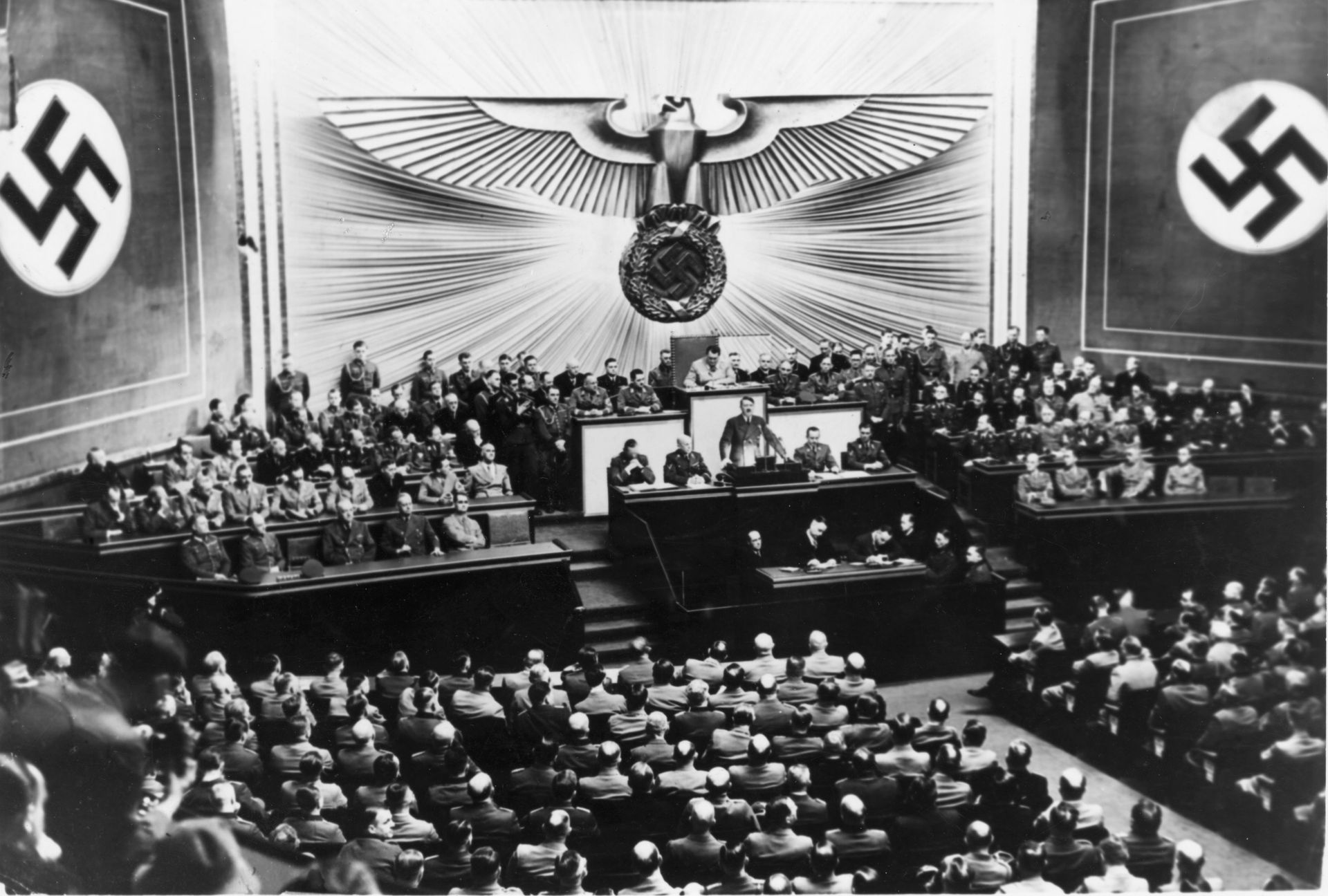
On December 11, 1941, four days after the Japanese attack on Pearl Harbor, Adolf Hitler stood before the Reichstag and declared war on the United States. It was one of the most consequential strategic miscalculations in military history — and it was entirely voluntary.
Japan's attack had brought the United States into the Pacific war, but it had not obligated Germany to do anything. The Tripartite Pact of 1940, which bound Germany, Italy, and Japan in alliance, contained a mutual defense clause — but only in cases where one of the signatories was attacked by another power. Japan had attacked the United States, not the other way around. Germany was under no legal or treaty obligation to declare war.
Hitler did so anyway. His reasoning appears to have been several-fold. He had long anticipated that war with the United States was inevitable and believed that striking first, in solidarity with Japan, was preferable to waiting. He also thought that the undeclared naval war already developing in the Atlantic — German U-boats had been attacking American vessels — made formal war inevitable in any case. And he badly underestimated American industrial and military capacity, a miscalculation he shared with the Japanese leadership.
The decision handed Franklin Roosevelt something he had been unable to secure through political maneuvering: a congressional declaration of war against Germany. American public opinion, after Pearl Harbor, strongly supported war with Japan. But the political coalition Roosevelt needed to fight in Europe required a German declaration. Hitler provided it.
The consequences for Germany were fatal. American industrial production — once fully converted to war output — generated quantities of equipment and materiel that Germany could not match. American troops in North Africa, Italy, and eventually France put millions of additional soldiers into the fight against German forces. American airpower joined the bombing campaign against German cities and industry. The combination of Soviet resistance in the east and American power in the west produced the two-front war that German military planning had always identified as the scenario most likely to produce German defeat.
Had Hitler not declared war on December 11, 1941, it is entirely possible the United States would have focused its resources on the Pacific. The war in Europe might have lasted years longer. The Soviet Union, without American Lend-Lease support, might have faced even greater difficulty. The outcome of the war — certain enough in hindsight — was made dramatically more certain by one man's decision in Berlin that December.
Universal History Archive / Getty Images
In the summer of 1945, the United States had developed and tested the world's first nuclear weapon. The question facing President Harry Truman was whether to use it against Japan.
The alternatives were real and debated at the time. One option was a demonstration — detonating the weapon over an uninhabited area to show Japan what it faced. Another was a naval blockade combined with continued conventional bombing, which was already devastating Japanese cities. A third was a land invasion of the Japanese home islands, which military planners estimated could cost hundreds of thousands of American casualties and potentially millions of Japanese lives. A fourth was waiting to see whether the Soviet Union's entry into the Pacific war — scheduled for August 1945 under agreements made at Yalta — would prompt Japanese surrender.
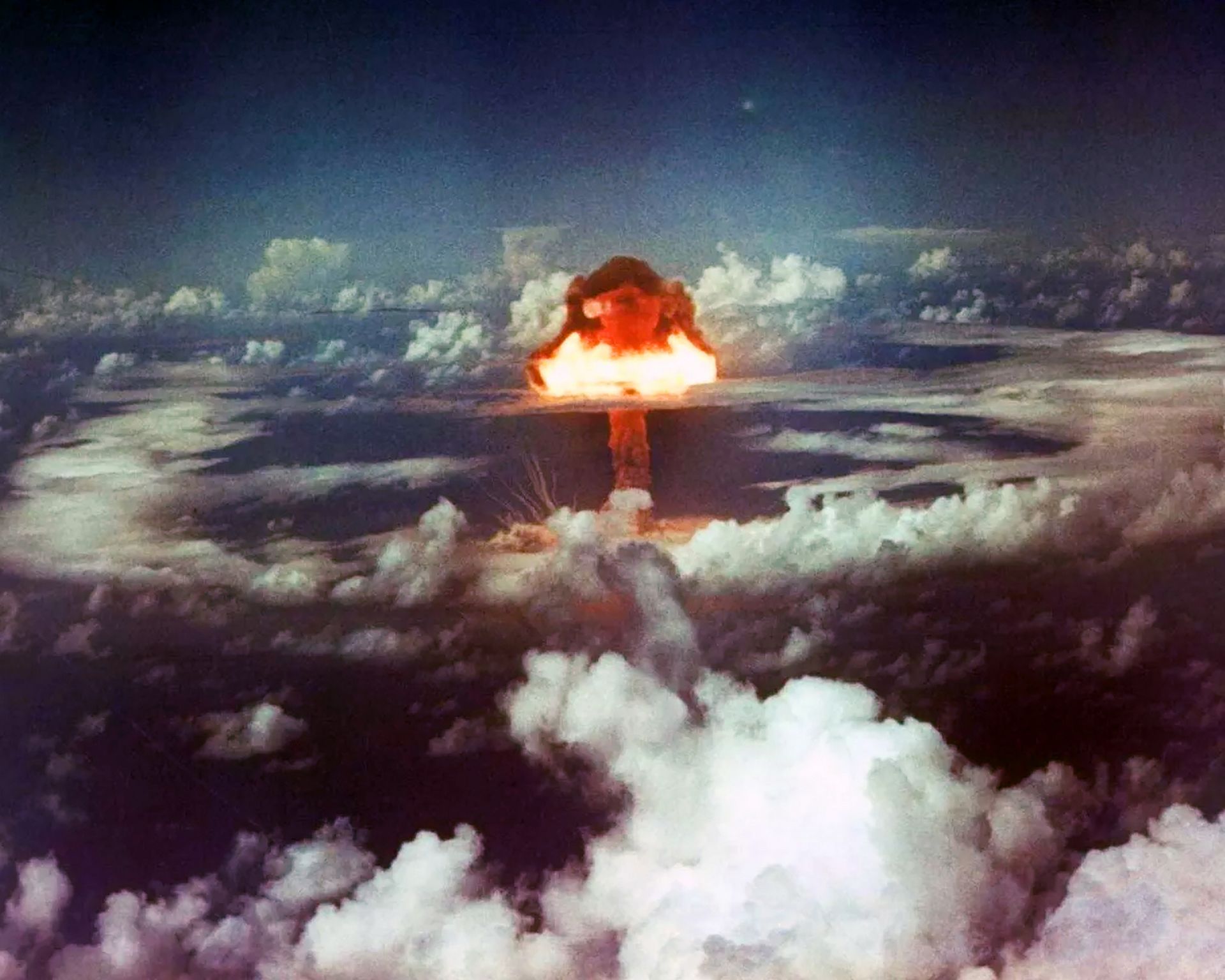
Truman chose to use the bombs directly against Japanese cities. The first was dropped on Hiroshima on August 6, 1945, killing an estimated 70,000 to 80,000 people immediately and tens of thousands more from radiation and injury in the weeks that followed. The second was dropped on Nagasaki on August 9, killing an estimated 40,000 people in the immediate blast. Japan announced its intention to surrender on August 15. The formal surrender ceremony took place on September 2.
The decision remains one of the most debated in modern history. Supporters argue that it ended the war quickly and avoided the catastrophic casualties of an invasion. Critics argue that Japan was already near surrender, that the bombs were used partly to intimidate the Soviet Union, and that the deliberate targeting of civilian populations constituted a war crime. These arguments have continued in historical scholarship for eight decades and have not been resolved.
What is not disputed is the long-term effect on global politics. The use of nuclear weapons at Hiroshima and Nagasaki defined the atomic age and created the template for the Cold War's logic of deterrence. The fear of nuclear weapons — grounded in the reality of what they had done to two Japanese cities — restrained both the United States and the Soviet Union from direct military conflict for four decades. Every subsequent arms control negotiation, every Cold War crisis, and every debate about nuclear proliferation has been conducted in the shadow of Truman's decision.
A different choice — a demonstration, a blockade, or simply waiting for Soviet entry into the war — would have ended the conflict differently and might have produced a post-war world in which nuclear weapons remained a theoretical threat rather than a demonstrated one.
Keystone-France / Getty Images
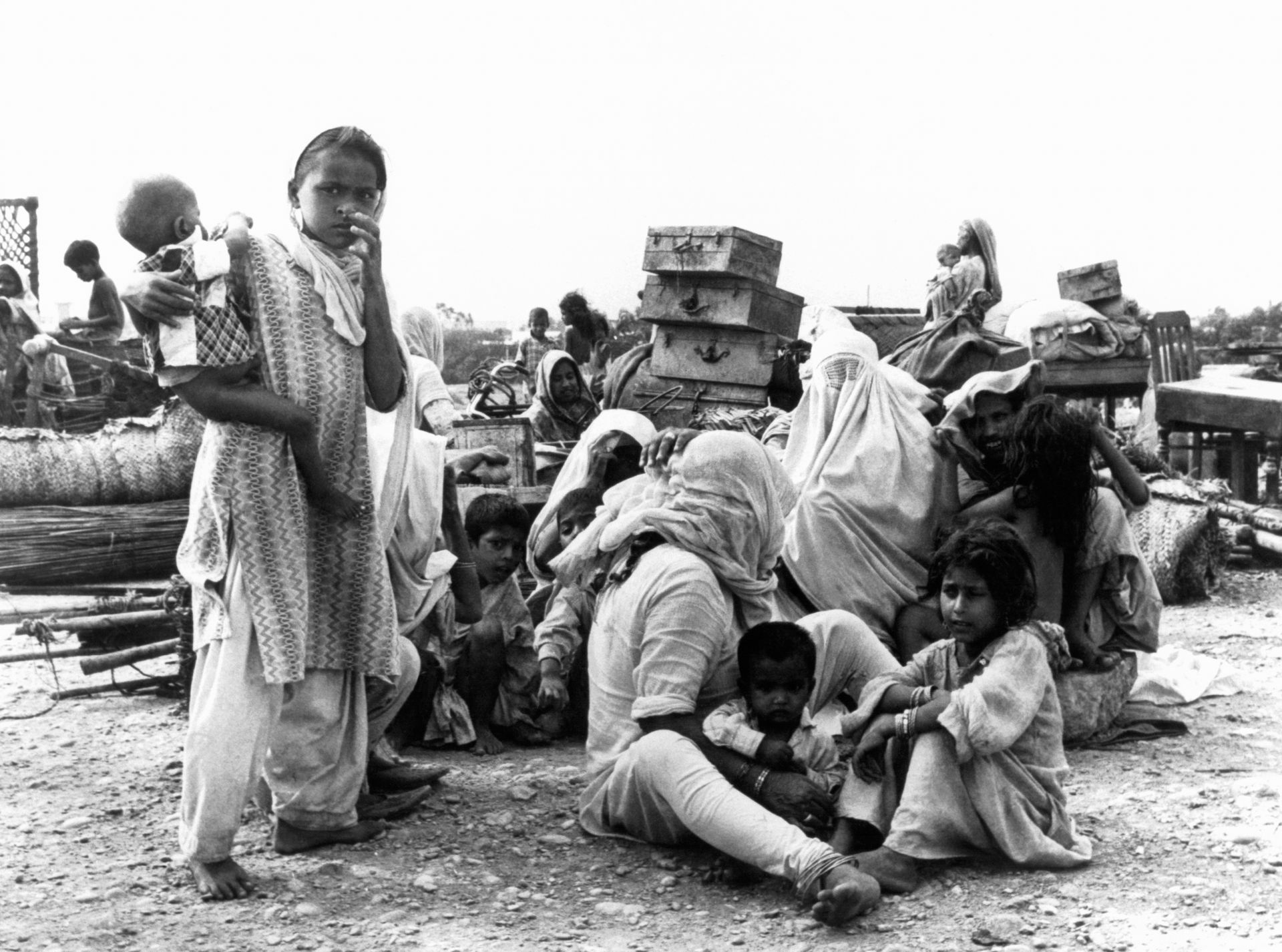
When Britain decided to grant India independence in 1947, it faced a political landscape it had partly created: a subcontinent divided between a Hindu majority population and a large Muslim minority, represented politically by the Indian National Congress and the Muslim League. Muhammad Ali Jinnah, the League's leader, insisted on a separate Muslim state. Congress, led by Jawaharlal Nehru and others, resisted partition.
The British government, exhausted by the Second World War and confronting a growing insurgency in India, decided to move quickly. Lord Mountbatten, appointed as the last Viceroy in February 1947, accelerated the independence timeline dramatically — from a target date of June 1948 to August 15, 1947, cutting the preparation time to a matter of months. The border between India and Pakistan was drawn in five weeks by a British lawyer, Cyril Radcliffe, who had never been to India before his appointment.
The consequences of that rushed decision were immediate and catastrophic. The boundary cut through Punjab and Bengal, dividing communities, villages, farms, and families. Muslims in what became India and Hindus and Sikhs in what became Pakistan suddenly found themselves on the wrong side of a new international border. The population transfer that followed was one of the largest in human history — an estimated 10 to 20 million people displaced in a matter of months.
The violence that accompanied partition killed an estimated one to two million people. Whole communities were massacred. Trains arrived at stations filled with the bodies of passengers killed en route. The horror of partition left a wound in the collective memory of the subcontinent that has never healed.
The conflict between India and Pakistan that partition produced has shaped South Asian politics ever since. The two countries have fought four wars. Both eventually developed nuclear weapons. The disputed territory of Kashmir has been a source of ongoing confrontation for more than 75 years. Pakistan's political instability — rooted partly in the circumstances of its founding — has made it one of the most consequential fragile states in the world.
A more deliberate partition process — one that allowed for proper surveys, longer timelines, and negotiated population exchanges — might not have eliminated all conflict. But the scale of the immediate violence was substantially a product of the decision to move the date.
JACQUET-FRANCILLON / Getty Images
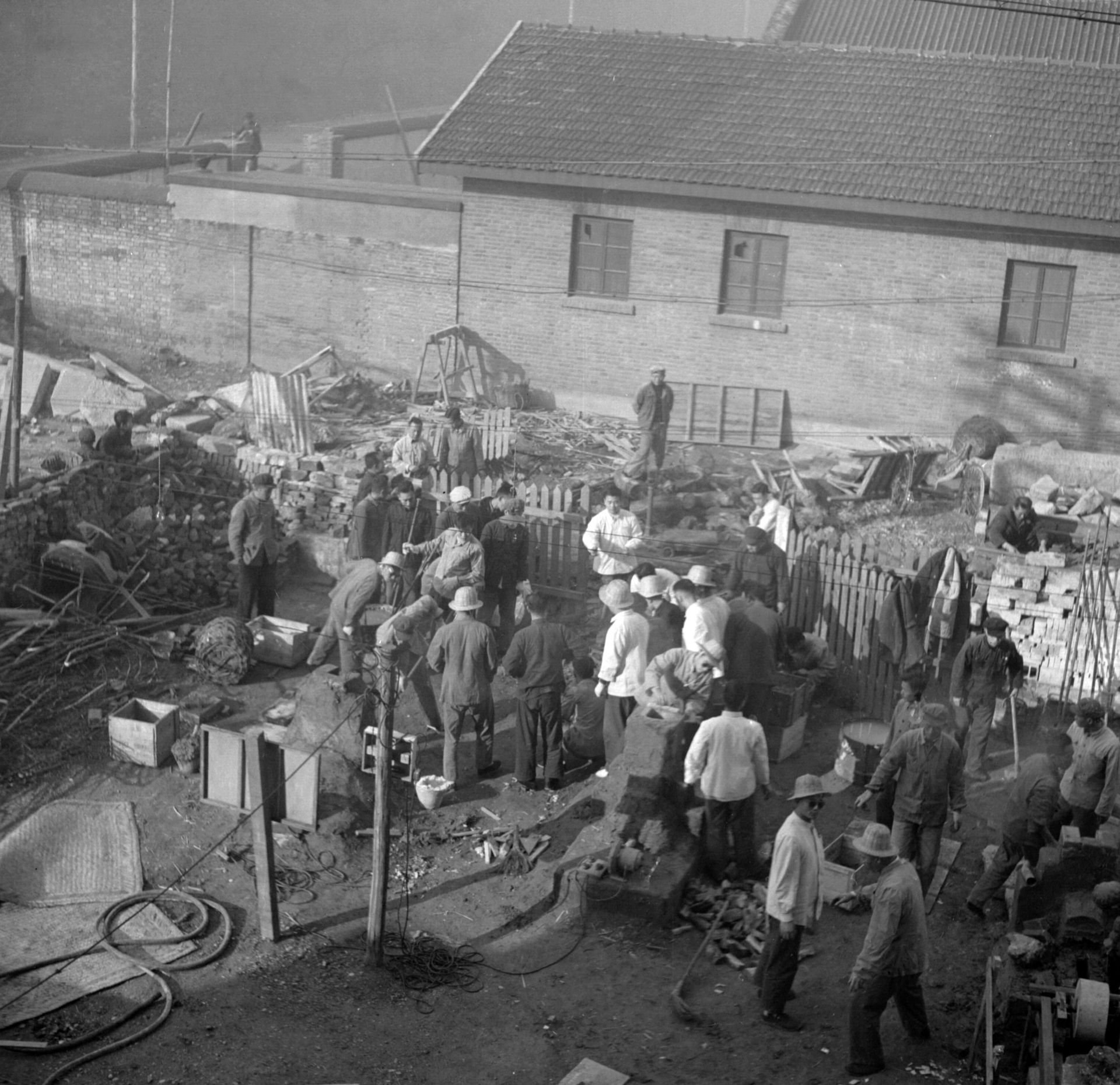
In 1958, Mao Zedong launched the Great Leap Forward, an economic and social campaign intended to transform China from an agrarian society into a socialist industrial state within a few years. The decision was made at the top of the Chinese Communist Party, over the objections of several senior leaders who privately doubted the agricultural and industrial production targets were achievable.
The campaign reorganized the rural population into large communes, eliminated private farming, and demanded that peasants meet unrealistic grain production quotas. It also launched a "backyard steel" campaign, in which millions of peasants were pulled from agricultural work to produce steel in small local furnaces. The steel produced was largely unusable. The grain quotas were not met.
What followed was the largest famine in recorded human history. Accurate numbers are still disputed — the Chinese government did not acknowledge the famine publicly for decades — but the scholarly consensus places the death toll between 15 million and 55 million people, with most researchers estimating approximately 30 million deaths from starvation and related causes between 1959 and 1961.
The famine was not primarily caused by drought or natural disaster. It was caused by policy: unrealistic production targets, the suppression of accurate reporting by local officials terrified of Mao's purges, the continuation of grain exports even as people starved, and the deliberate restriction of food to rural areas as punishment for missing quotas. Local officials who reported the truth were accused of being rightists and punished. The system's incentives ensured that no accurate picture of what was happening could reach the top.
China's population was set back by decades. Communities that had survived wars, floods, and previous famines were destroyed. The trauma shaped Chinese social and economic attitudes toward food security and state authority in ways that persist.
The decision that launched this catastrophe was a specific choice by a specific leader, made at a specific moment, over the objections of advisers who could see the risks. Had Mao adopted a more gradual industrialization strategy — as several colleagues urged — China's 20th century would have been profoundly different. The famine also damaged Mao's authority within the Party, setting in motion the power struggles that eventually produced the Cultural Revolution, another catastrophe caused by another set of deliberate decisions.
Bettmann / Getty Images
In October 1962, American U-2 reconnaissance aircraft photographed Soviet missile installations under construction in Cuba. The missiles, once operational, would be capable of striking most of the continental United States with nuclear warheads. President John F. Kennedy was told of the discovery on October 16. He convened a secret group of senior advisers — the Executive Committee of the National Security Council, known as ExComm — to deliberate on a response.
The options ranged from doing nothing to launching an immediate air campaign to destroy the missile sites, followed by a ground invasion of Cuba. The military's preferred option was airstrikes. General Curtis LeMay, the Air Force chief of staff, argued forcefully for military action. Several senior advisers agreed that the missiles could not be allowed to become operational and that only force could guarantee their removal.
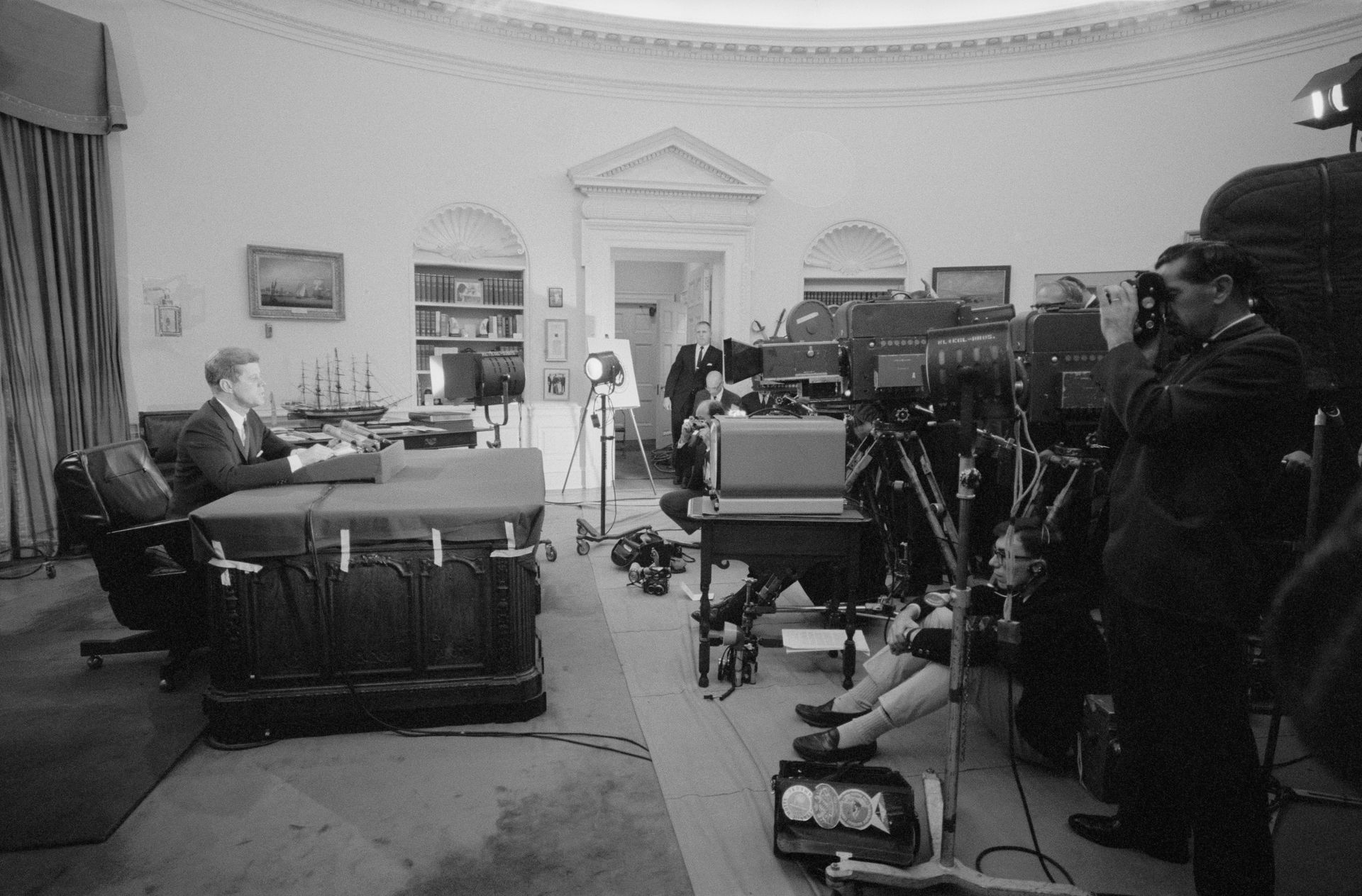
Kennedy rejected the airstrike option and chose instead a naval blockade — he called it a "quarantine" to avoid the legal implications of the word "blockade" under international law — to prevent additional Soviet military equipment from reaching Cuba. He announced the blockade in a television address on October 22, setting off 13 days of the most intense nuclear standoff in history.
During the crisis, Soviet ships approaching the blockade line turned back. Nikita Khrushchev and Kennedy exchanged letters. A deal was eventually reached in which the Soviet Union agreed to remove the missiles from Cuba in exchange for a U.S. pledge not to invade Cuba and a secret agreement to remove American Jupiter missiles from Turkey.
The counterfactual here is stark. Airstrikes on Cuba would not have destroyed all of the Soviet missiles — some were already mobile and concealed — and might not have achieved their military objective. They would certainly have killed Soviet military personnel, likely triggering retaliation. The CIA later confirmed that Soviet forces in Cuba had tactical nuclear weapons with authorization to use them if the island was invaded. A U.S. invasion could have resulted in the first use of nuclear weapons since Hiroshima and Nagasaki.
Kennedy's choice of the blockade — slower, less satisfying to the military advisers pressing for action, and politically riskier in the short term — created the space for diplomacy. During 13 days of crisis, the world came closer to nuclear war than at any other point in the Cold War. Kennedy's decision kept it from going over the edge.
iStock Editorial / Getty Images Plus
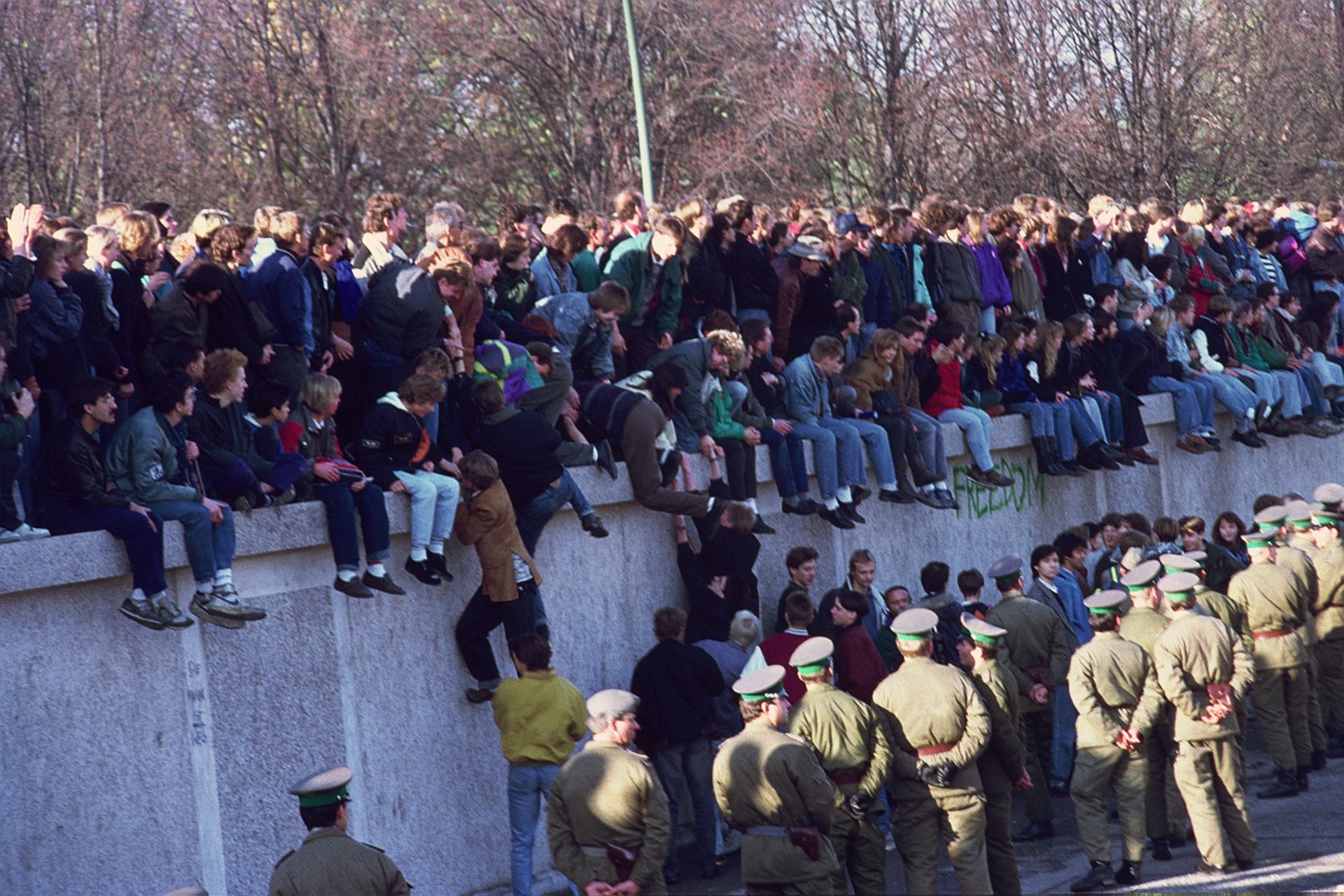
In November 1989, the Berlin Wall fell. Within two years, the Soviet Union — which had existed since 1922 — dissolved. The conventional account of these events invokes inevitable historical forces: the failure of communism, the power of popular demand, the weight of economic dysfunction. That account obscures a critical decision made by one man.
Mikhail Gorbachev, General Secretary of the Communist Party from 1985, made a deliberate choice not to use Soviet military force to suppress the independence movements that swept through Eastern Europe in 1989 and through the Soviet republics in the years that followed. This was not the default option. The Soviet Union had demonstrated its willingness to use force in exactly these circumstances before — in Hungary in 1956 and in Czechoslovakia in 1968. The military option was real.
Gorbachev had launched a series of reforms — glasnost (openness) and perestroika (restructuring) — intended to modernize the Soviet system, not to destroy it. He did not intend for his reforms to produce the Soviet Union's collapse. But when the crisis came — when East Germans flooded through the Wall, when Poland and Hungary negotiated their own transitions, when the Baltic states demanded independence — he refused to authorize military force.
The reasons were partly ideological: Gorbachev genuinely believed that using force would produce a dead end, that the Eastern European countries needed to choose their own paths, and that Soviet legitimacy could not be built indefinitely on bayonets. The reasons were also practical: the Soviet economy was in severe difficulty, and the cost of maintaining empire by force — as the Afghanistan war had demonstrated at length — was one the country could no longer afford.
Had Gorbachev chosen differently — or had he been replaced by a harder-line successor before 1989 — the outcomes are genuinely uncertain. Military force might have suppressed the independence movements temporarily, as it had in 1956 and 1968. Or it might have produced revolutions more violent than the peaceful ones that actually occurred. What is certain is that the peaceful dissolution of the Soviet empire — the largest voluntary relinquishment of imperial power in modern history — was a choice. Not a foregone conclusion, not an inevitable historical outcome, but a decision made by a man who had other options and declined to use them.
