15 places where you can watch nature's most spectacular events IRL
From synchronized fireflies in Tennessee to a river of red crabs in the Indian Ocean, these 15 natural events reward travelers who plan around nature's calendar
Credit: Vasilis V. / Pexels
Nature does not perform on demand. The most dramatic events on Earth — a million wildebeest crossing a crocodile-filled river, a bay that glows blue when you drag a paddle through it, a waterfall that appears to catch fire — happen on schedules set by ocean currents, lunar cycles, solar activity and rainfall. Miss the window and you wait a year. Sometimes longer.
That is precisely what makes these events worth chasing. Anyone can visit the Eiffel Tower in any month. Watching brown bears snatch leaping salmon out of a waterfall in Alaska requires showing up in July, when tens of millions of sockeye push into Bristol Bay. Seeing fireflies blink in unison in the Great Smoky Mountains means winning a lottery for a two-week stretch in early summer. The constraint is the point. These are appointments with the planet, and the planet does not reschedule.
The travel industry has caught on. Eclipse chasers book hotels along paths of totality years in advance. Aurora tourism has reshaped the winter economies of northern Norway, Finland and Canada. Whale-watching cooperatives in Baja California now anchor entire village economies for four months of the year. For local communities, a predictable natural event can be more valuable than a beach — it draws visitors in the off-season, and it gives residents a direct financial stake in protecting the ecosystem that produces it.
This list covers 15 of those events and the specific places to see them. It spans six continents and every kind of budget, from a free national park walk to a liveaboard dive boat off South Africa. Each entry explains what actually happens, when to go, where to position yourself and what the experience demands of you — because some of these require nothing more than a lawn chair, while others require a wetsuit, a permit or a tolerance for waking up at 3 a.m.
A note on timing throughout: nature offers probabilities, not guarantees. Build in buffer days, check local forecasts and treat any single night or river crossing as a roll of weighted dice. The odds are good. They are never certain.
1 / 15
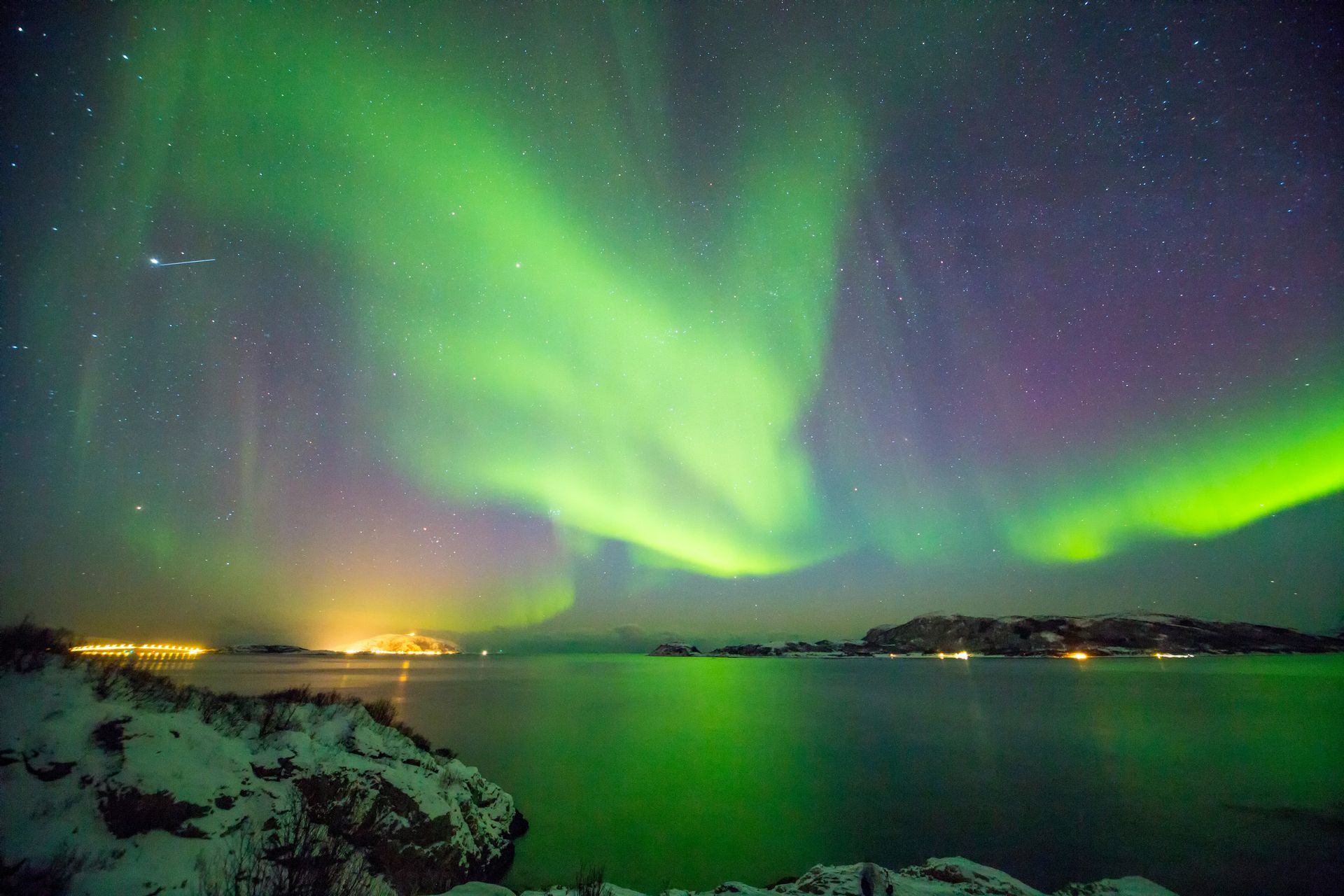
The northern lights in Tromsø, Norway
Credit: Lightscape / Unsplash
The aurora borealis happens when charged particles from the sun collide with gases in Earth's upper atmosphere. Oxygen produces the familiar green; nitrogen adds purples and reds. The result is light that moves — rippling, folding and sometimes filling the entire sky in a matter of seconds.
Tromsø sits about 217 miles north of the Arctic Circle, directly beneath the auroral oval, the ring around the magnetic pole where displays are most frequent. That geography is why the city of roughly 75,000 people has become one of the world's busiest aurora destinations. On a clear, dark night during solar activity, the lights are visible from the harbor itself, though serious viewers head away from streetlights.
The season runs from late September to early April, when nights are long enough for darkness. From late November to mid-January, the sun does not rise above the horizon at all — the polar night — which extends viewing hours but brings harsh cold. Many visitors consider late September and March the sweet spots: geomagnetic activity tends to rise around the equinoxes, and temperatures are milder.
Guided "aurora chases" are the standard approach. Operators monitor cloud cover and drive vans toward clear skies, sometimes crossing into Finland or Sweden in a single night. A minibus tour typically costs the equivalent of $120 to $200 per person. Independent travelers can rent a car and use free aurora-forecast apps that track the KP index, a scale of geomagnetic activity.
Two practical points matter more than any tour. First, clouds beat everything — a strong solar storm is invisible through overcast skies, so flexibility across several nights is essential. Second, cameras see more than eyes do. A long exposure will render faint gray arcs as vivid green, so manage expectations on quiet nights.
Alternatives under the same auroral oval include Abisko in Sweden, known for a microclimate that keeps skies unusually clear, plus Fairbanks, Alaska, and Yellowknife, Canada.
2 / 15
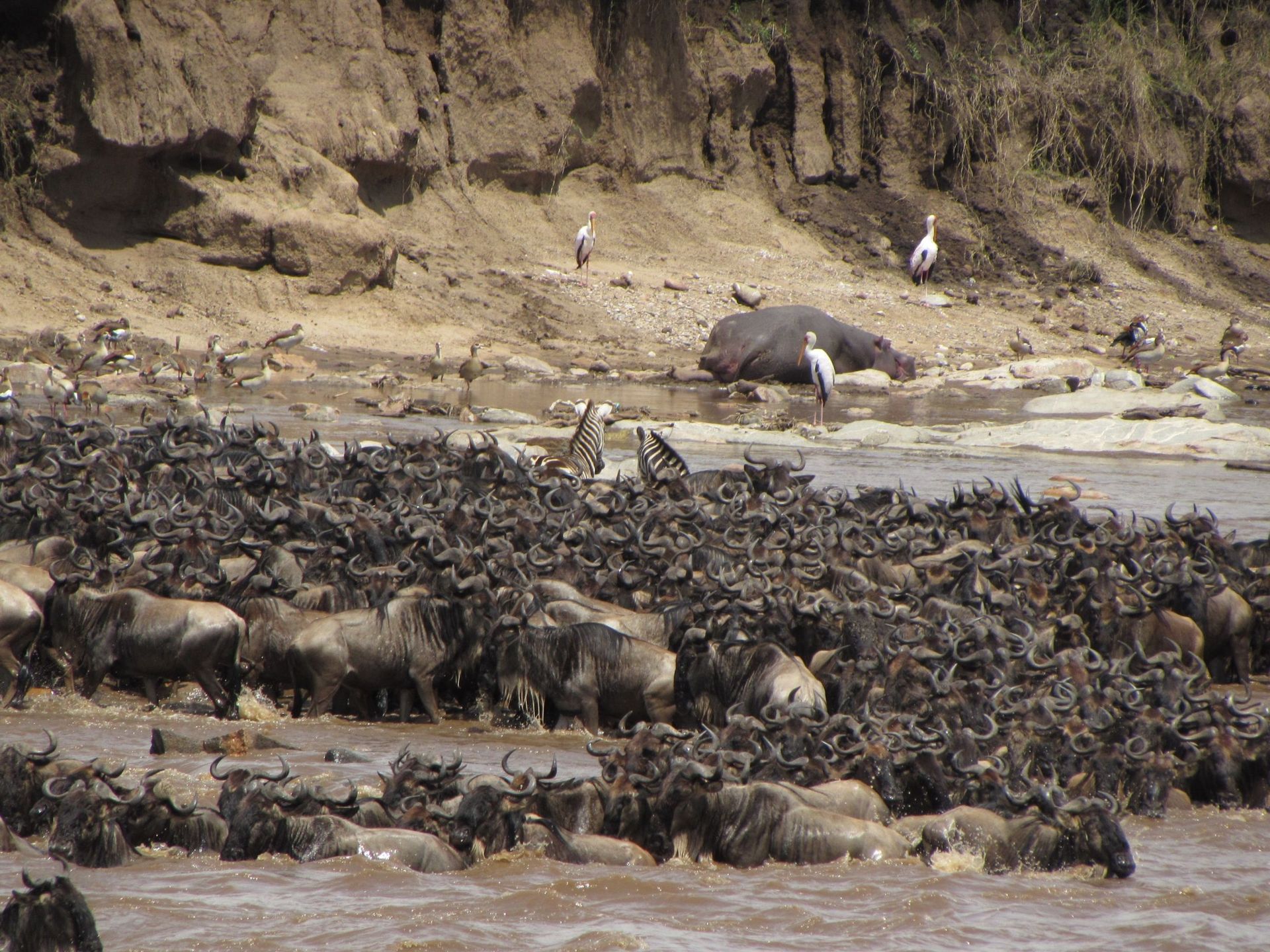
The great wildebeest migration in Kenya and Tanzania
Credit: Bushland Adventure / Pexels
Roughly 1.3 million wildebeest, joined by hundreds of thousands of zebras and gazelles, move in a continuous loop through the Serengeti ecosystem every year. The circuit covers well over 1,000 miles, driven by rainfall and the fresh grass it produces. It is the largest overland migration of large mammals on Earth, and it never actually stops — the question is only where the herds are in any given month.
The scenes most people picture are the river crossings. From roughly July through October, herds mass on the banks of the Mara River, which cuts through the northern Serengeti in Tanzania and Kenya's Maasai Mara reserve. Crossing is chaotic. Nile crocodiles wait in the water, the banks are steep and animals sometimes mill for hours before one plunge triggers thousands more. A single crossing can last minutes or most of an afternoon, and no guide can promise one on a given day.
The migration offers a second, quieter act that many travelers overlook. From late January into March, the herds gather on the short-grass plains of the southern Serengeti and the Ndutu area to give birth. Hundreds of thousands of calves arrive within a few weeks, with thousands born on peak days. Predators concentrate accordingly, so lion, cheetah and hyena sightings are at their most reliable of the year — and lodges are cheaper than in crossing season.
Logistics shape the experience. Mobile tented camps reposition with the herds and cost more than fixed lodges but put you closer to the action at dawn. In the Maasai Mara, staying inside private conservancies bordering the reserve reduces vehicle crowds at sightings.
Timing advice reduces to one rule: follow the rain, not the calendar. Wet seasons shift year to year, and the herds shift with them. Book with operators who track herd movements weekly rather than selling a fixed itinerary months out.
3 / 15
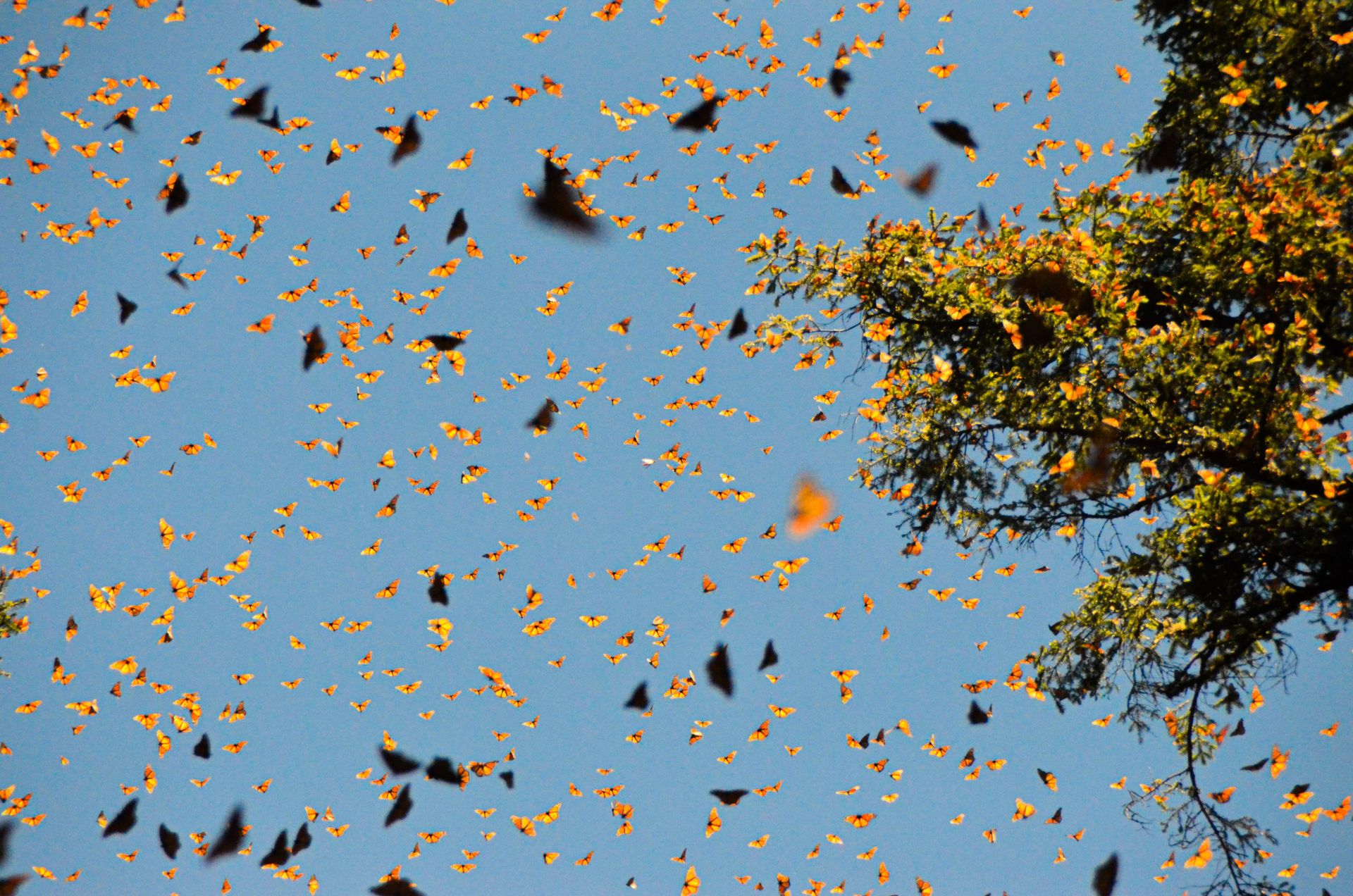
Monarch butterfly wintering grounds in Michoacán, Mexico
Credit: Ernesto RƎIƎZ / Pexels
Every autumn, monarch butterflies from across eastern North America fly as far as 3,000 miles to a few forested mountaintops in central Mexico. They cluster in oyamel fir forests at elevations around 10,000 feet, coating trunks and branches so densely that boughs bend under the weight. When sunlight warms a colony, thousands of butterflies lift off at once, and the sound — a soft rush of wings — is audible.
The destination is the Monarch Butterfly Biosphere Reserve, a UNESCO World Heritage site straddling the states of Michoacán and México, about a four-hour drive west of Mexico City. The most visited sanctuaries are El Rosario and Sierra Chincua, both near the town of Angangueo. Reaching the colonies involves a walk or horseback ride up steep trails at altitude, so pace yourself.
The butterflies arrive around early November — their appearance is woven into Día de Muertos traditions in the region — and remain into March. January and February are the most reliable months for dense clusters, and warm, sunny midday hours produce the most flight activity. Silence is enforced at the colonies, and visitors must stay on marked paths with local guides, whose fees support the communities that protect the forest.
The migration itself is a biological puzzle. No individual butterfly makes the round trip. The monarchs that winter in Mexico fly north in spring, breed and die in the southern U.S., and it takes several successive generations to reach Canada. The generation born in late summer then flies all the way back to forests it has never seen — navigation science still cannot fully explain how.
The phenomenon is also fragile. Illegal logging, herbicide use that kills milkweed along the migration route and climate shifts have all pressured the population, and colony sizes swing sharply year to year. Visiting responsibly, with certified guides inside the reserve, directly funds conservation.
4 / 15
The bioluminescent waters of Mosquito Bay, Puerto Rico
Credit: Chasing Lyu / Pexels
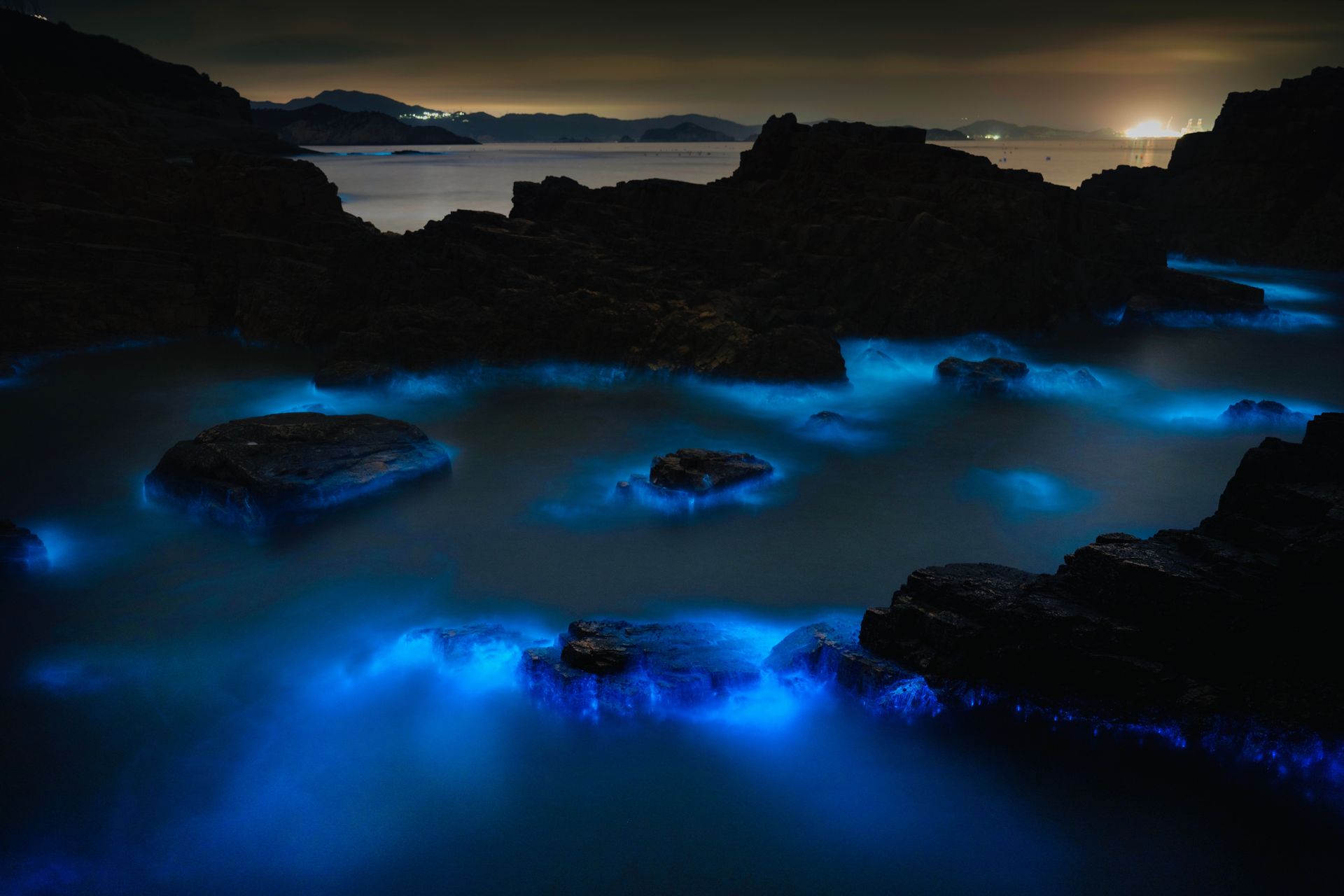
Mosquito Bay, on the south shore of the island of Vieques, holds the Guinness World Record as the brightest bioluminescent bay on Earth. The glow comes from dinoflagellates — single-celled plankton called Pyrodinium bahamense — that emit a flash of blue-green light when the water around them is disturbed. Drag a hand through the bay at night and it trails light. Fish dart past as glowing streaks. Raindrops make the surface sparkle.
The brightness is a product of geography. The bay's narrow mouth limits water exchange with the open Caribbean, and decaying mangrove leaves feed the plankton, so the organisms accumulate in extreme concentrations of hundreds of thousands per gallon of water. The same conditions exist in only a handful of places worldwide, and Vieques has the most intense version.
Swimming has been prohibited since 2007 to protect the ecosystem — sunscreen and insect repellent harm the plankton — so the standard visit is a guided kayak or electric-boat tour lasting about two hours. Clear-bottom kayaks are worth the modest premium, since much of the show happens beneath you. Tours run nightly and cost roughly $55 to $75 per person.
Moonlight is the variable that matters most. A full moon washes out the glow, so book within about five nights of a new moon, and check the lunar calendar before booking flights. Cloudy nights, counterintuitively, can improve the experience by deepening the darkness.
Getting there requires commitment. Vieques lies about eight miles off Puerto Rico's east coast, reached by a short flight from San Juan or a ferry from Ceiba. After Hurricane Maria in 2017, the bay went dark for months as the plankton population crashed — then recovered. Two smaller bioluminescent bays elsewhere in Puerto Rico, Laguna Grande in Fajardo and La Parguera in the southwest, offer backups, but neither matches Mosquito Bay's intensity.
5 / 15
Cherry blossom season across Japan
Credit: Frank Lee / Pexels
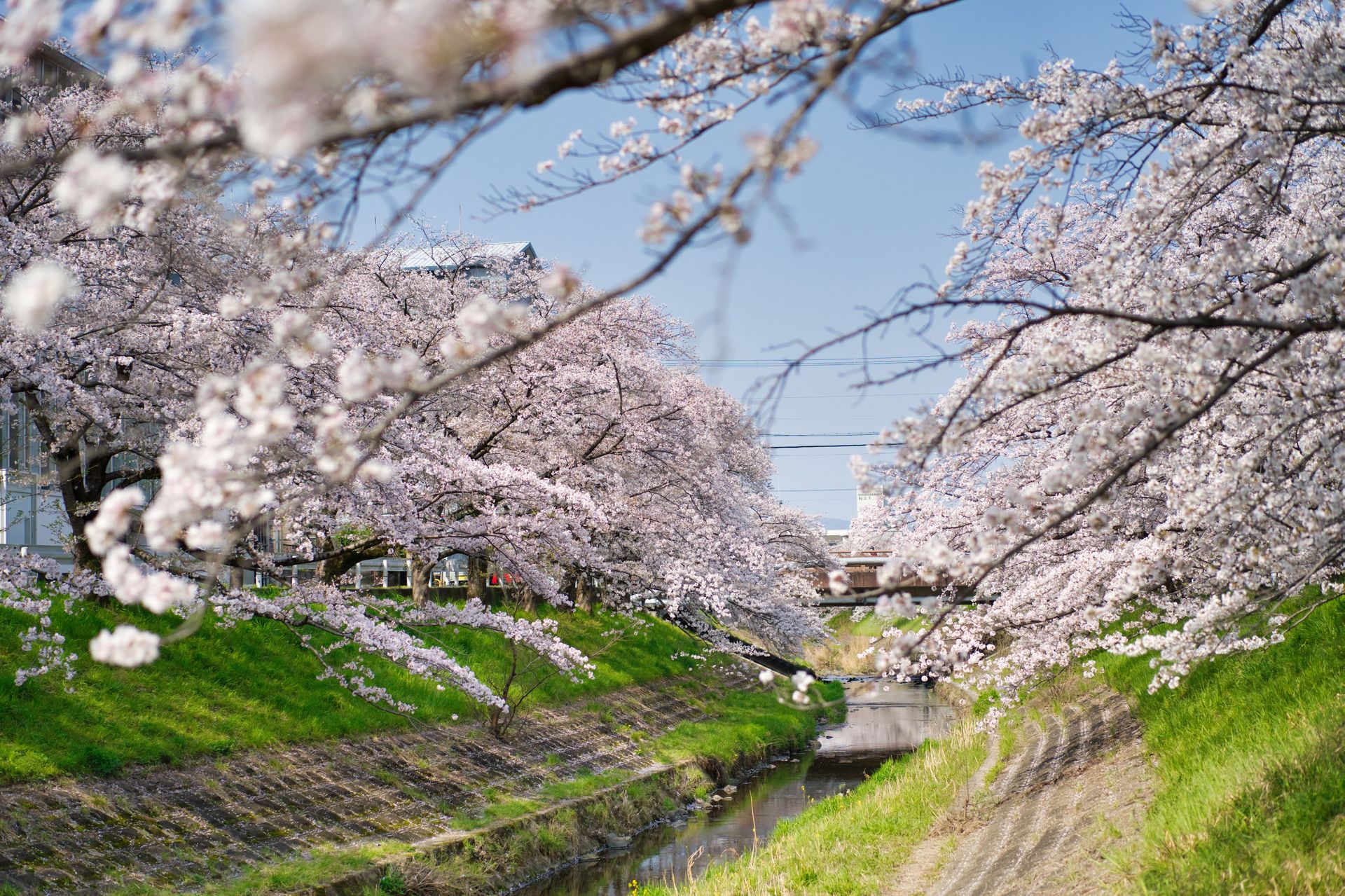
For a few weeks each spring, Japan reorganizes itself around flowers. The cherry blossom front — the sakura zensen — sweeps up the archipelago from the subtropical south in March to Hokkaido in May, and forecasters track its progress the way other countries track hurricanes. Offices hold parties under the trees. Convenience stores sell blossom-themed everything. Train platforms fill with people carrying picnic blankets.
The biology explains the intensity. The dominant ornamental variety, the Somei Yoshino cherry, consists of genetically identical clones propagated by grafting. Because every tree in a region shares the same genes, they respond to warming temperatures in near-unison: a city's blossoms open together, peak together and fall together, all within about two weeks. The brevity is central to hanami, the centuries-old custom of flower viewing, which treats the blossoms as a meditation on impermanence.
Tokyo and Kyoto typically peak in late March or early April, though the timing shifts with each winter's weather, and recent decades have trended earlier. In Tokyo, Ueno Park and the banks of the Meguro River draw the biggest crowds; Shinjuku Gyoen offers more space and later-blooming varieties. Kyoto's Philosopher's Path runs beneath a canal-side tunnel of trees, and Maruyama Park hosts nighttime viewing under lanterns. Mount Yoshino in Nara prefecture, planted with tens of thousands of cherry trees across four elevation zones, blooms in ascending waves through April.
Travelers $TRV who miss the main window have options. Hokkaido's blossoms open in early May, and the Fuji Five Lakes area pairs mid-April blooms with views of the mountain. Going early has a hedge too: plum blossoms peak in February and March with a fraction of the crowds.
Practical advice is blunt. Book lodging months ahead, expect peak-season prices and check bloom forecasts — published by multiple Japanese weather services from January onward — before locking in dates. A one-week trip aimed at the forecast peak usually catches something, from first buds to falling petals.
6 / 15
A total solar eclipse along the path of totality
Credit: adiprayogo liemena / Pexels
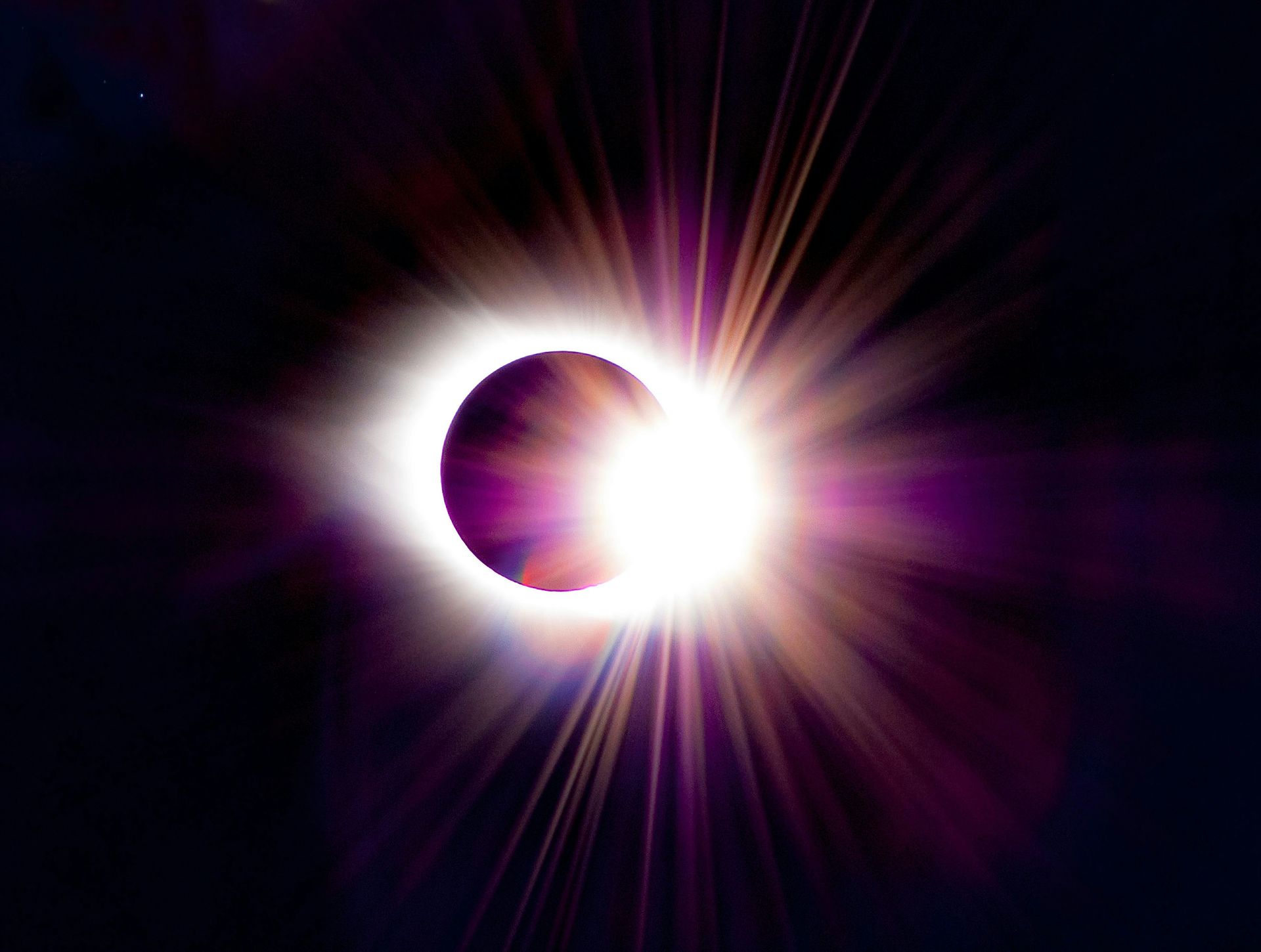
A partial solar eclipse is a curiosity. A total solar eclipse is a different event altogether. For a few minutes inside the narrow path of totality — typically around 100 miles wide — the moon completely covers the sun, daytime collapses into twilight, temperatures drop, stars appear and the solar corona becomes visible as a white halo. People who have seen 99% coverage and 100% coverage describe them as unrelated experiences, and the difference drives a global subculture of eclipse chasers.
The next opportunity is close: on Aug. 12, 2026, totality will sweep across Greenland, western Iceland and northern Spain — the first total solar eclipse visible from mainland Europe since 1999. In Spain, the path crosses cities including A Coruña, Valencia and Zaragoza, with the eclipse occurring low in the evening sky. A year later, on Aug. 2, 2027, another eclipse crosses southern Spain, North Africa and the Middle East, with totality near Luxor, Egypt, lasting over six minutes — unusually long by eclipse standards.
Position and weather strategy decide everything. Totality lasts longest along the centerline of the path, and even a few miles toward the edge shaves off seconds. Cloud cover is the great enemy, so veteran chasers pick regions with strong August sunshine statistics and stay mobile on eclipse day, ready to drive toward clear sky.
Safety rules are simple and absolute. Looking at the sun requires certified eclipse glasses at all times except during totality itself, when the sun is fully covered and the naked eye is safe — and seeing the corona without filters is the entire point.
Plan far ahead. Hotels inside a path of totality sell out a year or more in advance, and prices multiply. The compensation is that eclipses are the most predictable event on this list: astronomers can state the schedule to the second, centuries out.
7 / 15
The sardine run off South Africa's east coast
Credit: adiprayogo liemena / Pexels
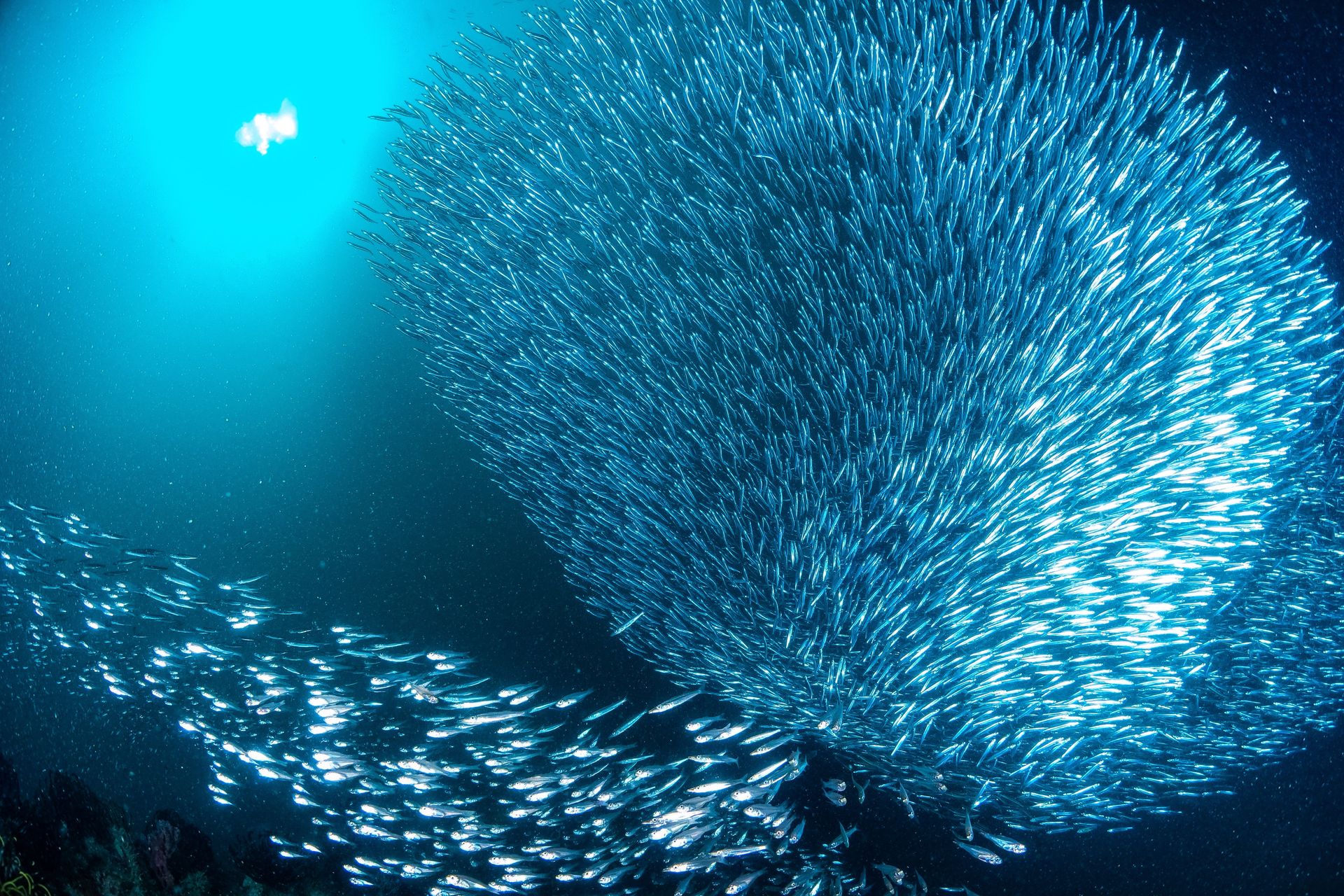
Between May and July, enormous shoals of sardines move north along South Africa's east coast, following a tongue of cold water that pushes up from the Agulhas Bank toward KwaZulu-Natal. The shoals can stretch for miles, and they drag the ocean's predators with them: common dolphins in pods of thousands, Cape gannets diving from 100 feet, sharks, Bryde's whales and seals, all converging on the same moving buffet.
The signature moment is the bait ball. Dolphins herd a section of the shoal into a tight, spinning sphere and pin it near the surface. Then everything attacks at once — gannets punching into the water like arrows, sharks slicing through from below, a whale sometimes engulfing a whole section in a single lunge. A bait ball may last only minutes, which is why the sardine run is often described as ocean wildlife at its most concentrated.
This is primarily a diving and snorkeling event. Operators based in Port St. Johns, along the Wild Coast, and in towns such as Umkomaas run daily boat trips during the season, using spotter planes and radio networks to locate action. Divers drop in on scuba or skin-dive alongside the bait balls; non-divers can watch gannet storms and dolphin pods from the boat. Conditions are demanding — open ocean, swell, cold water in the 60s Fahrenheit — so this suits travelers with some sea experience.
Honesty about the odds matters. The run depends on water temperature, and in warm years the sardines stay deep or fail to appear in force. Some seasons deliver day after day of action; others disappoint. Booking a week or more, rather than a couple of days, is the standard hedge.
Even in quiet sardine years, the coast delivers humpback whales migrating north to breeding grounds during the same months, which gives every boat trip a consolation prize.
8 / 15
The red crab migration on Christmas Island
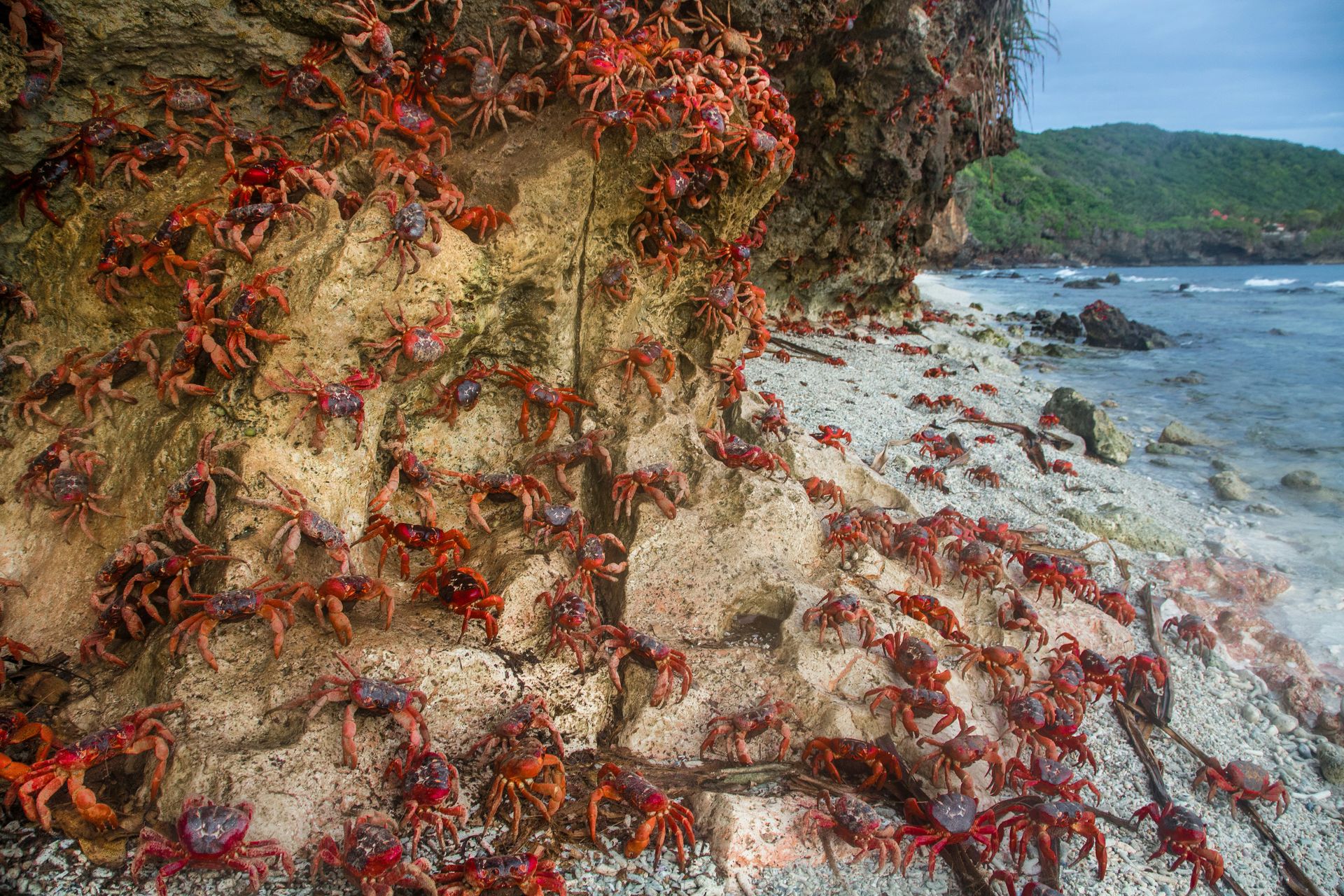
Christmas Island, an Australian territory in the Indian Ocean about 220 miles south of Java, is home to tens of millions of red land crabs. For most of the year they live scattered through the island's rainforest. Then the first rains of the wet season arrive — usually in October or November — and the forest floor begins to move.
The crabs migrate en masse from the forest to the sea to breed, following routes their populations have used for generations. Roads close as columns of red sweep across them. Residents rake crabs out of driveways. The island's national park has built dedicated crab bridges and underpasses, and rangers erect temporary barriers to funnel the animals safely across traffic corridors. For roughly two weeks, the island effectively reorganizes itself around crustaceans.
The timing within the migration is lunar. Males arrive at the coast first and dig burrows; females follow, and spawning is synchronized to the last quarter of the moon, when the difference between high and low tide is smallest. Before dawn on spawning nights, females pack the shoreline and release eggs into the surf in a shimmering mass. About a month later, if ocean conditions cooperate, young crabs the size of fingernails return from the sea and march inland — a reverse migration that can carpet the coast in miniature.
Visiting requires planning around uncertainty. The migration's start depends on rainfall, so Parks Australia publishes predicted spawning dates based on lunar phases, and travelers typically build trips of a week or more around them. Flights reach the island from Perth, and accommodations are limited, so early booking is essential.
The crabs also tell a conservation story. Invasive yellow crazy ants have killed tens of millions of them, and the island runs an aggressive control program — including introduced micro-wasps that attack the insects sustaining the ants — to protect the migration.
9 / 15
Synchronous fireflies in Great Smoky Mountains National Park
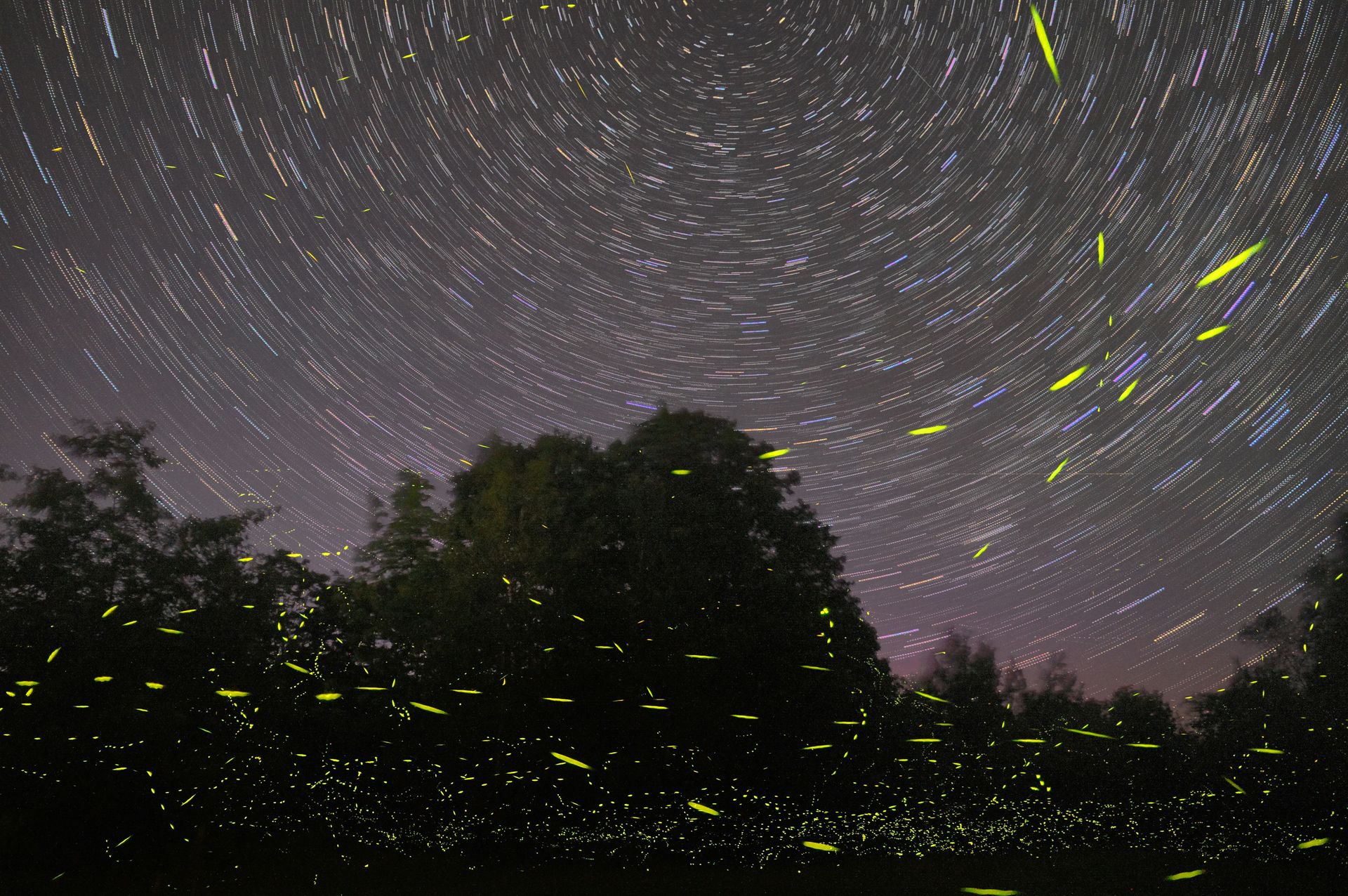
Most fireflies flash on their own schedules. Photinus carolinus does not. For about two weeks each year, usually from late May into early June, males of this species in the Great Smoky Mountains flash in unison — five to eight quick pulses, then several seconds of total darkness, then the entire hillside lights up again. The effect reads less like insects and more like a forest running on a shared circuit.
The synchrony is a mating display. Females on the ground respond to the males' coordinated bursts with their own signals, and researchers believe flashing together helps females distinguish their species' pattern from the visual noise of other fireflies. Whatever the evolutionary logic, the display depends on darkness: moonlight, flashlights and phone screens all disrupt it.
The best-known viewing site is Elkmont, a former logging community inside the park in Tennessee. Demand grew so overwhelming that the National Park Service now runs an annual lottery for vehicle passes during the predicted peak window, announced each spring. Winners park at a designated area and ride shuttles or walk in; red-filtered flashlights are required, and rangers enforce light discipline. The lottery is free to enter, with a modest fee for winners.
Losing the lottery is not the end of the road. Congaree National Park in South Carolina hosts its own synchronous firefly event in late May with a similar lottery, and the Allegheny National Forest in Pennsylvania has documented populations viewable in late June. Small populations of synchronous species exist across the Appalachians, and local guides increasingly offer trips outside the famous sites.
Conditions shape the show. The insects flash most actively on warm, humid, moonless nights, starting about 30 to 45 minutes after sunset and continuing for a few hours. Cold snaps suppress activity. Photography is difficult and discouraged at close range — long exposures work from the back of the viewing area, but the display rewards putting the camera down.
10 / 15
Brown bears at the salmon run in Katmai, Alask
Credit: Mbz1 / Wikimedia Commons (CC BY-SA 3.0)
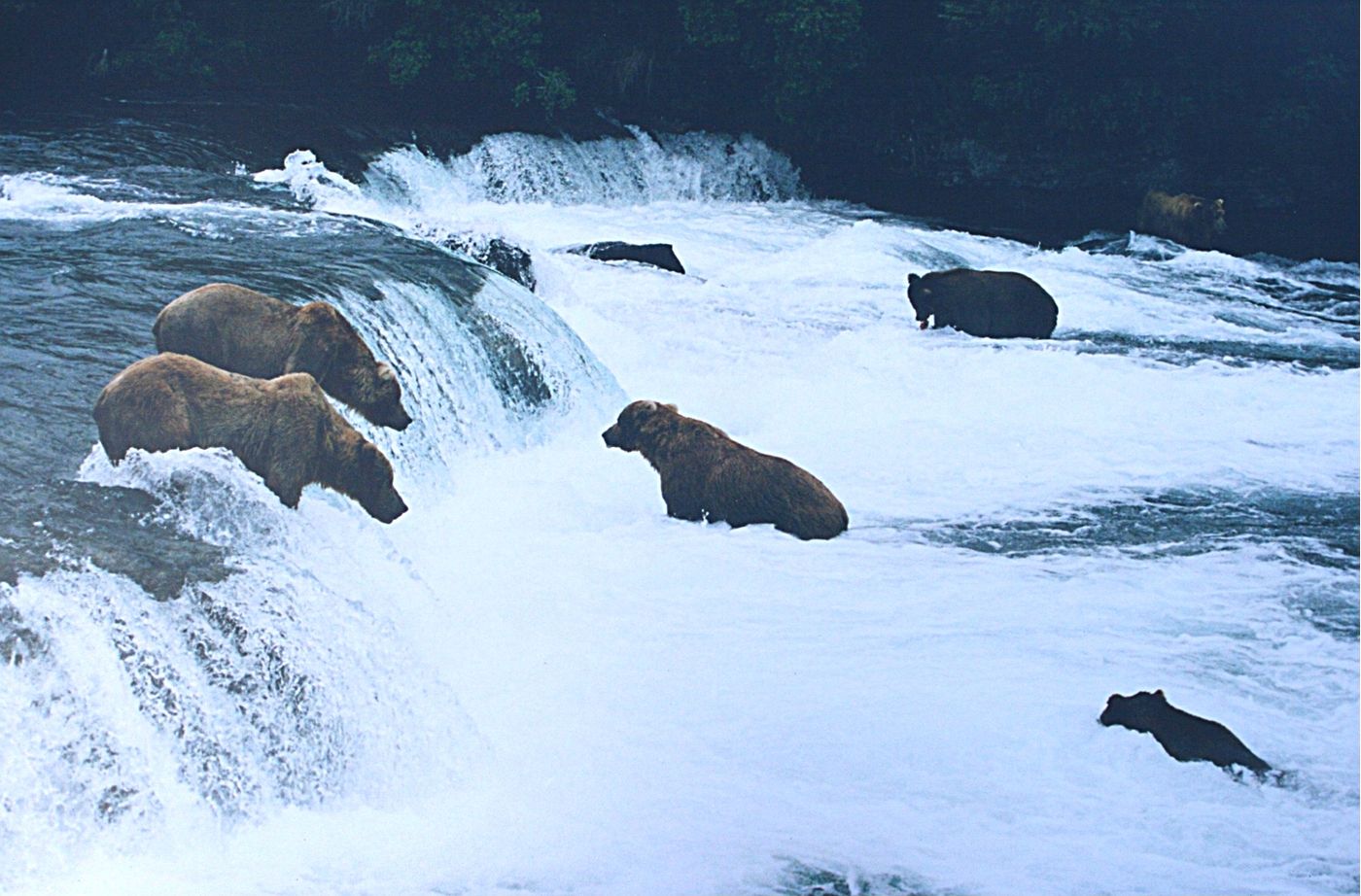
Each summer, tens of millions of sockeye salmon return from the ocean to the rivers of Bristol Bay, the largest sockeye run on Earth. At Brooks Falls, inside Katmai National Park on the Alaska Peninsula, the fish must leap a six-foot waterfall to continue upstream — and the park's brown bears know it. In July, at the run's peak, a dozen or more bears may work the falls at once, the biggest males claiming the prime spots where salmon launch themselves directly into open jaws.
The viewing setup is unusually intimate for wildlife this large. Elevated platforms stand within yards of the falls, connected by a trail from Brooks Camp, and visitors watch 1,000-pound predators fish from close range in safety. Rangers run mandatory bear-behavior orientations on arrival, and the human infrastructure — boardwalks, gates, timed platform slots in peak season — exists to keep two species comfortably apart.
Katmai has no road access. Most visitors fly to the town of King Salmon, then take a floatplane to Brooks Camp; day trips from Anchorage or Homer are possible but long and expensive, often running $700 to $1,200 per person. The campground and the small lodge at Brooks book out many months ahead for July.
Timing matters within the season. July offers the classic falls scenes as salmon mass below the drop. By September, the bears shift downstream to feed on spawned-out fish, and they are dramatically fatter — the phase celebrated by Fat Bear Week, the park's online bracket contest each October, in which the public votes for the bear that has best packed on weight for hibernation.
Travelers $TRV without an Alaska budget can watch anyway: explore.org streams live cameras from Brooks Falls all season, which is how many people first discover the place before deciding to stand on the platform themselves.
11 / 15
The firefall at Yosemite's Horsetail Fall
Credit: Stephen Leonardi / Pexels
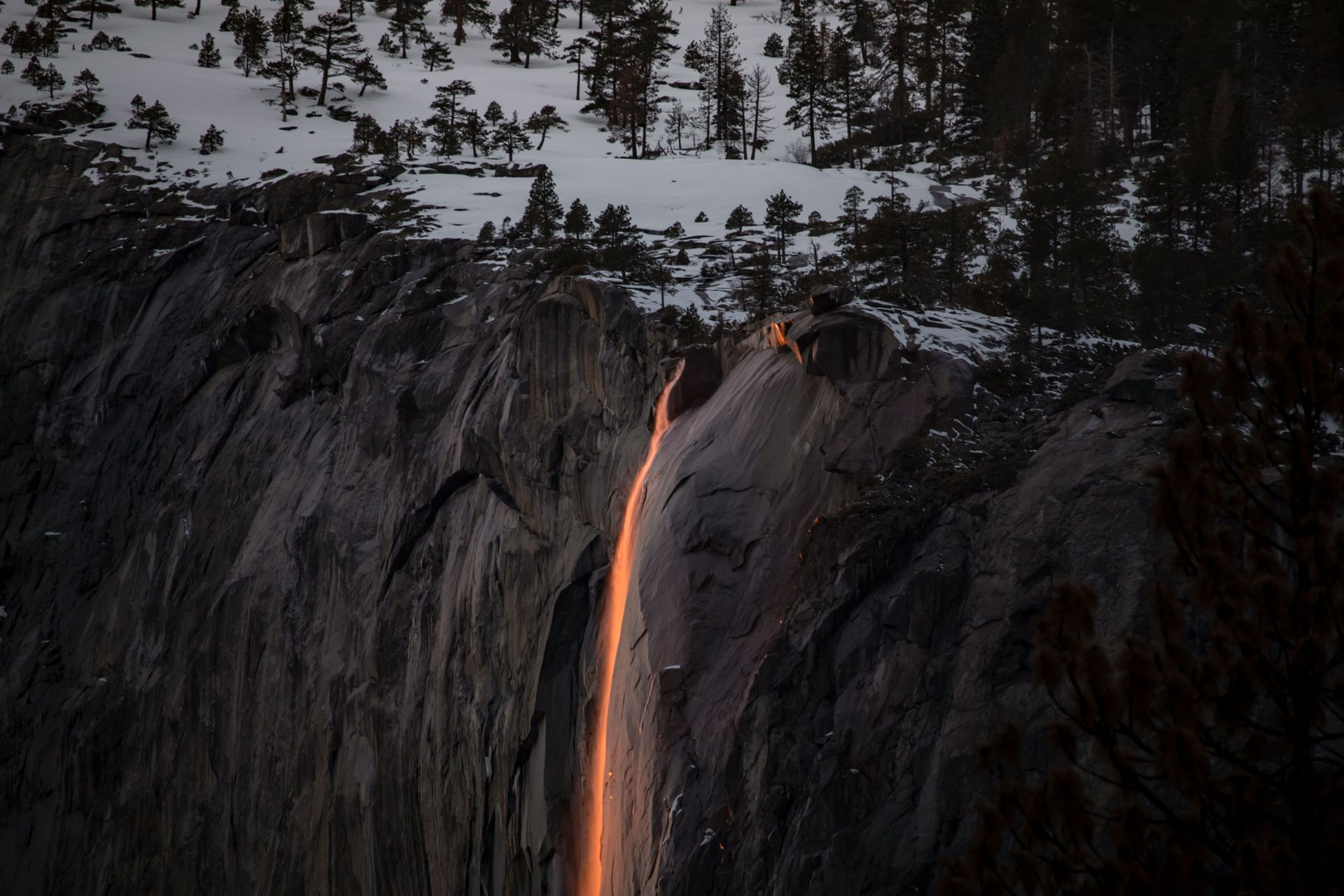
For roughly two weeks in mid-to-late February, a thin waterfall on the east flank of El Capitan appears to turn to fire. Horsetail Fall drops about 1,500 feet down the granite face, and when the setting sun hits it at exactly the right angle, the water glows deep orange and red against the darkening cliff — a natural effect photographed to look like flowing lava.
The physics requires a precise alignment. Only in a narrow February window does the sun set at the angle that backlights the fall while the surrounding rock falls into shadow. Even then, three more conditions must hold: enough snowmelt to keep water flowing over the lip, a clear western horizon at sunset and temperatures warm enough during the day to melt snow into the fall's small drainage. Many February evenings, one of the three fails and nothing happens. When everything aligns, the glow lasts about 10 minutes.
The name carries history. From the late 1800s until 1968, Yosemite staged an artificial "firefall" by pushing burning embers off Glacier Point each night — a spectacle the park ended as incompatible with its mission. Photographer Galen Rowell's 1973 image of Horsetail Fall lit by sunset popularized the natural successor, and social media turned it into a mass event.
The crowds now shape the logistics. Yosemite requires reservations to enter the park on peak February weekends during the firefall window, and rangers manage designated viewing areas near El Capitan Picnic Area, with sections of road closed to parking. Arrive hours early, bring layers for a cold wait and expect to walk a mile or more from parking.
A realistic plan builds in multiple evenings. Photographers who get the shot often describe two or three failed sunsets first — which, in drought years with little snow, can stretch to an entire missed season.
12 / 15
Catatumbo lightning over Lake Maracaibo, Venezuela
Credit: Fernando Flores / Wikimedia Commons (CC BY-SA 2.0)
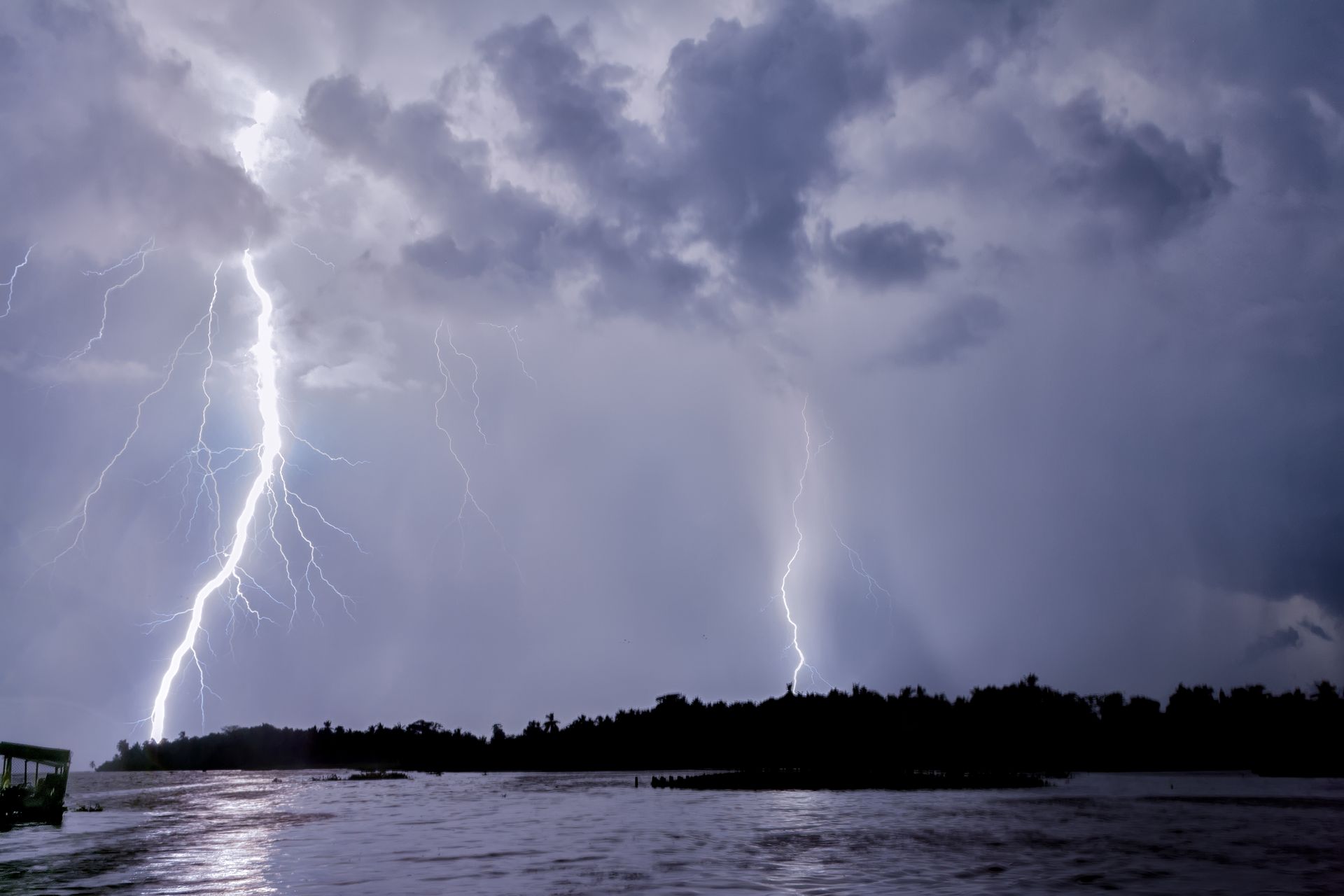
At the southwestern corner of Lake Maracaibo in Venezuela, where the Catatumbo River enters the lake, thunderstorms form over the same patch of water on up to 140 to 160 nights a year. The storms can flash for eight to 10 hours at a stretch, at rates approaching 28 lightning strikes per minute at their peak. The region holds the Guinness World Record for the highest concentration of lightning on Earth, and the phenomenon is distinct enough to appear on the flag of Zulia state.
The mechanism is geographic. Warm, humid air over the lake — one of South America's largest — collides nightly with cool downslope winds from the surrounding Andes and Perijá mountains. The collision drives towering storm clouds over the river mouth with clockwork regularity, concentrated roughly from April through November, with a lull during the drier early months of the year.
Watching it is a genuine expedition. Visitors typically travel to stilt-house fishing villages such as Ologá or Congo Mirador on the lake's southern shore, sleeping in hammocks and watching the storms build after dark over open water. Because the lightning is often 10 or more miles away, much of the display is silent — constant flashes illuminating cloud towers with little audible thunder, which makes long viewing sessions strangely peaceful.
The practical caveats are significant. Venezuela's political and economic situation has made independent travel difficult for years, and travelers should check their government's current advisories and go only with established local operators, most of whom stage trips from the Andean city of Mérida. The trade-off for the difficulty is exclusivity: the villages see a fraction of the visitors of any other place on this list.
The lightning has practical fame too. Sailors on the Caribbean historically used the nightly glow as a natural lighthouse, calling it the Maracaibo Beacon.
13 / 15
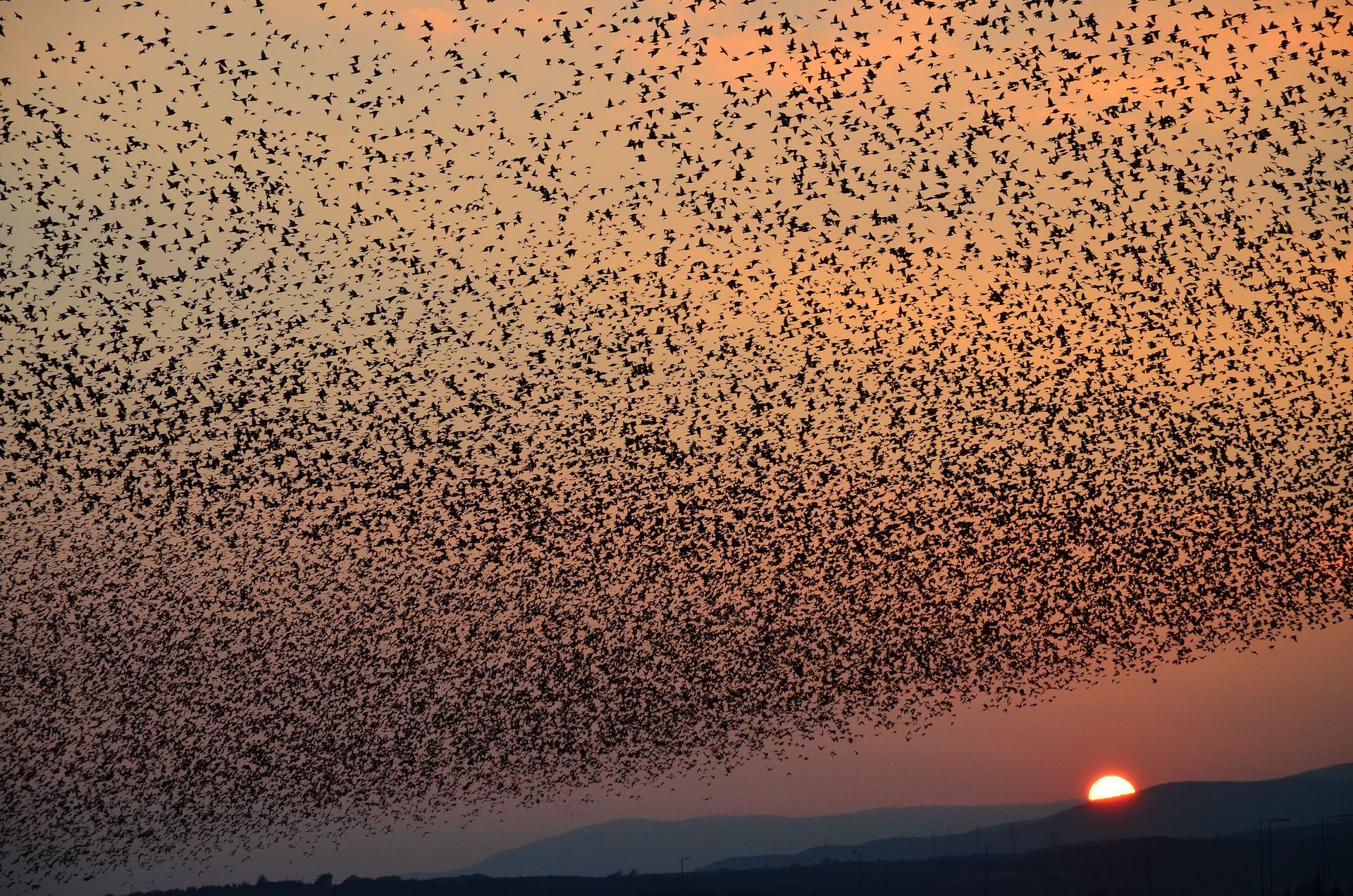
Starling murmurations on the Somerset Levels, U.K.
Credit: Vasilis V. / Pexels
On winter evenings in southwest England, hundreds of thousands of starlings gather in the sky before roosting, flying in dense, coordinated flocks that stretch, fold and twist like a single organism. These displays — murmurations — rank among the most accessible wildlife events anywhere: they happen near roads and marked trails, they require no permit and they run for months.
The Somerset Levels, a low-lying wetland region between the Mendip and Quantock hills, hosts some of the largest roosts in the U.K. Starlings from across the region, joined by winter migrants from continental Europe, converge each dusk on reedbeds at nature reserves such as RSPB Ham Wall and the adjacent Shapwick Heath. The season runs from November into February, with the biggest flocks typically in December and January.
The shapes have an explanation. Each bird tracks and responds to its six or seven nearest neighbors, and those local adjustments ripple through the flock in waves — which is why a murmuration can pivot in under a second without collisions. The most dramatic contortions often come when a peregrine falcon or sparrowhawk attacks: the flock pulses, splits and reforms around the predator, since a tight, unpredictable mass is harder to strike.
Practicalities are simple but strict on timing. Arrive at least 45 minutes before sunset, because the display builds gradually and can end abruptly when the birds funnel down into the reeds to roost. The roost site shifts between reserves through the winter, so check the reserves' murmuration hotlines or social feeds on the day. Cold, clear evenings tend to produce longer displays. Bring binoculars, but the event needs no magnification.
There is an undertone worth knowing: starling numbers in the U.K. have fallen steeply since the 1970s, and the species sits on the country's red list of conservation concern. The winter gatherings remain vast — and they are also a census.
14 / 15
Gray whale calving lagoons in Baja California, Mexico
Credit: Josh Withers / Pexels
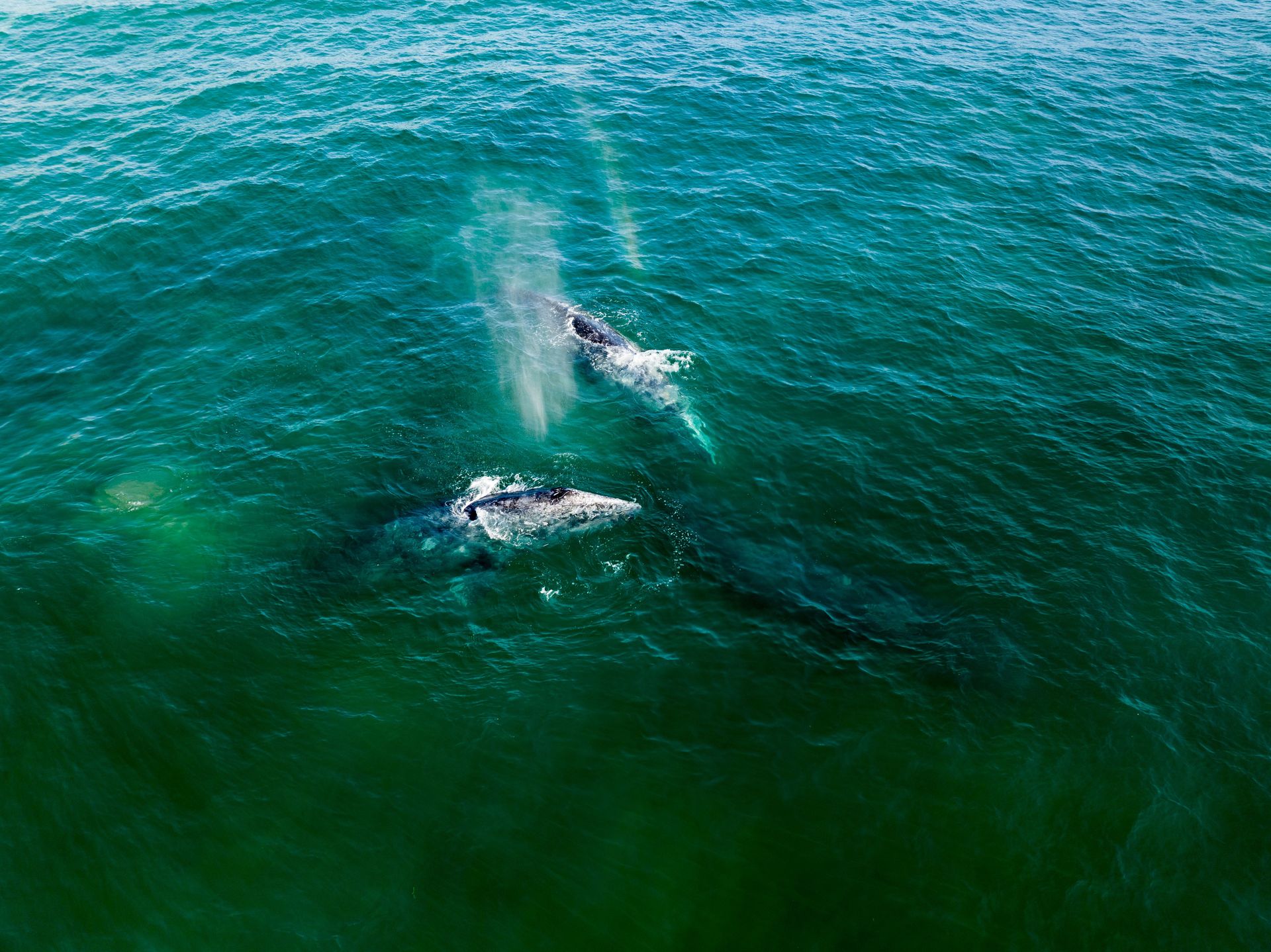
Gray whales make one of the longest migrations of any mammal, traveling up to 10,000 to 12,000 miles round trip each year between summer feeding grounds in the Arctic and winter breeding lagoons on the Pacific coast of Mexico's Baja California peninsula. From January through early April, thousands of whales pack three shallow lagoons — San Ignacio, Ojo de Liebre and Magdalena Bay — to mate, give birth and nurse their calves.
What sets these lagoons apart is the behavior known locally as the "friendly whale" phenomenon. Mothers and calves regularly approach the small licensed boats, called pangas, and linger alongside — close enough that passengers can touch them, which the whales appear to initiate and tolerate. The behavior was first widely reported at San Ignacio in the 1970s and has continued for decades. Nowhere else do 40-ton wild animals seek out this kind of contact so reliably.
The setting has formal protection. San Ignacio and Ojo de Liebre lie within the El Vizcaíno Biosphere Reserve, and the whale sanctuary there is a UNESCO World Heritage site. Mexican regulations cap the number of boats allowed on the water at once, restrict them to designated zones and require licensed local operators — rules that emerged partly from a fight in the 1990s, when conservationists and residents defeated a proposed industrial salt plant at San Ignacio.
Trips range widely in cost and comfort. Day tours run from towns such as Guerrero Negro and San Ignacio, while multiday packages at rustic camps on the lagoon shores bundle several boat sessions, meals and tents or cabins. February and March are peak months, when mothers with young calves are most numerous and most curious.
The season doubles as an economics lesson: whale watching sustains fishing villages through winter, giving communities a direct stake in the animals' return each year.
15 / 15
The Perseid meteor shower from a dark-sky reserve
Credit: FURKAN GÜNEŞ / Pexels
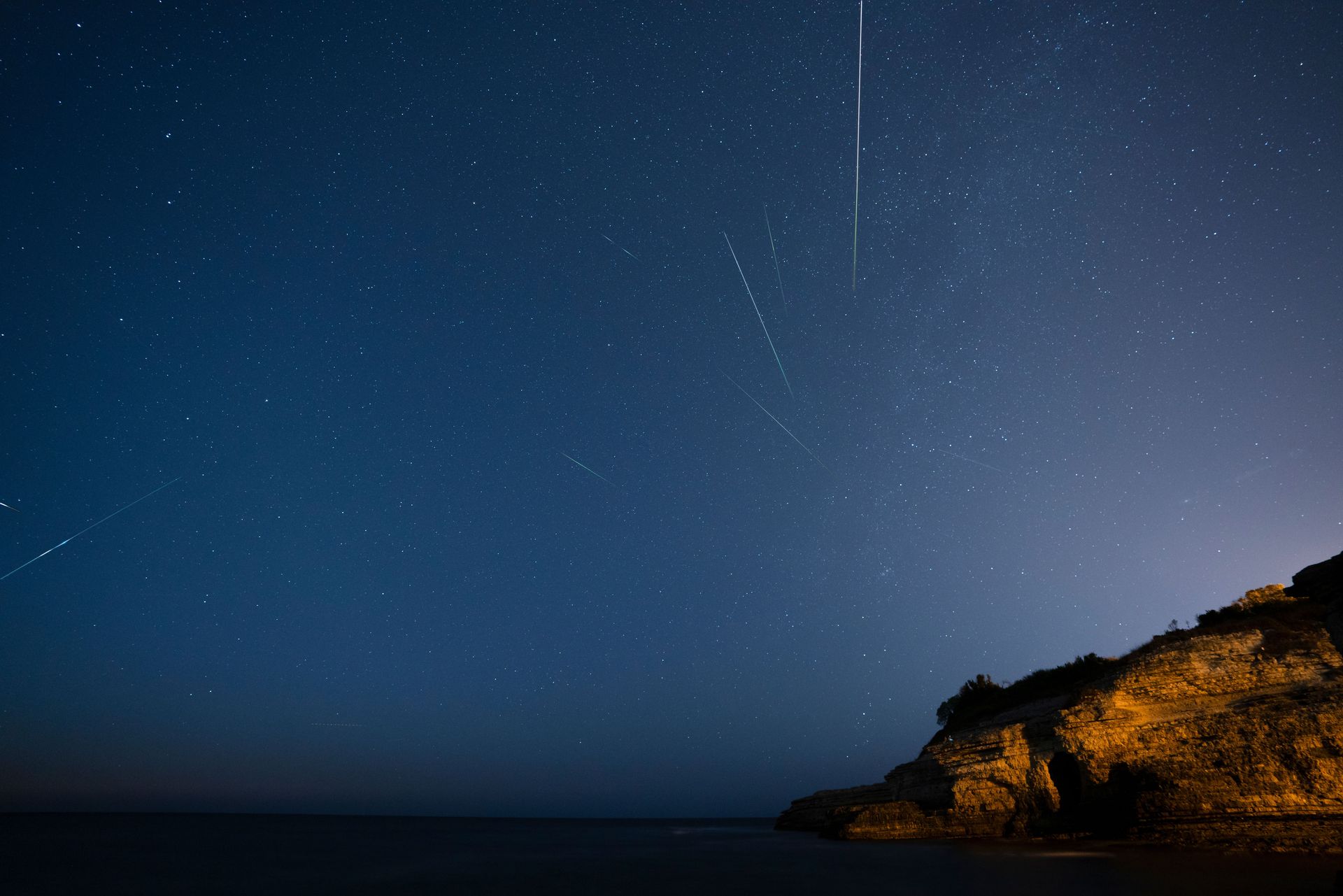
Every August, Earth plows through the debris trail of comet Swift-Tuttle, and the result is the Perseid meteor shower — the most watched sky event of the year. Sand-grain fragments hit the atmosphere at about 37 miles per second and burn up as streaks of light, with the occasional larger piece producing a fireball bright enough to cast shadows. Under genuinely dark skies at the peak, observers can see 50 or more meteors an hour.
The peak falls around Aug. 12 to 13 each year, though the shower runs from mid-July into late August. Rates climb after midnight, when your side of Earth rotates into the debris stream, and the hours before dawn are best. The moon is the deciding variable: a bright moon washes out fainter meteors, so check the lunar phase for the year before planning around the peak.
Location transforms the experience, which is where dark-sky reserves come in. DarkSky International certifies places that protect night skies through lighting controls, and they make ideal Perseid bases. Options span continents: the NamibRand Nature Reserve in Namibia, the Central Idaho Dark Sky Reserve around the towns of Stanley and Ketchum, the Brecon Beacons in Wales and Aoraki Mackenzie in New Zealand, among dozens of others. Even without certification, any site far from city glow — high deserts, remote coasts, mountain valleys — works.
Technique is refreshingly minimal. No telescope, no binoculars: meteors streak across wide swaths of sky, so the naked eye is the right instrument. Lie back on a blanket or reclining chair, let your eyes adapt to darkness for 20 to 30 minutes, avoid phone screens and look generally toward the northeast, away from any moon.
Of everything on this list, this event demands the least and repeats the most reliably — an annual appointment that requires only darkness, patience and a clear night.
